
Troubleshooting
Black Slime in the Robot Vacuum Base Station Tray: What It Is and How to Clean It
Direct answer
The black slime in the wash tray is biofilm that forms when dirty water, hair and organic matter sit in the dock; black dots on the filter are usually mold. Remove the tray and filter, scrub them with a soft brush, dry them completely, and clean more often so water never sits for long.
What you see
You pull out the wash tray at the bottom of the dock and find a black or gray-green slimy layer on the bottom, in the corners and under the scraper ridge, stringy when you touch it. The filter mesh is clogged, with black dots along the edges. There's a musty, drain-like smell around the dock, and the mop pads smell too.
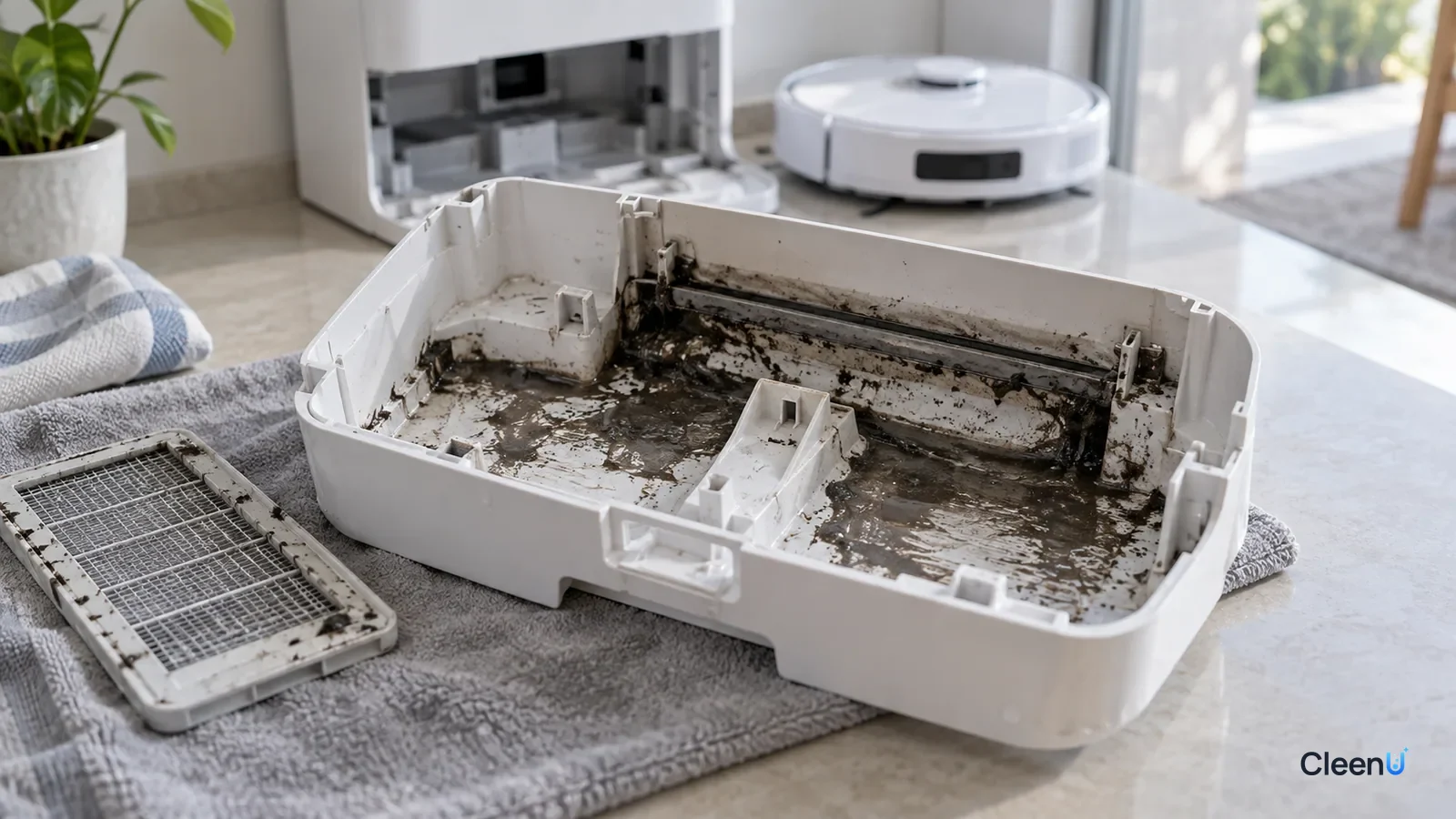
A robot mop with a self-cleaning dock washes its pads after every run. Clean water sprays onto the pads, the pads spin and scrub against the wash tray, and the dirty water drains through a filter at the bottom and gets pumped into the dirty tank. The wash tray is the dirtiest, wettest, least ventilated spot in the whole machine, and plenty of owners go a month or two without ever removing it. The first look is usually a shock.
Black slime looks alarming, but once you know where it comes from, dealing with it is simple.
What is the black slime, exactly?
It's mostly biofilm. The wash tray holds three ingredients: water, organic matter washed off the floor (skin flakes, hair, crumbs, grease, pet drool), and the bacteria that come in with it. After every pad wash, a little dirty water stays in the bottom of the tray, in the gaps around the scraper and on the filter. Inside a warm, damp, closed dock, bacteria multiply within hours.
Once bacteria settle on the plastic, they secrete sticky extracellular polymers, mostly polysaccharides and proteins, that wrap themselves together with nearby hair, grit and grease into an elastic gel. That's why it feels slimy and stringy. Bacteria inside biofilm hold up to rinsing far better than bacteria floating in water, so a rinse only takes off the top layer.
As for the color: grit and dust are gray-black to begin with. Some molds produce dark pigments and grow as black or dark green spots. Deep inside the biofilm, where there's little oxygen, some bacteria reduce sulfur compounds to sulfides, which combine with iron in the water to form black deposits and bring a rotten-egg, drain-like smell. Now and then you'll see pink or orange slime instead; that's another group of moisture-loving bacteria, and it gets cleaned the same way.
The black dots on the filter are usually mold. Mold likes surfaces that stay damp without being submerged, and the filter mesh and its edges fit that perfectly.
Why do some docks grow slime so fast?
Work through these to find out why slime builds up so fast
-
Step 1 Has it been more than two weeks since you removed and scrubbed the wash tray and filter?
- Yes
- That's the most common cause. Biofilm keeps thickening. Scrub them now, then weekly.
- No
- Go to the next check
-
Step 2 Do you often leave the dirty tank full overnight, or reinstall it right after emptying without drying?
- Yes
- Bacteria and odor in the dirty tank spread back into the tray and lines. Empty, rinse and air-dry it open after every run.
- No
- Go to the next check
-
Step 3 Is the dock in a damp, stuffy spot such as a bathroom doorway, a kitchen corner or a closed cabinet?
- Yes
- Move it somewhere dry with airflow, and run a dehumidifier in humid weather.
- No
- Go to the next check
-
Step 4 Do you have pets, a greasy kitchen, or a robot that often mops up spills and food bits?
- Yes
- More organic matter means faster biofilm. Scrub the tray and filter every three or four days, and clean up urine, vomit and heavy grease by hand first.
- No
- Go to the next check
-
Step 5 Have you been overdosing cleaning solution, or using dish soap or a high-foam cleaner?
- Yes
- Residue and foam collect in the tray and become part of the biofilm. Switch to a low-foam robot mop solution and dose sparingly.
- No
- Check whether the dock's drying and drain functions work and whether water pools in the tray. Follow your manual and contact support if it continues.
How to deep clean the wash tray and filter
Step 1: Power off and remove. Turn off the dock per your manual and take out the wash tray, filter and scraper (on some models the scraper is part of the tray). Wear gloves and open a window if the smell is strong.
Step 2: Dump the water and pull out hair. Pour leftover water down the drain and use paper towels to pull out clumps of hair and grit so they don't clog your sink.
Step 3: Soak in warm water. Fill a basin with warm water and a little dish soap or laundry detergent, and soak the tray and filter for 10 to 15 minutes. Warm water softens grease, and surfactant helps loosen biofilm from the plastic.
Step 4: Scrub with a soft brush. Work the bottom, corners, scraper gaps and filter mesh back and forth with a soft brush. The layer bonded to the plastic holds tight and only comes off with scrubbing. Skip steel wool; scratches give bacteria more places to cling.
Step 5: Rinse clean. Rinse off all suds and loosened grime until nothing feels slimy.
Step 6: Wipe the dock base. The base under the tray and around the drain collects slime too. Wipe it with a damp cloth, then dry it.
Step 7: Dry completely before reinstalling. Let the tray and filter air-dry fully somewhere with airflow. Put them back damp and bacteria regrow quickly.
If mold spots on the filter won't brush off, or the mesh is warped or torn, replace the filter per your manual.
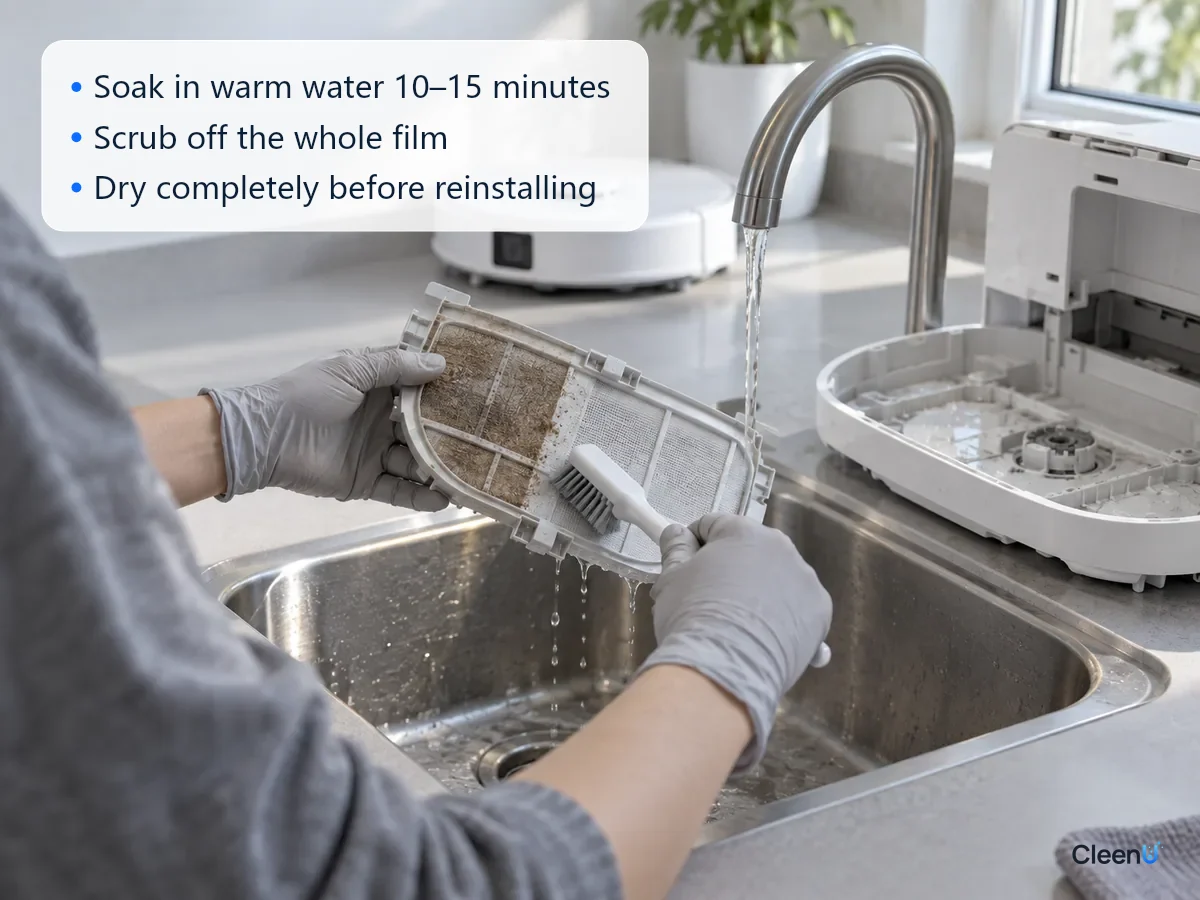
Can I soak the tray in bleach?
Not as a routine. Chlorine bleach can yellow and embrittle plastic parts and damage seals. Any bleach left behind gets onto the pads and floor at the next wash, and bleach that meets leftover cleaner or the ammonia-type compounds in pet urine can release irritating fumes.
Biofilm isn't really a "kill it" problem. It's a "scrub it off and dry it out" problem. Peel the whole film off the surface, dry the surface completely, and the few bacteria left behind struggle to rebuild. Some manuals recommend a specific cleaning method or product; follow yours.
How to keep the slime from coming back
Empty the dirty tank after every run, rinse it and let it dry open.
Scrub the wash tray and filter weekly, or every three or four days with pets, a greasy kitchen or humid weather.
Use the dock's hot-air drying if it has one, so pads and tray dry quickly.
Keep the dock somewhere dry with airflow, not in a closed cabinet or right outside the bathroom.
Clean up pet urine, vomit, food spills and heavy grease by hand instead of letting the robot mop them.
Dose cleaning solution sparingly and use only low-foam robot solution. CleenU Robot Vacuum Cleaning Solution is a neutral, low-foam concentrate at pH 6.5 to 7.5 with low-foam nonionic surfactants and a defoamer, no wax, no chlorine and no particles. It dilutes at about 1:50 to 1:100; 10 to 20 mL per fill is usually enough. Less is better than more. It's a floor cleaner that helps the robot lift greasy soil. It doesn't replace scrubbing the tray and doesn't disinfect the dock. For the difference between cleaning and disinfecting, see does robot mop solution disinfect.
It works in most robot mops from Roborock, iRobot (Roomba Combo and Braava), Ecovacs Deebot, Dreame and Narwal, and in floor washers such as Tineco. Add it to the clean water tank or the dock's designated detergent compartment as your manual directs. CleenU isn't affiliated with these brands; the names only indicate compatibility.
For a full-machine routine, see robot vacuum maintenance schedule. For the dirty tank itself, see why a robot vacuum dirty water tank smells.
How is a smelly tray connected to the pads and dirty tank?
The three parts of the dock are linked. Pads get washed in the tray, and the wash water drains through the filter into the dirty tank. Biofilm in any one of them passes bacteria and odor to the other two.
A dirty tray means freshly washed pads pick up bacteria and carry the smell back to your floors.
Dirty pads bring more organic matter into the tray with every wash, so biofilm grows faster.
A dirty tank left full lets odor and bacteria work back through the lines to the tray.
So when the dock smells, clean all three together: scrub and dry the tray and filter, hand wash the pads, and empty and scrub the dirty tank. For pad care, see how to clean smelly robot mop pads.
Stop using the dock and contact support if you see these
The dock keeps leaking or water won't drain even after you clean the tray; you can see mold or water marks inside the dock near the circuit board; or it smells burnt, makes unusual noises or shows an error that won't clear. Unplug it, don't open the housing yourself, and contact the manufacturer for service.
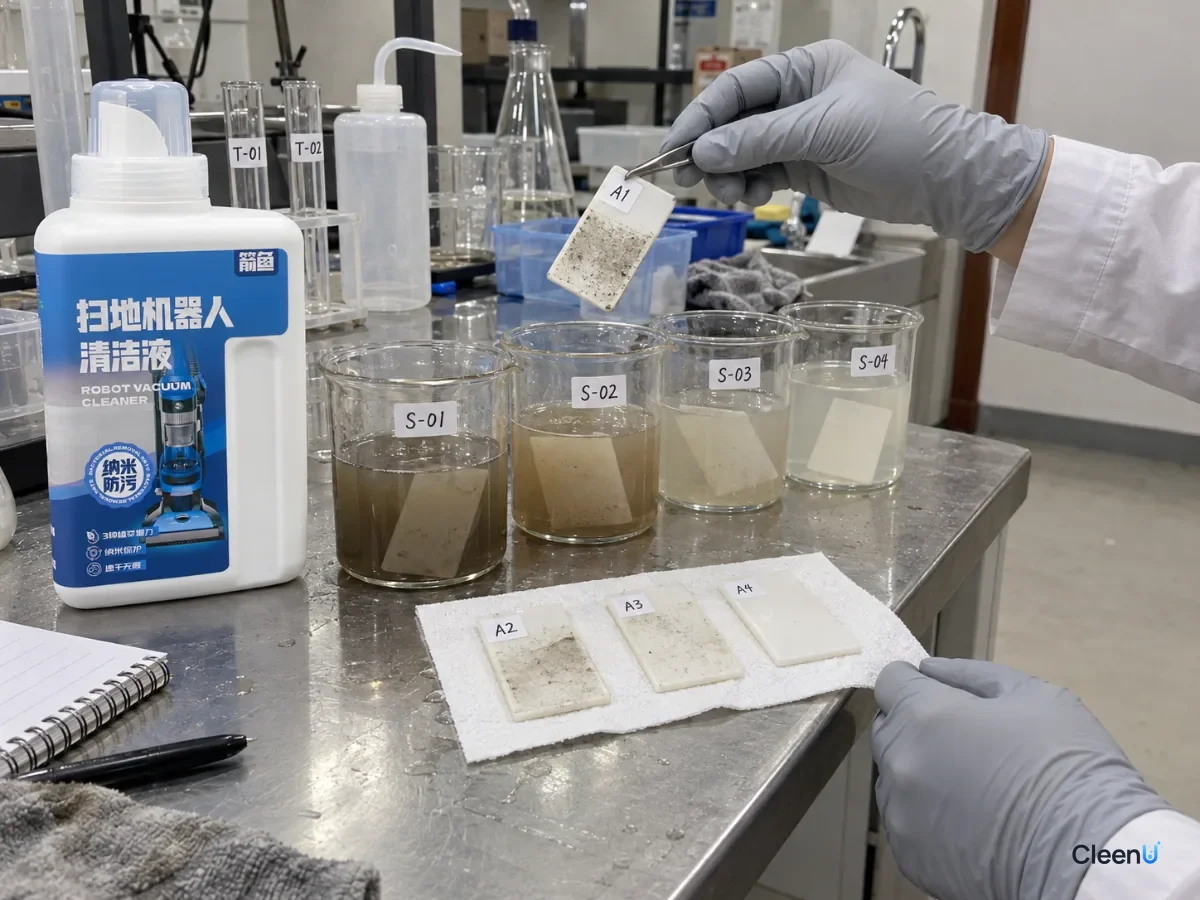
Where are the wash tray's blind spots?
A few places are easy to miss when you scrub the wash tray: the gap between the scraper ridge and the tray floor, where dirty water sits longest; the area around the drain, where hair and grit get caught; the contact surface between the tray and the dock base, which often still has a ring of slime after you pull the tray; and the filter's frame and clips, where dark gunk hides in the grooves even after the mesh looks clean.
Use a thin soft brush or an old toothbrush for those gaps, and wipe the base with a damp cloth, then a dry one. Get these spots clean and the tray won't turn black again a few days later.
Common questions about black slime in the dock wash tray
Is the black slime harmful?
It's where bacteria and mold collect, and it passes odor and bacteria to your pads and floors. Regular scrubbing and drying keep it under control. No need to panic, but don't leave it.
How often should I scrub the wash tray?
Weekly for most homes, every three or four days with pets, a greasy kitchen or humid weather. If you see slime or mold spots, the interval is too long.
Why does it come back a few days after I clean it?
Usually the parts went back in before they were fully dry, or the dirty tank often sits full overnight. A damp, stuffy dock location speeds it up too.
Can I soak the tray in vinegar?
An occasional soak in diluted white vinegar helps with mineral scale; rinse well afterward. Don't soak it for long, and never put vinegar in the water tanks.
If I use cleaning solution, will the dock stop growing slime?
No. Solution helps clean the floor; it doesn't replace scrubbing the tray. Overdosing adds residue and makes the tray dirtier.
The filter is moldy and won't come clean. Should I replace it?
Yes. If mold has grown into the mesh and won't brush out, or the filter is warped or torn, replace it per your manual.
Why does my floor smell sour after the robot mops?
The dock is usually the source. Slime in the wash tray, damp pads, and leftover dirty water carry odor back onto the floor. Scrub the tray and filter, wash and dry the pads, and empty and air out the dirty tank. If the smell stays, check whether the clean tank or the solution has been sitting too long.
To keep foam and residue from building up in the wash tray, for everyday mopping use a sparing dose of low-foam, wax-free Robot Vacuum Cleaning Solution.
Black slime in a robot vacuum's wash tray is biofilm, built by bacteria living on leftover dirty water and organic matter, and black dots on the filter are usually mold. The fix is scrubbing and drying: remove the tray and filter, soak them in warm water, brush off the whole film, wipe the dock base, and let everything dry before reinstalling. Prevent it by cleaning more often, emptying and drying the dirty tank after every run, keeping the dock somewhere airy, and dosing a low-foam robot solution sparingly. Solution helps clean the floor, but it doesn't replace scrubbing the dock.