
Troubleshooting
Robot Vacuum Dirty Water Tank Smells? How to Clean It and Keep It Fresh
Direct answer
A robot vacuum dirty water tank smells because dirty water, hair and food bits sit in a closed, damp tank where bacteria and mold grow. Empty and rinse the tank after every run, leave the lid open to dry, and scrub the filter and wash tray weekly, and the odor clears up.
Check these five things to find where the smell comes from
- Does the dirty water sit in the tank overnight, or for days, after mopping?
- Are the lid, seal and filter coated with hair and slimy buildup?
- Is there standing water and grime in the dock's wash tray?
- Do the mop pads stay damp after a run instead of being dried?
- Has the robot mopped over pet urine, spilled soup or a drink recently?
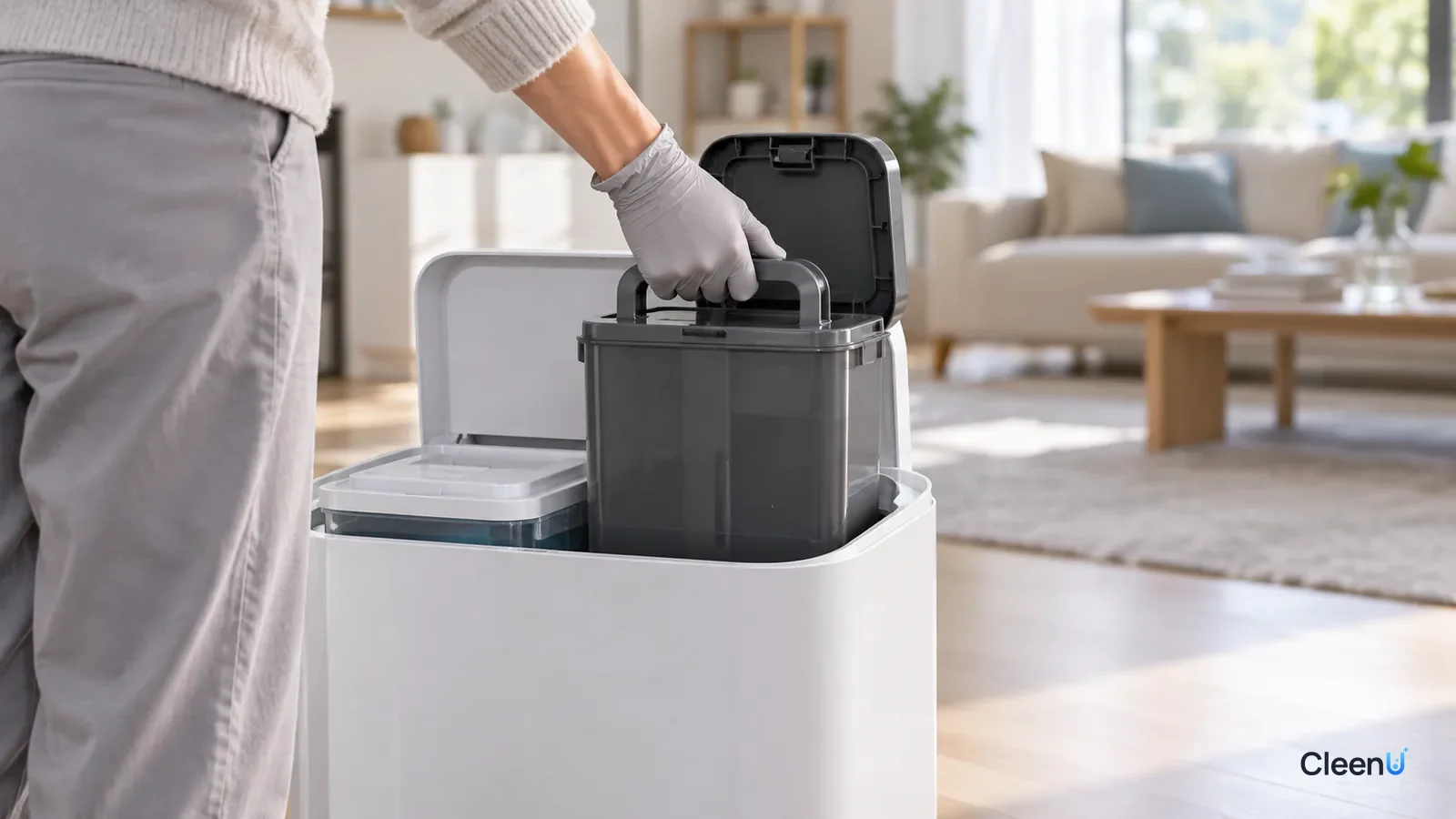
You open the dock and get hit with a smell like old dishwater or a drain. On a bad day you can smell it from across the room without opening anything. It's easy to assume the robot is broken or the cleaning solution is at fault. In most cases, though, the odor comes from somewhere much simpler: dirty water that was left in the tank too long.
Where does the dirty water tank smell come from?
When a robot mops, the pads pick up dust, skin flakes, hair, crumbs, pet fur and the oily film from footprints. A self-cleaning dock then washes the pads and pumps that water into the dirty tank. It is loaded with organic matter, which is ready-made food for bacteria and mold.
The dirty tank is small, closed, damp and dark. At room temperature, microbes start multiplying in that water within hours. As they break down proteins, fats and food particles, they give off sour, rotten-smelling gases. Overnight, the smell is obvious. After two or three days, a slimy biofilm forms on the tank walls and seal, and at that point just dumping the water won't get rid of the odor.
Warm weather speeds all of this up. Homes with pets and kids put more organic matter on the floor, so their dirty water turns smelly faster too.
Where the smell actually comes from: microbial metabolism
The stench in a dirty water tank is, at bottom, the volatile gases that microbes release as they break down organic matter. The dirty water a robot collects contains three main kinds of raw material.
Proteins: from skin flakes, hair, pet drool and food scraps. When bacteria break down sulfur-containing amino acids, they produce hydrogen sulfide and thiols, the source of that rotten-egg, drain-like smell. Breaking down other amino acids produces ammonia and amines, which smell sharp and fishy.
Fats and oils: from skin oil on bare feet and grease on the kitchen floor. When microbes break these down, they release short-chain fatty acids such as butyric acid, a main source of sour, rancid smells.
Carbohydrates: from spilled drinks, juice and bits of rice or bread. They ferment into organic acids that sour the water and give off a fermented smell.
Many of these odor compounds have very low odor thresholds, meaning the nose picks up a tiny amount. That's why a little leftover water and a thin layer of grime in the tank can still smell strong.
Why a closed dirty tank smells so fast
A dirty tank is close to a perfect culture dish: room temperature, always damp, dark, and once the lid is on, the oxygen inside gets used up quickly. In low-oxygen conditions, anaerobic bacteria take over, and the sulfur compounds and amines they produce are among the worst-smelling of all.
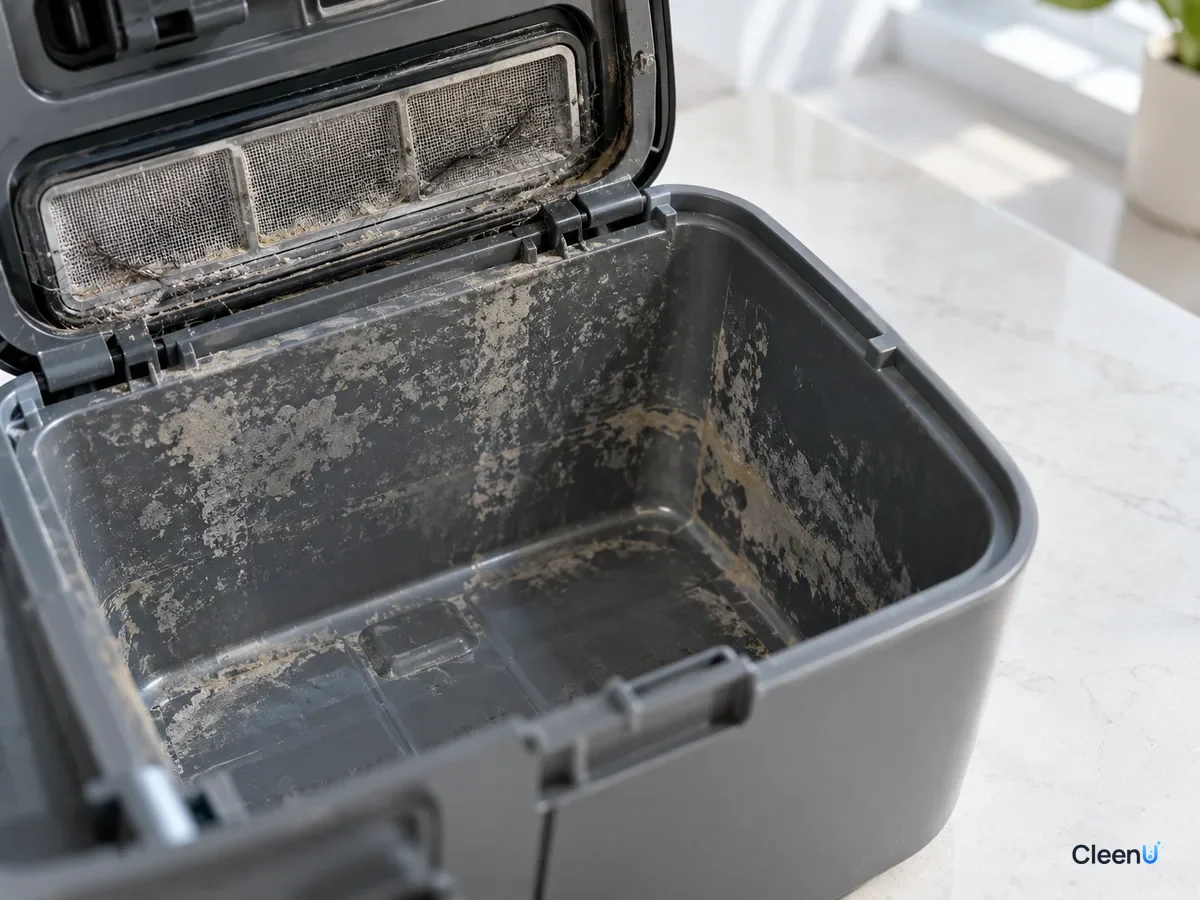
Over time, bacteria coat the tank walls, seal and filter with a slimy layer of extracellular polymers that shelters them. That's a biofilm. It acts like a protective shell, won't rinse off with plain water, and holds up better against cleaners and drying. Even after you dump the water, the microbes in the biofilm keep working, which is why the tank can smell even when it's empty. To get rid of it you need mechanical action, scrubbing, to break the film apart, followed by thorough drying.
Temperature matters too. Microbes multiply faster as it warms up, so dirty water left for a few hours in summer can smell worse than water left overnight in winter.
Why fragrance won't cover it and bleach isn't the answer
A heavily scented solution just layers another smell on top. Fragrance molecules don't break down hydrogen sulfide, amines or short-chain fatty acids, and the microbes keep multiplying. Once the fragrance fades, the odor is back, and because fragrance oils are oily, they add residue too.
Pouring chlorine bleach into the dirty tank looks like a permanent fix, but it causes its own problems. Sodium hypochlorite gets used up quickly by all the organic matter in dirty water, so it works less well than you'd think. It also attacks seals and metal parts, and mixed with leftover acidic cleaner it can release chlorine gas.
What actually works is a sequence: empty the dirty water to remove the food source, scrub to break up the biofilm, then dry to take away the moisture microbes need most. The cleaning solution's role in all this is to disperse oil and soil from the floor into the water so the dock can flush them into the dirty tank, not to "sanitize" the tank.
Other parts of the robot that can smell
The dock's wash tray: the pads are scrubbed here, and the bottom often holds a layer of standing water, grime and tangled hair. It is the second most common source of odor after the tank itself.
The filter and the seal: the filter at the tank inlet catches hair and larger debris, and grime collects in the grooves of the rubber seal. Over time both turn dark and slimy.
The mop pads: pads that stay damp after mopping keep fermenting the soil and microbes in their fibers. Leaving the dock's drying function off, or not drying pads on a robot without a dock, makes them sour, and they carry the smell back to the floor on the next run.
Hoses and outlets: a robot that hasn't been cleaned in a long time can build up grime in its internal lines. Clean the tank, wash tray and pads first, though, before deciding there is another source.
Use your nose to narrow it down
Different smells usually point to different sources, so take a moment to tell them apart before you start cleaning.
Sour, like old dishwater: dirty water has been sitting in the tank too long. Emptying, rinsing and drying the tank with the lid open usually makes a big difference right away.
Musty or damp: the likely culprits are mop pads that never dry and a wet wash tray. Focus on getting the pads and the bottom of the dock completely dry.
Fishy or sharp, like ammonia: the robot has probably mopped through pet urine, spilled soup or food scraps. Clean the dirty tank, the pads and the wash tray, not just one of them.
Burnt or like hot plastic: this isn't grime. It can mean a motor or circuit is overheating. Turn the robot off, unplug it and contact the manufacturer.
Robots without a self-cleaning dock have no dirty water tank, but the onboard water tank and the pads can still smell. The approach is the same: pour out leftover water the same day, and wash and dry the pads after each run.
Causes and fixes, side by side
The causes run from most to least common. Most odors go away after the first few are handled once or twice.
Common causes of a smelly robot vacuum dirty water tank, and what to do
| Cause | What you notice | Fix | Prevention |
|---|---|---|---|
| Dirty water left overnight | Sour smell when the dock opens, worse each day | Empty the tank, rinse it, and let it air-dry with the lid open | Empty the dirty water the same day you mop |
| Buildup on the walls and seal | Still smells when empty; walls feel slimy | Scrub walls and seal with a soft brush and a little neutral cleaner, rinse, dry | Scrub weekly instead of just rinsing |
| Clogged filter | Filter wrapped in hair and turning dark | Remove the filter, pull off the hair, scrub, dry and reinstall | Clean the filter weekly |
| Water and grime in the wash tray | Odor from the bottom of the dock; muddy water in the tray | Remove and scrub the tray; wipe and dry the dock base | Clean the wash tray weekly |
| Damp pads fermenting | Pads gray or dark and smelling sour | Wash the pads and dry them fully, by air or with the dock's dryer | Turn on the dock's drying function and replace pads on schedule |
| Mopped over pet urine or spills | Sudden strong, sharp or fishy smell | Empty and rinse the tank; wash the pads and the tray | Clean up pet accidents and spills by hand before the robot runs |
Give the tank and dock one thorough cleaning
When the smell is already strong, dumping the water isn't enough. Clean every part that touches the dirty water.
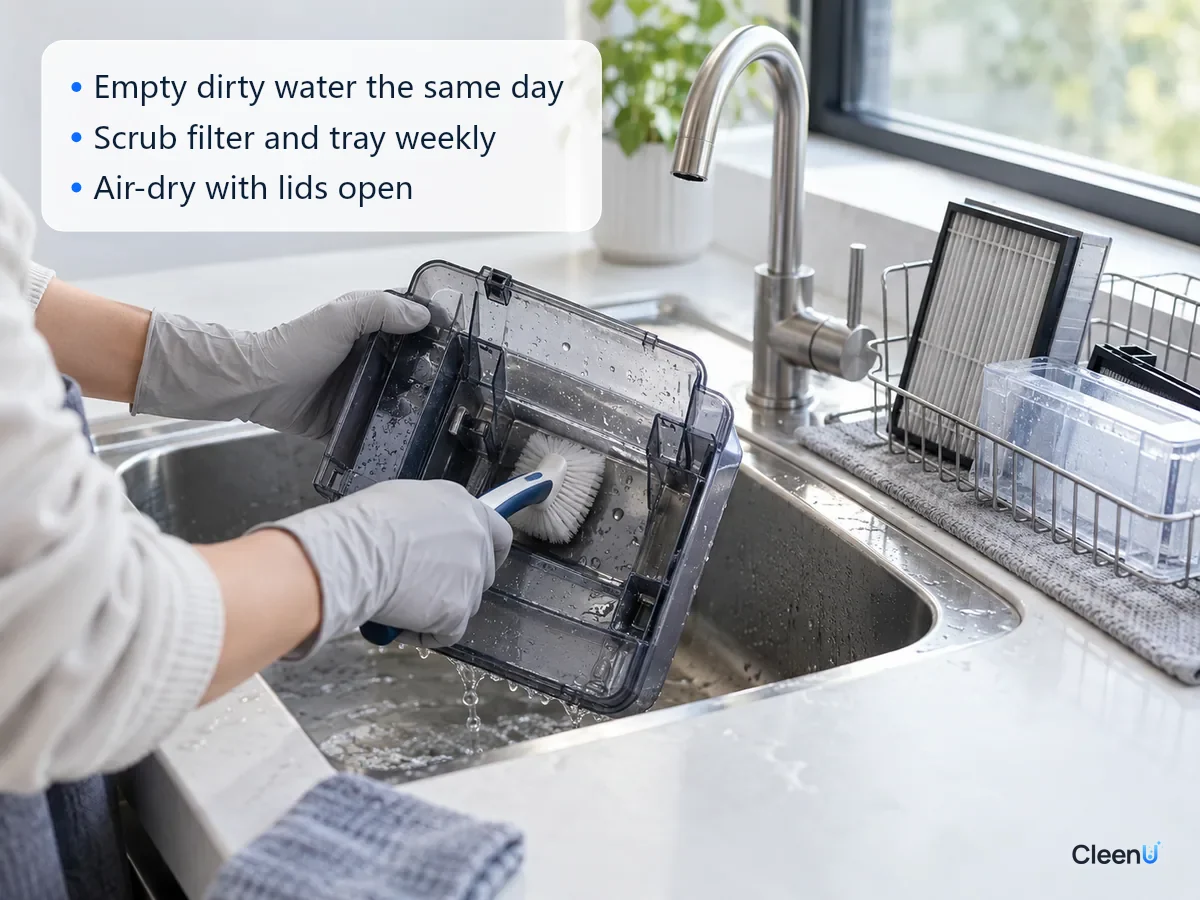
Empty the dirty tank and rinse it two or three times to flush out grit and hair. Then dip a soft brush in a little neutral cleaner and scrub the walls, the bottom, the inside of the lid and the seal, paying attention to corners and grooves. Rinse repeatedly with clean water until no suds remain.
Take out the filter, pull off the tangled hair, scrub it with the brush and rinse it. Remove the dock's wash tray, scrub the grime and hair off the bottom and rinse it clean. Wipe the dock base with a damp cloth, then dry it.
Set the tank, filter and tray somewhere with good airflow, lids open, and reinstall them only once they are completely dry. Wash and dry the mop pads too. If they are dark, stiff or still smell after washing, it is time for new ones.
Don't pour bleach, toilet bowl cleaner or vinegar into the tank. Chlorine and acids can damage the seals and sensors, and mixing them can release harmful gases. For what can and can't go in the tank, see can you put vinegar or bleach in a robot mop tank.
How to keep the dirty water tank from smelling
After every run: empty the dirty water the same day, rinse the tank and leave the lid open to dry. On models with auto-empty or a drain connection, check the lines and drain as the manual recommends.
Mop pads: turn on the dock's drying function if it has one. If it doesn't, take the pads off after each run, wash them and let them dry. Check them every two to three months and replace them once they are dark, stiff or keep smelling after a wash.
Weekly: scrub the tank, filter and wash tray instead of just rinsing them.
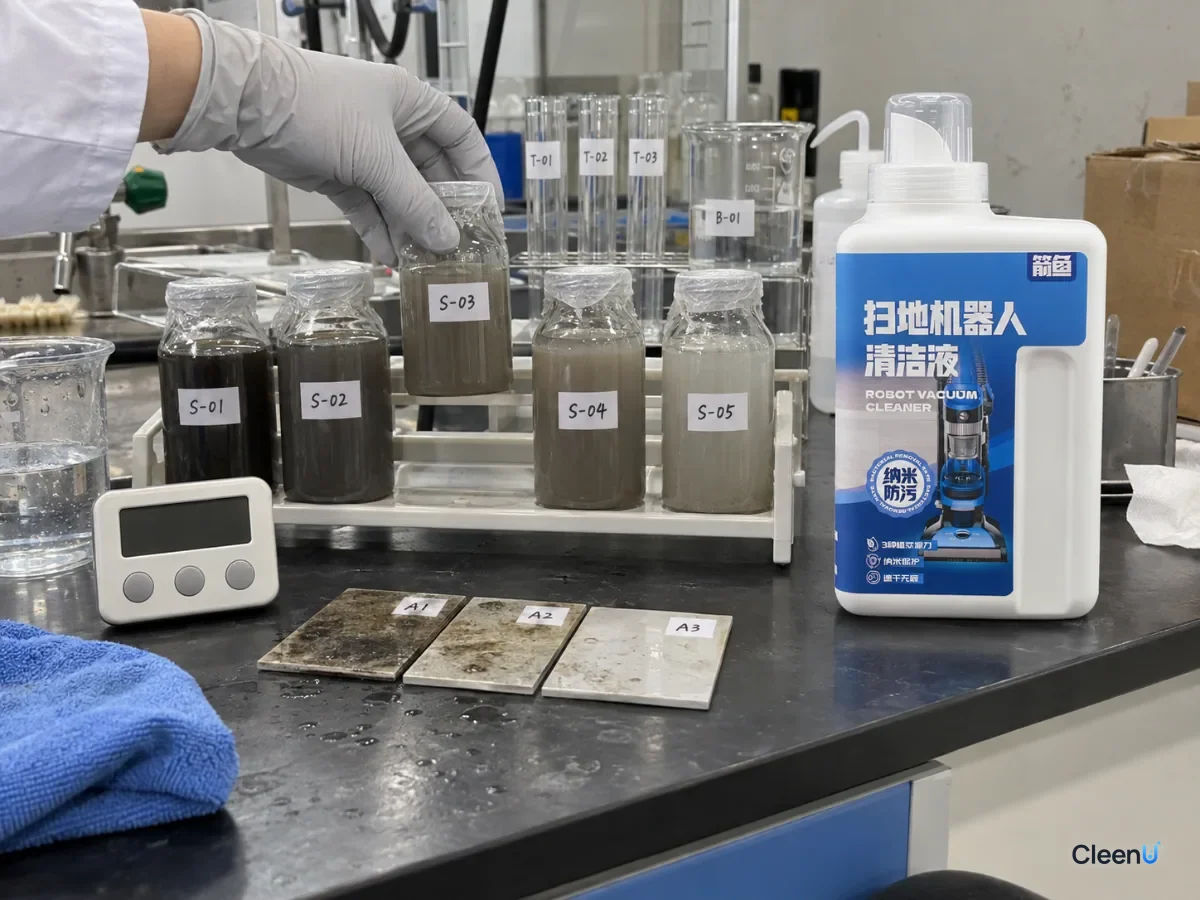
Cleaning solution: use only a low-foam solution made for robot mops, measured to the label. High-foaming regular cleaners get churned in the tank and create a lot of foam, and the leftover foam and grime stick to the tank walls. CleenU Robot Vacuum Cleaning Solution, for example, is a neutral, low-foam concentrate with a pH of 6.5 to 7.5, wax-free and chlorine-free, diluted at about 1:50 to 1:100, usually 10 to 20 mL per fill. It helps lift oily soil and footprints off the floor, but it doesn't replace emptying the tank and cleaning the parts.
It works in most robot mops from Roborock, iRobot (Roomba Combo and Braava), Ecovacs, Dreame and Narwal, and in Tineco-type washers. If the manual requires the maker's own solution or the robot is under warranty, follow the manual first. CleenU isn't affiliated with any of these brands.
Pet homes: clean up vomit and accidents by hand before the robot runs so it never mops through them. Set the areas around food and water bowls as no-mop or extra-attention zones in the app. For choosing and adding a cleaning solution, see the robot mop cleaning solution guide.
This article is part of the Robot Vacuum Cleaning Solution & Maintenance Guide, which covers the full maintenance schedule and links to every troubleshooting guide.
Stop if you see any of these
The odor stays strong after a thorough cleaning, or smells burnt or like hot plastic; the robot keeps throwing errors or won't drain or pump properly; the dirty tank or internal lines leak. Stop using it, unplug it, and contact the manufacturer's support. Don't take apart the internal lines or electronics yourself.
Dirty water tank odor questions from robot owners
How often should I clean the dirty water tank?
Empty it, rinse it and air-dry it the same day after every run, and scrub the walls, seal and filter with a soft brush once a week.
Is the cleaning solution making my dirty tank smell?
Usually not. The odor comes from dirty water and organic matter left in the tank. Use a low-foam robot solution at the label dose, and empty and dry the tank promptly.
Can I pour disinfectant or bleach into the dirty tank to kill the smell?
No. Chlorine and acidic products can damage the seals and sensors and may react with leftover cleaner. Scrubbing, rinsing and drying the tank works better.
Will a strongly scented cleaning solution cover the smell?
No, and it isn't a good idea. Fragrance only masks the odor for a while; the dirty water and biofilm are still there. Heavily scented, high-foaming products also add residue.
What should I do about smelly mop pads?
Wash them in plain water or a little laundry detergent, dry them completely, and turn on the dock's drying function. Replace pads that are dark, stiff or still smell after washing.
Why does the tank smell worse in summer?
Warmth speeds up bacteria and mold, so dirty water can start to smell within hours. In hot weather, empty the tank the same day and let it dry with the lid open.
I already washed the dirty water tank. Why does it still smell?
Biofilm is usually left behind. A slick film builds up on the tank walls, lid seal, filter and the dock's wash tray, and rinsing alone will not remove it, so microbes keep producing odor. Scrub the walls, seal and filter with a brush, clean out the dock tray, then leave everything open to dry. Check whether the mop pads smell or are not drying, too.
Should I add anything to the dirty water tank to stop the smell?
No. Additives in the dirty tank will not fix the odor. Cleaning solution belongs in the clean water tank or the dock's designated detergent compartment; in the dirty tank it does nothing useful and can foam. Prevent smells by emptying and rinsing the dirty tank the same day, leaving it open to dry, scrubbing the filter and seal regularly and drying the pads.
For a neutral, low-foam robot mop cleaning solution that won't whip up foam in the dirty tank, try Robot Vacuum Cleaning Solution.
A smelly dirty water tank comes from dirty water, hair and food bits sitting in a closed, damp space where bacteria and mold grow. Empty, rinse and air-dry the tank the same day you mop, scrub the tank, filter and wash tray weekly, and keep the pads dry and replaced on schedule, and the odor stays under control. Don't try to overpower it with bleach, vinegar or heavy fragrance; cleaning and drying the parts is what works.