
Troubleshooting
Robot Mop Smells Sour, Fishy, or Musty? Find the Source by the Smell
Direct answer
Start by naming the smell. Sour usually means food residue fermenting in the dirty-water tank and pads. Fishy or rotten means pet and kitchen residue breaking down in the pads and tank. Musty means the pads, clean-water tank, or dock never fully dried. Clean and dry the matching part and most odors go away.
What you see
After the robot mops, the living room has a smell you can't quite name: sometimes like spoiled leftovers, sometimes fishy, sometimes damp and musty. Opening the dock, the dirty-water tank makes you step back. The mop pads feel slimy and smell bad. You've tried a few different solutions and the smell is still there.
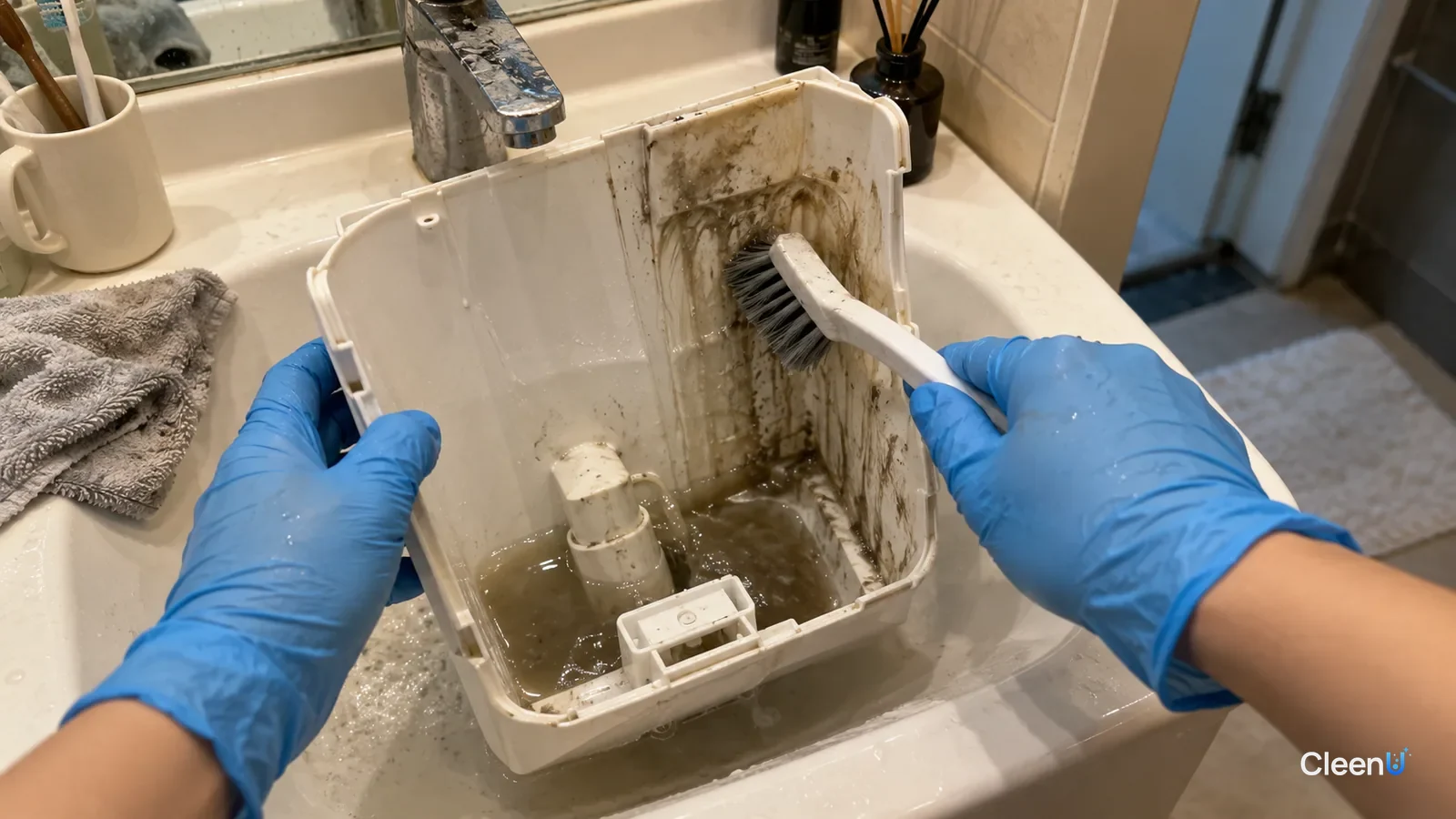
Robot mop odors are almost never the smell of the cleaning solution. They come from microbes growing in some damp, food-rich corner of the machine and releasing odor compounds as they break down organic matter. Different microbes feeding on different things produce different molecules, so your nose is a genuinely useful diagnostic tool: different smell, different source, different fix.
Three smells, three sources
Sour: fermentation
A mop pad picks up crumbs, spilled drinks, juice, and milk, all sources of sugar and starch. In the warm, wet dirty-water tank and pads, lactic acid bacteria, yeasts, and other microbes ferment those sugars into organic acids: lactic acid, acetic acid (the vinegar smell), and butyric acid (the spoiled-cheese smell). Leave dirty water in the tank for a day or two, or put pads away damp, and within hours you'll smell it.
This smell usually lives in the dirty-water tank and pads, with a little left on the floor after mopping.
Fishy or rotten: protein and fat breaking down
Fishy and foul smells usually come from protein and fat. In pet homes, drool, urine, hair, and dander all contain protein and fat; by the kitchen, so do greasy footprints and meat juices. When bacteria break down protein they produce amines and sulfur compounds: trimethylamine smells fishy, hydrogen sulfide and thiols smell like rotten eggs, and putrescine and cadaverine smell like decay. Oxidized and broken-down fats release aldehydes and short-chain fatty acids with a rancid edge.
These molecules have extremely low odor thresholds, so a trace is enough to notice. They tend to hide deep in pad fibers, corners of the dirty-water tank, and the gaps and filter in the dock's wash tray.
Musty or earthy: mold and actinomycetes
Musty smells come from places that stay wet: pads that were washed but not dried, a clean-water tank that always has water in it, standing water in the bottom of the dock's wash tray. Molds and actinomycetes release compounds like geosmin and 2-methylisoborneol, which the human nose picks up at tiny concentrations as that "damp basement" smell. Water left overnight in the clean tank can also grow a thin biofilm, and when that water goes onto the pads, the musty smell goes onto your floor.
Five steps to find the source
Find the source of robot mop odor in five steps
-
Step 1 Is there dirty water still sitting in the dock's tank, or a slimy film on the tank walls?
- Yes
- Empty it, scrub the walls, lid, and seal with warm water and a soft brush, rinse, and leave it open to dry completely before reinstalling. Empty it after every mopping run from now on.
- No
- Go to the next check
-
Step 2 Do the pads feel slimy or stiff, or smell sour or fishy?
- Yes
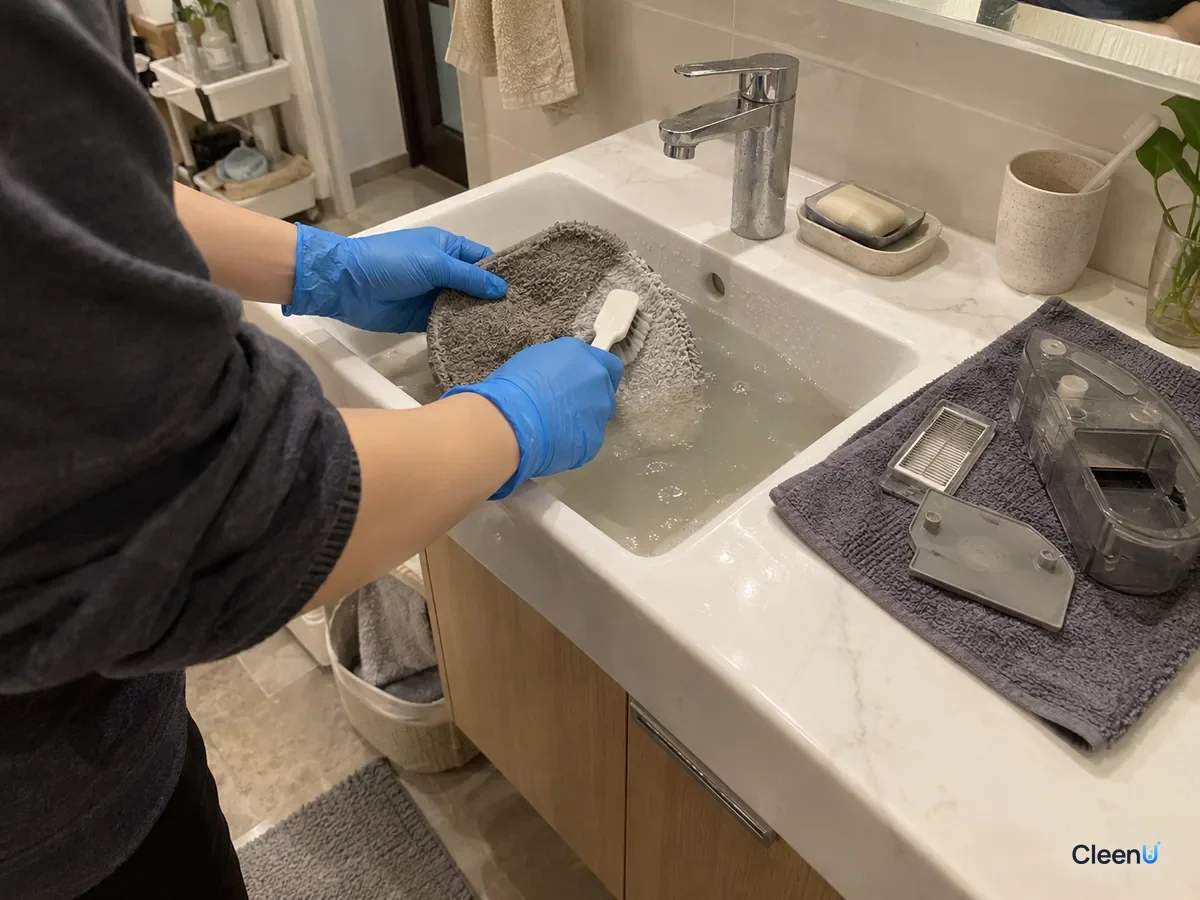
- Take them off and hand-wash or machine-wash per the manual, then dry them completely or use the dock's drying function. Replace pads that are dark, stiff, or still smell after washing.
- No
- Go to the next check
-
Step 3 Has water been sitting in the clean-water tank for more than a day, with a slimy feel or musty smell?
- Yes
- Dump the old water, rinse, and let it dry. From now on, mix water and solution fresh each time instead of storing it.
- No
- Go to the next check
-
Step 4 Does the dock's wash tray, filter, or drain have black sludge, hair clumps, or standing water?
- Yes
- Remove the wash tray and filter per the manual, brush off the sludge and hair, rinse, and dry. Clear the drain with a thin brush.
- No
- Go to the next check
-
Step 5 With all of those cleaned and dried, is there still a strong smell after mopping?
- Yes
- Check whether pet accidents or spilled drinks were on the floor before the robot ran. If you still can't find the source, contact the manufacturer to check the internal water lines.
- No
- Odor solved. Keep it that way with the maintenance habits below.
Match the smell: cause, location, fix, prevention
| Smell: Main cause | Usual location | Fix | Prevent it |
|---|---|---|---|
| Sour: Sugar and starch residue fermenting into organic acids | Dirty-water tank, pads | Empty the tank, scrub it, wash and dry the pads | Empty dirty water after every run; sweep up food first |
| Fishy or foul: Bacteria breaking protein and fat into amines and sulfur compounds | Deep in pads, tank corners, wash tray | Deep-clean pads and wash tray; replace badly affected pads | Clean pet accidents and grease by hand before the robot runs |
| Musty or earthy: Mold and actinomycetes growing where it stays wet | Pads not dried, overnight clean water, standing water in the tray | Empty, scrub, dry completely | Dry pads every time; mix clean water fresh |
| Sharp chemical: Too much solution, or mixing in other products | Clean-water tank, freshly mopped floor | Empty and rinse the tank, remix at the right ratio | Use 1:50 to 1:100; never mix products |
When the season, water, or pad changes, so does the answer
The same routine can give very different results across the year. In summer, warm rooms speed up bacterial growth, so dirty water can turn sour within half a day and pads take longer to dry in humid air. That is when emptying the dirty tank after every run, and using the dock's hot-air drying if it has one, stops being optional. Damp shoulder seasons cause the same problem for musty smells: air-drying simply does not finish the job.
Hard water matters too. Calcium and magnesium bind with fatty acids from skin oils and form calcium soap, a dull, slightly gritty film on pad fibers and tank walls. The film doesn't smell on its own, but it traps organic residue and gives bacteria a place to settle. In hard-water homes, a longer warm-water rinse of the pad usually helps more than adding extra solution.
Pad material shifts things as well. Microfiber picks up soil fast and holds it deep; cotton pads dry slowly and go musty sooner. A quick check: soak the pad alone in a basin of clean water for an hour, then smell the water. If the water smells, the pad itself is the source.
Why more solution can make it smell worse
The first instinct when a robot smells is to add more cleaning solution, or a little fragrance or disinfectant. That usually backfires.
Too much solution leaves extra surfactant and organic material behind, which feeds microbes. The film in the pads and dirty-water tank gets thicker and the smell gets stronger, and the floor turns tacky and picks up more dust and hair.
Fragrance and essential oils just layer a scent on top. The source is still there, and in a few days you get a combined smell that's worse. Some essential oil components can also damage tank seals.
Bleach and other chlorine disinfectants react with organic matter in the dirty water and give off a sharp smell, and they can corrode metal parts and seals in the machine. For why these don't belong in the tank, see Can you put vinegar or bleach in a robot mop tank?.
What actually fixes odor is removing food and moisture: empty dirty water promptly, wash and dry pads, don't leave water in the clean tank overnight, and use solution at the right ratio.
What cleaning solution can and can't do
A cleaning solution's job is to emulsify and disperse grease, skin oil, and dusty film on the floor so the pad carries them into the dirty-water tank instead of letting them build up on the floor and in the pad. A good robot mop solution should be low-foam (so the dirty-water tank doesn't fill with suds and trigger a false "full" alert), low-residue (so it doesn't leave a tacky film on floors or pads), and effective at a small dose.
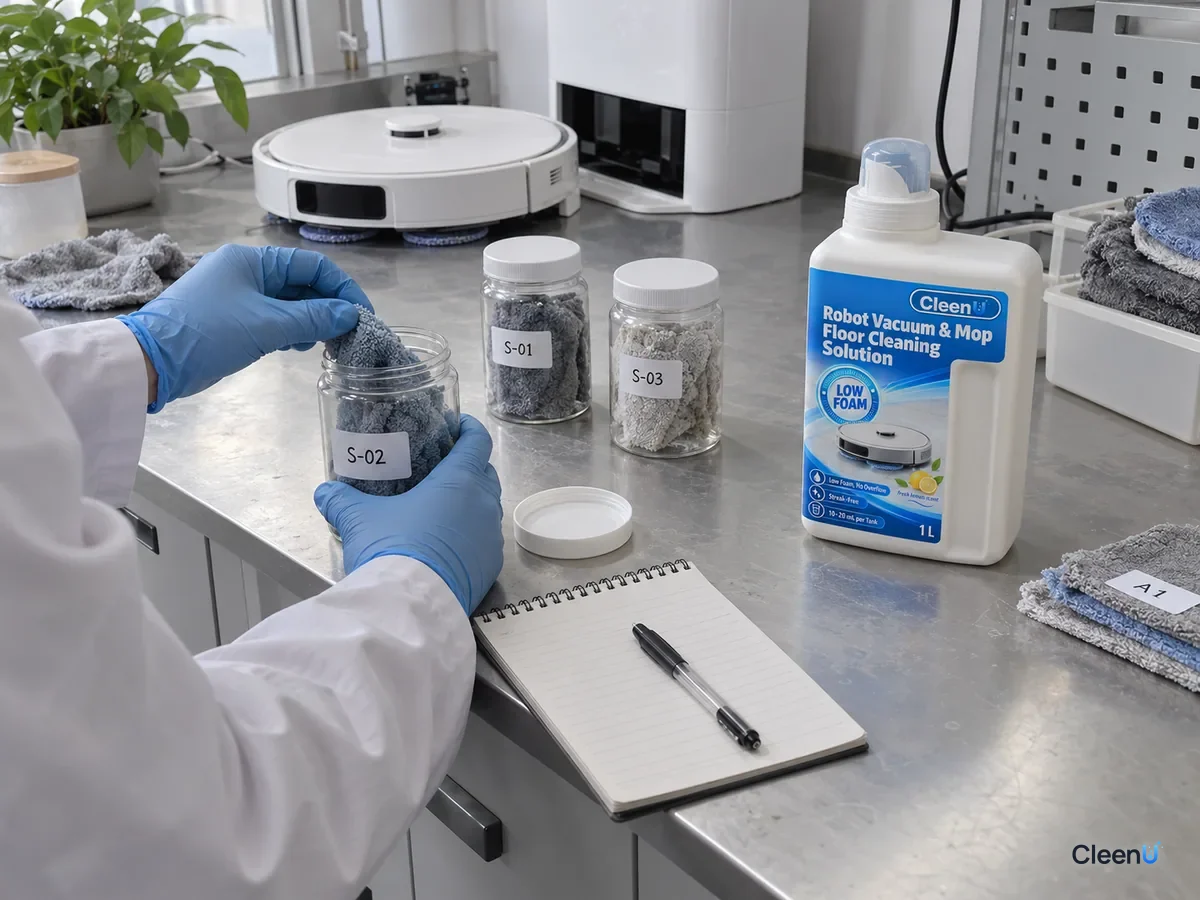
Take CleenU Robot Mop Cleaning Solution as an example. It's a neutral (pH 6.5 to 7.5 as a concentrate), low-foam formula built on low-foam nonionic surfactants with a defoamer, with no wax, no chlorine, and no particles. It dilutes at about 1:50 to 1:100, and 10 to 20 mL per fill is usually enough. The pet-home version is fragrance-free with no added fragrance and adds a cyclodextrin-based odor neutralizer. Cyclodextrin is a ring-shaped molecule with a water-loving outside and a water-repelling cavity; odor molecules like amines and thiols fit inside and form an inclusion complex, which makes them less volatile, so lingering odor on the floor after mopping is lighter.
To be clear: the solution handles soil and odor on the floor. Microbes already growing in the dock, pads, or tanks have to be dealt with by cleaning and drying. Solution doesn't replace routine maintenance. For more pet-home tips, see Robot mopping in a home with cats and dogs.
On compatibility: CleenU Robot Mop Cleaning Solution has been tested on common models, such as Roborock, Roomba, Ecovacs, Dreame, Narwal, and Tineco. Add it to the clean-water tank or the designated dosing tank per your manual, never to the dirty-water tank. If your manual specifies the brand's own solution or the machine is still under warranty, follow the manual and warranty terms first.
Maintenance that keeps the smell away
After every mopping run: empty the dirty-water tank and give it a quick rinse. Turn on the dock's drying function if it has one; if not, take the pads off to air-dry.
Weekly: hand-wash or scrub the pads, and clean the dirty-water tank, wash tray, and filter, leaving the lids open to dry.
Clean-water tank: don't store water mixed with solution for long; mix fresh each time. Empty it and let it dry if the robot will sit unused.
Every one to three months: check the pads for darkening or stiffness and replace as needed. For a part-by-part schedule, see Robot vacuum maintenance schedule.
Before mopping: clean up pet accidents, spilled drinks, and raw meat juices by hand so the robot doesn't carry them into the pads and tank.
For a specific part, see Dirty-water tank smells, Smelly or dark mop pads, Musty clean-water tank, and Moldy dock wash tray.
Stop if you see this
If you smell burning or hot wiring, unplug it right away and contact the manufacturer. If the room has a sharp chemical smell after mopping or your eyes or throat feel irritated, open windows, empty and rinse the tank, and check whether you added too much solution or mixed in another product. Don't put bleach, disinfectants, essential oils, or dish soap in the tank, and don't take apart the dock's or robot's internal water lines yourself.
Robot mop odors: common questions
Why does my robot mop smell sour?
Usually dirty water and food residue in the pads are fermenting into organic acids. Empty the tank after every run, scrub it, and wash and dry the pads, and the sour smell goes away.
How do I get rid of a fishy smell from my robot vacuum?
Fishy odor comes from protein and fat breaking down, usually deep in the pads and the wash tray. Deep-clean the pads, wash tray, and filter, and clean pet accidents and grease by hand before the robot runs.
Can I still use a mop pad that smells musty?
If it smells fine after washing and drying, yes. If it's dark, stiff, or musty no matter how you wash it, mold has grown into the fibers; replace it.
Will cleaning solution get rid of the smell?
It can lighten lingering odor on the floor, but it can't remove the source inside the machine. Odor is solved by emptying dirty water, washing pads, and drying tanks. Use solution at the right ratio; too much makes it worse.
How is the pet-home robot mop solution different?
CleenU's pet-home version is fragrance-free with no added fragrance, adds a cyclodextrin-based odor neutralizer, and contains no quats or phenols. It's neutral and low-foam and used the same way as the standard version.
Can I add fragrance to the tank to cover the smell?
We don't recommend it. Fragrance just mixes with the odor, some essential oil components can damage tank seals, and they aren't pet-friendly.
For a neutral, low-foam solution that carries floor grease and skin oil into the dirty-water tank at a small, cap-measured dose instead of building up in the pads, take a look at our Robot Vacuum & Mop Floor Cleaning Solution.
The fastest way to fix robot mop odor is to name the smell. Sour means residue fermenting in the dirty water and pads; fishy or foul means protein and fat breaking down; musty means pads, the clean tank, or the wash tray stayed wet and grew mold. The fix is removing food and moisture: empty dirty water after every run, wash and dry pads, mix clean water fresh, scrub the wash tray and filter regularly, and clean pet accidents and grease by hand first. Use solution at about 1:50 to 1:100; overdosing, fragrance, and disinfectants only make the smell worse.