
How-to
Robot Mopping in Humid Weather: Settings That Help Floors Dry
Direct answer
When humidity is high, set the water to its lowest level or switch to vacuum-only. Run a dehumidifier or the AC first, and mop once the floor stops sweating. Dose solution at the low end, and dry the pads, dirty tank and wash tray after every run so nothing turns moldy or smelly.
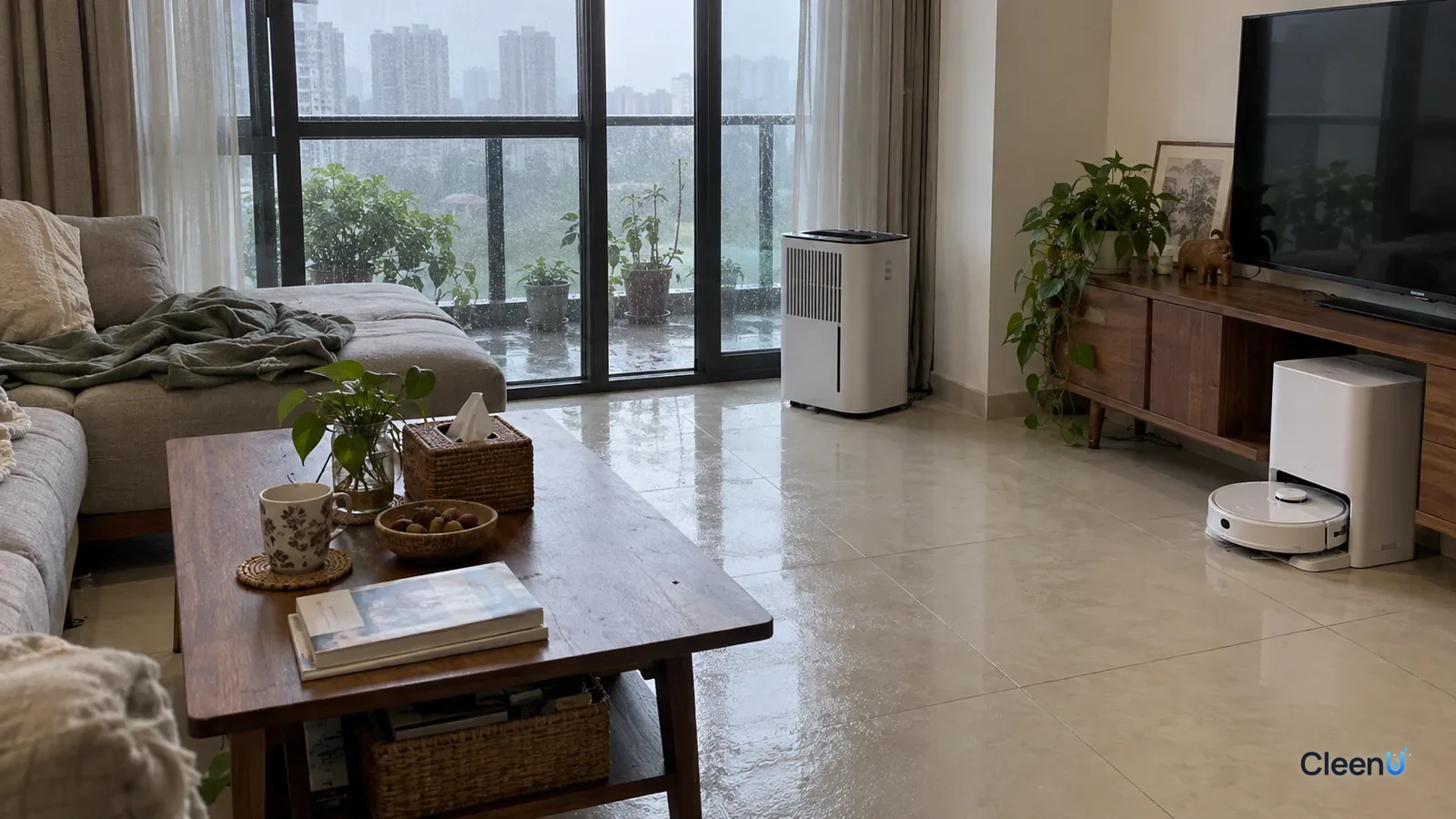
Muggy summer stretches in the Southeast and Gulf Coast, and those spring days when warm, wet air rolls in over a cold house, are the hardest times for a robot mop. The floor already feels damp, tile and walls may bead with moisture, and a mopping pass leaves floors wet for ages, slippery underfoot and printed with every footstep. A couple of days later the pads and dock start to smell.
Many people either keep mopping and make things wetter, or stop entirely and let dust build up. A few setting changes let you keep using the robot through humid weather.
Why do floors "sweat" in humid weather?
Damp floors in humid weather usually aren't a leak. They're water vapor from the air condensing on the floor.
When warm, moist air arrives after a cold spell, interior walls and tile are still cold, and their surface temperature sits below the air's dew point. When warm, humid air touches that cold surface, vapor condenses into droplets, the same way a cold drink "sweats."
In long humid stretches, the air is close to saturated, so water on floors and pads barely evaporates.
Either way, the film a robot mop leaves dries far more slowly: a minute or two normally, tens of minutes or longer now.
What goes wrong if you mop as usual?
Floors stay wet and slippery. The film won't dry, which is a fall risk, especially with older adults or small children at home.
Footprints and streaks show more. Every step leaves a print on a damp floor, and dust sticks to the film so the floor looks streakier.
Hardwood and seams absorb moisture. Solid and engineered wood are already swelling in high humidity, and mopping water on top makes seams more likely to cup or darken.
Pads and docks grow mold. Washed pads won't dry, water in the wash tray and dirty tank won't evaporate, and bacteria and mold multiply fast in warm, damp conditions, often smelling within days.
Residue lingers. Solution water evaporates slowly, so residue sits on the floor longer and turns tacky more easily.
Settings for humid weather
Six adjustments for humid weather
Dehumidify first, then mop
Run a dehumidifier or the AC's dry mode with doors and windows closed. When the floor no longer feels damp and tile isn't beading, let the robot mop.
Caution:On muggy days, opening windows brings in wetter outdoor air and makes things worse. Open up once the weather turns drier.
Lowest water level, or vacuum only
When floors are sweating badly, have the robot vacuum only. When you do mop, set the water to its lowest level so the pads are just damp.
Mop less often
If you normally mop daily, switch to every other day or every two or three days, vacuuming in between.
Dose solution at the low end
Slow evaporation means residue stays longer, so use less. CleenU Robot Vacuum Cleaning Solution dilutes at about 1:50 to 1:100, usually 10 to 20 mL per fill. In humid weather, go to the low end, about 10 mL for a 1-liter tank, or use plain water for everyday dust.
Dry the pads, dirty tank and wash tray every time
If your dock has hot-air drying, run it after every mop and lengthen the cycle. If not, remove the pads and hang them somewhere airy or dry them with a hair dryer. Empty, rinse and air-dry the dirty tank after every run, and scrub the wash tray and filter every three or four days.
Treat wood-floor rooms separately
In humid weather, set hardwood and engineered wood rooms to vacuum only, and wipe spots by hand with a wrung-out cloth if needed. Stop wet mopping if seams darken or cup.
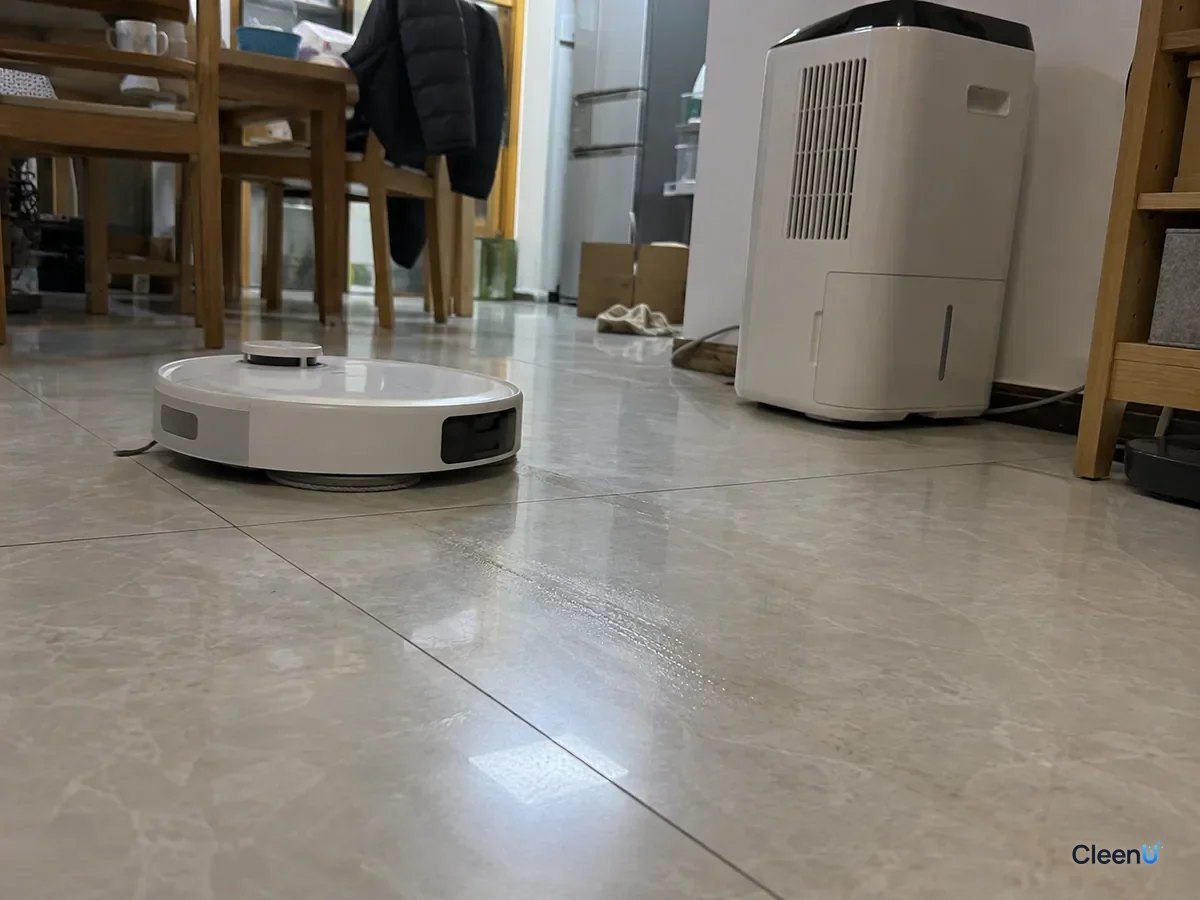
Dew point: why dehumidifying beats opening windows
How much water vapor air can hold depends on temperature; warmer air holds more. The dew point is the temperature at which air, cooled without changing its moisture content, starts to condense.
On muggy days the outdoor air is warm and humid, and its dew point is often above the temperature of your walls and floors. Open the windows and more humid air comes in, condenses on the cool floor, and the house gets damper.
A dehumidifier condenses water vapor out of the air and drains it away, lowering both moisture content and dew point; AC dry mode works on a similar principle. Once the dew point drops below the floor's temperature, the floor stops sweating and the robot's film can evaporate normally.
So on humid days: close up, dehumidify, and mop once the floor is dry. Open windows once the weather turns dry or outdoor humidity clearly drops.
At what humidity should you adjust?
Gut feel isn't a reliable humidity gauge. An inexpensive indoor hygrometer showing relative humidity makes it easier. As a general guide (always go by how fast your floor actually dries):
Below about 60% relative humidity: normal settings, with your usual water level and schedule.
About 60% to 80%: drop the water a step, use the low end of the label, and check whether the floor dries within a few minutes. Keep water especially low in wood-floor rooms.
Above about 80%, or tile and walls beading with moisture: vacuum only and dehumidify first. Mop once humidity falls and floors stop sweating.
An even simpler check: look at the floor after mopping. If it's dry within a minute or two, your settings fit the conditions. If it's still wet after ten minutes or more, lower the water or pause wet mopping.
Floor temperature matters too. After a cold snap, cold tile can still sweat even when the indoor humidity reading isn't very high. Touch the floor with the back of your hand; if it feels cold and damp, hold off on mopping.
Humid weather is when docks grow mold
In humid weather, the part most likely to cause trouble is often the dock, not the floor.
Pads: washed pads barely dry in high humidity and are exactly where bacteria and mold thrive. If your dock dries them, use it every time; if not, take them off and hang them. For smelly pads, see how to clean smelly robot mop pads.
Wash tray and filter: leftover water plus hair and skin flakes grow black slime fast. Clean them more often and let them dry before reinstalling. See black slime in the robot vacuum base station tray.
Dirty tank: empty, rinse and air-dry it after every run. Never leave wastewater in it overnight.
Clean tank: use mixed solution the same day rather than filling up for several days.
Dock location: keep it out of the dampest spots like the bathroom doorway or a screened porch, ideally in a room you're dehumidifying.
Cleaning solution tips for humid weather
Use less: slow evaporation makes residue tackier, so dose at the low end.
Low foam: foam lingers longer in humid conditions, and the dirty tank is more likely to report full.
No wax: waxy residue turns tacky and cloudy in humidity.
Storage: keep the concentrate indoors somewhere cool and dry with the cap closed tight.
CleenU Robot Vacuum Cleaning Solution is a neutral, low-foam concentrate at pH 6.5 to 7.5 with low-foam nonionic surfactants and a defoamer, no wax, no chlorine and no particles. It works in most robot mops from Roborock, iRobot (Roomba Combo and Braava), Ecovacs Deebot, Dreame and Narwal, and in floor washers such as Tineco. Add it to the clean water tank or the dock's designated detergent compartment as your manual directs. CleenU isn't affiliated with these brands; the names only indicate compatibility.
Stop wet mopping if you see these
Hardwood seams darkening, cupping or crowning; floors that stay wet and slippery for a long time with older adults or small children at home; or obvious mold and odor on the dock or pads, with black slime in the wash tray. Switch to vacuum only, dehumidify, and dry the pads and dock parts. Resume mopping once the weather dries out.
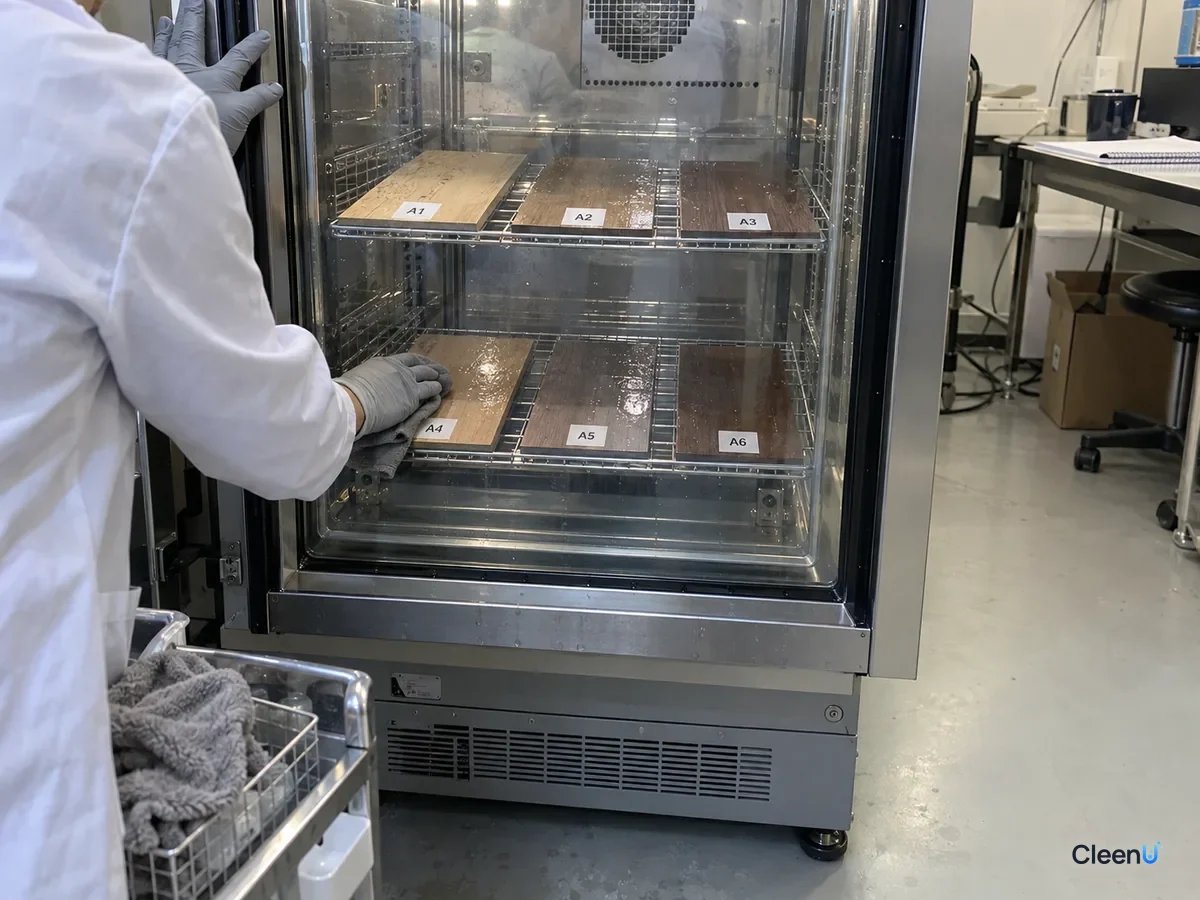
Pairing a dehumidifier or AC dry mode with your robot
A dehumidifier suits long humid stretches and brings humidity down steadily. Put it near the areas the robot mops most and turn it on an hour or two before mopping. Empty and clean its bucket regularly so it doesn't grow mold.
AC dry mode lowers humidity quickly and works well right before mopping. It also cools the room a little, so watch that floors don't get so cold they start sweating again.
Keep the dock in a room you're dehumidifying so pads and the wash tray dry better.
Scheduling runs after the dehumidifier has been going a while is the easiest routine for humid weather.
This article is part of the Robot Vacuum Cleaning Solution & Maintenance Guide, which covers the full maintenance schedule and links to every troubleshooting guide.
Common questions about robot mopping in humid weather
Can I still robot mop on muggy days?
Yes, but dehumidify first and use the lowest water level, or vacuum only. When floors are sweating badly, pause wet mopping.
Should I open windows to air out on humid days?
No. Outdoor air is wetter, so opening windows makes condensation worse. Keep them closed, dehumidify, and open up once it dries out.
My pads keep smelling in humid weather. What should I do?
Run the dock's drying cycle after every mop and lengthen it; if there's none, remove and hang the pads. Hand wash pads weekly and scrub the wash tray and filter every three or four days.
Should I use more solution when it's humid?
No, less. Slow evaporation keeps residue on the floor longer, so use the low end of the label or plain water.
Can I mop hardwood in humid weather?
Better to vacuum only and wipe spots by hand with a wrung-out cloth if needed. Stop wet mopping if seams darken or cup.
The floor is still wet and slippery after mopping. What now?
Dry it with a dry microfiber cloth or dry mop and run the dehumidifier. Next time lower the water or vacuum only.
Why do I get water streaks after robot mopping on humid days?
Cut the solution to the low end, about 10 mL per liter of water, and lower the water flow one step. In humid air the film dries slowly, so extra cleaner and tap-water minerals have time to settle into streaks. If marks remain, run one plain-water pass to check for residue instead of adding more solution.
To use less and leave less residue in humid weather, dose at the low end with the low-foam, wax-free Robot Vacuum Cleaning Solution.
In humid weather, floors are already taking on moisture, so the film a robot mop leaves dries slowly, turning floors slippery and footprinted and letting pads and docks grow mold. Close up and dehumidify first, and mop once the floor stops sweating. Set water to the lowest level, or vacuum only and mop less often. Dose solution at the low end. Dry the pads, dirty tank and wash tray after every run, and keep the dock somewhere dry. Keep wood-floor rooms to vacuum only during humid stretches, and stop wet mopping if seams show problems.