
Troubleshooting
Grout Lines Getting Darker After Robot Mopping? Here’s Why
Direct answer
Usually dirty water and residue from the pad seep into the grout, and when the water evaporates the soil stays behind. Grout that stays damp can also grow mildew. Lower the water level, wash the pads often, go light on solution, and brush the grout by hand every week or two.
Check these first
- Where it's darker: along the robot's regular path, or in damp spots like corners and the bathroom doorway?
- Color and pattern: evenly gray or black, or scattered dark dots?
- Water level: set to medium or high, with floors taking ages to dry?
- Pads: gray, dark or smelly when you take them off?
- Solution: often adding extra, or using a high-foam or waxy product?
- Dock: has it been a long time since you cleaned the wash tray and dirty tank?
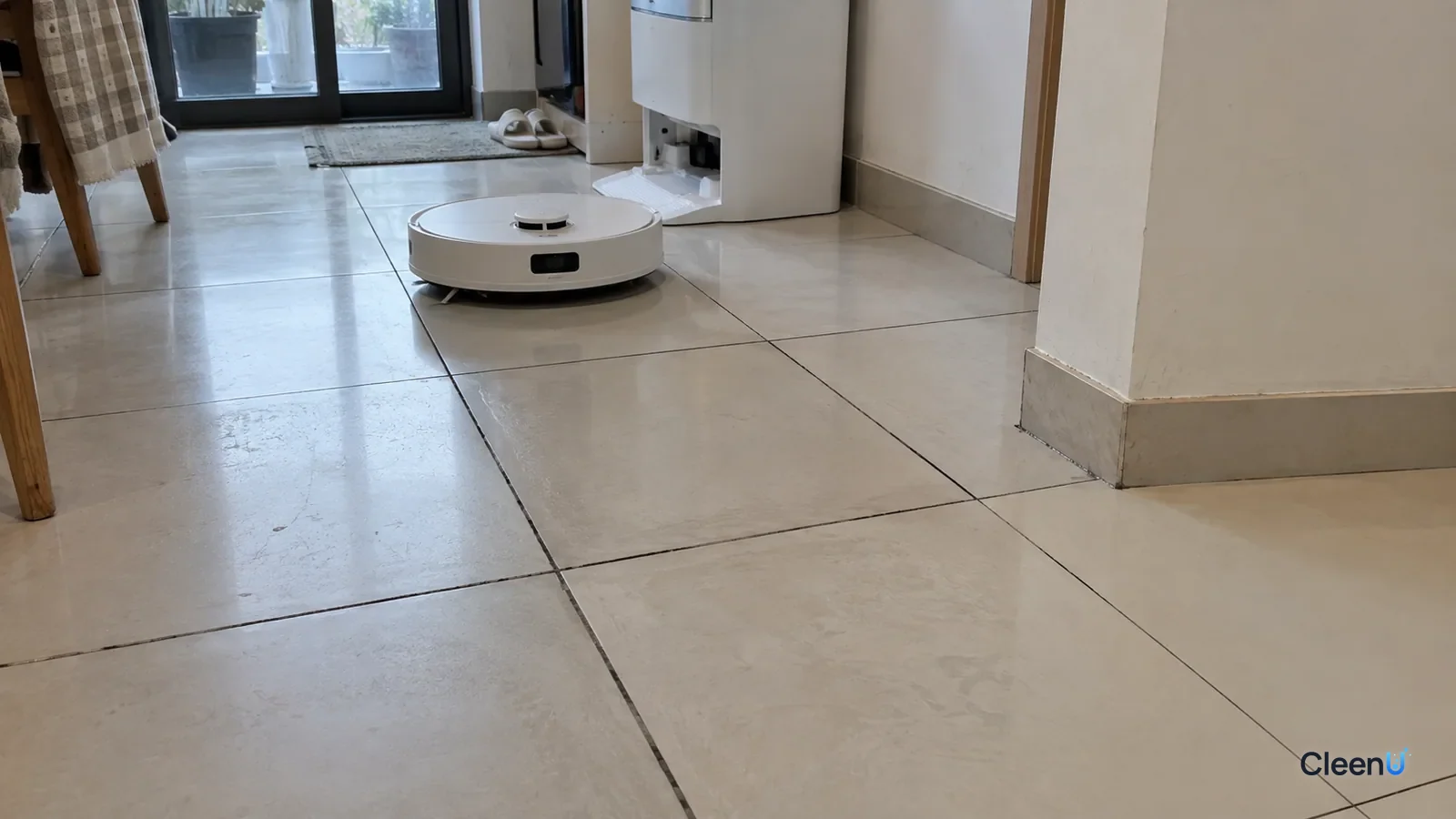
Grout that was light gray or white at install turns dark gray or black a few months into robot mopping, especially in the living room, kitchen and hallway where the robot runs most, far darker than under furniture or in corners it rarely reaches. It's puzzling: the robot mops every day, so why does the floor look dirtier?
The daily mopping is often exactly why.
Why does mopping darken grout?
Grout is the lowest, roughest part of a tile floor. Common cement-based grout is full of tiny pores, like a very fine sponge. Even epoxy or urethane grout wears and roughens over time.
Here's what happens when a robot mops.
The pad dissolves soil into water, forming a dirty film carrying dust, grease and skin flakes.
The pad pushes that film across the floor. When it reaches a grout line, a low spot, the water flows in and capillary action draws it into the pores.
When the water evaporates, the soil stays in the grout. Mop daily and you deposit a little more every day.
The dirtier the pad, the dirtier that film, and the faster grout darkens.
On top of that, if you overdose solution, surfactant residue also flows into the grout and dries tacky, grabbing even more dust.
Different grouts darken at different rates
Cement-based grout: the most common and least expensive. It's cement, fine sand and additives, and once cured its surface is full of capillary pores that absorb water readily. It soaks up dirty water, builds up and darkens fastest, and grows mildew most easily. Light-colored cement grout shows it most.
Epoxy grout: cures dense and absorbs almost nothing, so it resists staining far better. But years of pad friction and grit scratching leave fine wear and scratches, and soil lodges in them, so it slowly dulls.
Grout sealers and color coatings: usually a resin layer over cement grout. Stain resistance depends on the coating staying intact. Where it wears or flakes off, the cement underneath absorbs soil again.
Urethane and polyurea grouts: dense and somewhat flexible, with good stain resistance, though they still need regular cleaning.
So with the same robot settings, a home with light cement grout will see darkening much faster than one with epoxy grout. Cement grout especially calls for low water, regular brushing and, once it's clean and fully dry, a penetrating grout sealer to cut absorption.
Why is grout darkest along the robot's usual path?
As a robot pad moves, its leading edge pushes a small film of water, and soil collects along the pad's edges and both sides of its path. When the pad crosses a grout line perpendicular to its direction, the line acts like a channel and draws some of that water in. When a grout line runs parallel to the path, the pad's edge rides along it for a long stretch, and dirty water runs along and soaks into it.
That's why alternating mopping direction, or brushing the grout along the robot's main routes by hand every so often, keeps the grout color more even.
Another possibility: mildew
At the bathroom doorway, in front of the kitchen sink or on a patio, dark grout can be mildew. High water flow and floors that stay wet for hours keep grout damp, and with organic matter packed in the grout, mold has what it needs. Mildew usually shows as dark dots that come back a week or two after you wipe them away.
To tell them apart, scrub a section with a stiff brush and plain water. If it lightens noticeably, it's buildup. If it's spotty, won't brush out and keeps returning in damp corners, it's likely mildew. For more on telling them apart, see black grout: mold or dirt?.
Common causes of darkening grout and what to do
| Cause | What you see | Fix | Prevention |
|---|---|---|---|
| Water level too high | Water sits in the grout after mopping and dries slowly; grout along the path is darker | Set water to low or medium-low | Set water by floor type; floors should dry within a minute or two |
| Dirty pads | Pads look gray or dark; floor shows gray marks | Hand wash the pads; replace worn ones | Clean the wash tray and pads regularly |
| Too much solution or a high-residue formula | Grout feels tacky and collects dust; floor feels tacky too | Cut the dose; run a few water-only passes | Use a low-foam, wax-free robot solution at the label ratio |
| Grout staying damp and growing mildew | Dark dots that keep coming back in damp corners | Treat mildew by hand; keep the area dry and ventilated | Lower water or set no-mop zones in damp areas |
| Aging, powdery grout | Rough, sandy grout that darkens overall | Cleaning won't fully restore it; consider regrouting or sealing | Consider sealing new grout |
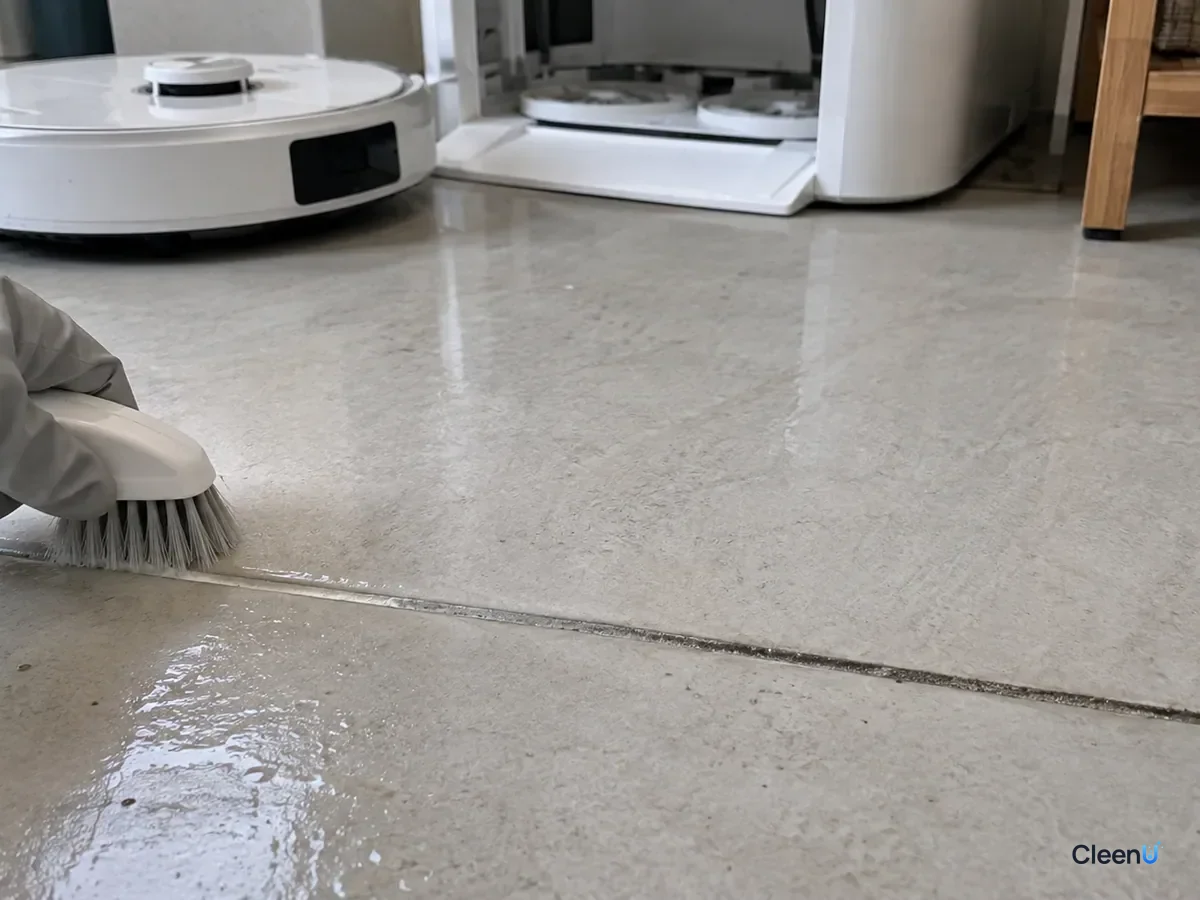
How to clean grout that's already dark
A robot pad can't press into grout lines, so buildup already in the grout has to be brushed out by hand.
Get a grout brush or an old toothbrush, a basin of warm water and a little neutral cleaner.
Dip the brush in diluted cleaner and scrub back and forth along the grout. Wipe up the dirty water right away with a damp cloth so it doesn't flow back in.
Wipe with plain water, blot dry with a dry cloth and keep the room ventilated so the grout dries quickly.
For stubborn buildup, let the diluted cleaner sit on the grout a few minutes before brushing. Treat mildew separately according to the mildew product's directions.
Don't soak cement grout in strong acids, which eat into it and make it powdery, and take extra care near natural stone.
Once the grout is clean, daily robot mopping keeps it looking good much longer.
Daily settings that keep grout from darkening again
Lower the water. Tile doesn't mind water, but grout suffers from staying damp and collecting dirty water. Use the lowest setting that still cleans, and floors should dry within a minute or two.
Wash the pads often. Pads are the source of the dirty water; the cleaner they are, the less soil reaches the grout. Beyond dock washing, hand wash them weekly and replace them per the manual.
Go light on solution. CleenU Robot Vacuum Cleaning Solution, for example, dilutes at about 1:50 to 1:100; 10 to 20 mL per fill is usually enough, or about 10 to 20 mL for a 1-liter tank. It's a neutral, low-foam concentrate at pH 6.5 to 7.5 with low-foam nonionic surfactants and a defoamer, no wax, no chlorine and no particles, so it leaves little residue to turn tacky in the grout.
Vacuum before mopping. Pick up dust and grit first so the pad doesn't push them into the grout along with water.
Handle damp areas separately. Make the bathroom doorway and the area in front of the sink no-mop zones or lower the water there, and wipe them dry by hand.
It works in most robot mops from Roborock, iRobot (Roomba Combo and Braava), Ecovacs Deebot, Dreame and Narwal, and in floor washers such as Tineco. Add it to the clean water tank or the dock's designated detergent compartment as your manual directs. CleenU isn't affiliated with these brands; the names only indicate compatibility. For full tile settings, see robot mopping tile and luxury vinyl plank.
Stop and check if you see these
Grout that's powdery, crumbling or cracked over large areas, or dark grout with loose or hollow-sounding tiles; or dark spots in corners that keep spreading with a clear musty smell. Stop wet mopping those areas, keep them dry and ventilated, and have a pro check for leaks or failed grout, and consider regrouting.
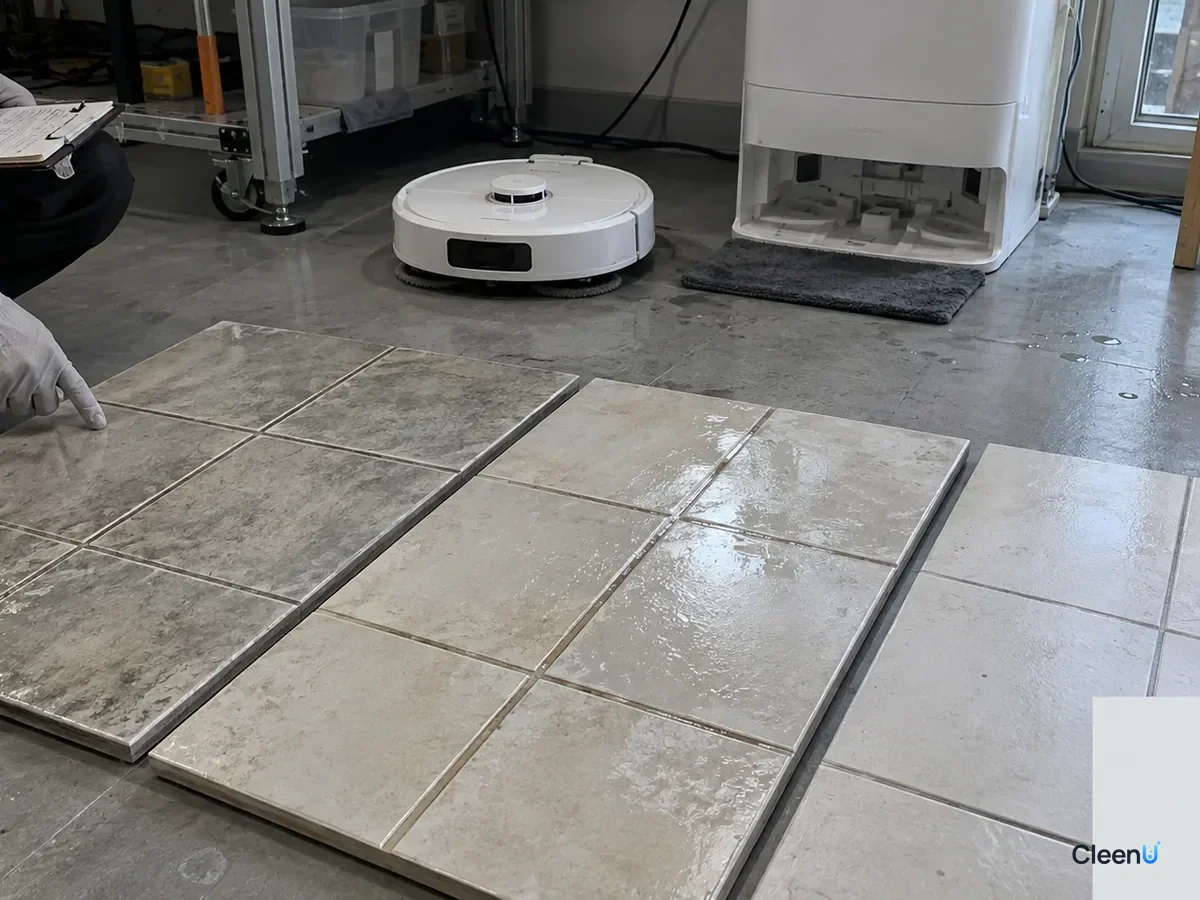
Should you seal grout after scrubbing it?
Once grout is scrubbed clean and completely dry, a grout sealer is worth considering, especially for light cement grout. A penetrating sealer soaks into the pores and cuts absorption, so dirty water and grease don't soak in as easily and day-to-day cleaning gets easier.
Apply it only after the grout is fully dry and follow the product directions. Some sealers can affect the tile surface, so test a hidden spot first. Sealing isn't permanent and usually needs reapplying on the schedule the product recommends. Grout that's already powdery or cracked gets little benefit and is better regrouted.
This article is part of the Robot Vacuum Cleaning Solution & Maintenance Guide, which covers the full maintenance schedule and links to every troubleshooting guide.
Common questions about grout darkening after robot mopping
Why does my grout get darker even though the robot mops daily?
Dirty water from mopping flows into the grout, and when it dries the soil stays. Each run adds a little, and it's worse with high water flow and dirty pads.
Can a robot mop clean grout?
No. The pad can't press into grout lines, so existing buildup needs a brush by hand. The robot handles daily upkeep.
Does cleaning solution make grout darker?
Not a low-foam, wax-free robot solution at the label ratio. Overdosing or a high-residue product can leave tacky residue in the grout that grabs dust and darkens it faster.
How often should I scrub the grout?
Every week or two where the robot runs most, and more often in damp areas and the kitchen.
Can I scrub grout with bleach or toilet bowl cleaner?
Not as a routine. Chlorine and acid products can discolor grout and make it powdery, and mixing them releases irritating gas. Treat mildew separately per the product's directions.
Will sealed or epoxy grout still darken?
It resists staining better, but with long buildup and wear it can still dull. Keep water low, wash pads often and clean it regularly.
Is black grout mold or just dirt?
Scrub it first to find out. If a soft brush with an everyday cleaner lifts it and the line gets lighter, it is dirt left by mop water. If it stays, forms spots or patches, and keeps returning in damp corners, treat it as mildew with a dedicated mildew cleaner and let the area dry fully.
How do I clean epoxy grout that has turned dark?
Scrub along the line with a neutral cleaner and a soft brush, then wipe with clean water and dry. Epoxy barely absorbs water, so the darkening is usually grime caught in fine surface wear, and scrubbing lightens it. Where a top coat has worn away, the cement grout underneath will keep soaking up dirt until it is repaired.
For robot mopping that leaves little residue and won't turn tacky in the grout, try the low-foam, wax-free Robot Vacuum Cleaning Solution.
Grout darkens after robot mopping mostly because dirty water and solution residue from the pad seep into the grout and leave soil behind each time they dry. Damp corners can also grow mildew. Brush dark grout by hand with diluted neutral cleaner, then dry and ventilate. Day to day, lower the water level, wash the pads often, vacuum before mopping, go light on solution and treat damp areas separately so the grout stays light longer. If grout is powdery or cracked, cleaning won't fix it; consider regrouting or sealing.