
Q&A
Does Robot Mop Cleaning Solution Disinfect Floors?
Direct answer
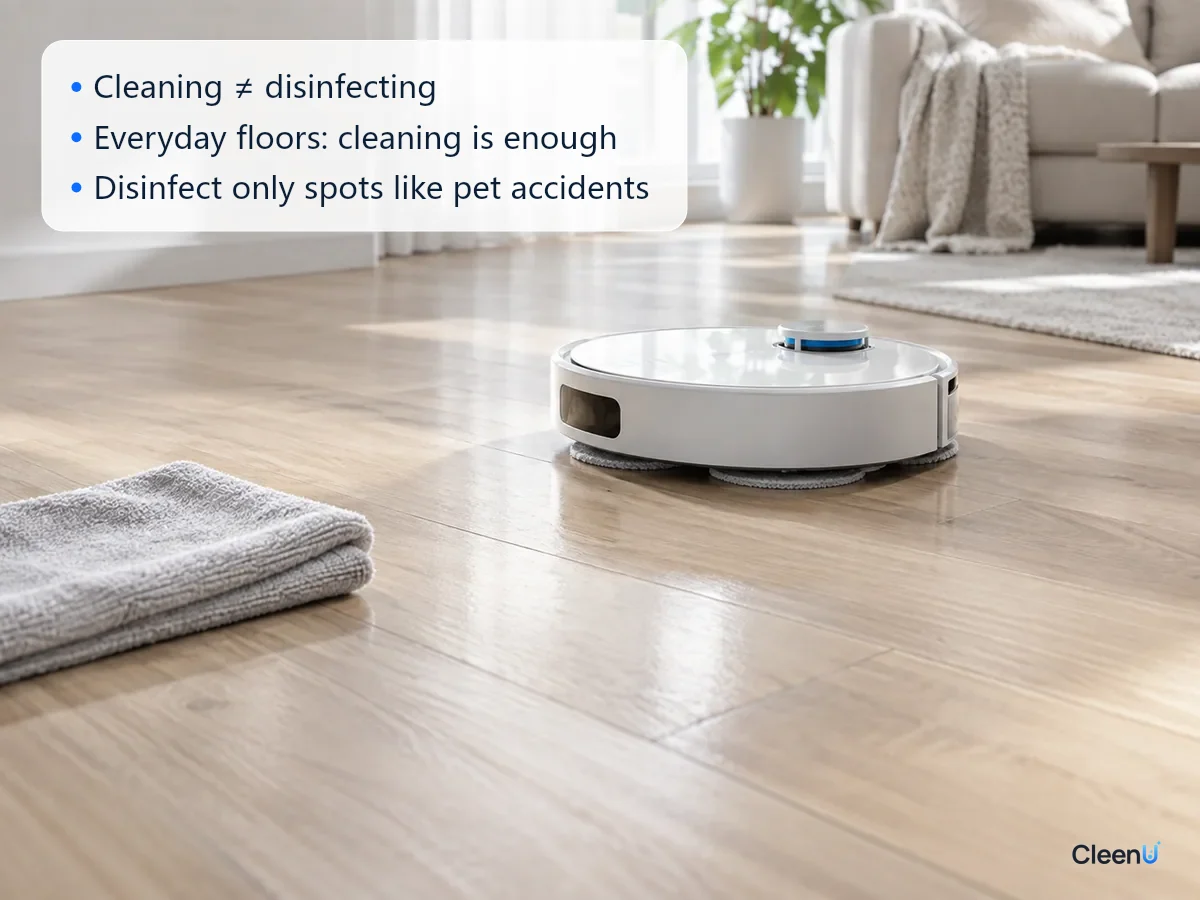
A regular robot mop cleaning solution doesn't disinfect: it removes soil from the floor, and cleaning and disinfecting are different jobs. Only products tested and registered for it can claim to disinfect or kill germs. For everyday floors, cleaning is what matters. Treat spots like pet accidents separately with a registered disinfectant, following its label.
Cleaning and disinfecting: what is and is not claimed
Yes
- Use the solution for everyday floor cleaning: it is there to lift and remove dirt
- Spot contamination such as pet accidents: remove the mess first, then disinfect that spot separately
No
- Expecting a robot mop solution to disinfect: it is a cleaning product and makes no disinfecting claim
- Adding disinfectant to the robot's tank
It depends
- Wanting a disinfecting or germ-killing claim: only products that passed the relevant testing and are labeled under the regulations may make it
If you have a baby crawling on the floor or cats and dogs at home, one of the first questions about robot mop solution is usually, "Does it kill germs?" Some people even pour disinfectant into the tank so the robot sanitizes as it mops.
To answer that, you first have to separate two words that get used interchangeably: cleaning and disinfecting.
What's the difference between cleaning and disinfecting?
Cleaning removes the soil you can see and feel: dust, footprints, greasy film, drink spills, pet dander. The surfactants in a cleaner wet, emulsify and disperse that soil so the pad can pick it up. When the soil goes, most of the microbes stuck to it go with it, which is the hygiene benefit that comes with cleaning.
Disinfecting uses chemical or physical means to kill or inactivate microbes on a surface to a defined standard. It usually requires specific active ingredients at the right concentration for the right contact time, and the surface has to be cleaned first, or soil shields the microbes from the disinfectant.
So the order is: clean first, then disinfect if needed. Good cleaning is the foundation for disinfecting to work, and for most home floors, thorough everyday cleaning is all the hygiene you need.
Who can claim to "disinfect" or "kill germs"?
Claims like "disinfects," "kills germs" or "antibacterial" can't just be printed on any bottle.
In the United States, products that claim to kill bacteria or viruses generally have to be registered with the Environmental Protection Agency, and the label carries an EPA registration number. In China, products that claim to disinfect fall under disinfection product rules and have to go through the required testing and hygiene safety evaluation, with label claims matching the test results.
A regular floor cleaner or robot mop solution that hasn't gone through those steps can claim to clean, but not to disinfect or kill germs. If you see "kills germs" or "antibacterial" on a label, look for the registration number or the matching test and filing information.
How disinfectants work: the common active types
Different disinfecting ingredients kill microbes in different ways.
Chlorine (for example, sodium hypochlorite in bleach): a strong oxidizer that damages cell structures and enzymes. It works fast on a wide range of microbes, but organic matter uses it up quickly, it corrodes and bleaches many materials, and mixed with acidic products it releases chlorine gas.
Hydrogen peroxide: also an oxidizer. It breaks down into water and oxygen, so it leaves little residue, but it needs the right concentration and contact time.
Quaternary ammonium compounds ("quats"): cationic surfactants that bind to negatively charged cell membranes and disrupt them. They have little odor and are relatively mild, but mixed with anionic surfactants they bind together, precipitate and stop working, and residue on floors adds slipperiness.
Alcohols (ethanol, isopropyl alcohol): they denature proteins and evaporate quickly. They're used on small areas and small objects, not whole floors, and they're flammable.
Every one of these needs two things to deliver what the label claims: enough concentration and enough contact time. The "contact time" or "dwell time" on a disinfectant label is how long the surface must stay wet. A mopped floor's water film dries in under a minute, which is why "disinfecting while you mop" rarely meets the conditions on a disinfectant label.
Why you have to clean before you disinfect
A basic rule in infection control is clean first, then disinfect. The reason is organic load.
Dust, grease and protein soil on the floor wrap around microbes like a shield so the disinfectant can't reach them. With oxidizing disinfectants, the organic matter in the soil also reacts with the active ingredient and uses it up early. Spray disinfectant on a dirty floor and it works far less well.
So where disinfecting really is needed, the right sequence is: clean up waste or vomit by hand, clean the surface with a cleaner and wipe it off, then apply the disinfectant at the concentration and contact time on its label, wiping afterward if the label says to.
Seen this way, thorough everyday cleaning already lowers the number of microbes on the floor: as soil is emulsified, dispersed and carried away, the microbes stuck to it go too. That's the benefit of cleaning; it just can't be called "killing germs."
What a disinfecting claim on a label requires
For a product to say "kills germs" or "disinfects," it has to be tested against specific microbes at a specified concentration, contact time and level of organic soil, show that it reaches the kill level the standard requires, and complete the required registration. The results apply only to those conditions: a different microbe, more dilution or a shorter contact time and the conclusion may no longer hold.
That's why ordinary cleaning solutions can't just claim to kill germs, and why even registered disinfectants must be used exactly as labeled, without extra dilution or shortcuts on contact time.
Does CleenU Robot Vacuum Cleaning Solution disinfect?
It works in most robot mops from Roborock, iRobot (Roomba Combo and Braava), Ecovacs, Dreame and Narwal, and in Tineco-type washers. If the manual requires the maker's own solution or the robot is under warranty, follow the manual first. CleenU isn't affiliated with any of these brands.
No. It's a cleaning product and makes no disinfecting or germ-killing claims.
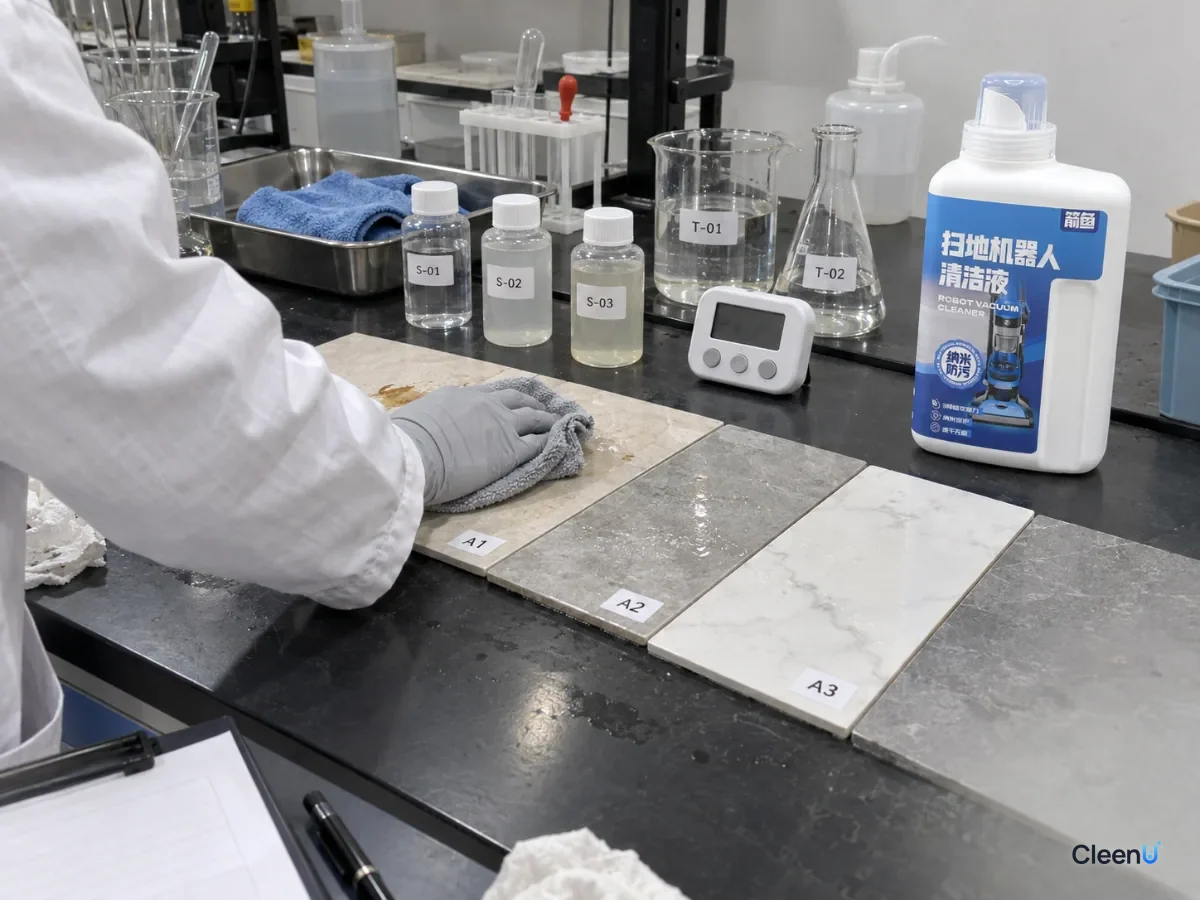
CleenU Robot Vacuum Cleaning Solution is a neutral, low-foam concentrate with a pH of 6.5 to 7.5. Its low-foam nonionic surfactants wrap grease and footprints at low concentration and suspend particles so the pads carry them away. It's wax-free, chlorine-free and free of particles, and it needs no rinse. It dilutes at about 1:50 to 1:100, usually 10 to 20 mL per fill. Its job is to leave floors clean and dry without residue.
How to read the words on a cleaning product label
Cleans, removes dirt: takes soil off the surface. That's the core job of a floor cleaner.
Deodorizes, neutralizes odors: reduces or neutralizes smells, as in products made for pet homes. Deodorizing isn't the same as killing germs. A fresher smell doesn't mean the microbes are gone.
Antibacterial or "inhibits bacterial growth": usually means slowing certain microbes under specific test conditions, which is different from killing them. The conditions behind the claim matter.
Sanitizes, disinfects, kills germs: claims to kill or remove microbes to a defined standard. These claims require matching tests and regulatory registration, and the label should show it.
Knowing the difference keeps you from treating a "fresh scent, odor control" floor cleaner as a disinfectant, or from disinfecting every floor in the house every day because a label says "antibacterial."
Where disinfecting actually makes sense at home
For most homes, floors need frequent, thorough cleaning, not daily disinfecting. The situations that really call for disinfecting are specific:
Pet waste, vomit or blood: put on gloves, clean it up by hand, then disinfect that small patch of floor following the product label.
Raw meat juices or raw egg on the kitchen floor: wipe it up, then treat that area on its own.
Someone at home with a stomach bug: disinfect the floor they've been sick on and the area around the toilet, following the product label.
The baby's play mat, toys and high chair: these are what babies touch with their hands and mouths, and they matter more than the floor of the whole house. Clean and disinfect them as their instructions say, and wipe off any residue as directed.
These are spot jobs done by hand as needed. The robot handles everyday cleaning.
Why you shouldn't put disinfectant in a robot mop
Chlorine bleach is a strong oxidizer. Sitting in the tank and lines, it ages rubber seals, corrodes metal parts and can fade pads and whiten floors. Mixed with acidic products such as vinegar or toilet bowl cleaner, it can release toxic chlorine gas.
Many disinfectants foam or leave residue, which leads to false "dirty tank full" alerts and sticky floors, and most were never designed for a robot's water system. Many robot makers state in the manual that only water or a specified solution may be used, and adding something else can affect the warranty.
For more on why, see can you put vinegar or bleach in a robot mop tank.
Keeping floors hygienic with a baby or pets at home
Get everyday cleaning right: vacuum before mopping, use a low-foam robot solution at the label ratio, and clear dust, hair, footprints and greasy film promptly. Set the baby's play area and pet zones as extra-attention areas for another pass.
Treat spot contamination separately: clean up pet waste, vomit, spilled milk or meat juices by hand first, then disinfect just that small area following the disinfectant's label, including any wipe-down it calls for. Don't let the robot run over it.
Keep the robot itself clean: most germs and odors don't start on the floor, they start in the machine. Empty, rinse and dry the dirty tank after every run, turn on pad drying, and use mixed solution in the clean tank the same day.
Ventilate and dry: open a window after mopping so floors dry quickly. Damp floors and damp pads are where microbes thrive.
This article is part of the Robot Vacuum Cleaning Solution & Maintenance Guide, which covers the full maintenance schedule and links to every troubleshooting guide.
Cleaning and disinfecting questions people ask most
Robot mop solution and disinfecting: common questions
Does robot mop cleaning solution kill germs?
A regular robot mop solution is a cleaning product that removes soil. Only products tested and registered for it can claim to kill germs; check the label for a registration number or test information.
Do I need to disinfect my floors when I mop?
Not for everyday mopping. Thorough cleaning removes most soil and the microbes stuck to it. Disinfect only spots like pet accidents or vomit.
Can I put bleach in my robot mop to disinfect?
No. Chlorine can corrode seals and metal parts, and mixed with acids it releases toxic gas. If a spot needs disinfecting, treat that small area by hand.
Is mopping with disinfectant safe for babies and pets?
Disinfectant residue on the floor can end up on hands, paws and tongues, and disinfecting the whole house isn't necessary. Clean every day, and after disinfecting a spot, wipe it as the label directs.
Can I trust robot mop solutions labeled "antibacterial"?
Look for registration or test information and the conditions behind the claim. Be skeptical of an impressive-looking percentage with nothing behind it.
Can mop pads spread germs?
They can if they stay damp and dirty. Keep the pad-wash interval short, dry the pads after each run, and replace them when they turn dark or smell.
Does the dirty water tank need disinfecting?
What matters is emptying, rinsing and air-drying it the same day and scrubbing it weekly with a soft brush. Don't pour chlorine or acidic products into it.
Can I mix floor cleaner and disinfectant?
No. Mixing products can cause reactions, foam or harmful gases. If you need to disinfect, clean and rinse first, then use the disinfectant on its own as the label directs.
Stop if any of these happen
A sharp smell, foam or errors after adding disinfectant to the tank; irritating fumes after mixing two cleaning or disinfecting products; a baby or pet seems unwell after contact with the floor. Ventilate the room, stop using the robot, and empty and rinse the tanks. Get medical help for anyone who feels unwell, and call your veterinarian for pets.
For everyday robot mopping with a neutral, low-foam, chlorine-free solution that needs no rinse, try Robot Vacuum Cleaning Solution.
Robot mop cleaning solution and disinfectant aren't the same thing. A cleaning solution removes soil from the floor, and only products tested and registered for it can claim to disinfect or kill germs. For everyday floors, cleaning is what counts: vacuum first, use a low-foam robot solution at the label ratio, and keep the robot itself clean and dry. Handle pet accidents and vomit by hand, then disinfect that spot separately following the product label. Don't put bleach or other disinfectants in the robot's tank.