
How-to
Robot Mopping Over Radiant Floor Heating: What to Adjust
Direct answer
Over radiant heat, dose at the low end, lower the water level, mop when the floor is cooler and use mixed solution the same day. A warm floor makes water evaporate fast, so solution concentrates on the floor before the pad can carry it off, leaving streaks. Wood floors also suffer from repeated wet-dry cycles.
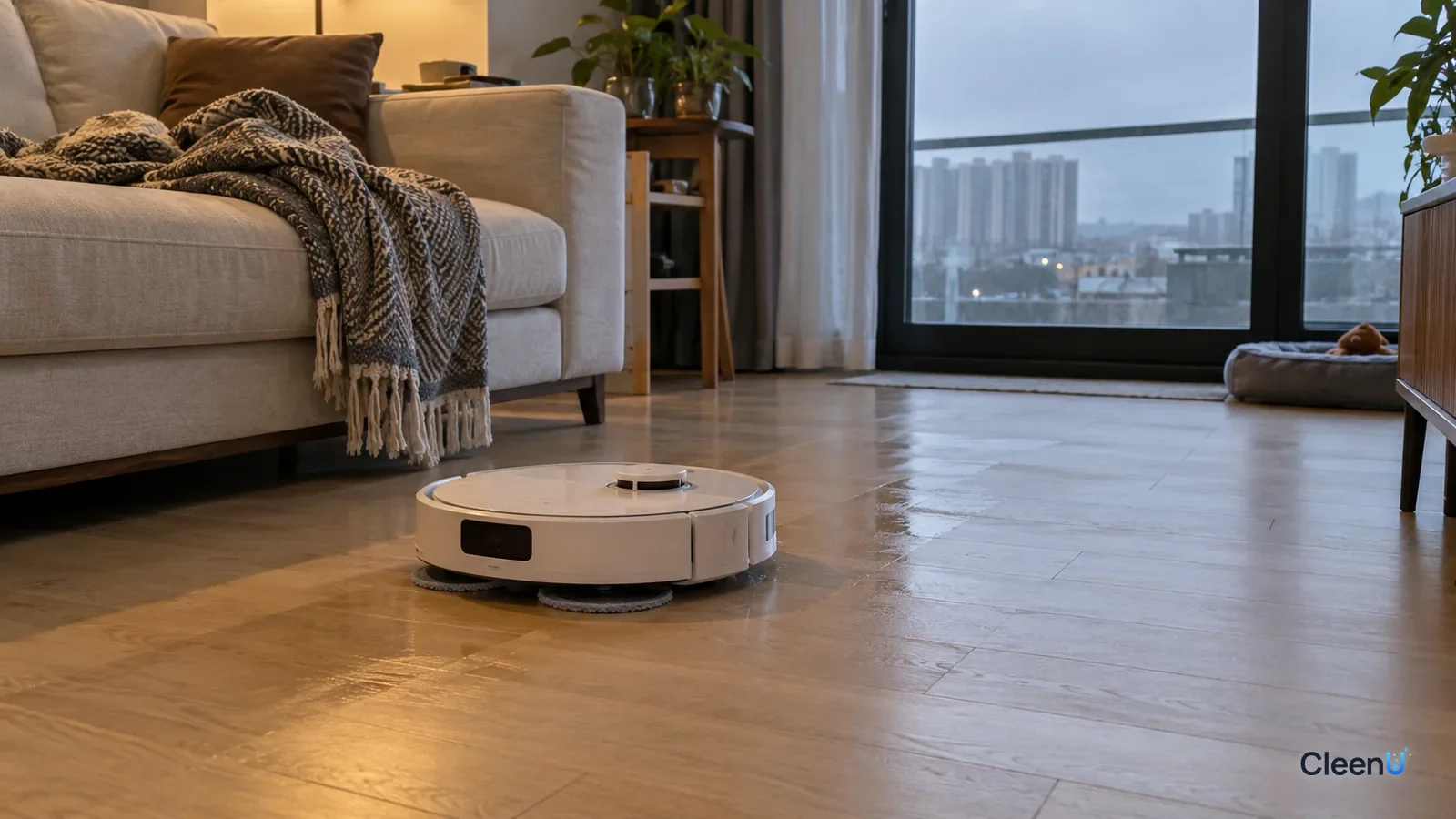
When the radiant floor heating comes on for winter, many households notice the robot mop's results change. Tile gets faint pale streaks, dark floors show rings with whitish edges, the seams in the wood floor seem wider, and the solution's scent is stronger after mopping.
Most of that comes down to one cause: the floor is warmer. A warmer floor makes the thin film of water the pad leaves behind evaporate faster and less evenly, so the solution's ingredients stay on the floor before the pad can pick them up. Once you understand that, the adjustments are simple.
How floor heating changes the result
As a robot mops, the pad leaves a very thin film of water on the floor, holding dissolved solution and loosened dust. Normally that film evaporates evenly within a minute or two, leaves very little behind, and you can't see it.
With radiant heat on, the floor surface usually runs a few degrees warmer than the room. The film evaporates noticeably faster, and unevenly.
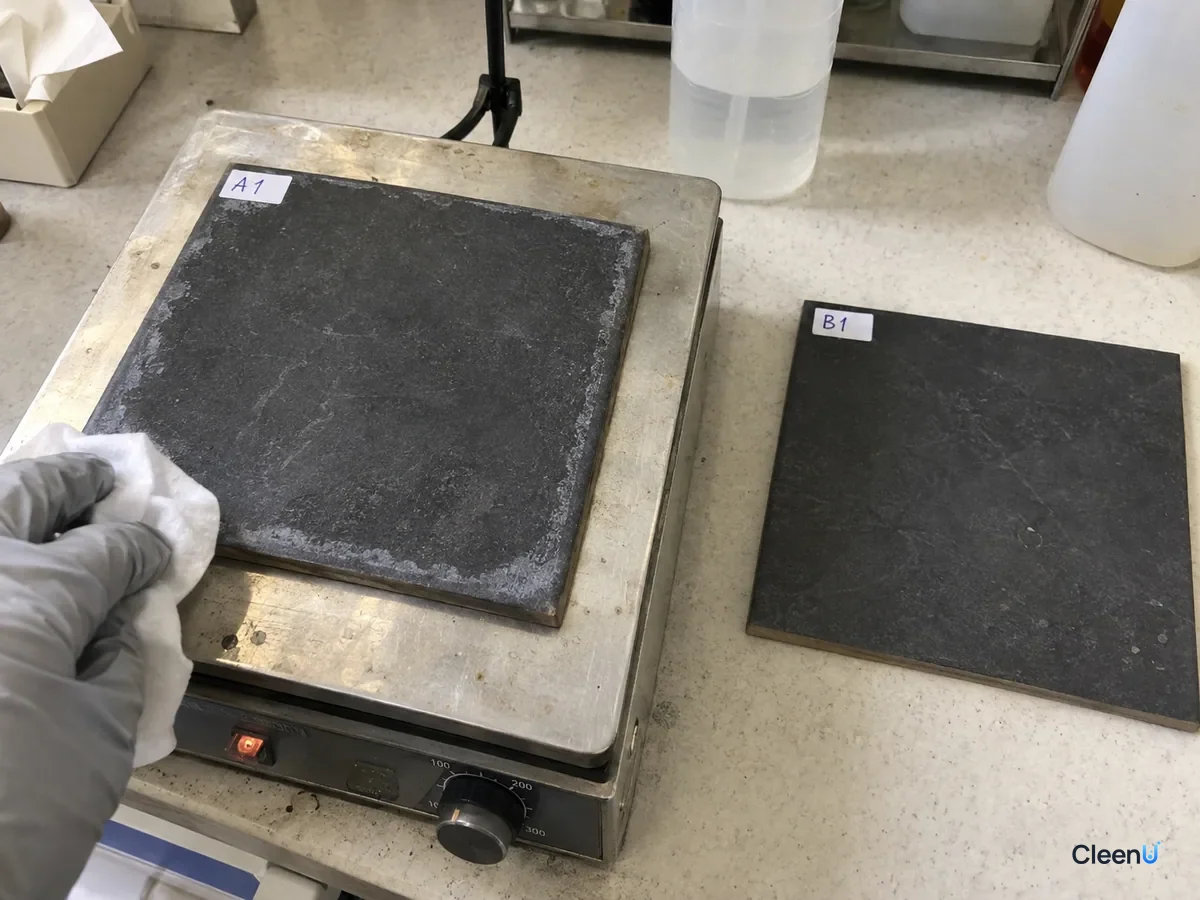
The edges dry first. The film is thinnest at its edges, so they dry first as the floor heats them, and liquid keeps flowing outward from the middle to replace it, carrying dissolved ingredients and dust to the rim. When it dries, you get a ring with a whitish edge. It's the same effect that leaves a darker rim when spilled coffee dries on a table.
There's no time to pick it up. Between the pad's passes, the film from the previous pass may already have dried, so solution and dust stay on the floor as streaks.
Solids concentrate. The faster water evaporates, the more concentrated the leftover solids. With too much solution or hard water, streaks and white marks get more obvious. For other causes of streaks, see robot mop leaving streaks.
Why wood floors are at extra risk in heated rooms
Wood takes on and gives off moisture with the humidity in the air. Air in rooms with floor heating tends to be dry, so wood floors shrink in winter and their seams open up. Frequent wet mopping at that point puts the seams and surface through repeated wet-then-fast-dry cycles, and water gets into the wider seams more easily. Over time, seams can darken and edges can lift.
So on heated wood floors, the rule is less water and fast drying. Set the water low so the pad is just damp, and don't wet-mop large areas while the seams are visibly open. Whether a wood floor suits radiant heating, and how to care for it, is up to the flooring maker's instructions. For everyday settings on wood, see robot mop on hardwood floors.
Watch the tank and dock temperature too
If the dock sits in a heated room, the clean water tank and detergent compartment warm up too. Diluted solution left a day or two somewhere warm grows bacteria more easily, and the tank starts to smell musty or sour. Diluted solution is almost all water, and with dust and skin flakes carried back from the floor, microbes multiply much faster once it is warm.
So during heating season, use mixed solution in the clean tank the same day instead of mixing enough for several days, and don't park the dock against a radiator or the heating manifold. If the tank already smells, see How to deal with a moldy robot vacuum base station.
Using cleaning solution in a heated room
Cleaning solution helps dust and greasy footprints lift off the floor and disperse in water so the pad can carry them away. Floor heating speeds evaporation, so a larger share of the solution stays on the floor, and you need less than usual.
CleenU Robot Vacuum Cleaning Solution, for example, is a neutral, low-foam concentrate at pH 6.5 to 7.5 with low-foam nonionic surfactants and a defoamer, no wax, no chlorine and no particles. It dilutes at about 1:50 to 1:100; 10 to 20 mL per fill is usually enough. During heating season, stay at the low end, about 10 mL for a 1 L clean tank, and for everyday light dust, plain water alone is fine. A wax-free formula won't leave a wax film that bakes onto a warm floor, but the surfactant itself leaves marks if you overdose, so "less is more" matters most in a heated room.
Five adjustments for robot mopping over floor heating
Dose at the low end
Use about 1:100, roughly 10 mL for a 1 L clean tank, and plain water when the floor just has light dust. Measure with the cap instead of pouring by eye.
Lower the water level one step
A warm floor evaporates fast, and too much water leaves uneven drying marks. Set it to low or medium-low so the pad is just damp and the film on the floor stays thin and even.
Avoid the warmest hours
Mop when the heating runs cooler, such as in the morning or after turning it down, or lower the thermostat briefly before mopping so the floor isn't as warm.
Set wood-floor rooms separately
In the app, give wood-floor rooms a low water level or vacuum only. If seams are visibly wider or darkening, pause wet mopping and spot-clean with a well-wrung cloth.
Caution:If a wood floor lifts, cups or darkens along the seams, stop wet mopping and check the heating temperature and indoor humidity.
Use mixed solution the same day
Fill the clean tank only with what you'll use that day. Empty what's left after mopping, rinse and air-dry the tank, and keep the dock away from radiators and the heating manifold.
Stop wet mopping if you see these
Wood floors lift, cup or darken and open at the seams; the floor turns tacky or hazy over large areas, and a plain-water pass doesn't help; or the clean tank or dock smells clearly musty or sour. Switch to vacuum only, check the dose, heating temperature and indoor humidity, clean the tank and dock, and resume mopping once the problem is fixed.
Fixing streaks that have already formed
Streaks and white marks in a heated room are usually solution residue or minerals from hard water.
Mop once with plain water: fill the clean tank with water only, use a medium water level and run a pass. Most solution residue comes up.
Wipe problem spots dry: where streaks are obvious, wipe with a wrung-out damp cloth and immediately dry with a microfiber cloth, so the film doesn't evaporate on the warm floor by itself.
Treat hard-water marks separately: rings with white edges that water won't remove are usually calcium and magnesium from the water. In hard-water areas, switch to purified water if your manual allows. Existing scale on tile can be wiped off by hand with diluted white vinegar, then plain water. Never use acid on natural stone. See white spots after robot mopping.
CleenU Robot Vacuum Cleaning Solution works in most robot mops from Roborock, iRobot (Roomba Combo and Braava), Ecovacs Deebot, Dreame and Narwal, and in floor washers such as Tineco. Add it to the clean water tank or the dock's designated detergent compartment as your manual directs. CleenU isn't affiliated with these brands; the names only indicate compatibility.
How different floors behave over heating
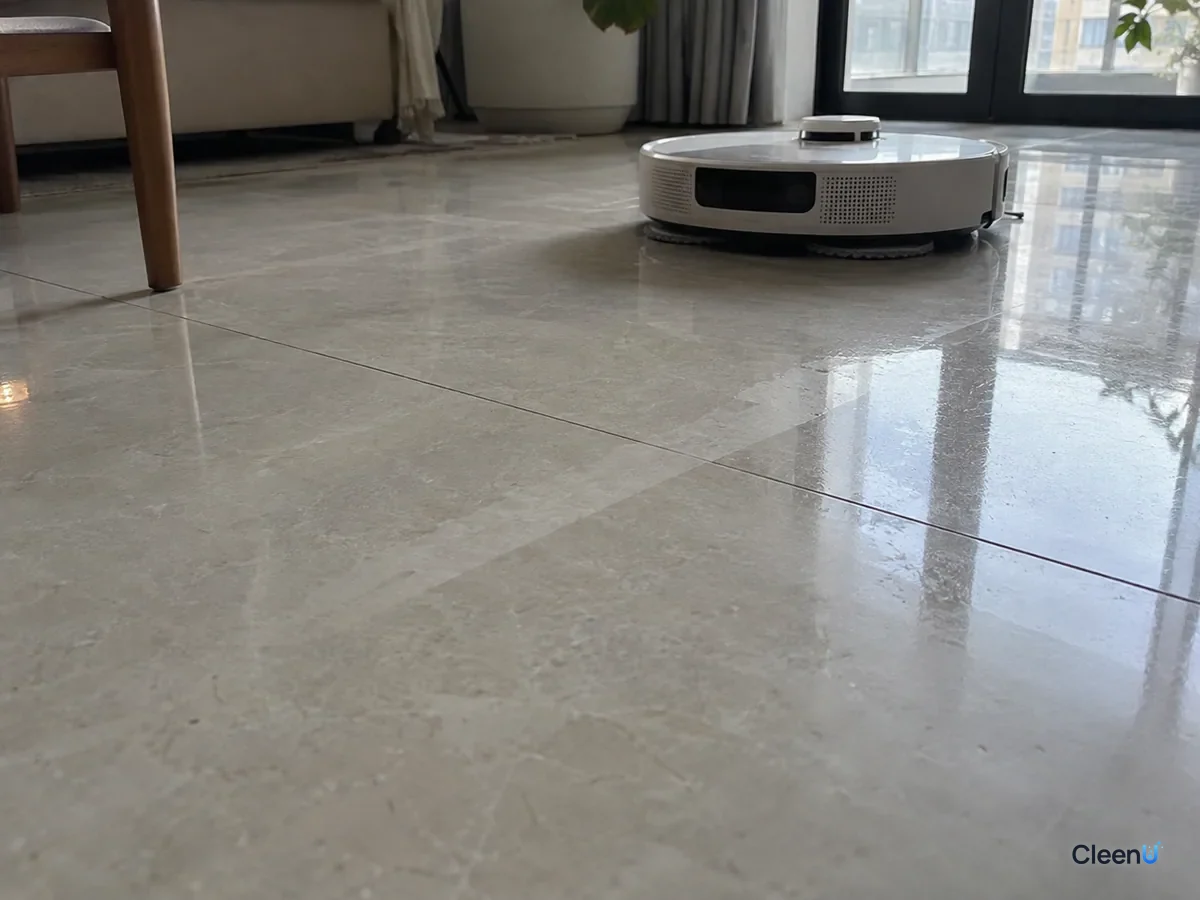
Tile conducts heat well, so its surface runs closest to the heating setpoint. The film evaporates fastest, and streaks and white rings show most on dark or polished tile. Dose low, lower the water, and wipe streaky areas with a dry cloth after mopping.
Vinyl plank has a wear layer and doesn't mind water, but once heating warms its surface, leftover solution shows more easily as haze on a smooth finish. Dose at the low end too, and run a plain-water pass now and then to reset.
Laminate has a high-density fiberboard core under its wear layer, and its seams hate water. During heating season, use the low water setting, keep the pad just damp and don't leave standing water near seams.
Solid and engineered hardwood are the most sensitive to humidity swings, and winter shrinkage with wider seams is most common on them. During heating season, lean on vacuuming, space out wet mopping and use the lowest water setting.
The heating temperature matters too. With the same settings, a higher setpoint dries the floor faster and makes streaks more likely. Many radiant systems can be set room by room, so in a living room or kitchen you mop often, choose the lower end of the comfortable range. It saves energy and makes mopping results more consistent.
Why the solution's scent is stronger in a heated room
A warmer floor makes volatile ingredients in the water film evaporate faster, including fragrance. So the same dose smells stronger while mopping in a heated room, especially with doors and windows shut. That doesn't mean the solution has gone bad; it's evaporating faster. Use less and air out the room briefly after mopping, and the scent fades quickly. For scent-sensitive homes, consider a fragrance-free or lightly scented formula. If you smell something harsh, sour or unusual, check whether the mixed solution sat too long in the tank or another cleaner got mixed in. See strong smell after robot mopping.
How often to mop during heating season
With windows mostly shut in heating season, dust comes mainly from inside: clothing fibers, skin flakes and pet hair. That dust is mostly dry, and vacuuming handles most of it, so you can mop a bit less than usual, such as vacuuming daily and mopping every other day. Mop the kitchen and entryway, where greasy footprints and mud show up, an extra time on their own.
Floor heating dries indoor air, so a humidifier that keeps humidity moderate is easier on wood floors and on people. Don't aim a humidifier straight at the floor or at wood flooring.
This article is part of the Robot Vacuum Cleaning Solution & Maintenance Guide, which covers the full maintenance schedule and links to every troubleshooting guide.
Common questions about robot mopping over floor heating
Can I robot mop while the floor heating is on?
Yes. Lower the water, dose at the low end and mop when the heating runs cooler if you can. Use even less water in wood-floor rooms, and pause wet mopping while seams are open.
Why do I get streaks every time since the heating came on?
The warm floor dries the film fast and unevenly, so solution and dust stay behind before the pad can pick them up. Use less solution and lower the water level, and streaks improve noticeably.
Should I add more solution to get heated floors clean?
Add less. Heating leaves a larger share of the solution on the floor, so more solution means more streaks. Mop dirty areas twice instead.
How long can mixed solution sit in a tank in a heated room?
Use it the same day. Diluted solution grows bacteria faster somewhere warm and can smell musty within a day or two. Empty what's left and rinse and dry the tank.
Can I wet-mop a heated wood floor every day?
A low water setting every other day is safer. Wood already shrinks in winter, and frequent wet mopping raises the chance of water getting into the seams. Follow the flooring maker's guidance.
Do I need to turn the heating off before mopping?
No. Turning it down briefly or mopping when it runs cooler is enough. The goal is a floor that isn't too warm, so the film dries more evenly.
Since the floor heating came on, mopping leaves a smell. Is it the solution?
Usually it's the pads and dirty-water tank, not the solution. Warmth speeds up odor from leftover dirty water and damp pads, so empty the dirty tank after every run, use the dock's drying cycle and keep the solution at its normal dose.
To use less solution and leave fewer streaks during heating season, dose at the low end with the low-foam, wax-free Robot Vacuum Cleaning Solution.
In a room with radiant floor heating, the warm floor dries the water film fast and unevenly, so solution and dust concentrate on the floor before the pad can carry them away, leaving streaks and rings with whitish rims. Wood floors already shrink in dry heated air, and repeated wet mopping lets water into the seams more easily. Adjust by dosing at the low end (about 10 mL for a 1 L tank, or plain water for light dust), lowering the water level one step, mopping when the floor is cooler, setting wood-floor rooms separately, using mixed solution the same day and keeping the dock away from heat. For streaks that have already formed, run a plain-water pass, wipe problem spots dry and treat hard-water marks separately.