
Q&A
Can a Robot Mop Clean Up Pet Urine? What to Do Instead
Direct answer
Don't let a robot mop run through fresh cat or dog urine. The pad smears it across the floor, presses it into seams and contaminates the pad, water path and dock. Blot it up, clean and deodorize by hand, let the floor dry, then go back to normal robot mopping.
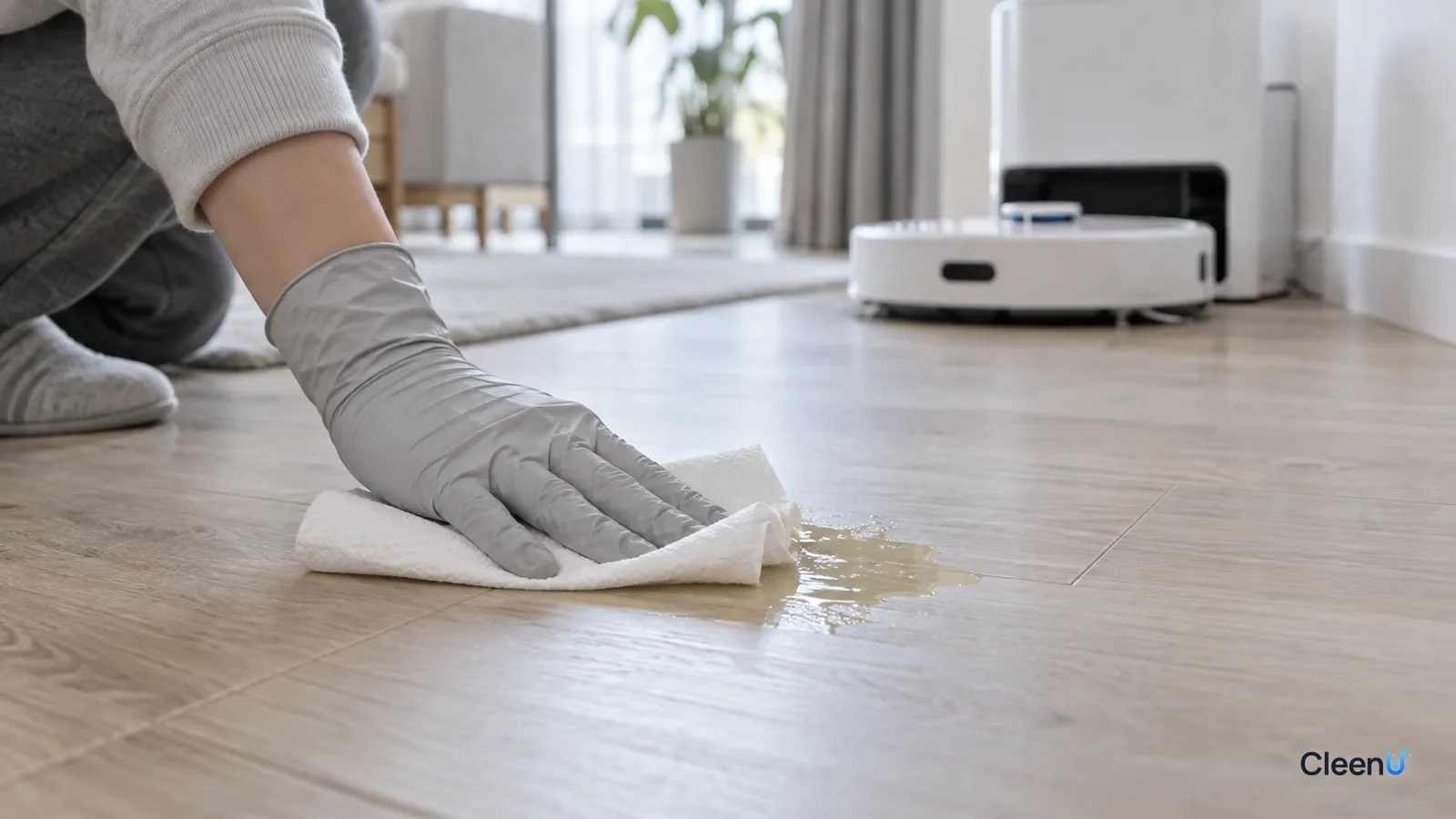
Pet urine: can the robot mop it directly?
Yes
- Pause the robot when you find a stain, or set that area as a temporary no-go zone
- Blot it dry with paper towels or an absorbent cloth, working from the outside in, then clean the residue by hand
- Let the robot go back to routine mopping once the floor is fully dry and no strong smell remains
No
- Letting the robot mop fresh urine directly: the pad spreads it, presses it into seams, and contaminates the pad, water line and dock
It depends
- Pet-urine cleaners: follow the label; a general household cleaner is also fine if its label says it suits that floor
The quick answers pet owners ask first
Can a robot mop detect pet urine?
Most can't. Some high-end models use obstacle cameras that recognize solid messes like pet poop, but urine is a flat, clear or pale yellow liquid, and most robots will mop right through it.
My robot already ran over pee. What now?
Stop the robot and move it away from the area. Remove and wash the pad separately, empty and rinse the dirty water tank, clean the dock's wash tray and filter, then re-clean the floor by hand using the steps below.
If I add cleaning solution, can the robot handle urine?
No. Robot mop solution is dosed for everyday mopping, which is far too dilute for a puddle of urine, and adding it doesn't stop the pad from spreading the mess.
Why does my pet keep peeing in the same spot after I cleaned it?
The odor compounds are still there. You may not smell them, but your pet can, and it treats the spot as a bathroom. Use a method that breaks down or traps odor, and let the area dry completely.
Can I use bleach on pet urine?
Don't pour bleach straight onto it. Urine contains ammonia-type compounds, and mixing them with chlorine bleach can release irritating fumes. Bleach can also discolor wood and laminate. If you need to disinfect, clean the urine up first and follow the product label on its own.
What should pet homes use for everyday robot mopping?
A pet-home robot mop cleaning solution handles paw prints, drool marks and light pet odor. It doesn't replace cleaning up urine by hand.
Can I put pet odor eliminator in my robot mop tank?
No. Most odor sprays are not made for a robot's water lines; foam, fragrance, and film-forming ingredients can stay on the floor and inside the tank, and they don't reach the urine residue itself. Treat the spot by hand first, then use a low-foam, neutral robot mop solution for routine runs.
Can I add iodine or disinfectant to the tank for cat urine smell?
Don't add either to the clean tank. Disinfectants and iodine solutions can stain floors and pads and are not designed for a robot's water path. Blot the urine, treat the spot with a pet urine cleaner, dry it, and let the robot handle only routine mopping afterward.
In homes with cats and dogs, a robot mop is almost standard equipment. Litter, fur and paw prints need cleaning every day. But accidents happen, especially with puppies, older cats and pets new to the house. The classic scenario: nobody notices the puddle, the robot starts its scheduled run, and a small spot becomes a long wet trail.
Why shouldn't a robot mop handle urine?
A robot mop works by wiping a damp pad back and forth so soil transfers to the pad, which the dock then washes. That system is built for a thin layer of dust, footprints and greasy marks. A puddle of urine is a different job.
It spreads the urine. The pad only absorbs part of the liquid and pushes the rest along, turning a small spot into a streak several times larger. The longer the robot's path, the more floor gets contaminated.
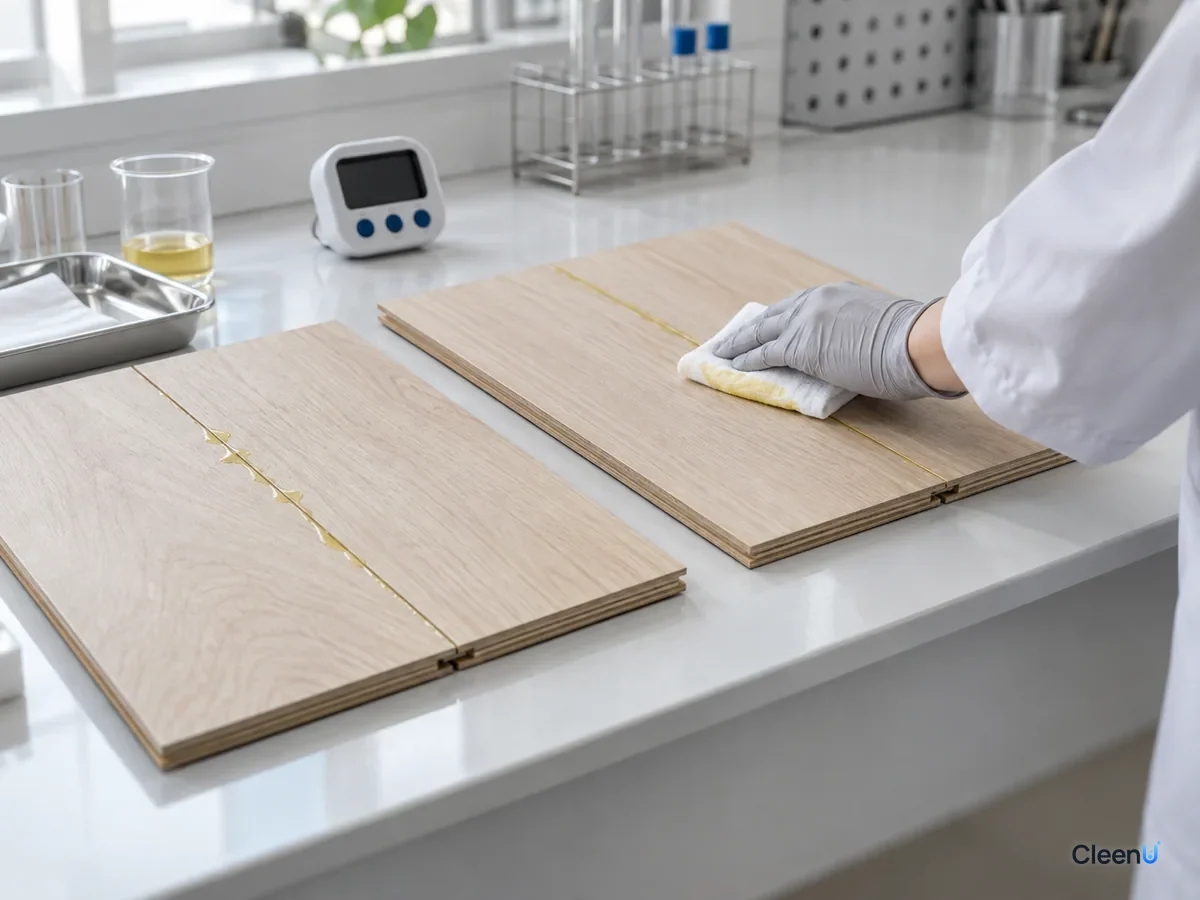
It drives urine into gaps. Seams in hardwood, laminate and vinyl plank, and grout lines between tiles, soak up liquid under the pad's pressure. Once urine dries inside those gaps, the smell lasts a long time and is hard to get out.
It contaminates the machine. A pad soaked in urine gets washed in the dock, so urine ends up in the wash tray, the filter and the dirty water tank. Bacteria break down the urea into ammonia, and the dock quickly starts to smell like a litter box.
Why is urine so hard to clean and so smelly?
Cat and dog urine is mostly water, carrying dissolved urea, uric acid and urate salts, ammonia, mineral salts and a handful of strongly scented organic compounds. A few of those explain the trouble.
Urea gets broken down by bacteria. Bacteria on the floor, in the seams and on the pad convert urea to ammonia, which is why an old spot smells sharper over time.
Urate salts don't dissolve easily. As urine dries, urate salts are left behind as fine crystals on the floor and in gaps. The crystals themselves barely smell, but humidity or mopping water releases the odor again. That's why some spots smell fine most days and then stink the moment you mop.
Cat urine is especially stubborn. It contains sulfur-containing odor compounds that keep releasing smell as they age, one reason cat pee is harder to get rid of than dog pee.
So handling urine comes down to two things: remove as much of the liquid as possible, and deal with the leftover odor sources while getting the floor and gaps completely dry.
How is a pet urine cleaner different from a regular cleaner?
A regular household cleaner uses surfactants to carry water-soluble soil off the floor. Most of what's in urine, including urea, salts and many organic compounds, dissolves in water, so water plus a general cleaner removes a lot of it. The hard part is the dried urate crystals and whatever has soaked into seams, where bacteria keep breaking it down.
Pet urine products usually take one of two approaches. Enzyme or bio-based formulas use enzymes, proteins that speed up specific reactions. Urease, for example, breaks down urea, and some formulas target other organic compounds in urine. These products need to stay wet and sit long enough to work; spraying and wiping right away cuts their effect. Odor-trapping formulas use molecules such as cyclodextrins that hold odor molecules inside their ring-shaped cavity.
Both approaches assume you've blotted up the urine first. A puddle left on the floor dilutes the product and leaves more water in the seams to dry out. Also, don't combine enzyme cleaners with chlorine bleach. Chlorine deactivates the enzymes and can react with ammonia-type compounds in urine to form irritating fumes.
The right order: hand cleaning first, robot second
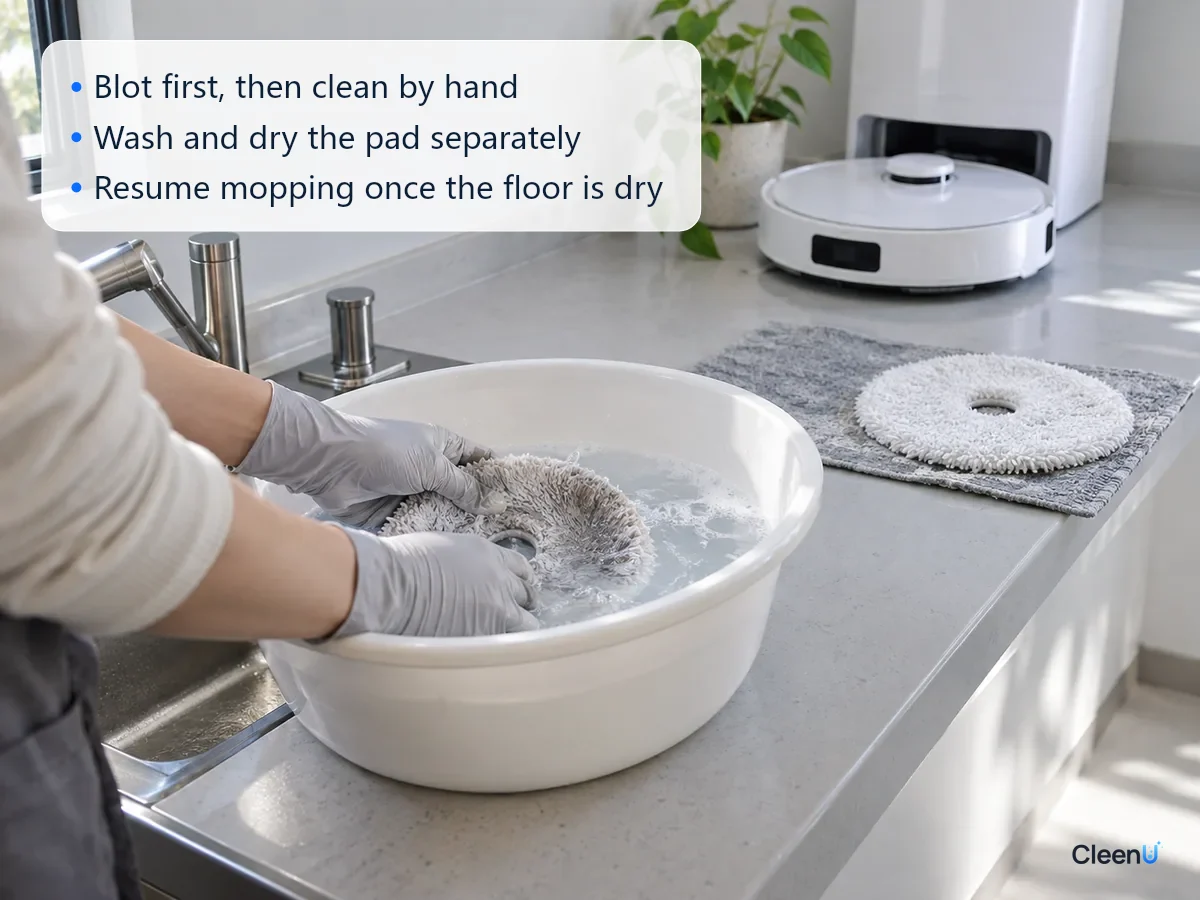
Step 1: Pause the robot. As soon as you spot the puddle, pause it in the app or set the area as a temporary no-go zone so a scheduled run doesn't drive through it.
Step 2: Blot up the urine. Wearing gloves, press paper towels or an absorbent cloth onto the spot, working from the outside in. Blot; don't wipe, or you'll spread it. Keep switching to fresh towels until nothing more comes up.
Step 3: Clean the residue. Wipe with a cloth dampened in plain water, then blot dry. If you have a pet urine cleaner, apply it per the label, leave it for the stated time and wipe dry. A general household cleaner is fine as long as its label says it's safe for that floor.
Step 4: Work the seams. If the spot is on a seam or grout line, press a damp cloth into it several times to draw urine out. Grout can take a gentle scrub with a soft brush before you wipe it dry.
Step 5: Ventilate and dry. Open a window, run a fan or dehumidifier, and let the floor and gaps dry fully. Move fast with wood and laminate so moisture doesn't sit in the seams and cause cupping.
Step 6: Resume robot mopping. Once the floor is completely dry with no obvious smell, let the robot mop as usual. On the first run you can add a pet-home robot mop solution to handle any faint leftover odor.
What if the robot already mopped through it?
Stop the robot and carry it off the area or send it back to the dock.
Floor: follow the steps above along the robot's whole path, especially seams, grout and corners.
Pad: remove it, rinse it well with plain water, then hand wash with a little laundry detergent, rinse thoroughly and dry completely. If it still smells, soak and wash again. If it's stiff, yellowed or still smelly, replace it.
Dirty water tank: empty it, rinse several times, scrub the inside walls, lid and seal with a soft brush, and leave it open to dry.
Dock: remove the wash tray and filter, scrub them with water and a soft brush, wipe the base clean, and let everything dry before reinstalling. For deeper dock cleaning, see why a robot vacuum dirty water tank smells.
Clean water tank: if it sits on the robot close to the pad, empty and rinse it too.
How pet homes can prevent the next one
Adjust the schedule. Run the robot when someone is home to catch problems, or set timed runs once your pet's bathroom habits are reliable.
Set no-mop zones. Mark the areas around the litter box, favorite accident corners and the crate as no-mop zones in the app and clean them by hand.
Check before you leave. Take a quick look at your pet's usual spots before a scheduled run.
Look at the pet, too. Frequent indoor accidents can come from training issues or stress, and sometimes from a urinary problem. A vet visit is worth it.
Use the right everyday solution. Pet-home floors pick up paw prints, drool and splashes around food bowls. CleenU Robot Vacuum Cleaning Solution for Pet Homes is a pH-neutral, low-foam concentrate at pH 6.5 to 7.5 with cyclodextrin-based odor control and no added fragrance. It dilutes at about 1:50 to 1:100; 10 to 20 mL per fill is usually enough. Cyclodextrin is a ring-shaped sugar molecule whose water-repelling center can hold some odor molecules so fewer escape into the air, which makes it useful for everyday pet smells. It's for routine mopping. It doesn't replace hand cleanup, and the robot should never be sent through urine or vomit.
It works in most robot mops from Roborock, iRobot (Roomba Combo and Braava), Ecovacs Deebot, Dreame and Narwal, and in floor washers such as Tineco. Add it to the clean water tank or the dock's designated detergent compartment as your manual directs. CleenU isn't affiliated with these brands; the names only indicate compatibility. For more on mopping with pets, see robot mopping in homes with cats and dogs.
This article is part of the Robot Vacuum Cleaning Solution & Maintenance Guide, which covers the full maintenance schedule and links to every troubleshooting guide.
What to watch for on different floors
Hardwood and laminate: the enemy is urine sitting on the floor. Blot fast, clean with a barely damp cloth rather than lots of water, press the seams dry and run a fan. Floors with an intact finish usually come through fine if you act quickly. Dark or swollen spots mean urine got into the wood; ask the flooring manufacturer about repair.
Vinyl plank and LVT: the surface is waterproof, but the seams still take in liquid. Focus on the seams, dry them and ventilate.
Tile: the surface doesn't absorb, so it's the easier case, but cement-based grout is porous and can hold smell and yellow stains. Brush the grout, then dry it.
Rugs and mats: a robot mop should already be avoiding them. Blot urine with an absorbent cloth and treat with a carpet cleaner made for that job.
Why not "let the robot go first and deal with it later"?
Some people figure the robot is mopping anyway, so it might as well clean the surface a bit. In practice it spreads the contamination from one small spot to a full path, pushes urine into more seams and grout, and leaves you with a pad, tank and dock that all need extra cleaning.
It's better to delay the robot and clean the urine by hand first.
Once the urine is cleaned up by hand and the floor is dry, for everyday mopping that also handles paw prints, drool marks and light pet odor, try Robot Vacuum Cleaning Solution for Pet Homes.
Don't send a robot mop through cat or dog urine. The pad smears it across the floor, drives it into seams and contaminates the pad, dirty tank and dock. Pause the robot, blot from the outside in, clean by hand, work the seams and let everything dry before the robot mops again. If it already ran through, stop it, re-clean its path, and wash the pad, tank, wash tray and filter. Set no-mop zones, adjust the schedule, and use a pet-home solution for light everyday odor.