
Q&A
Tap, Filtered, or Distilled Water in a Robot Mop?
Direct answer
In most areas, tap water is fine. If your water is hard and you see white spots or scale in the tank and outlet holes, switch to distilled or purified water if your manual allows. Distilled water has no residual chlorine, so it grows bacteria faster; use tank water and mixed solution the same day.
Which water can go in a robot mop?
Yes
- Tap water (the default for most homes)
- Distilled or purified water, in hard-water areas where the manual allows
- Water from a home water softener, where the manual allows
No
- Reverse osmosis reject (drain) water
- Mineral or spring water, which is high in minerals and leaves more spots
- Hot or boiling water
- Rainwater, aquarium water or other untreated water
It depends
- Filtered drinking water from a pitcher or under-sink filter: the chlorine is removed, so use it the same day
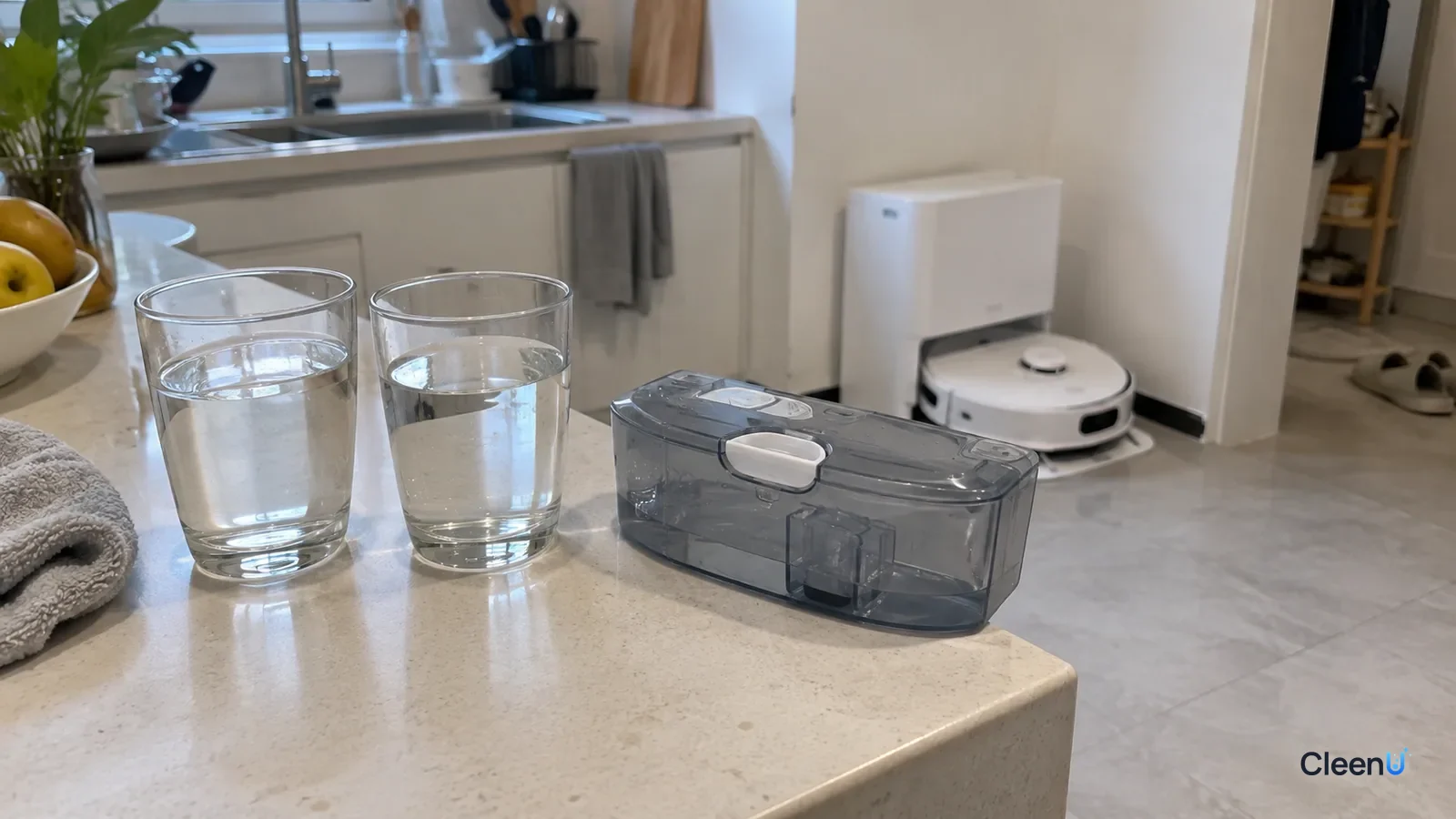
What goes in the clean tank seems like a minor question, but manuals often say "distilled water recommended" or "do not use ... water," and online advice is all over the place. Some say distilled water prevents scale, some say it makes the tank smell, some say chlorine in tap water damages the robot. Which is right?
It depends on your water and how much effort you're willing to put in.
How do these waters actually differ?
Tap water has been settled, filtered and disinfected. It carries some calcium and magnesium, which set its hardness, plus a little residual chlorine, deliberately left in to keep suppressing microbes in the pipes. Water varies a lot by region. Much of the Midwest, Southwest and Texas has hard water; parts of the Pacific Northwest and New England have soft water.
Distilled and purified water. Purified water is usually made by reverse osmosis; distilled water is boiled into steam and condensed. Both remove nearly all minerals, chlorine and impurities, so hardness is very low.
Filtered water. Home filters vary. Activated carbon pitchers and faucet filters mainly remove chlorine, odors and some organics while leaving minerals in. Under-sink reverse osmosis systems produce water close to purified. Either way, the chlorine is gone.
Softened water. A water softener uses ion-exchange resin to swap calcium and magnesium for sodium. Hardness drops, but total dissolved solids don't fall much.
Mineral and spring water often carry even more minerals than tap water.
How does hard water affect a robot mop?
As water evaporates, calcium and magnesium come out as calcium and magnesium carbonate, which is scale. For a robot mop that shows up in two places.
On the floor. The film the pad leaves air-dries, the minerals stay behind, and dark, glossy floors show white rings. For more, see white spots after robot mopping.
Inside the machine. The clean tank bottom, filter, pump, outlet holes and dock lines see hard water every day, and scale slowly builds up. Holes narrow and flow gets uneven, and docks that wash pads with hot water scale their heaters faster.
So if your water is hard (your kettle, showerhead and faucet scale quickly), your floors show white spots after mopping, or you see scale in the outlet holes or tank, distilled or purified water is an effective fix.
What to watch for with distilled water
Distilled water solves scale but brings a problem people overlook: it has no residual chlorine.
In the clean tank, tap water's residual chlorine gives a little protection against microbes. Distilled water and carbon-filtered water don't have that. Left in the tank for days, bacteria from the air and your hands multiply more easily, and the tank walls turn slimy and smell musty.
The same goes for water mixed with cleaning solution. Diluted dozens of times, a solution's preservatives are already much weaker, and pairing it with chlorine-free water makes it even less suited to sitting around.
With distilled water, then:
Fill only what you'll use that day. Don't fill the tank and leave it for days.
Use water mixed with solution the same day.
Empty, rinse and air-dry the clean tank weekly.
For a musty tank, see robot vacuum clean water tank smells musty.
Why do some manuals say not to use distilled water?
Some manuals say "do not use distilled or purified water," which seems to contradict the hard-water advice. The reason usually comes down to how the machine senses water.
Some robots and docks use metal electrodes to detect water. When water covers the electrodes, current flows between them and the machine knows the tank has water. Tap water carries dissolved calcium, magnesium, sodium, chloride and other ions, so it conducts well enough. Distilled and purified water contain almost no ions and conduct very poorly, so the electrodes may not register it. The robot may then report an empty clean tank, or the dirty tank's full sensor may misbehave.
So whether distilled water works depends on your model's manual.
If the manual recommends or allows distilled water, use it freely, just use it up the same day.
If the manual says not to, stick with tap water even in a hard-water area, and ease white spots by lowering the water level and dosing solution sparingly.
If the manual doesn't say, try it once. If you get empty-tank or full-tank errors, switch back to tap water, or use a half-and-half blend of tap and distilled to cut the hardness.
Adding cleaning solution does change conductivity somewhat, but usually not enough to make distilled water behave like tap water, so it won't fix an electrode-sensing problem.
Why does tap water's chlorine fade over time?
Residual chlorine in tap water is mostly hypochlorous acid and hypochlorite. It gets used up reacting with organic matter in the water and on container walls, breaks down with light and warmth, and slowly escapes into the air. Tap water left in an open container for a day or two has very little left.
So even tap water loses its protection if it sits in the tank too long. Whatever water you use, fill for the day and empty and rinse the tank weekly.
Will the chlorine in tap water damage the robot?
Residual chlorine in tap water is very low, kept within limits that are safe to touch and drink, and under normal conditions it doesn't harm robot tanks, seals or lines. Machines whose manuals call for tap or distilled water are designed with that in mind.
What you shouldn't do is add bleach or other chlorine disinfectants to the tank yourself. That's a completely different concentration. It can damage seals, discolor floors and release irritating gases if it meets other cleaners.
What about reverse osmosis reject water?
Better not. As a reverse osmosis system makes pure water, it concentrates the minerals and impurities it rejects into a second stream that goes to the drain. That water is higher in minerals than your tap water, so white spots and scale get worse. It's fine for flushing toilets or watering plants that aren't salt-sensitive, but keep it out of the robot.
What about softened water?
If your manual allows it, yes. Softened water has swapped calcium and magnesium for sodium, and sodium-based residues are fewer and dissolve more easily, so white spots drop noticeably. Total dissolved solids stay about the same, so you may still see a very faint trace now and then. The sodium doesn't affect the machine.
Does the water type change how you use cleaning solution?
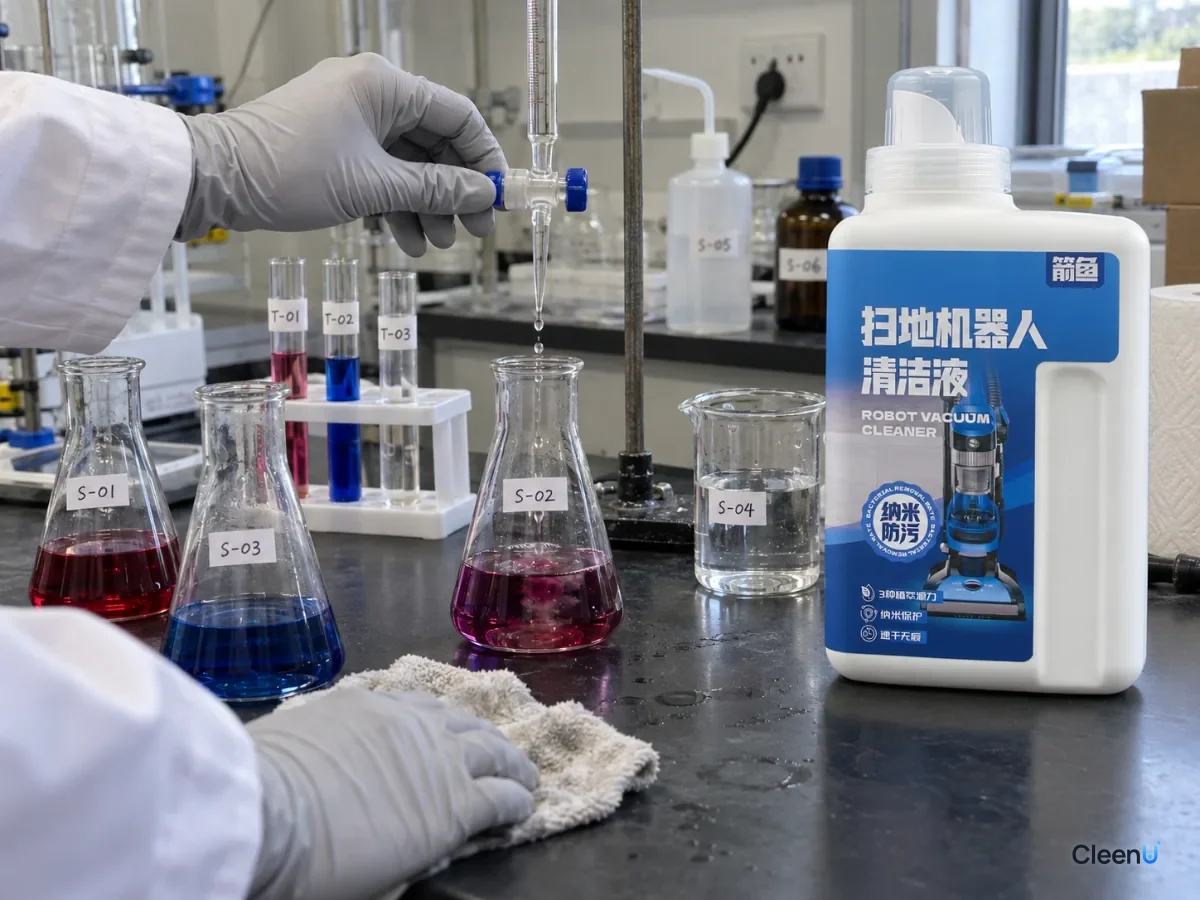
No. Dilute at the label ratio either way. CleenU Robot Vacuum Cleaning Solution is a neutral, low-foam concentrate at pH 6.5 to 7.5 with low-foam nonionic surfactants and a defoamer, no wax, no chlorine and no particles. It dilutes at about 1:50 to 1:100; 10 to 20 mL per fill is usually enough. Nonionic surfactants aren't sensitive to water hardness, so they behave consistently in hard, soft and distilled water and don't form calcium soap deposits with the minerals.
One difference: in distilled water, the same dose may foam slightly more than in hard water, because calcium and magnesium mildly suppress foaming in some surfactants. With a low-foam formula the difference is usually small. If you switch to distilled water and see more foam in the dirty tank, just use a bit less.
It works in most robot mops from Roborock, iRobot (Roomba Combo and Braava), Ecovacs Deebot, Dreame and Narwal, and in floor washers such as Tineco. Add it to the clean water tank or the dock's designated detergent compartment as your manual directs. CleenU isn't affiliated with these brands; the names only indicate compatibility.
How to tell if your water is hard
Check your kettle. After a month or two, is there white scale on the bottom?
Check the showerhead and faucet aerator. Do they crust up quickly?
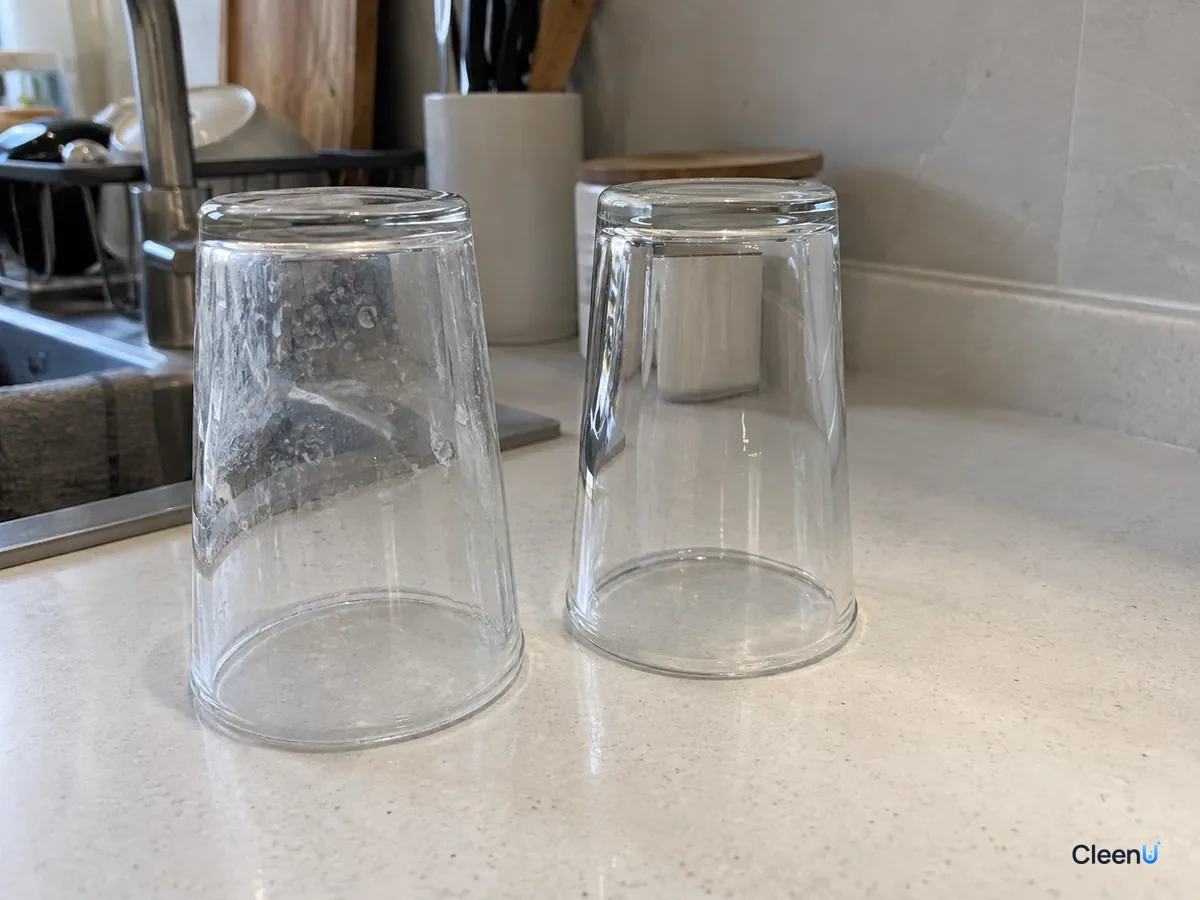
Check drinking glasses. Do they dry with white spots?
Check your water utility's annual water quality report (Consumer Confidence Report), which usually lists total hardness.
Or use a water hardness test strip or TDS meter.
If your water is hard and your floors show spots, switch to distilled water. If it's not hard and floors dry clean, stick with tap water: it's easiest and brings a little chlorine protection with it.
This article is part of the Robot Vacuum Cleaning Solution & Maintenance Guide, which covers the full maintenance schedule and links to every troubleshooting guide.
Common questions about which water to use in a robot mop
Do I have to use distilled water in my robot mop?
No. Tap water is fine in most areas. Switch to distilled water if your water is hard and you see white spots or scale, as your manual allows.
Why does my tank smell faster with distilled water?
Distilled water has no residual chlorine, so it offers no microbial protection. Fill only what you'll use that day, use mixed solution the same day, and rinse and dry the tank weekly.
Can I use filtered water from my pitcher or fridge?
Yes, but filtering usually removes the chlorine, so treat it like distilled water and don't leave it in the tank.
Can I use mineral or spring water?
Better not. It often has more minerals than tap water, so it leaves more spots and scale.
Can I use warm water in winter?
A little warm water to bring it near room temperature is fine. Avoid hot or boiling water, which can warp the tank and seals.
How do I clear scale from the outlet holes?
Soften it with warm water, then clear it gently with the soft pin or fine brush your manual recommends. If allowed, soak removable parts in diluted citric acid and rinse thoroughly.
Should I switch to distilled water if my floors get white spots?
Cut back the solution and wash the pads first. If spots that water won't wipe off remain, they are usually hard-water minerals, and you can switch to distilled water if your manual allows. Distilled water has no chlorine, so use the mix the same day and rinse and dry the tank regularly.
Can I put hot water in my robot mop tank?
No hot or boiling water. Heat can warp or age the tank, lines and seals, and it makes foam and odor worse. Room-temperature tap water works fine with a cleaning solution. In winter, water that is lukewarm to the touch is enough; follow your manual.
Whether you use tap or distilled water, for a low-foam robot mop solution that isn't sensitive to water hardness and just dilutes at the label ratio, try Robot Vacuum Cleaning Solution.
For most homes, tap water is the right choice for a robot mop, and its residual chlorine gives the tank a little protection. If your water is hard and you see white spots or scale in the tank and outlet holes, switch to distilled, purified or softened water where your manual allows. Those have no chlorine, so fill only what you'll use that day, use mixed solution the same day and rinse and dry the tank regularly. Skip RO reject water, mineral water, hot water and untreated water. Cleaning solution works the same in any of them at the label ratio.