
Comparison
Robot Mop Cleaning Solution vs Disinfecting Floor Cleaner
Direct answer
A cleaning solution lifts soil off the floor and has to be low-foam, low-residue and machine-friendly. A disinfectant has to be registered and used at the label's strength and contact time. Disinfectants don't necessarily belong in a robot mop, so check your manual, and disinfect specific spots by hand when needed.
How to choose
-
Everyday mopping of dust, footprints, greasy marks and paw prints
Choose A robot mop cleaning solution at the label ratio
Everyday floor problems are soil, and cleaning solves them. A robot solution is low-foam and low-residue for daily machine use.
-
Someone has a cold or stomach bug, or a pet had an accident or vomited indoors
Choose Clean up the mess by hand, then treat that area with a suitable disinfectant
Disinfecting needs enough strength and contact time, and a robot's thin film dries too fast to provide it.
-
Your manual explicitly allows a specific disinfecting floor product in the machine
Choose Follow the manual and product label, and don't mix it with other solutions
That product has been checked for machine compatibility. Without that approval, don't add one yourself.
-
You want to "disinfect while you mop" every day
Choose Not recommended; keep up regular cleaning and dry floors
With frequent disinfectant use, residue and irritation are often more real than the benefit, and it can damage the machine and floors.
Lots of households share a simple wish: mop clean and kill germs at the same time. So some people add bleach or a chlorine-based sanitizer to the robot's tank, or buy floor cleaners labeled "disinfecting."
But cleaning and disinfecting are different jobs. Knowing the difference tells you when you need which, and what belongs in a robot mop.
How is cleaning different from disinfecting?
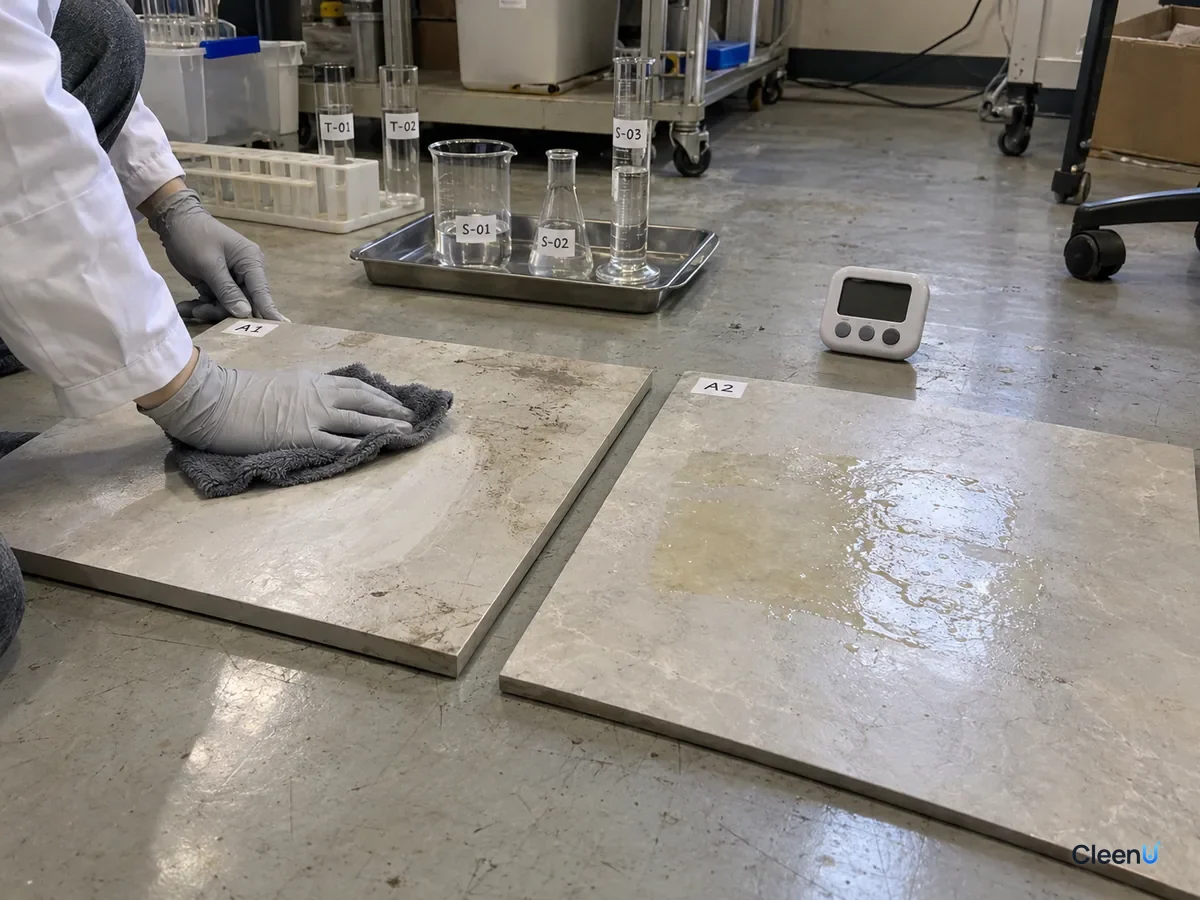
Cleaning removes soil from a surface. Dust, grease, skin flakes, food bits and dirt are wetted, emulsified and dispersed by surfactants and carried away by the pad. Cleaning also removes many of the microbes riding on that soil, but its goal is removing soil, not killing germs.
Disinfecting kills microbes on a surface or reduces them to a specified level by chemical or physical means. A disinfectant has to be used at a set concentration and stay wet on the surface for a set time, its contact time, to deliver the claim on its label.
The order is clean first, then disinfect. Soil shields microbes and uses up or weakens disinfectant, so hygiene guidelines generally require cleaning before disinfecting. Disinfecting a dirty surface works less well.
Why is "disinfecting" a claim that has to be proven?
In the U.S., products that claim to kill, disinfect or sanitize are generally pesticides regulated by the EPA. They must be registered, their efficacy proven with specified test methods, and their labels must state target organisms, use strength, contact time and precautions. Products without that registration can't make those claims.
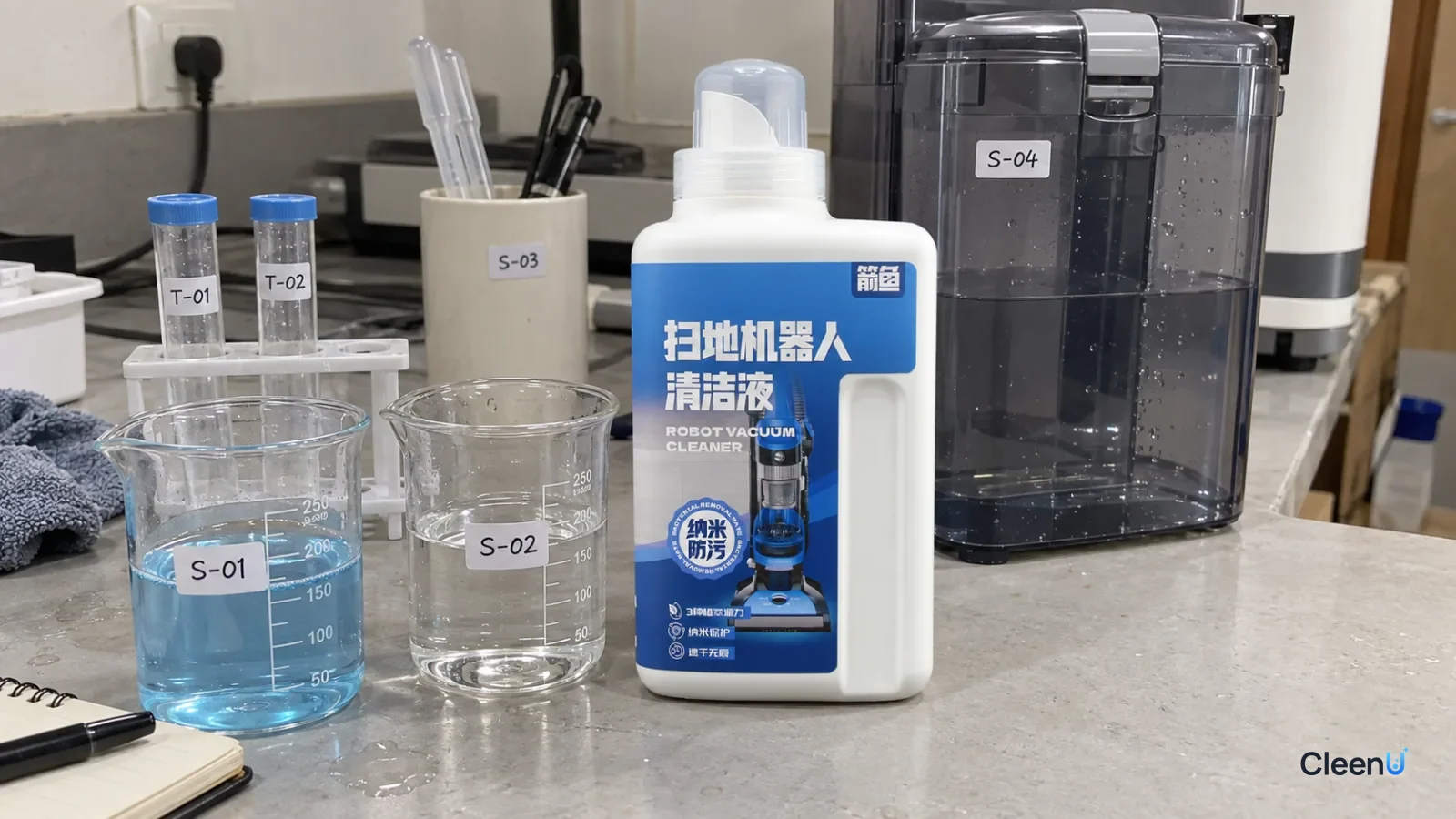
So an ordinary floor cleaner or robot mop solution can say "cleans" but not "kills germs" or "disinfects." CleenU Robot Vacuum Cleaning Solution, for example, is a neutral, low-foam formula designed for cleaning. It isn't a disinfectant and makes no germ-kill or disinfecting claims.
Why doesn't disinfectant necessarily belong in a robot mop?
Not enough contact time. Disinfectants need to stay wet on a surface for a while to work, but a robot lays down a very thin film that dries in seconds to a minute or two, well short of most label contact times.
Hard to control strength. How you'd dilute a disinfectant in the tank and how much water the robot puts down rarely line up with the product's label directions.
Hard on the machine. Chlorine disinfectants can age tank seals and plastics and corrode metal contacts, and some disinfectants foam and trigger false "tank full" alerts.
Hard on floors. Chlorine products can discolor hardwood and laminate, and acidic or strongly alkaline disinfectants damage stone and finishes.
Mixing risk. A disinfectant meeting a cleaning solution or another product in the tank can react, release irritating gases or cancel both out.
Residue and irritation. A robot never rinses, so disinfectant residue stays on the floor, where pets and babies spend the most time.
So unless your robot's manual specifically allows a disinfecting product in the machine, don't add one to the tank yourself. For more, see can you put vinegar or bleach in a robot mop tank.
Robot mop cleaning solution vs disinfecting floor cleaner, point by point
| What to compare | Robot mop cleaning solution | Disinfecting floor cleaner |
|---|---|---|
| Main job | Removes dust, footprints, greasy marks and other soil | Kills or reduces microbes on the surface |
| Claims | Cleans, removes soil | Must be registered; label states target organisms, strength and contact time |
| How it's used | Diluted at the label ratio, used daily in the machine | At label strength, kept wet on the surface for the set time |
| Foam and residue | Low foam, low residue, no rinse needed | Varies; some require rinsing |
| Machine fit | Designed for robot use | Not necessarily machine-safe; follow the manual |
| Best for | Everyday mopping | Targeted disinfection in specific situations |
Do home floors need daily disinfecting?
For most healthy households, keeping floors clean and dry, and promptly cleaning up food, pet messes and spills, meets everyday hygiene needs. Frequent, whole-floor disinfectant use tends to bring more real problems: residue, irritation and damage to floors and machines.
Disinfecting usually makes sense in specific, local situations: a stomach bug with vomiting or diarrhea in the family, a pet accident or vomit indoors, raw meat or eggs dropped on the floor, or a family member with a weakened immune system whose doctor recommends it.
In those cases, put on gloves, clean up the mess, then treat that area with a suitable disinfectant at its label strength and contact time, and wipe and ventilate as the label directs. Don't pour disinfectant into the robot and mop the whole house. For pet accidents, see can a robot mop clean up pet urine.
Keeping everyday mopping hygienic
Mop with a low-foam robot solution at the label ratio to carry soil away. CleenU Robot Vacuum Cleaning Solution is a neutral, low-foam concentrate at pH 6.5 to 7.5 with low-foam nonionic surfactants and a defoamer, no wax, no chlorine and no particles. It dilutes at about 1:50 to 1:100; 10 to 20 mL per fill is usually enough.
Keep the machine clean. Empty and dry the dirty tank after every run, and clean and dry the pads, wash tray and filter regularly. Dirty pads and docks are germ sources in their own right.
Keep floors dry. Use moderate water flow so floors dry quickly.
Handle special situations locally. Clean up by hand, then disinfect just that area with a proper product.
It works in most robot mops from Roborock, iRobot (Roomba Combo and Braava), Ecovacs Deebot, Dreame and Narwal, and in floor washers such as Tineco. Add it to the clean water tank or the dock's designated detergent compartment as your manual directs. CleenU isn't affiliated with these brands; the names only indicate compatibility. For more on cleaning vs disinfecting, see does robot mop solution disinfect.
This article is part of the Robot Vacuum Cleaning Solution & Maintenance Guide, which covers the full maintenance schedule and links to every troubleshooting guide.
"Sanitizing," "antibacterial," "disinfecting": what's the difference?
Floor products use terms like sanitizing, antibacterial, disinfecting and germ-killing. Definitions and requirements vary by region, but in the U.S. and many other places, any claim about acting on microbes generally has to be registered, proven and labeled accordingly. It can't just be printed on a bottle.
A practical check for shoppers: does the label state target organisms, use strength, contact time and a registration number (in the U.S., an EPA registration number)? Treat a vague "antibacterial" with no directions or basis with caution.
A robot mop solution's job is cleaning: carrying away soil, greasy film and footprints, low-foam, low-residue and machine-friendly. It doesn't need, and shouldn't use, vague germ language to seem stronger.
Thorough cleaning is the foundation of hygiene
Most microbes on floors ride on soil: dust, grease, food bits and skin flakes. Remove the soil and most of those microbes go with it; keep the floor dry and they struggle to multiply.
So for everyday home hygiene, clean plus dry is the most basic and effective measure. A robot that mops floors clean daily, lets them dry quickly, and has its pads and dock cleaned and dried regularly already delivers that. True disinfection is needed only in a few specific situations and spots, handled locally per the disinfectant's directions.
Common questions about robot mop solution and disinfectants
Does robot mop cleaning solution disinfect?
No, don't use it as a disinfectant. It cleans. Without registration and a disinfecting claim on the label, a product can't be treated as a disinfectant.
Can I put bleach in my robot mop's tank?
Better not. Chlorine bleach can damage tank seals, corrode contacts and discolor floors, and it can release irritating gas if it meets other products.
Can a floor cleaner labeled "sanitizing" go in my robot mop?
Only if both your robot's manual and the product label say it can be used in that model. Otherwise don't add it, and never mix it with other solutions.
With a baby at home, should I disinfect the floors every day?
No. Clean, dry floors are enough day to day. In special situations, disinfect the specific area, then wipe and ventilate.
My pet had diarrhea indoors. What should I do?
Wear gloves and clean up the mess, treat that area with a suitable disinfectant per its label, wipe and ventilate, then let the robot resume daily mopping.
Can cleaning and disinfecting be done in one step?
Generally clean first, then disinfect. Disinfecting a soiled surface is less effective.
Will disinfectant in the tank damage my robot?
It can, so keep bleach-based disinfectant out of the tank. Chlorine attacks seals, pumps and metal parts and ages pads and tubing. If an area needs disinfecting, treat it separately after mopping, following the disinfectant's label, and use a neutral low-foam solution for routine mopping.
For everyday mopping, if you want a solution that focuses on cleaning well, low-foam and low-residue for daily machine use, try Robot Vacuum Cleaning Solution.
Robot mop cleaning solution and disinfecting floor cleaner do different jobs. A cleaning solution carries soil away and needs to be low-foam, low-residue and suited to daily machine use. A disinfectant must be registered and proven, and only works at label strength with the surface kept wet for its full contact time. A robot's thin film dries too fast, and disinfectants can harm machines and floors or react with other liquids, so don't put one in the tank without your manual's approval. Clean, dry floors are enough day to day; in special situations, clean up by hand, then disinfect locally.