
How-to
Storing a Robot Vacuum for Weeks: Empty, Clean, and Dry the Tanks
Direct answer
Empty and clean the clean tank, dirty tank and auto-dosing compartment, wash and fully dry the pads, and scrub and dry the wash tray and filter. Charge the robot per the manual, then power it off. Cap leftover solution tightly, store it somewhere cool and dark, and check its look and smell before using it again.
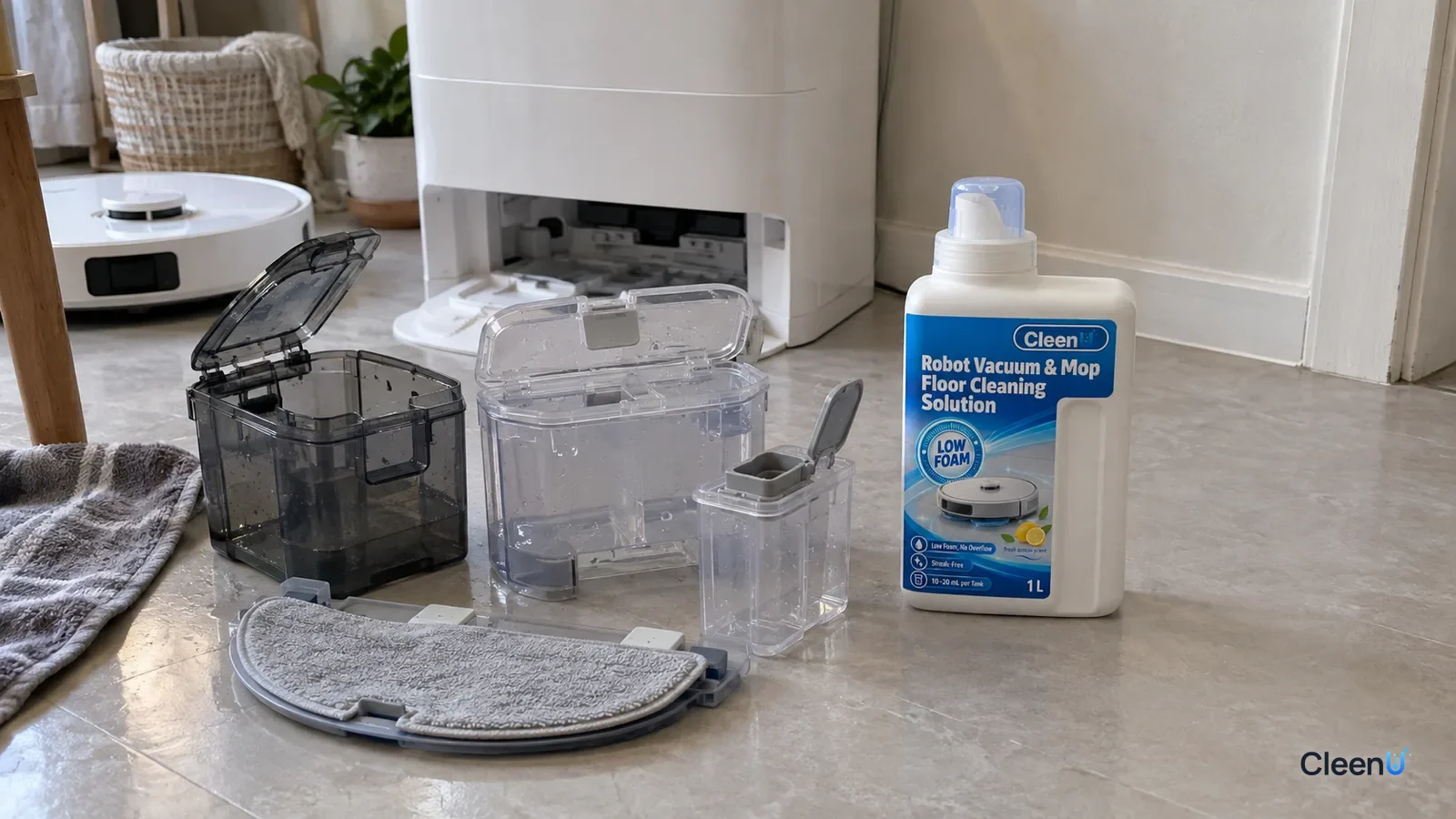
A work trip, a vacation, the holidays at family's or a seasonal move can leave a robot mop idle for a week or two, or months. Many people just send it home to the dock and head out. When they get back and open the dock, a sour smell hits: the dirty water has fermented, the pads are moldy, the clean tank is slimy, and the dosing compartment's opening has a ring of white crystals.
Half an hour of prep before you leave means the robot is ready to go the day you get back.
Why empty the tanks before storing?
Dirty tank: it holds dust, hair, skin flakes, grease and food scraps from your floors, prime food for bacteria. A few days in a closed, warm dock and it ferments and stinks. A few weeks and it can grow black film and mold that are much harder to clean.
Clean tank: tap water's chlorine is used up within a day or two, and mixed solution has weakened preservation once diluted, so bacteria grow over time and the tank turns slippery and musty.
Pads: damp pads are a breeding ground for bacteria and mold. The longer they sit, the more likely they go dark and smelly, sometimes beyond saving.
Wash tray and filter: leftover dirty water and hair form biofilm that dries into a hard crust, which is tougher to scrub off.
Auto-dosing compartment: concentrate sitting in the compartment for a long time crystallizes and thickens at the opening and outlet, and you may come back to false "detergent low" alerts or a dock that won't dispense.
Before storing, do this in order
Seven steps from emptying to powering off
Empty and clean the dirty tank
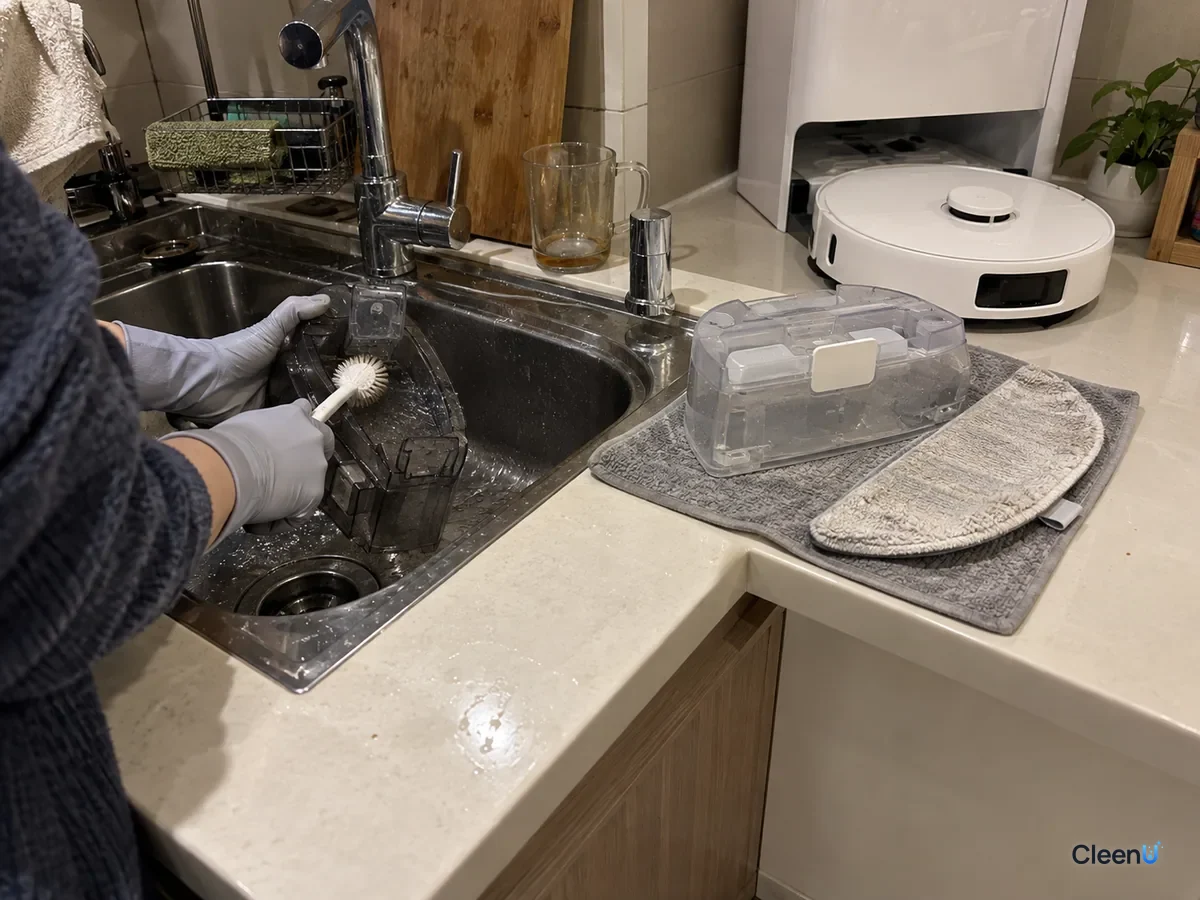
Pour out the wastewater, rinse with warm water, scrub the walls, lid and seal with a soft brush, wipe the level contacts, and leave it open until completely dry.
Empty and rinse the clean tank
Pour out any leftover water or mix, rinse two or three times, brush the filter at the bottom and leave it open to dry.
Empty the auto-dosing compartment
Pour leftover concentrate back into the original bottle (only if it looks and smells normal; never pour back anything watered down). Rinse the compartment with warm water, clear crystals from the opening and outlet, and let it dry.
Caution:If you'll be gone more than a few weeks, empty the compartment rather than leaving concentrate in it.
Wash and fully dry the pads
Remove the pads, hand wash in warm water with a little laundry detergent and rinse. Dry them completely with the dock's drying cycle or by hanging them somewhere airy, then reattach or store them separately.
Scrub the wash tray and filter
Remove the wash tray and filter, brush off hair and slime, rinse and let them dry. Wipe the dock base clean.
Clean the robot
Clear hair from the main and side brushes, empty the dust bin and clean its filter, and wipe the sensors and charging contacts.
Handle battery and power per the manual
For a short trip, the robot can stay on the dock. For long storage, charge the battery to the level your manual recommends, power the robot off and unplug the dock.
Caution:Lithium-ion batteries don't like long storage fully charged or fully drained. Recommendations vary by brand, so follow your manual, and check the charge every so often during long storage.
One last check before you leave
- Dirty tank: emptied, scrubbed, left open to dry, contacts wiped
- Clean tank: emptied, rinsed, dried, bottom filter brushed
- Auto-dosing compartment: emptied (for several weeks or more), no crystals at the opening or outlet
- Pads: washed and fully dry, stored in a breathable bag or reattached
- Wash tray and filter: scrubbed, dried and reinstalled
- Robot: no hair on the brushes, dust bin emptied
- Battery and power: charged to the level the manual recommends; powered off and unplugged for long storage
- Solution: cap tight, stored cool and dark
How much prep depends on how long you're gone
A few days: empty, rinse and air-dry the dirty tank, let the dock dry the pads, and pour out any mix in the clean tank. The robot can stay docked and be ready when you're back.
A week or two: on top of that, rinse and dry the clean tank, scrub the wash tray and filter, and take the pads off to dry fully. Concentrate can stay in the dosing compartment, but check the opening for crystals when you get back.
A month or more: do all seven steps above, empty the dosing compartment, and handle the battery per the manual before powering off and unplugging. When you're back, check the parts and solution and do a plain-water test run.
Seasonal storage or a move: after cleaning and drying everything, wipe down the robot and dock and store them somewhere dry, dark and free of pressure. If you still have the original box, use it, ideally with a desiccant pack or two inside.
How to store leftover solution
Robot mop concentrate keeps a long time when stored as directed. CleenU Robot Vacuum Cleaning Solution, for example, has a 24-month unopened shelf life. For an opened bottle during a long break:
Close the cap tight, and dry the measuring cap before putting it back so no liquid sits in it.
Store it indoors somewhere cool, dry and dark, like a cabinet, not on a porch, windowsill, in the car or next to the water heater.
In winter, keep it where it won't freeze.
Never add water to the bottle or pour diluted mix back in.
Keep it out of reach of children and pets.
When you're back, check that it's clear and even with no separation or sediment, that the color and smell haven't changed and that the bottle isn't bulging. If all's normal, keep using it; if it's clearly changed, keep it out of the machine. For more, see robot mop cleaning solution changed color or separated.
Getting back up and running
Check that parts are clean and dry. If the pads, tanks or wash tray smell or show mold spots, clean them first.
Check the solution. Use it only if it looks and smells normal.
Run once with plain water. Make sure water flows normally, there are no errors and the dirty tank shows no unusual foam, then add solution at the label ratio.
Check the battery. After long storage, charge fully and confirm run time is normal.
Update the map. If furniture moved, have the robot remap or update no-go zones.
CleenU Robot Vacuum Cleaning Solution is a neutral, low-foam concentrate at pH 6.5 to 7.5 with low-foam nonionic surfactants and a defoamer, no wax, no chlorine and no particles. It dilutes at about 1:50 to 1:100; 10 to 20 mL per fill is usually enough. It works in most robot mops from Roborock, iRobot (Roomba Combo and Braava), Ecovacs Deebot, Dreame and Narwal, and in floor washers such as Tineco. Add it to the clean water tank or the dock's designated detergent compartment as your manual directs. CleenU isn't affiliated with these brands; the names only indicate compatibility.
Why drying matters more than washing
Plenty of people wash the tanks and pads before leaving, pop everything straight back in, close the lids and still come home to a smell. Bacteria and mold need water. The little water left on tank walls, in pad fibers and in wash tray crevices can't evaporate inside a closed dock, and that's enough for the few surviving microbes to multiply again.
So the key is clean plus dry. Leave the tanks open somewhere airy until they're dry inside and out, dry the pads fully with the dock's drying cycle or on a line (out of harsh direct sun, which ages them), and let the wash tray dry after scrubbing before reinstalling. On a dry surface microbes can barely grow, however long you're away.
If you can, store washed, dried pads separately in a breathable cloth bag rather than sealed inside the dock.
Can the robot run remotely while you're away?
Many robots support remote start and scheduled cleaning, and a scheduled vacuum while you're gone means clean floors when you return. A few cautions:
Vacuum only, don't mop. With nobody home, a leak, a run through a pet accident or a stuck pad can't be dealt with, and wastewater sits in the dirty tank until you're back.
Consider your pets. If someone is caring for them, tell that person when the robot runs. If no one is, skip remote runs.
Dust bag capacity. Several runs over a long trip can fill the bag, so start with an empty one.
Power and network. If you unplugged the dock for long storage, remote start won't work. If you want remote runs, leave the dock powered and online.
Coming home to a smelly tank
If you didn't empty the tanks before leaving and they smell when you get back, wear gloves, empty them, and scrub the walls, lids and seals with warm water and a little dish soap, then rinse. If the smell lingers, soak the tank in diluted white vinegar for 10 to 15 minutes (for cleaning the tank only; rinse thoroughly afterward and never mop with vinegar in the tank), then leave it open to dry completely. Replace pads that have mold spots or won't lose their smell.
This article is part of the Robot Vacuum Cleaning Solution & Maintenance Guide, which covers the full maintenance schedule and links to every troubleshooting guide.
Common questions about storing a robot vacuum
I'm only gone a week. Do I really need to empty the tanks?
Yes, it's worth it. The dirty tank starts to smell within days and the clean tank can grow bacteria. Emptying, rinsing and drying before you go is the easiest route.
Should I empty concentrate from the auto-dosing compartment?
For more than a few weeks, yes. Pour concentrate that looks and smells normal back into the bottle, then clean, de-crystallize and dry the compartment.
Should the robot stay on the dock charging while I'm away?
For short trips, that's fine. For long storage, charge the battery to the level your manual recommends, power off and unplug the dock.
My opened solution sat for a few months. Can I still use it?
Check it first. If it's clear and even with no separation or sediment, normal color and smell and no bulging, keep using it. If it's clearly changed, keep it out of the machine.
The pads smell musty when I get back. What now?
Soak and scrub them in warm water with laundry detergent, rinse and dry fully. If the smell won't go or there are visible mold spots, replace them.
Should I cover the robot while it's stored?
A breathable dust cover is fine. Don't seal it in a plastic bag, which traps any leftover moisture.
After storage, my robot isn't using any solution. What's wrong?
Check the auto-dosing outlet and line first: concentrate left in the compartment can thicken at the outlet while the robot sits. Flush the compartment and line with warm water as your manual allows, then refill and run a test cycle.
For a robot mop solution with a 24-month unopened shelf life that keeps well and is ready when you're back, try Robot Vacuum Cleaning Solution.
Before a robot vacuum sits idle, spend half an hour on it. Empty and clean the dirty tank, clean tank and auto-dosing compartment, wash and fully dry the pads, scrub and dry the wash tray and filter, clear the brushes and dust bin, and handle the battery and power per the manual. The key is clean plus dry, because microbes barely grow on dry surfaces. Cap leftover solution tightly and store it cool and dark. When you're back, check its look and smell, run once with plain water, then resume at the label ratio.