
Q&A
Can a Robot Mop Be Used on Marble Floors?
Direct answer
Yes, with a low water setting and only a neutral cleaner labeled for natural stone. Acidic products like vinegar, citric acid, descalers and toilet bowl cleaners etch marble, leaving dull white marks that can't be cleaned away.
What's OK on marble floors
Yes
- Robot mopping on a low water setting
- Plain water
- A neutral floor cleaner labeled for natural stone
No
- Vinegar, citric acid, descalers, toilet bowl cleaners and other acidic products
- Bleach and strong alkaline degreasers
- Abrasive cleaners, steel wool and stiff brushes
It depends
- A robot mop cleaning solution: check whether the label lists natural stone. If not, test a hidden spot first or use plain water.
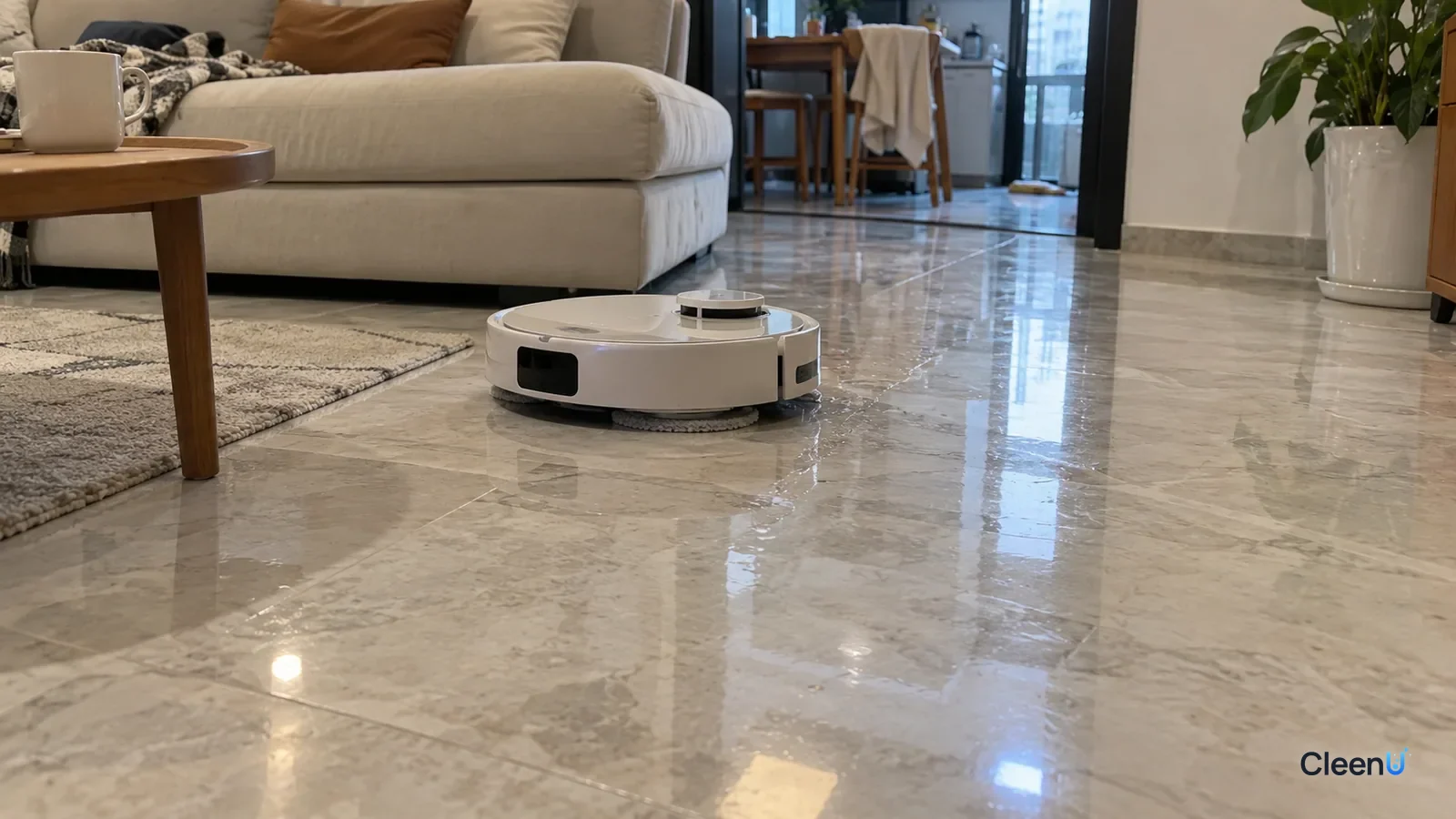
Marble floors are beautiful and luxurious, and they're also one of the most delicate floors in a home. One of the first worries after buying a robot mop is whether marble can take daily mopping, and whether cleaning solution will hurt the stone.
It can be mopped, but two things matter: how much water, and whether the cleaner is acidic.
Why does acid damage marble?
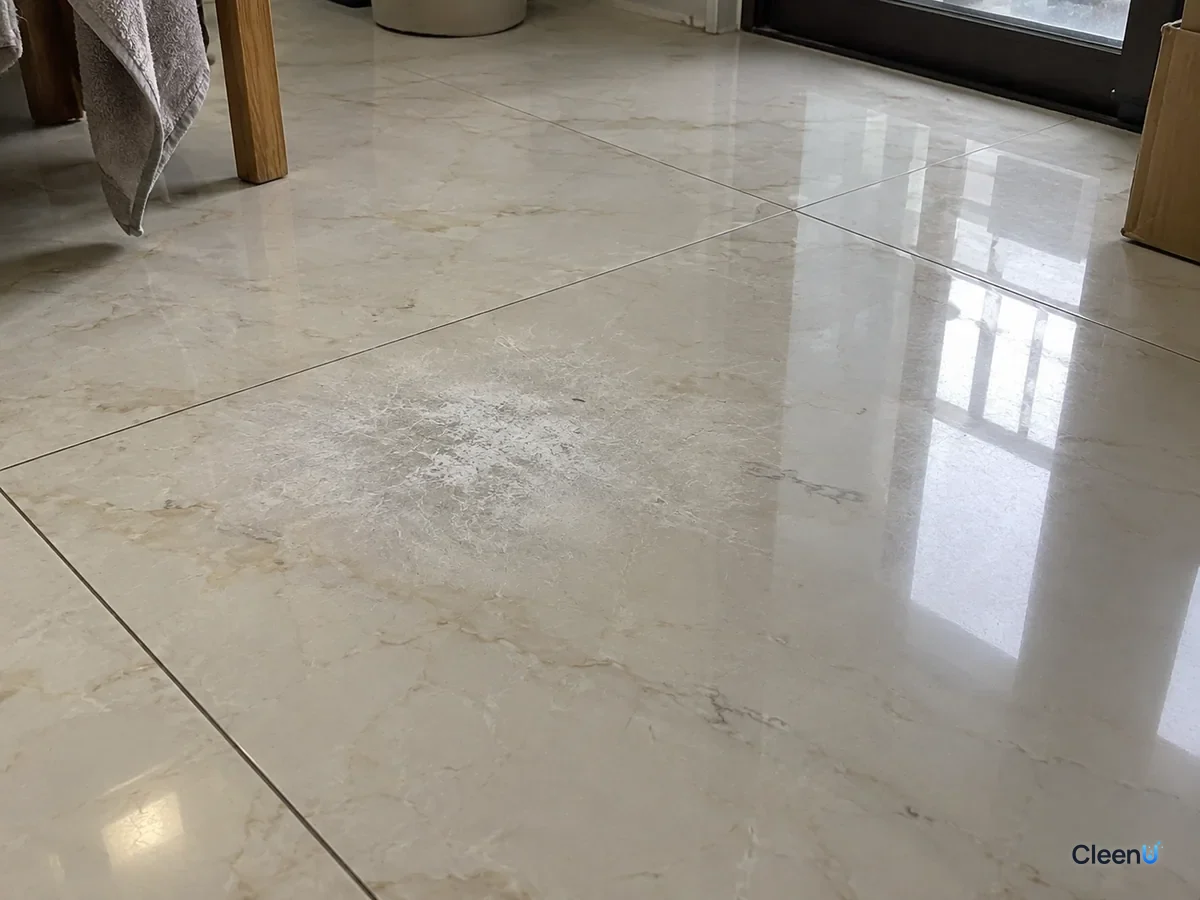
Marble is mostly calcium carbonate. Calcium carbonate reacts with acid to form soluble calcium salts, water and carbon dioxide. When that happens on the surface, it's called etching: a micron-thin layer of the polish dissolves, leaving the surface rough and dull, with pale, cloudy marks that look like water spots.
Etching isn't a stain. A stain sits on top and can be cleaned off. Etching changes the stone surface itself, so no cleaner will bring it back. It takes professional honing and polishing to repair.
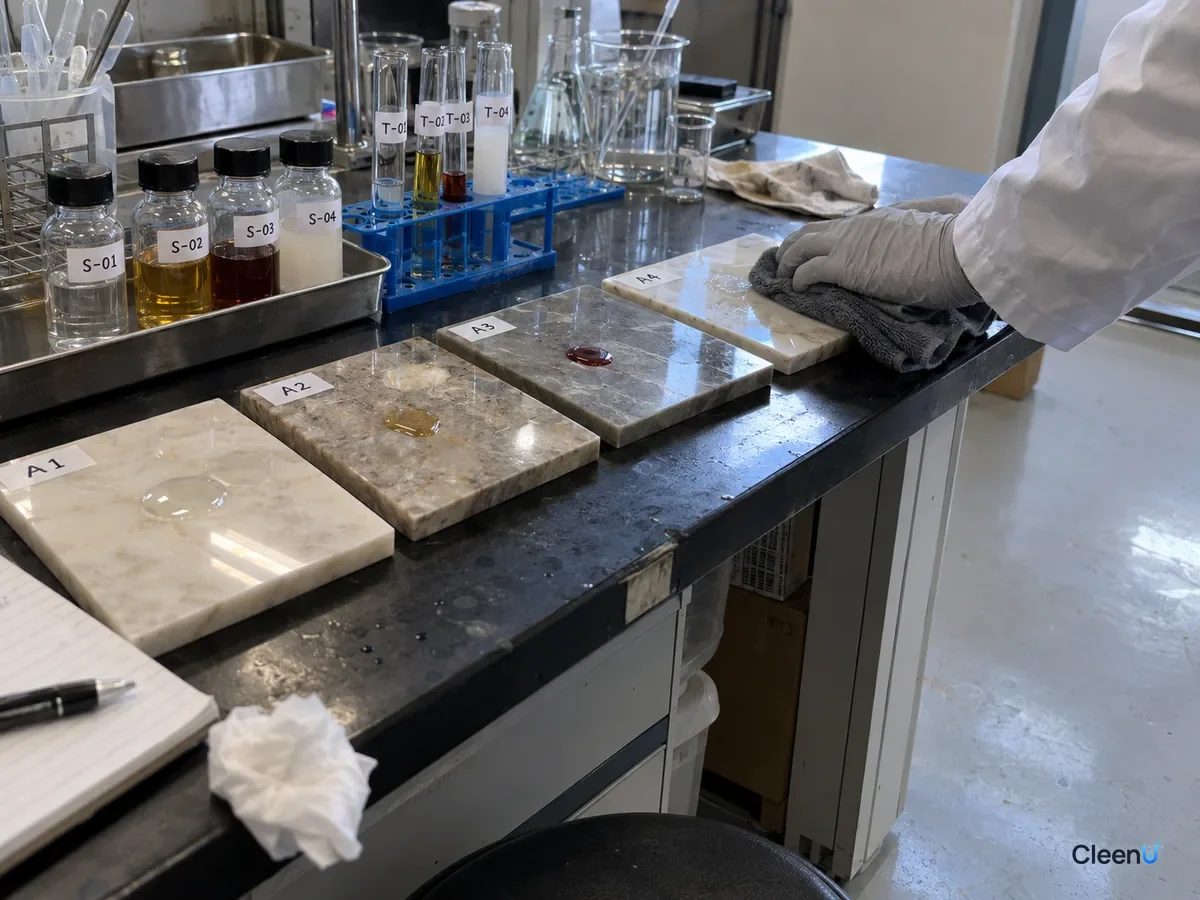
So the first rule for marble is: no acidic products at all. Vinegar, citric acid, descalers, toilet bowl cleaners and some bathroom cleaners are acidic. Even spilled orange juice, soda, wine or vinegar can etch if left sitting, so wipe spills promptly.
Terrazzo, travertine and some limestones are also mostly calcium carbonate and just as sensitive to acid. Granite is made mostly of silicate minerals and is far more acid-resistant, but its polish and sealer still deserve gentle treatment.
Does marble mind strong alkalis too?
Marble tolerates alkalis better than acids, but strongly alkaline cleaners can damage sealers and crystallized finishes on the surface and dull the shine. Over time they can also leave alkaline residue that attracts dust, and some colored marbles may discolor.
So the safest choice for marble is a neutral cleaner, ideally one labeled for natural stone.
Absorption and sealers: why light marble needs extra care
A stone's water absorption is how readily it soaks up water. Marble is a natural stone with some porosity, and varieties differ widely: dense marbles absorb little, while looser stones or those with natural fissures and veining absorb more. With light marble, absorbed water and soil show through the surface as yellowish or gray water marks, while darker stones hide the same absorption better.
If a robot mops daily with too much water, the stone slowly soaks it up, along with dust and cleaner residue from the pad. Over time, light marble can develop yellowed or darkened patches, often called water staining or yellowing, that surface cleaning alone can't remove.
Many marble floors are sealed at installation with a penetrating (impregnating) sealer that closes surface pores and cuts absorption. Sealers don't last forever. They wear with use and cleaning, especially with strong alkaline or acidic cleaners. So:
Use a neutral, stone-safe cleaner for daily care to protect the sealer.
Keep water low and let the floor dry quickly to limit absorption.
Check the sealer periodically, as your stone care guidance suggests. Put a few drops of water somewhere hidden. If they bead and sit for several minutes, the sealer is working. If the water soaks in quickly and darkens the stone, it's time to reseal.
How to set up a robot mop for marble
Lower the water. Marble is somewhat porous, and light marble especially absorbs water and soil. Water that lingers can seep into joints and below, causing water marks or yellowing. Set water to low, and the floor should dry within a minute or two.
Vacuum before mopping. Marble isn't especially hard, and grit dragged under a pad scratches the polish. Vacuum first and keep the pads clean.
Choose a cleaner that suits stone. Use only a neutral cleaner labeled for natural stone, at a light dose. When in doubt, mop with plain water.
Watch the joints and edges. Joints between slabs and along walls collect water and dirt, so check them after mopping.
Maintain it properly. Sealing and polishing should follow your stone supplier's or a stone care professional's advice. A robot mop and everyday cleaner don't replace that.
Can robot mop cleaning solution be used on marble?
It depends on the product label. Most robot mop solutions are neutral or mildly alkaline and contain no acid, so they're relatively gentle on marble. But whether one is suitable for natural stone depends on the floor types its label lists.
CleenU Robot Vacuum Cleaning Solution, for example, is a neutral, low-foam concentrate at pH 6.5 to 7.5 with no wax, no chlorine and no particles. Its label lists tile, vinyl plank, laminate and sealed hardwood, and natural stone isn't on that list. So for marble floors, we recommend a neutral cleaner labeled for natural stone, or plain water for everyday robot mopping. In homes that mix tile, wood and marble, use plain water on the marble areas, or set marble rooms to vacuum only and care for them by hand.
The general rule applies to every cleaner: go by the floors listed on the label, and don't assume a floor that isn't listed is suitable.
Already seeing dull or white patches?
First tell a stain from an etch. Wipe with a cloth dampened with plain water. If it comes off, it's a stain or scale. If it won't come off and the surface feels rough and has lost its shine, it's most likely etching.
Stains: wipe with a neutral stone cleaner and a soft cloth, then wipe with plain water and dry.
Hard-water scale: never use acid on marble to remove scale. Work at it with a neutral stone cleaner, and leave stubborn scale to a stone care pro.
Etching: cleaning won't fix it; it needs professional honing and polishing. Keep acidic products off the floor from now on.
For hard-water spots, see white spots after robot mopping, but note that the diluted-vinegar tip there applies to tile only, never marble.
Never put these in the tank
Vinegar and citric acid: many people use them to fight scale, but in a robot tank they get spread evenly across marble floors and etch large areas.
Bleach: harsh, can damage stone sealers and discolor colored marbles.
Descalers and toilet bowl cleaners: strongly acidic, marble's worst enemy.
For why these don't belong in a robot mop, see can you put vinegar or bleach in a robot mop tank.
CleenU Robot Vacuum Cleaning Solution works in most robot mops from Roborock, iRobot (Roomba Combo and Braava), Ecovacs Deebot, Dreame and Narwal, and in floor washers such as Tineco, for tile, vinyl plank, laminate and sealed hardwood areas. Add it to the clean water tank or the dock's designated detergent compartment as your manual directs. CleenU isn't affiliated with these brands; the names only indicate compatibility.
Zoning a robot in homes that mix marble and tile
Many homes have marble in the living room and tile or wood elsewhere. With one robot for the whole house, the safest zoning:
Mark the marble area as its own zone in the app with a lower water level.
Mop marble with plain water, or with a neutral cleaner labeled for natural stone, and use the robot mop solution elsewhere.
If your robot can't switch liquids by zone, use plain water throughout, or set marble areas to vacuum only and care for them by hand with a stone cleaner.
Where marble meets other floors, including marble thresholds, the pad can carry solution across, so wipe the transition with a cloth and plain water after mopping.
Everyday habits that protect marble
Put a mat at the entry to keep grit out.
Use felt pads on furniture legs so moving furniture doesn't scratch.
Blot spilled juice, vinegar, wine or coffee immediately, then wipe with plain water.
Keep acidic cleaners from splashing onto marble in bathrooms and kitchens.
Check the sealer periodically and reseal as your stone care guidance recommends.
This article is part of the Robot Vacuum Cleaning Solution & Maintenance Guide, which covers the full maintenance schedule and links to every troubleshooting guide.
Common questions about robot mops on marble
Can a robot mop my marble every day?
Yes. Keep the water low, vacuum first, and use only a neutral cleaner labeled for natural stone, or plain water.
Can I use vinegar to remove scale from marble?
No. Vinegar is acidic and etches marble, leaving permanent dull white marks. Use a neutral stone cleaner or call a stone care pro.
My marble looks dull and cloudy after mopping. Is it the cleaner?
It could be cleaner residue, scale or etching. If plain water removes it, it's residue or a stain. If it won't come off and feels rough, it's likely etching and needs professional honing.
Can I use robot mop cleaning solution on marble?
Go by the label. CleenU Robot Vacuum Cleaning Solution doesn't list natural stone, so use a stone-specific neutral cleaner or plain water on marble.
Is granite sensitive to acid too?
Granite resists acid far better than marble, but its polish and sealer still don't like strong acids or alkalis, so use a neutral cleaner day to day.
I spilled juice or soda on marble. What should I do?
Blot it with a dry cloth right away, then wipe with plain water and dry. Acidic drinks left sitting can etch.
My marble darkens and soaks up water when mopped. Should I keep robot mopping it?
Pause wet mopping on that area. If water darkens the stone or spots soak in, the sealer is likely worn, and more mopping won't fix it. Keep low water and a neutral solution for daily dust elsewhere, and have a stone-care professional check and reseal.
A robot mop can clean marble floors if you keep the water low, vacuum first, and use only a neutral cleaner labeled for natural stone, or plain water when unsure. Marble is mostly calcium carbonate, so any acidic product, including vinegar, citric acid, descalers and toilet bowl cleaners, etches it permanently, and strong alkalis can damage its sealer. Always go by the floors listed on a cleaner's label. CleenU Robot Vacuum Cleaning Solution is made for tile, vinyl plank, laminate and sealed hardwood, not natural stone, so in mixed-floor homes use plain water on marble or care for it separately.