
How-to
How Much Cleaning Solution Should You Add to a Robot Mop?
Direct answer
Work out the dose from the label ratio and your tank size, and err low. For CleenU Robot Vacuum Cleaning Solution, the ratio is about 1:50 to 1:100, and 10 to 20 mL per fill is usually enough. On very dirty floors, run a second pass instead of doubling up. Extra solution means foam and residue.
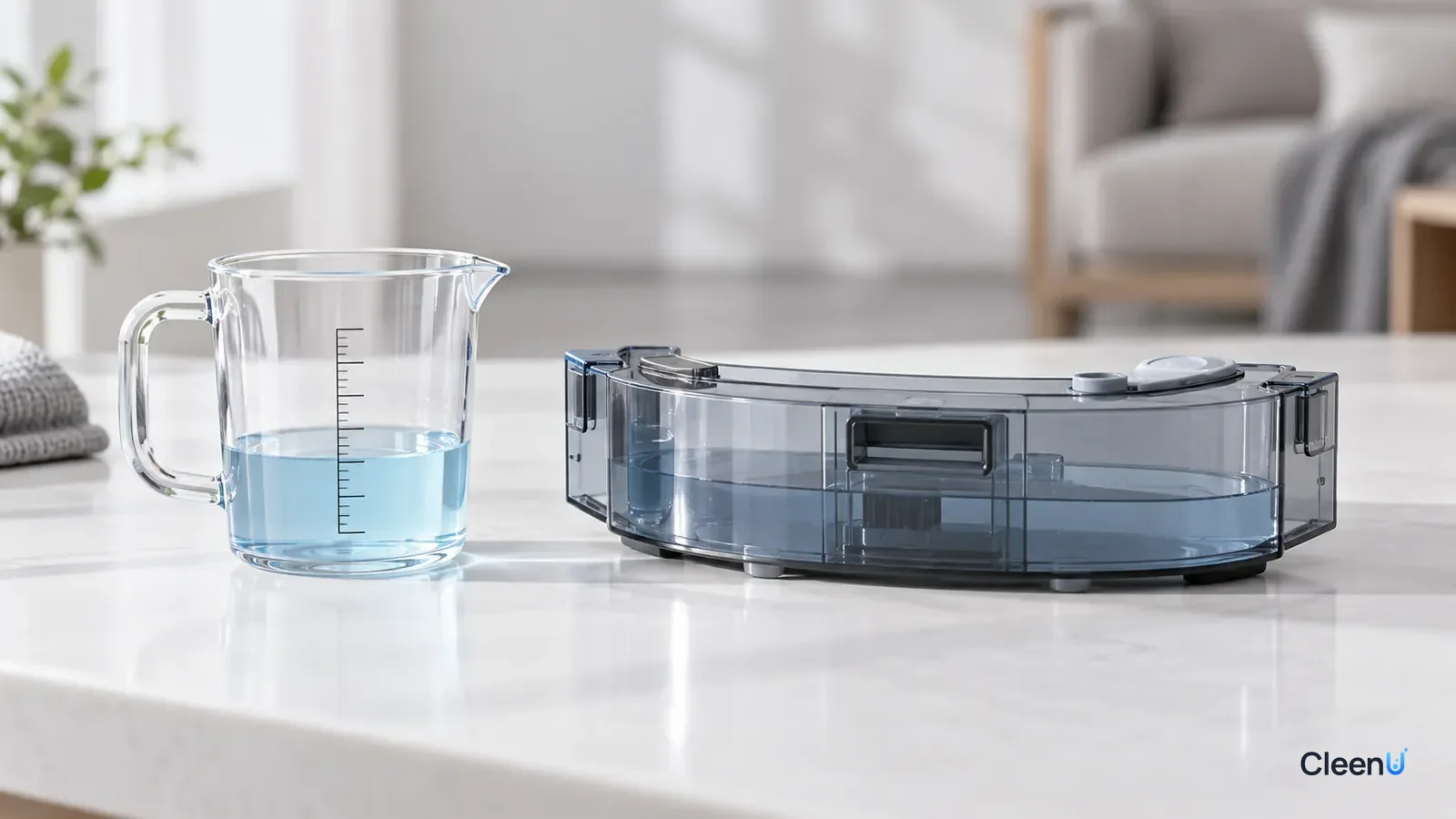
"A little extra will clean better" is almost everyone's instinct, and with a robot mop it is exactly backward. When people trace streaks, sticky floors and false "tank full" alerts back to their source, too much solution is usually the culprit.
What sets the dose
Two numbers decide how much solution to add: the dilution ratio on the label and how much water your tank holds.
The manufacturer sets the ratio based on the concentration of active cleaning ingredients, the soils the product targets and the equipment it is designed for. At that strength, the surfactants can wet and emulsify oily footprints and dull film, while the residue left behind is small enough that no rinse is needed. A 1:50 ratio means one part solution to fifty parts water.
Tank size varies a lot. Robots without a dock usually carry a few hundred milliliters of water onboard. Self-cleaning docks often hold three or four liters or more. The same ratio in a bigger tank calls for more solution, so a tip like "just add one capful" may not fit your robot at all.
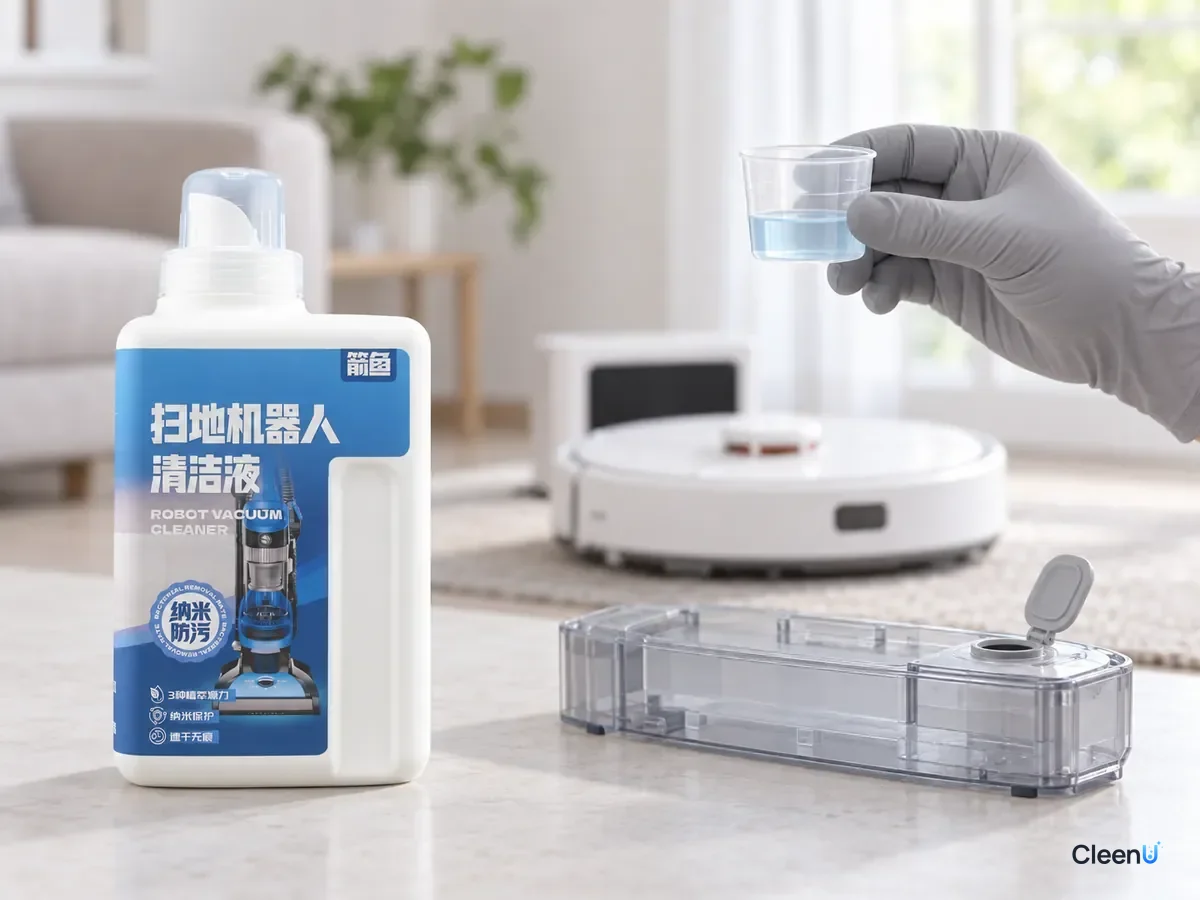
CleenU Robot Vacuum Cleaning Solution dilutes at about 1:50 to 1:100. For everyday use, 10 to 20 mL per fill is usually enough, measured with the marked cap. A 1-liter bottle covers about 50 to 100 runs. The table below converts 1:50 to 1:100 for common tank sizes; always defer to the label on the product in your hand.
If you have a Roborock, iRobot, Ecovacs, Dreame or Narwal robot mop, or a Tineco-style floor washer, CleenU robot mop cleaning solution works in most models; add it to the clean tank or dosing compartment as the manual directs. (CleenU isn't affiliated with these brands.)
Reference doses at 1:50 to 1:100
- 300 mL (typical onboard tank)
- 3–6 mL
- 1 L
- 10–20 mL
- 2 L (dock clean tank)
- 20–40 mL
- 4 L (large-capacity dock)
- 40–80 mL
The ratio is a range: use the lighter end (closer to 1:100) for routine upkeep and the stronger end (closer to 1:50) for dirtier kitchens and pet zones. Do not go beyond the range.
Why the right dose depends on what is on your floor
The same tank of water can be picking up very different things, and each needs a different amount of cleaning power.
Dust and fine grit just sit loosely on the surface. The vacuum takes most of it, and a damp pad picks up the rest with little or no solution. For floors like that, the lighter end of the ratio range, or even plain water, is enough.
Footprints and body-oil film are oily and cling in a thin layer. Surfactants have to wet and emulsify that film before the pad can carry it away. This is where the solution does its real work, and it is what most routine mopping in living rooms and bedrooms is dealing with, so the standard label dose is right.
Greasy kitchen footprints, pet drool marks and dried drink spills contain more fat, sugar and protein and hold on harder. What they need is not a stronger mix but more contact time and more wiping. A second pass, or spot-cleaning by hand first, does far more than doubling the dose.
So set a baseline dose for the soil your home mostly deals with, then handle the dirtier spots with extra passes and focus zones instead of adding more solution every time.
Why more solution leaves floors dirtier
This is where the intuition breaks down. The solution is there to clean, so how can adding more make things worse? The answer lies in how a robot mops compared with a person.
When you mop by hand, you can change the water, rinse with clean water and go over the floor with a dry mop. A robot works in a single pass. Water carrying the solution goes onto the pad and across the floor. Some of the dirty water is pulled back up, and the rest dries where it lands. Whatever cleaning ingredients are in that leftover film stay on the floor too.
At the right strength, the residue is so small you cannot see it once it dries. Double the strength and you double the surfactant left behind. That thin film feels tacky underfoot and shows up as streaks when light hits the floor at a low angle. It also grabs fresh dust, so the floor gets dirty faster. That is the "the more I mop, the worse it looks" loop.
Foam is the second problem. A low-foam formula makes very few suds at the label dose, but at double strength the foam increases noticeably. Once the pump, the scrubbing ribs and the recovery system churn it, foam builds up in the dirty tank, reaches the level sensor and triggers a false "tank full" alert. It can also seep out through gaps and dry around the lines and outlets.
The third issue is diminishing returns. Surfactants work within an effective concentration range. Past that point, the extra product does not raise cleaning power proportionally; it just adds residue. So doubling the dose usually doubles the residue, not the cleanliness.
Dose versus results: a curve that rises, then levels off
If you slowly increase the dose from zero, cleaning performance doesn't climb in a straight line. It rises, then levels off.
At a very low dose: there's too little surfactant in the water. Wetting improves a bit, but grease emulsification is weak, and oily footprints stay put.
At the right dose: surfactant concentration passes the critical micelle concentration and micelles form in quantity, pulling oil in and dispersing it into the water. Grease-cutting power jumps. This is where the recommended dose sits when a formula is designed.
Beyond that: cleaning barely improves and the curve flattens. The extra surfactant has nothing left to do, and it brings three side effects: more foam, more dried residue, and floors that feel sticky or slippery.
So doubling the dose doesn't make floors twice as clean; it leaves twice the residue. CleenU Robot Vacuum Cleaning Solution's recommended ratio of about 1:50 to 1:100 sits right where that curve starts to level off. Adding more only adds burden, not results.
Working out the dose by tank size
The ratio is relative to the water, so add concentrate in proportion to how much water is in the tank. At about 1:50 to 1:100: an onboard tank of about 0.5 L (17 oz) takes about 5 to 10 mL; a 1 L tank about 10 to 20 mL; 2 L about 20 to 40 mL; and a 4 L dock clean tank about 40 to 80 mL.
The math: dose ≈ water volume ÷ 100 to water volume ÷ 50. If the tank isn't full, scale the dose down to the water actually in it. When in doubt, go with the low end.
Why the same dose works differently in different homes
Water: calcium and magnesium in hard water use up some of the cleaning ingredients and combine with fatty acids to form calcium soap. Hard-water homes see white water marks more easily, but the fix is lower water flow and the label dose, not more solution.
Type of soil: a bedroom that's mostly dust needs only the low end. A kitchen or entry with lots of greasy footprints can take the high end, or get an extra pass as a high-attention zone.
Temperature: grease emulsifies less readily in cold water. When kitchen grease marks stand out in winter, a second pass does more than a bigger dose.
What actually helps on a really dirty floor
What improves cleaning is dwell time and scrubbing action, not concentration.
Run a second pass. The first pass wets and loosens the oily film; the second carries it away. Mark the kitchen, the area around the dining table and the entryway as focus zones in the app, or schedule a repeat run.
Vacuum before you mop. If grit and hair are not picked up first, the pad gets dirty fast, and by the end of the run it is wiping the floor with a dirty cloth.
Hand-treat heavy grease and dried spills first. Wipe thick grease by the stove or dried juice spots with a cloth dampened with diluted solution, then let the robot handle routine upkeep.
Keep the pads clean. Once a pad is saturated, adding more solution does nothing. Increase the dock's self-cleaning frequency if you can, and replace pads that have turned gray and stiff.
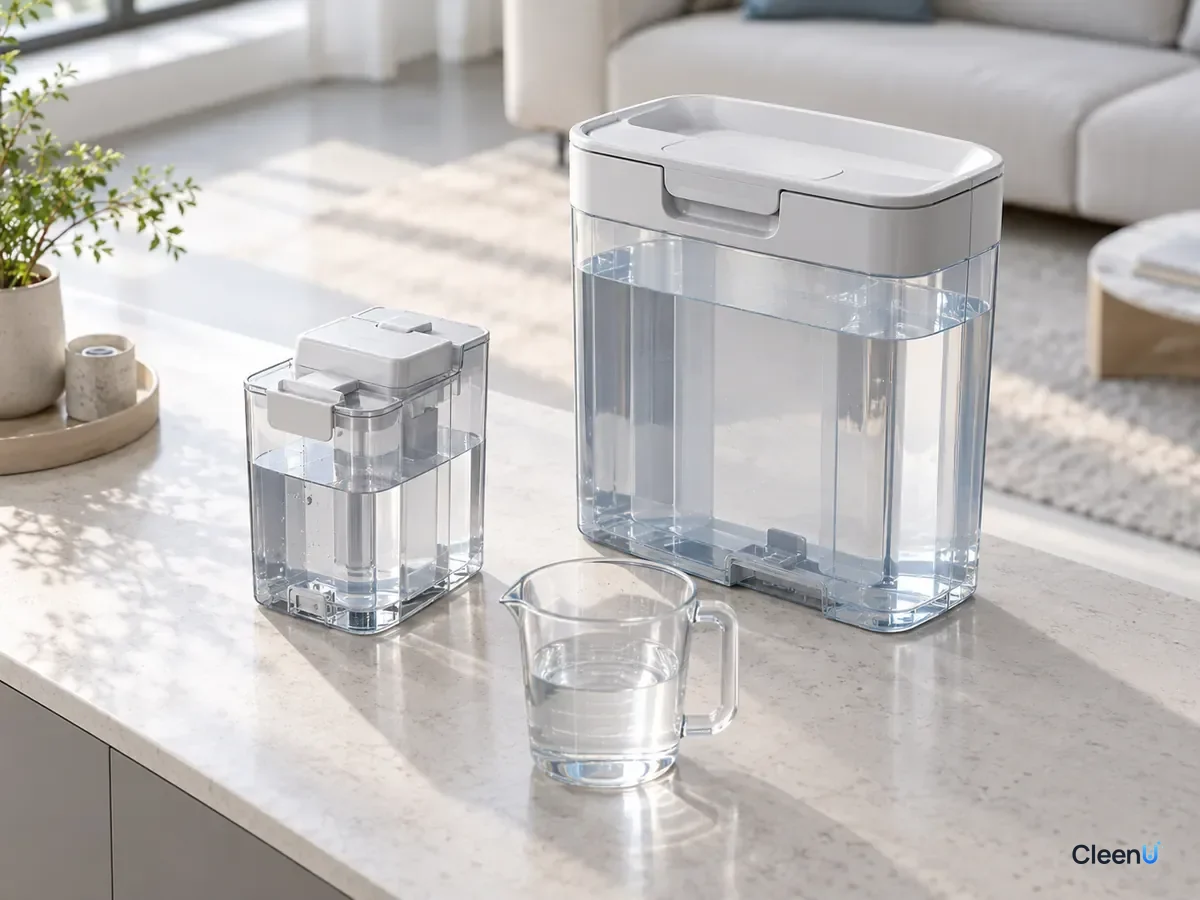
Four steps to a correct dose
Find your tank capacity
Check the fill line on the tank or the spec sheet in your manual, and note how much water your onboard tank or dock clean tank holds.
Work out the dose from the label ratio
Divide the water volume by the ratio. For example, 2 liters of water at 1:100 is 20 mL of solution. Do the math once and write it on a sticker near the tank so you do not have to repeat it.
Measure it; do not pour by eye
Use the marked cap or a measuring cup. Pouring straight from the bottle into the tank makes it very easy to overshoot.
Caution:Keep undiluted concentrate off your skin and out of your eyes; rinse with water if it splashes.
Check the floor, then fine-tune
Once the floor is dry, touch it and look across it at a low angle. If it feels tacky or shows streaks, move toward the lighter end of the ratio range. If oily footprints remain, add a focus-zone pass instead of more solution.
Do water hardness, season or floor type change the dose?
They change the results, but they are rarely a reason to add more solution.
In hard-water areas, calcium and magnesium in the water tie up some of the cleaning ingredients and leave white spots on dark floors as the water dries. Many people see those spots and add more solution, which just piles residue on top of the mineral marks. It works better to keep the label dose, drop the water level one step so the floor dries faster, and, if the spots persist, switch to filtered or distilled water if your manual allows it. Chelating ingredients in a formula help offset hard water to a degree, but they are also designed around the label dose.
In winter or humid weather, floors dry slowly, so any residue sits on the surface longer and is easier to feel as tackiness. The fix is a lower water level, better airflow or a dehumidifier, and if needed a move toward the lighter end of the ratio range. Do not keep using your summer settings.
Floor type matters too. Sealed hardwood and laminate do not like staying damp, so go lighter on both solution and water. Tile and luxury vinyl plank tolerate water well, so you can adjust within the label range based on how dirty they are. No floor calls for going above the label maximum.
How to tell the dose is right
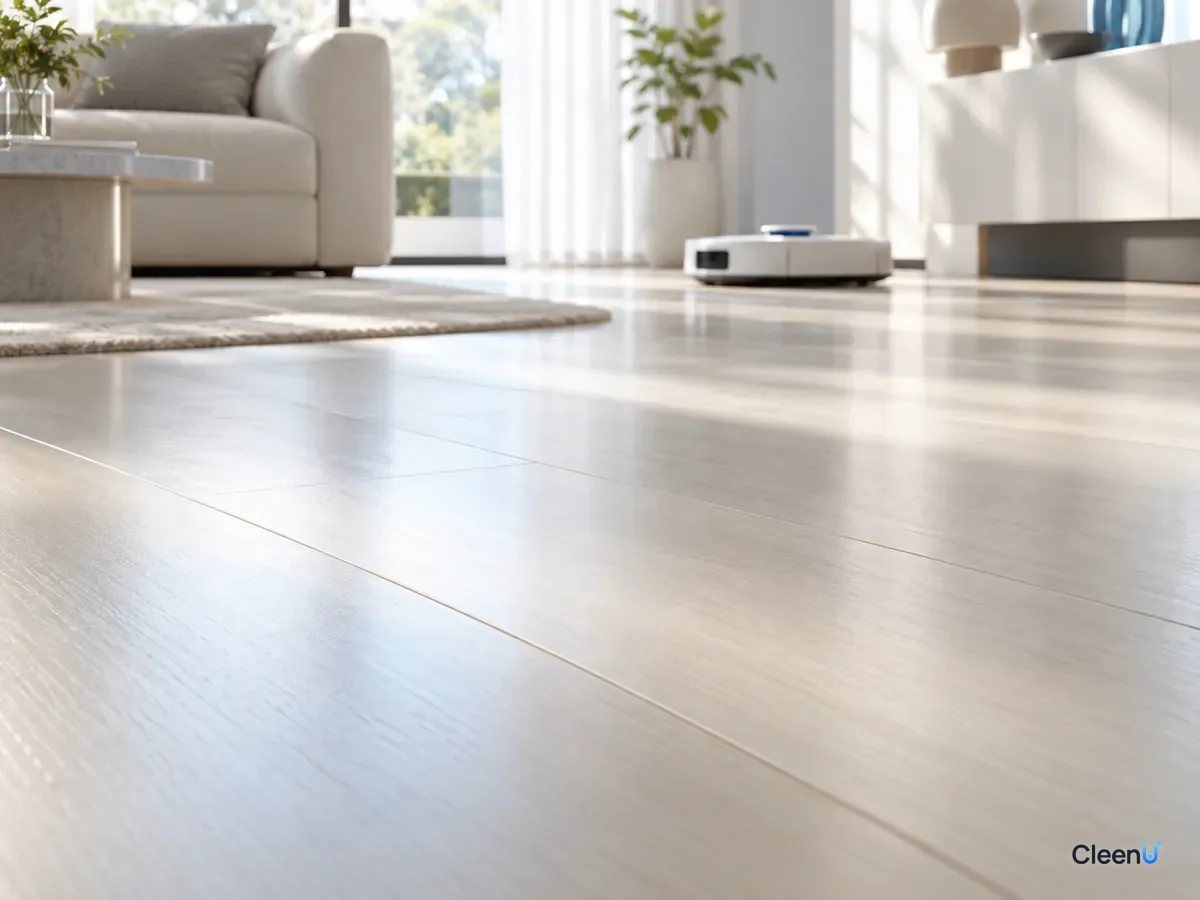
When the dose is right, you will notice a few things. The floor dries within a minute or two. It feels dry, not tacky, under bare feet. There are no obvious streaks or haze when you look at it in raking light. There is no thick layer of foam in the dirty tank. The pad comes out damp but not dripping.
If the floor is sticky or slick once dry, or there is always a layer of foam in the dirty tank, you are using too much, so cut back. If the floor is still sticky at the label dose, with a clean pad and after a second pass, the dose is no longer the issue. The product is leaving too much residue for your floors or your robot, and it is time to switch to a low-residue robot formula.
Stop using the solution if this happens
If floors stay sticky or slippery after you cut the dose, the robot keeps reporting a full dirty tank, or you notice a sharp smell after mopping, stop using the solution. Run with water only, clean the tanks and pads, and check the product label and your robot's manual.
Written for: Owners who are unsure how much solution to add, who see sticky floors or streaks after mopping, or who need to scale the dose for a large dock tankNot for: Robots whose manual specifies water only or the manufacturer's own solution only
10 to 20 mL per fill is all it takes with our Robot Vacuum Cleaning Solution.
For which tank the solution goes in, see where cleaning solution goes in a robot vacuum. For choosing a solution and troubleshooting, read the robot mop cleaning solution guide.
This article is part of the Robot Vacuum Cleaning Solution & Maintenance Guide, which covers the full maintenance schedule and links to every troubleshooting guide.
Dosing questions robot mop owners ask most
Will too much solution damage my robot?
A one-time overdose will not break anything, but using too much over time adds foam and residue that can trigger sensor errors and leave deposits around the outlets. If you overdid it, pour the tank out and mix a new batch.
My dock tank is large. How do I work out the dose?
Divide the water volume by the label ratio. At about 1:50 to 1:100 with 4 liters of water, that is roughly 40 to 80 mL. If in doubt, use the lighter 1:100 end.
Can I double the dose for a really dirty floor?
No. A second pass with the dirty area set as a focus zone cleans better than a double dose and does not leave a sticky film.
How do I know I am using too much?
A floor that is tacky or slippery once dry, streaks in raking light, and a constant layer of foam in the dirty tank are all signs of too much solution.
Can I use the same dose for a different brand of solution?
No. Each product has its own strength and ratio, so always follow the label on the bottle you are using.
I added too much or the wrong product. What now?
Too much: pour some out and top up with water to get back to about 1:50 to 1:100. In the dirty tank by mistake: empty and rinse that tank. Another cleaner or a disinfectant: empty the clean tank, rinse it two or three times, run a short cycle with plain water, then refill correctly.
Set the dose from the label ratio and your tank size, and err on the low side. Extra solution leaves residue and foam, not cleaner floors. On a dirty floor, run a second pass, vacuum first and keep the pads clean. If floors are still sticky after you cut the dose, switch to a lower-residue formula.