
How-to
How Often Should You Run Your Robot Mop?
Direct answer
Two to three times a week is enough for most homes. Mop daily where pets hang out, where a baby crawls, or in a greasy kitchen or busy entry. The more often you mop, the less solution you should add each time, sometimes just water, so residue doesn't build up day after day.

The first thing most people set up on a new robot mop is the schedule: what time it runs, whether it vacuums, mops or both, and how many passes. Plenty of people pick "vacuum and mop the whole house every day" on the theory that more is cleaner. A month or two later, some notice the floors getting slick, the pads smelling and the solution disappearing fast. Others mop once a week and find the kitchen and entry always look dirty.
There's no single right frequency. It depends on how many people live with you, whether you have pets or small kids, how much you cook and what your floors are made of. Below are schedules you can use as a starting point, by household type.
Frequency depends on how fast your floors get dirty
Vacuuming and mopping are different jobs. Vacuuming handles dry particles like dust, hair and crumbs, which show up every day, so many homes vacuum daily.
Mopping handles what vacuuming can't: skin oil in footprints, grease tracked from the kitchen, dried water and drink spots, paw prints and drool. Those build up more slowly, and you only notice them once there's enough.
So how often you mop comes down to a few things.
Traffic. More people, more guests and more time at home mean footprints pile up faster.
Pets. Paw prints, drool, shedding and splashes around food bowls make floors get dirty several times faster.
A crawling baby. Babies spend hours on the floor, so the bar for clean is higher.
Cooking. Daily cooking adds greasy footprints in the kitchen and dining area every day.
Floor type. Dark, glossy floors show every footprint and water spot; light matte floors hide dirt better.
Season. Rain and snow bring in mud and water at the entry. In humid weather floors dry slowly, and mopping too often backfires.
Schedules by household
Schedules by household type and area
One or two people, out at work, rarely cook
Mop the whole house twice a week; vacuum daily if you like
Floors mostly collect dust and a few footprints, so two mops a week keep them clean, with vacuum-only runs in between. Add a small dose of solution each time, or alternate water-only and solution runs.
Family of three who cook every day
Whole house three times a week, kitchen and dining area daily
In the app, set the kitchen and dining room to mop daily and other rooms every other day. Add a little solution for the kitchen; bedrooms can get water only.
Homes with cats or dogs
Pet areas daily, whole house three or four times a week
Mop the living room, around food bowls and the door your pets use every day, and bedrooms and the office every other day or two to three times a week. A pet-home solution with odor control works well at a small, label-strength dose.
Caution:Don't let the robot mop through urine or vomit. Clean those up by hand first.
Homes with a crawling baby
Mop crawling areas daily with a low-residue formula
Mop where your baby crawls every day, during naps or outings. Dose at the low end of the label or use plain water, and let the floor dry and air out before crawling time. Make the play mat a no-go zone and wipe it by hand.
Entry and mudroom
Daily in rain or snow, every other day otherwise
The entry collects the most grit and water. In wet weather mop it daily and set it as a priority zone for an extra pass.
Humid season
Mop less often and lower the water
In humid weather floors dry slowly, and mopping too often keeps them damp, which is hard on hardwood seams. Mop every other day, drop the water level a step and run a dehumidifier first.
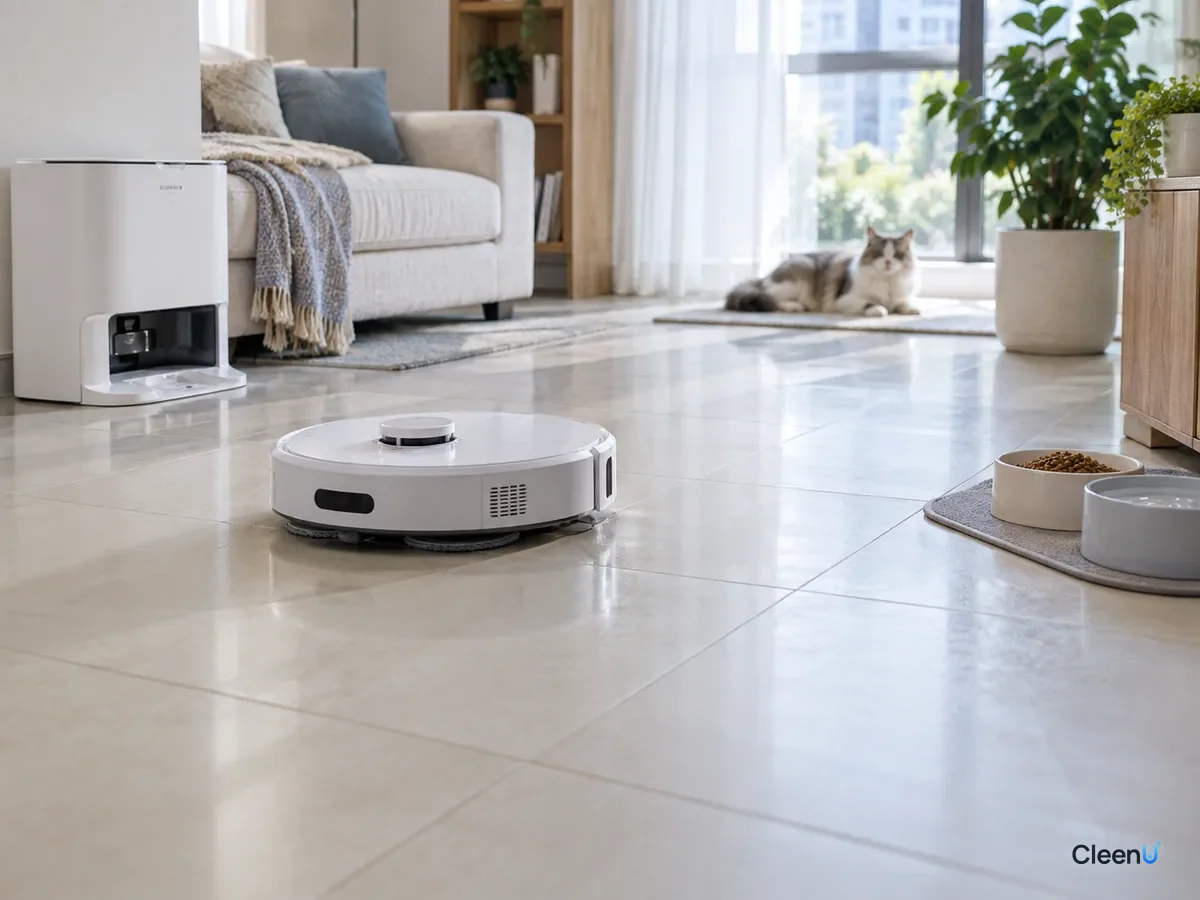
Why mop more often with less solution?
A robot never follows up with a rinse. The surfactants and other non-volatile ingredients in the solution stay on the floor as the water evaporates. Each run leaves very little, but mopping daily at a full dose lets residue build on the same floor day after day.
The first week you may not notice. After two or three weeks your bare feet pick up a slight tack, and faint streaks show in side light. Keep going and the floor turns slippery and collects dust faster, so it actually looks dirtier.
It's like painting the floor with an invisibly thin coat every day. You can't see one coat, but you can see twenty.
So think about frequency and dose together.
Mopping two or three times a week: dose at the label ratio each time. CleenU Robot Vacuum Cleaning Solution, for example, dilutes at about 1:50 to 1:100; 10 to 20 mL per fill is usually enough.
Mopping daily: dose at the low end, about 10 mL for a 1-liter tank, or alternate, such as water on weekdays and solution on weekends, using solution only for priority zones like the kitchen and entry.
If floors start feeling tacky or slippery: skip solution for a few days and mop with water to lift the buildup, then go back to a small dose. For more, see why floors get slippery after robot mopping.
One pass or two? How passes and frequency work together
Many robot mops let you set the number of passes. Passes and frequency are two dials you can trade against each other.
Mopping is really transferring soil from the floor to the pad. The first pass picks up most of the loose, easily dissolved soil. The second pass meets what's stuck on harder, and it also picks up some of the thin film the first pass left. For greasy footprints and dried drink spots, a second pass usually does more than a bigger dose on the first.
A practical way to combine them:
Rooms that stay clean longer: mop less often, one pass each time.
Kitchens, entries and pet areas that get dirty fast: mop more often and set them to two passes, rather than doing two passes everywhere.
Deep cleans or seasonal resets: two passes for the whole house, with a small dose of solution on the first and plain water on the second to lift residue.
One more thing: the pad gets dirtier as a run goes on. Self-cleaning docks send the robot back to rinse mid-run, but the more floor and the dirtier it is, the less effective the pad is toward the end of each stretch. Mop the dirtiest areas first or on their own, so the pad isn't dragging kitchen grease into the bedrooms.
Mop more, maintain more
More frequent mopping puts more load on the dock and pads.
Dirty water tank: empty, rinse and let it dry open after every run. If you mop daily, that's a daily task.
Pads and wash tray: with daily mopping, scrub the wash tray and filter every three or four days and hand wash the pads weekly.
Clean water tank: use solution mix the same day; don't fill it up for the week.
Consumables: pads and brushes wear out sooner than the manual's reference interval, so replace them based on wear.
For a full routine, see robot vacuum maintenance schedule.
When to schedule runs
While you're out: after you leave for work or school drop-off, so the robot doesn't get in the way and the floor is dry when you're back.
After dinner: have the robot mop the kitchen and dining area while the greasy footprints are still fresh and easiest to remove.
Once your pet's bathroom habits are reliable: when you first set up a schedule in a pet home, watch a few runs while you're home so the robot never finds an accident first.
When your baby isn't on the floor: in homes with a crawler, schedule runs during naps or outings.
CleenU Robot Vacuum Cleaning Solution is a neutral, low-foam concentrate at pH 6.5 to 7.5 with low-foam nonionic surfactants and a defoamer, no wax, no chlorine and no particles. It's designed for low concentration, which suits frequent everyday robot mopping, and the pet-home version adds cyclodextrin-based odor control. It works in most robot mops from Roborock, iRobot (Roomba Combo and Braava), Ecovacs Deebot, Dreame and Narwal, and in floor washers such as Tineco. Add it to the clean water tank or the dock's designated detergent compartment as your manual directs. CleenU isn't affiliated with these brands; the names only indicate compatibility.
Signs your mopping schedule needs adjusting
- Tacky underfoot or streaks in side light: cut the solution dose, or alternate water-only and solution runs
- Floors getting slippery: skip solution for a few days and mop with water
- Kitchen and entry always dirty: make them priority zones with an extra daily pass instead of raising the dose for the whole house
- Pads and dirty tank smelling fast: clean them more often and check whether the robot is mopping up things it shouldn't
- Dark or damp hardwood seams: mop less often and lower the water level
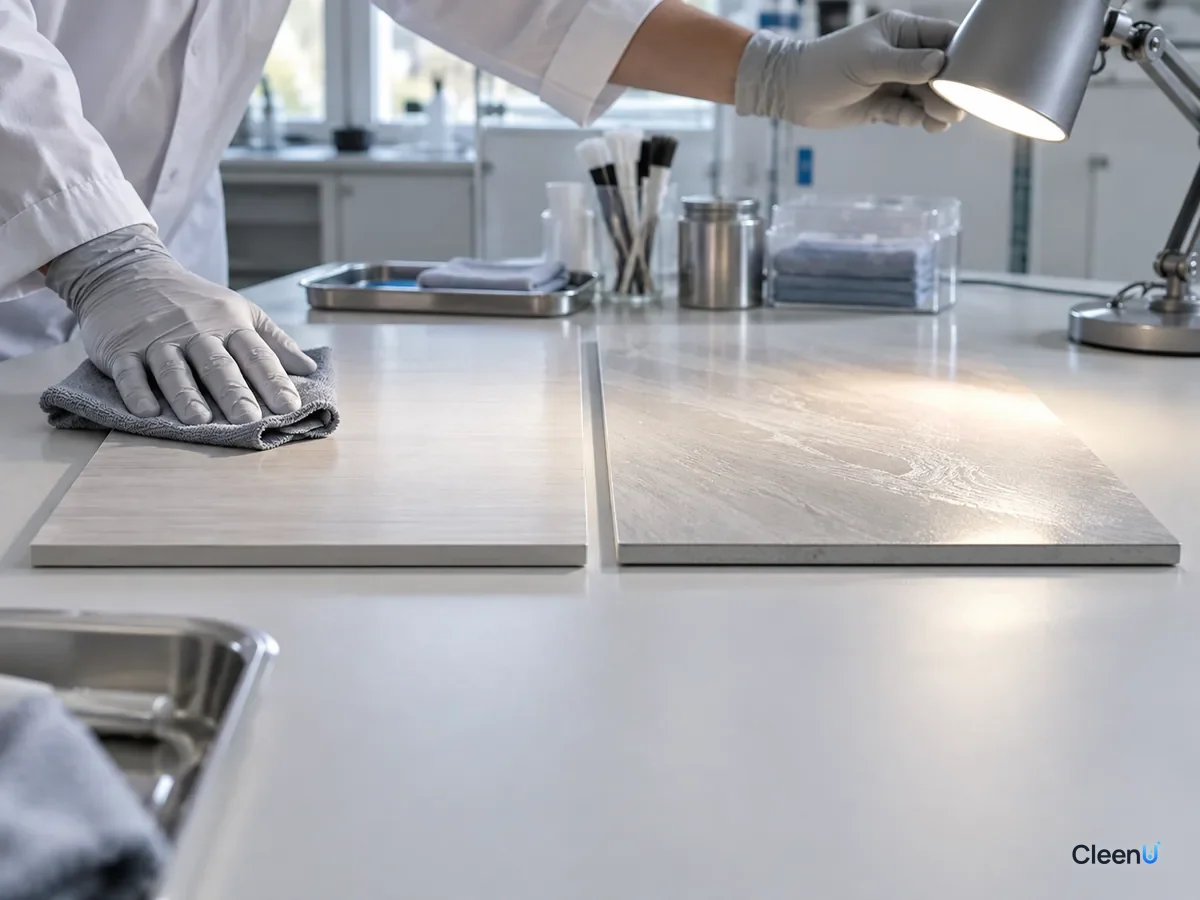
Should vacuuming and mopping run separately?
Many robots let you vacuum and mop together, vacuum first then mop, or run them as separate jobs. If you vacuum more often than you mop, split them: vacuum only on a daily schedule, and run a mop-only job every other day or a few times a week.
The advantage is that pads don't pick up dust and hair during vacuuming, and by the time the robot mops, there's no loose debris, so the pad only has to deal with greasy film and footprints. Floors come out cleaner, and pads and the dock last longer. Turning on "vacuum before mopping" for every mop run works well too.
Common questions about how often to robot mop
Is it OK to run my robot mop every day?
Yes, for homes with pets, small kids or lots of cooking. Just dose at the low end of the label or alternate water and solution so residue doesn't build up.
Is vacuuming daily and mopping weekly enough?
For one or two people who rarely cook and have no pets, vacuuming daily and mopping twice a week is enough. Give the kitchen and entry an extra pass when they get dirty.
Do I need to add solution every time I mop?
No. Water handles everyday dust. Add a little solution for greasy kitchens, entries and pet areas.
Would mopping twice a day be cleaner?
For most homes it's unnecessary. It keeps floors damp longer and loads up the dock and pads. For spots that need more, set a priority zone with an extra pass.
Can I mop hardwood every day?
Yes, if the finish is intact and the seams are tight, on a low water setting. The floor should dry within a minute or two with no water in the seams.
Why are my floors getting more slippery with daily mopping?
Usually a full dose of solution every day is building up residue. Skip solution for a few days, mop with water, then dose at the low end.
How often should I run my robot mop with pets?
With shedding pets or daily dog walks, vacuum every day and mop daily or every other day, adding an extra pass by the door and food bowls. When you mop often, use the low end of the solution dose or alternate with plain water so residue doesn't build up, and wash the pads and tray more often.
How often should you run a robot vacuum and mop?
Most homes do well with daily vacuuming and mopping two to three times a week. Move to daily mopping for kitchens, pets, or a crawling baby, and mop wood floors less often. Match the solution to the schedule: the more often you mop, the less you need per fill.
If you mop often and want a low-foam, wax-free robot mop solution designed for low concentration so daily use doesn't build up residue, try Robot Vacuum Cleaning Solution.
How often to run a robot mop depends on how fast your floors get dirty. One or two people who rarely cook can mop two or three times a week. Homes that cook daily should mop the kitchen and dining area every day, and homes with pets or a crawling baby should mop those areas daily too. The more often you mop, the lighter the dose, or alternate water and solution, so residue doesn't build up, and clean the dock and pads more often. An extra pass on priority zones works better than a bigger dose for the whole house.