
Troubleshooting
Smelly, Graying Robot Mop Pads: How to Wash Them and When to Replace Them
Direct answer
Robot mop pads usually smell because they stay damp after mopping and the soil trapped in the fibers ferments. Wash them and dry them completely after every run, deep clean them once a month, and replace them once they turn dark, stiff or flattened, or still smell after washing.
Check these five things to find out why the pads smell
- Do the pads stay wet after mopping, and is the dock's drying function turned on?
- Is the dock's pad-wash interval long, so dirty pads cover a large area?
- Were the pads hand-washed with fabric softener, or with detergent that wasn't rinsed out?
- Are there pets at home, with drool, skin oil and food bits on the floor?
- How old are the pads, and have they gone stiff, flat or frayed at the edges?
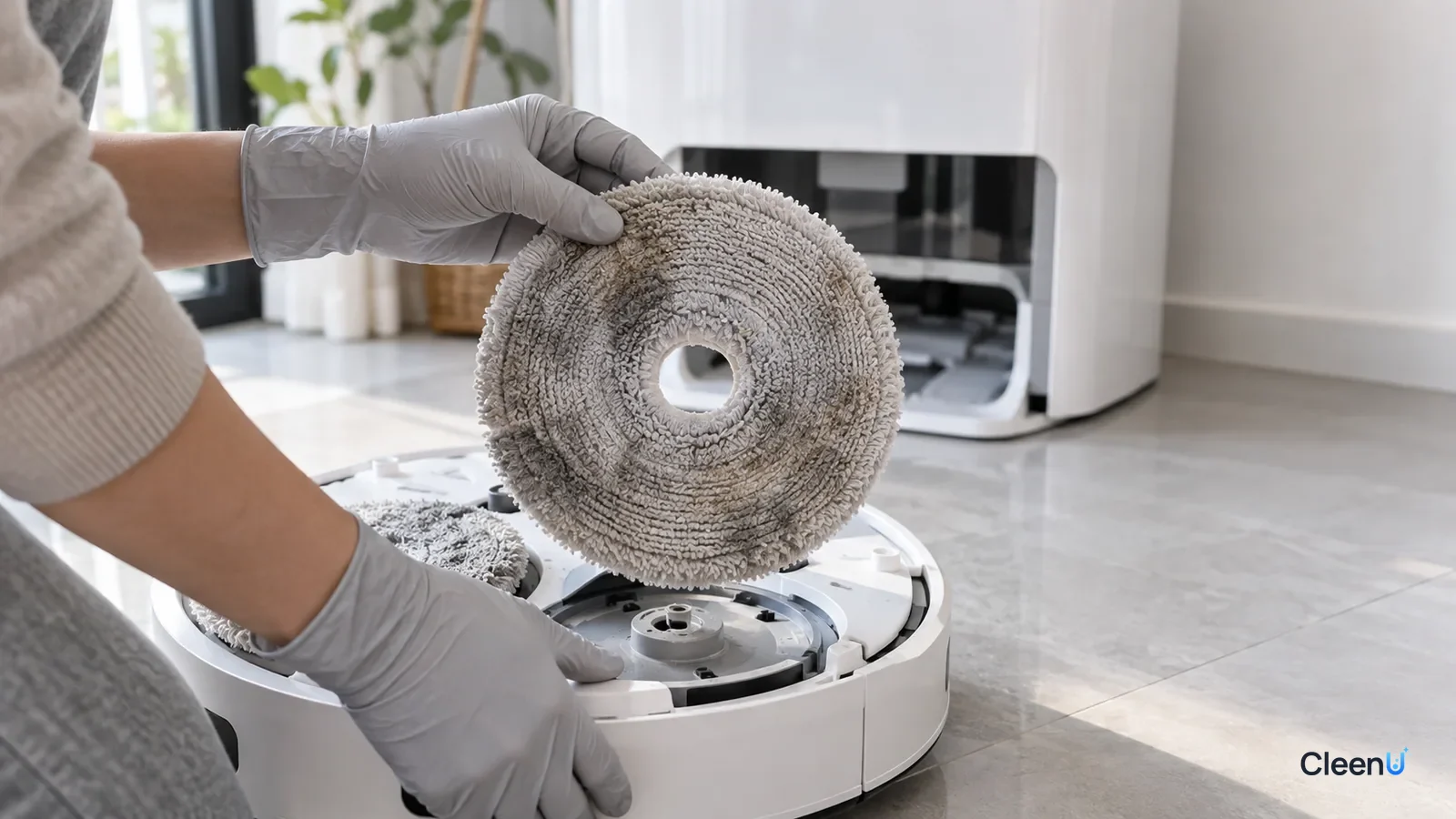
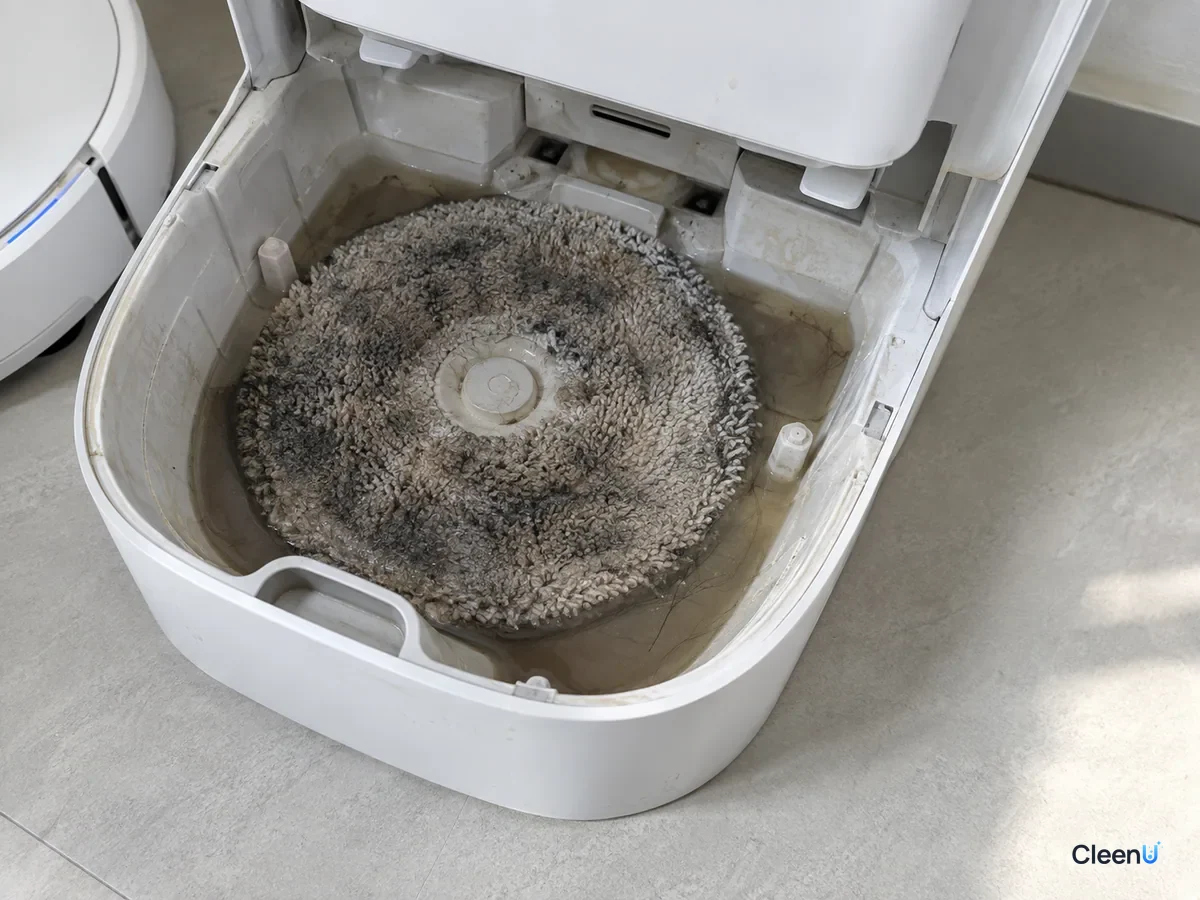
After a while with a robot mop, a lot of owners notice the pads getting grayer and darker, with a sour or musty smell up close, and a faint odor in the house after the robot runs. Some blame the cleaning solution; others add a strongly scented solution to cover it up, and the smell only gets stranger.
Smelly, graying pads are one of the most common robot mop problems. The causes are usually simple, and so is the fix.
Why do robot mop pads smell and turn dark?
Mop pad fibers are fine and dense, and they pick up a lot of soil: dust, skin flakes, hair, skin oil from footprints, kitchen grease, pet drool and food bits. Much of that is organic matter, which is food for bacteria and mold.
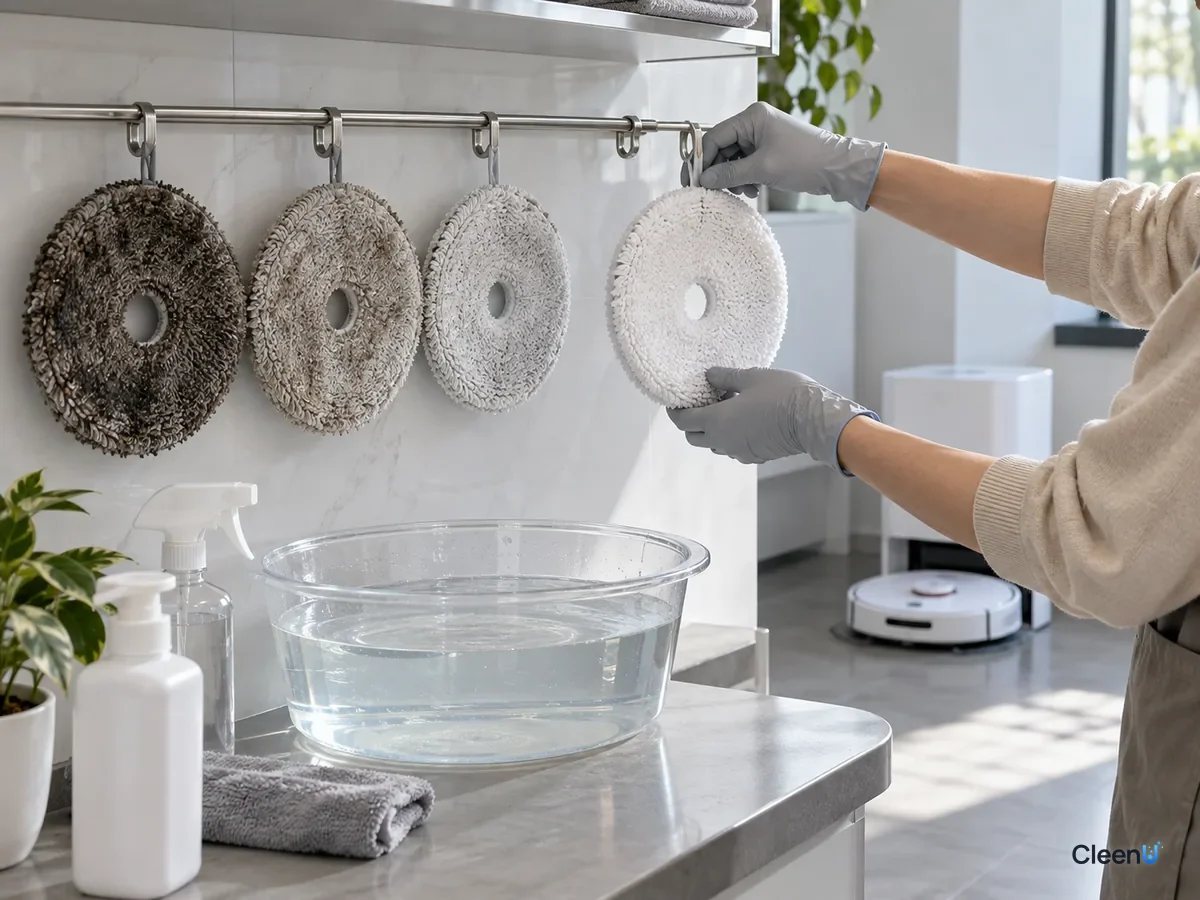
The pads are also almost always damp. If they aren't washed and dried soon after mopping, wet fibers plus leftover organic matter let microbes multiply within hours, and as they break it down they give off sour and musty smells. Over time, soil and microbial byproducts deep in the fibers turn the pads gray and dark in a way a quick rinse won't fix.
Two other things darken pads: oily soil that builds up in the fibers and holds on to dust, and minerals from the water or detergent residue that leave the fibers stiff and gray.
Does the dock's washing and drying actually help?
Yes, and it matters a lot.
A self-cleaning dock scrubs the pads during mopping to wash most of the soil out, and the drying cycle afterward blows warm air through them. That removes the one thing microbes need most: moisture. Turning on drying alone fixes a lot of pad odor.
Dock washing only removes surface soil, though. Grease and buildup deep in the fibers still need a periodic hand wash. On docks or robots without drying, take the pads off after every run, wash them and let them dry.
The cleaning solution matters too. A low-foam, low-residue robot solution lets the dock rinse oily soil out of the pads more easily, while high-foam, high-residue products leave buildup in the fibers that makes pads stiff and tacky. CleenU Robot Vacuum Cleaning Solution, for example, is a neutral, low-foam formula with a pH of 6.5 to 7.5, wax-free and chlorine-free, dosed at about 1:50 to 1:100, or roughly 10 to 20 mL per fill.
It can be used in most Roborock, Ecovacs, Dreame, Narwal and iRobot robot mops and in Tineco-type floor washers; where it goes, and whether auto-dosing can be used, depends on the manual. CleenU isn't affiliated with these brands.
How pads trap soil: the structure of microfiber
Most robot mop pads are microfiber, usually a blend of polyester and polyamide (nylon). During manufacturing the fibers are split, so each one breaks into many finer wedge-shaped filaments with countless tiny gaps and channels between them.
Those gaps do two things. First, capillary action: they soak up and hold water quickly, so the pad stays evenly damp. Second, enormous surface area: the filament edges scrape up fine dust and oily film from the floor and lodge it in the gaps. That's why microfiber picks up soil so much better than ordinary cotton.
The same structure is why pads hide things. Oil, protein and fine dust lodged deep in the gaps are hard to rinse fully out, and when the pad stays damp, that residue becomes a breeding ground for microbes.
Why fabric softener ruins mop pads
The active ingredients in fabric softener are cationic surfactants, such as esterquats. They carry a positive charge and cling tightly to negatively charged fibers, forming an oily molecular film that makes fabric feel smooth and fluffy.
On clothes that's the point. On mop pads it's a problem. The film clogs the microfiber's gaps and makes the fibers water-repellent, so absorbency drops noticeably and water spreads unevenly while mopping. The film also transfers to the floor, leaving it slippery or tacky. And softener buildup is hard to wash out in one go; the more you use, the less the pad absorbs.
So there's one firm rule for washing pads: no fabric softener, and avoid "2-in-1" detergents with built-in softener where you can.
Hard water and residue make pads stiff and gray
In hard-water areas, pads that go wet and dry over and over slowly collect calcium and magnesium in the fibers. These combine with fatty acids from detergent and skin oil to form calcium soap, leaving the fibers stiff, gray and rough. Overdosed cleaning solution does something similar, drying into solids that lodge in the fibers.
If a pad is stiff and gray but doesn't smell much, mineral and residue buildup is the likely cause. A deep clean with a warm soak, a little laundry detergent, plenty of scrubbing and extra rinsing helps somewhat. If it's still stiff and absorbs poorly, it's time to replace it.
Why drying cuts odor so much
Microbes need water to grow. Once a pad's moisture drops below a certain level, most bacteria and molds slow down sharply or stop. A dock's warm-air drying pulls moisture out of the pads right after mopping, shortening the time they spend damp, warm and full of nutrients.
Air-drying can do much the same, as long as there's airflow: hang the pads up or spread them out, and don't leave them folded or tucked into a stuffy corner. The faster they dry, the less they smell.
Causes and fixes, side by side
Common reasons robot mop pads smell or darken, and what to do
| Cause | What you notice | Fix | Prevention |
|---|---|---|---|
| Pads stay damp | Sour or musty smell that gets worse | Take them off, wash them and dry them fully | Turn on dock drying, or wash and air-dry after every run |
| Long pad-wash interval | Pads darken fast; floors look grayer | Shorten the interval and deep clean the pads | Wash by room or a smaller area |
| Detergent or softener residue | Pads stiff or tacky; floors sticky | Rinse several times in plain water | Skip fabric softener and rinse thoroughly |
| Grease buildup | Pads dark and shiny, greasy to the touch | Soak in warm water with a little laundry detergent, then scrub | Wipe up large kitchen spills by hand first |
| Pet drool and food bits | Strong or fishy smell | Wash the pads and wash tray together and dry them | Clean up pet areas by hand; wash pads more often |
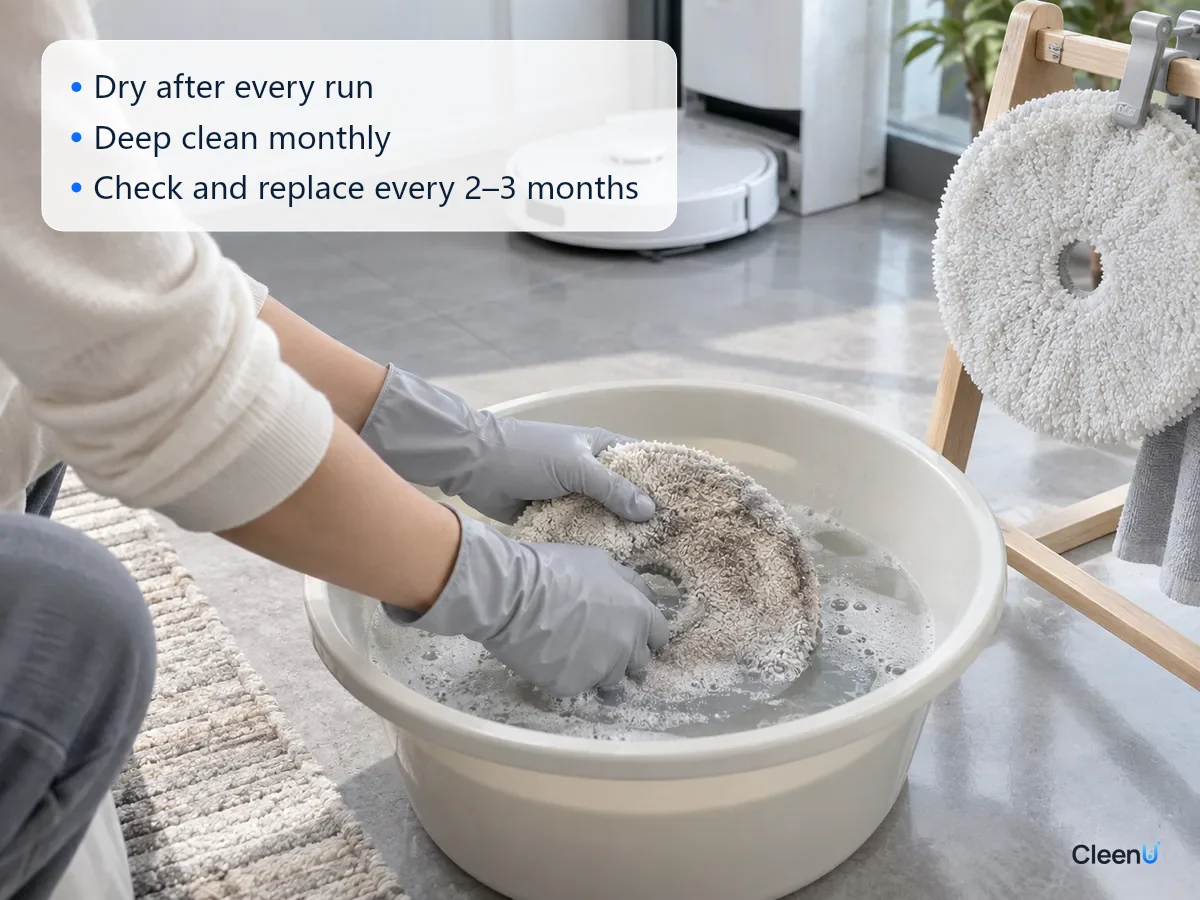
| Worn-out pads | Stiff, flat or frayed; smell won't wash out | Replace the pads | Check them every two to three months |
How to wash robot mop pads properly
Everyday washing: on a docked robot, let the dock wash and dry the pads. Without a dock, take the pads off after mopping, rinse and scrub them in clean water, wring them out and hang them somewhere airy to dry, in sunlight if you can.
Monthly deep clean: take the pads off and soak them for 20 to 30 minutes in a bowl of warm water with a little laundry detergent. Scrub them by hand or with a soft brush to work the soil and grease out of the fibers. Rinse repeatedly until the water squeezed out is clear and free of suds, then dry them completely or let the dock dry them.
A few cautions: skip fabric softener, which coats the fibers with an oily film that cuts absorbency and transfers to the floor as a sticky residue. Don't scald the pads with boiling water, which can warp them. Whether they can go in the washing machine or take chlorine bleach depends on the pad's care instructions; when in doubt, wash by hand.
Clean the wash tray too: clean pads won't stay clean if the dock's wash tray is full of dirty water and grime. Take the tray out and scrub it once a week.
Washing different kinds of pads
Spinning round pads: the most common type, usually attached to the spinning plates with hook-and-loop backing. For a deep clean, take the whole pad off to soak and scrub it, and clear out the hair that collects around the center hole. Dry them flat or hanging, not folded.
Flat pads: long pads that clip onto a mop bracket. The fibers are dense and grease tends to build up in the middle. After soaking, scrub along the direction of the fibers, rinse well, and dry them pulled flat so they don't warp.
Roller mops: some models scrub continuously with a roller. If the roller doesn't come apart, remove and rinse it on the schedule in the manual, and clear hair from both ends.
Disposable pads: replace them after use. Don't wash and reuse them; their fibers aren't built for it and they shed and clean poorly.
When is it time for new pads?
Pads are consumables, and even well-washed pads wear out. Replace them when:
They're still dark or gray after a deep clean and the color won't come back.
They still smell noticeably after being washed and dried.
The fibers have gone stiff, matted or flat and no longer feel soft and fluffy.
The edges are fraying or shedding, or the hook-and-loop backing or clips no longer hold well.
Mopping results have clearly dropped off, with dirty floors or streaks.
Most homes should check pads every two to three months. Homes with pets or daily mopping may need to replace them more often. Use pads made for your model, attached firmly and evenly.
The pads are clean, but the house still smells?
Pads are only one source. Dirty water left overnight in the dirty tank, water stored too long in the clean tank, and standing water and hair in the wash tray can all make the house smell. Check them together: empty, rinse and dry the dirty tank after every run, use mixed solution in the clean tank the same day, and scrub the wash tray weekly. For what you can and can't use to clean the tanks, see can you put vinegar or bleach in a robot mop tank. If pad residue is leaving floors sticky or streaky, see robot mop leaving streaks.
Don't try to cover the smell with a heavily scented solution, essential oils or disinfectant in the tank. Fragrance only masks it for a while, the soil and microbes are still there, and high-fragrance, high-foam products add residue that makes the pads dirty faster.
This article is part of the Robot Vacuum Cleaning Solution & Maintenance Guide, which covers the full maintenance schedule and links to every troubleshooting guide.
Stop if you notice any of these
The pads won't spin, or there's grinding or a burning smell; the dock gives off an unusual smell or gets hot while drying; the dock still smells strongly after the pads and wash tray are thoroughly cleaned. Unplug it and stop using it, check the pad attachment and the dock, and contact the manufacturer's support. Don't take apart the dryer or electrical parts yourself.
Mop pad odor and graying: questions people ask most
How long should the dock's drying run?
The dock's default drying cycle is fine; it usually starts automatically after mopping. What matters is drying after every run so the pads never sit wet overnight.
Can I wash robot mop pads in the washing machine?
Check the pad's care instructions. If machine washing is allowed, use a mesh laundry bag, a regular cycle and no fabric softener. When in doubt, wash by hand.
Can I soak dark pads in bleach?
Not as a first step. Chlorine bleach can damage fibers and color, and residue can end up in the tank. Soak and scrub in warm water with laundry detergent; if they won't come clean, replace them.
How often should I replace robot mop pads?
Check them every two to three months, and replace them once they're dark, stiff, flat or keep smelling after washing. Homes with pets may need to replace them more often.
Will a strongly scented solution get rid of pad odor?
No. Fragrance only masks it; the cause is moisture and soil. Washing and drying after every run, plus a monthly deep clean, is what removes the smell.
Why do new pads turn dark within days?
Usually the pad-wash interval is too long or the floor hadn't been mopped in a while, so the pads picked up a lot of soil at once. Shorten the interval and vacuum before mopping.
My robot mop leaves a smell after mopping. What should I check first?
Check the mop pads first. Pads that are not fully washed or dried are the most common source, and they spread that odor across the floor. Smell the pads: if they are sour or musty, remove them, wash with water or a little laundry detergent, skip fabric softener and dry them completely. If the pads are clean, move on to the dirty tank, filter and dock wash tray.
For a low-foam, low-residue robot mop solution that won't leave buildup in your pads, try Robot Vacuum Cleaning Solution.
Smelly, graying robot mop pads usually come down to pads staying damp after mopping, plus soil and detergent residue building up in the fibers. Let the dock wash and dry the pads after every run, or wash and air-dry them by hand if it can't; deep clean them monthly in warm water with a little laundry detergent and no fabric softener; and scrub the wash tray weekly. Replace pads once they're dark, stiff, flat or keep smelling. Don't cover the smell with fragrance; keeping things clean and dry is what works.