
Formulation Science
Why Robot Mop Cleaning Solutions Need Preservatives
Direct answer
Water-based cleaners contain water, surfactants and fragrance, so microbes can grow in them, and more easily once opened and diluted. A proper preservative system keeps the product from spoiling within its shelf life. It protects the liquid in the bottle; it doesn't make the solution a disinfectant.
How a fresh bottle of solution can end up spoiled
- Leaving the factory: the formula's preservative system keeps microbes in the bottle at a very low level.
- Opening: each time you open the cap, airborne bacteria and mold spores get a chance to enter, and a wet measuring cup or a hand on the bottle neck brings in more.
- Diluting: at 1:50 to 1:100 in the tank, the preservative is diluted dozens of times too, and its protection drops sharply.
- Sitting: a mix left for days in a warm tank lets surviving microbes multiply.
- Spoiling: the liquid clouds, smells sour or foul, grows slime, and the tank and pads start to stink.
Many people see "preservative" on a cleaner's ingredient list and wonder why it can't be left out. Others take it the other way: if there's a preservative, surely the cleaner kills germs?
Neither is quite right. To see what preservatives actually do in a cleaner, start with why a bottle of cleaner goes bad in the first place.
Why can cleaners grow microbes?
Microbes need water, nutrients, a suitable temperature and a suitable pH. Water-based cleaners check nearly every box.
Water: it's most of what's in the bottle.
Nutrients: surfactants, fragrance, thickeners and some naturally derived ingredients are usable carbon sources for many bacteria and molds.
pH: neutral is right where most bacteria are comfortable.
Temperature: room temperature, especially in summer and inside a dock, suits microbial growth.
So a water-based cleaner without a preservative system can cloud and smell within days to weeks of opening. That's not poor quality; it's the nature of water-based products.
Where do the germs in the tank come from?
Air and surroundings: air, hands and floors all carry plenty of microbes, and every time you open the cap or add solution, some get in.
Tap water: it's disinfected but not sterile. Its chlorine is used up within a day or two in the tank, after which the few remaining bacteria can multiply.
Backflow and cross-contamination: bacteria from the pads, wash tray and dirty tank can reach the clean tank indirectly through lines, splashes or hands.
Contaminated concentrate: scooping with a wet cup, pouring mix back into the bottle or leaving liquid around the bottle neck all contaminate the concentrate.
How do preservatives work?
At the right concentration, preservatives inhibit microbial growth so the product stays stable through its shelf life. Different preservatives work differently: some disrupt cell membranes, some bind key enzymes inside microbes and deactivate them, and some change the acidity inside the cell.
Household products choose preservative systems based on pH, ingredients and use. Common options include isothiazolinones, phenoxyethanol and organic acid salts, and they're often blended to cover bacteria, mold and yeast. Which to use and how much must fit regulatory limits and be validated by testing.
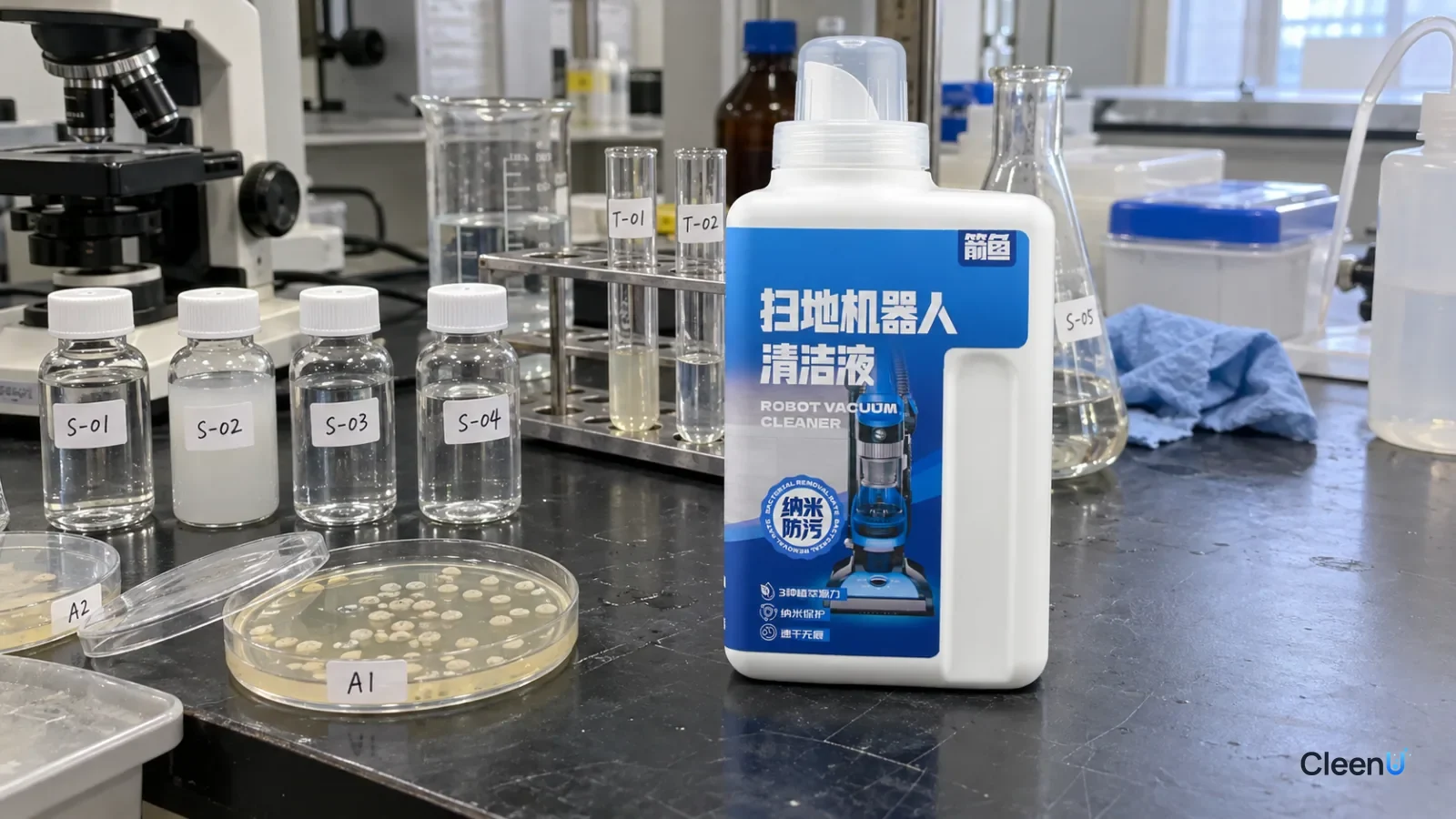
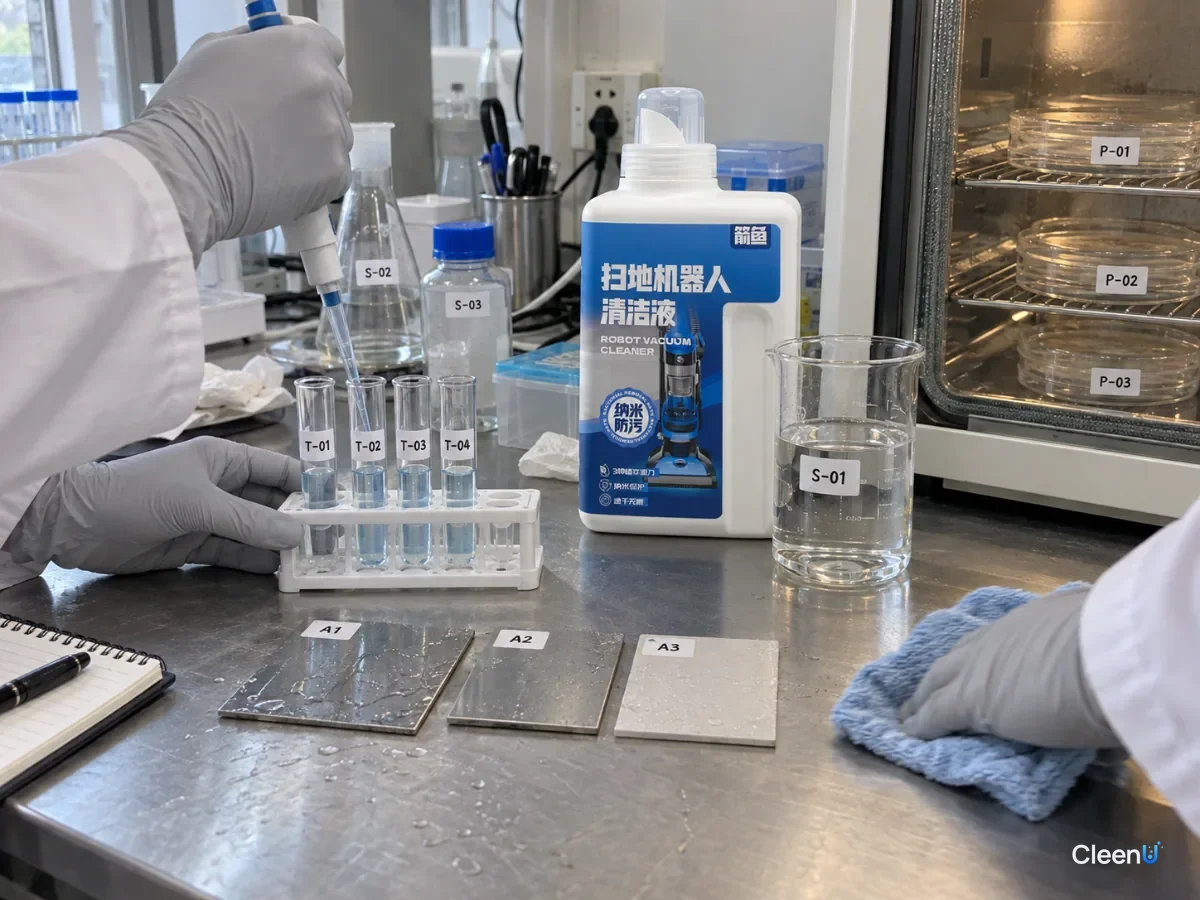
Whether a preservative works depends on how it performs in the whole formula, not just what was added. Formulators use a preservative challenge test: known numbers of bacteria, mold and yeast are deliberately added to the product, and counts are checked at set time points to see whether they fall to required levels. Only a system that passes is considered adequate for that formula.
How to think about preservative safety
Any talk of preservatives raises safety questions. A balanced view:
Preservatives are regulated. Countries and regions set which preservatives household products may use and at what maximum levels, and properly made products stay within those limits after safety assessment.
Dose matters. Some preservatives, such as certain isothiazolinones, can sensitize a small number of people with sensitive skin at higher concentrations, which is exactly why their use levels are tightly limited. Diluted 1:50 to 1:100 in a robot's tank, preservative concentration in the working solution drops dozens of times further, and even less remains once the floor dries.
No preservation carries bigger risks. A bottle of cleaner that's grown microbes spreads those microbes and their byproducts across every floor in the house, which is usually more worrying for people and pets than a preservative at compliant levels.
If you have allergies: check the ingredient list and avoid what you know you react to, wear gloves rather than touching concentrate, dilute at the label ratio, and let the floor dry and air out after mopping.
In short, a compliant, validated preservative system is part of what makes a water-based cleaner safe to use, not something to strip out.
Preserving isn't disinfecting
This is the point most often confused.
A preservative's job is to protect the product in the bottle from microbial spoilage during storage and use. Its concentration is designed to inhibit growth inside the bottle.
Disinfecting means killing microbes on a surface to a specified level within a specified time. That takes specific active ingredients, enough concentration and contact time, and in the U.S. and many other places, registration and proof by specified test methods.
So a cleaner with a preservative doesn't disinfect floors, and diluted 1:50 to 1:100, its preservative concentration is lower still. CleenU Robot Vacuum Cleaning Solution, for example, is a neutral, low-foam formula designed for cleaning and makes no germ-kill or disinfecting claims. For more on cleaning vs disinfecting, see does robot mop solution disinfect.
Why should mixed solution be used the same day?
The preservative level is designed for the concentrate. Diluted at about 1:50 to 1:100 in the clean tank, it drops by fifty to a hundred times and offers little protection. Left a day or two in a warm tank with nutrients and no protection, the mix starts growing bacteria.
So add only what you'll use that day and use it up. Don't fill the tank for several days, and never pour mixed solution back into the bottle. For a musty tank, see robot vacuum clean water tank smells musty.
How you can lighten the preservative's load
Measure with a dry, clean cup and keep your hands off the bottle neck.
Close the cap tight, and dry the measuring cap before putting it back.
Never add water to the bottle or pour mix back in.
Store concentrate cool and out of light, away from heat.
Use mixed solution the same day, and empty, rinse and dry the tank weekly.
Stop using it if it turns cloudy, smells off, separates or the bottle bulges. See bulging bottle or yellowed robot mop solution.
CleenU Robot Vacuum Cleaning Solution is a neutral, low-foam concentrate at pH 6.5 to 7.5 with low-foam nonionic surfactants and a defoamer, no wax, no chlorine and no particles, and a 24-month unopened shelf life. It dilutes at about 1:50 to 1:100; 10 to 20 mL per fill is usually enough. It works in most robot mops from Roborock, iRobot (Roomba Combo and Braava), Ecovacs Deebot, Dreame and Narwal, and in floor washers such as Tineco. Add it to the clean water tank or the dock's designated detergent compartment as your manual directs. CleenU isn't affiliated with these brands; the names only indicate compatibility.
Why do some cleaners advertise "preservative-free"?
Some products market themselves as preservative-free. They usually control microbes other ways: very high or very low pH, high levels of alcohol or other ingredients that inhibit microbes on their own, water-free concentrate tablets or powders, or packaging like one-way valves and airless pumps that keep contamination out.
Each approach has its place and needs validation. For a neutral, low-foam robot mop solution that sits in tanks and dosing compartments for long periods, high pH or high alcohol usually isn't a good fit (hard on floors and machines, and strong-smelling), so a compliant preservative system is usually the more balanced choice.
Concentrate in the auto-dosing compartment faces more pressure
The dosing compartment holds concentrate, but it's not like the original bottle. It often isn't fully sealed, its opening sees a lot of air, a little water or dust may get in with each refill, and the dock is warm and damp inside. The concentrate's preservatives can handle some contamination, but add water to the compartment, go too long without cleaning or mix old and new solution, and the system can be overwhelmed, leading to cloudiness, odor and slime.
So never add water to the compartment, clean it every month or two and empty it before switching products. Each of those lightens the load on the preservative system.
This article is part of the Robot Vacuum Cleaning Solution & Maintenance Guide, which covers the full maintenance schedule and links to every troubleshooting guide.
Common questions about preservatives in cleaning solution
Can a cleaner skip preservatives?
A water-based cleaner without a preservative system spoils easily once opened. A few products control microbes other ways, such as extreme pH or high alcohol content, but that also has to be validated.
Are preservatives harmful to people and pets?
Properly made products use them within regulatory limits after safety assessment, and on a dry floor at label dilution very little remains. If you're allergic to a specific ingredient, check the label and avoid it.
If a cleaner has a preservative, does it kill germs?
No. The preservative protects the product in the bottle at a level designed for that, and it's lower still once diluted. It doesn't make the cleaner a disinfectant.
Why does mixed solution in the tank smell after a few days?
Dilution slashes the preservative level, the tap water's chlorine runs out, and the tank is warm and damp, so bacteria grow. Use mixed solution the same day.
How long does solution keep after opening?
Follow the label's shelf life and storage directions, use it within a reasonable time, and stop if it clouds, smells off or separates.
What's a preservative challenge test?
Bacteria, mold and yeast are deliberately added to a sample and checked at set times to see whether they're suppressed, confirming the preservative system is adequate for that formula.
For a robot mop solution that keeps well, with a 24-month unopened shelf life, and focuses on cleaning floors, try Robot Vacuum Cleaning Solution.
Robot mop cleaning solutions need preservatives because water-based formulas have water, nutrients and a comfortable pH and temperature for microbes, and opening the bottle, scooping with a wet cup and diluting into the tank all make growth easier. A preservative system designed for the concentrate and proven by challenge testing keeps the product stable through its shelf life. It protects the bottle's contents; it doesn't make the cleaner a disinfectant, especially once diluted. Measure with a dry cup, close the cap tight, never add water to the bottle and use mixed solution the same day to keep both solution and tank clean.