
Q&A
My Dog Licks the Floor After Robot Mopping. What Should I Know?
Direct answer
Keep residue low and let the floor dry first. Dose at the low end of the label, choose a low-foam formula with no wax or chlorine, mop while your dog is out of the room, and let the floor dry and air out before it comes back. If your dog drools, vomits or seems off, stop and call your vet.
Homes with dogs: what to do and what to keep out of the tank
Yes
- Add solution at the low end of the label dose, and choose a low-foam, wax-free, chlorine-free formula
- Mop when the dog is not around, and let the floor dry with ventilation before it comes back
No
- Bleach or chlorine disinfectants: harsh, and residue is unfriendly to a dog's mouth and digestive tract
- Essential oils and perfume: some oils, such as tea tree oil, are unfriendly to cats and dogs
- Dish soap, laundry detergent and body wash: high foam and residue, with a bitter taste and possible stomach upset if licked
- Pet odor sprays: not made for robots, and their ingredients and residue are not controllable
- White vinegar and alcohol: may corrode the robot, and the smell irritates dogs
It depends
- If the dog drools, vomits or seems unwell: stop using the solution right away and call a vet
Do cats "lick the floor" too?
Cats lick the floor itself less than dogs, but they pick up residue more quietly: walking across a freshly mopped floor, their paw pads collect residue, and they carefully lick their paws and groom afterward. Cats also like to lie and roll on sunny floors.
So cat homes should also keep the dose low and let floors dry fully before letting the cat in. Cats are especially sensitive to many essential oil compounds, so keep essential oils out of the tank entirely.
The questions dog owners ask first
My dog licked the floor right after mopping. Is that a problem?
On a floor that's fully dry after mopping at label strength, very little residue is left; a wet floor carries more. Watch for drooling, vomiting, diarrhea or lethargy, and if you see any, stop using the product and call your vet.
Why does my dog keep licking the floor?
Often it's crumbs and grease the dog can smell and taste. It can also be habit, boredom or anxiety, or a digestive, dental or nutritional issue. Frequent, compulsive floor licking is worth a vet visit.
Can I still use cleaning solution with a dog at home?
Yes. Choose a low-foam, wax-free, chlorine-free formula with a short ingredient list and dose at the low end. Use plain water for everyday dust and add solution when the kitchen or food-bowl area gets dirty.
How long after mopping should I wait before letting my dog in?
Floors usually dry in a minute or two. Open a window and wait until the floor is fully dry and the smell has cleared, about half an hour, to be safe.
Do cats lick floors too?
Cats lick floors less often, but they walk across them and then lick their paws and groom, so they meet floor residue too. The same precautions apply.
Can I add pet odor spray or essential oils to the tank?
No. They aren't made for machines, their residue and ingredients are unpredictable, and some essential oil compounds are especially hard on cats and dogs.
Can my robot mop over dog poop or pee?
No. Clean up the mess by hand, wipe the spot with water and let it dry before the robot runs. Mopping over feces, urine or vomit smears it, soils the pads and lines, and makes odor harder to remove. The CleenU pet-home solution is not meant for having the robot mop over these messes either.
My pet seems bothered by the smell of the cleaning solution. What should I do?
Use less first: dose at the low end of the label, and let the floor dry and the room air out before pets come back. Swap a scented solution for a fragrance-free one; the CleenU pet-home version has no added fragrance and uses cyclodextrin-type odor control. If your pet still avoids the area or drools, stop and call your vet.
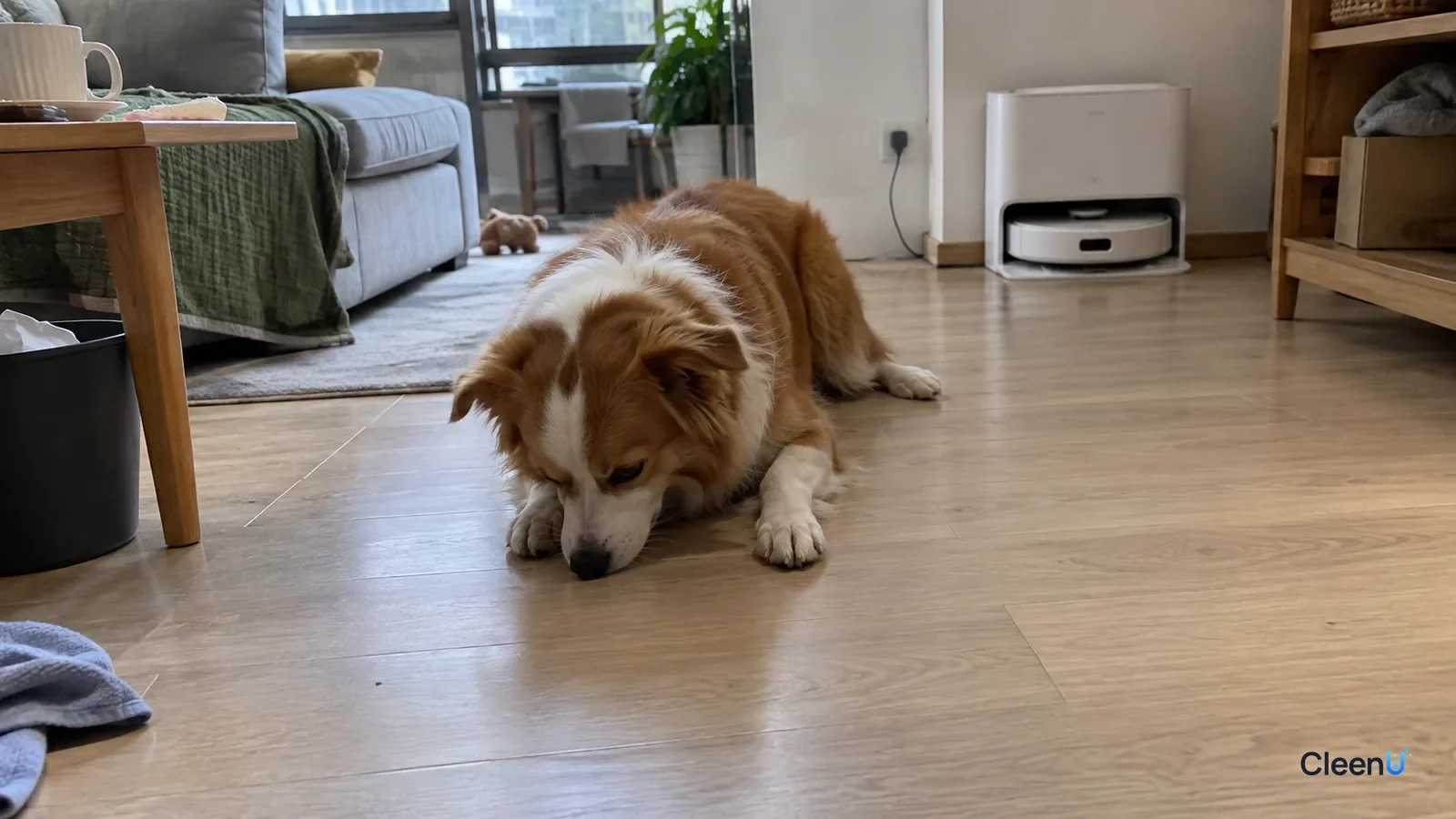
Plenty of dog owners know the scene: the robot finishes mopping, and the dog follows its path, sniffing and giving the floor a lick here and there. Some dogs lick the kitchen and the area under the dining table every single day. It's natural to wonder whether cleaner left on the floor is a problem if your dog licks it up.
It's a fair concern. Dogs are close to the floor, their paw pads are on it all day, and they lick it directly, so they meet floor residue far more than people do. The good news is that with the right solution, the right dose and the right timing, you can keep that exposure very low.
Why do dogs lick floors?
Knowing why helps cut the behavior at its source.
Food smells. Kitchen and dining floors collect crumbs, grease and drips, and a dog's nose picks up food smells we can't.
Exploring scents. Dogs learn about their surroundings with nose and tongue, and new smells on the floor, including cleaner fragrance, draw their curiosity.
Habit and mood. Boredom, anxiety and too little exercise can show up as repeated licking of floors and furniture.
Health. Frequent, compulsive floor licking is sometimes linked to stomach upset, nausea, dental problems or nutrition.
So rather than only asking whether the cleaner is lickable, do two things at once: reduce residue on the floor, and reduce the reasons your dog licks it.
What stays on the floor?
When a robot mop lays down diluted solution, the water evaporates and the non-volatile ingredients stay, mostly surfactants plus small amounts of preservative and fragrance. How much stays depends on:
Dose. The one you control most directly. Double it and you double the residue.
Formula. A lean formula designed for low concentration leaves very little. Products with wax or shine enhancers are designed to stay on the floor, so they leave more, and heavily scented products leave fragrance and solubilizer behind too.
Frequency. A robot never rinses, so daily mopping at a full dose builds residue on the same floor.
Wet or dry. Right after mopping, while the floor is still wet, the film is at its most concentrated and a lick picks up the most. Once it's dry, what's left is an extremely thin layer.
The dose makes the difference: why a dry floor matters so much
Any assessment of how a chemical affects people or animals comes back to one principle: dose. The same ingredient can have almost no effect in tiny amounts and cause trouble in large ones. If a pet swallowed a lot of the surfactants used in cleaners, the typical result is irritation of the mouth and gut, with drooling, vomiting or diarrhea. What's left on a floor after mopping at label strength and drying is far less than that.
A simple way to picture it: at about 1:100, every 100 parts of liquid in the tank hold roughly 1 part concentrate, and surfactant is only part of that concentrate. That dilute mix is spread over hundreds of square feet of floor, and once the water evaporates, each patch holds only an extremely thin layer. A few licks of a fully dry floor pick up very little.
But on a wet floor, your dog is licking the film itself. And if you add several times the dose, or a full dose every day that keeps building up, exposure multiplies. That's why controlling the dose, waiting for a dry floor and cleaning the bowl area separately do far more than switching to a product that simply says "pet safe."
Cut floor licking at the source
Clean up food right away. Wipe up dropped food and drips after meals, and have the robot vacuum before mopping the kitchen and dining area daily.
Keep the bowl area clean. Spilled kibble and water are one of the main reasons dogs lick the floor over and over. Put a washable mat under the bowls and wash it daily.
Give your dog enough exercise and play. Bored dogs with energy to burn lick floors and furniture more. Walks, sniffing games and puzzle toys all help.
Watch for health signals. If your dog suddenly licks floors and objects a lot, along with appetite changes, vomiting or bad breath, see your vet to rule out stomach or dental problems.
How to robot mop in a home with a dog
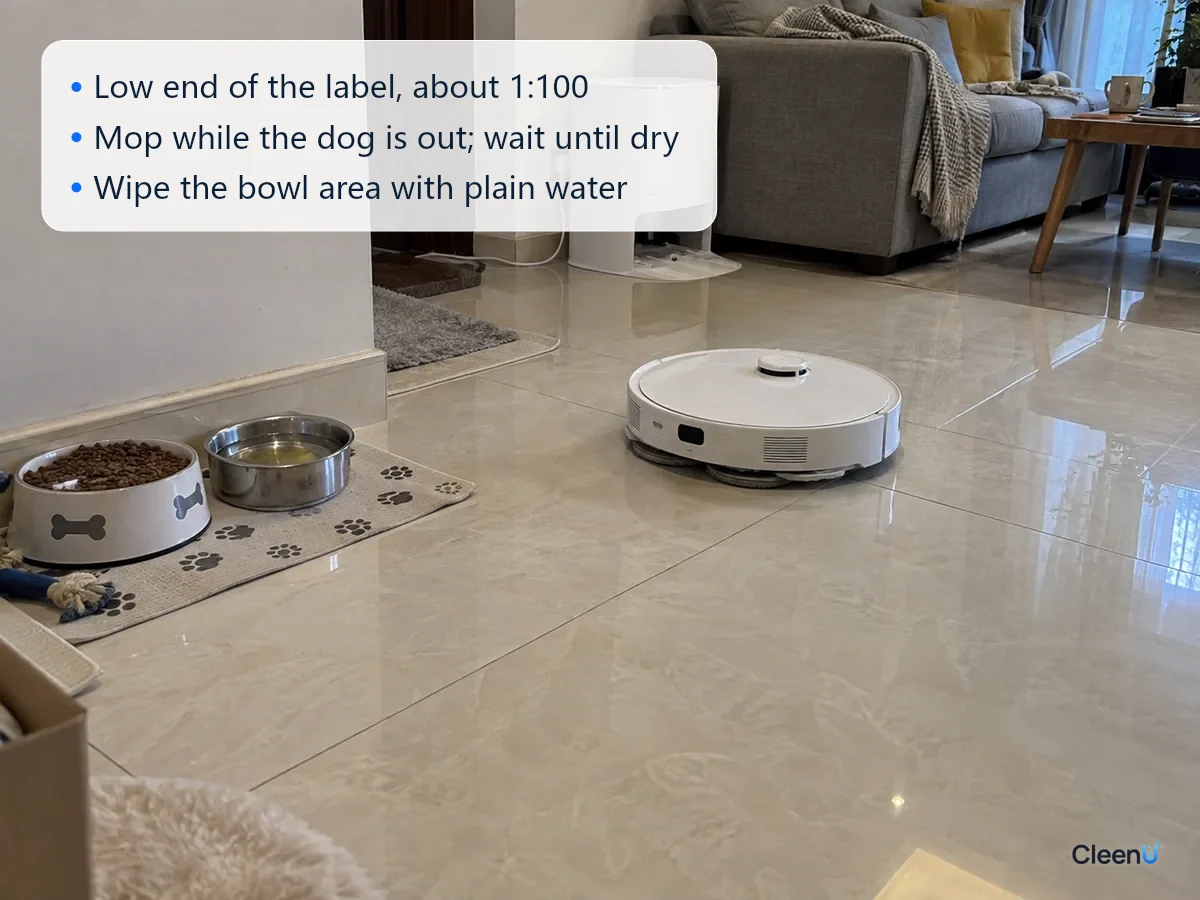
Dose at the low end of the label. CleenU Robot Vacuum Cleaning Solution for Pet Homes dilutes at about 1:50 to 1:100; 10 to 20 mL per fill is usually enough. If your dog licks the floor, start at the low end, about 10 mL for a 1-liter tank.
Alternate water and solution. Use plain water for everyday dust, and add solution when the kitchen, food-bowl area or entry gets dirty.
Choose a low-foam, wax-free, chlorine-free, lightly scented formula. CleenU Robot Vacuum Cleaning Solution for Pet Homes is a neutral, low-foam concentrate at pH 6.5 to 7.5 with low-foam nonionic surfactants, a defoamer and cyclodextrin-based odor control, with no wax, no chlorine and no particles, and no added fragrance.
Mop while your dog is out. Run the robot during walks so the floor is dry by the time you're back. If your dog's home, keep it in another room or gate off the area being mopped.
Ventilate and wait until it's dry. Open a window or run ventilation, and let your dog back in once the floor is fully dry and the smell has cleared.
Handle the food and water bowl area separately. That's where dogs lick most. Make it a no-mop zone and wipe it with a damp cloth and plain water, or give it a plain-water wipe after the robot finishes.
Don't raise the dose for dirty zones; add a pass. For a greasy kitchen, set it as a priority zone for an extra pass rather than adding more solution.
It works in most robot mops from Roborock, iRobot (Roomba Combo and Braava), Ecovacs Deebot, Dreame and Narwal, and in floor washers such as Tineco. Add it to the clean water tank or the dock's designated detergent compartment as your manual directs. CleenU isn't affiliated with these brands; the names only indicate compatibility. For more pet-home tips, see robot mopping in homes with cats and dogs.
Keep these out of the tank in a dog home
Bleach and chlorine cleaners: harsh, and their residue is hard on a dog's mouth and stomach.
Essential oils and perfume: some oil compounds, such as tea tree oil, are hard on cats and dogs.
Dish soap, laundry detergent and body wash: high foam and heavy residue, bitter to lick and possibly upsetting to the stomach.
Pet odor sprays: not made for machines, with unpredictable ingredients and residue.
Vinegar and rubbing alcohol: can corrode parts, and the smell bothers dogs.
What does "pet safe" really mean?
Lots of cleaning products say "pet friendly" or "pet safe," but there's no single standard behind those words. It's more useful to look at the actual formula traits and directions:
Low foam and low residue, with no wax, no chlorine and no essential-oil fragrance.
A clear dilution ratio, so residue stays very low at label strength.
Directions like "let pets back in once the floor is dry."
No cleaning solution should be licked up in quantity or drunk by a pet. Dilution at the label ratio and a fully dry floor are what keep exposure low. Store the bottle where pets can't reach it, and dry the measuring cap after each use so your dog never gets a taste of concentrate.
Watch for these signs
If, after licking a freshly mopped floor, your dog drools a lot or keeps licking its lips; vomits or has diarrhea; seems lethargic or won't eat; or has a red mouth or unusual breath:
Stop using that solution and mop with plain water. Bring the packaging or a photo of the label and call your vet or the ASPCA Animal Poison Control Center. Don't try to make your dog vomit or give it medicine on your own.
This article is part of the Robot Vacuum Cleaning Solution & Maintenance Guide, which covers the full maintenance schedule and links to every troubleshooting guide.
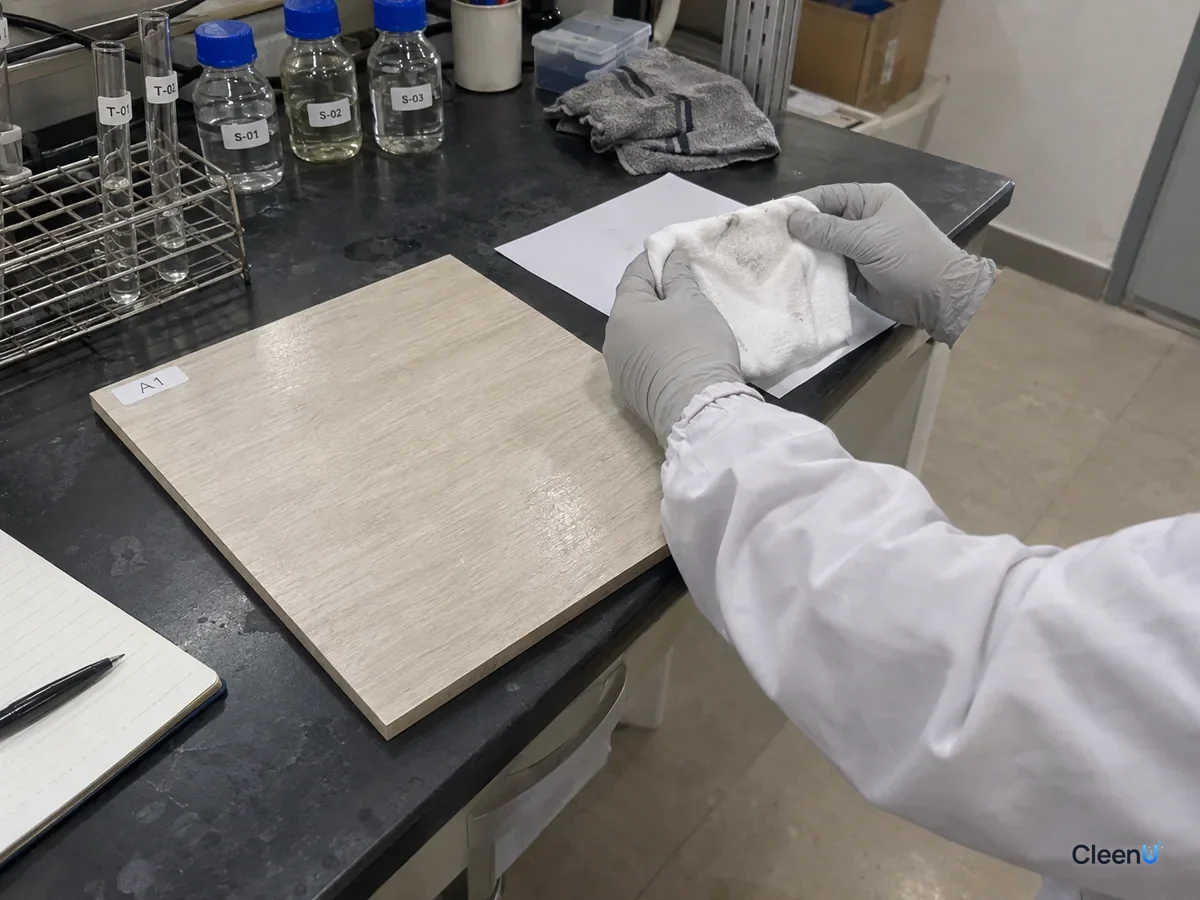
If your dog licks the floor and you want a neutral, low-foam, wax-free, chlorine-free robot mop solution that handles paw prints and pet odor at the low end of the label, try Robot Vacuum Cleaning Solution for Pet Homes.
If your dog licks the floor, the key after robot mopping is low residue and a fully dry floor. Choose a low-foam, wax-free, chlorine-free, lightly scented formula, dose at the low end and use plain water for everyday dust. Mop while your dog is out, and let it back in once the floor is dry and aired out. Wipe the food and water bowl area separately with plain water. Keep disinfectants, essential oils, dish soap and odor sprays out of the tank, and if your dog drools, vomits or seems off after licking, stop and call your vet.