
Troubleshooting
Strong Chemical Smell After Robot Mopping: When to Stop and What to Check
Direct answer
Yes, stop. A harsh smell is a warning sign. Open the windows, get people and pets out of the freshly mopped room, then check the dose and whether anything got mixed with bleach or another cleaner. If it's still harsh or dizzying at label strength, that product isn't right for your home. Switch.
What you see
The robot just finished mopping and the smell hits you at the door. It might be bleach-like, heavy perfume, or sour and foul. After a while your eyes sting, your throat feels dry, maybe you feel a little dizzy. Your pets step around the freshly mopped floor. It's worst with windows closed, in small rooms, or with the heat on.
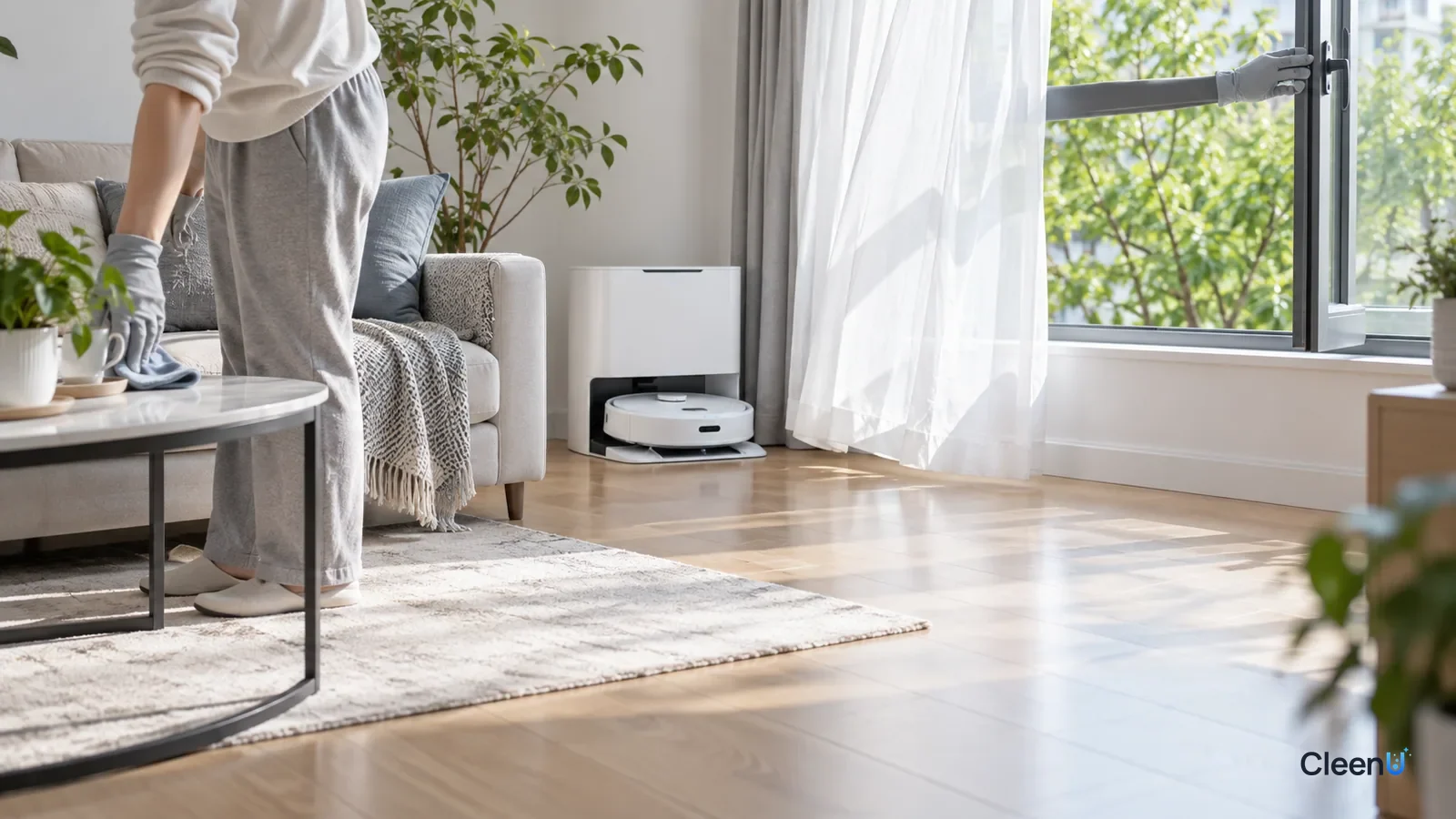
When a robot mop spreads diluted solution across the whole floor, whatever can evaporate from that liquid goes into the air as the floor dries. With that much surface and that much evaporation, any smell gets amplified. A faint scent after mopping is normal. A harsh, stinging one isn't. It means there's a high concentration of something irritating in the air, or something that shouldn't be there at all.
Where does a harsh smell come from?
Too much solution. This is the most common cause. Robot mop solutions are designed for low concentration. Overdose and surfactants, fragrance and preservatives all multiply, and so does what evaporates. A scent meant to be light turns sharp and cloying.
Something got mixed. This is the one to take most seriously. If bleach, a toilet bowl cleaner, vinegar or rubbing alcohol went into the tank along with the cleaner, or you switched products without rinsing out the last one, different chemicals can react in the tank and release irritating gases. Chlorine bleach meeting an acidic product releases chlorine gas; meeting ammonia-containing substances, it forms chloramines. Both irritate the eyes and airways, and even small amounts can make people feel noticeably unwell.
A product that isn't made for homes. Some add heavy fragrance to "cover odors" or "last longer." Some contain strongly volatile solvents such as alcohols or glycol ethers that smell sharp and evaporate fast. Some are built for industrial or commercial use and feel harsh in a closed-up house.
A spoiled solution. Solution stored too long or badly can grow microbes or break down, giving a sour or fermented smell.
A dirty machine. A dirty tank that wasn't emptied, pads that didn't dry or a slimy wash tray all smell, and once the robot mops, that odor mixes with the cleaner's scent into something harsh and hard to place.
Work through these steps
Harsh smell after mopping? Find the cause step by step
-
Step 1 Has bleach, a disinfectant, toilet bowl cleaner, vinegar or alcohol gone into the clean tank or detergent compartment recently, or two cleaners been mixed?
- Yes
- Stop the robot, open the windows and get people and pets out of the room. Wearing gloves, empty the tank, rinse it repeatedly and wash the pads. From now on add only one cleaner your manual allows.
- No
- Go to the next check
-
Step 2 Did this fill go over the label ratio, like more than half a capful at once or just pouring without measuring?
- Yes
- Next time measure with the cap at the label ratio and err on the low side. For now, run the robot once more with plain water to pick up residue, and ventilate.
- No
- Go to the next check
-
Step 3 Does the solution itself smell the way it did when new? Any sour or foul smell, darker color or a bulging bottle?
- Yes
- The solution may have spoiled. Stop using that bottle and check it for spoilage.
- No
- Go to the next check
-
Step 4 If you mop with plain water only, is there still a bad smell?
- Yes
- The smell is coming from the machine. Empty and scrub the dirty tank, and clean the pads, wash tray and filter, then let them dry.
- No
- If it's still harsh at label strength, the fragrance or solvents in that product don't suit a home. Switch to a low-odor, neutral, low-foam robot mop solution.
Why does the same solution smell stronger from a robot?
Plenty of people notice that a cleaner that seemed fine with a hand mop smells much stronger once a robot uses it. The robot amplifies the conditions for evaporation.
Bigger evaporating area. By hand you often mop only the dirty spots and may rinse afterward. A robot lays a thin film across the whole floor every run and never rinses, so everything in that film evaporates in place.
A thin film dries fast. It's gone in minutes, so the volatile ingredients are released in a short burst and the concentration in the air jumps.
The dock heats and churns. A self-cleaning dock scrubs the pads at high speed, whipping liquid into fine spray and foam. Docks with hot-air drying blow warm air over the pads, which speeds up the release of fragrance and other volatiles left in them. The corner where the dock sits is often the smelliest spot in the house.
Closed-up rooms. With the AC or heat on and the windows shut, what evaporates has nowhere to go and builds up.
So a robot mop solution has to meet a stricter smell standard than a hand-mopping cleaner: light fragrance, no strongly volatile solvents, the low end of the label, and airflow during and after mopping. One easy habit is to schedule runs while the windows are open or while you're out, so the smell has cleared by the time you're back.
Why is mixing so dangerous?
The most dangerous combinations involve chlorine bleach and other products.
The active ingredient in household bleach is sodium hypochlorite. It's fairly stable in alkaline conditions, but when it meets acid, such as the hydrochloric acid in some toilet bowl cleaners, the acetic acid in vinegar or citric acid, it breaks down and releases chlorine gas. Chlorine is a yellow-green gas with a strong, irritating smell; low levels sting the eyes and throat, and higher levels injure the airways.
When sodium hypochlorite meets ammonia or compounds containing amine groups, it forms chloramines, which are also pungent and irritating. Urine contains ammonia-type compounds, so don't pour bleach straight onto pet accidents either.
A robot mop's tank is a small, partly closed space, and the pump and dock keep churning the liquid. If a reaction like that happens inside, the gas spreads through the house as the robot mops. So the tank should only ever hold plain water or one cleaner your manual allows, and you should rinse it before switching products. For why bleach and vinegar don't belong in the tank, see can you put vinegar or bleach in a robot mop tank.
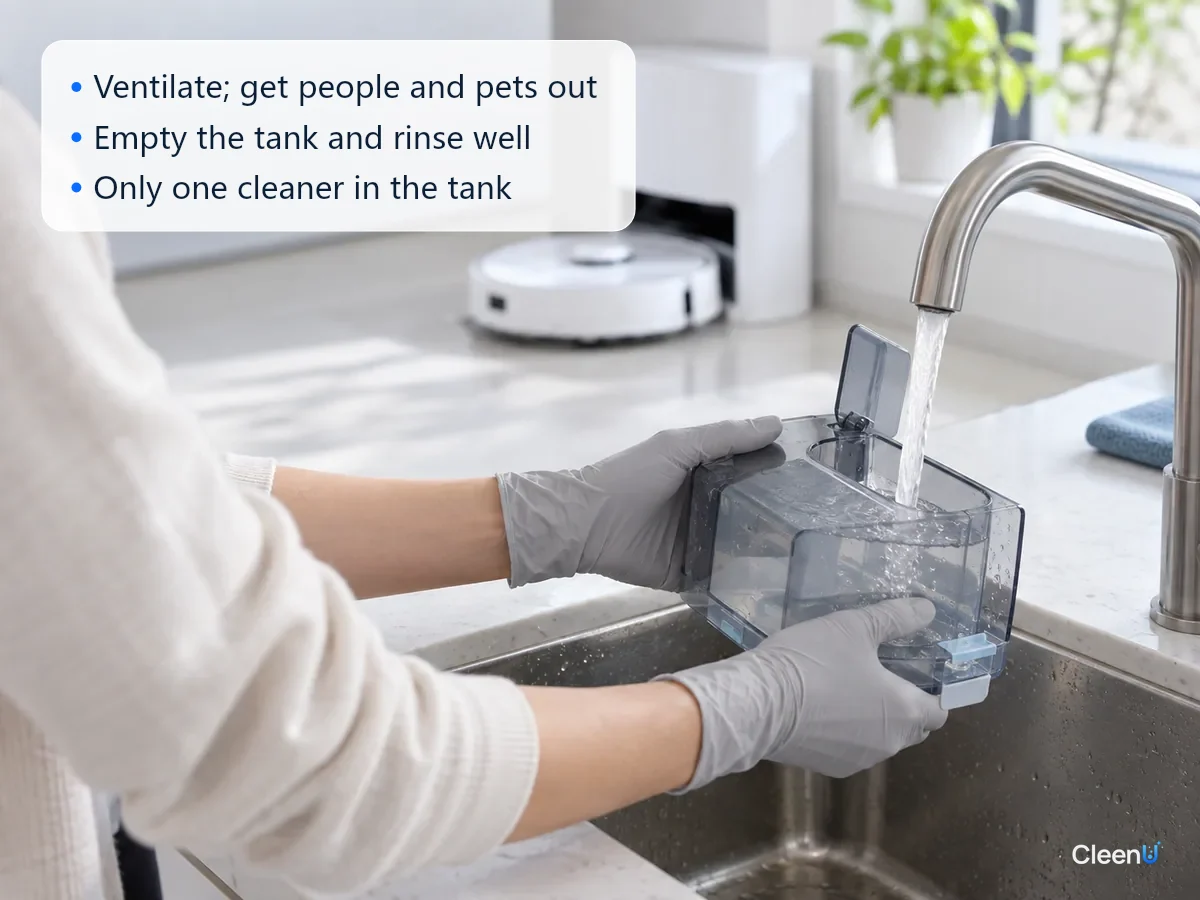
If someone feels unwell, do this first
Open windows and doors and turn on exhaust fans. Get people and pets out of the freshly mopped room.
Stop the robot. Don't let it keep mopping.
If you suspect a gas from mixed chemicals, don't lean in to sniff the tank. Wear gloves, empty it somewhere ventilated and flush it with plenty of water.
Rinse stinging eyes with water. For coughing, chest tightness, trouble breathing or dizziness that doesn't ease, get medical help and tell them which cleaning products were involved. In the U.S., Poison Control is available at 1-800-222-1222.
What should a home robot mop solution smell like?
A good household robot mop solution, diluted at the label ratio, leaves only a faint scent after mopping that's mostly gone within an hour or two in a ventilated room. Nothing stings or catches in your throat, and people and pets are comfortable in the room.
When you choose one, look for:
Neutral or near-neutral pH, no chlorine and no strongly volatile solvents.
Low foam. The more foam, the more fragrance and ingredients get whipped into the air when the dock washes the pads.
A light scent, or a fragrance-free option. For homes with babies, pets or scent-sensitive people, see scented or fragrance-free robot mop cleaning solution.
A clear dilution ratio on the label and a measuring cap so dosing is easy.
CleenU Robot Vacuum Cleaning Solution is a neutral, low-foam concentrate at pH 6.5 to 7.5 with low-foam nonionic surfactants and a defoamer, no wax, no chlorine and no particles. The standard version has a lemon scent and the pet-home version a lighter lemon scent. It dilutes at about 1:50 to 1:100; 10 to 20 mL per fill is usually enough, and at that strength it leaves only a faint lemon smell after mopping. It works in most robot mops from Roborock, iRobot (Roomba Combo and Braava), Ecovacs Deebot, Dreame and Narwal, and in floor washers such as Tineco. Add it to the clean water tank or the dock's designated detergent compartment as your manual directs. CleenU isn't affiliated with these brands; the names only indicate compatibility.
The mix-up between smell and clean
Many of us judge cleanliness by smell: a bleach smell means "disinfected," a strong perfume means "clean." A strong smell only means there's a lot of volatile material in the air. It has nothing to do with whether the floor is actually clean.
A clean floor dries without feeling tacky or slippery and shows no streaks or footprints in side light. After mopping, the fainter the smell, the better.
This article is part of the Robot Vacuum Cleaning Solution & Maintenance Guide, which covers the full maintenance schedule and links to every troubleshooting guide.
Stop now and get help or contact support if you see these
You suspect mixed cleaners produced an irritating gas; anyone has coughing, chest tightness, trouble breathing, lasting dizziness or eye pain that doesn't ease; or a pet is drooling, vomiting or lethargic. Ventilate and leave the room right away, stop using the robot and that solution, and get medical or veterinary advice if needed.
Common questions about harsh smells after robot mopping
Is a light scent after mopping normal?
Yes. At the label ratio, a faint scent that fades in an hour or two is normal. A harsh, choking or uncomfortable smell isn't.
Does a strong smell mean the floor is cleaner?
No. A strong smell only means more volatile ingredients in the air. Check the floor for streaks, tackiness and footprints instead.
Can I add cleaning solution and bleach to the tank together?
No. Chlorine bleach mixed with other products can release irritating gas and also damages tank seals and floors. Only ever add one liquid your manual allows.
Do I need to rinse the tank when I switch solutions?
Yes. Empty it and rinse two or three times with plain water before adding the new solution so the two never mix.
I have pets and the house smells harsh after mopping. What should I do?
Get the pets out and ventilate, and stop using that solution. Switch to a low-odor, neutral, low-foam product at the low end of the label, and let the floor dry fully before pets come back.
It smells bad even when I mop with just water. Why?
The smell is coming from the machine: dirt in the dirty tank, pads and wash tray. Empty and scrub the dirty tank, clean the pads and tray, and let everything dry.
Is robot mop solution safe for pets?
The safer approach is to dilute as directed and keep pets off the floor until it is dry. Never add disinfectant or phenol-based cleaners to the tank. For pet homes, pick a neutral, fragrance-free robot solution without quats or phenols, and ventilate after mopping. If a pet seems unwell after licking the floor, call your vet.
To switch to a chlorine-free, neutral, low-foam robot mop solution that leaves only a faint lemon scent at label dilution, try Robot Vacuum Cleaning Solution.
If your home smells harsh after robot mopping, stop, open the windows and get people and pets out of the room. First rule out mixing: bleach, a toilet bowl cleaner, vinegar or a second cleaner in the tank can release irritating gas. Then check for overdosing, a spoiled solution or a dirty machine. If the smell is still harsh at label strength, that product isn't suited to your home. Switch to a neutral, chlorine-free, low-foam, lightly scented robot mop solution and dose on the low side.