
Troubleshooting
Bulging Bottle or Yellowed Robot Mop Solution: Signs It Has Gone Bad
Direct answer
A bulging bottle plus yellow, cloudy or sour-smelling liquid usually means microbes are producing gas or the formula has failed. Stop using it and keep it out of your robot mop. A bottle that bulges a little in the heat while the liquid stays clear and smells normal is usually just warm air expanding.
Check these first
- How much it bulges: slightly rounded, or rock hard with the bottom pushed out?
- Opening it: does it hiss loudly, and does it puff up again a few days after you release the pressure?
- Color: noticeably more yellow, darker or cloudier than when new?
- Smell: sour, fermented, rotten-egg or harsh?
- Surface: are fine bubbles rising steadily, or is there foam or a film floating on top?
- Storage: patio, car, next to the water heater, anywhere hot or sunny?
- Neck and cap: liquid left sitting in the neck, a loose cap, or water added to the bottle?
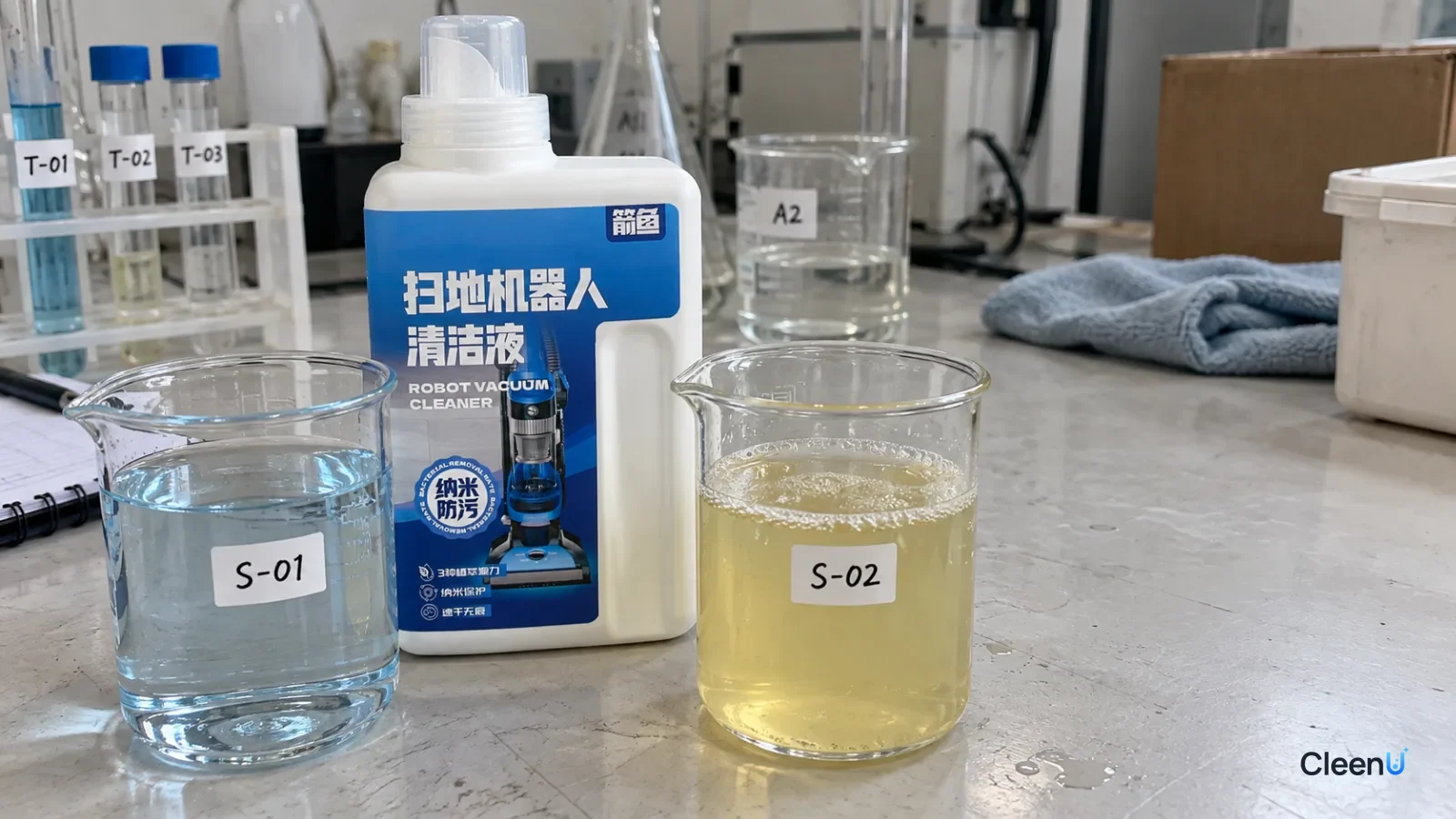
You open the cabinet and the bottle of robot mop solution is puffed up. It hisses when you loosen the cap, the liquid looks darker and more yellow than when you bought it, and there's a faint sour smell. Is it spoiled, or was it just hot in there? Can it still go in the robot?
A bulging bottle doesn't automatically mean the solution has gone bad, but it's a signal worth taking seriously. The key is to read the bulge together with what's happening to the liquid.
Why does a bottle bulge?
A sealed bottle bulges when the gas pressure inside is higher than outside. There are three common reasons.
Warm air expanding. Above the liquid there's a pocket of air. As the temperature rises, both air and liquid expand and a little dissolved gas comes out, so pressure rises and a soft plastic bottle rounds out. Carry a bottle from an air-conditioned room onto a summer patio, or leave it in a hot car, and a bulge is normal. Once it cools, the pressure drops and the bottle goes back to shape.
Air pressure changes. Shipping by air or to a higher elevation lowers the outside pressure, so the bottle bulges relative to it. That isn't spoilage either.
Gas being made inside. This is the one to worry about. The most common cause is microbial growth: bacteria, yeast or mold multiplying in the liquid, breaking down organic ingredients and releasing carbon dioxide and other gases while turning the liquid yellow, cloudy, sour or foul. Some formulas also contain ingredients that slowly decompose and release gas, such as peroxide or hypochlorite products, which usually come with a vented cap. A neutral, low-foam robot mop solution isn't in that group, so ongoing gas usually points to microbes.
Why does the liquid turn yellow?
Yellowing is a separate signal with its own causes.
Oxidized fragrance or dye. Many fragrance ingredients have structures that oxidize easily. With light and heat they slowly yellow, and the scent shifts too, so lemon starts smelling flat or bitter.
Microbial byproducts. Growing microbes release colored substances, so the liquid gradually yellows and clouds, often with a sour or fermented smell.
Raw material color shift. Some surfactants darken slightly after long exposure to heat.
Yellowing alone with a normal smell is usually a light-and-heat cosmetic change. Yellowing with a bulge or an off smell should be treated as spoilage.
Bulging and yellowing combinations, and what to do
| What you see | Likely cause | What to do | Prevention |
|---|---|---|---|
| Slight bulge in hot weather, liquid clear, smell normal | Warm air expanding in the bottle | Move it somewhere cool; once it's back to shape, keep using it | Keep it off the patio, out of the car and away from the water heater |
| Bulges again days after releasing pressure; liquid cloudy and sour | Microbes growing and making gas | Stop now, dispose of the whole bottle, keep it out of the machine | Close the cap tight; never add water; don't scoop with a wet cup |
| Yellowed, smell normal, no bulge | Fragrance or dye oxidized by light or heat | Trial a small dose and watch foam and floors | Store it out of light |
| Yellowed with a foul or harsh smell | Microbial contamination or ingredient breakdown | Stop; don't sniff it closely; ventilate | Store as labeled; don't use past the date |
| Bulging with fine bubbles rising steadily | Ongoing gas, usually fermentation | Stop; open slowly to release pressure, away from your face | Never combine different liquids in one bottle |
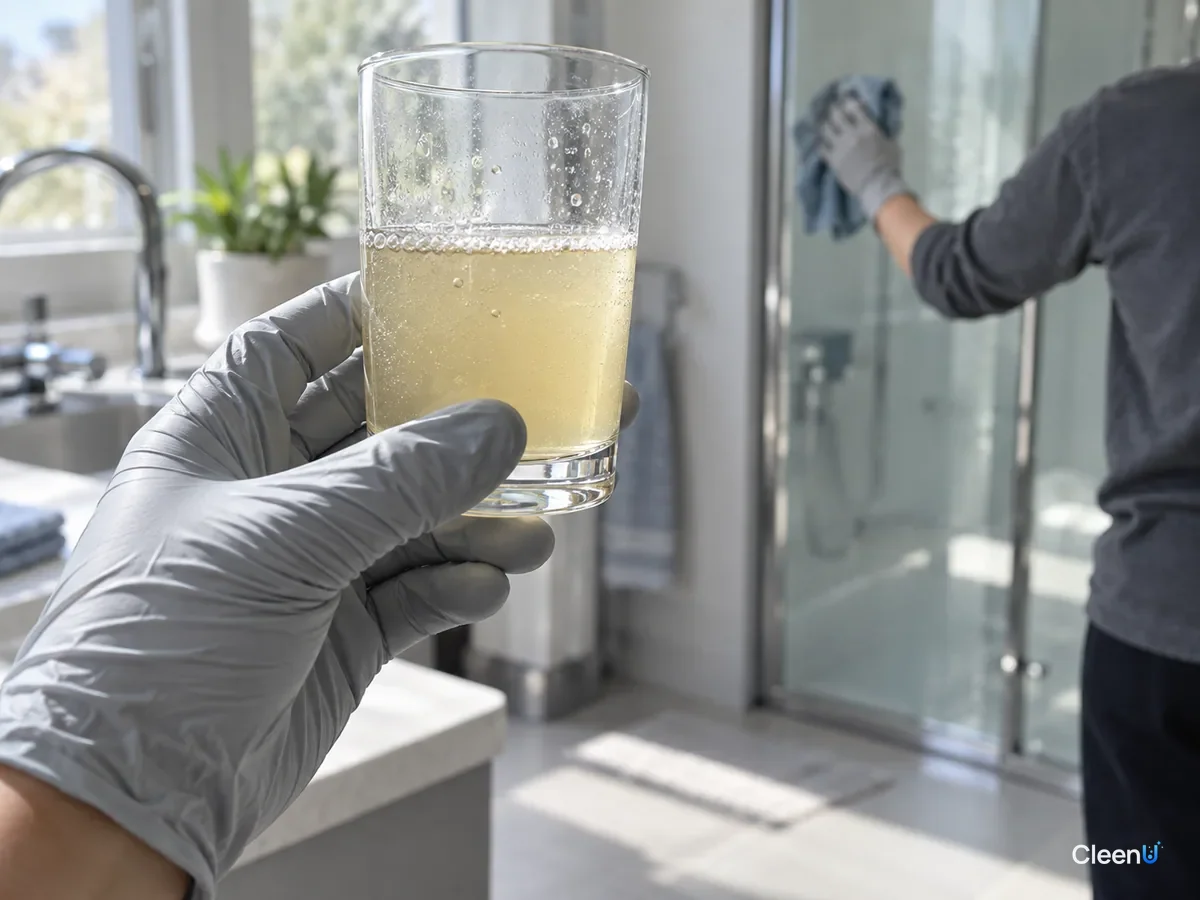
Why shouldn't spoiled solution go in a robot mop?
A spoiled solution affects the whole machine.
Microbes get into the clean tank, lines, pads and dock, so the tank smells musty, pads stink and slime grows faster in the dock's wash tray.
Foam and residue become unpredictable. The dirty tank may report full, and floors may turn tacky or smell off.
Cloudy bits and stringy material catch in filters, outlet holes and auto-dosing tubes.
The gas and odor spread through the house as the robot mops.
So when a bulging bottle comes with changes in the liquid, don't hesitate. Stop using it. If it's already in the machine, empty the clean tank and detergent compartment and rinse them, hand wash and dry the pads, and scrub the dock's wash tray. For the tray, see black slime in the robot vacuum base station tray.
How to handle a bulging bottle safely
Take it somewhere ventilated and hold it away from your face. Loosen the cap slowly to let the pressure out. Don't twist it open fast, or liquid can spray toward your eyes.
Wearing gloves, pour the liquid down the drain and follow it with plenty of water. Don't pour it together with other cleaners or disinfectants.
Rinse the empty bottle and dispose of it according to local rules. Don't reuse it for other liquids.
If it gets on your skin, rinse with water. If it gets in your eyes, flush with running water for several minutes and get medical help if irritation continues.
How do cleaning solutions resist spoiling?
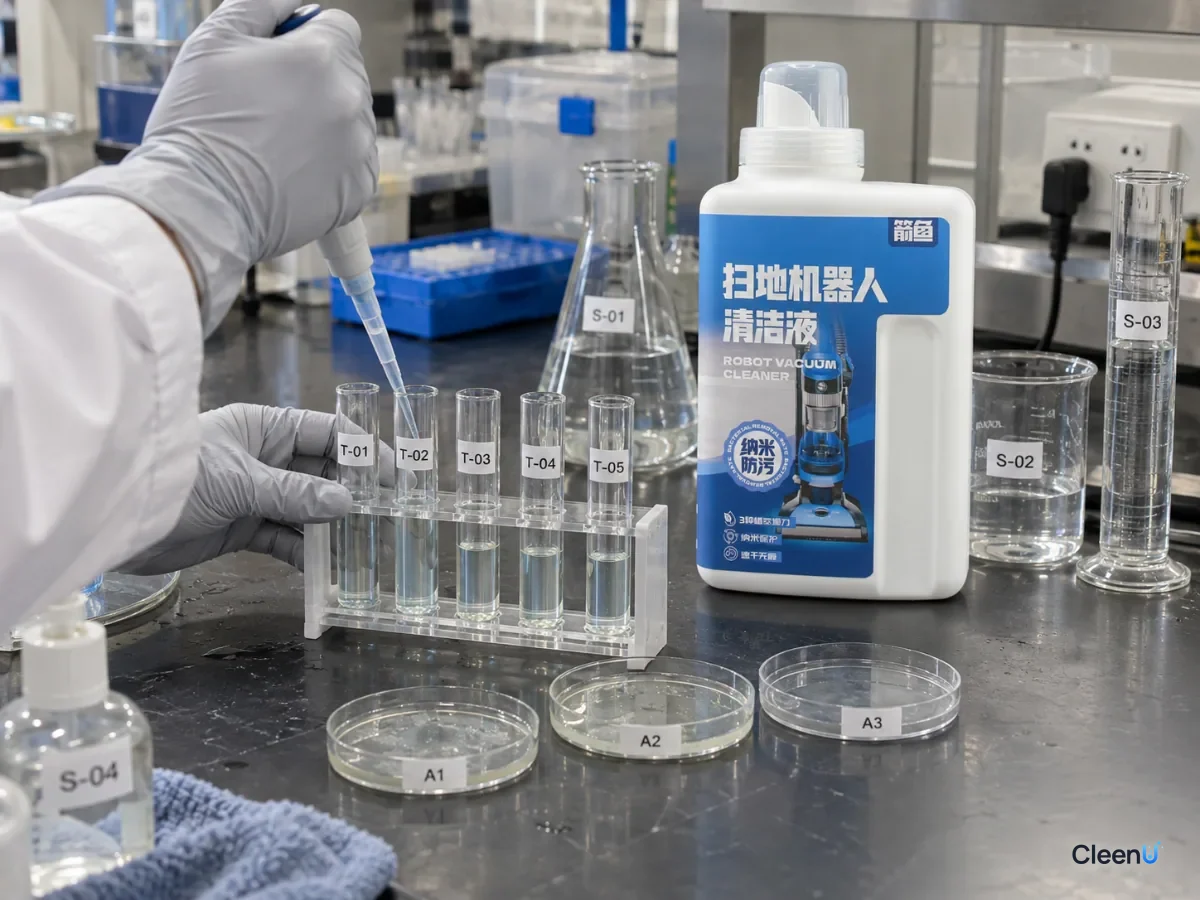
Water, surfactants and fragrance are all food for microbes, so every proper water-based cleaner has a preservative system: preservatives chosen to work at that product's pH and in that formula, dosed for the concentrate, and verified with a preservative challenge test. In a challenge test, known amounts of bacteria, mold and yeast are deliberately added to the product, and the team checks whether they're suppressed and reduced within set time points. It shows whether the product can hold up when it gets contaminated during normal use.
That system has limits.
It's designed for the concentrate. Dilute the product dozens of times and the preservative is diluted just as much, so protection drops sharply. That's why diluted mix should be used the same day and never poured back.
It can't hold off constant heavy contamination. Wet measuring cups, dirty hands on the bottle neck or used water poured back in all bring in large numbers of microbes, and over time the system can be overwhelmed.
It weakens with time and heat. Stored hot for long periods, some preservatives break down.
CleenU Robot Vacuum Cleaning Solution is a neutral, low-foam concentrate at pH 6.5 to 7.5 with low-foam nonionic surfactants and a defoamer, no wax, no chlorine and no particles, in a 1-liter bottle with a measuring cap and a 24-month unopened shelf life. It dilutes at about 1:50 to 1:100; 10 to 20 mL per fill is usually enough. It works in most robot mops from Roborock, iRobot (Roomba Combo and Braava), Ecovacs Deebot, Dreame and Narwal, and in floor washers such as Tineco. Add it to the clean water tank or the dock's designated detergent compartment as your manual directs. CleenU isn't affiliated with these brands; the names only indicate compatibility.
How to store it so it doesn't bulge or yellow
Keep it indoors somewhere cool, dry and dark. Not on a patio or windowsill, in the car or next to the water heater.
Close the cap tight right after each use, and dry the measuring cap before putting it back.
Measure with a dry cup and keep your hands off the bottle neck.
Never add water to the bottle, pour diluted mix back in or combine different cleaners.
Use it up within a reasonable time after opening rather than stockpiling it. For other changes like separation or thinning, see robot mop cleaning solution changed color or separated.
Stop using it right away if you see these
The bottle puffs up again after you release the pressure; the liquid is cloudy or yellow with a sour, fermented or foul smell; bubbles keep rising or a film floats on top; or the clean tank and pads start smelling soon after you add it. Stop using that bottle and dispose of it safely as described above. If it's already in the machine, empty and rinse the tank and detergent compartment, clean the pads and dock, and contact the seller with the batch number and purchase date.
What if the bottle is caved in instead?
The opposite of bulging, a bottle can dent inward. Usually it moved from somewhere hot to somewhere cold and the air inside contracted, creating a vacuum, or it was filled at altitude and shipped to lower ground where outside pressure is higher. That usually doesn't mean spoilage; loosen the cap to let air in and it pops back.
The other possibility is a poor cap seal that lets liquid slowly evaporate or seep out, so the level drops and the bottle deforms. Check the neck for crystals or leak marks. The concentration may have shifted, so look at and smell the liquid before dosing at the label ratio.
This article is part of the Robot Vacuum Cleaning Solution & Maintenance Guide, which covers the full maintenance schedule and links to every troubleshooting guide.
Common questions about bulging bottles and yellowed solution
My bottle bulged in the summer heat. Has it gone bad?
Check the liquid first. If it's clear and smells normal, it's likely warm air expanding; once it's back to shape in a cool spot, keep using it. If the liquid is yellow, cloudy or smells off, treat it as spoiled.
The bottle bulged. Can I let the air out and keep using it?
If it puffs up again a few days later, something inside is still making gas, usually microbes, so stop. If it bulged once and the liquid is normal, keep using it and move it somewhere cooler.
The solution turned yellow but smells fine. Can I use it?
Yes, trial it at the low end of the label and watch the dirty tank foam and floor feel. It's usually fragrance oxidized by light or heat; store it out of light from now on.
The bottle arrived bulging. Is that normal?
Heat or pressure changes in shipping can make a bottle bulge a little. Leave it somewhere cool indoors for a day or two; if it goes back to shape and the liquid looks normal, it's fine. If it stays bulged or the liquid looks off, contact the seller.
I already put spoiled solution in my robot mop. What now?
Empty the clean tank and detergent compartment and rinse them several times. Hand wash and dry the pads, scrub the dock's wash tray and filter, run once with plain water, then switch to a fresh solution.
Can I keep cleaning solution on the patio?
Better not. Big temperature swings and strong light make bottles bulge and colors change, and they speed up the breakdown of preservatives and fragrance. An indoor cabinet is better.
When it's time for a fresh bottle, choose a neutral, low-foam robot mop solution with a 24-month unopened shelf life and a measuring cap: Robot Vacuum Cleaning Solution.
When a robot mop solution bottle bulges, judge it together with the liquid. A slight bulge in the heat with clear, normal-smelling liquid is usually expanding air. A bottle that puffs up again after venting, with yellow, cloudy or sour liquid, usually means microbes are making gas, so stop using it and keep it out of the machine. Vent it slowly, away from your face. If it's already in the robot, empty and rinse the tank and detergent compartment and clean the pads and dock. Store solution somewhere cool and dark, measure with a dry cup and never add water to the bottle.