
Q&A
Can You Put Hot Water in a Robot Mop Tank?
Direct answer
Most robot mop manuals call for room-temperature water, so skip hot water in the clean tank. Heat can warp the tank and age the seals and pump, and it makes cleaner smells stronger. If you want hot water for grease, choose a model whose dock heats water to wash the pads.
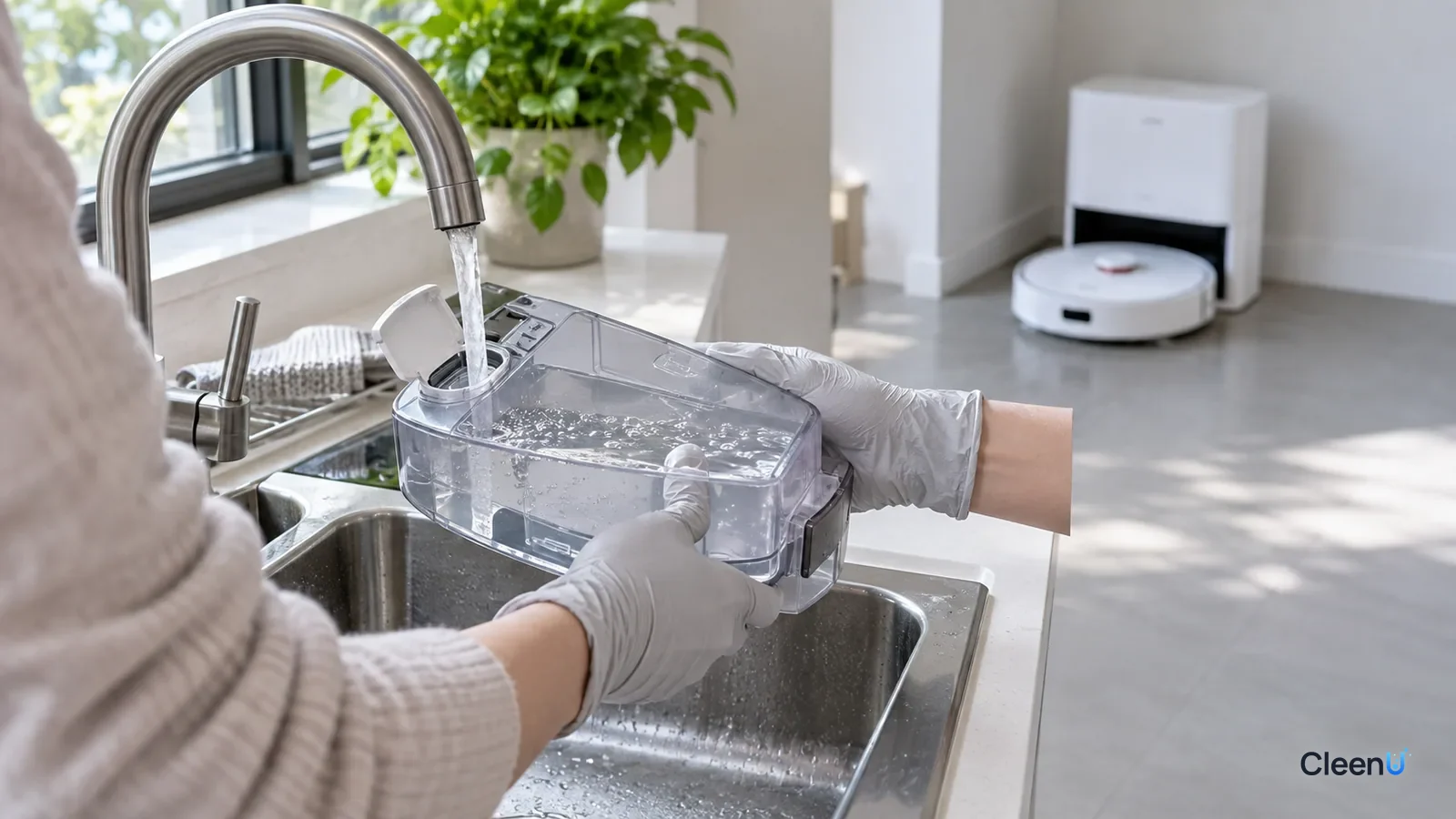
Water temperature in the clean tank
Yes
- Room-temperature water: if the manual says to use it or not to add hot water, add only that
- In winter, mix in a little warm water, up to about room temperature
No
- Pouring hot water into the clean tank: it may deform or age the tank, seals and pump, and makes the solution smell stronger
It depends
- Manual gives a maximum temperature: stay under it with some margin, do not fill right up to the limit
- Models with hot-water pad washing or a heated dock: still fill the clean tank with room-temperature water, since the dock heats its own rinse water
- Manual says nothing: treat it as room-temperature water, which is the safest choice
What if the dock sits somewhere cold in winter?
In cold climates, a dock in an unheated garage, porch or mudroom can see water in the tank and lines approach freezing. Water expands as it freezes and can crack tanks, tubing and pumps. Keep the dock's room within the temperature range your manual specifies. If the robot will sit unused somewhere cold, empty the clean tank, dirty tank and dosing compartment so nothing freezes.
Concentrate also thickens in the cold, which can hinder auto-dosing. If dosing struggles in winter, move the dock somewhere warmer and watch whether it improves.
The questions people ask first
Can I put hot water in my robot mop's clean water tank?
Better not. Most manuals call for room-temperature water, and some list a maximum temperature. Going over it can warp or crack the tank, and damage from misuse may not be covered by warranty.
What about warm water?
Within your manual's range, yes, which usually means close to room temperature and not hot to the touch. In winter, when tap water is icy, a little warm water to bring it near room temperature is fine.
Won't hot water clean better?
Heat does help with grease, but water in the clean tank cools long before it reaches the floor, so the benefit is small and the risk isn't.
Why do some robot mops advertise hot-water pad washing?
That's a heater built into the dock. It warms water in its own lines to a designed temperature and uses it to wash the pads. It's not the same as pouring hot water into the clean tank.
Can I mix cleaning solution with hot water?
Better not. Heat releases fragrance and other volatiles faster so the smell gets stronger, and some formulas turn temporarily cloudy when hot.
In winter the water is freezing. Will the robot still clean well?
It barely matters. Robot mopping relies on the pad and the solution working together. You can let tap water sit until it's closer to room temperature before filling.
When winter tap water is ice cold, it's natural to think hot water will mop cleaner or even sanitize, so some people add hot water or even boiling water to the clean tank. In summer, others want hot water to cut kitchen grease. So can you? Check your manual, but for most models the answer is room-temperature water. Hot water does more harm than good.
Why don't robot mops like hot water?
A robot mop's clean tank, pump, lines and seals are designed for room-temperature water.
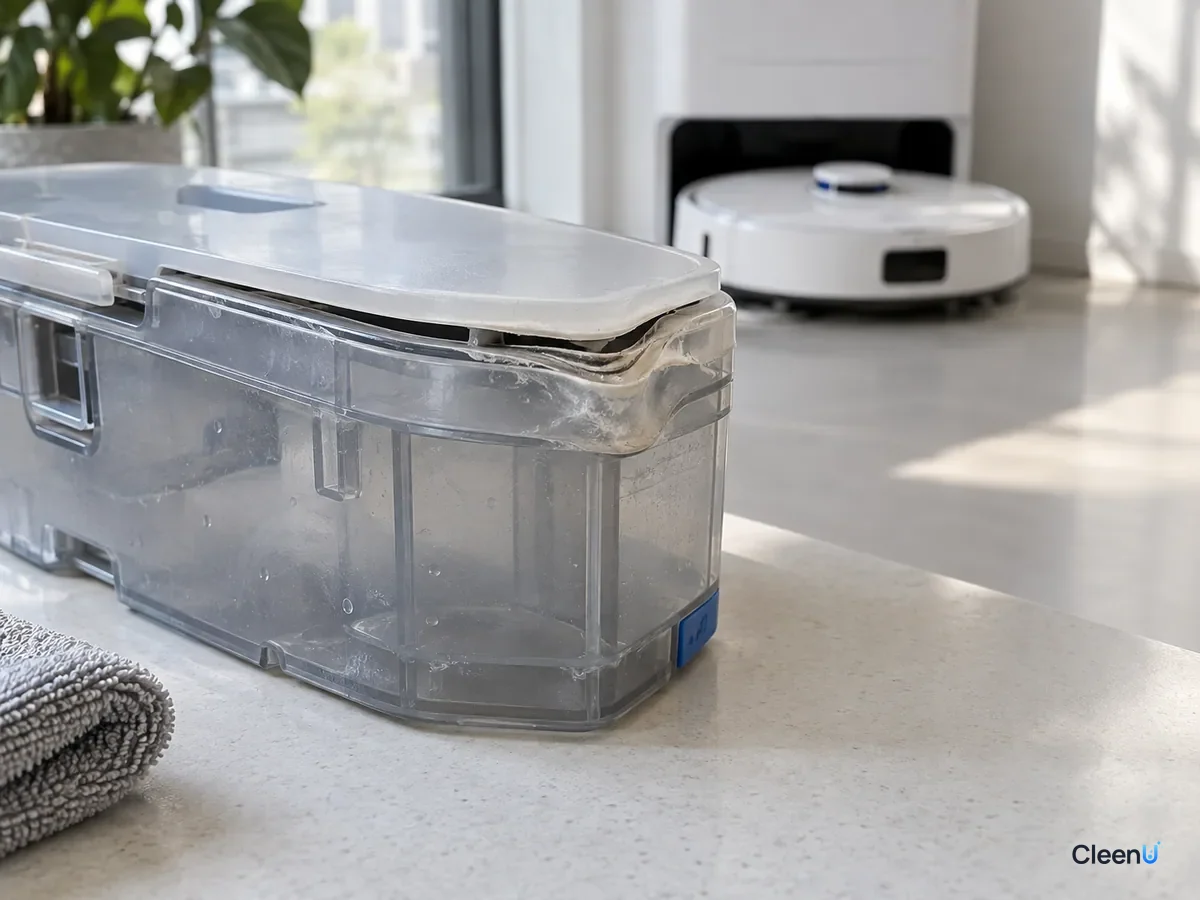
Plastic can warp. Clean tanks are usually clear or translucent engineering plastics such as PP, ABS or polycarbonate. Each has a heat deflection temperature, and sustained contact with water near it softens and bends the plastic. The lid stops sealing, clips and fittings loosen, and the tank leaks. Clear tanks can also cloud, whiten or develop fine cracks.
Seals age faster. Silicone or rubber gaskets keep the tank, pump and outlets from leaking. Heat speeds up rubber aging, so gaskets harden and lose their spring, and slow leaks follow.
Pumps and valves. The small pump and solenoid valve have parts and lubrication designed for room temperature. Pumping hot water regularly can shorten their life.
Electronics. The clean tank often sits inside the robot near the circuit board and battery. The heat and steam from hot water aren't good for either.
Warranty. Many manuals list water temperature requirements, and damage from misuse may not be covered.
Does hot water actually clean floors better?
Temperature does affect cleaning. In Sinner's circle, the model cleaning pros use, results come from chemistry, mechanical action, temperature and time together. Heat softens grease, makes it flow and speeds up surfactant action, which is why hot water washes dishes better.
A robot mop is a different situation.
The water cools fast. Water in the clean tank goes through the pump, fine tubing and outlet holes onto the pad, then onto the floor. The pad and floor are at room temperature, and a run often lasts tens of minutes, so the tank water has cooled to near room temperature well before most of it reaches the floor.
The flow is tiny. A robot puts out very little water, and a thin film on a room-temperature floor matches the floor's temperature within seconds.
So hot water in the tank does little for grease on the floor while risking the tank and seals. What actually works on grease: clean heavy spots by hand first, add a small, label-strength dose of low-foam solution that emulsifies oil, and give the kitchen an extra pass. For details, see using a robot mop on a greasy kitchen floor.
Why does grease melt in heat, and why doesn't that help on the floor?
Hot water cuts grease because of melting points. Cooking fats are mixtures of triglycerides. Vegetable oils are rich in unsaturated fatty acids and stay liquid at room temperature. Animal fats like lard, butter and bacon grease are rich in saturated fats and stay semi-solid until they warm to somewhere in the 70s to 80s °F or above. The film on a kitchen floor is usually a mix of these, blended with dust, and it's harder and tackier when it's cool.
Washing dishes in water around 105 to 120°F softens those fats so surfactants can emulsify them. On a floor, though, the water film is so thin that the floor pulls it back to room temperature almost instantly, and the grease never gets warmed. For a robot mop, temperature is a factor you can't really use. The one you can adjust is chemistry: a low-foam solution that wets and emulsifies grease in room-temperature water is far more practical than hot water in the tank.
That's also a design requirement for robot mop solutions: they have to lift everyday greasy footprints in room-temperature water, at low concentration, with very little scrubbing.
How to read your manual's water temperature guidance
Manufacturers phrase it differently. The common versions:
"Use room-temperature water" or "do not add hot water": stick to room-temperature water, and in winter add a little warm water just to take the chill off.
A specific maximum, such as "water no hotter than X degrees": stay under it, with some margin rather than right at the limit.
"Hot-water pad washing" or "dock heating": the dock heats its own water. Still fill the clean tank with room-temperature water; don't pour hot water in yourself.
Nothing stated: room-temperature water is the safe choice.
Tank material notes and warranty terms sometimes say that warping or leaks caused by hot liquids aren't covered. Two minutes with that section when the robot arrives can save a lot of trouble.
What's a hot-water pad-washing dock?
Some robot mop docks can wash pads with hot water. A heater inside the dock warms water to a set temperature and uses it to rinse the pads in the wash tray. Some add hot-air drying too.
That's different from pouring hot water in yourself.
The heating happens in dedicated lines inside the dock, with materials and seals chosen for that temperature.
The heated water is used only to wash the pads, so the heat goes exactly where grease collects.
The machine controls temperature and timing and stays within its design limits.
If you cook a lot and your pads never come fully clean or start to smell, a model with hot-water pad washing is a better choice than hot water in the clean tank.
What happens if you mix hot water with cleaning solution?
Some people add both hot water and solution for a double boost. It can backfire.
Stronger smell. The hotter the water, the faster fragrance and other volatiles escape, so the house smells noticeably stronger while the robot mops.
More foam. Some formulas foam more as they warm, sending foam into the dirty tank when the dock washes the pads.
Temporary cloudiness. Many low-foam solutions use nonionic surfactants, which have a cloud point. Above it, they become less soluble, the liquid turns cloudy, and some ingredients can drop out and cling to the tank and lines. It usually clears once it cools, but repeated cycles leave more residue in the lines.
So mix solution with room-temperature water at the label ratio. CleenU Robot Vacuum Cleaning Solution is a neutral, low-foam concentrate at pH 6.5 to 7.5 with low-foam nonionic surfactants and a defoamer, no wax, no chlorine and no particles. It dilutes at about 1:50 to 1:100; 10 to 20 mL per fill is usually enough, mixed with room-temperature water. It works in most robot mops from Roborock, iRobot (Roomba Combo and Braava), Ecovacs Deebot, Dreame and Narwal, and in floor washers such as Tineco. Add it to the clean water tank or the dock's designated detergent compartment as your manual directs. CleenU isn't affiliated with these brands; the names only indicate compatibility.
What if the water is freezing in winter?
In cold climates, winter tap water can be just a few degrees above freezing. That doesn't really hurt the robot, but two small things help.
Concentrate disperses a little more slowly in very cold water. Fill the tank halfway, add the solution, then top up and swirl gently so it mixes well.
Let tap water sit a while to warm toward room temperature, or add a little warm water until it feels neither cold nor hot.
Never pour in boiling water to warm it up.
The "hot water sanitizes" myth
Some people believe hot-water mopping kills germs. For heat to disinfect, water has to stay hot enough for long enough. Tank water has cooled by the time it reaches the floor, and a film on the floor cools in seconds, so those conditions never happen. For everyday mopping, a clean, dry floor is the practical standard for hygiene. If an area needs disinfecting, treat it by hand with a suitable product per its label, and keep disinfectants out of the robot. For the difference between cleaning and disinfecting, see does robot mop solution disinfect.
This article is part of the Robot Vacuum Cleaning Solution & Maintenance Guide, which covers the full maintenance schedule and links to every troubleshooting guide.
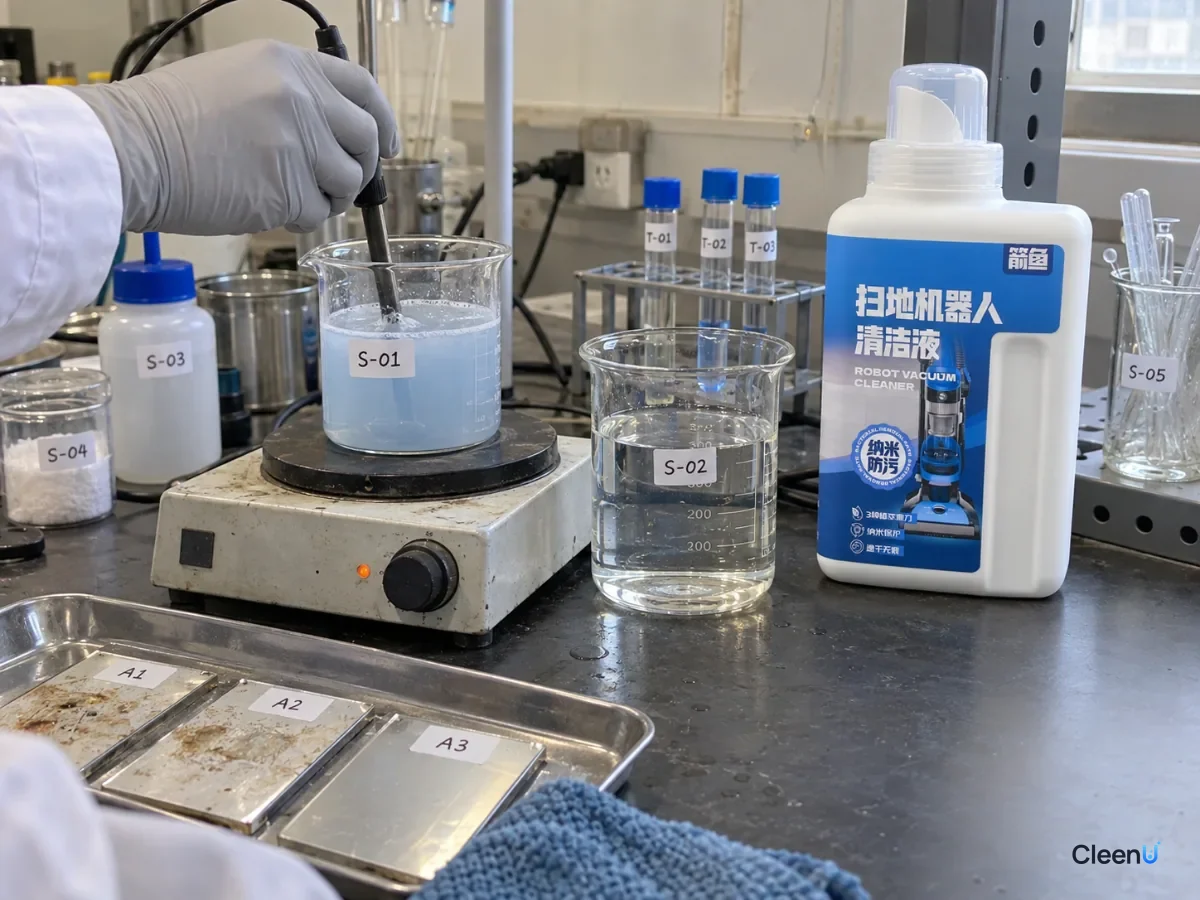
For a robot mop solution that emulsifies greasy footprints in room-temperature water, with no need for hot water, try Robot Vacuum Cleaning Solution.
Most robot mops call for room-temperature water, so don't add hot water to the clean tank. Heat can warp and crack the tank, age the seals, shorten pump life, make cleaner smells stronger and leave residue in the lines, and tank water cools long before it reaches the floor anyway. In winter, a little warm water to bring it near room temperature is fine. For grease, clean heavy spots by hand, use a low-foam solution at the label ratio and give the kitchen an extra pass. If you want hot water for the pads, choose a dock with built-in heating.