
Troubleshooting
Robot Vacuum Clean Water Tank Smells Musty? How to Clean It and Mix Cleaning Solution Fresh
Direct answer
A musty clean water tank usually means water sat in it for days and bacteria and mold started growing on the walls and filter. Empty it, scrub it and let it air-dry with the lid open. Use mixed solution the same day instead of storing water in the tank, and keep the concentrate tightly capped.
What you see
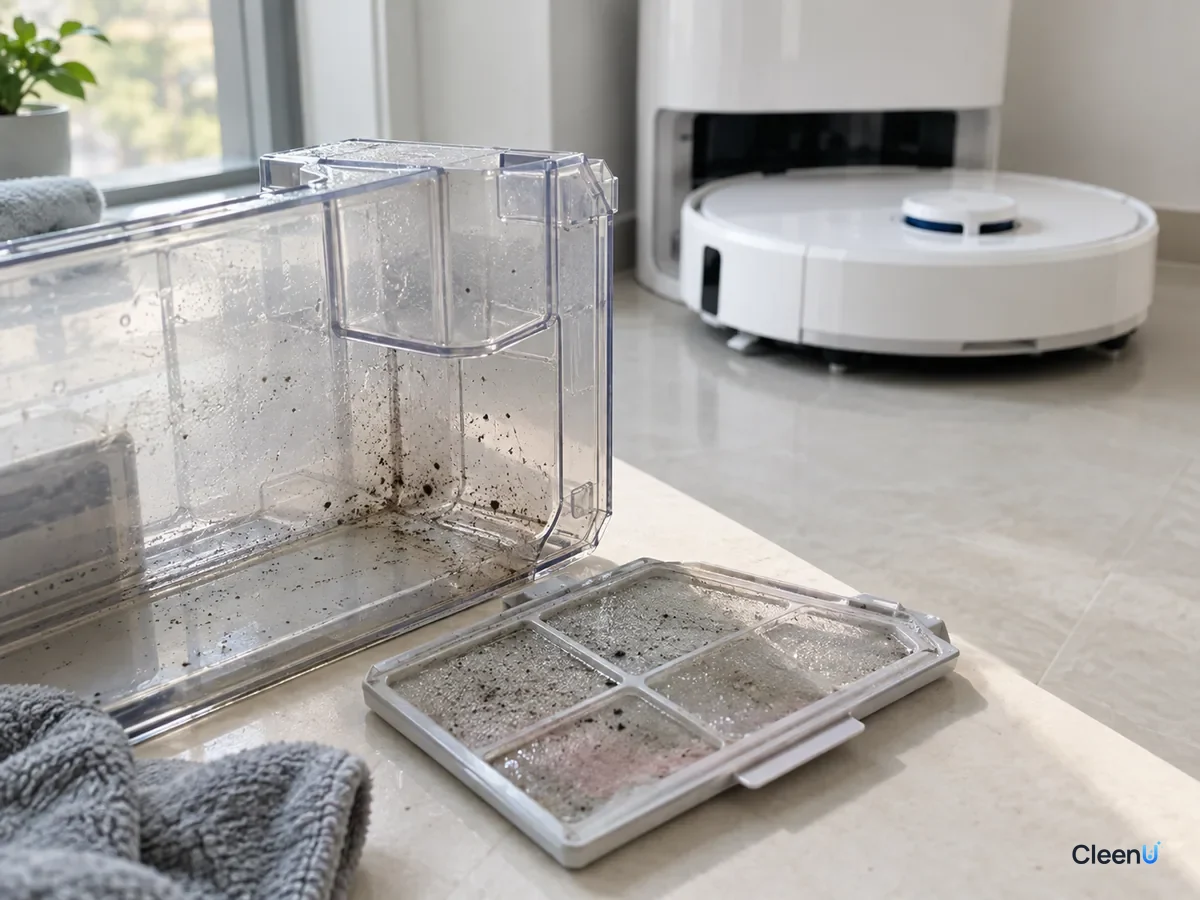
You open the dock's clean water tank and get a stale, musty or sour smell. The walls feel slippery, and there are faint black dots or a pink or gray slimy film in the corners or on the filter. It's supposed to be clean water, yet the house smells a little off after the robot mops.
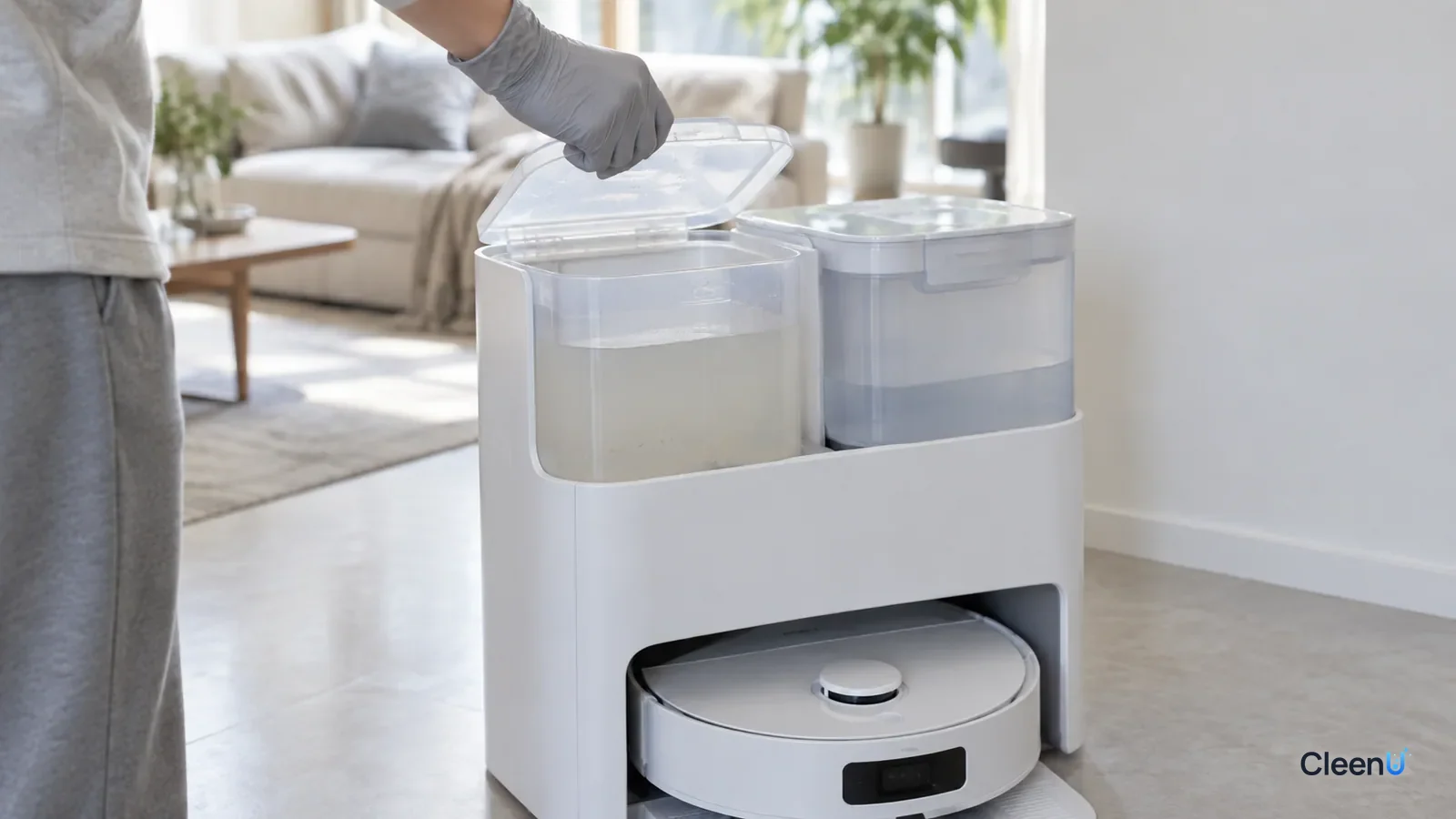
Most people keep an eye on the dirty water tank but rarely think the clean water tank could smell. It only ever holds clean water and cleaning solution, so it should stay clean. In practice, any water left in the tank long enough becomes a breeding ground for microbes. When the robot mops, that musty water gets spread across the floor, and the whole room picks up the smell.
How does clean water end up smelling musty?
Tap water isn't sterile, and the air carries plenty of bacteria and mold spores. A clean water tank is closed, damp and dark. At room temperature, the few microbes in the water gradually cling to the tank walls and multiply, forming a slimy layer called biofilm.
Once biofilm forms, it acts like a protective shell. The microbes inside keep multiplying and give off musty or sour odors, and even fresh water picks up the smell again quickly. Typical signs are slippery walls and black dots or pink or gray slime in the corners, on the filter and around the inlet.
Tanks with cleaning solution mixed in need extra care. A cleaning solution is stable as a concentrate, but once it's diluted 1:50 to 1:100, everything in it is diluted too. Mixed solution is meant to be used the same day, not left in the tank for days.
What the musty smell and pink slime actually are
The musty smell in a clean water tank is different from the sour stench of a dirty tank. It's more like a damp basement or a forgotten dishcloth. That earthy, musty character is often linked to microbial byproducts such as geosmin and 2-methylisoborneol. They're common metabolites of actinomycetes and some algae and fungi, and people are extraordinarily sensitive to them: a trace in water is enough to smell. They're also often behind the occasional "earthy" taste in tap water.
The pink or orange-red slime on tank walls and in corners shows up in showers, bathrooms and pet water bowls too. It's usually tied to bacteria that produce a red pigment and thrive in damp conditions; Serratia marcescens is the one most often mentioned. They feed on trace organic matter, leftover soap and cleaner in the water, and form a colored biofilm on surfaces that never dry.
Black dots are usually mold colonies, most often on seals and the inside of the lid, where drying is slowest.
None of these microbes need much food. A tank of water left for a few days and a thin film of residue on the walls are enough. So the key isn't killing them, it's denying them the conditions to grow: pour out standing water, scrub off the biofilm and dry the tank completely.
Why diluted solution should be used the same day
A cleaning concentrate's preservative system is designed for the concentrate, so it protects the product from microbial contamination through its shelf life. Once you dilute it 1:50 to 1:100, the preservative is diluted to between a fiftieth and a hundredth of its original concentration too, which is usually below the level where it can hold microbes back.
The tap water you dilute with isn't sterile either. It leaves the treatment plant with a little residual chlorine to suppress microbes, but that chlorine gradually evaporates and gets used up. After a few hours to a day or two in the tank, that protection is essentially gone.
Put those together and diluted solution sitting in a clean tank is actually more vulnerable to microbes than the concentrate itself. That isn't a flaw in any one product; it's how every concentrate-plus-water product behaves. The right approach is to mix what you'll use that day, not a big tank to use over several days.
Robot clean tanks carry one more risk. On some models, a little dirty water can splash or flow back into the clean tank during pad washing or when you pour by hand, bringing in a heavy load of microbes. That's another reason the clean tank needs regular scrubbing, not just refilling.
Which habits make a clean water tank go musty?
Filling the tank and leaving it for days: topping it up before a trip and using it when you get back, or making one tank last several days.
Never cleaning the tank: only ever adding water, never emptying, scrubbing and drying it, so the biofilm keeps building.
A tank that never dries: snapping the lid shut and docking it right after use, so moisture can't escape and the corners stay wet.
Adding things that don't belong: milk, tea or juice should never go in. Essential oils, perfume and dish soap shouldn't either; they add residue that gives microbes something to cling to and feed on.
Storing the concentrate poorly: leaving the cap loose after opening, keeping the bottle somewhere hot and humid, or decanting it into a container that isn't clean.
Four checks to find out why the clean water tank smells
Work through these four checks to find the source of the musty smell
-
Step 1 Has the water in the clean tank been sitting there for more than a day?
- Yes
- Pour out the old water, rinse the tank two or three times and let it air-dry with the lid open before refilling. From now on, add only what you'll use that day.
- No
- Go to the next check
-
Step 2 Do the walls, the inside of the lid or the filter feel slippery, or can you see black dots or a pink or gray film?
- Yes
- Biofilm has formed, and rinsing won't remove it. Scrub the walls, lid and filter with a soft brush and a little neutral cleaner, rinse well and let everything dry completely with the lid open.
- No
- Go to the next check
-
Step 3 Once the tank is clean, does the smell come back as soon as you add cleaning solution?
- Yes
- Check the solution. Has it been open a long time, has its color or smell changed noticeably, or has it separated or formed sediment? If so, stop using it, open a fresh bottle, keep it tightly capped and store it somewhere cool.
- No
- Go to the next check
-
Step 4 Is your dock plumbed in with an automatic water supply?
- Yes
- The supply line and valve may be holding grime too. Clean the inlet filter as the manual describes, and if the smell persists, ask the manufacturer's support to flush the water lines.
- No
- Clean and dry the clean tank, dirty tank, wash tray and pads all at once. If the musty smell is still there, contact the manufacturer's support.
How a musty clean tank differs from a smelly dirty tank
The two odors come from different places and call for different fixes.
The dirty tank smell comes from the water collected during mopping. It carries dust, skin flakes, food bits and oil, turns sour within hours and usually smells sharper, like old dishwater. The fix is emptying, rinsing and drying the dirty tank the same day you mop.
The clean tank smell comes from water stored too long and the biofilm on the walls. It's more of a stale, damp smell, like a forgotten dishcloth or a damp corner, and it comes back quickly even with fresh water. The fix is scrubbing off the biofilm, drying the tank completely and breaking the habit of storing water in it.
The two often show up together, since moisture and odor from the dirty tank and wash tray affect the whole dock. When you track down a smell, check and clean the clean tank, dirty tank, wash tray and pads together.
Storing the robot when you're away
Before a business trip, a vacation or any long break, a few minutes of prep means you won't come home to a musty smell.
Empty both the clean and dirty tanks, rinse them, and let them dry with the lids open before putting them back, or leave them out of the dock to air.
Take the pads off, wash them and let them dry completely. If the dock has a dryer, run a full drying cycle first.
Wipe any standing water out of the wash tray and clear hair from the filter.
When you get back, rinse the clean tank with fresh water before adding new water and solution for the first run.
How to deep clean the clean water tank
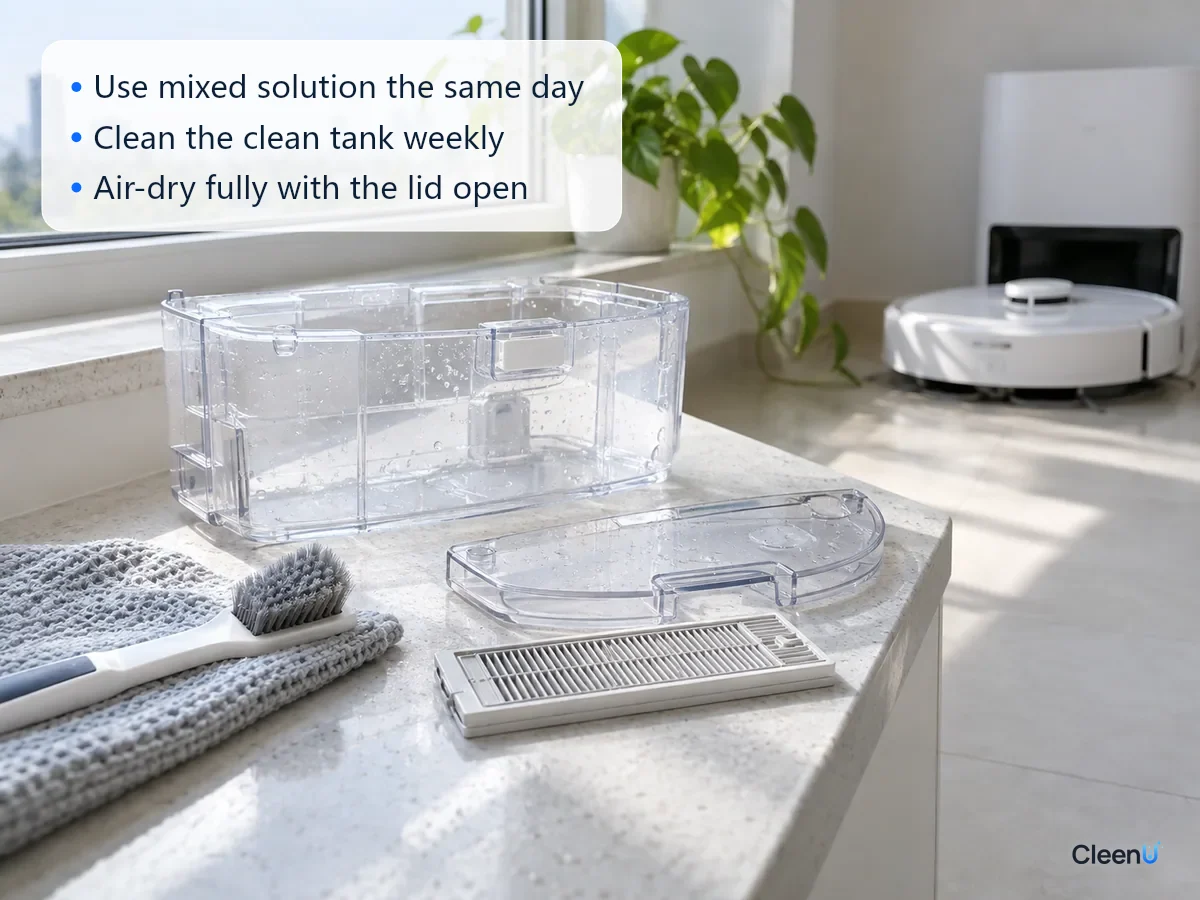
Empty the clean tank and rinse it two or three times. Remove the filter and lid if they come off. Dip a soft brush in a little neutral cleaner and scrub the walls, the bottom, the corners, the inside of the lid, the seal and the filter, focusing on anywhere that feels slippery or shows dots.
Rinse repeatedly with clean water until there are no suds and no cleaner smell. Then set the tank, lid and filter apart somewhere with good airflow and let them dry completely, for at least a few hours, before putting them back.
Don't pour bleach, toilet bowl cleaner, vinegar or high-strength alcohol into the tank. Chlorine, acids and solvents can damage the seals, pump and sensors, and any residue gets spread onto the floor during mopping. For what can and can't go in the tank, see can you put vinegar or bleach in a robot mop tank.
How to keep the clean water tank from going musty
Fill only what you need: add just the water you'll use that day, and pour out any mixed solution left after mopping rather than keeping it overnight. Before a trip of a few days, empty the tank and let it dry.
Clean it weekly: empty, rinse and dry the clean tank at least once a week, and give it a thorough scrub with a soft brush once a month.
Let it dry: after mopping, leave the clean tank's lid open for a while so moisture can escape.
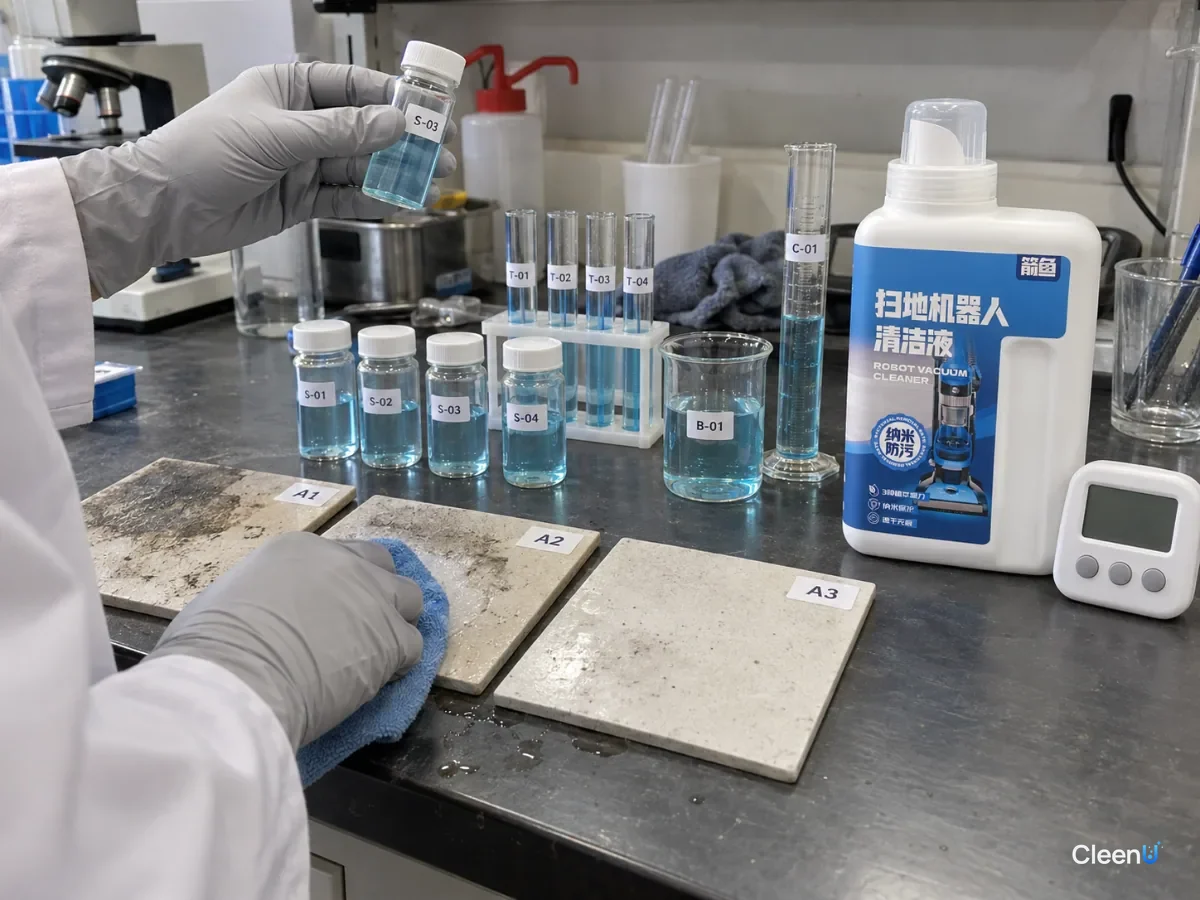
Mix solution fresh: add robot mop cleaning solution to the clean tank at the label ratio and use it up the same day. CleenU Robot Vacuum Cleaning Solution, for example, is a concentrate diluted at about 1:50 to 1:100, usually 10 to 20 mL per fill. After opening, keep the cap tight, store the bottle somewhere cool and out of direct light, and don't decant it into containers that aren't clean.
It can be used in most Roborock, Ecovacs, Dreame, Narwal and iRobot robot mops and in Tineco-type floor washers; where it goes, and whether auto-dosing can be used, depends on the manual. CleenU isn't affiliated with these brands.
Add only what belongs: just water and a robot mop cleaning solution. No essential oils, perfume, milk, tea or dish soap.
Look after the whole system: empty the dirty tank after each run and dry the pads with the dock's dryer or on a rack. When the whole robot stays clean and dry, the house stays fresh. For where solution goes in different robots, see where to put cleaning solution in a robot vacuum.
This article is part of the Robot Vacuum Cleaning Solution & Maintenance Guide, which covers the full maintenance schedule and links to every troubleshooting guide.
Stop if you see any of these
A strong musty smell remains after thorough cleaning and drying; the clean tank is cracked or leaking; water flow is erratic or the pump makes unusual noises; the concentrate has clearly changed color or smell, or separated with sediment. Stop using the robot and the affected solution, and contact the robot maker's support or your solution supplier.
Musty clean water tank questions people ask most
How long can water stay in the clean water tank?
Ideally use it the same day. Don't leave mixed solution overnight, and empty and dry the tank before a trip.
How often should I clean the clean water tank?
Empty, rinse and dry it weekly, and scrub the walls, lid and filter with a soft brush once a month.
Can I soak a musty tank in disinfectant?
It isn't a good idea. Chlorine and acidic products can damage seals and the pump. Scrubbing with a soft brush and neutral cleaner, rinsing and drying fully is safer.
If I add cleaning solution, will the tank stay fresh?
Don't count on it. Diluted solution left standing can grow microbes too. What matters is using it the same day, cleaning the tank regularly and letting it dry.
How long does cleaning solution last once opened?
Follow the shelf life and storage directions on the bottle. Keep it tightly capped somewhere cool, and stop using it if the color or smell changes or it separates.
What is the pink slime in my clean water tank?
It's a microbial film that forms on surfaces that stay damp, common in bathrooms and water tanks. Scrub it off, dry the tank thoroughly and stop leaving water in it for days.
Can I put hot water in the clean water tank?
No. Use room-temperature water. Hot water does not keep the tank from going musty, and it can warp the tank, seals and lines; several manufacturers' manuals say not to use it. Cleaning solution works fine in room-temperature water. What prevents mustiness is mixing only what you need, not leaving water sitting overnight, and emptying and air-drying the tank.
For a low-foam, neutral concentrate you mix fresh for each run, try Robot Vacuum Cleaning Solution.
A musty clean water tank comes from water sitting too long in a closed, damp space, where bacteria and mold form a biofilm on the walls and filter. Empty it, scrub it with a soft brush and neutral cleaner, rinse and let it dry completely with the lid open. From then on, add only what you need, use mixed solution the same day, clean the tank weekly, and keep the concentrate capped and cool. Keep the clean tank, dirty tank and pads clean and dry, and the smell won't come back.