
How-to
Can You Use a Robot Mop on Hardwood Floors? Water Level and Solution Settings
Direct answer
Yes, if your hardwood has an intact finish and tight seams. Set the robot to its lowest water level and test a hidden spot first. Skip wet mopping on waxed or oiled floors and on boards that are already gapping or cupping; vacuum only or clean them by hand.
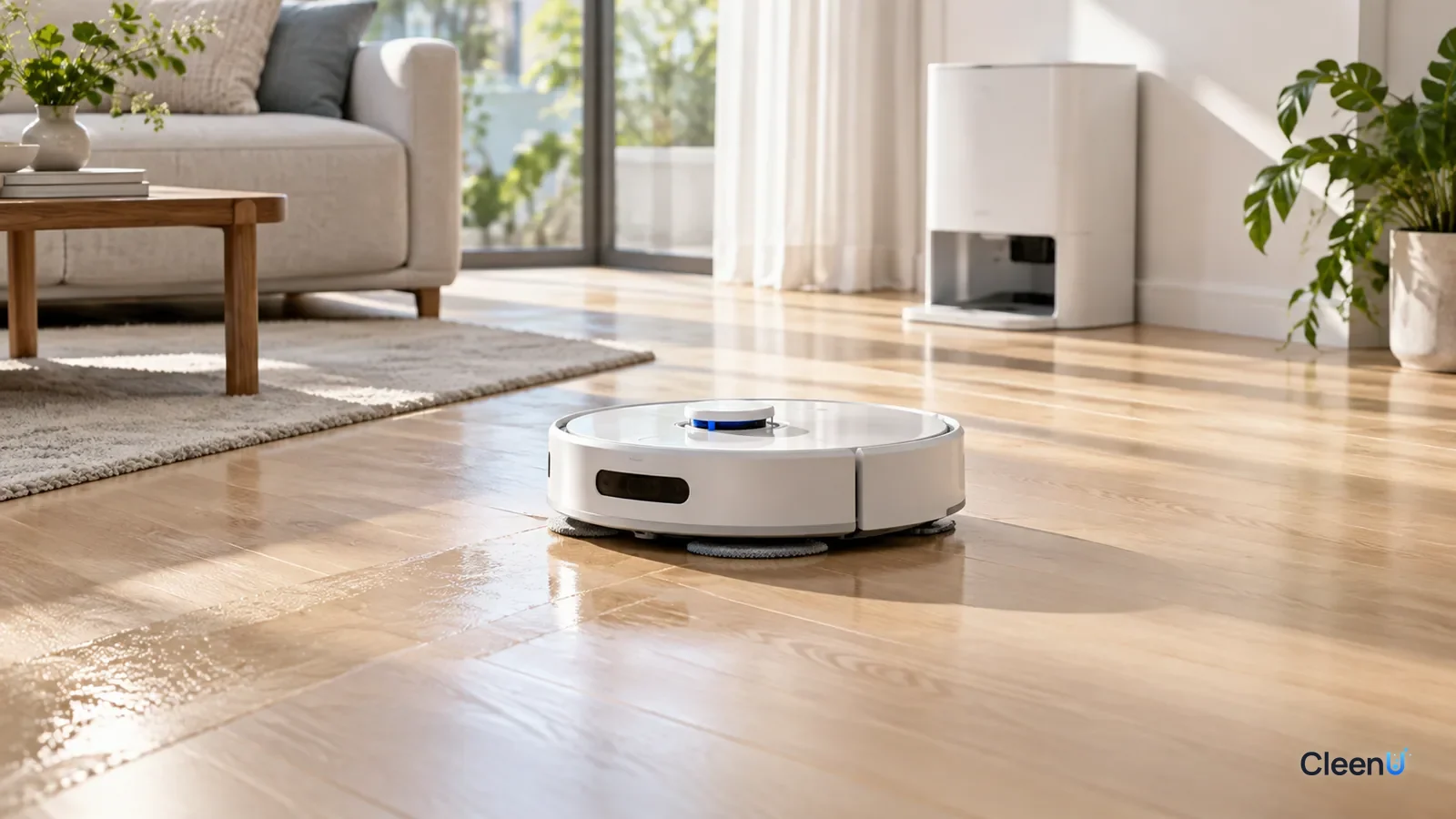
Hardwood is the floor people worry about most. It looks great and feels great underfoot, but it doesn't like water, scratches or harsh chemicals. One of the first questions new robot mop owners ask is whether they can let it mop the wood every day.
It comes down to two things: whether your floor has a complete protective finish, and whether the water level and cleaning solution are set right. Get those right and a daily robot pass is actually gentler than a string mop, because the robot uses very little water, applies even pressure and never sloshes a bucket's worth onto the boards.
Why does hardwood react to water?
Wood is a porous material made of cellulose, hemicellulose and lignin, and its cell walls are full of hydroxyl groups that bond with water. Wood constantly takes moisture in from its surroundings and gives it back. When its moisture content changes, it swells or shrinks.
Once a floor is installed, each board is pressed against its neighbors. A little water on the surface for a short time isn't a problem. But if water sits in the seams or soaks into the wood, those boards swell more than the ones around them, push against each other and lift at the edges. That's cupping, and in worse cases crowning or buckling. When the water dries out, the boards shrink and the seams open wider. Repeat that a few times and the gaps keep growing, which lets in even more water.
Engineered hardwood and laminate are more stable and more scratch-resistant on top, but their cores are plywood layers or high-density fiberboard. Once water gets into a seam, that core swells and rarely goes back down. The usual sign is a raised ridge along the joint.
So the real risk isn't the damp pad. It's water that lingers in the seams and gets into the wood.
First, check whether your hardwood can be wet-mopped
Check these four things before you mop
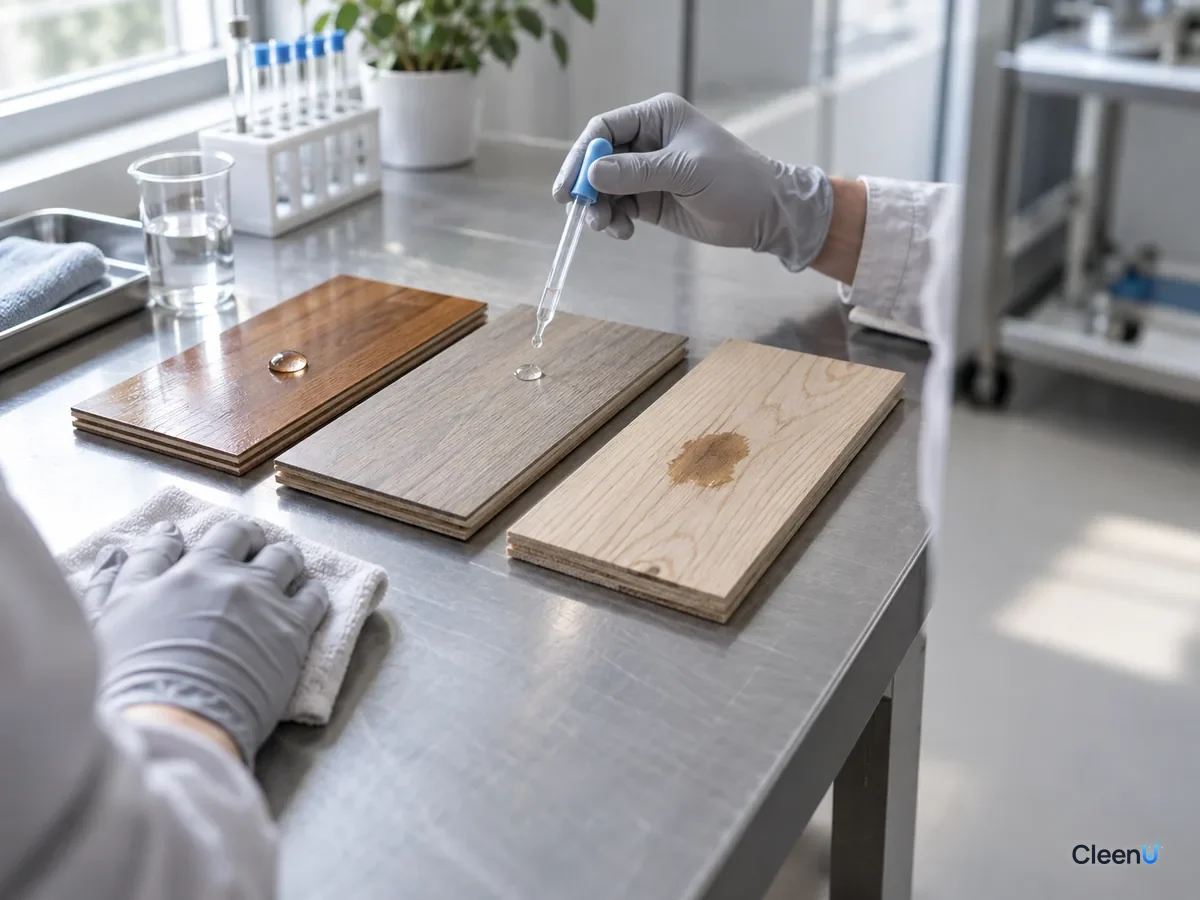
- Finish: is there an intact glossy or matte finish? Put a drop of water in a hidden spot; it should bead up and sit on the surface for several minutes.
- Seams: are the boards tight, with no visible gaps, dark lines or lifted edges?
- Floor type: sealed solid hardwood, engineered hardwood and laminate are candidates; waxed or oil-finished wood isn't.
- Manufacturer: does the flooring care guide allow damp mopping, and does it restrict any cleaners?
The water-drop test takes five minutes. Put a drop somewhere hidden, like under the sofa, and watch it. If it stays round on the surface and wipes off without a mark, the finish is intact. If it soaks in fast and leaves a dark spot, the surface isn't sealed or the finish has worn through, and that floor isn't a good match for robot wet mopping.
Waxed and oiled floors need extra care. Wax and oil protect the wood by soaking into the top layer and forming a thin film. Frequent wet mopping and cleaners slowly strip that film, leaving the floor dull and hazy. Maintain those floors with the products the manufacturer recommends, and let the robot vacuum only.
How to set up a robot mop for hardwood
Six steps from setup to a finished pass
Set the water level to lowest or low
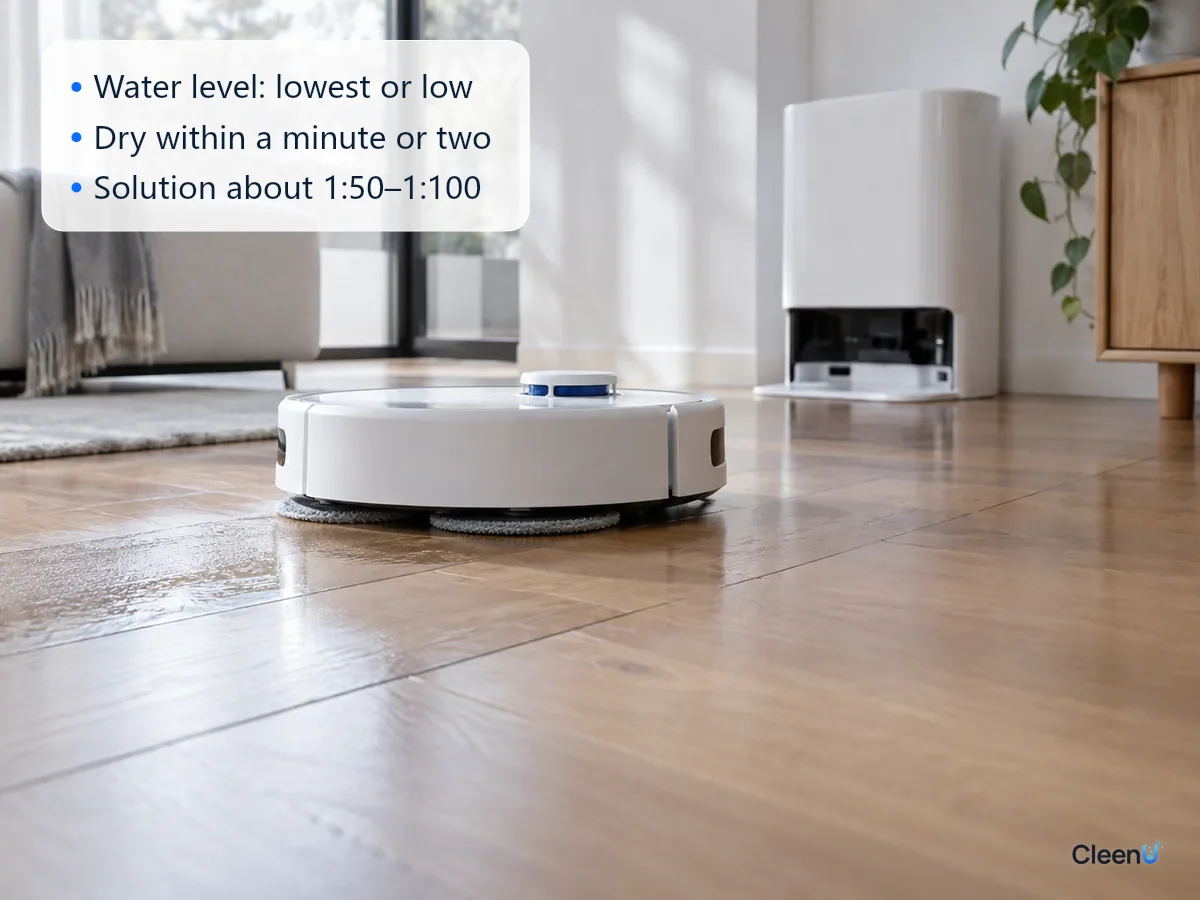
In the app, set water flow for hardwood rooms to the lowest or low setting. The pad should be just damp, and mopped areas should air-dry within a minute or two. If you still see wet streaks that take ages to dry, turn it down further.
Caution:Some robots adjust water flow automatically by floor type. Confirm the setting manually the first time anyway.
Test a hidden area first
Pick a spot beside the sofa or at the edge of the bed and mop just that area. Check that it dries within a minute or two, doesn't look hazy or feel tacky, and that no water sits in the seams.
Add solution sparingly
Plain water handles everyday dust. For greasy footprints or grime tracked from the kitchen, add a low-foam robot mop cleaning solution. CleenU Robot Vacuum Cleaning Solution dilutes at about 1:50 to 1:100; 10 to 20 mL per fill is usually enough, or about 10 to 20 mL for a 1-liter tank. Less is better than more.
Caution:Don't add dish soap, vinegar, bleach, rubbing alcohol or essential oils, and avoid any cleaner with wax or shine enhancers.
Set paths and no-mop zones
Turn on carpet detection or set no-mop zones in the app. In rooms with a clear board direction, have the robot mop with the grain. For wet, grimy spots like the entry or the kitchen doorway, add an extra pass instead of raising the water level.
Check the seams afterward
For the first few runs, look for water sitting in the seams or dark lines, and feel the board edges for lifting. If you see problems, lower the water again or switch that room to vacuum only.
Keep the pads clean
The dock washes the pads after each run, but still take them off regularly to hand wash and dry. Dirty pads release water unevenly and smear soil back onto the floor.
Why water level matters more than the solution
The risk to hardwood comes from water, not from the cleaner. On a low setting, the pad leaves a very thin film that evaporates in seconds to a minute or two, before it can work into the seams. Turn the water up and the film thickens, pools at the seams and gets drawn in by capillary action.
Capillary action is liquid creeping into a narrow gap, pulled along by surface tension. The narrower the gap, the stronger the pull. That's why seams stay the weak point even when the finish is perfect.
There's a subtle point here. Surfactants in a cleaning solution lower water's surface tension, so the liquid spreads more easily and gets into fine gaps more readily. That wetting power is exactly what lets the solution lift soil off the floor, but it's also a reminder to keep the water level low whenever you use solution, so nothing sits in the seams.
What kind of solution suits hardwood?
When choosing a robot mop cleaning solution for wood, look for:
Low foam. Foam builds up in the dock and dirty tank and makes the pad hold more water.
Neutral or near-neutral pH. Strong alkaline cleaners can haze some finishes and strip wax, and strong acids aren't suitable either. CleenU Robot Vacuum Cleaning Solution is a neutral, low-foam formula at pH 6.5 to 7.5.
No wax or shine enhancers. They build up layer by layer. At first the floor looks shiny, but over time it turns tacky, dull and dusty, and it can get slippery.
Low residue with no rinse needed. A robot doesn't follow up with a clean-water pass, so the formula has to be designed to work at low concentration and dry clean.
CleenU Robot Vacuum Cleaning Solution uses low-foam nonionic surfactants with a defoamer and contains no wax, no chlorine and no particles. It's made for tile, vinyl plank, laminate and sealed hardwood, not for unsealed wood, waxed floors or carpet. It works in most robot mops from Roborock, iRobot (Roomba Combo and Braava), Ecovacs Deebot, Dreame and Narwal, and in floor washers such as Tineco. Add it to the clean water tank or the dock's designated detergent compartment as your manual directs. CleenU isn't affiliated with these brands; the names only indicate compatibility.
How mopping differs by type of wood floor
Sealed solid hardwood: with an intact finish, daily mopping on a low setting is fine. Watch the seams and err on the side of less water.
Engineered hardwood: a thin real-wood veneer over plywood layers, more stable than solid wood. The seams still don't tolerate long-term dampness, so keep water low.
Laminate: a very hard wear layer that resists scratches, over a fiberboard core that swells if water gets into the seams. Keep water low and make sure nothing pools at the joints.
Waxed or oiled wood: don't wet-mop it with a robot. Vacuum only and follow the manufacturer's maintenance routine.
Bamboo: behaves much like hardwood and doesn't like prolonged moisture. If it has a finish, treat it like sealed hardwood.
For controlling moisture when you mop by hand, see how to mop hardwood floors without water damage.
Season and climate matter too
In humid months, water evaporates slowly and the wood itself is absorbing moisture from the air. Drop the water level another notch, mop every other day, or run a dehumidifier before mopping.
In winter with the heat on, the air is dry, the boards shrink and the seams open. Those wider gaps take in water more easily, so keep the water low and make sure the floor dries within a minute or two.
In homes with kids and pets, spilled drinks and water-bowl splashes are common. Blot big spills with a dry towel right away instead of waiting for the robot.
This article is part of the Robot Vacuum Cleaning Solution & Maintenance Guide, which covers the full maintenance schedule and links to every troubleshooting guide.
Stop wet mopping if you see any of these
Dark or moldy seams; boards lifting, cupping or crowning, or sounding hollow or feeling springy underfoot; a finish that turns white, blisters or loses its sheen in patches. Switch that room to vacuum only and keep it dry and ventilated. If it doesn't improve, have the flooring manufacturer or installer take a look.
Common questions about robot mops on hardwood
Can a robot mop my hardwood every day?
Yes, if the finish is intact and the seams are tight. On a low water setting, a floor that dries within a minute or two with nothing sitting in the seams means your setup is right.
Do I need cleaning solution for hardwood?
Not for everyday dust; water is enough. For greasy footprints or kitchen grime, add a small amount of neutral, low-foam, wax-free robot mop solution at the label ratio.
Why does my hardwood look hazy after robot mopping?
Usually too much solution, or a product with wax or shine additives, left on the surface. Cut the dose or run a few water-only passes. If the haze stays, have the finish checked.
The seams have turned dark. Can I keep robot mopping?
Stop wet mopping first. Dark seams usually mean long-term dampness with dirt packed in, and more water makes it worse. Clean them by hand, keep them dry, then decide whether to resume on a low setting.
Why can't a robot mop waxed floors?
Water and cleaner gradually strip the wax, leaving the floor dull and hazy. Vacuum only and maintain it by hand as the manufacturer recommends.
Will a robot mop scratch hardwood?
The pad itself is soft and won't. Scratches usually come from grit trapped under the robot. Vacuum before mopping and clean the brush and pads regularly.
Can I put regular hardwood floor cleaner in my robot mop?
Not unless the label says it is made for robot mops. Many hardwood cleaners are built for hand mops and contain wax, polish, or extra foam that can clog outlet holes and leave a dull film. On sealed wood, use a neutral, low-foam robot solution at about 1:50 to 1:100 and keep the water level low.
Will a robot mop damage hardwood floors?
Not on sealed, well-finished hardwood, as long as you keep the water level low and avoid pooling. The risk comes from too much water on unsealed, waxed, or worn boards and open seams. Test a small area first, use the lowest water setting, and skip rooms where the finish is gone.
For sealed hardwood, if you want a neutral, low-foam, wax-free robot mop solution that measures easily with the cap, try Robot Vacuum Cleaning Solution.
Whether a robot mop can clean your hardwood depends on the finish and the seams. Sealed solid hardwood, engineered hardwood and laminate can usually be mopped on a low water setting after a test in a hidden spot. Waxed or oiled wood and floors that are already gapping or cupping should be vacuumed only. Water level matters more than the cleaner: a floor that dries within a minute or two with dry seams is set right. When you need solution, choose a neutral, low-foam, wax-free one and dose on the low side.