
How-to
How to Mop Hardwood Floors Without Water Damage
Direct answer
To mop hardwood floors, vacuum up grit first, then use a barely damp flat mop and a neutral wood floor cleaner, working along the grain. Never leave standing water, and open a window so the floor dries fast. This works for sealed hardwood; oiled, waxed and unsealed floors need their own care.
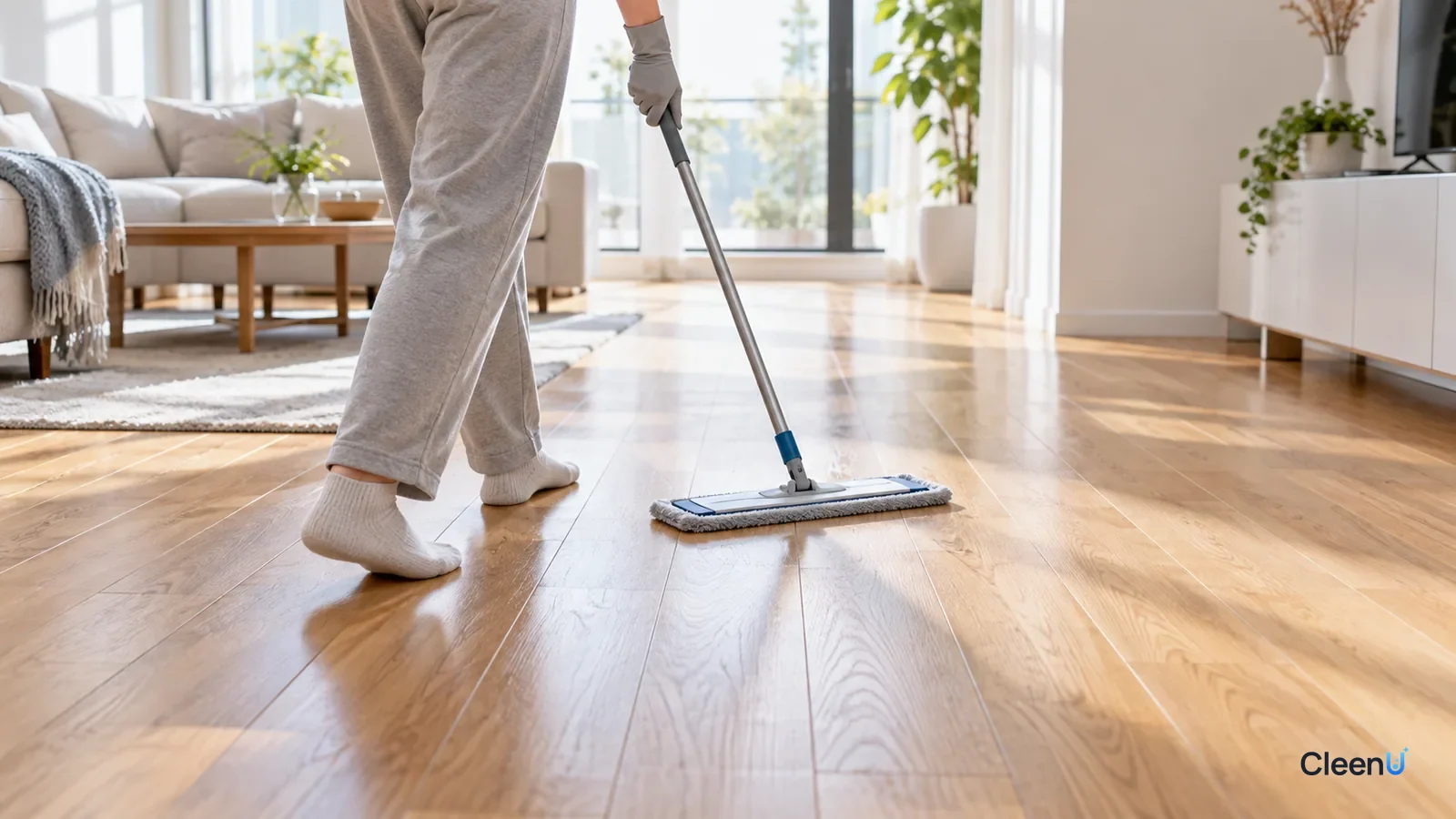
Hardwood floors feel warm underfoot and look beautiful, and plenty of people chose them for exactly that reason. Then mopping day comes and the worry starts. Too wet and the boards might cup or gap; skip it and the floor never feels clean. And after a few months with a regular floor cleaner, the finish seems duller, with a haze that won't go away.
Hardwood can handle a little water. What it can't handle is two things: water soaking into the seams and the wood, and the wrong cleaner eating away at the finish. Avoid those, and mopping hardwood is no more stressful than mopping tile.
Why is hardwood sensitive to water?
Wood moves. It swells when it absorbs moisture and shrinks as it dries. Most hardwood floors have a polyurethane or similar finish on top that blocks most water, but the seams, edges and worn spots in the finish are weak points.
When a mop is too wet, water sits on the floor and seeps down between the boards. The edges absorb it and swell, and the boards cup, with edges higher than the middle. With more water over more time, the boards can crown or buckle, turn dark, or grow mold. Once that damage happens, drying the floor out rarely undoes it completely.
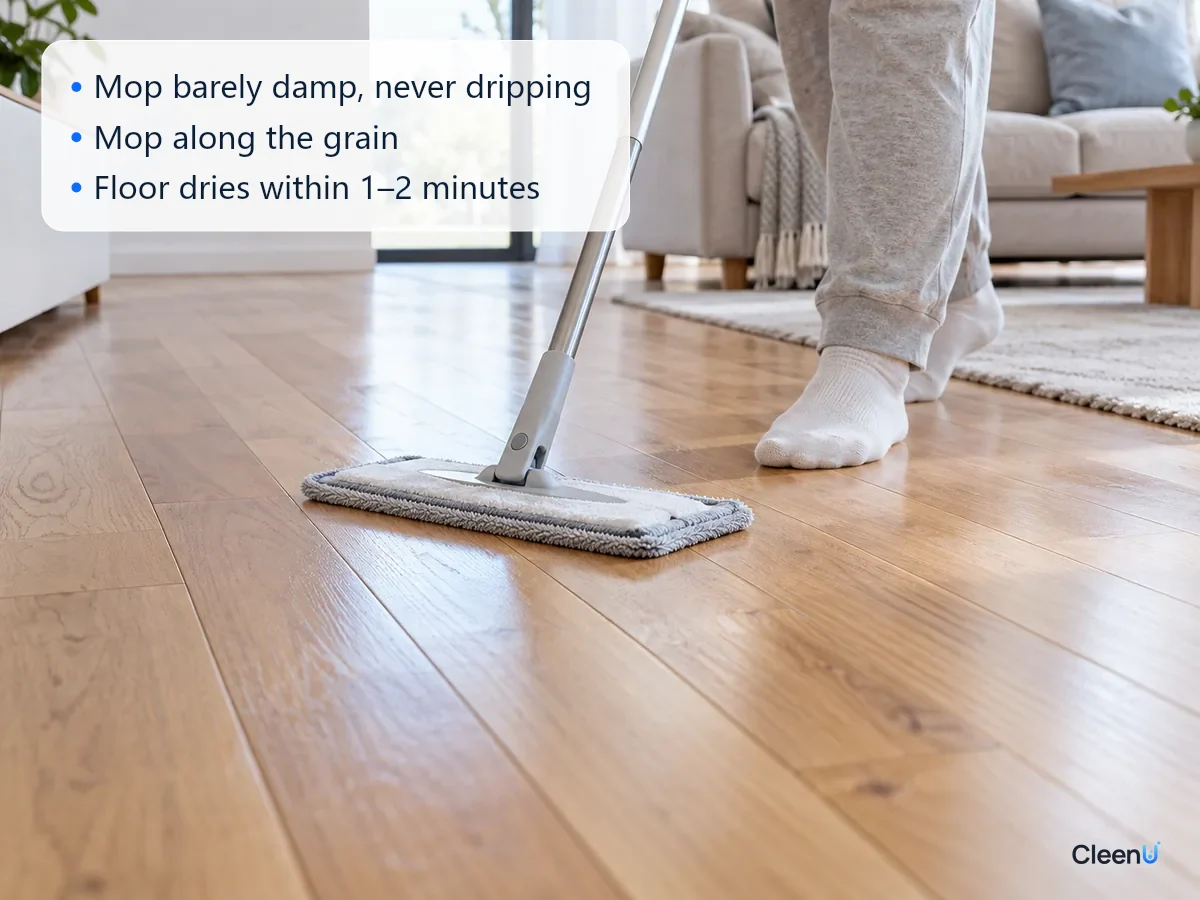
So the key to mopping hardwood is less water. The mop should be only barely damp, and the floor it passes over should air-dry within a minute or two, not sit there wet and shiny.
Why not just use any floor cleaner?
The second issue is the cleaner. Many all-purpose floor cleaners are alkaline and strong on grease, which is fine for tile and vinyl but can dull and cloud a polyurethane finish over time. Solvent-heavy products can even soften it. Others add wax or shine ingredients so the floor looks glossy right after mopping; those build up layer by layer and eventually turn sticky and blotchy, and they show every footprint.
Hardwood does better with a neutral, low-moisture, low-residue cleaner made for wood. CleenU Laminate & Wood Floor Cleaner is one example. It is a neutral, low-moisture formula: surfactants lift skin oil and footprints with very little water and flash off quickly, so nothing pools in the seams, and the neutral pH is gentle on polyurethane finishes, leaving the floor with its natural sheen. It is made for sealed hardwood and laminate, not for unsealed, waxed or oil-finished wood.
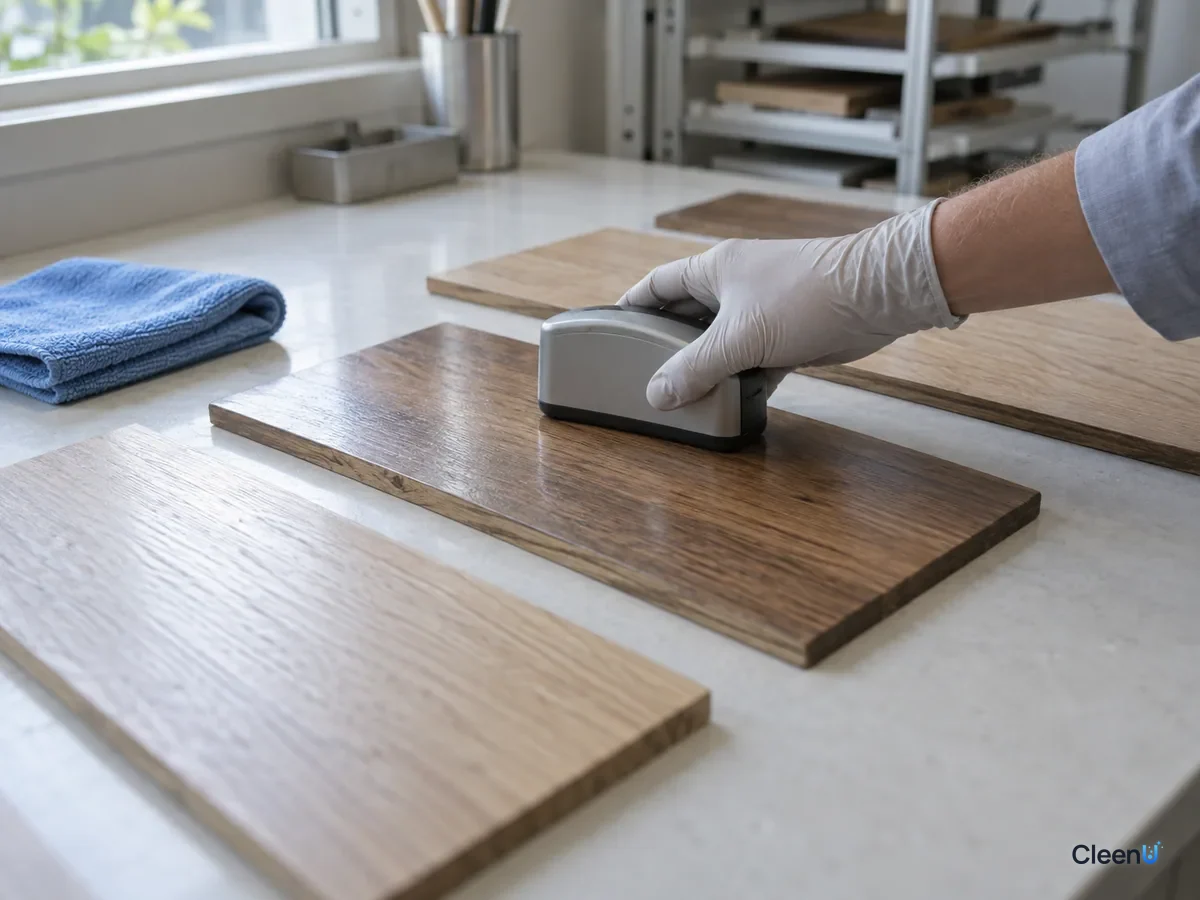
Know which kind of wood floor you have
Before you mop, find out how your floor is finished. That decides whether damp mopping is safe.
Sealed hardwood: a clear finish sits on top, with a visible film whether it looks glossy or matte. Put a drop of water somewhere out of sight. If it beads up and sits on the surface, the floor is sealed, and you can damp mop it as described below.
Oiled or waxed floors: there is no film on top, and the surface feels more like bare wood. A drop of water slowly darkens the wood and soaks in. Don't damp mop these with a cleaner; care for them with the wood soap or maintenance oil the flooring maker recommends.
Unsealed wood: there is no protection at all and water soaks in fast. Stick to vacuuming and dry dusting, and treat spots with a cloth wrung out until it is nearly dry.
If you can't tell, check the flooring maker's care instructions or ask your installer.
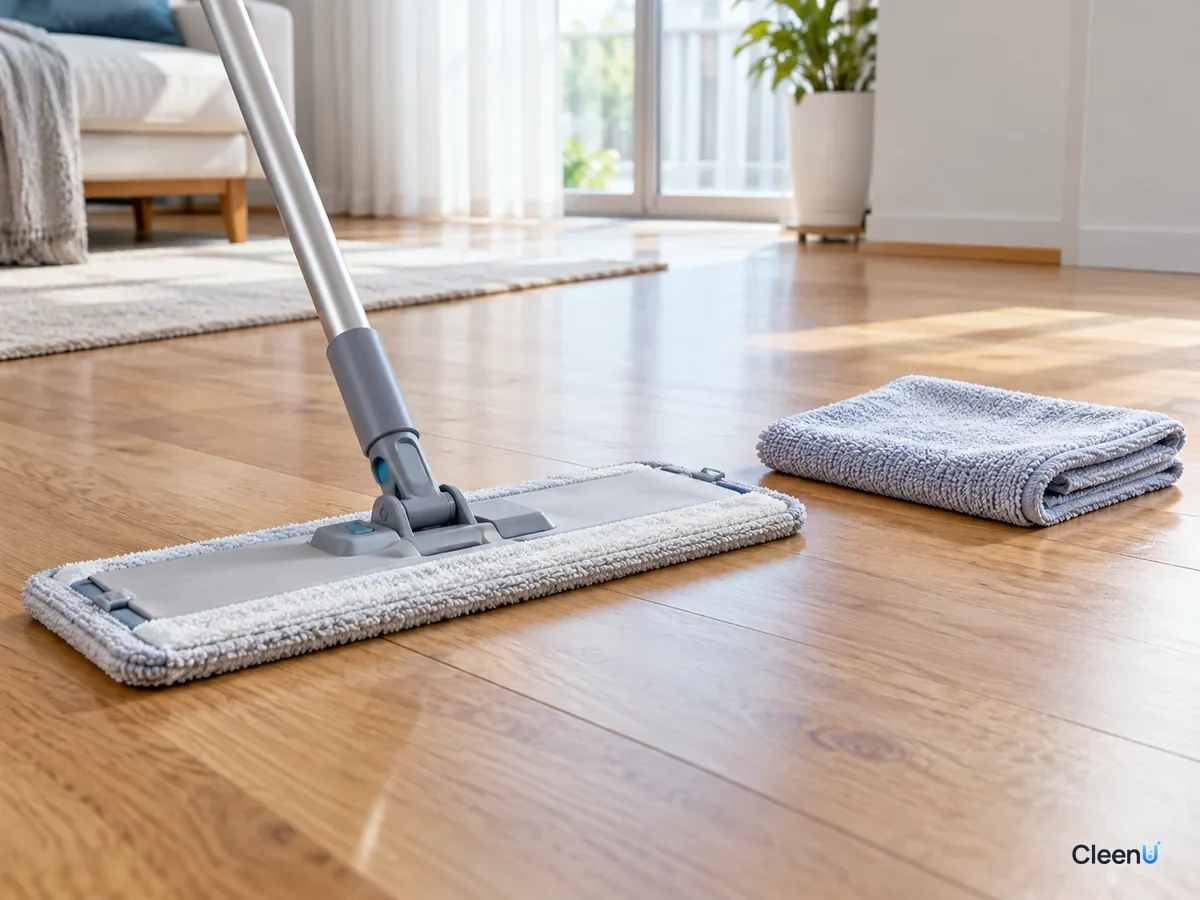
Step by step: mop hardwood floors safely
Vacuum, damp mop, spot clean, dry: four steps for hardwood
Vacuum or sweep up the grit first
Use a vacuum with a soft hard-floor head or a broom to pick up dust, hair and grit, including along the walls and under furniture. Grit acts like sandpaper on the finish; if it isn't removed first, the mop drags it across the floor and leaves fine scratches.
Spray the floor or the mop and keep the pad barely damp
Spray wood floor cleaner onto a small area of floor or onto the flat mop pad, working about 10 square feet at a time. The pad should be only damp, never wet enough to drip when squeezed. If you use a bucket, wring the mop until it barely drips.
Caution:Never pour water directly onto the floor, and don't use a steam mop; the heat and moisture both damage hardwood.
Mop along the grain
Push and pull the flat mop along the length of the boards, working section by section. Following the grain lifts dirt out of the fine grooves in the wood and avoids cross-grain streaks. Go over high-traffic spots like entryways and under the dining table once or twice more.
Spot clean stubborn marks
For dried drink or sauce spills, spray the cleaner onto a clean cloth, hold it on the spot a few seconds to soften it, then wipe along the grain and dry the area with a dry cloth. Skip steel wool, stiff brushes and scouring powder.
Ventilate so the floor dries fast
Open a window or turn on a fan so the floor dries within minutes, and blot any visible wet spots right away with a dry cloth. Keep shoes and furniture off the floor until it is completely dry.
How to tell you mopped it right
The mopped floor dries on its own within a minute or two, with no wet, shiny patches. Once dry, it shows no hazy streaks or footprints in side light, and it doesn't feel sticky or draggy under bare feet.
If the floor looks hazy or streaky, you probably used too much cleaner or the mop was too wet; use less next time and wring the pad drier. If the floor feels sticky, see why your floor feels sticky after mopping. If footprints and water marks show up more after mopping, see why floors look streaky after mopping.
Before you mop hardwood, make sure
- The floor is sealed hardwood, not oiled, waxed or unsealed wood
- You have vacuumed or swept up the grit first
- The cleaner is neutral and wax-free, made for wood floors
- The mop is only damp and won't drip when squeezed
- You can open a window or run a fan so the floor dries quickly
Common hardwood mopping mistakes
"More water gets it cleaner." More water doesn't mean cleaner; it just keeps dirty water in the seams longer. If the floor is very dirty, mop it twice rather than wetter.
"A splash of vinegar or dish soap cuts the dirt." Vinegar is acidic and can dull a finish with regular use. Dish soap foams and leaves residue that turns sticky and hazy.
"A coat of wax will make it shine." Sealed hardwood doesn't need wax. Wax layered on a polyurethane finish turns sticky and blotchy, and it makes switching back to normal cleaning harder.
"Any mop will do." What matters is that the mop is clean and wrings out well. Wash and dry the flat mop's pad after every use; a dirty pad just spreads grime back across the floor.
How often should you mop hardwood?
Most of the work should be dry cleaning. Vacuum every day or two to pick up grit and dust; that does more to protect the finish than anything else.
Damp mopping doesn't need to happen often. Once a week is enough for most homes. With kids, pets, or near the entry and kitchen, spot mop those areas every few days.
A few habits make a hardwood floor last longer. Put a mat at the door to catch grit from shoes. Add felt pads under furniture legs so moving a chair doesn't scratch the floor. Wipe up spills right away instead of letting liquid sit. Keep indoor humidity moderate: very dry air opens gaps between boards, and very humid air makes them swell.
Laminate is mopped the same way as sealed hardwood: little water, along the grain, and dry it promptly. For other floor types, see how to clean different types of floors.
Stop if you see any of these
Board edges lifting, seams opening or boards crowning in the middle; a finish that turns white, bubbles or peels; areas that darken after mopping and stay damp for a long time. Stop damp mopping, dry the floor and improve ventilation, check the flooring maker's care instructions, and contact your flooring retailer or installer if the damage is significant.
Written for: Households with sealed hardwood or laminate who want to mop regularly without water damage or a dulled finishNot for: Oiled, waxed or unsealed wood floors; floors that are already cupping, cracking or peeling
Hardwood mopping questions people ask most
Can I use a wet mop on hardwood floors?
On sealed hardwood, yes, as long as the mop is wrung until barely damp and no water is left standing. Oiled, waxed and unsealed wood shouldn't be damp mopped.
Can I use a regular floor cleaner on hardwood?
Not long term. Many all-purpose cleaners are alkaline or contain wax, which dulls the finish and leaves it blotchy. Use a neutral, wax-free cleaner made for wood.
Can I use a steam mop on hardwood?
No. The heat and moisture push into the seams and can whiten the finish or warp the boards.
Why does my hardwood look hazy after mopping?
Usually too much cleaner or a mop that is too wet. Use less, wring the pad drier, and go over the floor once with a mop barely dampened with plain water.
Can a robot mop clean hardwood floors?
On sealed hardwood, yes. Set the water flow to low, use a neutral, low-foam, wax-free robot mop cleaning solution, and keep the room ventilated.
How can I tell if my wood floor is sealed?
Put a drop of water in an out-of-sight spot. If it beads up and stays on top, the floor is sealed. If it darkens the wood and soaks in, the floor is likely oiled, waxed or unsealed.
Do I need to dilute hardwood floor cleaner?
Only if the label says it is a concentrate. CleenU Laminate & Wood Floor Cleaner is ready to use: spray it on the floor or onto a damp mop and wipe right away, with no dwell time and no extra water. Adding water yourself tends to make the mop too wet. If you use a concentrate, follow its ratio and still wring the mop until it is just damp.
Is laminate cleaned the same way as hardwood?
Yes, the routine is the same: dry-dust first, mop with a just-damp mop and a pH-neutral cleaner, then let the floor dry quickly. Laminate has a harder wear layer, but its seams still swell if water pools in them. On both floors, skip steam mops and heavy spraying. Unsealed, waxed or oil-finished wood needs its own care routine.
For a neutral, low-moisture wood floor cleaner that dries fast and is gentle on the finish, try Laminate & Wood Floor Cleaner.
Hardwood can be mopped; what it can't take is water in the seams and cleaners that attack the finish. Vacuum up grit first, then mop along the grain with a barely damp flat mop and a neutral, wax-free wood floor cleaner, leave no standing water, and ventilate so the floor dries quickly. Sealed hardwood and laminate both handle this well; oiled, waxed and unsealed wood need the care the flooring maker recommends.