
Troubleshooting
Why Your Floor Feels Sticky After Mopping
Direct answer
A floor that feels sticky after mopping almost always has residue on it, usually from too much cleaner or a mop that wasn't wrung out. Dilute to the label ratio and mop once or twice with plain water to lift the old residue. Still sticky? Look for mixed products, old polish, or sugary spills.
Check these five things to find the source of the stickiness
- Did you pour cleaner freehand and go over the label ratio?
- Is the mop too wet, so the floor takes a long time to dry?
- Have you used two cleaners together, or a polish or "shine" product in the past?
- Is the stickiness concentrated in the kitchen, under the table or in a kids' play area?
- Has the mop water gone unchanged for a long time, or was the mop pad washed with fabric softener?
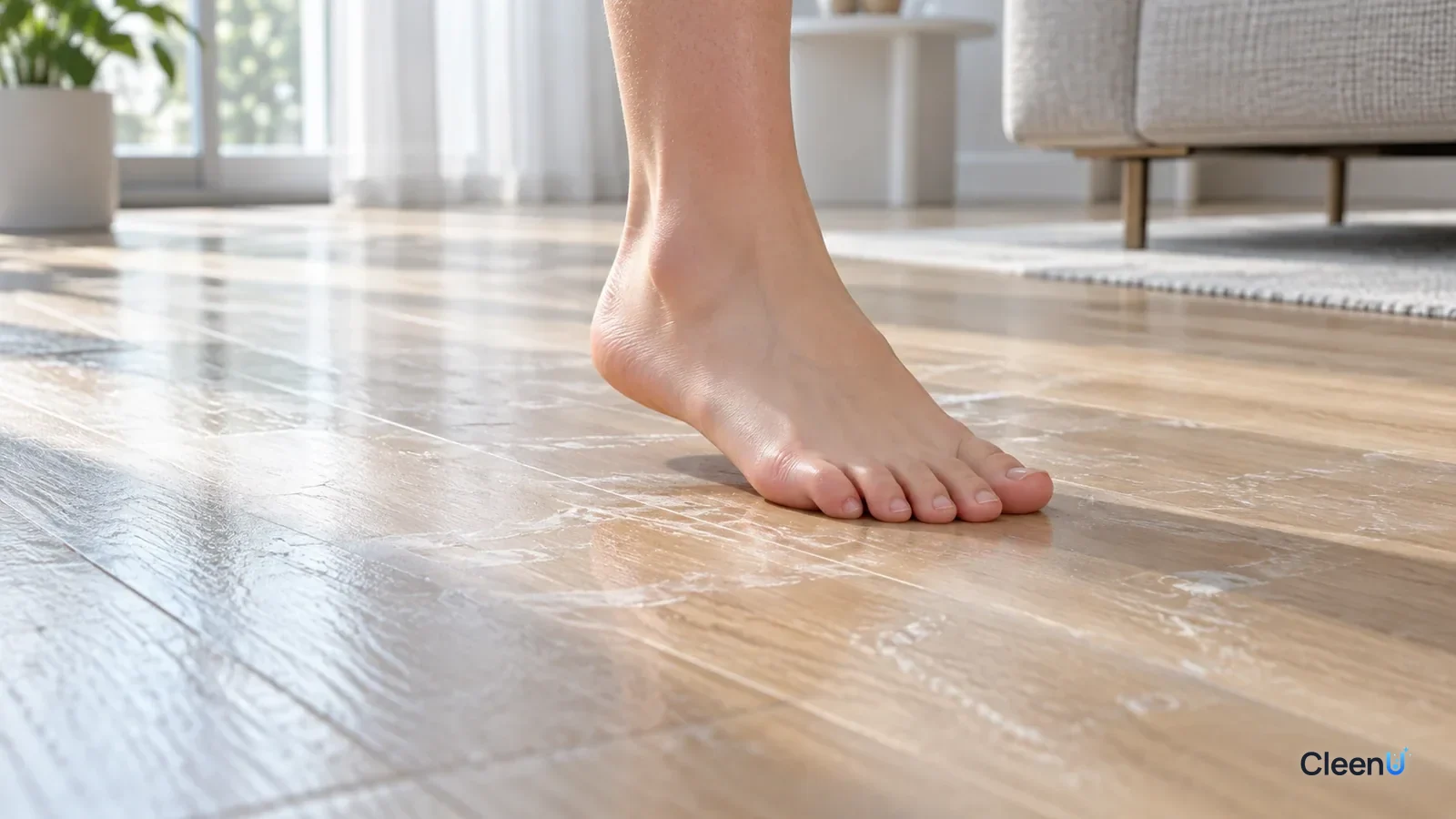
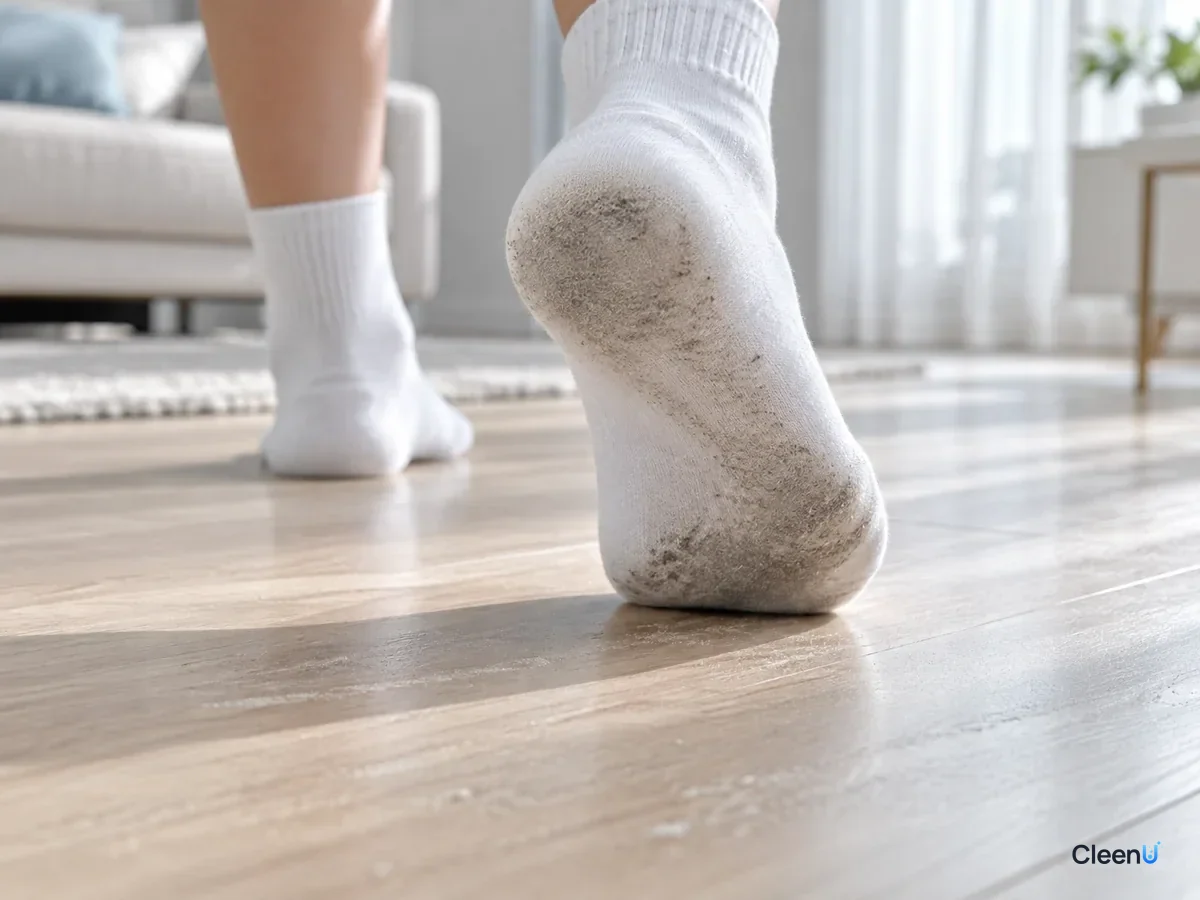
You walk barefoot across a floor you just mopped and it feels like your feet are being grabbed. White socks come away gray after one lap, and dust and hair seem to cling to the floor. The natural reaction is to assume it wasn't cleaned well enough, so you add more cleaner and mop again, and it gets stickier.
Sticky floors almost always have one thing in common: something was left on the surface that shouldn't be there. It might be cleaner residue, buildup from an older product, or a sugary spill that never really came off. The tacky feeling comes from that thin film, not from the floor itself.
Why does a floor get sticky?
The working ingredients in floor cleaner are surfactants. They emulsify and break up oily film, footprints and dust so the mop can carry them away. At the label ratio, so little surfactant stays on the floor that you can't feel it once it dries. Double the ratio and the extra doesn't get picked up by the mop; when the water evaporates, it leaves a slightly tacky film behind.
That film causes two problems. It feels sticky underfoot, and it catches dust, hair and skin oil from feet, so the floor gets dirty faster. A floor that gets dirty faster tempts you to add more cleaner, which leaves more residue, and the floor gets stickier every time you mop.
An over-wet mop makes it worse. The more water left on the floor, the slower it dries and the more dissolved cleaner and soil it carries, so the film it leaves behind is thicker.
Besides the dose, what else causes it?
The first is mixing products. Two cleaners used back to back, or combined in one bucket, can interact and leave more residue than either would alone. Many households also use a "floor care" or "shine" product on top of their cleaner; those are designed to leave a coating, and layered with cleaner they get sticky more easily.
The second is old polish. Floors that were waxed, oiled or treated with a shine product carry built-up coating. A regular cleaner partly dissolves it without removing it, and the floor ends up tacky and draggy.
The third is sugar. The kitchen, under the dining table and kids' play areas are the worst spots. Spilled soda, juice or sweetened drinks dry on the floor, the mop picks up only part of it, and the rest gets dissolved and spread around, so a whole area ends up faintly sticky.
The fourth is the mop and the water. Mop water that doesn't get changed puts diluted dirt and residue right back on the floor every time the mop goes in the bucket. A mop pad washed with fabric softener carries an oily softener coating that transfers straight to the floor.
Causes and fixes, side by side
The causes run from most to least common. Change one thing at a time, mop once, and walk on the floor barefoot once it is dry. That tells you whether you found the cause.
Common causes of a sticky floor after mopping, and what to do
| Cause | What you see | Fix | Prevention |
|---|---|---|---|
| Too much cleaner | The whole floor is sticky; footprints and dust stand out | Mop once or twice with plain water, then use the label ratio | Measure with a cup; on very dirty floors, mop a second time |
| Mop too wet | The floor takes a long time to dry, then feels sticky | Wring the mop until it stops dripping and ventilate | Use a flat mop kept just damp |
| Mixed products | Sticky, draggy floor that never feels clean | Stop mixing and mop several times with plain water | Use one cleaner at a time |
| Old polish buildup | Draggy overall, sticky in spots, blotchier the more you mop | Remove the old coating the way the flooring maker recommends | Don't layer cleaners and floor-care products |
| Sugary spills | Sticky patches in the kitchen or under the table | Wipe the sugar off with a warm, damp cloth, then mop normally | Clean up drink spills the same day |
| Dirty mop water | Floor gets grayer as you go, worse along walls | Change to clean water and rinse the mop before continuing | Change the water every room or two |
| Fabric softener in the mop pad | A freshly washed pad leaves the floor sticky | Rinse the pad in plain water several times | Never use fabric softener on mop pads |
How to get the residue off
A floor that is already sticky doesn't need a stronger cleaner. It needs the residue taken off:
Sweep or vacuum first to clear dust and hair. Fill a bucket with warm water and no cleaner, rinse the mop, wring it until it is only damp, and mop in straight lines along the grain. Warm water helps the residue dissolve; this pass is only there to carry it away. Then empty the bucket, refill with clean warm water and mop again, rinsing the mop in the bucket every small section.
Finish by going over the floor with a dry flat mop or a dry cloth, and open a window so it dries quickly. Once it is completely dry, walk on it barefoot. If the stickiness is clearly less, the problem was residue. If a few spots are still sticky, it is most likely sugar; wipe those spots on their own with a warm, damp cloth. If the whole floor still feels draggy and looks blotchy, it may be old polish that needs to come off the way the flooring maker recommends.
After that, use the label dose for everyday mopping. CleenU Floor Cleaner is one example: a neutral, no-rinse formula with a pH of 7.0 to 8.5, made with low-foam nonionic surfactants and a small amount of fast-drying solvent, with low solids. Spray it on the floor or onto a flat mop about a square meter (roughly 10 square feet) at a time, or for large areas dilute it 1:20, which is 50 mL in 1 liter of water. At that dose there is no need to rinse, and the floor doesn't turn sticky.
How to tell for yourself whether it is cleaner residue
Three quick tests you can do at home.
The side-by-side wipe: pick a small sticky patch and wipe it several times with a well-wrung cloth dampened in plain water. Let it dry, then step on it barefoot and compare it with the untouched floor next to it. If the wiped patch feels clearly less sticky, residue is almost certainly the cause.
The foam check: rub a clean, damp cloth hard over a sticky area a few times, then swish the cloth in a bowl of plain water. Visible suds on the water mean there is a fair amount of surfactant residue on the floor.
The white-sock test: walk a lap in clean white socks. If the soles turn gray quickly, there is a film on the floor that holds dust. Walk the same lap after mopping with plain water, and the socks come away much cleaner.
When all three point to residue, stop adding cleaner and take the residue off with plain water as described above.
Different floors show residue differently
Tile and vinyl plank (LVP/SPC): the surface doesn't absorb water, so residue stays on top. You feel the stickiness most clearly, and it responds fastest; two plain-water passes usually restore it.
Laminate and sealed hardwood: they don't like water. Use a well-wrung mop even when you are lifting residue, and don't flood the floor to "rinse it clean"; water in the seams can swell the edges.
Waxed or oiled floors: they already carry a care coating, and stickiness is often that coating mixed with cleaner. Check the flooring maker's care instructions before you try to strip anything with a strong cleaner.
For everyday mopping methods by floor type, see how to clean different types of floors.
Stop using the current product if you see any of these
The floor is still slippery once fully dry; wood or laminate edges swell or lift; the finish turns white or dull and plain water won't restore it; your skin stings after contact. Stop, switch to plain water and a well-wrung mop, and check the product label and the flooring maker's cleaning guidance.
Sticky-floor questions people ask most
Does a sticky floor mean my floor cleaner is low quality?
Don't blame the product yet. The most common causes are using too much and mopping too wet. Mop twice with plain water to lift the residue, then use the label ratio.
What removes sticky residue from a floor?
Warm water is enough. Skip the cleaner, wring the mop well, mop twice and dry the floor. You don't need a stronger product.
Do I need to rinse after a no-rinse floor cleaner?
Not at the label dose. If the floor is already sticky, one or two plain-water passes will lift the old residue.
Why is the floor stickiest in the kitchen and under the table?
It is usually sugar from drinks and food that the mop only partly picked up. Wipe those spots with a warm, damp cloth, then mop normally.
Can I use a floor cleaner and a floor polish together?
Better not. Polish is meant to leave a film, and layered with cleaner it makes floors sticky and blotchy.
How should I wash mop pads so they don't leave floors sticky?
Wash them in plain water or a little detergent, rinse well, skip the fabric softener, and let them dry completely.
Will WD-40 remove glue residue from a floor?
It often loosens adhesive, but it leaves an oily film that makes floors slippery and attracts dirt. Test a hidden spot, use only a little, wipe the glue away, then clean the area with a pH-neutral floor cleaner until the slick feel is gone. Skip it on unsealed wood.
For a neutral, low-residue floor cleaner that leaves no sticky film at the label dose, try Floor Cleaner.
When a floor gets stickier the more you mop, start with the dose: going over the label ratio or mopping too wet leaves residue behind. Mop twice with warm plain water, dry and ventilate, then stick to the label ratio. If it is still sticky, check for mixed products, old polish, sugary spills and fabric softener in the mop pad. The answer is taking residue off, not adding more cleaner.