
Troubleshooting
Cloudy Laminate Floors: Causes and Fixes
Direct answer
Cloudy, streaky laminate is usually cleaner residue or hard-water film, and using less product with a barely damp mop fixes it. If the seams are raised, lifting, or the edges look pale and swollen, water has gotten into the boards. That's damage, not dirt, and it needs repair.
What you see
Your laminate looked even and glossy when it went in. Months later, at an angle it looks patchy and hazy, you can see mop streaks after it dries, some seams have turned lighter and feel slightly raised, and it's worst by the bathroom and kitchen doors.
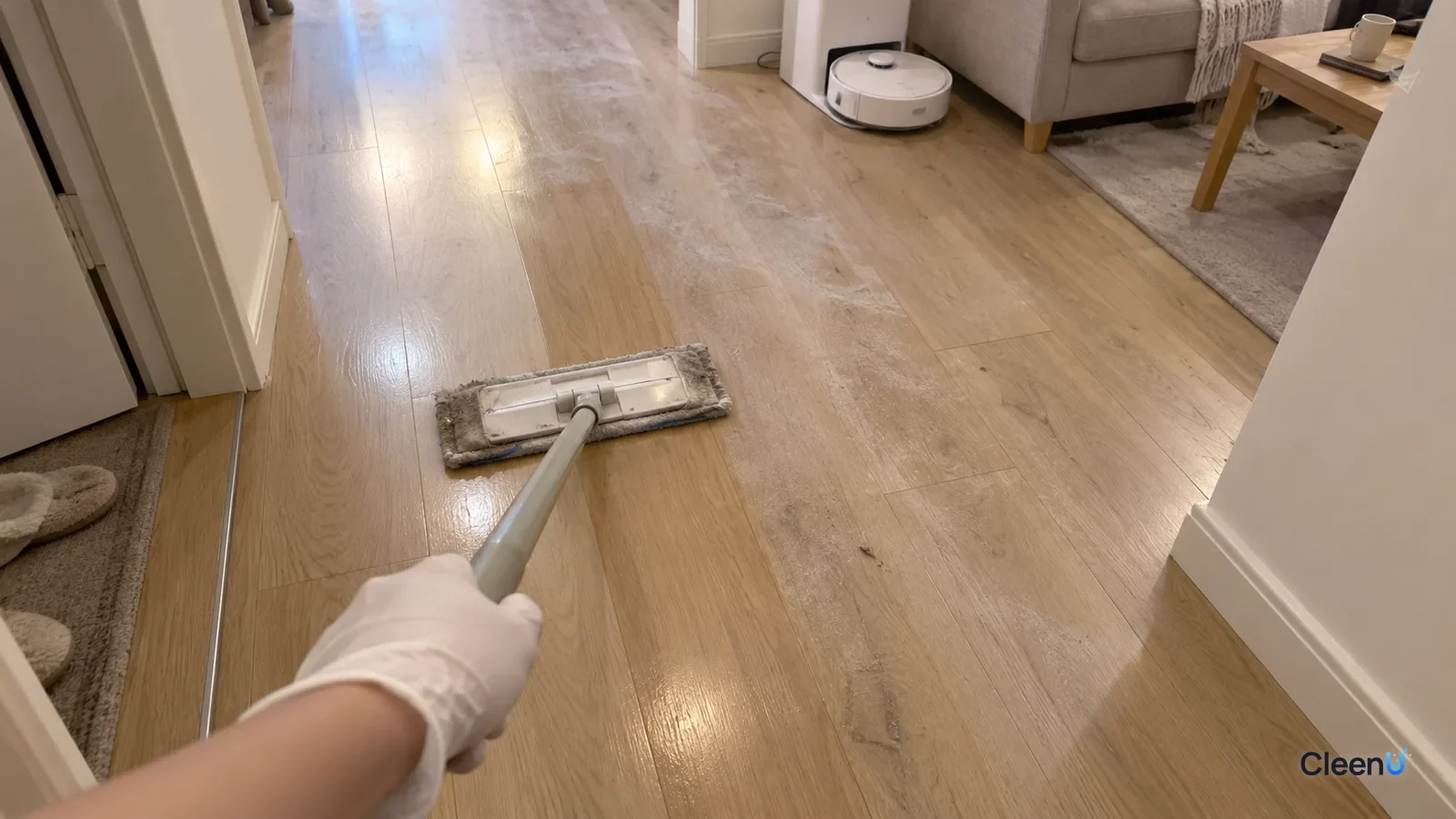
Laminate and engineered wood are popular for good reason: durable, easy to care for, and reasonably priced. But they share one weakness: water. Most cases of "cloudy" laminate trace back to water. Sometimes it's residue left on top; sometimes the water has gone into the board.
How laminate is built
Laminate is a layered product: a hard, clear wear layer (resin with aluminum oxide), a printed design layer, a high-density fiberboard (HDF) core, and a backing layer. The wear layer is very hard and doesn't absorb water, so everyday dirt stays on top. The part that hates water is the HDF core. It's pressed wood fiber, it swells when it absorbs water, and it basically doesn't shrink back.
Engineered wood has a real wood veneer on top, protected by a finish, over a plywood core. The finish protects the veneer, but the seams are still the weak spot.
Water gets in two ways: through the seams, and through a scratched or worn surface. Mop with too much water and it pools in the seams and slowly soaks into the core.

Cloudiness on the surface: residue and hard water
If the haze is only on the surface, feels flat, and your fingertip picks up a slightly gritty or tacky feel, it's usually residue.
Too much cleaner. Surfactants, fragrance, and other ingredients dry onto the wear layer as a thin film. Uneven thickness catches the light as hazy patches.
Hard water. Calcium and magnesium in tap water leave calcium carbonate behind as the water evaporates, which shows clearly on dark floors as a white, powdery haze.
The wrong product. "Clean and shine" products, oil soaps, and floor wax don't absorb into laminate. They just build up on top and get blotchier with every use. Laminate never needs wax.
A dirty mop. A pad loaded with oil and grit spreads it evenly across the floor.
Pale, raised seams: water swelling
If the paleness is along the seams, with lighter, slightly raised edges or a little ridge between boards, water got in. The core absorbed water and swelled, pushing the seam up and stretching the design and wear layers so the edges look white.
That's physical damage, and no cleaner can shrink swollen fiberboard. Mild cases may settle slightly once completely dry, but they rarely recover fully, and badly swollen boards need replacing.
Five steps to diagnose and fix it
Find out why your laminate is cloudy in five steps
-
Step 1 Is the paleness along the seams, with raised or lighter edges, or do boards feel like they're lifting?
- Yes
- It's water swelling. Stop wet mopping, ventilate so the floor dries completely, find the water source (a leak, spills, or too much mop water), and ask your flooring supplier whether boards need replacing.
- No
- Go to the next check
-
Step 2 Is it a patchy haze that looks noticeably brighter after you wipe a spot with a damp cloth and let it dry?
- Yes
- It's surface residue. Mop twice with plain water and a barely damp pad to lift it, then use less cleaner going forward.
- No
- Go to the next check
-
Step 3 Does it look like a white powder, mainly on dark floors in a hard-water area?
- Yes
- It's mineral residue. Wring the mop drier and follow with a dry microfiber pad so less water evaporates on the floor.
- No
- Go to the next check
-
Step 4 Have you used oil soap, polish, wax, or a "care" floor product?
- Yes
- It's product buildup. Stop using it and clean several times with a neutral wood floor cleaner; ask your flooring supplier about removal if needed.
- No
- Go to the next check
-
Step 5 After all that, is the floor still blotchy, or is the surface covered in fine scratches?
- Yes
- The wear layer or finish may be worn or damaged, which cleaning can't fix. Contact your flooring supplier.
- No
- Problem solved. Keep it that way with the routine below.
Why a low-moisture cleaner matters
The whole point of cleaning laminate is to lift dirt with as little water as possible and get the floor dry fast.
Take CleenU Laminate & Wood Floor Cleaner as an example. It's a pH-neutral, low-moisture wood floor cleaner, pH 6.5 to 7.5 as supplied, made with nonionic surfactants and fast-drying solvents, with no wax, oil soap, or ammonia. It's ready to use: spray and mop right away, no dwell time.
The surfactants emulsify skin oil and dusty film from footprints. The fast-drying solvents make the small amount sprayed on the floor evaporate quickly, so water doesn't sit long enough to get into the seams. With no wax or oil soap, nothing builds up on the wear layer. Neutral pH is gentle on both finishes and wear layers.
You mist a light layer onto the floor or the pad of a flat mop and mop as you go, instead of mopping the whole house from one bucket. It's made for sealed hardwood, engineered wood, and laminate. It isn't for unsealed wood, waxed or hardwax-oil floors, or steam mops, and shouldn't be sprayed heavily enough to puddle.
The right way to mop laminate
Vacuum or sweep first to remove grit, which scratches the wear layer under a mop.
Use a flat mop with a microfiber pad, wrung out until it barely drips and feels just damp.
Mist cleaner onto the pad or a small patch of floor and mop along the length of the boards, section by section.
Open a window afterward. The floor should be dry within a few minutes; if it's still wet after ten, you used too much water.
Put absorbent mats by the kitchen and bathroom doors and wipe up splashes right away.
For how other floors compare, see How to clean every type of floor. For sealed hardwood, see How to mop hardwood floors. For streaks and stickiness, see Why floors look streaky after mopping and Sticky floor after mopping.
Habits that damage laminate
Steam mops: hot steam forces moisture into the seams and core, causing swelling and lifting.
Soaking-wet mops or sloshing a bucket: water sits in the seams and eventually soaks in.
Wax, oil soap, and polish: laminate doesn't absorb them, so they build up and look blotchy.
Steel wool and stiff brushes: they scratch the wear layer.
Routine vinegar or strong alkaline cleaners: they can dull the finish or wear layer.
Why the same floor looks great for one person and blotchy for another
The film behind a cloudy laminate floor isn't mysterious. It's dried surfactant, fragrance, calcium and magnesium salts from tap water, and the fine dust all of that grabs onto. Everything starts out dissolved in the mop water. As the water evaporates, the dissolved material migrates toward the edge of each wet patch and gets left behind there. That's why you often see faint lines that trace every pass of the mop.
How thick that film gets comes down to three things: how much water goes on the floor, how much is dissolved in it, and whether the pad can pick the dirty liquid back up. More water means slower drying and more residue pushed to the edges. More cleaner means more solids in the water. And a pad that's already saturated stops absorbing; it just spreads the dirty liquid around. Microfiber works because its very fine fibers create lots of tiny capillary channels that wick up oily soil along with water, but only while the pad still has room to hold it.
Here's a simple way to check your technique. Right after a pass, the floor should look faintly damp, and the dampness should shrink from the edges inward and disappear within a few minutes without leaving outlines. If the wet film is shiny, runs into the seams, or dries with rings, there's too much water or the pad is too dirty. Swap in a clean pad, wring it harder, and go over the blotchy area with plain water. Most surface residue comes up that way.
When conditions change, so does the diagnosis
With radiant floor heating on in winter, floors dry fast. That sounds helpful, but it also means dissolved material dries in place before the pad can pick it up, so residue and hard-water marks show more. Use less cleaner and wring the pad drier. Heated floors also run drier overall, so any puddle that reaches a seam tends to cause more visible swelling.
In very humid weather, laminate can collect a layer of condensation that looks white and hazy and feels damp to the touch. That isn't cleaner residue. Close the windows, run a dehumidifier, and judge the floor again once it's dry instead of mopping it over and over.
Engineered wood and laminate look alike, but they fail differently. Engineered wood has a real wood veneer under a finish. Once the finish wears through, the veneer looks gray and fuzzy, which is different from a cloudy film, and the flooring retailer should look at refinishing. Worn laminate shows as dull patches in the wear layer, and cleaning won't bring that back either.
If a robot mop does the daily work, set the water flow to low and keep the pad from parking in one spot. More on that in Can a robot mop be used on hardwood floors.
How to tell you're done
Surface residue is gone when the dry floor looks even under side light, the mop tracks have disappeared, and a fingertip slides across without dragging or sticking. If a week or two of misting cleaner onto the pad in a thin layer keeps the cloudiness away, the problem was dosage and water. If two or three plain-water passes still leave a few boards white, and those boards sit by a door, in front of the sink, or along a seam, go back to the diagnosis steps and look for raised edges. At that point there's nothing more cleaning can do, and adding more product only stacks new residue on top.
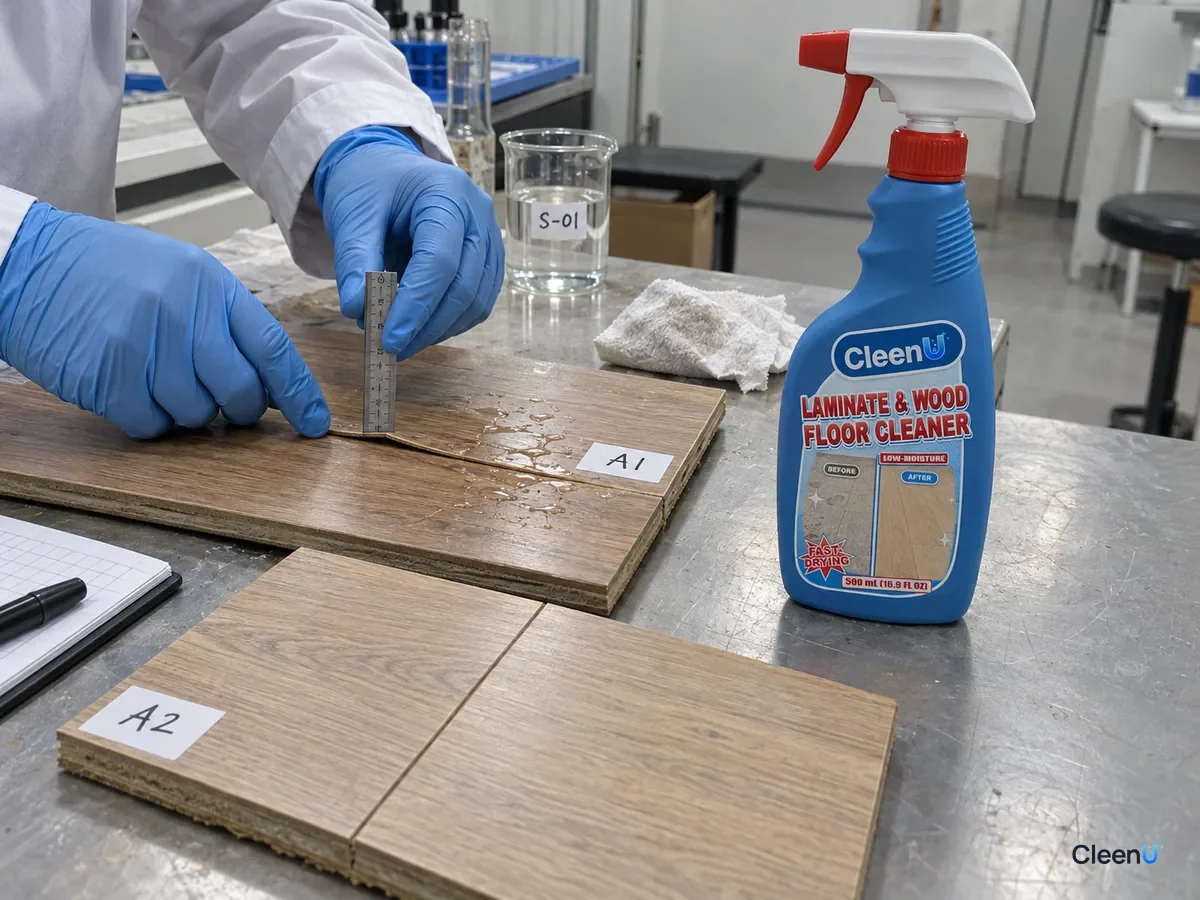
Stop if you see this
If seams are raised or lifting, boards sound hollow, or edges are darkening or growing mold, stop wet mopping, find and stop the water source, ventilate thoroughly, and contact your flooring supplier. If the floor is under warranty, follow the manufacturer's care instructions first. If cleaner irritates your skin, rinse with water.
Cloudy laminate floors: common questions
How do I fix a cloudy laminate floor?
First figure out whether it's surface residue or water at the seams. For residue, mop twice with plain water and a barely damp pad and use less cleaner. Pale, raised seams are water damage and need repair.
Can I wet mop laminate?
Damp, not wet. Wring the pad until it barely drips; the floor should be dry within a few minutes.
Can I use a steam mop on laminate?
We don't recommend it. Steam pushes moisture into the seams and core and causes swelling.
Does laminate need wax or polish?
No. The wear layer doesn't absorb it, so it just turns blotchy and sticky and harder to clean.
Will lifted laminate seams go back down?
Mild cases may settle slightly once completely dry, but they usually don't fully recover. Badly swollen boards need replacing.
What cleaner is best for laminate?
A neutral, low-moisture wood floor cleaner with no wax or oil soap, misted lightly onto the mop pad.
For a neutral, low-moisture cleaner with no wax or oil soap that you spray and mop and that dries fast on laminate and sealed wood, take a look at our Laminate & Wood Floor Cleaner.
When laminate looks cloudy, start by checking the surface versus the seams. Patchy haze that wipes brighter is cleaner residue or hard water: mop twice with plain water, use less product, and keep the pad barely damp, and stop any wax, oil soap, or polish. Pale, raised, or lifting seams mean water got into the core, which cleaning can't fix; stop wet mopping, find the source, and call your supplier. For everyday care, mist a neutral, low-moisture wood floor cleaner onto the pad, skip the steam mop, and let the floor dry within minutes.