
Troubleshooting
Why Floors Look Streaky After Mopping
Direct answer
Streaky floors after mopping usually mean too much cleaner, dirty mop water, a mop that is too wet, or hard tap water. Go back to the label dose, change the water often, wring the mop until it stops dripping, and do one plain-water pass to compare. Most floors look better the same day.
Check these five things first
- Did you eyeball the cleaner and go over the label dose?
- Did one bucket of water cover several rooms?
- Does the wrung-out mop still drip, and does the floor take ages to dry?
- Was the mop pad washed with detergent or fabric softener?
- Have you used a wax, polish or "shine" floor product before?
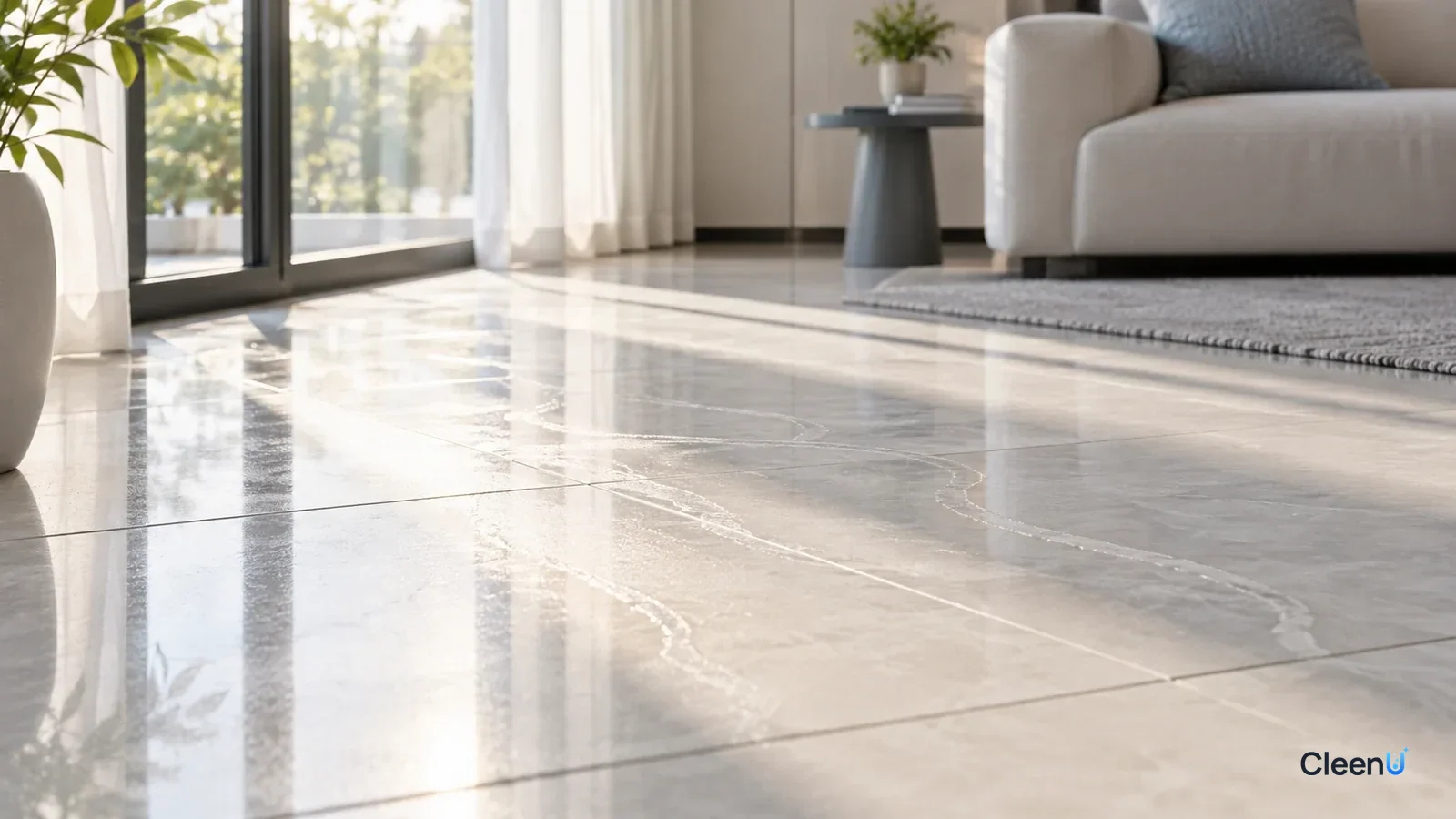
You finish mopping, the floor dries, and in the late-afternoon light it is covered in curving streaks. Worse, the spots you walk on show footprints more clearly than before you started. It happens constantly, and it almost always comes down to how the floor was mopped, not a problem with the floor itself.
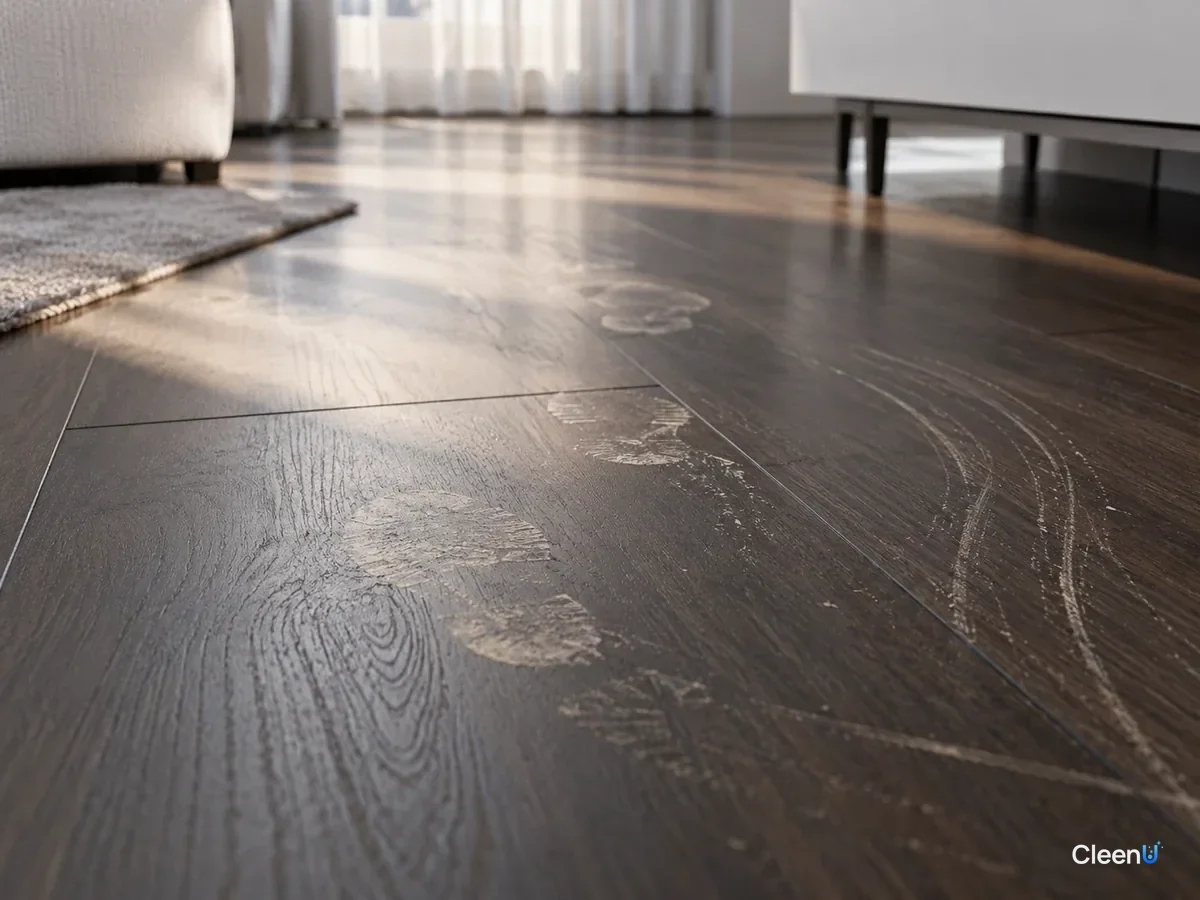
Streaks and footprints are really two different signals. Streaks mean something was left behind when the water dried: cleaner, minerals, or dirt the mop spread back out. Footprints that stand out mean there is a thin, slightly tacky film on the floor, and every step deposits skin oil and dust onto it. Figure out what was left behind and the fix becomes obvious.
What actually leaves streaks behind?
Mopping comes down to three steps: the cleaning solution wets the floor, it loosens the soil and carries it into the water, and the mop picks that dirty water up. Whatever thin layer of moisture stays behind then evaporates, and anything dissolved or suspended in it stays exactly where it was. Those leftovers are the streaks.
The first kind is cleaner residue. The more surfactant in the water, the thicker the film it leaves when it dries. At the label dose, that film is too thin to see. Double the dose and it shows up in the light as streaks, feels faintly tacky, and grabs footprints.
The second kind is dirt put back on the floor. If one bucket covers the living room, the kitchen and the entryway, the water turns gray long before you finish, and every dip of the mop paints diluted dirty water back on. When it dries, the dirt stays in the shape of the stroke.
The third kind is minerals from the water. Tap water carries calcium and magnesium, and hard-water areas carry more. When the mop is too wet and the floor stays damp for a long time, the water evaporates slowly and leaves white rings behind. You see them most on dark tile and glossy floors.
The fourth kind is old product buildup. Waxes, polishes and "shine" or "care" floor products leave a coating on purpose. Stacked over time, those coatings turn cloudy and blotchy. Mop over them with a regular cleaner and you partly dissolve the old layer without removing it, which makes things look worse.
Why do footprints show up more after mopping?
On a floor that is truly clean and dry, bare feet leave very little oil and nothing sticks. Once there is a layer of cleaner residue or old polish, it acts like a very thin glue. Walk across it in socks or bare feet and it catches the oil from your skin, dust settles on top, and the outline of each footprint shows.
So footprints standing out are a sign the floor is not really clean. Adding more cleaner only thickens the film and makes the prints more obvious. The fix is to take residue away, not to put more on.
Causes and fixes, side by side
The causes below run from most to least common. Start at the top, change one thing, mop once, and look again. That is the quickest way to find the real cause.
Common causes of streaks after mopping, and what to do
| Cause | What you see | Fix | Prevention |
|---|---|---|---|
| Too much cleaner | Shiny streaks, slightly tacky, very clear footprints | Go back to the label dose, then mop once with plain water to lift the residue | Measure with a cup or the cap instead of pouring freehand |
| Dirty mop water | Gray streaks, worst in corners and doorways | Change to clean water and rinse the mop before continuing | Change the water every room or two, or use two buckets |
| Mop too wet | Floor stays damp a long time, then dries with ring marks | Wring the mop until it stops dripping and is only damp | Use a flat mop and err on the dry side |
| Hard tap water | White rings on dark floors | Dry the last pass with a dry cloth so less water evaporates on the floor | Wring well, speed up drying, or use distilled water for the final pass |
| Laundry residue in the mop pad | A freshly washed pad leaves the floor blotchy | Rinse the pad in plain water several times | Never use fabric softener on mop pads |
| Old polish buildup | Whole floor looks hazy, patchy in places | Several plain-water passes, or strip the old layer the way the flooring maker recommends | Don't stack different types of floor products |
| Wrong technique | Arc-shaped streaks from circular strokes | Mop in straight lines with the grain and flip to a clean side often | Sweep or vacuum before you mop |
How to get rid of the streaks, step by step
If the floor already looks streaky, you do not need a new cleaner yet. Work through this once:
Sweep or vacuum first to get sand, hair and dust off the floor; otherwise the mop turns them into muddy water. Fill a bucket with plain water, rinse the mop and wring it until it is barely damp, and mop in straight lines along the grain. That pass is only there to lift the old cleaner residue and dirty water. Then go over the floor with a dry microfiber mop or a dry cloth so the water does not sit and evaporate slowly.
Once the floor is completely dry, look again at a low angle. If the streaks are mostly gone, the problem was residue or dirty water. If white rings are still there after plain water, look at your water and how wet the mop is. If the whole floor still looks cloudy, it is most likely old polish, and it needs to come off the way the flooring maker recommends.
From then on, stick to the label dose. CleenU Floor Cleaner is one example: a neutral, no-rinse formula with a pH of 7.0 to 8.5, low foam and low solids. Spray it on the floor or onto a flat mop about a square meter (roughly 10 square feet) at a time, or for large areas dilute it 1:20, which is 50 mL in 1 liter of water. Used that way, there is no need for a plain-water rinse afterward.
How to mop day to day so streaks don't come back
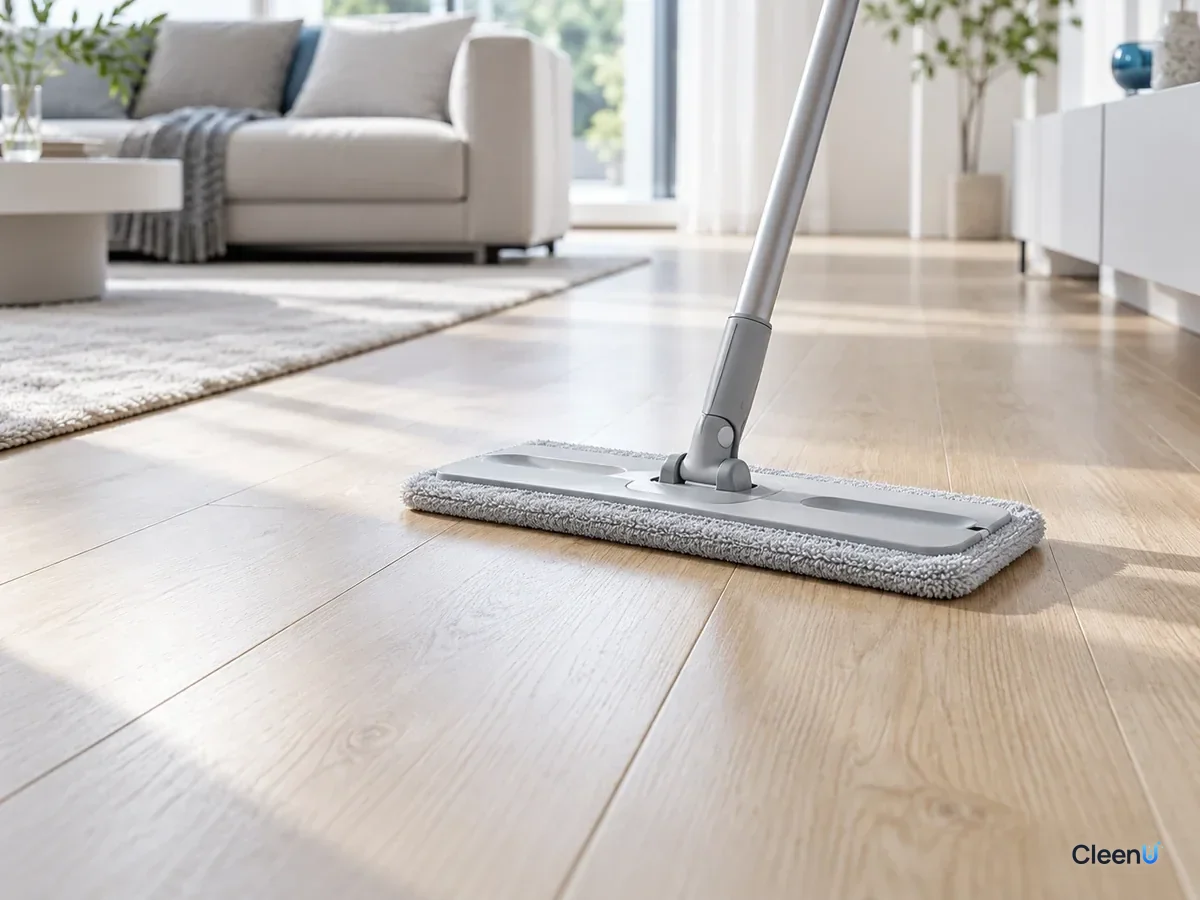
The tool matters more than most people think. A traditional string mop soaks up a lot of water, is hard to wring out, and keeps collecting dirty water in its strands. A microfiber flat mop has much finer fibers that grab fine dust and oily film, stays just damp after wringing, and leaves the floor drying fast. It is the least streak-prone option you can pick.
Keep clean and dirty water apart. If you can, use two buckets: one with cleaning solution mixed at the label ratio, one with plain water only for rinsing the mop. Rinse the dirt out in the plain-water bucket, wring, then dip into the solution and keep going. The solution bucket stays clean from the first room to the last. With a single bucket, change the water every room or two.
Look after the mop pad itself. Rinse it after every use and let it dry fully instead of leaving it balled up in a bucket. Wash pads without fabric softener; softener leaves an oily coating on the fibers that transfers straight to the floor the next time you mop.
Finally, help the floor dry. Open a window or door so air moves across it. When the floor is dry within a few minutes, there is no time for water to evaporate slowly and leave minerals and residue behind. In winter or on humid days, when floors dry slowly, a final pass with a dry cloth or dry mop makes a visible difference.
Different floors streak in different ways
Tile and vinyl plank (LVP/SPC) do not absorb water, so both residue and minerals stay on the surface. They show streaks most easily and fix fastest: less cleaner, fresh water and a well-wrung mop usually solve it.
Laminate and sealed hardwood do not like water. A wet mop streaks them, and the water can also seep into the seams and swell the edges. On these floors, use a well-wrung flat mop and let the floor dry quickly.
Glossy and dark floors magnify every mark. Even a small amount of residue shows, so they need an exact dose and a dry-cloth finish.
For floor-by-floor mopping methods, see how to clean different types of floors.
Stop using the current product if you see any of these
The finish turns white, dull or cloudy and plain water will not remove it; edges of wood or laminate planks swell or lift; the floor is slippery even when fully dry. Stop, switch to plain water and a well-wrung mop, and check the product label and the flooring maker's cleaning guidance before using it again.
Streaky-floor questions people ask most
Do streaks after mopping mean my floor cleaner is bad?
Don't blame the cleaner yet. The most common causes are using too much and mopping with dirty water. Fix those first, then judge the product.
Does more floor cleaner get the floor cleaner?
No. Going over the label dose leaves a residue film that makes streaks and footprints more visible. A second pass beats a double dose.
Do I need to rinse with plain water after mopping?
Not with a no-rinse formula at the label dose. If the floor is already streaky, one plain-water pass lifts the old residue.
Why does a freshly washed mop pad leave the floor streaky?
It is probably holding detergent or fabric softener. Rinse it in plain water several times, and skip fabric softener on mop pads.
How do I stop white water spots in a hard-water area?
Wring the mop well, help the floor dry fast, and finish with a dry cloth. On dark, glossy floors, use distilled water for the last pass.
My wood floor edges look white and slightly swollen after mopping. What now?
That is too much water. Stop wet mopping, dry the floor, use only a well-wrung flat mop from now on, and follow the flooring maker's advice.
For a neutral, low-residue, no-rinse floor cleaner, try Floor Cleaner.
When floors look streaky and footprints stand out after mopping, check in order: too much cleaner, dirty water, an over-wet mop, hard water, or old polish layered underneath. Sweep first, measure the dose, change the water often, wring the mop, mop with the grain and finish dry. Most streaking disappears within one or two mops.