
How-to
Mopping in Humid Weather: Why Floors Stay Wet
Direct answer
When floors "sweat" in humid weather, mop less and dry more. Close the windows, run a dehumidifier or your AC's dry mode, and wipe the water up with a well-wrung or dry microfiber pad. That water is condensing out of the air, so wet mopping only adds more. Mop normally once humidity drops, and use cleaner sparingly.
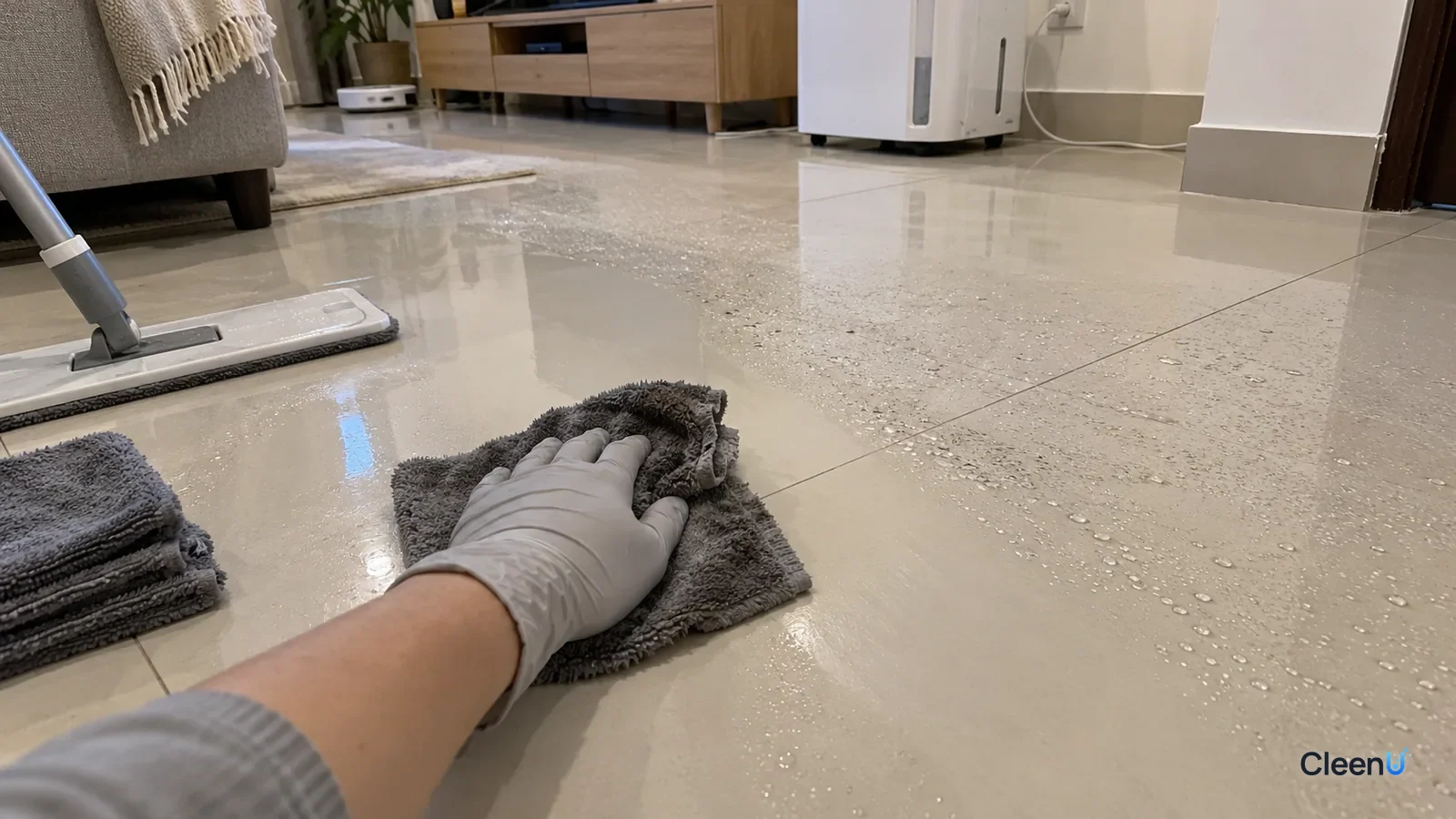
In warm, sticky spells, especially after a cold snap, floors can be a mess: beads of water on the tile, slippery footing, walls that seem to sweat, floors that stay wet for hours after mopping and end up streakier and tackier than before, laundry that won't dry, and a musty smell in the house.
The instinct is to mop more. But on these days the floor isn't wet because it's dirty. It's wet because moisture from the air is condensing on it. Mop the wrong way and you just make it wetter.
Why floors "sweat"
It usually happens when warm, humid air moves in after a stretch of cold weather. The outside air is warm and loaded with water vapor, while floors and walls indoors are still cold from the days before.
When warm, humid air touches a surface colder than its dew point, the vapor condenses into water. It's the same thing that makes a glass of iced tea sweat. Tile and stone conduct heat well, stay cold, and don't absorb water, so they show it most, looking like they were just mopped.
Long stretches of very humid weather have a similar effect: the air is close to saturated, so water on the floor can't evaporate and mop water just sits there.
So the water on your floor is being constantly resupplied from the air. Opening windows and wet mopping let in more humid air and put more water down.
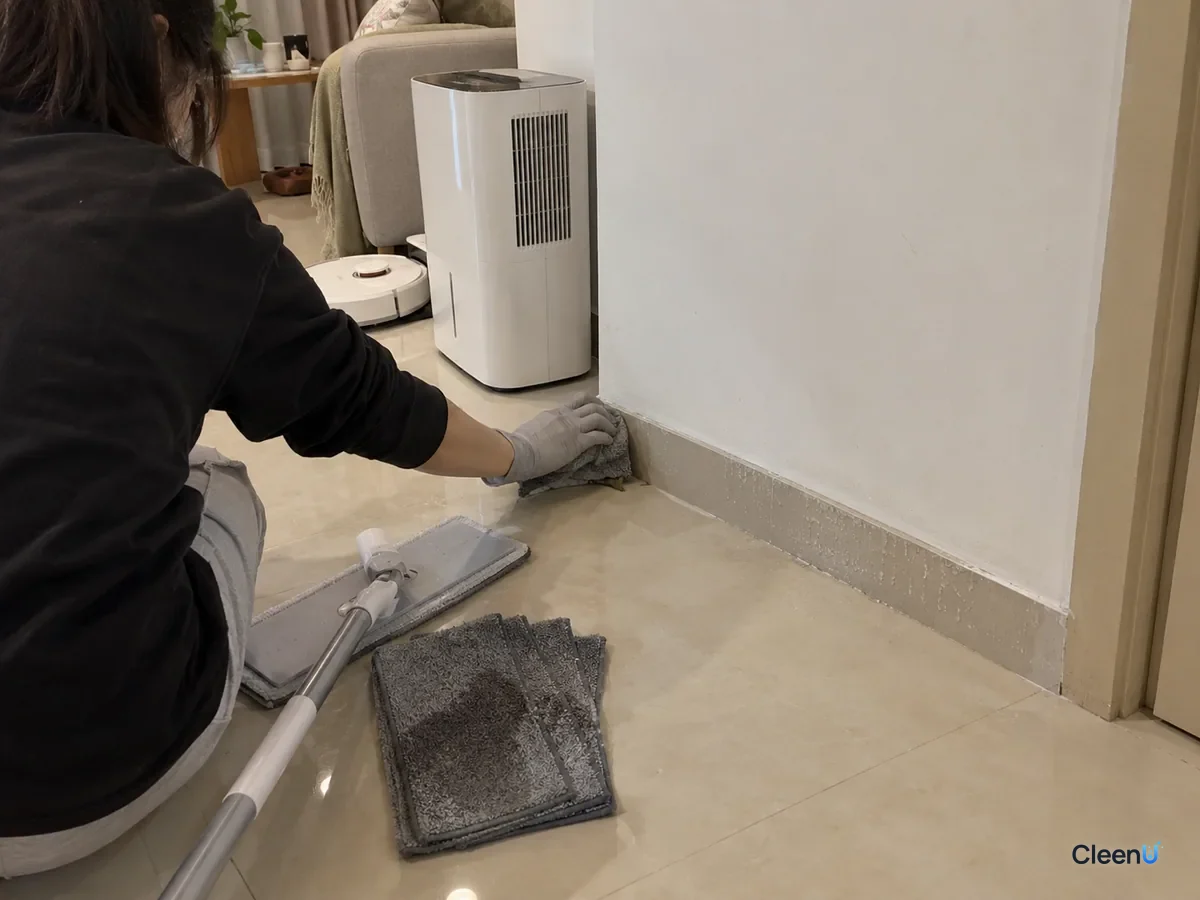
Dry the air first, then the floor
Close the windows. On these days, opening them lets in warm, wet air that feeds the condensation. Open up again once the weather turns dry.
Run a dehumidifier or your AC's dry mode. Once indoor humidity drops, the floor stops condensing. It works best with doors and windows closed, so start with the rooms you use most.
Warm the floor. If you have radiant floor heat, running it on low keeps the floor above the dew point and cuts condensation sharply.
How to mop on humid days
Handle sweating floors in five steps
Close windows and start dehumidifying
Close doors and windows and turn on the dehumidifier or AC dry mode to bring humidity down first.
Dry-mop the water up
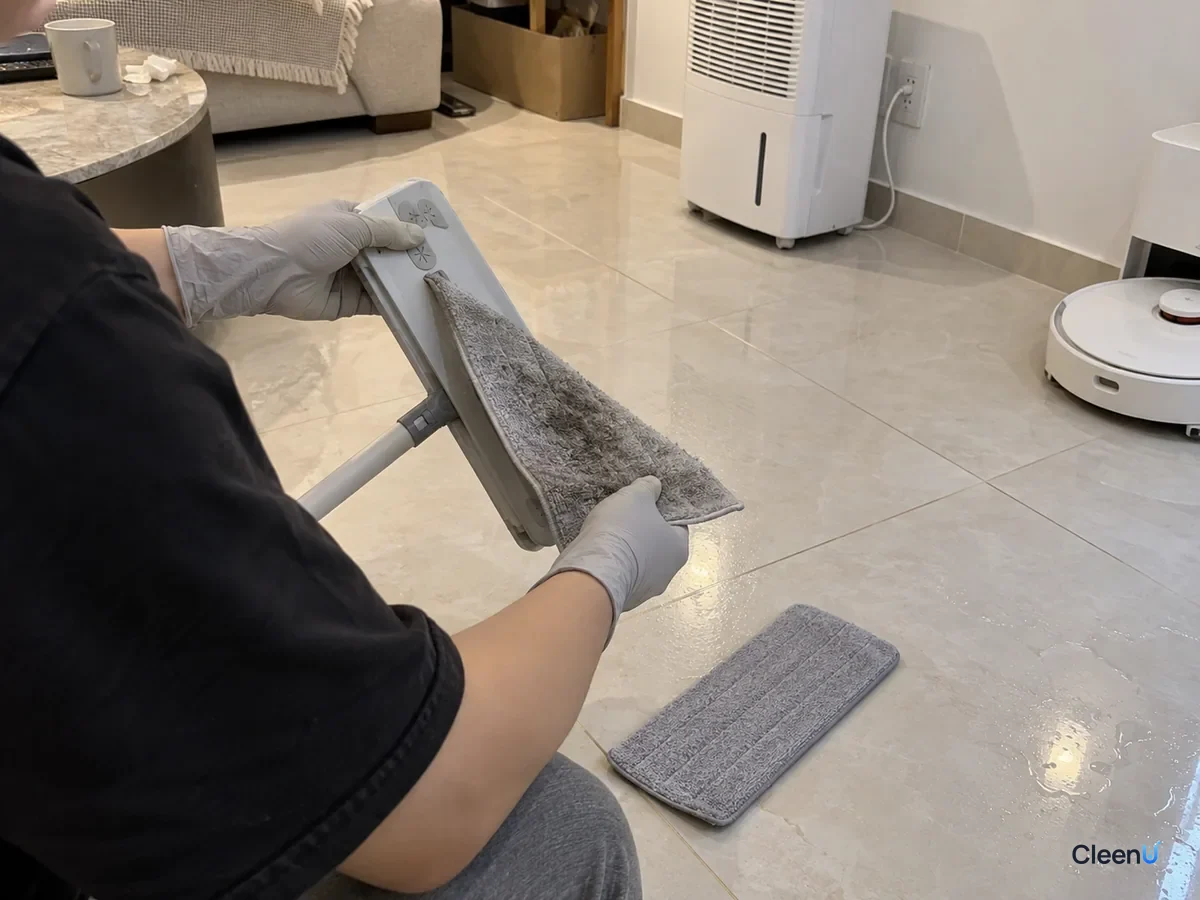
Use a dry microfiber pad to wipe up the condensation, switching to a fresh dry pad when it gets wet. No water, no cleaner; you're just absorbing it.
If you need to clean, wring the mop very dry
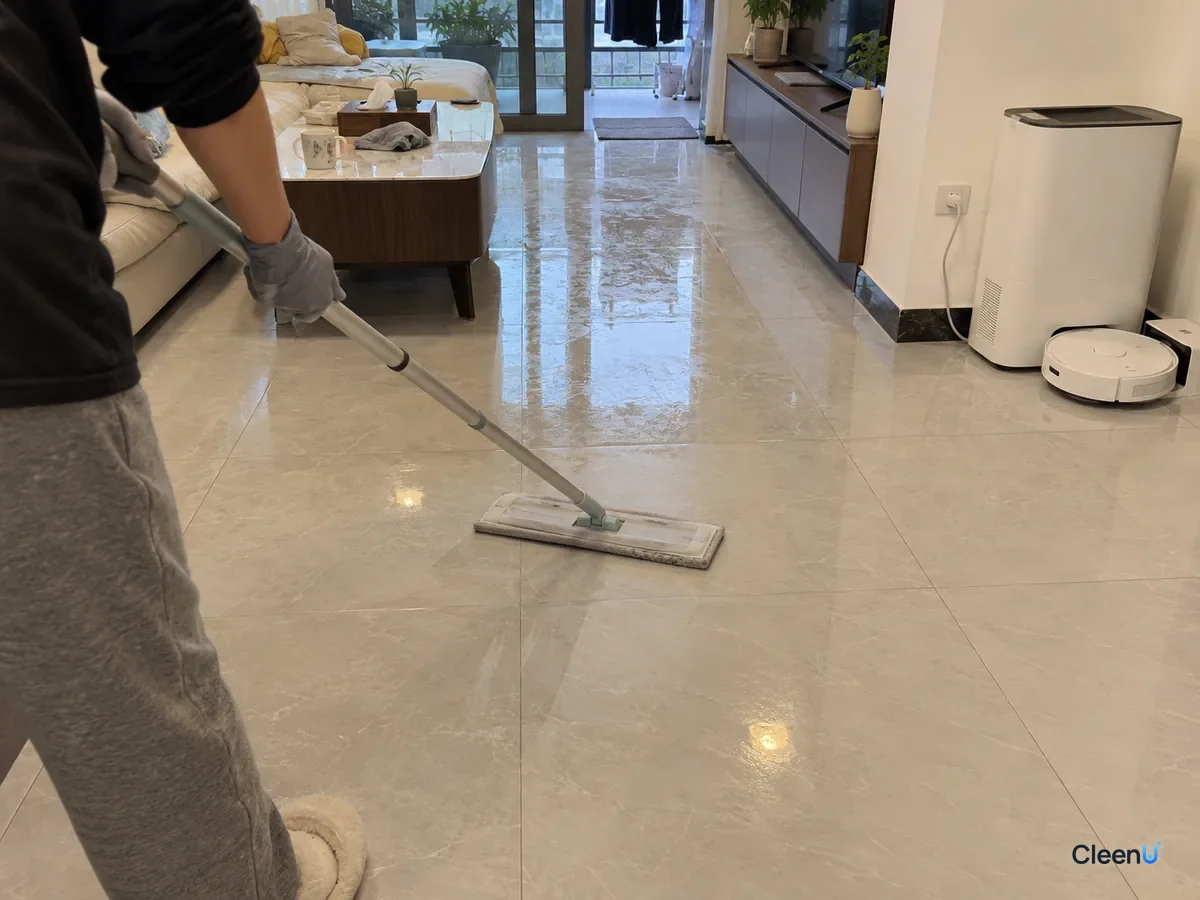
When the floor really needs a damp mop, measure cleaner per the label, wring the pad until it barely drips, and spot-clean only the dirty areas instead of mopping the whole house.
Dry-mop right behind it
Go over each damp-mopped area with a dry pad immediately. Don't wait for it to air-dry; in this weather it won't.
Put mats at the door and bathroom
Floors stay slippery, so put absorbent non-slip mats at the entry, kitchen, and bathroom, and be extra careful with kids and older family members.
Why floors end up streaky and tacky in humid weather
Normally, mop water and the surfactants in cleaner evaporate fast, and little is left behind. On humid days, mop water sits on the floor for a long time, mixes with condensation, and spreads cleaner and dissolved dirt into a thin film. When it finally dries, you get streaks and tacky residue, and the more cleaner you used, the worse it is.
So during humid spells: use less cleaner and measure it; damp-mop only where it's dirty; and dry-mop immediately after.
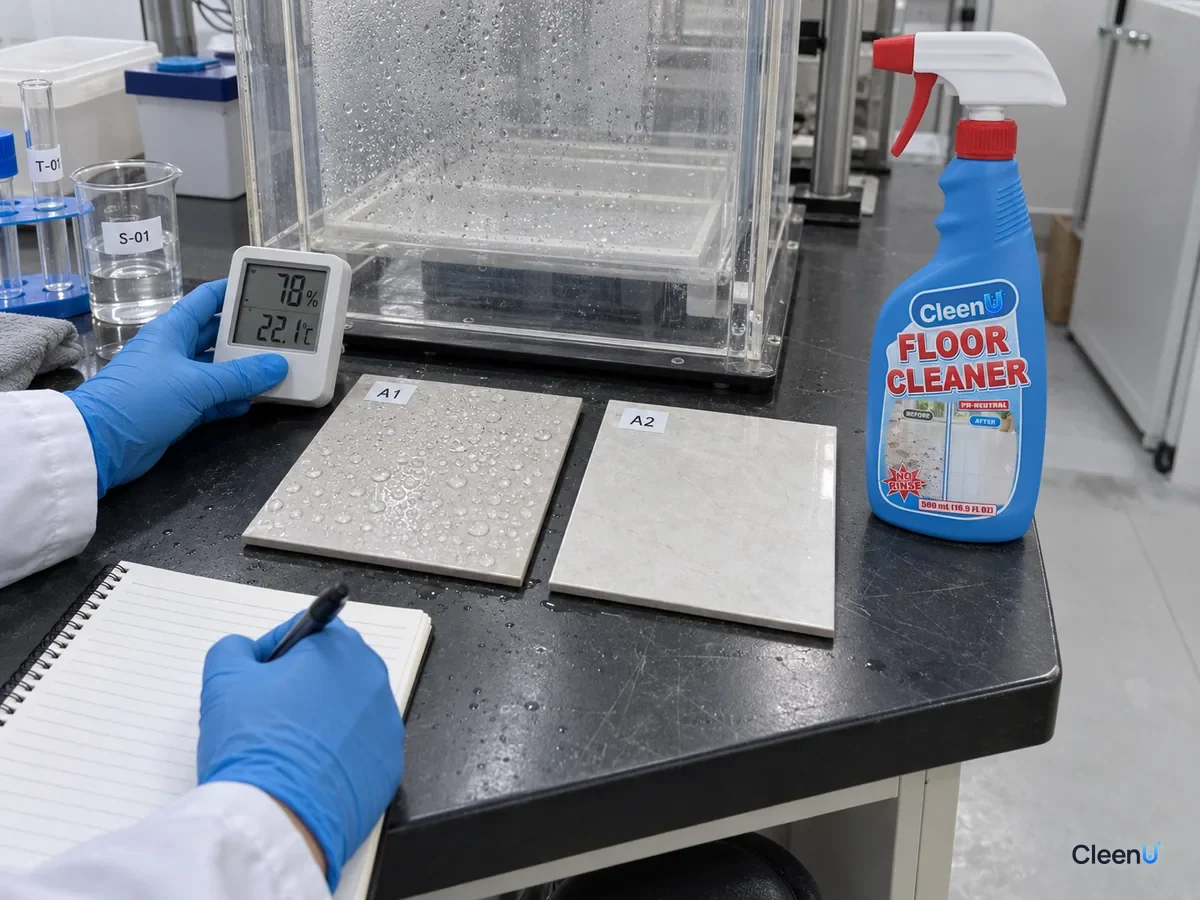
Take CleenU Floor Cleaner as an example. It's a pH-neutral, no-rinse floor cleaner, pH 7.0 to 8.5 as supplied, made with low-foam nonionic surfactants and a small amount of fast-drying solvent, with low solids, diluted 1:20 for larger areas. Low solids means little is left after drying, and the fast-drying solvent helps floors dry sooner. But on humid days no formula can outpace the moisture in the air, so using less water and drying right away matters more than which product you choose. It's made for sealed hard floors like tile, vinyl, laminate, and sealed hardwood, not unsealed or waxed wood or carpet.
What to watch for by floor type
Tile and stone: condensation is worst and they're slipperiest. Dry-wipe first and put safety first.
Hardwood and laminate: they don't like water to begin with, so avoid wet mopping in humid weather. Long dampness can make seams swell or lift. Keep the air dehumidified and wipe up water promptly. For more on wood and laminate, see How to clean every type of floor.
Vinyl plank and LVT: water won't hurt the planks, but water that seeps under the seams can turn musty, so dry-wipe here too.
Robot mops: during humid spells, set mopping water to the lowest level or vacuum only, and always dry the pads after use or they'll start to smell.
What the "dirt" on a sweating floor actually is
A humid-weather floor looks wet and dingy, but what's on it falls into three groups. The first is the condensation itself. It's clean water; it just arrives faster than it can leave. The second is the everyday grit you always have: fine dust, sand, and soil tracked in on shoes. On a dry day those are loose particles that sweep right up. On a humid day the water film wets them, they clump together, and foot traffic presses them into a thin layer of mud. The third is skin oil from bare feet and a little grease carried out of the kitchen. Normally it's a barely-there film, but water spreads it out and it mixes with the grit, which is why the floor feels draggy underfoot and looks gray.
Each of these needs a different move. Condensation only needs to be absorbed, so a dry pad does the job. Loose grit has to be trapped in the fibers of the pad and carried off; push it around with a wet pad and you smear it into a sheet of gray. Only the oily film really calls for cleaner. That's where the surfactants come in: they wet the oil and lower the tension between oil and water so the film can transfer from the floor to the pad. Once you see it that way, the order makes sense. Dry-wipe first to take away the water and the grit, then damp-mop only the small part that actually needs cleaner. You end up using far less of it.
How to tell whether the floor needs a damp mop
Here's a quick test. Take a clean white microfiber cloth and rub it firmly across the busiest stretch of floor, then look at it. If the cloth is wet but basically colorless, the floor is just wet, not dirty, and dry-wiping is enough. If it picks up a light gray, grit and water have turned into a muddy film, and a well-wrung pad with a small amount of cleaner will handle it. If the cloth comes up yellowish and feels slick, you're probably looking at greasy footprints near the kitchen or under the dining table. That's the one spot where the cleaner should sit for a moment before you wipe.
Watch the pad while you work, too. Microfiber can only hold so much water. Once a pad is saturated, it stops absorbing and starts pushing, spreading water and grime back across the floor. On humid days, keep two or three pads in rotation and swap one out as soon as it feels heavy. That beats mopping the whole house with a single pad. Afterward, wash the pads, wring them hard, and hang them in the room you're dehumidifying. Leave them balled up in a bathroom corner and they'll smell sour by morning.
Common humid-weather mopping mistakes
Using more cleaner to "get it done in one pass." More cleaner leaves more surfactant and dissolved soil behind, and in a film of water that won't evaporate, it just spreads further and dries tackier.
Mopping with hot water. It warms the floor for a few minutes, but the floor cools right back down, condensation returns, and you've added more moisture to the air.
Pointing a fan at the floor with the windows open. A fan speeds evaporation, but if it's pulling in warm, wet outdoor air, it can't do much. With the windows shut and a dehumidifier running, though, a fan really helps.
Waxing or oiling wood floors to "seal out" the moisture. When the boards are holding extra water, wax and oil don't bond well, and the finish can turn cloudy or blotchy.
Your approach should also shift as conditions change. Once indoor humidity drops and the floor feels dry to the touch, go back to normal diluted damp mopping. If the floor only sweats in the morning and evening and dries out by midday, do any damp mopping around noon, when humidity is lowest. If the floor stays damp for more than a week and mold dots show up along the baseboards, the problem goes beyond mopping. Look into moisture control and possible leaks in the house itself.
Once the humidity breaks, do a normal clean
When the weather turns dry, open the windows and mop normally with cleaner to remove the dusty film and water marks that built up. For tackiness and streaks, see Sticky floor after mopping and Why floors look streaky after mopping.
Stop if you see this
On slippery floors, have kids and older family members stay put or wear non-slip shoes. If wood floors bulge, lift, darken, or show mold, stop wet mopping, dehumidify more, and contact your flooring supplier. If walls and floors stay damp for long stretches or large mold patches appear, check for leaks. Use your dehumidifier per its manual and mind electrical safety.
Mopping in humid weather: common questions
The floor keeps getting wet. Should I mop more?
No. The water is condensing from the air, and mopping adds more. Close the windows, dehumidify, and wipe the water up with a dry pad.
Should I open windows on humid days?
Not while it's warm and muggy out; you're letting in more moisture. Open them once the weather turns dry.
Why are my floors tacky after mopping in humid weather?
Mop water and condensation sit on the floor and spread cleaner and dirt into a film. Use less cleaner and dry-mop immediately after damp mopping.
Can I use my robot mop in humid weather?
Set the water to its lowest level or vacuum only, and always dry the pads afterward or they'll smell.
How do I protect wood floors during humid spells?
Keep windows closed, dehumidify, skip wet mopping, and wipe up water promptly. If seams swell or lift, call your flooring supplier.
I don't have a dehumidifier. What can I do?
Use your AC's dry mode, keep doors and windows closed, wipe up water with a dry pad, and run radiant floor heat on low if you have it.
For a low-solids, fast-drying floor cleaner that goes a long way in small amounts and is less likely to leave a tacky film when you spot-mop on humid days, take a look at our Floor Cleaner.
When floors sweat in humid weather, the water is condensing from warm, wet air onto cold floors; it isn't dirt. Opening windows and wet mopping make it worse. Close the windows, run a dehumidifier or AC dry mode, and use radiant floor heat on low if you have it. Wipe condensation up with dry microfiber pads. When you must damp-mop, measure a small amount of cleaner, wring the pad well, mop only what's dirty, and dry-mop right behind it. Put down non-slip mats, and once the weather dries out, open up and do a normal clean.