
Troubleshooting
Floor Still Slippery After It Dries? Residue Is the Likely Cause
Direct answer
If the floor is slippery while wet, wait for it to dry. If it's still slick once dry, something left a lubricating film, usually too much cleaner, dish soap, or a wax or shine product. Mop it twice with plain water to compare, and switch to a low-residue floor cleaner if normal use still leaves it slick.
What you see
You mopped half an hour ago and the floor looks dry, but you slip in socks or slippers. The tile feels slick under your hand in a way it didn't when it was new. You've started warning the kids and grandparents to watch their step, and the dog skids when it runs.
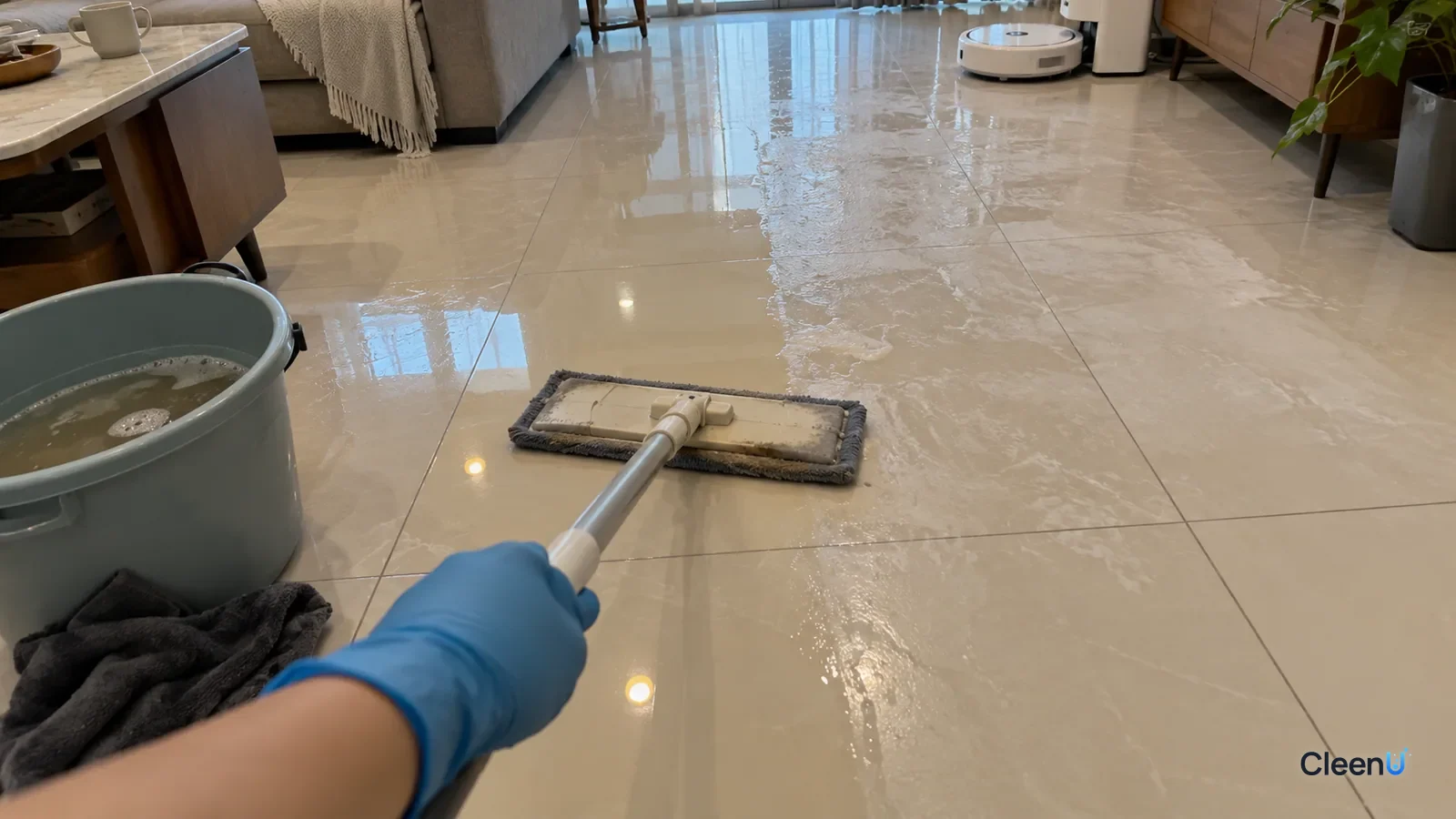
A slippery floor isn't just annoying; it's a safety issue. Falls on slick floors can be serious, especially for older adults and young children. The good news is that most post-mopping slipperiness goes away with a different cleaner and a different technique.
Why floors get slippery after mopping
There are two different situations.
Slippery while wet. When there's still water on the floor, a film of water sits between your shoe and the surface, and friction drops sharply. That's normal physics, and it's most noticeable on glazed or polished tile. The fix is a drier mop, ventilation, and staying off the floor until it's dry.
Slippery after it dries. This is the real problem. There's no water left, but friction is still lower than normal, which means something extra on the floor is acting as a lubricant.
What that slippery film is
In tribology, the science of friction, even a layer a few molecules thick between two surfaces can sharply lower the friction coefficient. That's called boundary lubrication. It's how machine oil works, and why the thin water film on ice is so slick. On floors, that film usually comes from a few places.
Too much cleaner. Surfactant molecules have one water-loving end and one oil-loving end. When they dry, they line up on the floor with the oily end facing out, which makes the surface slick. The more you use, the thicker and more continuous the film.
Dish soap and "care" products. Dish soap is high in solids, and some include hand-softening ingredients. "Clean and shine" floor products contain waxes, silicones, or polymers designed to make surfaces glossy and smooth.
Grease spread thin. Mopping greasy footprints by the kitchen with plain water or a weak cleaner smears the grease into a thin, slick film.
Wax buildup. Waxed wood or stone, or floors treated with care oils, layered with cleaner residue on top.
Five steps to find the cause
Find out why your floor is slippery in five steps
-
Step 1 Once the floor is completely dry, after at least 30 minutes with good airflow, is it still slippery?
- Yes
- There's a residue film. Keep going.
- No
- It's just wet-slippery. Wring the mop until it's barely damp, ventilate after mopping, and stay off the floor until it's dry.
-
Step 2 Do you pour floor cleaner by eye rather than measuring it per the label?
- Yes
- If you often pour extra, mop the floor twice with plain water to lift the excess residue, then measure with a cup at the label ratio from now on.
- No
- Go to the next check
-
Step 3 Are you using dish soap, body wash, or a floor product labeled "clean and shine" or "care"?
- Yes
- Stop using it and mop two or three times with plain water. Then switch to a low-foam, low-residue, wax-free floor cleaner.
- No
- Go to the next check
-
Step 4 Is the slippery area mainly by the kitchen or around the dining table, where there's grease?
- Yes
- Grease has been spread into a film. Spot-clean with a cleaner that cuts grease, then mop with plain water.
- No
- Go to the next check
-
Step 5 After two or three water passes and a low-residue cleaner, is it still noticeably slippery?
- Yes
- The floor may have a wax or finish layer, or the tile itself may be polished. Ask your flooring or tile supplier about stripping wax or an anti-slip treatment.
- No
- Problem solved. Keep measuring your cleaner per the label.
How to tell if it's residue
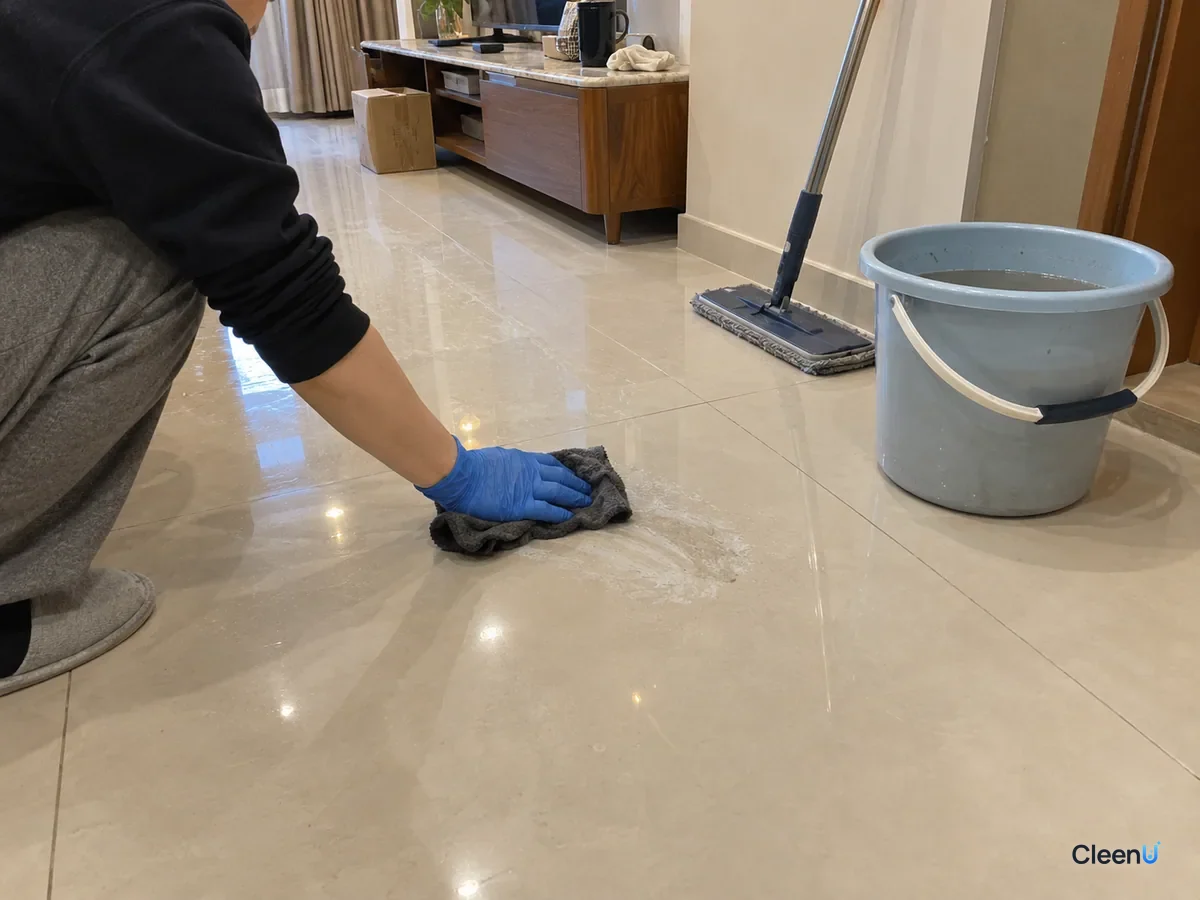
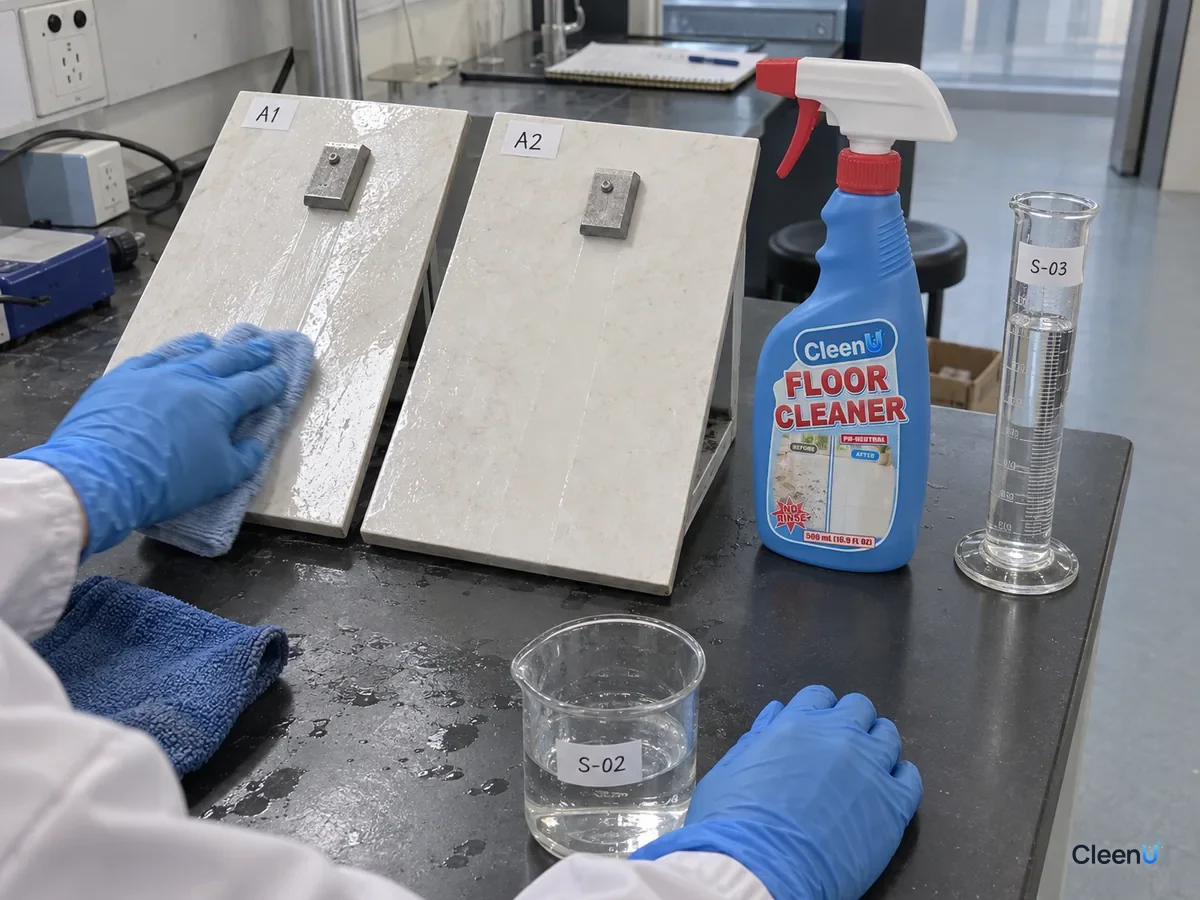
Here's an easy comparison. Pick a small patch of the slippery area and mop it two or three times with only plain water and a clean pad. Let it dry completely. Then walk across it in socks or bare feet and run your hand over it, and compare it with the untreated floor next to it. If the water-mopped patch is noticeably less slick, it's cleaner residue.
You can also rub the floor firmly with a dark, dry cloth and see whether anything white or tacky comes off.
How to keep floors from getting slippery
Use a low-residue floor cleaner. Take CleenU Floor Cleaner as an example. It's a pH-neutral, no-rinse floor cleaner, pH 7.0 to 8.5 as supplied, made with low-foam nonionic surfactants and a small amount of fast-drying solvent, with a low-solids design. Low solids means very little of what's in the bottle, besides water, stays on the floor once it dries, so you don't need a rinse pass and it's less likely to leave a slick film. The fast-drying solvent shortens the time the floor stays wet. For large areas, dilute 1:20 and mop right after spraying.
Measure per the label instead of pouring by eye. Double the cleaner doesn't double the cleaning, but it does double the residue.
Wring the mop until it's just damp. Less water dries faster and stays slippery for less time. Change dirty water so you're not spreading grime back.
Don't mop with dish soap or body wash, and don't use wax or shine products for routine mopping.
Spot-treat greasy footprints by the kitchen first, then mop the whole floor.
If there's already residue, mop two or three times with plain water to lift it before going back to the normal dose. Stickiness has the same root cause. For water marks after mopping, see Why floors look streaky after mopping.
Extra care with kids, older adults, and pets
Mop when people aren't moving around much, ventilate afterward, and keep everyone off the floor until it's dry.
Put non-slip mats in the bathroom, kitchen, and entry where floors get wet.
Don't use wax or shine products to make floors "glossier." Glossy and slippery often go together.
Pets that skid on slick floors can strain their joints. Put down runners along their usual paths.
If a robot mop is leaving floors slick, the causes and fixes are similar. See Why floors get slippery after robot mopping.
Why some floors feel much slicker than others
The same thin residue can feel completely different depending on the floor. Polished porcelain and glossy glazed tile have almost no microscopic texture, so traction comes from the shoe sole making broad contact with the surface. A film only a few molecules thick can noticeably cut that friction, which is why these floors turn slippery first. Matte and textured tile has fine grit on the surface. The residue gets spread across those bumps, so the slip is milder, but it collects in the low spots and the floor slowly looks dull and gray. Luxury vinyl, laminate and sealed hardwood all have a coating on top. Residue sits on that coating, and often shows up as a floor that feels both draggy and slick, with cloudy patches you can see in sunlight.
Hard water is another source people miss. Calcium and magnesium in tap water can react with some anionic surfactants to form insoluble calcium soap, which dries into a thin gray-white film. Adding more cleaner only makes that film thicker. Cut back on the cleaner and mop the film off with clean water in several passes.
Already slippery? Remove the residue in this order
Set up two buckets, one with clean water and one just for rinsing the mop. Work in sections with a mop wrung until it's barely damp. Every 20 to 30 square feet, rinse the mop in the rinse bucket, wring it out, then dip it in the clean water and keep going. That way you aren't spreading loosened residue back across the floor.
After the first pass, open a window and let the floor dry all the way. Then rub it firmly with a dark dry cloth. If the cloth stays free of pale, tacky marks and you can walk across barefoot without slipping, you're done. If not, mop once more. Two or three passes usually make an obvious difference.
When you go back to regular cleaning, measure with a cup and follow the label. With the right product at the right dose, you don't need a rinse pass afterward. A floor that dries quickly and feels dry and grippy underfoot tells you the dose is right.
Stop if you see this
If someone slips or nearly falls, stop using your current floor product and mop several times with plain water. Mark or avoid slick areas until the floor is fully dry. If cleaner irritates your skin, rinse with water. If the floor turns cloudy or dull, stop using the product and wipe with water to see if it improves.
Slippery floors after mopping: common questions
Why is my floor still slippery after it dries?
A lubricating film is left behind, usually from too much cleaner, dish soap, or wax products, or grease that got spread around. Mop a patch twice with plain water and compare.
I used too much floor cleaner. How do I fix it?
Mop two or three times with plain water and a clean pad to lift the excess, then measure with a cup at the label ratio going forward.
How do I keep tile from being slippery after mopping?
Use a low-residue floor cleaner at the label dilution, wring the mop until it's barely damp, and ventilate afterward. Add a non-slip mat by the bathroom door.
Why does mopping with dish soap make floors slippery?
Dish soap is foamy and high in solids. Without a rinse, the surfactants dry into a slick film on the floor.
Do no-rinse floor cleaners really not need rinsing?
Not when used at the label rate. Low-solids formulas leave little behind when they dry, but overdosing will still leave residue.
Plain water didn't fix it. Is it the floor?
Possibly. The floor may have a wax or finish layer, or the tile may simply be polished. Ask your supplier about stripping wax or an anti-slip treatment.
For a low-solids, no-rinse floor cleaner that dries fast and doesn't leave a slick film behind, take a look at our Floor Cleaner.
A floor that's slippery while wet just needs time to dry. One that's still slick after drying has a lubricating film, most often from too much cleaner, dish soap, or wax products, or grease that got smeared around. Mop a patch two or three times with plain water to confirm it's residue, then switch to a low-foam, low-solids floor cleaner, measure per the label, and use a barely damp mop. With kids, older adults, or pets at home, ventilate, wait for floors to dry, and put non-slip mats where floors get wet.