
Q&A
Robot Mop Cleaning Solution on Your Skin or in Your Eyes: What to Do
Direct answer
In the eyes: rinse right away with running water for at least 15 minutes, take out contact lenses if they come out easily, and see a doctor with the label if stinging, redness or blurred vision continues. On skin: rinse it off with water. Swallowed: rinse the mouth, don't induce vomiting and follow the label and a doctor's advice.
After a splash, what's right and what isn't
Yes
- Rinse eyes or skin right away with plenty of running water
- Hold the eyelids open while rinsing so water flows over the whole eye
- Take the bottle or label with you if you see a doctor
No
- Rubbing your eyes
- Using another cleaner, alcohol or vinegar to "neutralize" it
- Inducing vomiting after swallowing
It depends
- Eyewash: if there's no running water at hand, saline or eyewash works, but don't delay rinsing to go find it
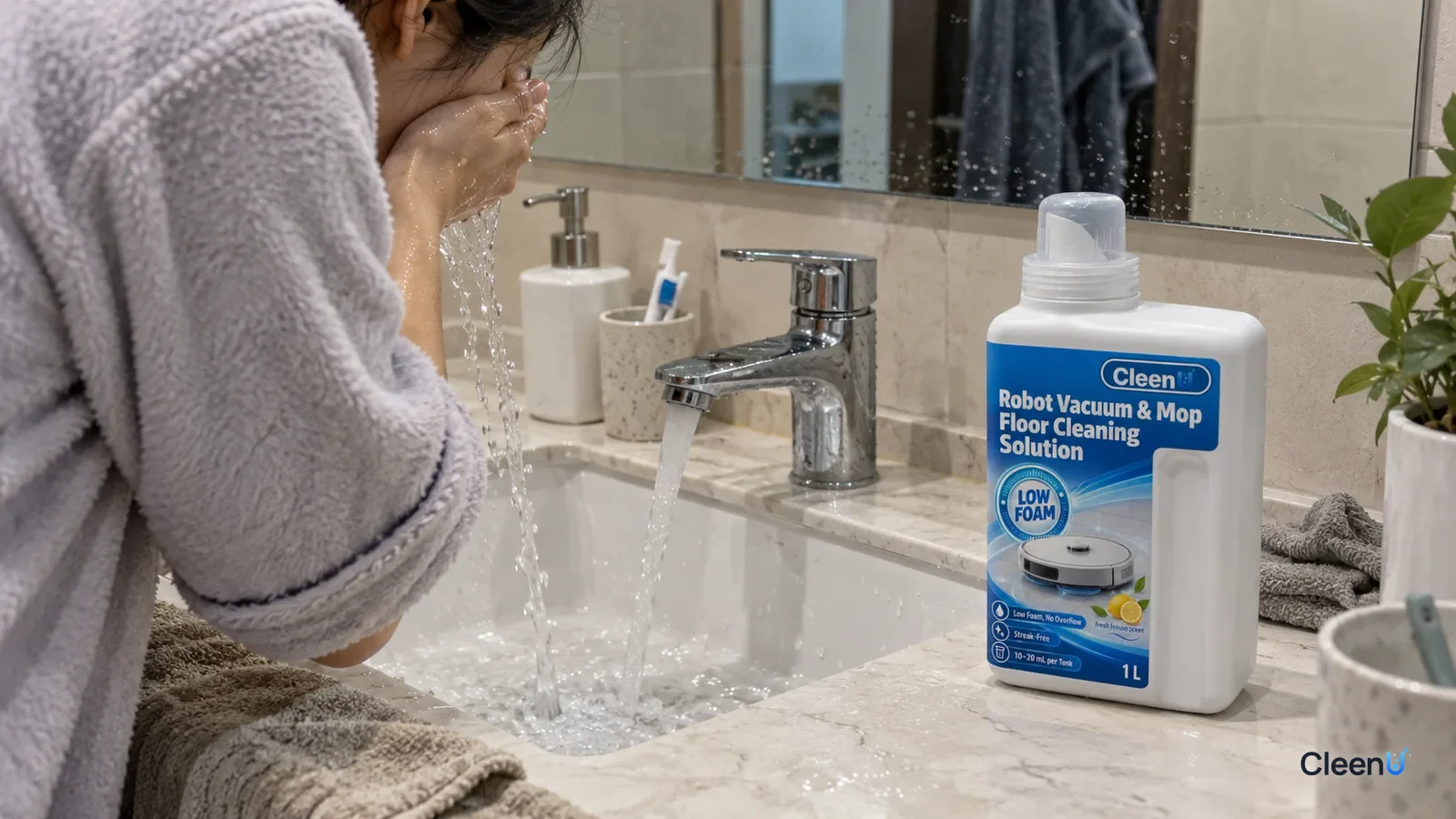
Concentrate sometimes splashes when you fill a robot mop: you pour too fast and it hits your hand, it flicks up as you twist the cap, or a curious kid gets hold of the bottle. When that happens, the first move isn't looking something up. It's rinsing.
Robot mop cleaning solution is a household cleaning product and generally causes no trouble when used as directed, but concentrate that gets directly into the eyes or mouth can still irritate. What to do isn't complicated. The keys are rinsing fast and thoroughly, and knowing when to get medical help.
Why concentrate needs extra care
Most robot mop solutions are concentrates diluted dozens of times before use, so the concentrate holds far more surfactant than the working solution. Surfactants lower surface tension and help lift grease, which is how they clean floors. The same action works on the tear film over your eyes and the oil layer on your skin.
Eyes: the tear film has a very thin oil layer, and surfactants disrupt it, causing stinging, watering and redness. The higher the concentration and the longer it stays, the stronger the irritation.
Skin: concentrate strips surface oils from the skin. Brief contact usually just leaves it dry or tight. People with sensitive or broken skin may get redness or itching.
Mouth and stomach: swallowing concentrate can irritate the mouth and throat and cause nausea or vomiting.
CleenU Robot Vacuum Cleaning Solution, for example, is a neutral, low-foam concentrate at pH 6.5 to 7.5 with no chlorine. A near-neutral pH means it isn't corrosive the way strong acid or alkaline cleaners are. But neutral doesn't mean it won't irritate the eyes, so keep concentrate out of eyes and away from children.
In the eyes: rinsing is the most important step
Rinse immediately: go straight to a faucet and rinse with running water at about room temperature. Cup water into the eye, or tilt your head so water runs from the inner corner to the outer corner and doesn't wash into the other eye.
Rinse long enough: keep rinsing for at least 15 minutes. Many people stop after a minute or two once it stops hurting, but surfactant may still be on the eye's surface.
Hold the eyelids open: gently spread the upper and lower lids with your fingers so water reaches the eye and the inside of the lids.
Contact lenses: if you wear contacts and they come out easily, take them out and keep rinsing. Don't put those lenses back in.
Watch afterward: if stinging, redness, heavy watering, light sensitivity or blurred vision continues after rinsing, see a doctor soon and take the bottle or label so they know what's in it.
Children: kids often cry and rub their eyes after a splash. Have one person hold the child while another rinses. See a doctor for any discomfort afterward.
On skin: rinse it off and watch for a reaction
Rinse the area with water to wash off the concentrate. If clothing got soaked, take it off and wash it separately.
If your skin just feels dry afterward, a little hand cream helps. If redness, itching or a rash lasts, or the skin was already cut or has eczema, ask a doctor.
If you fill the tank and clean it often, wear gloves to cut down on repeated skin contact with concentrate.
Swallowed: don't induce vomiting, get advice fast
A child swallowing solution is the situation to take most seriously.
Rinse the mouth first: have the child or yourself rinse with water and spit it out, not swallow it.
Don't induce vomiting: vomiting can make the surfactant liquid foam, bring it back up through the throat and even get it into the airway.
Small sips of water: if the person is alert and can swallow normally, a few small sips of water are fine. Don't force large amounts.
Get advice quickly: follow the directions on the label and call a doctor or Poison Control (1-800-222-1222 in the U.S.), with the product name, roughly how much and when. If there's vomiting, coughing, trouble breathing or drowsiness, get emergency care right away. Take the bottle or label with you.
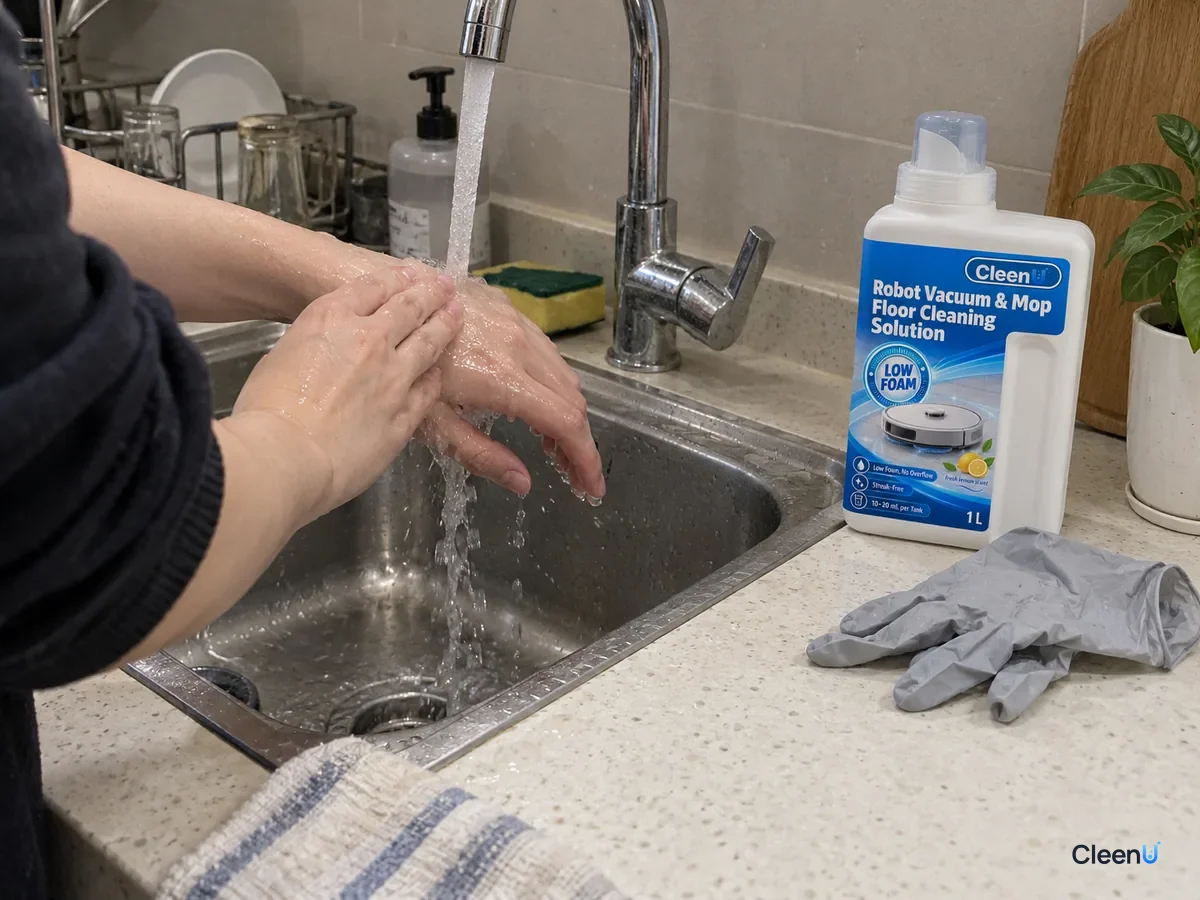
Prevention: a few habits when filling
Most splashes happen in the minute or two you spend filling. A few simple habits cut the risk a lot.
Use the measuring cap or a cup: don't pour straight from the bottle into the tank. Pour into the cap first, then slowly into the clean tank or detergent compartment. CleenU Robot Vacuum Cleaning Solution's 1 L concentrate comes with a measuring cap and dilutes at about 1:50 to 1:100, with 10 to 20 mL per fill usually enough, so the amounts are small and less likely to splash.
Fill at the sink: take the clean tank to the sink to fill it, so any splash rinses away right away.
Pour slowly: concentrate is a little thick and can gush out suddenly if you tip it too fast.
Wear gloves: if your skin is sensitive, wear gloves to fill and clean the tanks.
Cap it right away: tighten the cap as soon as you're done and put the bottle back in its spot.
This article is part of the Robot Vacuum Cleaning Solution & Maintenance Guide, which covers the full maintenance schedule and links to every troubleshooting guide.
Storage: out of reach of children and pets
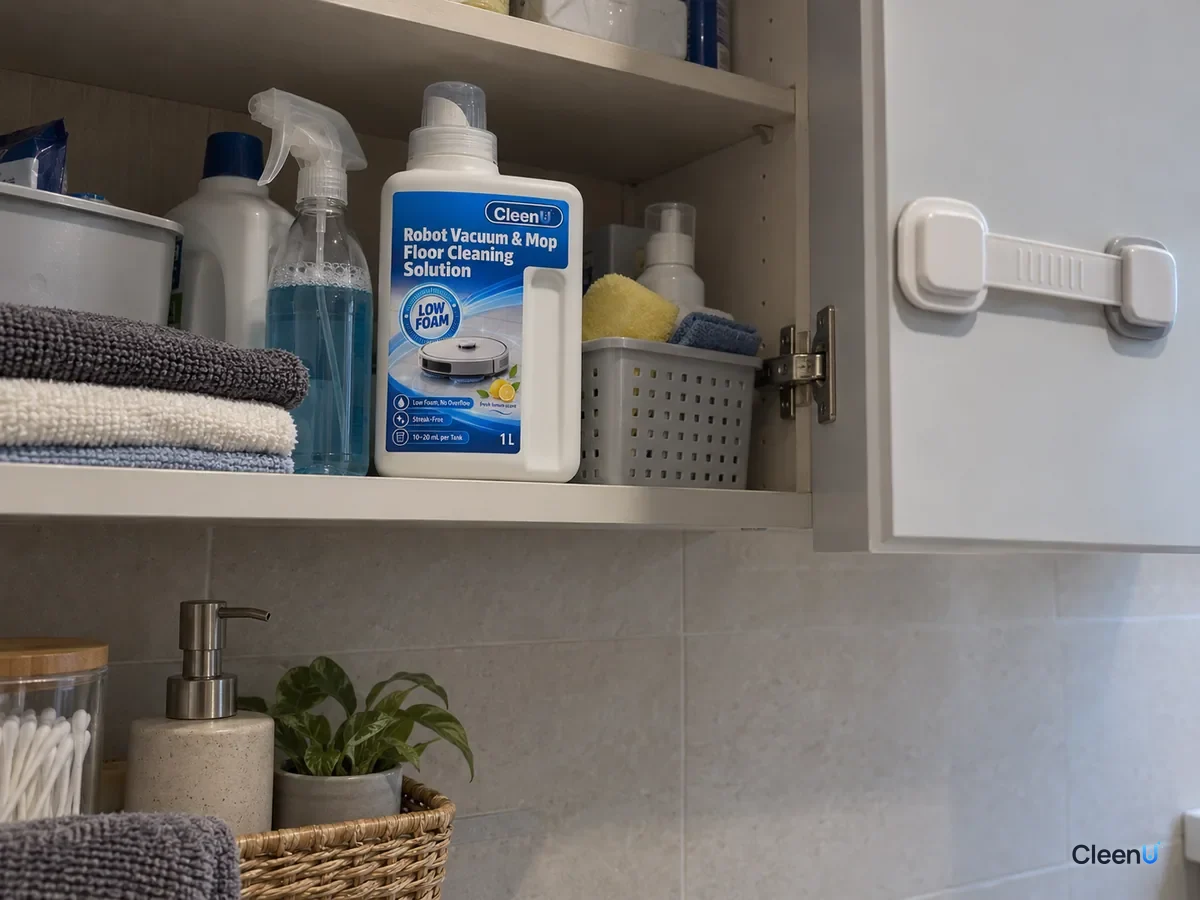
Keep it up high or in a locked cabinet where children can't reach it, not in an open cabinet under the sink or on the floor.
Keep it in its original bottle: never decant cleaning solution into a drink bottle, cup or anything that looks like it holds food or drink. That's one of the most common ways children end up swallowing cleaners.
Store it away from food: keep it apart from food and dishes.
Store it cool: away from heat and direct sun. It has a 24-month unopened shelf life; once opened, follow the label.
Diluted solution and freshly mopped floors
At the label ratio, the working solution is a few dozen times weaker than the concentrate, the pad carries most of it away, and little is left once the floor dries. In homes with babies or pets, let the floor dry completely before they play on it. For crawling babies and pets that lick floors, see robot mopping with a baby.
If diluted working solution splashes on skin, rinse it off with water. If it gets in the eyes, rinse thoroughly the same way as above.
CleenU Robot Vacuum Cleaning Solution works in most robot mops from Roborock, iRobot (Roomba Combo and Braava), Ecovacs Deebot, Dreame and Narwal, and in floor washers such as Tineco. Add it to the clean water tank or the dock's designated detergent compartment as your manual directs. CleenU isn't affiliated with these brands; the names only indicate compatibility.
If a pet licks or steps in concentrate
Cats and dogs are curious about smells. Spilled solution or concentrate dripped on the floor can get licked or stepped in, then swallowed when they lick their paws.
Stepped in it or got it on their fur: rinse the paws and fur with water, dry them and keep the pet from licking.
Licked a little: watch for drooling, vomiting, lethargy or loss of appetite. If anything seems off, call your vet soon and have the bottle or label handy.
Splashed in the eyes: rinse gently with water, as for people. If the pet keeps squinting, watering or looks red afterward, see a vet.
To prevent it, keep pets in another room while you fill the tank, and wipe up spilled concentrate right away with a damp cloth, then wipe again with plain water.
Protect yourself when cleaning tanks and the dock too
When you clean the clean tank, dirty tank, detergent compartment and dock wash tray, you're handling more than cleaning solution. The dirty tank holds wastewater picked up from the floor, mixed with dust, food scraps and pet hair, and it grows bacteria if left sitting. The detergent compartment holds concentrate.
Wear gloves, pour dirty water down the drain without splashing it toward your face, and before rinsing the detergent compartment, pour any leftover concentrate back into its original bottle or discard it (never into another container). Wash your hands afterward. For cleaning the compartment, see how to clean the auto-dosing tank.
Don't mix it with other cleaners
Another common risk comes from mixing: combining robot mop solution with bleach, toilet bowl cleaner or other products, or pouring them into the same tank one after another. Mixed cleaners can react, and some combinations release irritating gases. Put only robot mop solution and water in a robot's tank, never other cleaners or disinfectants. For what can't go in the tank, see vinegar or bleach in a robot mop tank.
Common questions about cleaning solution on skin or in eyes
How long should I rinse if solution gets in my eyes?
At least 15 minutes, holding the eyelids open so water flows over the eye. If stinging, redness or blurred vision continues, see a doctor and take the label.
The solution is neutral. Do I still need to rinse that long?
Yes. Neutral doesn't mean non-irritating; the surfactant in concentrate disrupts the tear film, so rinse the same way.
My child swallowed a mouthful of cleaning solution. What should I do?
Rinse the mouth, don't induce vomiting, and call Poison Control or a doctor as the label directs, with the bottle in hand. Get emergency care for vomiting, coughing, trouble breathing or drowsiness.
I got concentrate on my hands. Do I need to wash right away?
Yes, rinse it off with water. If your skin is sensitive, wear gloves when filling and use hand cream afterward.
Is a freshly mopped floor a problem for babies and pets?
Use it at the label ratio and let the floor dry completely before they play on it. The working solution is very dilute, the pad carries most of it away, and little remains once dry.
Where can I find ingredient and safety information?
Check the ingredients and precautions on the label. Brands and buyers who need an SDS or other safety documents can ask CleenU.
My skin turned red and itchy after a splash. Should I see a doctor?
Rinse the skin with plenty of water first, and see a doctor if redness, itching or stinging continues, bringing the bottle with you. Diluted neutral solution is usually mild, but sensitivity varies, so wear gloves when pouring concentrate.
For a neutral, chlorine-free robot mop solution with a measuring cap and small doses, choose Robot Vacuum Cleaning Solution.
If robot mop cleaning solution gets in your eyes, rinse right away with running water for at least 15 minutes with the lids held open, remove contact lenses if they come out easily, and see a doctor with the label if stinging, redness or blurred vision continues. On skin, rinse it off with water. If swallowed, rinse the mouth, don't induce vomiting and call a doctor or Poison Control as the label directs. A neutral formula isn't corrosive like strong acids or alkalis, but concentrate can still irritate the eyes and mouth. To prevent accidents, fill slowly at the sink with the measuring cap, wear gloves, cap the bottle right away, keep it in its original bottle out of children's reach and never mix it with other cleaners.