
Troubleshooting
Robot Mop Leaving Lint and Fibers on the Floor? Here's Why
Direct answer
Five causes are common: new pads shedding, worn pads fraying, mopping before vacuuming so hair gets rolled into clumps, a clogged dock wash tray filter sending dirty water back to the pads, and too much solution leaving a tacky floor that grabs fibers. Check what the lint looks like, then work through the list.
Check these five things to find where the lint comes from
- Whether the pads are new, or old, stiff and fraying at the edges
- Whether you vacuum before mopping, and how much hair and pet hair there is
- Whether the dock's wash tray and filter are wrapped in hair and fibers
- Whether the pads have gone through the washer with clothes or towels
- How much solution you add, and whether the floor feels tacky afterward
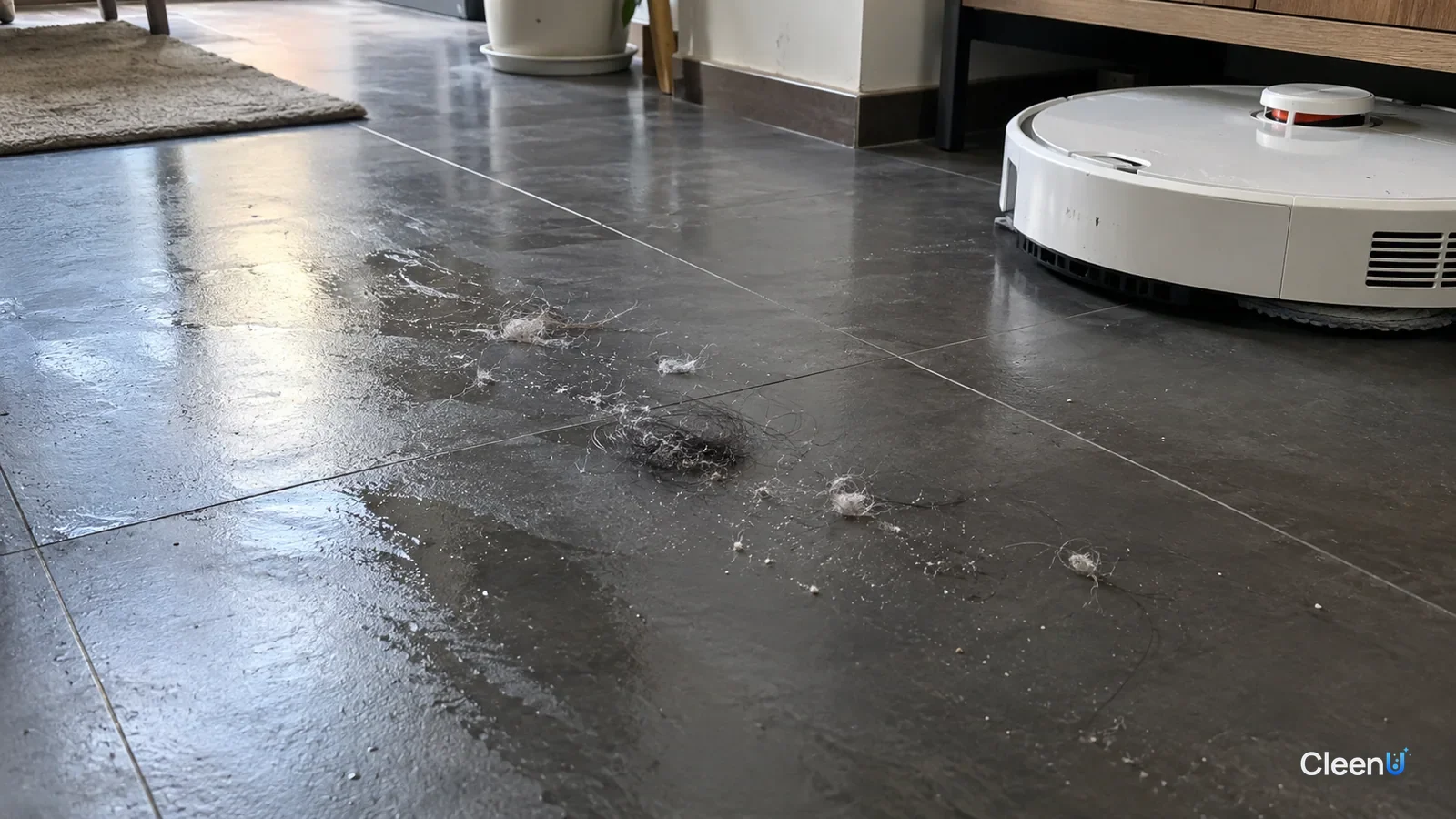
The robot mop finishes, and the dark floor is dotted with small white bits of lint, sometimes with little damp clumps of hair and dust. It was supposed to clean, and the floor has more on it than before.
Lint on the floor comes from one of two places. Either the pad itself is shedding fibers, or hair, clothing fibers and pet hair that were already on the floor got rolled into clumps by the pad and left behind. Once you know which, the fix is straightforward.
Start by looking at the lint
Crouch down, pick some up and feel it. That usually points you in the right direction.
The same color as the pad, very fine and short, spread evenly: most likely the pad is shedding. It's most common in the first few uses of a new pad and when a pad is worn and fraying.
Hair, long fibers, pet hair and dust in small damp clumps: hair and fibers that were already on the floor, rolled up by a wet pad and flung off as it spins or lifts.
Fine fluff in mixed colors: fibers from clothes, blankets and sofas. There's more of it in dry seasons, and a wet pad picks it up and moves it around.
Clumps near the end of the route, at turns or on the way back to the dock: the pad may be full of hair and releasing it, or the dock isn't cleaning the pad properly and it's heading back out dirty.
Why wet mopping rolls hair into clumps
When a robot mops, the pad is wet and spinning or sliding across the floor. Hair and long fibers stick to the pad's fibers and water film, and as it moves they wrap around one another and pick up dust until they form small clumps. A pad only holds so much. Once it's full, new clumps get flung off at its edges, when it lifts and when it turns.
That's why vacuuming before mopping matters so much in homes with lots of hair. Vacuuming removes hair and dry fibers first, and the pad only has to deal with the fine dust and soil left behind. Most robot mops have a vacuum-then-mop mode; use it when hair is heavy.
Does cleaning solution have anything to do with it?
Indirectly, yes. With too much solution, surfactants and other non-volatile ingredients stay on the floor, and once it dries the floor is tacky. Fibers and dust drifting down from the air stick to it more easily, so it looks like mopping left more lint. Excess solution also leaves more detergent in the pad's fibers, which stiffens the pad and makes it shed more.
A solution used at the label ratio that leaves no tacky residue helps with this. Low-foam nonionic surfactants wet the floor and help fine dust and oily soil disperse in water so the pad carries them away, and the floor dries clean rather than tacky, so fibers don't cling. CleenU Robot Vacuum Cleaning Solution, for example, is a neutral, low-foam concentrate at pH 6.5 to 7.5 with low-foam nonionic surfactants and a defoamer, no wax, no chlorine and no particles. It dilutes at about 1:50 to 1:100; 10 to 20 mL per fill is usually enough. For tracking down a tacky floor, see sticky floor after robot mopping.
Common causes of lint after robot mopping, and fixes
| Cause | What you see | Fix | Prevent it |
|---|---|---|---|
| New pads shedding | Fine, short fibers the pad's color, spread evenly, fading after a few uses | Hand-wash new pads in plain water and dry them before installing | Use OEM or reliable replacement pads |
| Worn, fraying pads | More fibers, fuzzy or fraying edges, stiff pads | Replace the pads | Check pads every two or three months |
| Mopping before vacuuming | Damp clumps of hair and dust, worse in homes with lots of hair | Vacuum before mopping; pick up obvious hair piles by hand first | Use vacuum-then-mop mode and vacuum more often |
| Clogged wash tray filter | More clumps late in the route and near the dock, pads getting dirtier | Clear hair from the wash tray and filter and rinse them | Clean the wash tray weekly, more often with lots of hair |
| Pads washed with clothes | Fine fluff in mixed colors | Wash pads separately, rinse well and air-dry | Don't wash pads with towels or clothes, and skip fabric softener |
| Too much solution | Tacky floor with fibers and dust stuck to it | Mop once with plain water, then dose at the label ratio | Use the measuring cap and lean low |
Washing pads so they shed less
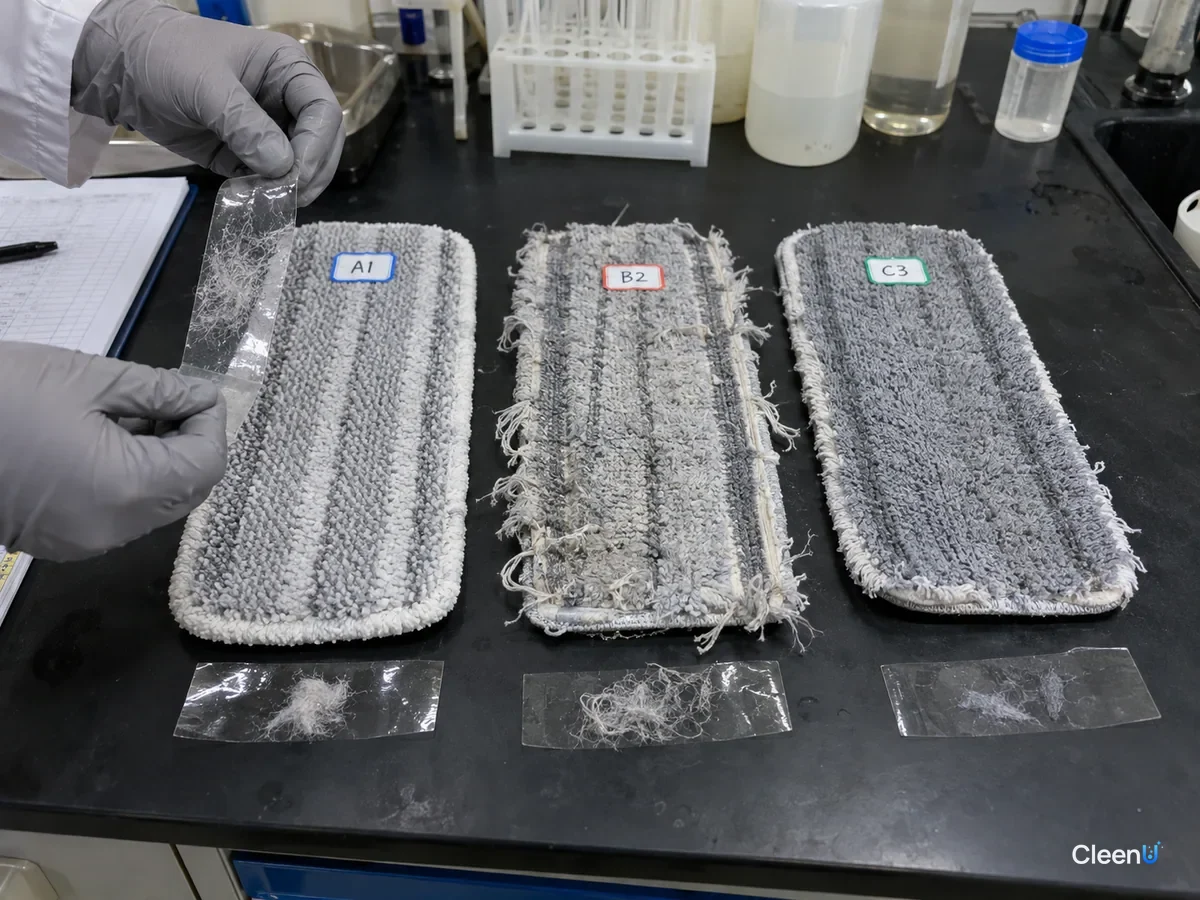
Microfiber pads are woven from very fine fibers, and new pads have some loose short fibers on the surface that come off in the first few uses. That's normal. Hand-washing new pads in plain water and drying them before you install them cuts down on first-use shedding.
When you wash pads, keep a few things in mind.
Wash them on their own: don't put them in the washer with towels or clothes. Lint from fabrics clings to the pads and ends up on the floor.
Skip fabric softener: it coats the fibers, so pads absorb less water, stiffen and shed more, and it carries residue onto the floor.
Rinse thoroughly: leftover laundry detergent makes pads stiff and tacky and leaves residue on the floor.
Dry them completely: pads that stay damp smell and grow bacteria, and the fibers age faster. If the dock has a drying function, turn it on after every run. For smelly or dark pads, see robot mop pad smells.
The dock's wash tray and filter: the step people miss
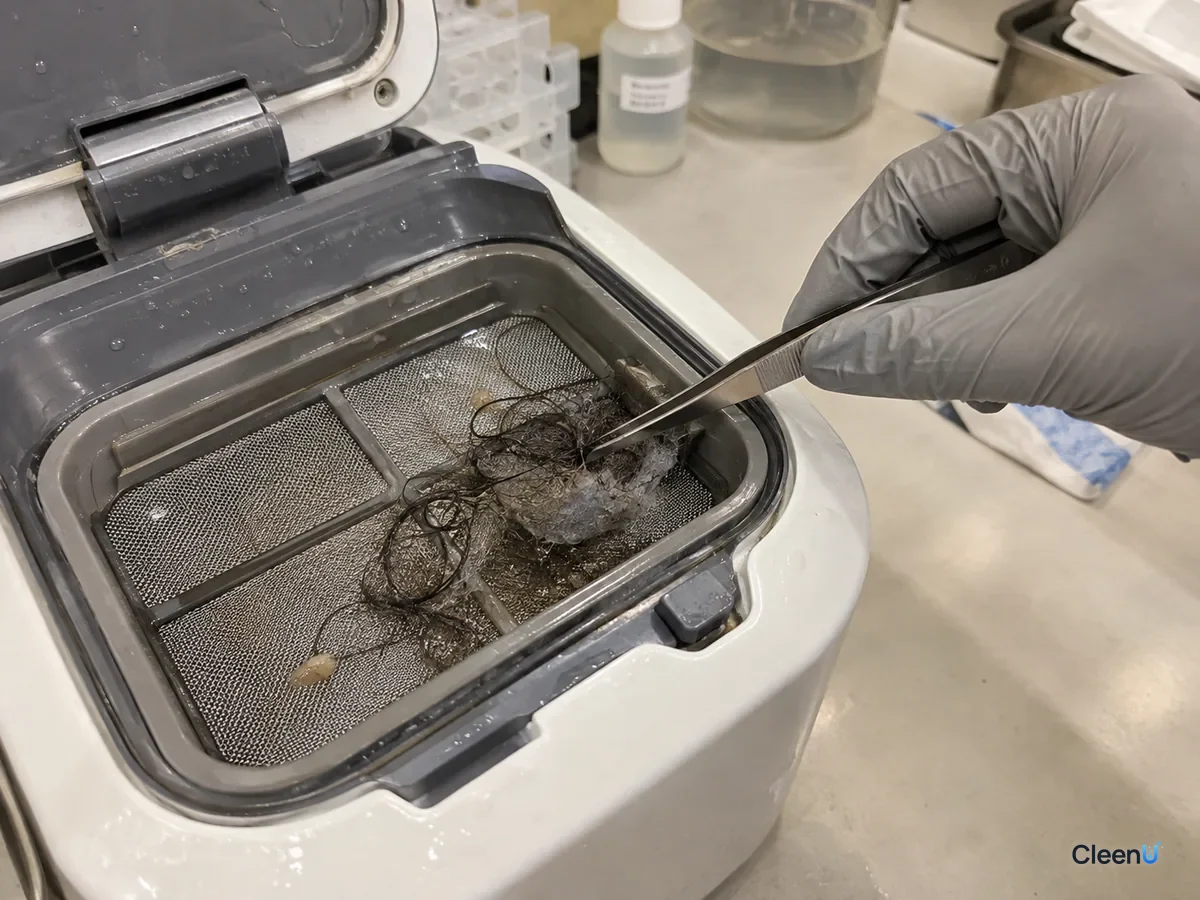
On a self-cleaning dock, the pads are rinsed in a wash tray with clean water, and the dirty water drains through a filter into the dirty tank. Hair and fibers easily wrap around the tray floor and filter. Over time the filter clogs and drains slowly, so the pads are really spinning in a pool of dirty water, and they head back out carrying hair and dirty water. The clumps show up late in the route.
Take out the wash tray and filter once a week, pick out hair with tweezers or an old toothbrush and rinse them. Do it more often with lots of hair or pets. For maintenance timing, see robot vacuum maintenance schedule.
Stop and check if you see these
The pads won't spin, make noise or have hair wrapped around the hub; the side brush or main brush is wound tight with hair; the dock's wash tray is full of dirty water that won't drain; or the floor is tacky over large areas after mopping. Stop the robot, clear hair from the pads, brushes and wash tray, check the drain and continue only once it's fixed.
Why there's more lint in dry seasons
In dry fall and winter air, fibers on clothes, blankets and sofas pick up static more easily from friction, come loose, float in the air and settle on the floor. The robot vacuums up most of them, but when it mops, the wet pad grabs the remaining fluff, collects it along its edges and drops it at turns or when it lifts.
What helps: vacuum before mopping with higher suction, run a humidifier to keep humidity moderate and cut static, and wash bedding, throws and sofa covers regularly to reduce fibers at the source.
Spinning, roller and flat pads shed differently
Spinning pads: two round pads rotate on the floor. Hair tends to wrap around the center of the pads or get flung to the outside, so lint usually shows up along both sides of the path and at turns.
Roller mops: the roller is scraped and rinsed inside the robot as it turns, so most hair gets scraped into the dirty water channel. Long hair still wraps around the roller ends and the scraper, and once enough builds up, it gets carried back to the floor.
Flat pads that slide under the robot: they cover a large area but hold only so much, so with lots of hair they collect a line of it along the pad edge and leave it at the end of the route.
Whatever the pad type, the approach is the same: vacuum up the hair first, let the pad handle fine dust, and clear anything that wraps around it regularly.
Extra tips for homes with pets
Pet hair is the most common source of lint. During shedding season, cats and dogs drop a lot of hair every day, and the robot's bin and brushes fill up fast. A few habits help.
During shedding season, vacuum daily, mop every other day and always vacuum before mopping.
Clear hair from the main brush and side brush every two or three days.
Around pet beds and litter boxes, pick up obvious hair and litter by hand before mopping.
For more on robot mopping with pets, see robot mop tips for pet homes.
CleenU Robot Vacuum Cleaning Solution works in most robot mops from Roborock, iRobot (Roomba Combo and Braava), Ecovacs Deebot, Dreame and Narwal, and in floor washers such as Tineco. Add it to the clean water tank or the dock's designated detergent compartment as your manual directs. CleenU isn't affiliated with these brands; the names only indicate compatibility.
Common questions about robot mops leaving lint
Is it normal for new mop pads to shed lint?
A little in the first few uses is normal. Hand-wash them in plain water and dry them before installing, and shedding drops off after a few runs. If they keep shedding heavily, switch to a better-made pad.
Are the damp hair clumps coming from the pad?
No. They're hair that was already on the floor, rolled up by the wet pad. Vacuum before mopping, use vacuum-then-mop mode and clear hair from the dock's wash tray.
Can I wash mop pads in the washer with towels?
Don't. Lint from towels and clothes sticks to the pads and ends up on the floor. Wash pads separately, skip fabric softener, rinse well and air-dry.
Can cleaning solution make pads shed?
Not at the label ratio. Too much leaves detergent in the pads and stiffens them, and a tacky floor grabs fibers, so dose at the label ratio and lean low.
How often should I clean the dock's wash tray?
At least weekly. With lots of hair or pets, every two or three days: pick the hair off the filter, rinse and let it dry.
How often should I replace mop pads?
Check them every two or three months and replace any that are stiff, flattened, fraying or won't wash clean. Old pads shed more and carry dirt back to the floor.
Can I use fabric softener when washing mop pads?
No. Softener coats the fibers, so pads absorb less water, pick up less dust and can carry residue back onto the floor. Wash pads in warm water with a little mild detergent and let them dry completely before reattaching.
For floors that dry clean rather than tacky and hold on to fewer fibers, dose at the label ratio with the low-foam, wax-free Robot Vacuum Cleaning Solution.
When a robot mop leaves lint, first work out whether the pad is shedding or hair already on the floor is being rolled into clumps. Hand-wash new pads before installing them, and replace worn, fraying ones. Damp clumps of hair and dust mean the floor was mopped before it was vacuumed, so use vacuum-then-mop mode and vacuum more often. Clumps late in the route point to a clogged wash tray and filter. Mixed-color fluff comes from washing pads with clothes. Dose solution at the label ratio so the floor dries clean, not tacky, and fibers won't cling to it.