
Q&A
Can You Put Robot Mop Cleaning Solution in a Steam Mop?
Direct answer
No. A steam mop boils water into steam, and the solution's non-volatile ingredients stay behind in the boiler and jets, where they build up, clog and foam, and may affect the warranty. Fill a steam mop with water only, as the manual says, and use a hand mop or robot mop where you want cleaning solution.
What can go in a steam mop
Yes
- Tap water, if the manual allows it
- Distilled or purified water, in hard-water areas or when the manual recommends it
No
- Robot mop cleaning solution
- Regular floor cleaner, dish soap or laundry detergent
- White vinegar, citric acid or other acids, unless a descaling cycle in the manual specifically calls for one
- Bleach, disinfectants or rubbing alcohol
- Essential oils or perfume
It depends
- The maker's own steam mop additives or scent pods, only the specified product in the specified place
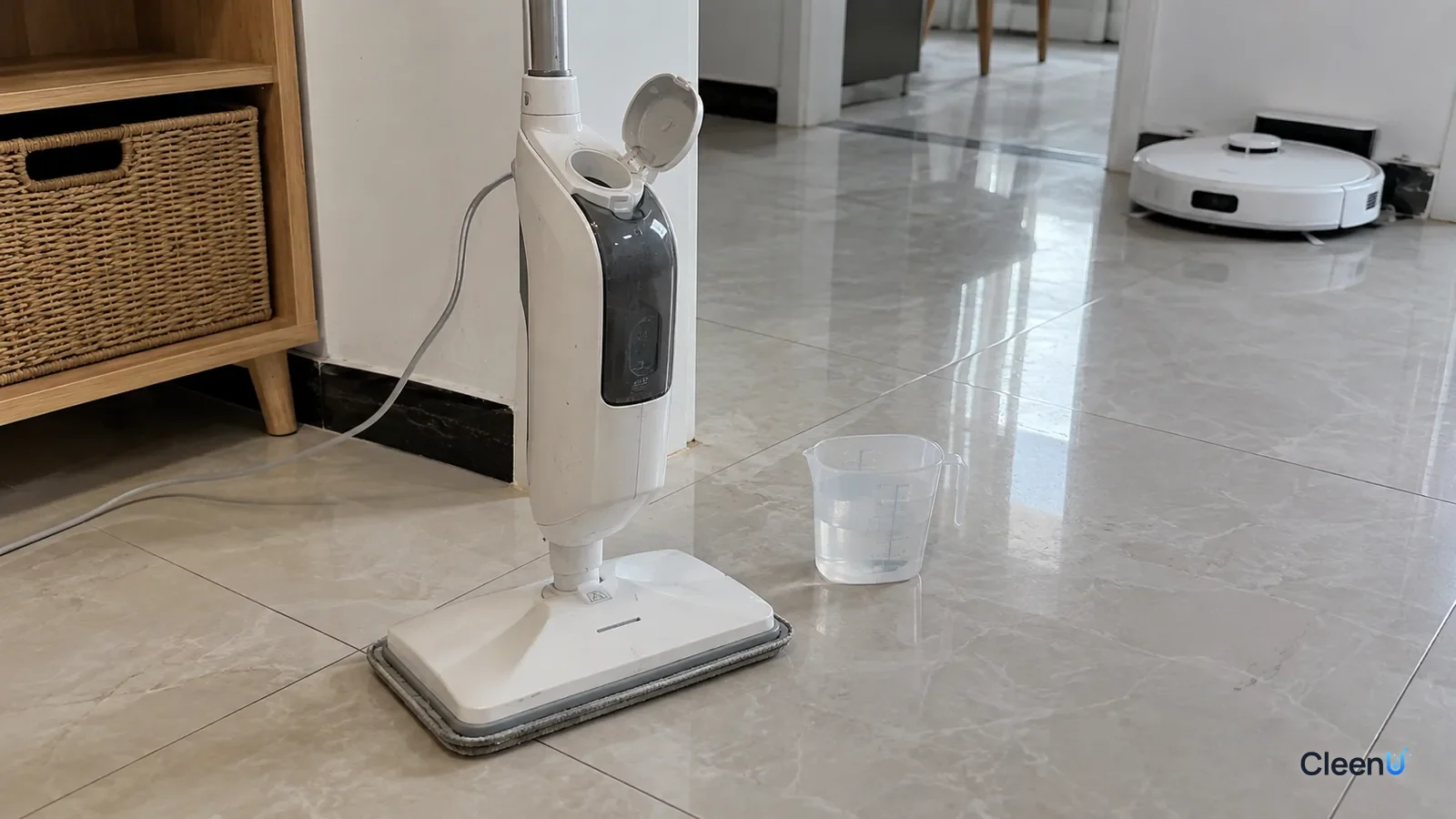
If you have both a robot mop and a steam mop, it's tempting to think: this robot mop solution works well, so why not pour a little into the steam mop and give its steam some cleaning power too?
Don't. The solution isn't the problem; the way a steam mop works is. The water in its tank gets heated into steam, and most of the ingredients that actually do the cleaning in a solution don't turn into steam.
How a steam mop works
A steam mop feeds water from its tank into a heating chamber, either a boiler or a flash heater, that boils it into steam. The steam sprays through jets in the mop head onto the pad, and the hot, moist pad wipes the floor. It cleans with heat and water: heat softens greasy soil, moisture helps wet and loosen it, and the pad wipes it away.
The key point is that when water turns to steam, only the water molecules leave as gas. Anything dissolved in the water stays in the heating chamber. Calcium and magnesium from tap water stay behind as scale, which is why many steam mop manuals recommend distilled or purified water in hard-water areas and regular descaling.
What happens if you add cleaning solution
The working ingredients in a cleaning solution are mostly surfactants, defoamer, fragrance and preservative, and most of them don't evaporate or travel with the steam. Put solution in a steam mop and you may run into these problems.
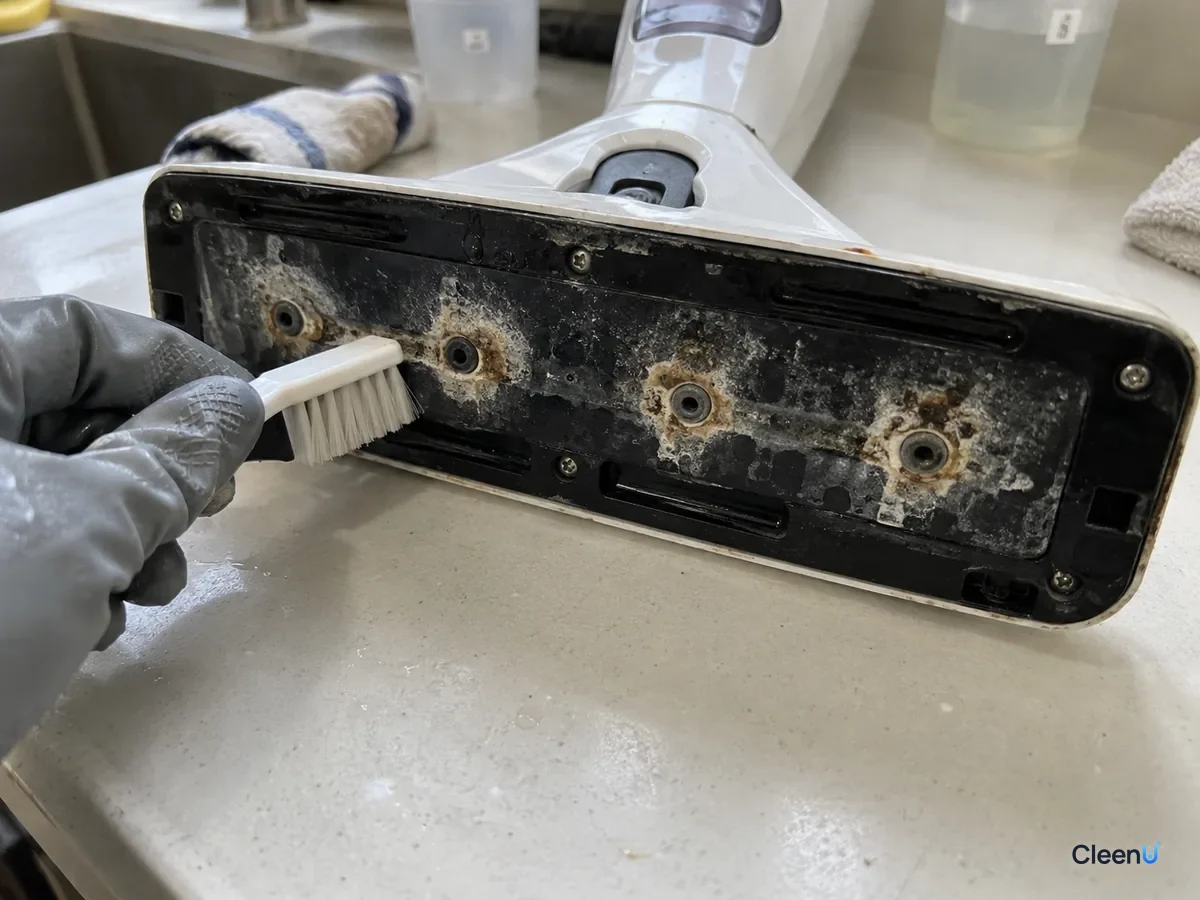
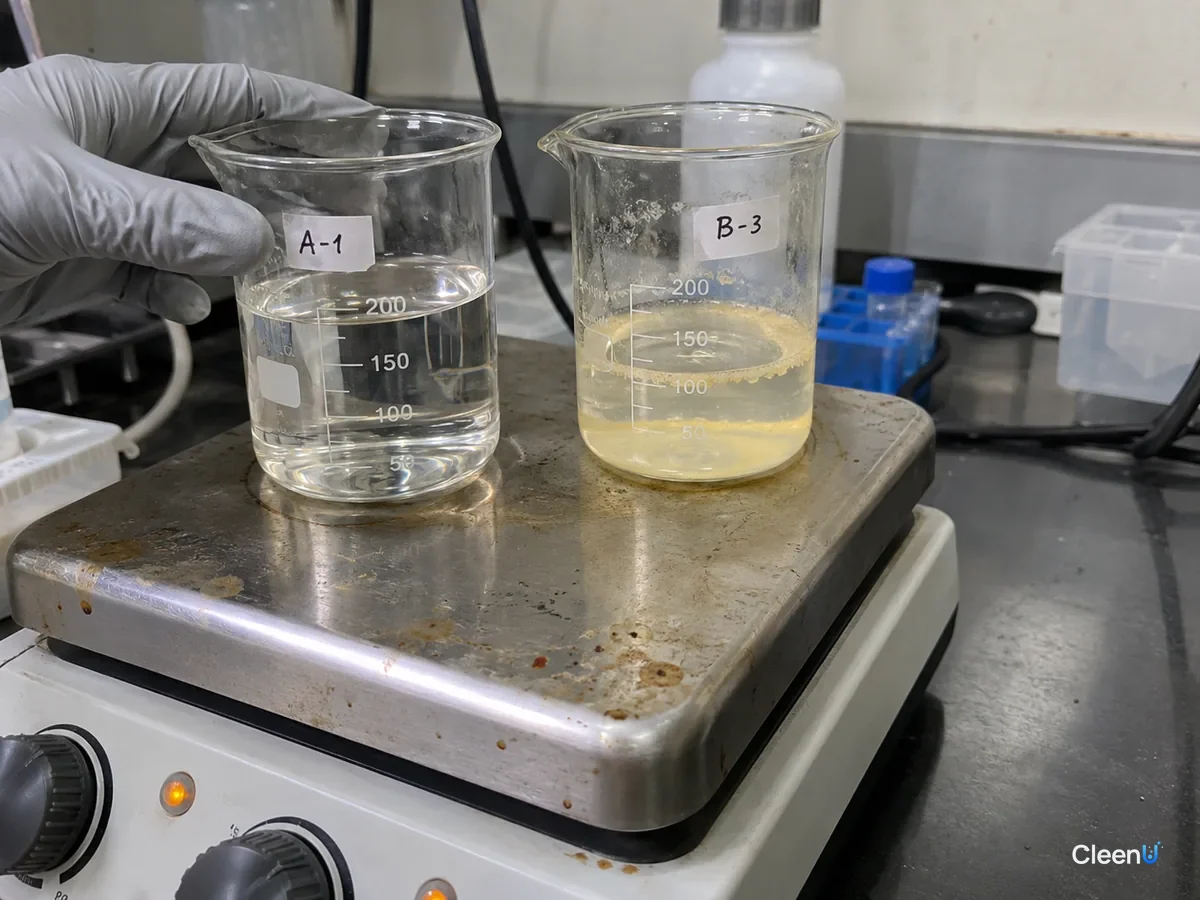
Buildup in the heating chamber: as water keeps boiling off, solution ingredients concentrate in the chamber. Heat can thicken or scorch them, and they mix with scale into deposits that are harder to remove.
Clogged jets and lines: concentrated residue narrows the jets, so steam comes out unevenly or not at all.
Foaming and spitting: surfactants foam when water boils, and the foam can get carried into the steam line, so the mop spits and drips water instead of producing even steam.
Odd smells: heated fragrance can turn harsh and smell nothing like it does in normal mopping.
Warranty trouble: most steam mop manuals say water only or the maker's specified additive, and damage from other cleaners may not be covered.
No better cleaning either: only water vapor reaches the pad. The solution's ingredients mostly stay in the machine and never get to the floor.
How to use a steam mop and a robot mop together
Each tool has its strengths, so split the work.
Robot mop: everyday vacuuming and mopping for dust, greasy footprints and light soil, with a low-foam cleaning solution made for robot mops, diluted to the label ratio. CleenU Robot Vacuum Cleaning Solution, for example, is a neutral, low-foam concentrate at pH 6.5 to 7.5 with no wax, no chlorine and no particles. It dilutes at about 1:50 to 1:100; 10 to 20 mL per fill is usually enough.
Steam mop: spot work on stubborn, sticky soil, such as dried grease on a kitchen floor or tacky spots where a drink dried. Hot steam softens them so they wipe away. Water only.
For stubborn spots that need both cleaning solution and heat, wipe first by hand with solution diluted to the label ratio in a bucket, then go over the spot with the steam mop, or simply hand-mop with warm water and solution. For hand-mopping with robot mop solution, see using robot mop solution with a regular mop.
Floors that don't suit steam mopping
Steam's heat isn't kind to every floor, even with plain water.
Unsealed wood and laminate: hot moisture can get into the seams and cause cupping and swelling. Many flooring makers advise against steam mops.
Waxed floors: heat softens the wax and leaves it uneven.
Some vinyl plank and PVC floors: prolonged heat can affect the wear layer and adhesive, so follow the flooring maker's instructions.
Natural stone: the stone itself tolerates heat, but expansion, contraction and high heat can affect some stone sealers, so follow stone-care guidance.
Glazed tile is usually the best fit for steam, though long-term heat can age grout faster.
For everyday settings on wood and vinyl plank, see robot mop on hardwood floors and robot mop settings for tile and vinyl plank.
Already added cleaning solution?
If solution has already gone into the steam mop, here's what to do.
Unplug it and let it cool: wait until the mop is completely cool before opening the tank.
Empty the tank: pour out all the leftover mix and rinse the tank with plain water several times.
Run it with plain water a few times: fill it with water and run it as the manual directs so the water flushes residue out of the chamber and lines. Point the first steam at a pad or rag, not straight at the floor.
Check the steam: if it's even, with no foam or odd smell, it's mostly flushed out. If steam output drops, it spits water or smells scorched, run the manual's descaling and cleaning cycle, and contact the maker if it still isn't right.
Everyday steam mop care: scale is more common than solution
Even with water only, a steam mop builds up scale over time. Calcium and magnesium in tap water keep coming out in the heating chamber as the water boils off, forming hard white scale that's mostly calcium and magnesium carbonate. Scale on the heater lowers its efficiency and cuts steam output, and flakes can break off and block the jets.
So steam mop care is mostly about preventing scale.
Use the right water: in hard-water areas, switch to distilled or purified water as the manual recommends, so less comes out of the water in the first place.
Empty it after use: pour out what's left in the tank after every use rather than storing water in it, which cuts scale and odors.
Descale regularly: follow the manual's descaling cycle with the descaler it specifies. Descalers are usually acidic and work by dissolving calcium carbonate, so use them only in that cycle, then run plain water through several times.
Clean the pads: wash and air-dry the steam mop's pads after each use, and skip fabric softener, which coats the fibers and makes them absorb less.
Keep two things separate. A descaler removes scale from the heating chamber and goes in briefly, during the descaling cycle the manual describes. A cleaning solution cleans floors and belongs in tools that put liquid directly on the floor. Neither should sit in a steam mop's everyday tank.
This article is part of the Robot Vacuum Cleaning Solution & Maintenance Guide, which covers the full maintenance schedule and links to every troubleshooting guide.
Why a robot mop can take solution and a steam mop can't
Both have a tank you fill, but the difference is where the water goes.
In a robot mop, working solution flows from the clean tank through outlet holes straight to the pad. The pad wipes the floor with it, the solution's ingredients reach the floor and do their job, and then the pad carries them off to the dirty tank. Nothing is heated; the liquid moves as it is.
In a steam mop, water is heated into steam. Only the water leaves, and the cleaning ingredients stay in the machine.
Cleaning solution is designed for tools that deliver liquid directly to the floor. The low-foam, low-residue design of a robot mop solution is aimed at a robot's outlet holes, lines and dirty tank, not at a heating chamber or steam system.
CleenU Robot Vacuum Cleaning Solution works in most robot mops from Roborock, iRobot (Roomba Combo and Braava), Ecovacs Deebot, Dreame and Narwal, and in floor washers such as Tineco. Add it to the clean water tank or the dock's designated detergent compartment as your manual directs. CleenU isn't affiliated with these brands; the names only indicate compatibility. Some floor washers have hot water or hot-air drying, and the same rule applies: add solution only where the manual specifies, never to a heated tank.
Docks that wash pads with hot water
Some robot mop docks wash the pads with heated water. That's different from a steam mop: the dock heats the rinse water for the pads, and cleaning solution generally goes in the clean tank or the designated compartment, used the way the manual describes. What matters is the manual's rules on solution: whether it's allowed, where it goes, and any temperature or ratio limits. For water temperature, see hot water in a robot mop.
Common questions about steam mops and cleaning solution
What about just a little cleaning solution in a steam mop?
Don't add any. The ingredients don't leave with the steam, so they concentrate in the heating chamber, and even small amounts over time cause buildup and clogs.
Can a steam mop clean well with water only?
Yes, for most everyday soil. Hot steam softens grease and sticky spots. For stubborn areas, wipe first by hand with diluted solution, then go over them with the steam mop.
What water is best in a steam mop?
Whatever the manual says. Most recommend tap water, with distilled or purified water in hard-water areas or where the manual suggests it, to cut scale.
Can I use steam mop scent pods or additives?
Only the maker's specified product, in the specified place. Don't swap in another brand's cleaning solution.
Can robot mop cleaning solution go in a floor washer?
In most floor washers, yes, in the clean tank or wherever the manual says. CleenU's solution works in most Tineco and similar floor washers, but never in a heated tank or steam system.
My steam mop is spitting foam and dripping. What should I do?
Unplug it and let it cool, empty the tank and run plain water through it a few times. If it's still not right, descale it as the manual directs or contact the maker.
My floor washer has a steam mode. Can I still add cleaning solution?
Only in the clean-water tank or detergent compartment your manual names, never in a steam or heated tank. Heat can break cleaners down, leave scale or cause foam that blocks the steam path, so use plain or specified water for steam.
Leave everyday mopping to the robot, with solution only in the clean tank or designated compartment, using the low-foam, wax-free Robot Vacuum Cleaning Solution.
Don't pour robot mop cleaning solution into a steam mop. A steam mop boils water into steam, and only the water leaves. Surfactants, fragrance and other ingredients concentrate in the heating chamber, where they can scorch, scale up, clog the jets and make the mop spit foam, and they may affect the warranty without ever reaching the floor. Fill a steam mop with water only or the maker's specified additive. Leave everyday mopping with solution to the robot, and for stubborn spots, wipe first by hand with diluted solution, then go over them with steam. If solution already went in, unplug it, let it cool, empty it, run plain water through it a few times, and contact the maker if anything is still off.