
Troubleshooting
Robot Mop Cleaning Solution Changed Color or Separated: Is It Still OK to Use?
Direct answer
If the solution has thinned out, changed color, separated or formed sediment, its formula is no longer stable, so don't put it in your robot mop. Stop using it, check the date and where it's been stored, and contact the seller. Store good solution cool and out of the sun, as the label says.
Check these first
- Date: the manufacture date and shelf life on the bottle, and roughly how long it's been open
- Storage: a patio, windowsill, spot next to the water heater, or the car, anywhere hot or sunny?
- Winter: somewhere cold enough to freeze?
- Cap: was it screwed on tight, and does leftover liquid sit in the measuring cap?
- Water added: has anyone poured diluted mix back into the bottle or topped it up with water?
- Smell: does it smell different than when you bought it, sour, foul or harsh?
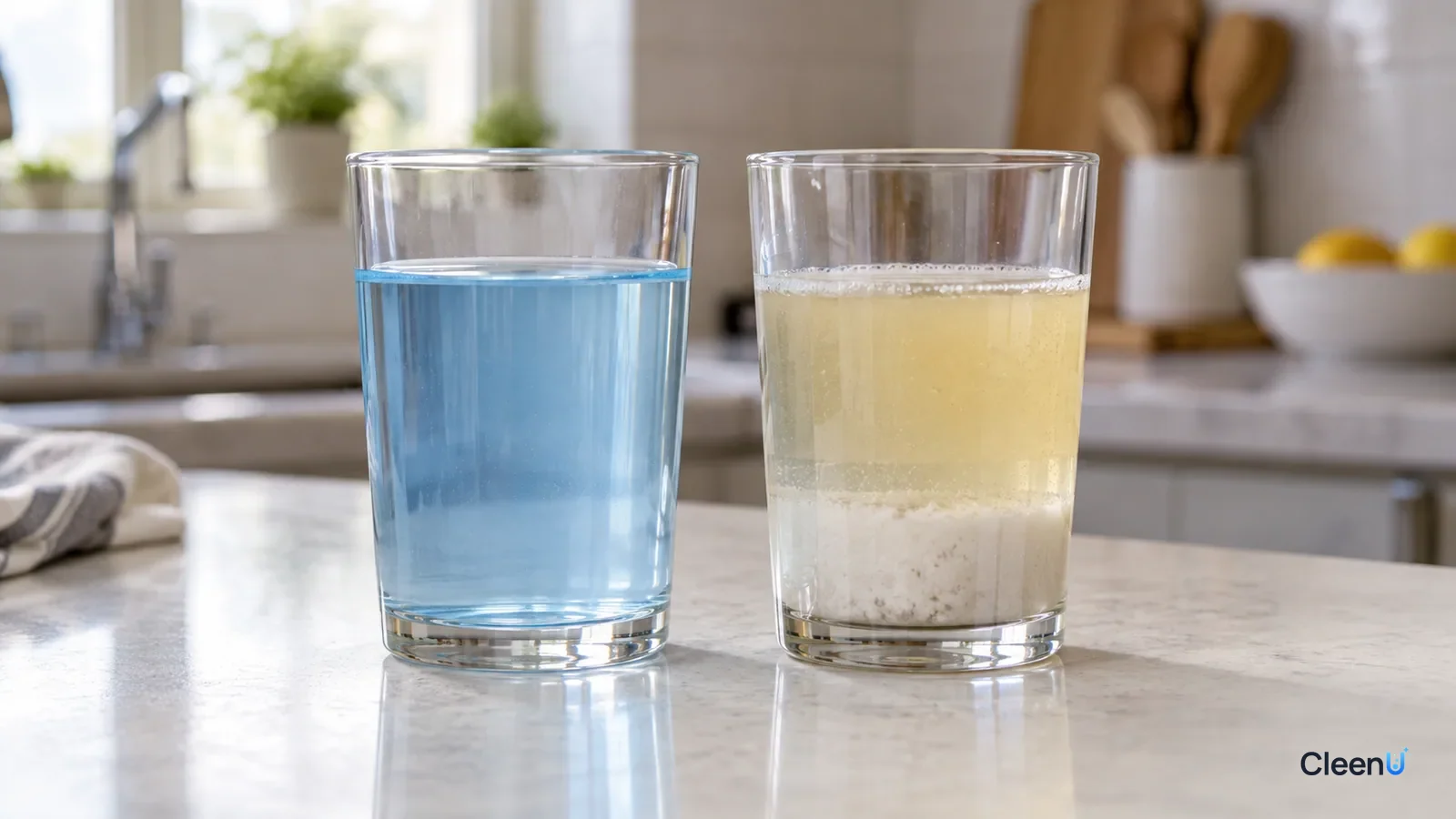
At 10 to 20 mL a fill, a bottle of robot mop cleaning solution can last months. Somewhere along the way you may notice it doesn't look the way it did: darker or yellow, cloudy where it used to be clear, watery, or clear on top with a layer of something settled at the bottom.
The usual instinct is to shake it and keep going. For a robot mop, that's exactly the wrong move. A solution that has broken down can foam more, leave more residue and clog the tiny outlet holes and auto-dosing lines.
Why does a cleaning solution become "unstable"?
A bottle of cleaner looks simple, but it's several ingredients held together by formula design: water, surfactants, defoamer, fragrance, solubilizers, preservatives, and sometimes odor control and a little dye. Some love water, some love oil, and on their own they don't mix well. Formulators choose ingredients and ratios so they form one clear, even system that stays together for a long time. That's formula stability.
A properly made product, within its shelf life and stored as the label says, shouldn't change noticeably in look, smell or thickness. A few things can knock that balance off.
Temperature. Heat speeds up reactions between ingredients and changes how surfactants dissolve; cold can make some ingredients crystallize or drop out. Many nonionic surfactants have a cloud point: above that temperature their solubility in water drops sharply and the liquid turns cloudy, sometimes even separating. That's a normal trait of nonionic systems, and the liquid often clears once it cools, but repeated heat can gradually push fragrance and other ingredients out of solution.
Light. UV breaks down fragrance and dye, so color fades or yellows and the smell changes.
Microbes. Cleaners contain water and organic ingredients. If the preservative system fails, or bacteria or mold get in, microbes grow: cloudiness, off smells, sediment or stringy bits.
Dilution or contamination. Pouring diluted mix back into the bottle, or scooping with a wet measuring cup, both thin the concentrate and bring in bacteria. Preservatives are dosed for full-strength concentrate, so dilution weakens them.
What does each change mean?
Common changes in how a solution looks, and what to do
| Change | Likely cause | What to do | Prevention |
|---|---|---|---|
| Cloudy, clears up once it cools | Nonionic surfactant above its cloud point in heat | Move it somewhere cool and watch it; if it clears and smells normal, use a small dose | Keep away from heat and direct sun |
| Separated, splits again right after shaking | Formula stability broken, often by long heat or freeze-thaw cycles | Stop; don't put it in the machine; contact the seller | Store as labeled; don't let it freeze |
| Sediment, crystals or stringy bits at the bottom | Ingredients dropping out, or microbial growth | Stop; don't shake it up and use it | Close the cap tight; never add water to the bottle |
| Noticeably thinner, almost like water | Water added, or thickener breaking down | Stop; find out whether water went into the bottle | Mix fresh and never pour it back |
| Darker or yellowed | Fragrance or dye oxidized by light or heat | If the smell changed too, stop; if only the color shifted and it smells fine, trial a small dose | Store out of light, not on a windowsill |
| Sour, foul or musty smell | Microbial contamination, failed preservative | Stop and dispose of the whole bottle | Don't scoop with a wet cup; keep the neck clean |
Why shouldn't a broken-down solution go in a robot mop?
Robot mops are much pickier about liquids than hand mopping.
More foam. Once the defoamer drops out or the formula separates, the ingredient balance changes in each layer, and what you pour out may foam far more. When the dock washes the pads, the dirty tank can report full or foam can spill over.
More residue. With some ingredients concentrated in one layer, your usual dose may actually be stronger than intended, leaving floors tacky or slippery.
Clogged lines. Sediment, crystals and stringy bits catch in the clean tank filter, outlet holes and auto-dosing tubes, causing uneven water flow and dosing failures. If your pads are coming out dry, see robot mop pads staying dry after adding solution.
Bacteria. A solution that's already growing microbes carries them into the clean tank, pads and dock, so everything starts to smell sooner.
So the rule is simple: if it looks or smells clearly different, keep it out of the machine. A bottle of solution costs far less than flushing lines, replacing pads or a repair.
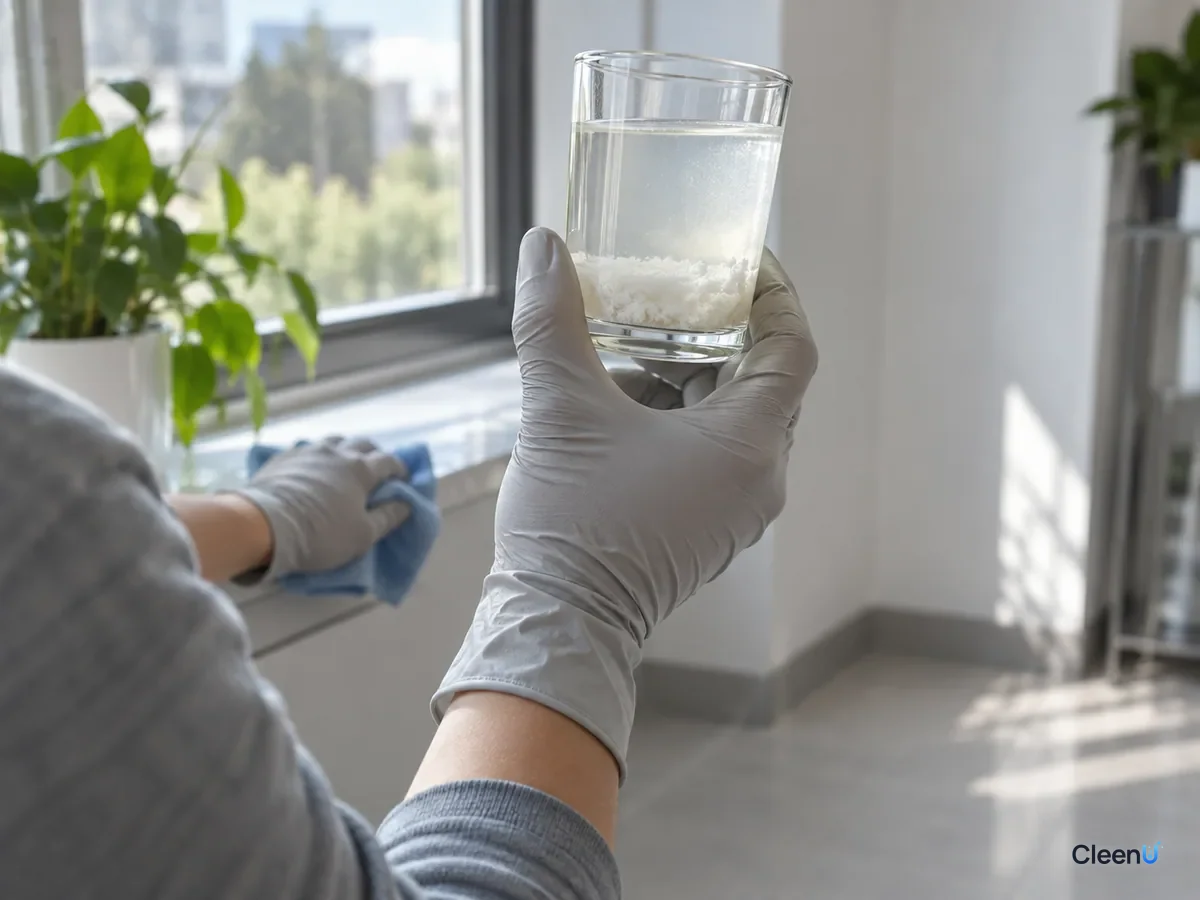
Not sure? Three checks you can do at home
If the solution looks a little off and you can't tell whether it's gone bad, spend five minutes on three simple checks.
Clarity. Pour a little concentrate into a clean, clear glass and hold it to the light. Clear and even with nothing floating or settled means the system is still stable. Haze, stringy bits or a visible layer line means don't use it.
Shake test. Mix a small batch at the label ratio in a clear bottle, say 5 to 10 mL of concentrate in 500 mL of water, cap it, shake hard for about ten seconds and let it sit for a minute. A low-foam product collapses fast and leaves only a thin ring on the surface. If the foam stays piled high and barely drops after a minute, the defoamer may have failed, and it shouldn't go in the machine.
Dry-down test. Spread a little of the diluted mix on a small piece of dark tile or glass and let it air-dry. Feel for tackiness and look for haze or spots in side light. If it leaves noticeably more residue than this bottle used to, the formula has changed.
If any one of the three fails, treat it as a stop. If all three pass and the smell hasn't changed, add it to the machine at the low end of the label and watch the dirty tank foam and the floors for a run or two.
Shelf life, and how long to use it once opened
Unopened, go by the shelf life printed on the bottle. CleenU Robot Vacuum Cleaning Solution, for example, has a 24-month unopened shelf life.
Once it's open, every time you uncap it, air, moisture and microbes get a chance to enter. Use it up within a reasonable time, close the cap tight after each use and store it somewhere cool and dark. At about 10 to 20 mL a fill, a 1-liter concentrate lasts a good while in daily use, so how you store it matters more than how fast you finish it.
How to store it so it doesn't go bad
Keep it somewhere cool, dry and dark, like an indoor cabinet. Not on a patio or windowsill, next to a water heater or radiator, or in the car.
In winter, keep it away from anywhere it could freeze, like an unheated garage or porch.
Close the cap tight after every use. Shake or wipe the measuring cap dry before putting it back so liquid doesn't sit in it.
Never add water to the bottle or pour diluted mix back in. Mix what you need that day and use it up. For problems with water left in the tank, see robot vacuum clean water tank smells musty.
Don't combine different cleaners in one bottle or refill the original bottle with anything else.
Store it out of reach of kids and pets.
How are cleaning solutions designed to keep?
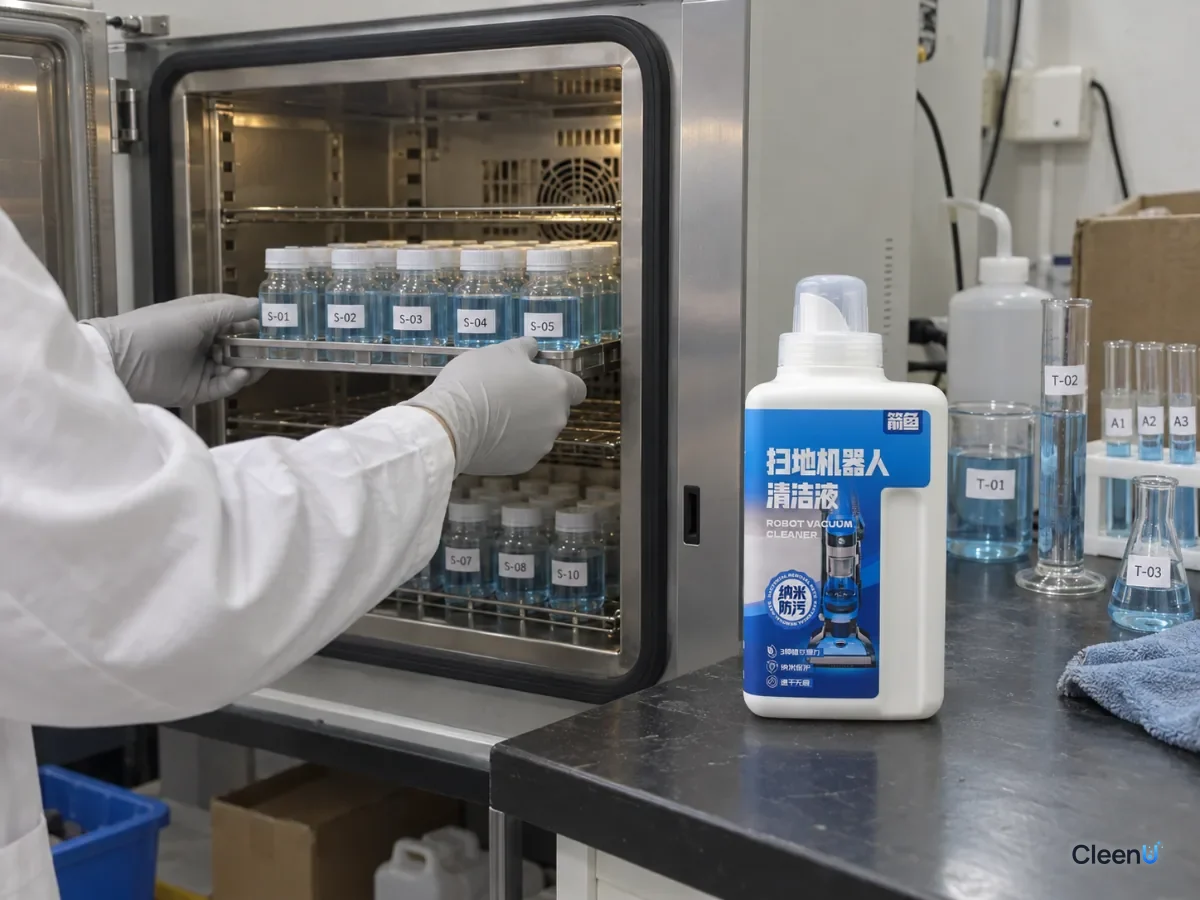
A well-made concentrate is formulated with shipping and home storage in mind: hot warehouses in summer, cold garages in winter, a delivery truck in the sun. A common approach is accelerated stability testing: samples sit at high heat, low cold and through hot-cold cycles for a period, and the team checks appearance, smell, viscosity and pH for changes to predict how the product will hold up at room temperature.
The preservative system is sized for the concentrate. At full strength it's enough to keep microbes in check, but diluted dozens of times it offers much less protection. That's why the concentrate keeps for a long time while diluted mix should be used the same day.
CleenU Robot Vacuum Cleaning Solution is a neutral, low-foam concentrate at pH 6.5 to 7.5 with low-foam nonionic surfactants and a defoamer, no wax, no chlorine and no particles, in a 1-liter bottle with a measuring cap. It dilutes at about 1:50 to 1:100; 10 to 20 mL per fill is usually enough. It works in most robot mops from Roborock, iRobot (Roomba Combo and Braava), Ecovacs Deebot, Dreame and Narwal, and in floor washers such as Tineco. Add it to the clean water tank or the dock's designated detergent compartment as your manual directs. CleenU isn't affiliated with these brands; the names only indicate compatibility.
This article is part of the Robot Vacuum Cleaning Solution & Maintenance Guide, which covers the full maintenance schedule and links to every troubleshooting guide.
Stop using it right away if you see any of these
It separates again right after shaking; there's sediment, crystals or stringy bits at the bottom; it smells sour, foul or musty; or, after adding it to the machine, the dirty tank suddenly foams, water flow drops or the detergent compartment shows an error. Stop using that bottle, empty and rinse the clean tank and detergent compartment, run once with plain water, and contact the seller with the batch number and purchase date.
Common questions about robot mop solution that changed color or separated
My solution separated. Can I shake it and use it?
Better not. If it splits again soon after shaking, the formula has broken down, and in the machine it can foam, leave residue and clog lines.
My solution turned cloudy in summer. Is it bad?
Move it somewhere cool and watch it first. If it clears and smells normal, it was likely a temporary heat effect and you can trial a small dose. If it stays cloudy, stop using it.
Can I use solution past its expiration date?
Not in a robot mop. Expired product may have weaker defoaming and preservation, so even if it looks fine it can foam more and grow bacteria more easily.
My solution turned yellow. Can I still use it?
If the smell changed too, stop. If only the color darkened a little and it smells normal, trial it at the low end of the label and watch the foam and floors.
Can I pour leftover diluted mix back into the bottle?
No. Diluted solution has weaker preservation, and pouring it back thins and contaminates the whole bottle.
My solution froze over the winter. Is it still good?
Let it thaw slowly at room temperature, shake it and check. If it's clear, even and smells normal, keep using it. If it separates or has sediment, stop.
Can I leave mixed solution in the tank for days?
It's better not to; use the diluted mix the same day. Diluted solution sitting in a warm tank can start to smell, grow a film, and clog outlet holes. If the robot will sit unused, empty the clean tank, rinse it, let it dry, and mix fresh next time.
How long will a 1-liter bottle of robot mop solution last?
It depends on how much you add and how often you mop. A 1 L tank takes about 10 to 20 mL per fill, and staying at the low end of the label dose stretches a bottle much further than free-pouring. Keep the cap tight, store it away from heat and sunlight, and stop using it if it changes color, separates, or smells off.
If it's time for a fresh bottle, for a neutral, low-foam robot mop solution with a 24-month unopened shelf life and a measuring cap for easy dosing, see Robot Vacuum Cleaning Solution.
If your robot mop cleaning solution has thinned, changed color, separated or formed sediment, its formula has broken down, so keep it out of the machine. It can foam more, leave more residue, clog outlet holes and dosing lines, and carry bacteria into the tanks. Cloudiness that clears once it cools can be trialed at a small dose; separation, sediment or an off smell means stop. Store solution somewhere cool and dark, close the cap tight, never add water to the bottle, and mix fresh each time.