
How-to
Cleaning Floors When Your Baby Is Crawling
Direct answer
Focus on low residue and low irritation. Dilute floor cleaner per the label, wring the mop until it's barely damp, go over your baby's main play area with plain water afterward, and let the floor dry completely before baby crawls. Lock cleaners up high, and skip bleach, essential oils, and dish soap for routine mopping.
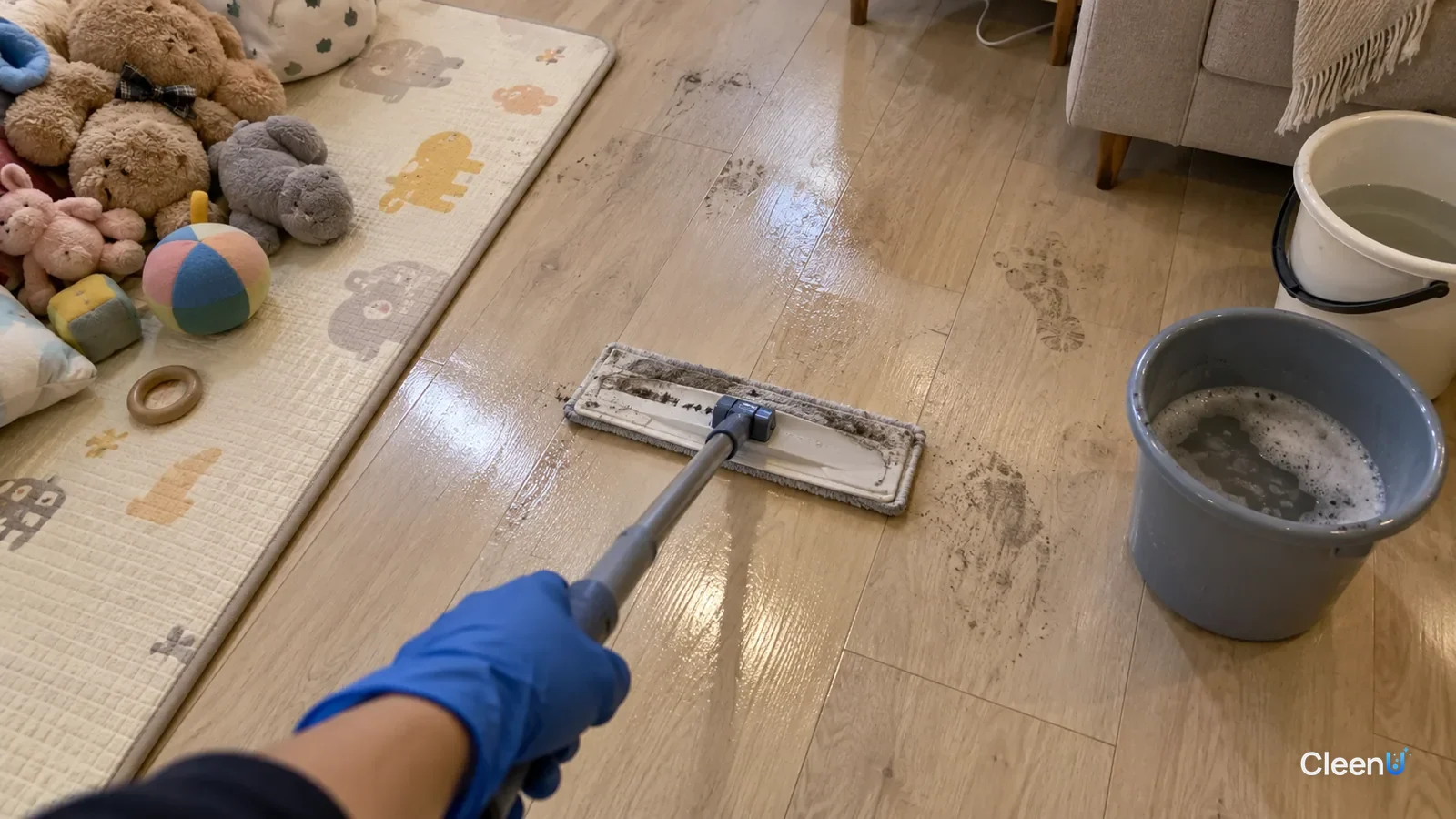
Once your baby starts crawling, the floor becomes their whole world: hands, knees, and cheeks on the ground, and everything they find goes in their mouth. That's when a lot of parents start wondering whether to mop every day, whether to disinfect, and whether cleaners are safe.
For a crawling baby, floor cleaning isn't about being more powerful. It's about being cleaner with less left behind. Here's what to watch for and how to do it.
What to worry about on the floor
Small objects: dropped buttons, coins, small parts, and pet food are choking hazards. These matter more than germs.
Dust, hair, and pet fur: babies crawling with their faces near the floor breathe it in, get it on them, and put it in their mouths.
Food and drinks: once solids start, rice, crumbs, and juice on the floor get sticky, attract bugs, and grow bacteria.
Dirt and bacteria tracked in on shoes: the entryway is the dirtiest part of the floor.
Cleaner residue: babies touch the floor and then their mouths, and their skin is more sensitive. The less cleaner left behind, the better.
So the order for a crawling baby is: clear objects and dust first, then damp-mop, then keep residue to a minimum.
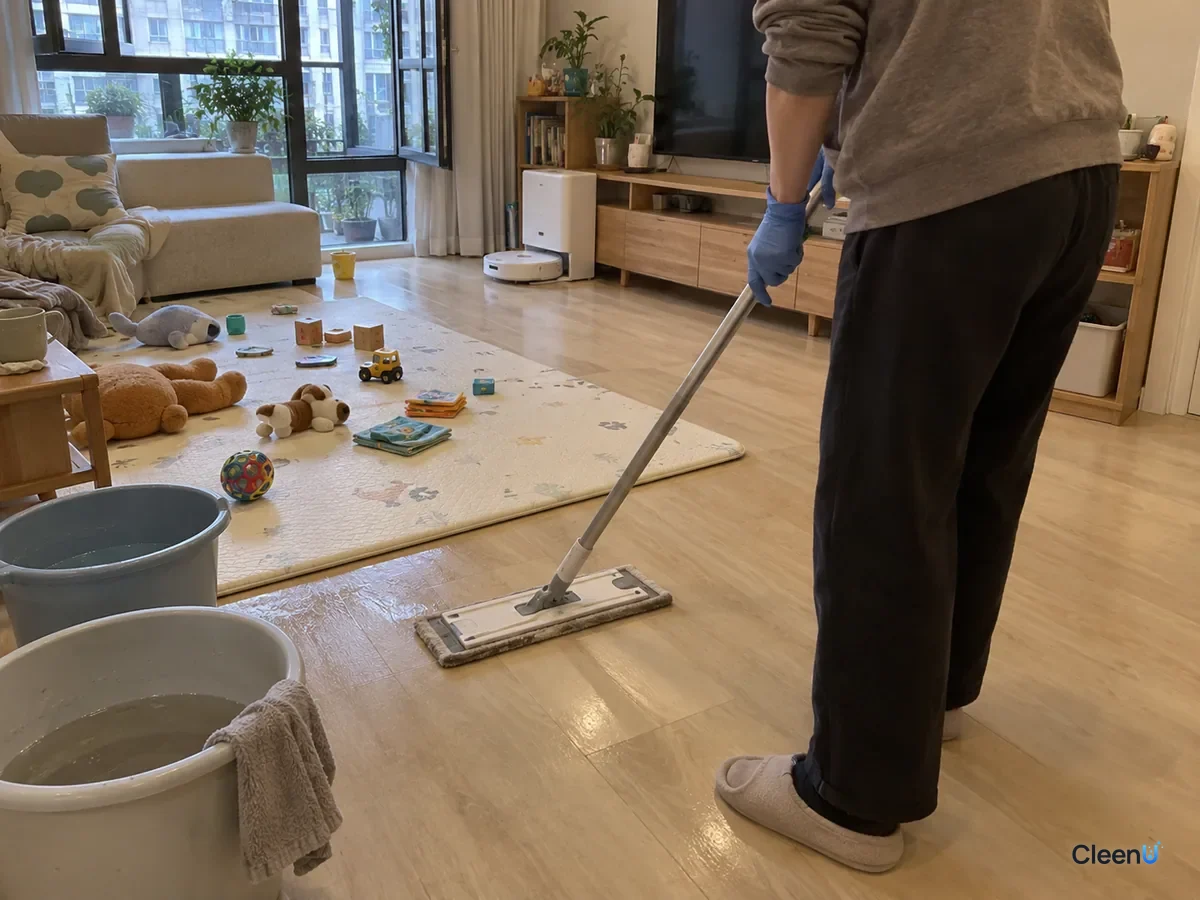
Why low residue matters more than heavy disinfecting
On an ordinary home floor, mopping correctly with a cleaner removes most dirt and the microbes stuck to it. Daily disinfectant isn't necessary for routine mopping.
Bleach has a strong, irritating smell, and residue on the floor ends up on little hands and skin; get the dilution wrong and it's hard on airways too. Some components of essential oils can irritate infants. Dish soap foams and leaves residue, so floors turn tacky and babies put sticky hands in their mouths.
When you really need to disinfect, for example when someone has been vomiting, has diarrhea, or is contagious, follow the disinfectant's label for dilution and contact time, rinse-mop with plain water afterward, and wait until the floor is dry and the smell is gone before your baby comes back.
Using floor cleaner with less residue
Take CleenU Floor Cleaner as an example. It's a pH-neutral, no-rinse floor cleaner, pH 7.0 to 8.5 as supplied, made with low-foam nonionic surfactants and a small amount of fast-drying solvent, with a low-solids design. Low foam and low solids mean very little non-volatile material stays on the floor after mopping, and the fast-drying solvent shortens how long you have to wait. Spray and mop as is, or mix 1:20 with water for larger areas.
It's designed to be no-rinse at the label rate. In a home with a crawling baby, we suggest one extra step: after mopping, go over your baby's main play area (the middle of the living room, around the play mat, beside the crib) once more with clean water and a wrung-out pad. It takes a few extra minutes and brings residue down even further.
It's made for sealed hard floors like tile, vinyl, laminate, and sealed hardwood. It isn't for unsealed or waxed wood or carpet, and it isn't a robot mop solution; robot mops need a low-foam robot mop solution.
Six steps for the play area
Clean the crawling area daily in six steps
Clean while baby is elsewhere
Mop during a nap, or while someone keeps your baby in another room, so they aren't crawling on a wet floor or near cleaner.
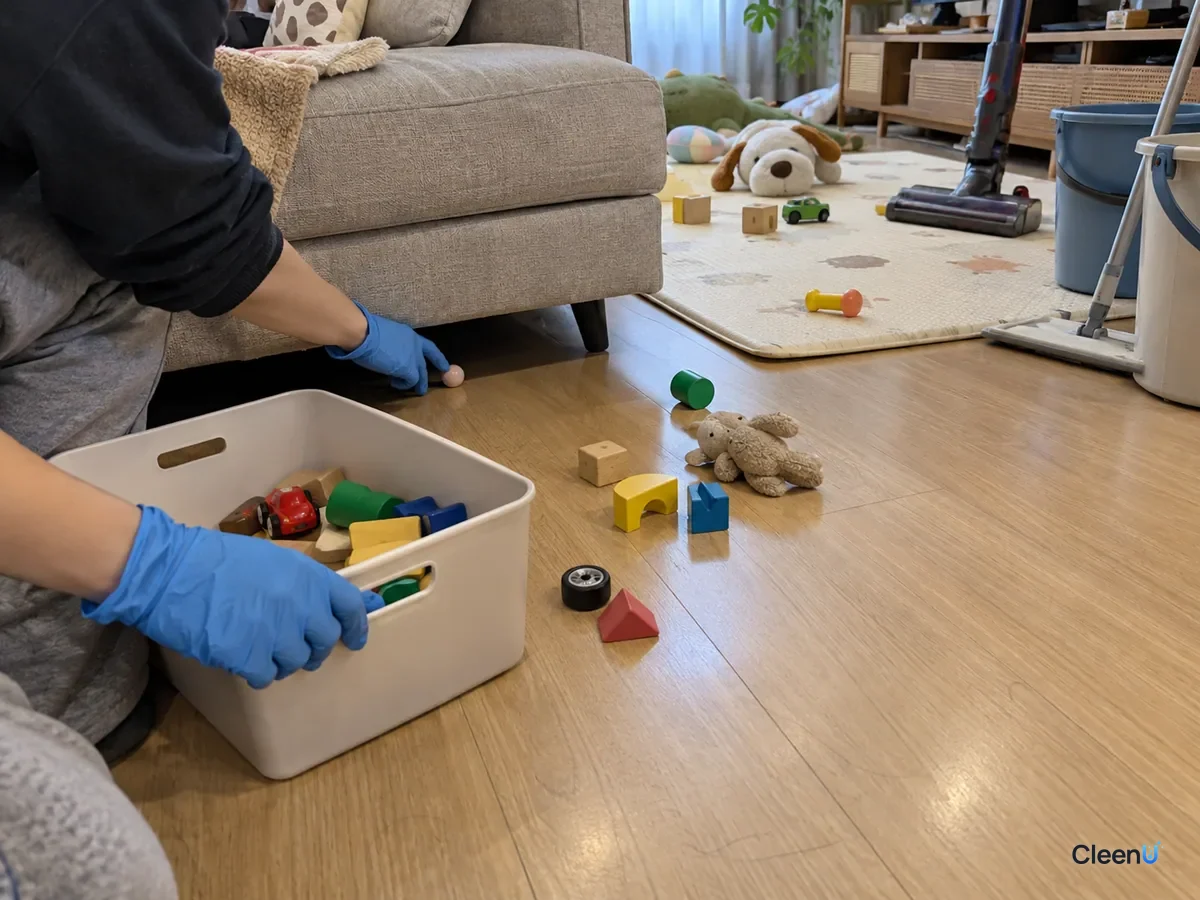
Pick up small objects, then vacuum
Put away small items and toys and check under the sofa and along cabinets for dropped parts. Then vacuum or dust-mop up dust, hair, and crumbs.
Caution:Anything small enough to fit in your baby's mouth needs to go. This step matters more than mopping.
Measure the cleaner
Use a measuring cup and mix at 1:20, about 6 ounces per gallon of water. Less is better than more; extra cleaner doesn't clean better, it just leaves more behind.
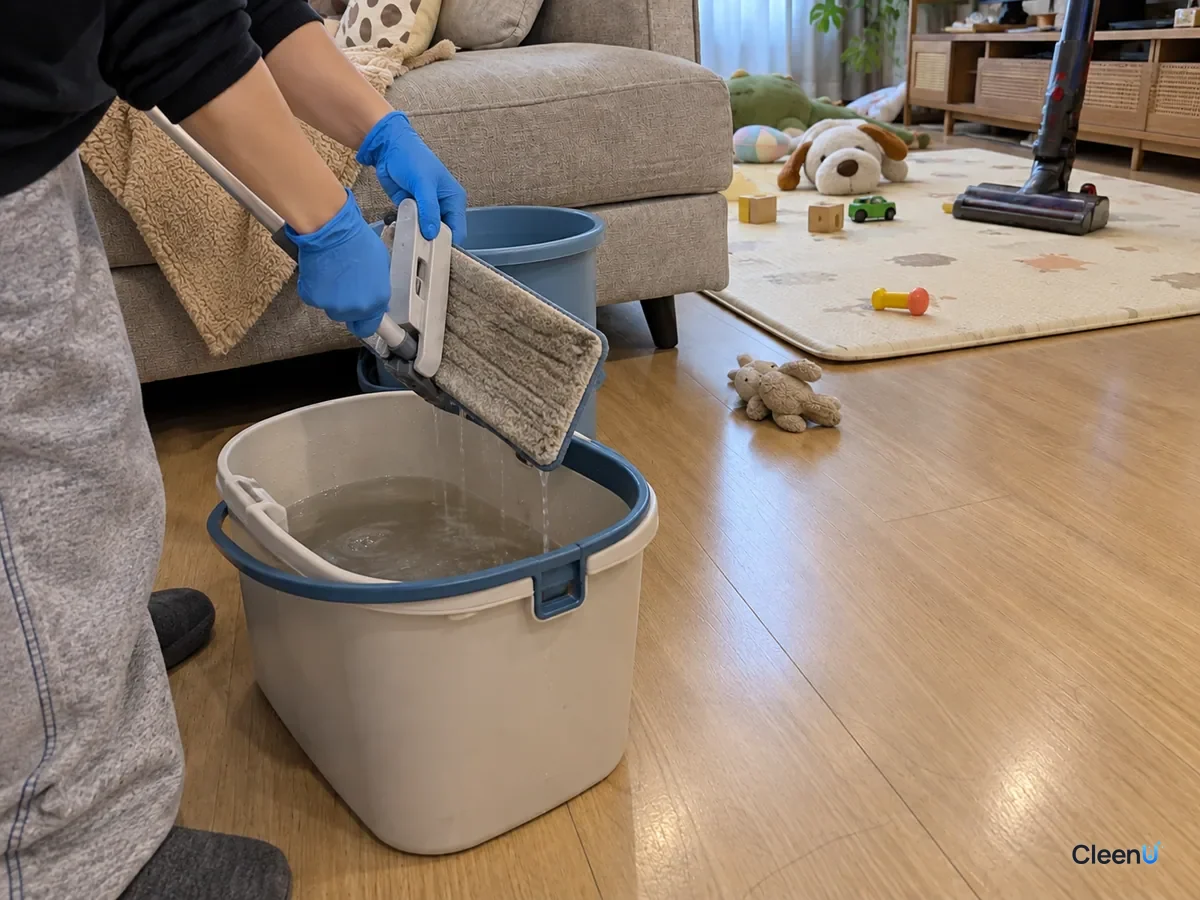
Wring the mop until it's barely damp
Wring the pad until it doesn't drip and mop in one direction. Wipe up food and juice with a damp wipe first, then mop the area.
Rinse the play area with plain water
Switch to a bucket of clean water and a fresh pad and go over your baby's main crawling area once more.
Ventilate and let it dry fully
Open a window and let the floor dry completely before your baby crawls on it again; it shouldn't feel damp at all. That usually takes 10 to 30 minutes.
Three kinds of baby mess, handled differently
Food, milk, and drool are the most common messes on a crawler's floor, and each one wants a slightly different approach.
Purees and baby cereal are mostly starch and sugar. They're stickiest when half dry and turn into hard flakes when fully dry. Pick up the solid part with a damp wipe first, then mop. Otherwise the mop just spreads it into a wider film.
Spilled milk carries protein and milk fat, and it yellows and smells sour as it dries. Diluted floor cleaner at room temperature wets and emulsifies it well. Press a damp cloth on the spot for a second or two before wiping instead of scrubbing back and forth. Skip hot water, which can set the protein into the floor's texture.
Drool and handprints are thin, but they trap dust and show up as hazy patches on tile and vinyl plank. A wrung-out mop with the normal dilution handles them. There's no need to make the solution stronger.
How to check that residue is low enough
Once the floor is fully dry, run two quick checks. Wipe a short stretch of the crawling area with a clean, damp white cloth and look for a gray or tacky trace. Then walk across it barefoot and notice whether your feet feel sticky or leave visible prints.
If both checks come up clean, your dilution and mop moisture are right. If the floor feels tacky, you probably used too much cleaner or a mop that was too wet. Use less next time, wring the mop harder, and follow with the plain-water pass.
Cleaning play mats and rugs
Foam play mats (EVA or XPE): wipe with a cloth dampened with diluted cleaner, then with a cloth and plain water, and let them dry. Interlocking mats trap crumbs and spills in the seams, so take them apart weekly and clean the edges.
Rugs: avoid thick shag rugs in the crawling area; they hold dust and dust mites. Vacuum low-pile rugs often and wash them per the care label.
Toys: wash toys that go in the mouth with warm water and mild detergent per the toy's instructions, then rinse and dry.
Storing cleaning products
Keep every cleaning concentrate in a high cabinet out of reach, ideally with a childproof lock. Crawlers soon pull up and open cabinet doors, so the lower cabinets and under the sink stop being safe.
Close the cap as soon as you're done, and never pour cleaner into a drink bottle or cup.
Dump mop water as soon as you finish, and never leave a bucket unattended on the floor. A baby can pull up on it or even fall in.
How often to clean
Play area: vacuum daily and damp-mop daily or every other day.
Whole house: two or three times a week.
Entryway: sweep daily, and set up a shoes-off area to cut down on tracked-in dirt.
Once solids start: clean up food and spills right after each meal.
If you also have pets, clean the crawling area even more often; for pet-home tips, see Robot mopping in a home with cats and dogs. For sticky or slick floors, see Sticky floor after mopping.
Stop if you see this
If your baby swallows or licks cleaner concentrate, call Poison Control (1-800-222-1222 in the U.S.) or your doctor right away and have the product label handy; don't induce vomiting. If your baby's skin turns red or breaks out after you mop, stop using that product and mop the floor several times with plain water. Keep your baby off wet floors, and never leave a bucket of water unattended.
Cleaning floors with a crawling baby: common questions
What should I mop with when I have a baby?
A low-foam, low-residue floor cleaner with a mild scent, diluted per the label, plus a plain-water pass over the main crawling area.
Do floors need to be disinfected every day for a crawling baby?
No. Regular mopping with a cleaner removes most dirt. Use a disinfectant per its label only in special situations like illness, and rinse-mop afterward.
Can I mop with bleach where my baby crawls?
Not as a routine. Bleach is irritating and residue reaches little hands and skin. If you must disinfect, dilute per the label, rinse-mop with water, and wait until it's dry and the smell is gone.
How long after mopping can my baby crawl?
Once the floor is completely dry, usually 10 to 30 minutes with a window open.
How often should I clean a foam play mat?
Wipe the surface daily, take it apart and clean the seams weekly, and wipe up milk or food right away.
Can I add essential oils to mop water to make the house smell nice?
We don't recommend it. Some essential oil components can irritate infants, and fragrance makes it harder to tell whether the floor is actually clean.
For a low-foam, low-solids floor cleaner that leaves little residue and dries fast on tile and wood floors in homes with babies, take a look at our Floor Cleaner.
Once your baby crawls, floor cleaning is about less residue and less irritation, not more power. Pick up small objects and vacuum first, then mop with a low-foam, low-residue floor cleaner diluted per the label and a barely damp pad. Go over the main play area with plain water, open a window, and let the floor dry completely before your baby crawls. Skip bleach, essential oils, and dish soap for routine mopping, and if you do need to disinfect, follow the label and rinse. Keep cleaners locked up high, never leave a bucket unattended, and clean play mat seams weekly.