

Product and application illustrations. Follow the product label and written use guidance.
CleenU product solution
Carpet Stain Remover
Blot, spray, blot · No water rings · Private label
Coffee, juice, sauce, or muddy footprints on the rug? Blot up the liquid, spray the stain remover, wait 3–5 minutes, and blot from the outside in with a white cloth until the stain moves onto it. Vacuum once dry—no rings, fluffy pile. Private label from 500 bottles.
- Carpet pile acts like thousands of tiny straws: spilled liquid wicks down the fibers into the backing. Rub hard and you push it deeper and fray the fibers, and as the surface dries the stain wicks back up into a ring. This cleaner wets and loosens the stain first; then you press a clean white cloth from the outside in so the stain transfers to the cloth, moving to a fresh section each time until no more color comes up.
- For coffee, tea, and juice, blot dry first, then spray and blot. For sauce and grease, scrape off solids with a spoon, then spray and give it longer to emulsify the oil. For muddy footprints, let the mud dry fully and vacuum out the grit before spraying. The low-residue formula dries without tackiness, so treated spots don’t attract more dirt.
- MOQ
- 500 bottles
- Free samples
- 3–5 days
- Bulk lead time
- Scheduled with the order

Product value
What does Carpet Cleaner clean?
Carpet Cleaner treats spots and traffic soil on carpets and rugs, including coffee, juice, sauce, muddy footprints, and grease.
View product detailsProduct summary
- Product type
- Mildly alkaline carpet spot-cleaning spray
- Intended use
- Drink spills, sauce and grease spots, muddy footprints, and traffic soil on carpets and rugs
- Formula
- Low-foam nonionic and anionic surfactants with mild alkaline builders and an anti-resoiling agent, pH 7.5–9.5; no bleach; ready to use.
- For
- Cleaning product brands, home-furnishing and car-care brands, supermarket and home retail chains, ecommerce sellers
Before & after
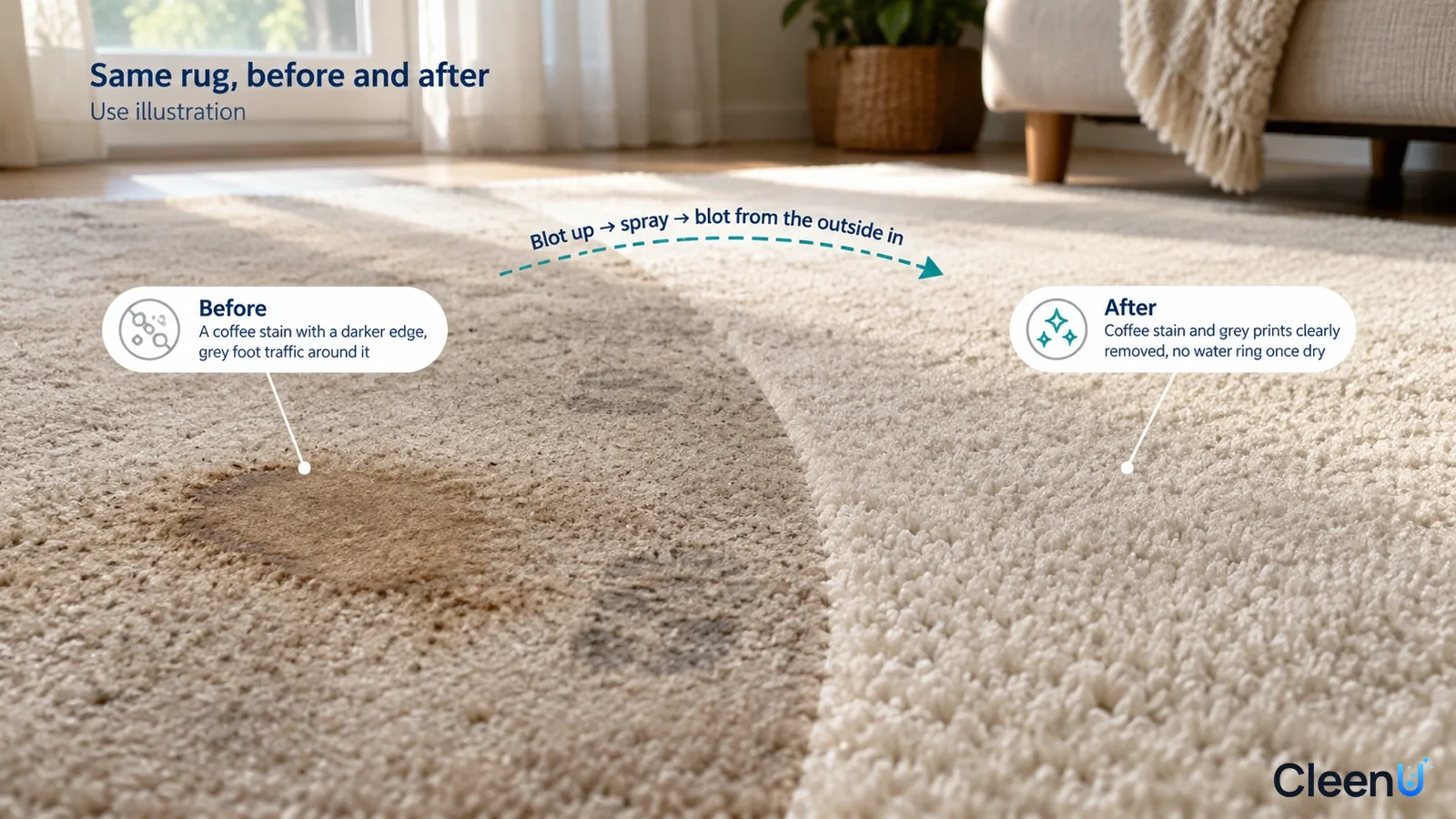
Before and after (use illustration)
Before: a coffee stain in the middle of a light rug, darker at the edges, with grey traffic marks around it. After: blotted, sprayed, blotted again, dried, and vacuumed, the stain and traffic marks are largely gone with no ring and the pile is fluffy.
- Before: a coffee stain with a darker edge and grey foot traffic around it
- After: the stain and traffic marks are clearly lifted
- No ring once dry, and the pile fluffs up after vacuuming

How it works
How a Stain Comes Out of Carpet
Carpet stains are water-soluble (sugars, dyes), oily (sauce, grease), or particulate (mud and grit). Surfactants lower surface tension so the cleaner wets fibers quickly; mild alkalinity helps release protein and sugar residue and emulsifies oil. With the stain suspended in the solution, a clean white cloth wicks up the liquid and the stain together. The low-residue formula leaves no tacky film, so the spot doesn’t attract dirt or wick back.
- Wet fibers
- Loosen stain
- Emulsify oil
- Blot to transfer
- Dry and vacuum
Usage guidance
Use guidance
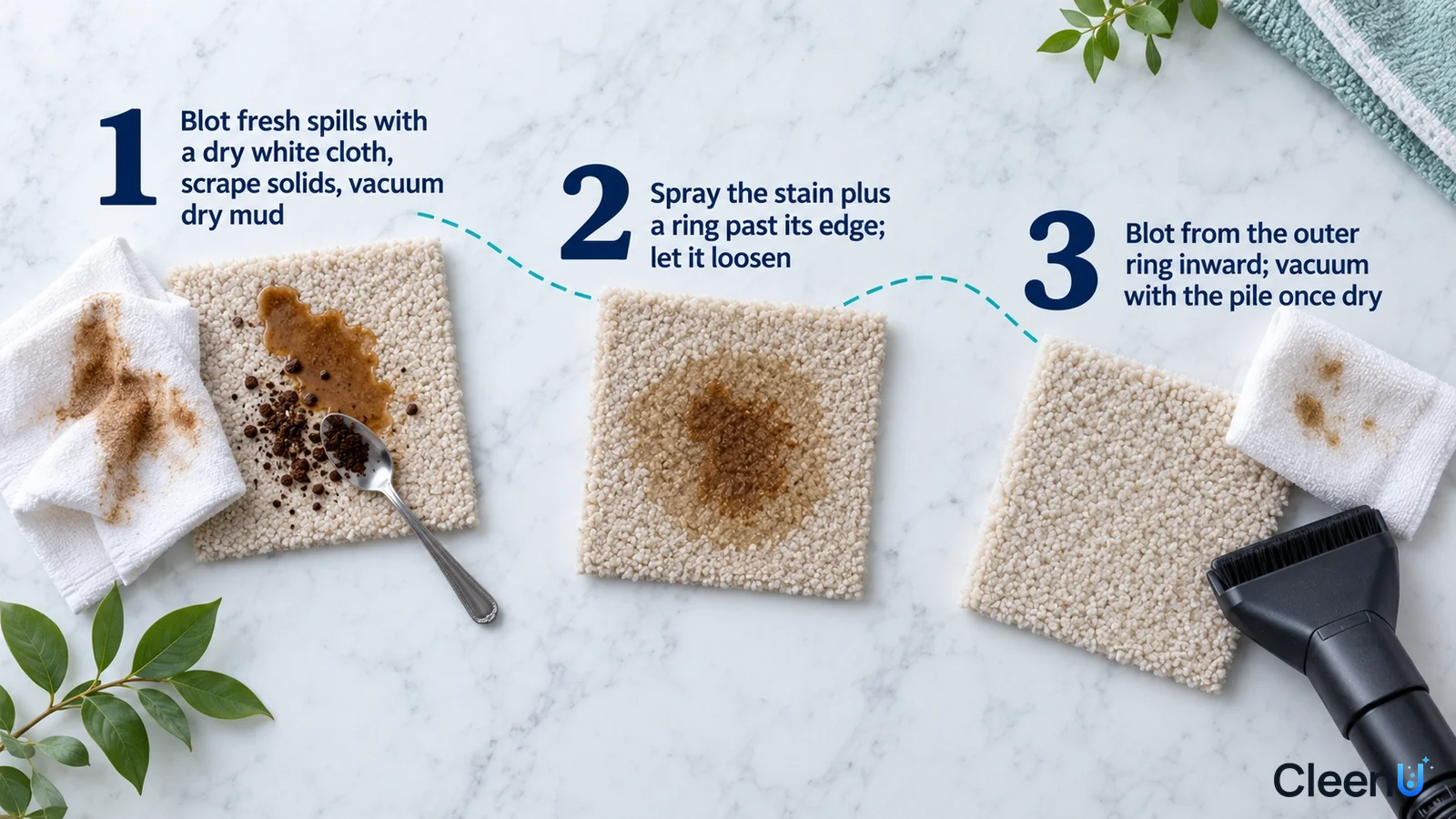
- Blot fresh spills with a dry white cloth, scrape off solids with a spoon, and let mud dry and vacuum it first.
- Spray the stain and a little beyond its edge, and wait 3 to 5 minutes.
- Blot from the outside toward the center with a clean white cloth, switching sections as color transfers, until nothing more comes up. Vacuum with the pile once dry.

Before you use it
Important notes
- Not for: Silk rugs, and pure wool or handmade rugs that haven’t been spot-tested
- Not for: Oversaturating the backing
- Not for: Rubbing
- Test first for special materials, special equipment, or sensitive scenarios.
- Avoid mixing with incompatible cleaners.
Product comparison
How to choose a Carpet Cleaner
For spots and traffic marks on carpets and rugs, use the Carpet Cleaner. Whole-carpet deep cleaning needs an extractor and extraction solution. For sofa and car seat fabric, use the Carpet & Upholstery Cleaner or Fabric Upholstery Cleaner.
View product comparison
| Decision point | Carpet Stain Remover | Dish soap and water |
|---|---|---|
| Residue | Low; dries non-tacky | High foam and residue; resoils |
| Oily stains | Emulsified and blotted out | Partly effective |
| Feel when dry | Fluffy pile | Can stiffen |
| Method | Spray, wait, blot | Needs repeated rinsing |
Where Carpet Stain Remover stands out
Stains Travel Down, So Blot, Never Rub
Carpet pile acts like thousands of tiny straws: spilled liquid wicks down the fibers into the backing. Rub hard and you push it deeper and fray the fibers, and as the surface dries the stain wicks back up into a ring. This cleaner wets and loosens the stain first; then you press a clean white cloth from the outside in so the stain transfers to the cloth, moving to a fresh section each time until no more color comes up.
Different Stains, Different Order
For coffee, tea, and juice, blot dry first, then spray and blot. For sauce and grease, scrape off solids with a spoon, then spray and give it longer to emulsify the oil. For muddy footprints, let the mud dry fully and vacuum out the grit before spraying. The low-residue formula dries without tackiness, so treated spots don’t attract more dirt.
Who it's for, where it's used, and when not to use it
For
End-use scenarios
When not to use it
Product Specifications and Custom Options
Key product details and custom options for your project.
Product specifications
Product type, cleaning scope, and format.
| Product type | Mildly alkaline carpet spot-cleaning spray |
| Surfaces | Carpets and area rugs (synthetic and wool-blend fibers) |
| Use scenarios | Living-room spills; Entry and hallway traffic marks; Rugs under the dining table |
| Target soils | Drink spills, sauce and grease spots, muddy footprints, and traffic soil on carpets and rugs |
| Directions | Ready to use, no dilution; 3–5 min dwell, then blot |
| Not for | Silk rugs, and pure wool or handmade rugs that haven’t been spot-tested; Oversaturating the backing; Rubbing |
| Size and packaging | 500 mL trigger spray bottle |
| pH | pH 7.5–9.5 at 25°C |
| Scent | Light linen scent |
| Shelf life and storage | 24 months unopened; keep tightly closed in a cool, dry, well-ventilated place. Protect from heat, direct sunlight, and freezing |
B2B custom options
Private label, packaging, MOQ, samples, and delivery.
| OEM/ODM and private label | From product direction and sample review to packaging, production, and delivery for your Carpet Cleaner project. |
| Packaging and labels | Mist trigger / foam trigger, fill size, labels, and retail sets can be customized |
| Case pack | 12 × 500 mL per case |
| MOQ | 500 bottles |
| Sample time | Free sample: 3–5 days |
| Bulk lead time | Scheduled with the order after packaging and label approval |
| Documents | SDS/MSDS, TDS, and batch COA provided per project on inquiry |
OEM/ODM project process
Move from product direction and sample review to packaging, production, and delivery for Carpet Stain Remover.
Define positioning
Decide spot-cleaning, routine care, or machine cleaning; spotting and extraction are different products.
Free sample
A free sample is usually ready in 3–5 days for project review.
Packaging and labels
Set fill size, trigger type, label language, the warnings your market requires, and spot-test, blot-don’t-rub, and do-not-soak instructions.
Bulk delivery
Standard MOQ is 500 bottles; bulk orders are scheduled after packaging and labels are approved.
Why choose CleenU for Carpet Stain Remover?
From product positioning and samples to packaging and repeat supply, CleenU supports OEM/ODM projects built around Carpet Stain Remover.
Stain removal balanced with low residue
The top complaints are wicking and stiffness. We balance stain removal, foam, and residue and can add an anti-resoiling agent.
Spray or foam
Mist covers evenly; foam sits on the pile and is less likely to reach the backing. We make both.
Sample reviews with clear criteria
Review samples on your carpet swatches with coffee, sauce, and mud stains against clear points: stain removal, blotting passes, wick-back after drying, and fiber feel.
Linen fresh or unscented
Home textiles suit light scents; linen, cotton, and unscented are most common.
Labels and documents
We supply bilingual labels, SDS/MSDS, TDS, and batch COAs, with spot-test, blot-don’t-rub, and do-not-soak instructions on the label, and can arrange third-party testing for your market.
Consistent supply and reorders
Each batch is retained and ships with a COA, so reorders match in color, scent, and feel.
Packaging and labeling options
Plan packaging format, label language, and shelf presentation around Carpet Stain Remover and your target channel.
Show packaging and label options
Packaging options
Core size: 500 mL trigger spray bottle. Also available: 1 L household refill, channel case packs, and ecommerce bundles with white microfiber cloths and a carpet brush. Mist trigger or foam trigger options, with labels and cartons made to your brand.
Supporting Documents and Materials
Purchasers usually confirm whether the materials are complete before formal cooperation. Preparing documents in advance helps with quoting, sampling, and channel review.
Show available documents
Project documents
When you inquire, we provide SDS/MSDS, a TDS, batch COAs, label directions, and packaging files for your project.
Related products, solutions, and articles
Explore related cleaning products, application guidance, and OEM/ODM resources for Carpet Stain Remover.
Frequently asked questions (FAQ)
Find practical answers about Carpet Stain Remover, private label, samples, MOQ, documents, and delivery.
How to use
Coffee on the carpet: what do I do first?
Blot with a dry white cloth or paper towel to soak up as much as you can before it sinks in. Don’t wipe. Once the cloth comes up dry, spray the cleaner.
Why does a ring reappear after the carpet dries?
That’s wicking: stain and residue deep in the pile rise to the tips as moisture evaporates. It comes from oversaturating, not blotting enough, or a high-residue cleaner. Spray lightly, blot thoroughly, and use a low-residue product.
How long should it sit?
3 to 5 minutes. Too short and the stain hasn’t loosened; too long and it can reach the backing. Give oily stains a little longer, but don’t let it dry.
What safety tips should I follow at home?
Test a hidden spot first. Spray lightly on the stain or the cloth instead of soaking the carpet, keep the room ventilated while it dries, keep kids and pets off the spot until it's dry, and never mix it with bleach or other cleaners.
How do I get an oil stain out of carpet?
Scrape off any oil or sauce with a spoon, then press thick paper towels on it to soak up the excess. Spray the stain, let it sit 3–5 minutes, and blot from the outside in with a clean white cloth; don't scrub. Grease usually takes two or three rounds. For motor oil or crayon, use a dedicated degreaser and test a hidden spot first.
Surfaces and common questions
Can I use it on wool rugs?
Wool blends, yes, after a colorfastness test in a corner. Pure wool, silk, and handmade rugs are more sensitive to alkalinity and moisture; test first or use a professional.
Will it get out red wine?
Fresh red wine responds well if you blot then treat. Old, set-in dark dye stains may only lighten rather than disappear.
Can I use it in a carpet extractor?
No, it’s a spot-cleaning spray. For whole-carpet deep cleaning, use a low-foam extraction solution.
The cloth isn’t picking up color anymore, but the stain is still there.
That round has lifted all it can. Let the carpet dry, then spray, wait, and blot again—old stains often take two or three rounds. If it’s faded but won’t change further, the dye has set into the fibers; stop scrubbing.
Can it handle pet urine?
It takes care of the visible stain: blot the urine up with thick paper towels first, then spray and blot. Odor that has soaked into the backing needs a pet odor eliminator too.
How soon can I walk on it?
Once you’ve blotted it to barely damp, it usually dries in 2–4 hours with ventilation. Stay off it until then, or dust will stick to the damp pile and make a new mark.
Can I use dish soap, or vinegar and baking soda, instead?
Better not. Dish soap foams heavily and is hard to rinse out of carpet fibers, and the residue attracts dirt, so the spot gets dirty faster. Vinegar and baking soda mostly neutralize each other and do little on stains. A carpet stain remover is low-foam and blots out with little residue, so the spot is less likely to come back.
Buying and private label
What should we decide first for a private-label carpet cleaner?
Three things: spot-cleaning spray or whole-carpet cleaning, whether to add a foam version (foam sits on top instead of sinking), and linen fresh or unscented. The core promise in carpet spotting is no ring after drying.
What are the sample, MOQ, and lead-time terms?
Free samples are usually ready in 3–5 days. Standard MOQ is 500 bottles, and bulk orders are scheduled after packaging and labels are approved.
What can be customized?
All of it: formula direction, scent, fill size (500 mL spray, 1 L refill, and more), mist or foam trigger, label design and language, and ecommerce bundles with white microfiber cloths and a carpet brush.
Can we test samples first?
Yes, we ship samples first. Test them on carpet swatches with coffee, sauce, and mud stains like the ones your customers handle, and record stain removal, blotting passes, wick-back after drying, and fiber feel. That tells you more than a before-and-after photo.
Which documents can you provide?
We provide SDS/MSDS, a TDS, and batch COAs, plus bilingual label content for your target market. They aren’t posted publicly; we send them per project on inquiry.
How is private-label pricing quoted?
Pricing is tiered by packaging, trigger or cap, label, and order quantity, starting at the 500-bottle MOQ. Send your target quantity, fill size, and packaging needs, and we’ll quote unit prices by volume tier with sample and lead-time details.
Launching your own Carpet Cleaner?
Send us your market, main cleaning scenarios, spray or foam, packaging ideas, and estimated volume. We will build your carpet cleaner OEM plan from the use case up.