
How-to
Deep Cleaning a Bathroom: A Step-by-Step Checklist
Direct answer
Work top to bottom and dry to wet. Clear the room and dust first, then apply products that need dwell time, like descaler and toilet gel, and clean other areas while they work. Then scrub the shower, sink, and toilet, and finish with the floor, a rinse, drying, and ventilation. Keep acidic and chlorine products apart.
The classic bathroom deep-clean problem is redoing work: the mirror you just cleaned gets splashed, the floor you just mopped gets dusted from above, the tile you just scrubbed picks up toilet cleaner. Worse, using different cleaners in random order can create harmful gases.
Do it in the right order and a deep clean takes about half the effort and is safer.
Why top to bottom and dry to wet
Top to bottom: dust, water, and cleaner all fall. Clean the ceiling, exhaust fan, mirror, and high shelves first, then counters, and the floor last, so everything that drops gets picked up at the end.
Dry to wet: do the dry work, like dusting and decluttering, before cleaner and water. Dry dust turns to mud when it gets wet, so going wet first makes it harder.
Products with dwell time first: descalers, mold removers, and toilet gels need several minutes or more. Apply them first and clean other areas while you wait.
Keeping cleaners apart
A bathroom deep clean usually involves several product types with different pH.
Mildly acidic bathroom cleaner: soap scum and light scale on shower tile, glass, sinks, and tub edges.
Acidic toilet gel and descaler: toilet rings and heavy scale on faucets and showerheads.
Alkaline oxygen grout cleaner: soap scum and organic stains in grout.
Chlorine mold remover: mold on caulk and in corners.
Never use acidic and chlorine products at the same time or back to back; they produce toxic chlorine gas. Acidic and alkaline products used together neutralize each other. So within one deep clean, separate them by area and time, and rinse and ventilate between product types.
If you need to treat mold, schedule it for a different day, or at least after all acidic products are rinsed away and the room has aired out for half an hour.
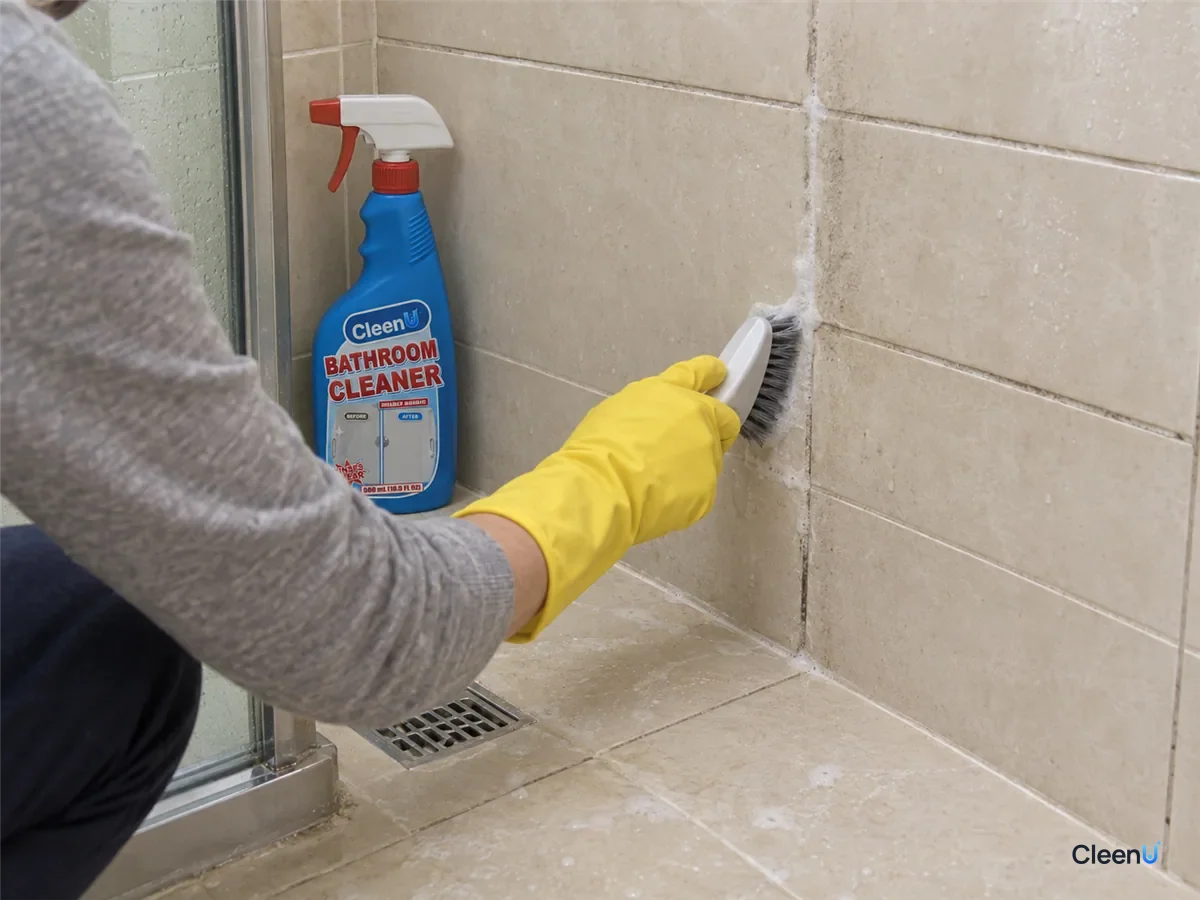
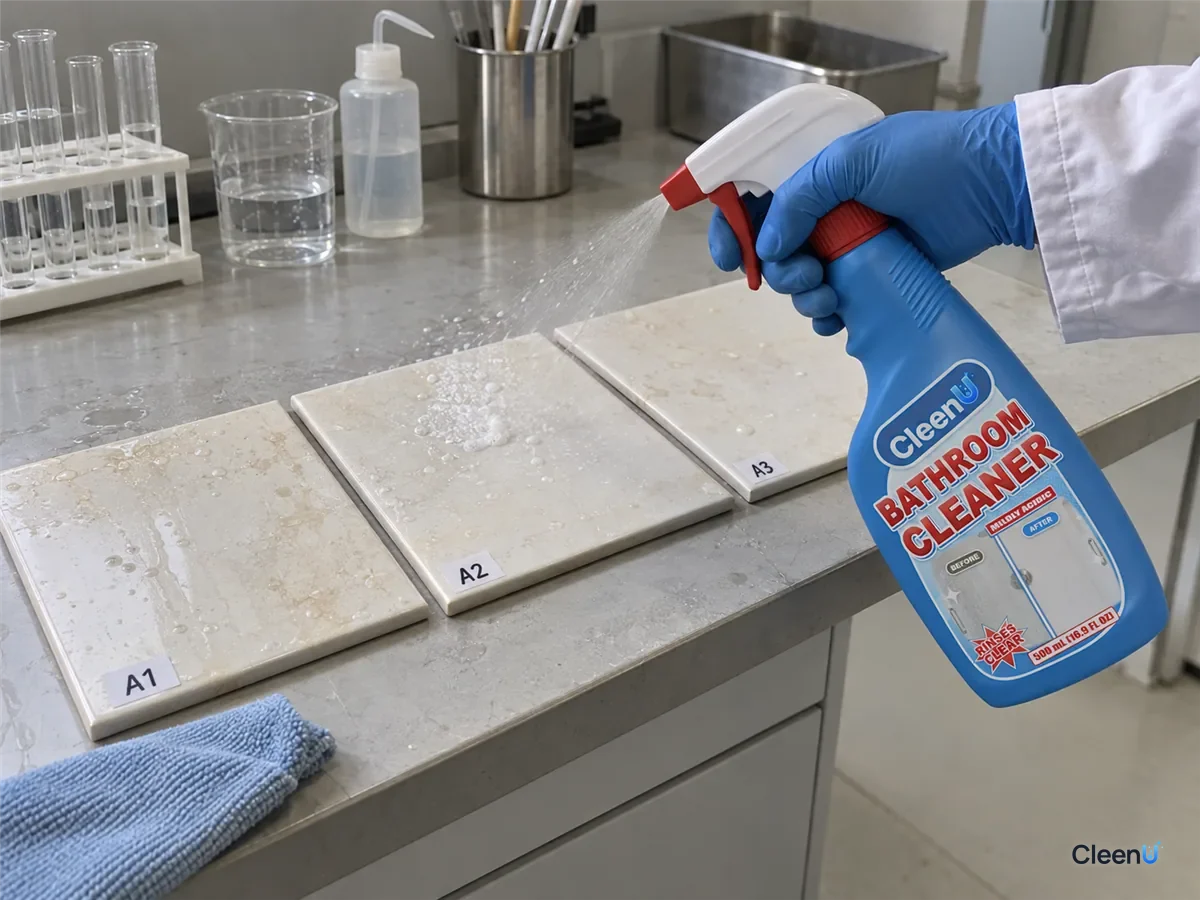
Take CleenU Bathroom Cleaner as an example. It's a mildly acidic bathroom spray, pH 2.5 to 4.0 as supplied, made with organic acids such as citric acid and nonionic surfactants. It's ready to use: let it sit 2 to 5 minutes, then scrub and rinse. It's gentle on glazed tile, glass, and chrome and handles the biggest job in the room, soap scum and light scale. It isn't for marble or other natural stone, must never be used with chlorine bleach, should be tested first on PVD or painted fixtures, and shouldn't sit on aluminum.
Plan for about an hour and a half to two hours for a standard bathroom. It sounds like a lot, but most of that time is products quietly working while you do something else. Following the order means you only clean each surface once.
Eight steps for a bathroom deep clean
Deep clean a bathroom in eight steps
Clear out, ventilate, and gear up
Take out toiletries, towels, bath mats, and the trash can. Run the fan and open a window, and put on gloves and a mask. Decide which product types you'll use and keep acidic and chlorine products apart.
Dry-dust from top to bottom
With a dry cloth or duster, clean ceiling corners, the exhaust fan cover, light fixtures, the top of the medicine cabinet, and high shelves, letting dust fall to the floor.
Apply products that need dwell time
Run a bead of toilet gel around the rim. Wrap faucets and showerheads with heavy scale in descaler-soaked paper towels, or remove and soak them. Spray bathroom cleaner on shower tile and glass. Let each sit per its label.
Caution:Use only acidic or mildly acidic products in this step. No chlorine mold remover at the same time.
Clean the mirror and counters while you wait
Spray mirror cleaner on a cloth and wipe the mirror from the center out, drying the edges. Wipe the vanity top, cabinet doors, and switch plates with a damp cloth. Use only a neutral stone cleaner on marble.
Scrub the shower and tub
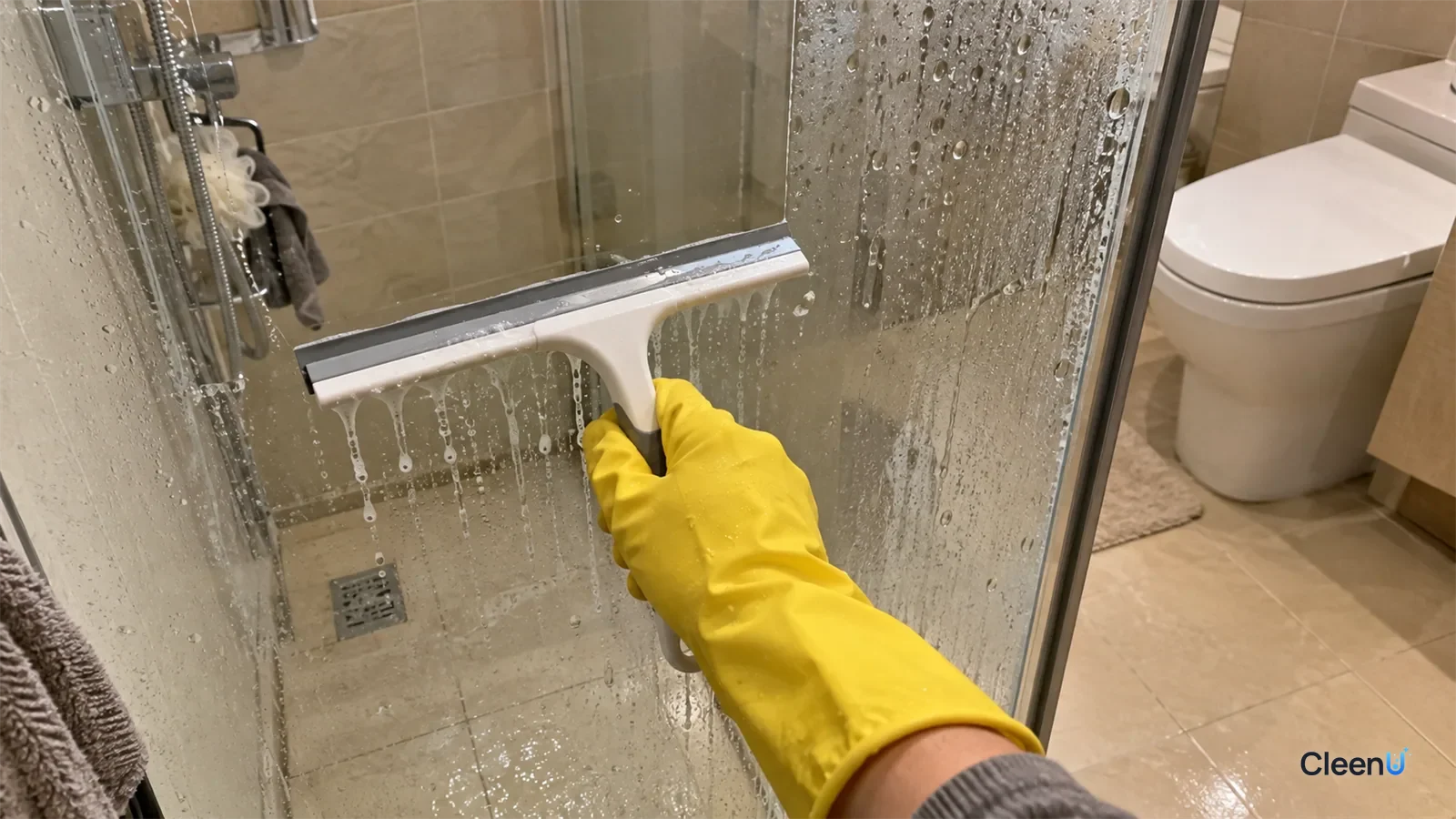
When the dwell time is up, scrub shower tile, glass, and the tub with a sponge or soft brush. Remove the wraps from faucets and showerheads and brush the outlets. Rinse top to bottom with the handheld shower and squeegee the glass.
Scrub the toilet and treat the grout
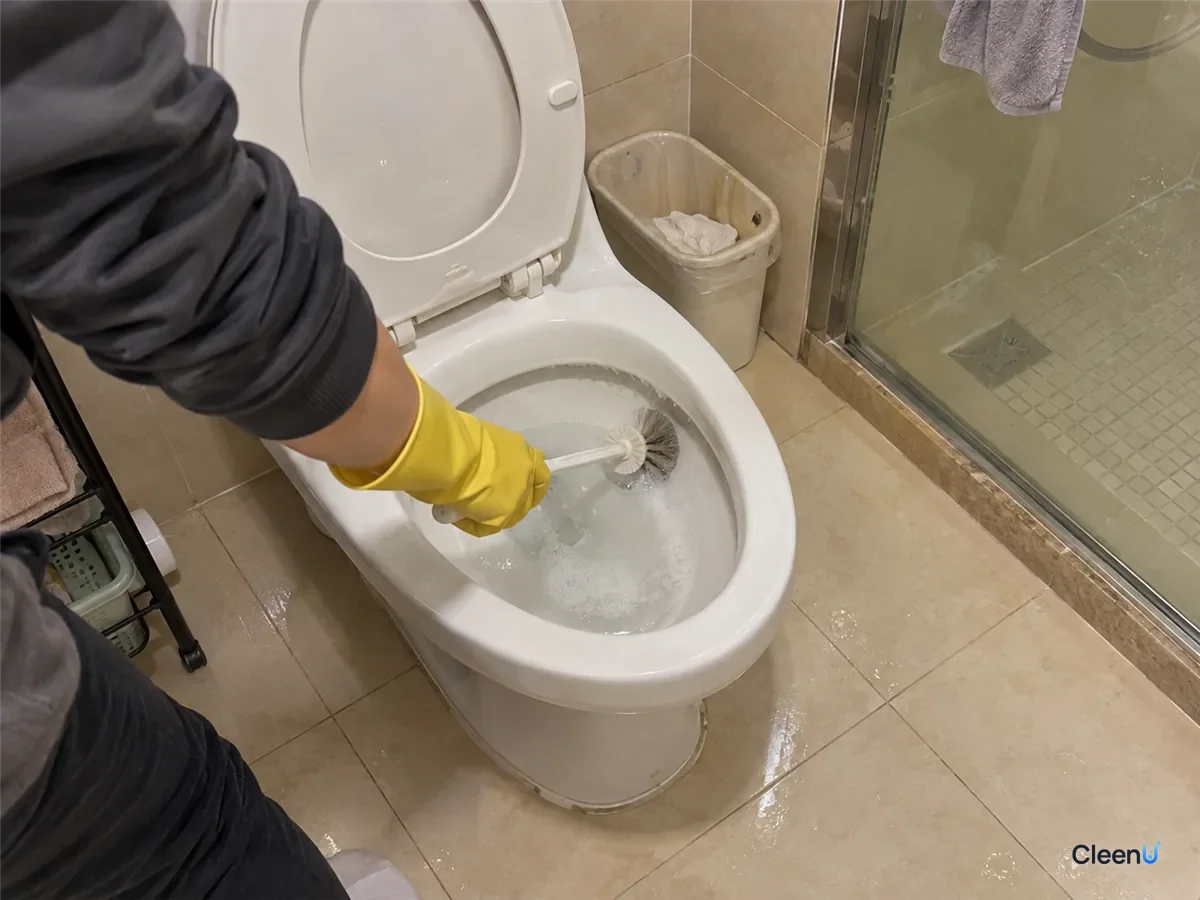
Scrub the bowl and under the rim with a toilet brush and flush. Wipe the outside of the bowl, seat, and handle with a cloth sprayed with bathroom cleaner, then with a plain-water cloth. For dark grout, rinse away the acidic products first, then spray grout cleaner, let it sit, scrub with a narrow brush, and rinse.
Caution:Grout cleaner is alkaline; use it only after acidic products have been rinsed away.
Clean the drain and floor
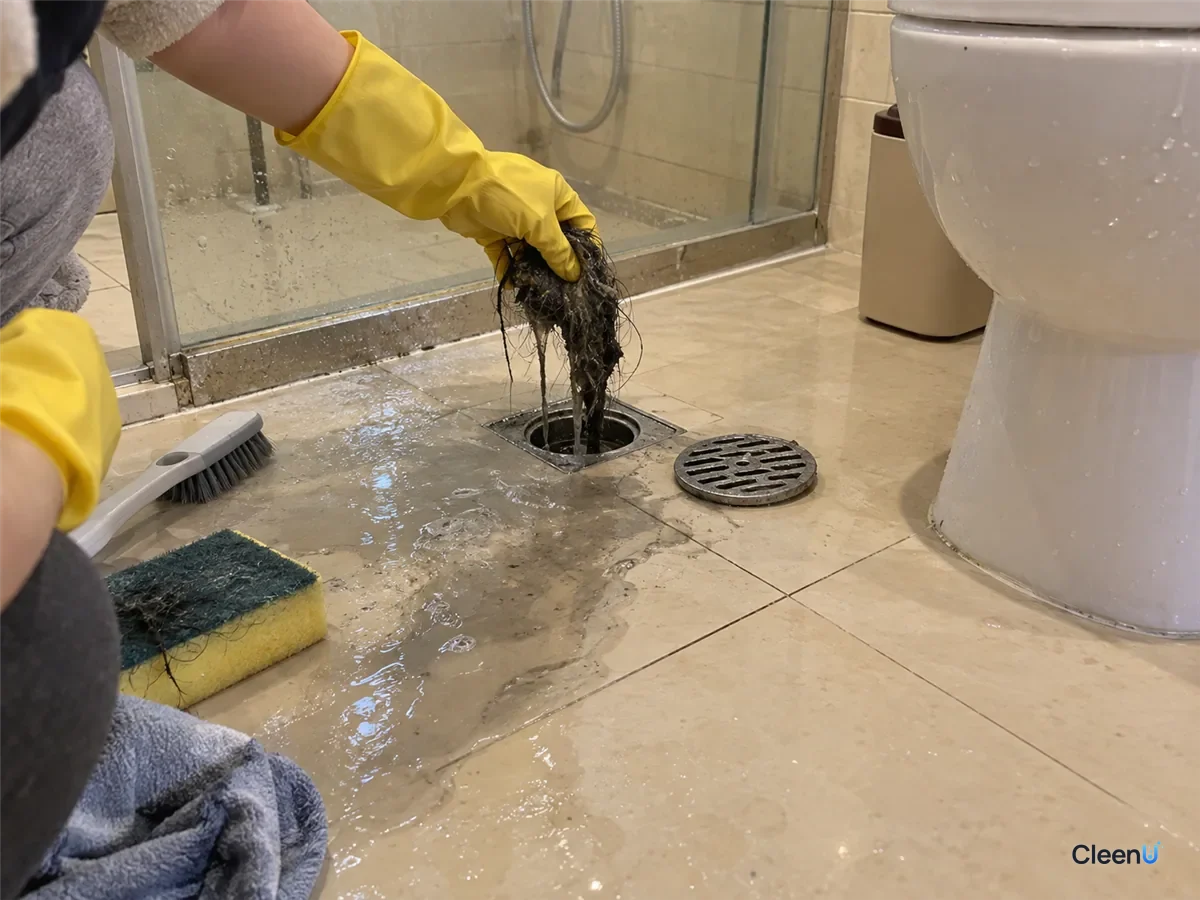
Pull hair and slime out of the drain, spray cleaner on the floor and scrub, and rinse from the far end toward the door, pushing dirty water into the drain.
Dry, ventilate, and put things back
Dry the mirror, faucets, and counters, and squeegee the floor. Keep the fan running at least another half hour, and once the floor is dry, return the mats, towels, and toiletries.
How often to deep clean
Once a month works for most homes; every two or three weeks for busy households, hard water, or poorly ventilated bathrooms.
Daily squeegeeing and ventilating plus weekly toilet and shower cleaning make deep cleaning much easier and reduce the need for heavy-duty products. For what to do daily, weekly, and monthly, see How to clean a bathroom.
Spots people miss
The flush holes under the toilet rim and the seam where the toilet base meets the floor.
The shower door track and bottom seal.
The back of the shower hose and holder.
The sink overflow hole.
Inside the medicine cabinet and the back of its door.
The exhaust fan cover.
High-touch spots like door handles, light switches, and faucet handles.
For dark grout, see Black grout: mold or dirt?.
Why soap scum and scale need dwell time
The dull, gray, slightly gritty film on shower tile is usually soap scum and scale layered together. Fatty acid salts in bar soap and body wash react with the calcium and magnesium in hard water to form insoluble lime soap, which then traps skin oil, hair product, and dust. Every time shower water dries, calcium carbonate and other minerals stay behind too. The film settles into the tiny texture of the glaze and hardens with each layer, so scrubbing harder with a sponge only shaves off the surface.
A mildly acidic cleaner works by dissolving it. Organic acids react with calcium carbonate and lime soap and turn them into salts that dissolve in water, while surfactants wet and emulsify the oils trapped inside. That reaction takes time, which is why you spray first, leave it for the 2 to 5 minutes on the label, and keep the surface wet before scrubbing with a sponge or soft brush. Then rinse the loosened residue away with clean water. The rinse is part of the result: acidic residue left to dry can cloud the surface all over again.
You know an area is done when, rinsed and dried, the tile and glass show no gray haze in side light and feel smooth rather than draggy. If hard white crust is still in the corners after a second round, that's heavy scale. A mild bathroom cleaner isn't the right tool for it, so switch to a dedicated descaler rather than leaving the cleaner on longer or attacking it with steel wool, which scratches glaze and chrome.
Hard-water homes see this film come back fastest. If the haze returns within a few days, the fix is usually daily squeegeeing rather than a stronger product, because removing the water before it dries stops new minerals from settling in the first place.
Stop if you see this
If you smell something sharp, start coughing, or your eyes sting, stop, leave the bathroom, and open windows. Never mix or follow acidic products with chlorine products. Keep acidic products off natural stone counters and floors. Watch your footing on wet floors. Anyone with asthma or other breathing conditions should stay out while you clean.
Bathroom deep cleaning: common questions
Where should I start when deep cleaning a bathroom?
Top to bottom and dry to wet: clear the room and dust first, apply dwell-time products to the toilet, shower, and fixtures, and do the floor last.
How long does a bathroom deep clean take?
About 1.5 to 2 hours for a standard bathroom. Using product dwell time to clean other areas saves a lot of it.
Can I use mold remover and toilet cleaner in the same session?
Not at the same time. Chlorine mold removers and acidic toilet cleaners create toxic gas together; treat mold on a different day if you can.
How often should I deep clean my bathroom?
Usually monthly; every two or three weeks for busy households, hard water, or poor ventilation.
What cleaners do I need for a deep clean?
A mildly acidic bathroom cleaner and a toilet bowl cleaner, plus a descaler for heavy scale, a grout cleaner for dark grout, and a separate mold-treatment session if needed.
How do I avoid redoing work?
Go top to bottom and dry to wet, apply dwell-time products first, and finish with the floor and drying.
For a mildly acidic bathroom spray that handles soap scum and light scale on shower tile, glass doors, sinks, and tub edges while staying gentle on glaze and chrome, take a look at our Bathroom Cleaner.
A bathroom deep clean goes faster with no redo if you work top to bottom and dry to wet. Clear out, ventilate, and dry-dust; apply dwell-time products like toilet gel, descaler, and bathroom cleaner first; clean the mirror and counters while they work; then scrub the shower, toilet, and grout; and finish with the drain, the floor, drying, and ventilation. Never use acidic products and chlorine mold remover together, use alkaline grout cleaner only after acidic products are rinsed off, and save mold treatment for another day. Do it monthly, with daily squeegeeing, and the bathroom stays clean.