
OEM/ODM
Private-Label Floor Cleaner: Universal Formula or Surface-Specific?
Direct answer
Start from your channel and target floors. A universal formula covers the most ground and suits mass retail and e-commerce. A wood-floor version needs low moisture and no wax; a tile-and-stone version needs neutral pH and a chelating agent. Each differs in pH, residue, and label claims, so launch one lead product first.
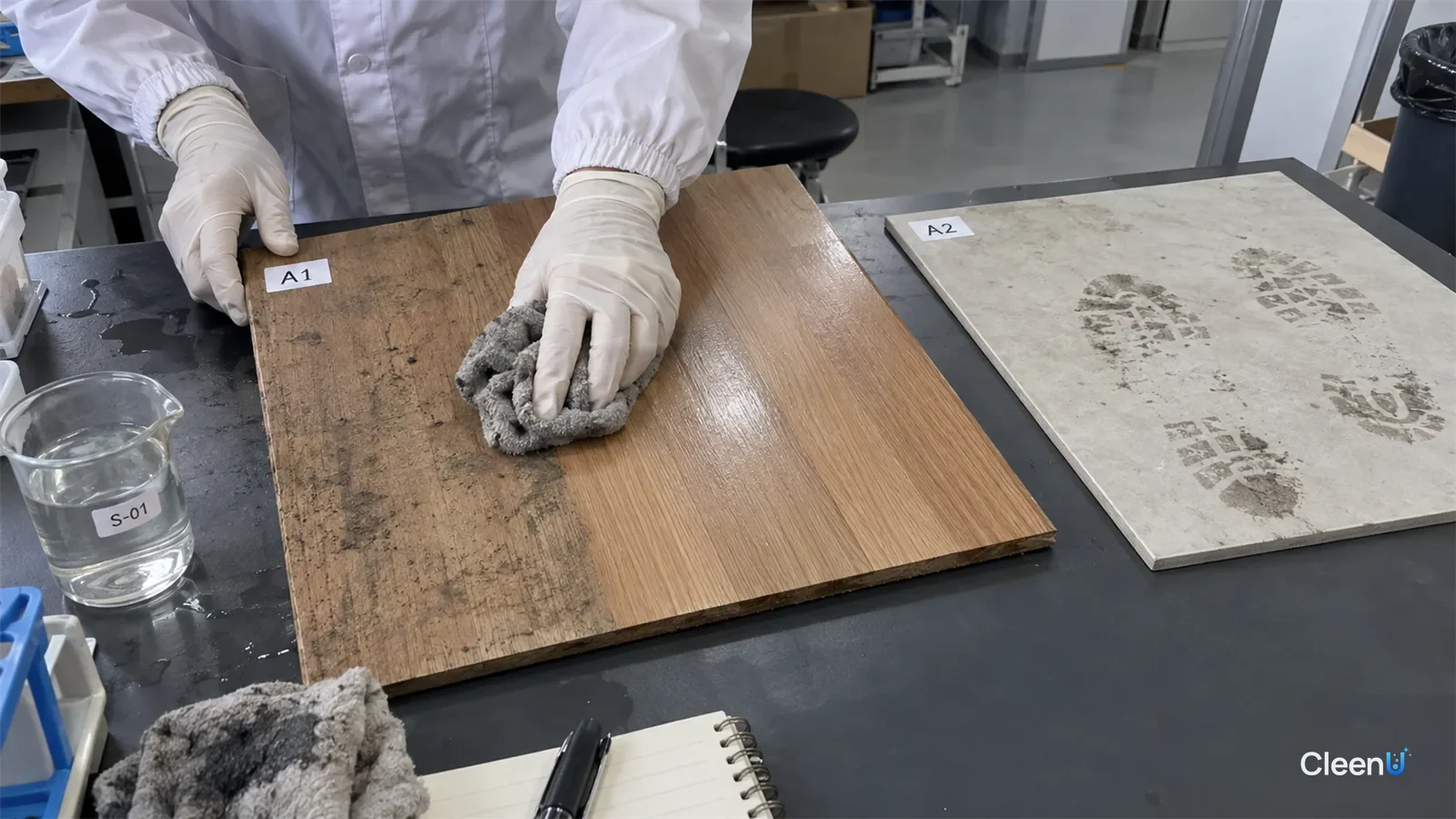
The first question most brands ask about private-label floor cleaner is whether to launch one general-purpose formula or split it by hardwood, tile, and vinyl. Successful brands have done both. The right answer depends on your channel, your customers, and how you plan to build the line. Here's how the formulas differ, how they match channels, and how a project actually runs.
How universal and surface-specific formulas differ
Floor cleaners all look like "dilute and mop," but different floors want different things.
Hardwood and laminate (sealed solid wood, engineered, laminate): the biggest risks are water and residue. They need low moisture, fast drying, no wax, oil soap, or ammonia, and near-neutral pH, or floors haze and seams swell.
Ceramic and non-slip tile: tolerate acid and alkali; greasy footprints and water spots are the main issues. A bit more grease-cutting power helps, plus a chelating agent to cut hard-water marks.
Natural stone (marble, terrazzo): can't take acid, so the formula must be neutral with no acidic builders.
Vinyl, LVP, and LVT: don't like solvents or wax, so they need a neutral, low-foam formula without strong solvents.
A universal formula has to satisfy all of these at once, so it takes the overlap: neutral or near-neutral, low-foam, low-residue, no wax, no strong solvents. That gives the widest compatibility, but on any single surface it usually isn't as targeted as a dedicated formula.
Our own lineup shows the range. CleenU Floor Cleaner is a pH-neutral, no-rinse formula, pH 7.0 to 8.5 as supplied, with low-foam nonionic surfactants and a small amount of fast-drying solvent, made for sealed hard floors like tile, vinyl, laminate, and sealed hardwood: the universal route. Our Laminate & Wood Floor Cleaner is a low-moisture formula at pH 6.5 to 7.5 with no wax, oil soap, or ammonia. Our Tile & Stone Cleaner is a neutral pH 7.0 to 8.5 formula with a chelating agent. Our Vinyl & Plastic Floor Cleaner is solvent- and chlorine-free and diluted 1:20 for resilient floors. Any of these can be a starting point for private-label development, adjusted to your positioning.
Choosing your first product by channel
Mass retail, club stores, and general e-commerce: shoppers want "the bottle for mopping" and don't sort by floor type. A universal formula is easy to understand, keeps SKUs and inventory lean, and makes a good first product.
Flooring stores and flooring-brand partnerships: customers who just installed hardwood or laminate care a lot about protecting it. A wood-floor formula is more convincing and pairs well with flooring brand recommendations.
Hotels, property managers, and cleaning companies: large areas with known floor types, mostly tile and stone, and a focus on cost per use and dilution. A concentrated tile-and-stone formula fits best.
Cross-border e-commerce (Amazon, Shopify, and similar): U.S. shoppers search by floor type, "LVP," "vinyl plank," "hardwood." Surface-specific products match search more easily and carry less review risk. A universal product needs a title and listing that spell out where it does and doesn't work.
What you can customize
The risks of each route
The biggest risk with a universal product is overpromising. If the label skips the "not for" floors and a customer uses it on unsealed wood or a waxed floor, that becomes a bad review. A universal product needs an even clearer "not for" list.
The risk with surface-specific products is SKU count. Every added product means another round of formula validation, packaging, labeling, and inventory. Keep the first launch to two products or fewer, prove the channel, then expand.
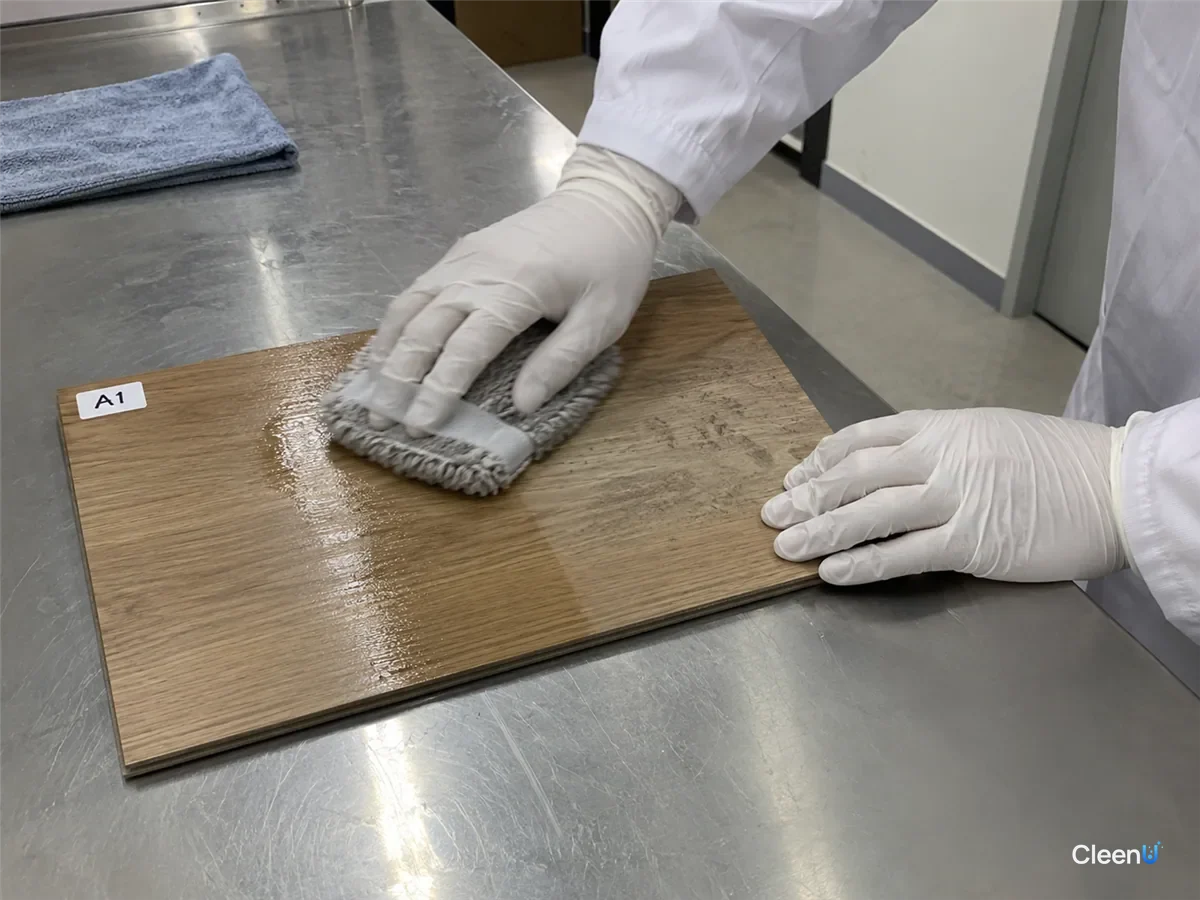
Either way, run a few basic checks before you finalize: residue and hazing tests on your target floor panels, a foam-height test, and, if possible, high- and low-temperature stability retains. Confirm the methods and pass criteria with your manufacturer during sampling.
How the project typically runs
Define the brief: channel, target floors, format, packaging, and budget.
Sampling: we adjust the formula to your brief; free samples take 3–5 days.
Testing and sign-off: you trial it on your target floors and confirm scent, residue, foam, and packaging.
Production after packaging and label approval: bulk orders are scheduled when the order is confirmed, with a 500-bottle minimum. Final pricing and lead times are confirmed in the formal quote.
Robot mop and wet-dry vacuum solutions have much stricter foam requirements than regular floor cleaners and form a separate product line; if your brand is considering those too, we can plan them together. For consumer education content, see our guide to cleaning every type of floor.
Start with the soil on the floor, not the label
Before picking a route, break down what actually ends up on the floors your buyers own. In most homes it is three things. First, grit and dust tracked in on shoes. Second, skin oils from bare feet and pet paws, plus cooking grease that settles near the kitchen. Third, whatever the mop water leaves behind when it dries: hard-water minerals and the cleaner's own solids. Grit is mostly removed by the mop itself; the cleaner's job is to wet the surface so particles stop sticking to the oily film. Oily film needs surfactants that lower interfacial tension and disperse the oil into the water so the pad can carry it away. Minerals show up as a dull haze in hard-water regions, and a chelating agent helps by binding calcium and magnesium so less of it re-deposits as the floor dries.
Each floor type turns these soils into a different problem. Glazed tile is dense, so dirt sits on top and the challenge is drying without water spots. Laminate has a tough wear layer but swelling-prone seams, so the challenge is water volume and drying speed. Vinyl plank and LVT have embossed texture that traps grit and film, so the challenge is residue building up in the grain until the floor looks gray. A universal formula has to balance all of these: not so much surfactant that it films on laminate, no solvent strong enough to bother resilient flooring, and no acidic side that would etch stone. A surface-specific formula can aim at one floor's main problem, which is exactly why it feels more targeted.
Residue and haze drive most bad reviews
A lot of negative floor cleaner reviews are not about weak cleaning. They say "streaky," "sticky," or "my socks leave prints." There are usually three causes. Users overdose, and the surfactant dries into a thin film that attracts fresh dust. The formula carries too many solids for a no-rinse product, so nothing ever lifts them back off. Or hard-water minerals dry down together with the cleaner. For a private label launch, getting low solids, low foam, and a clear dilution instruction right matters more than rich foam or a strong scent.
You can screen samples with a simple routine. Mop a target floor panel at the label ratio, let it air dry, and check it in side light for haze or mop marks. Rub it with a palm or a sock to feel for drag or tackiness. Then repeat the mopping three or four times and look again. If the first pass looks fine but the floor clouds up after several passes, the solids or surfactant level is likely too high. That is a sampling-stage fix; it is much harder to correct after the product is on shelves and the reviews are in.
When your channel changes, the decision changes too
Say you launched a universal formula in mass retail and are now moving into Amazon or Shopify. U.S. shoppers search by floor type, so the listing needs to name the sealed hard floors it suits and the floors it does not, such as unfinished wood and waxed floors. Skip that, and the same bottle can see very different return rates across platforms. Going the other way, a brand that started with a hardwood companion product does not necessarily need a new formula to reach grocery shelves. It can check whether its low-moisture formula also performs on tile and vinyl, then decide whether a second SKU is really needed.
Work out cost per use as well. A ready-to-use spray-and-mop bottle covers a limited area and suits small homes and spot cleaning. A concentrate used at around 1:20 costs less per mopping, but it needs a measuring cap or marked bottle and a clear ratio on the label. Without that, people pour by feel and the residue problem comes right back.
If you sell online, plan for shipping too: an inner seal under the cap, plus drop and leak tests on the final packaging, addresses the most common transit complaint for liquid floor care. Documents such as the SDS are provided per project after you inquire, and the formal quote is what governs pricing and timing.
What to lock down before the first production run
Before the first order goes into production, write down three things and get both sides to agree on them: the dilution ratio printed on the label, the floor types the label names, and the floors it tells people to avoid. Those three lines drive almost every complaint later. If the label says one cap per bucket but the sample was approved at a weaker ratio, shoppers will over-dose and see streaks. If the label lists sealed wood but nobody tested on a matte finish, you'll hear about dull patches. Keeping the approved sample, the label wording and the usage directions in step is cheaper than fixing reviews after launch.
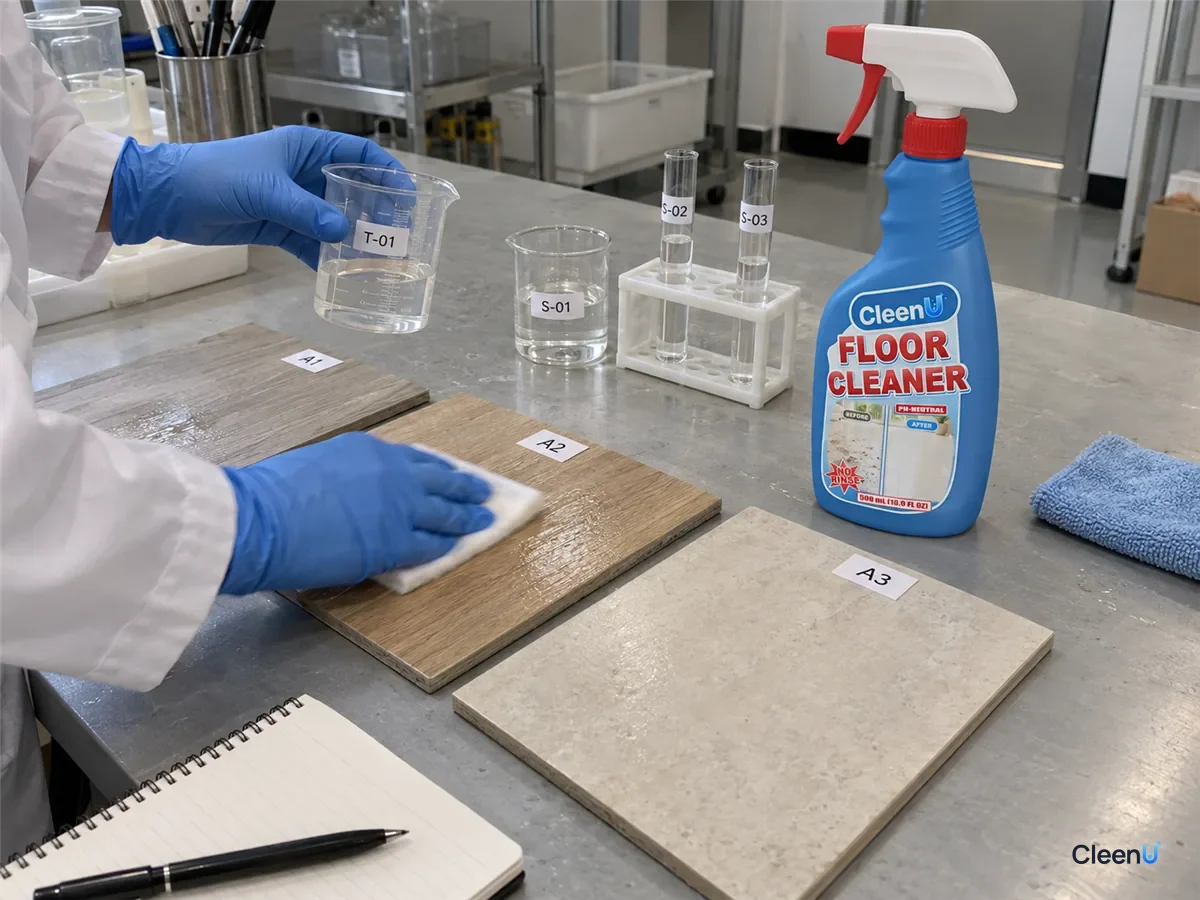
To start your private label from a neutral, no-rinse, low-foam, low-residue universal formula, take a look at our Floor Cleaner.
Whether to launch a universal or surface-specific private-label floor cleaner depends on your channel and target floors. Mass retail and general e-commerce suit a universal neutral formula: broad, lean on SKUs, but it must spell out where not to use it. Flooring partnerships and cross-border e-commerce suit surface-specific products that match needs and search terms. Hotels and property managers suit a concentrated tile-and-stone formula. Each route differs in pH, residue requirements, and label claims, so start with no more than two products, validate residue, foam, and stability on target floors, and expand once the channel works.