
Troubleshooting
How to Get Rid of Refrigerator Odor for Good
Direct answer
Find the source first. Spoiled food, leaked juices, the drain hole at the back of the fridge, and the door gasket cause most fridge odors. Empty the fridge, clean the walls, shelves, and gasket with a fridge cleaner, wipe again with plain water, and dry. Baking soda and charcoal only help afterward.
What you see
Every time you open the door there's a smell you can't quite place: sometimes sour like old leftovers, sometimes fishy, sometimes musty. Cake, ice cubes, and butter start tasting off. You've tried baking soda, lemon slices, and coffee grounds, but a few days later the smell is back.
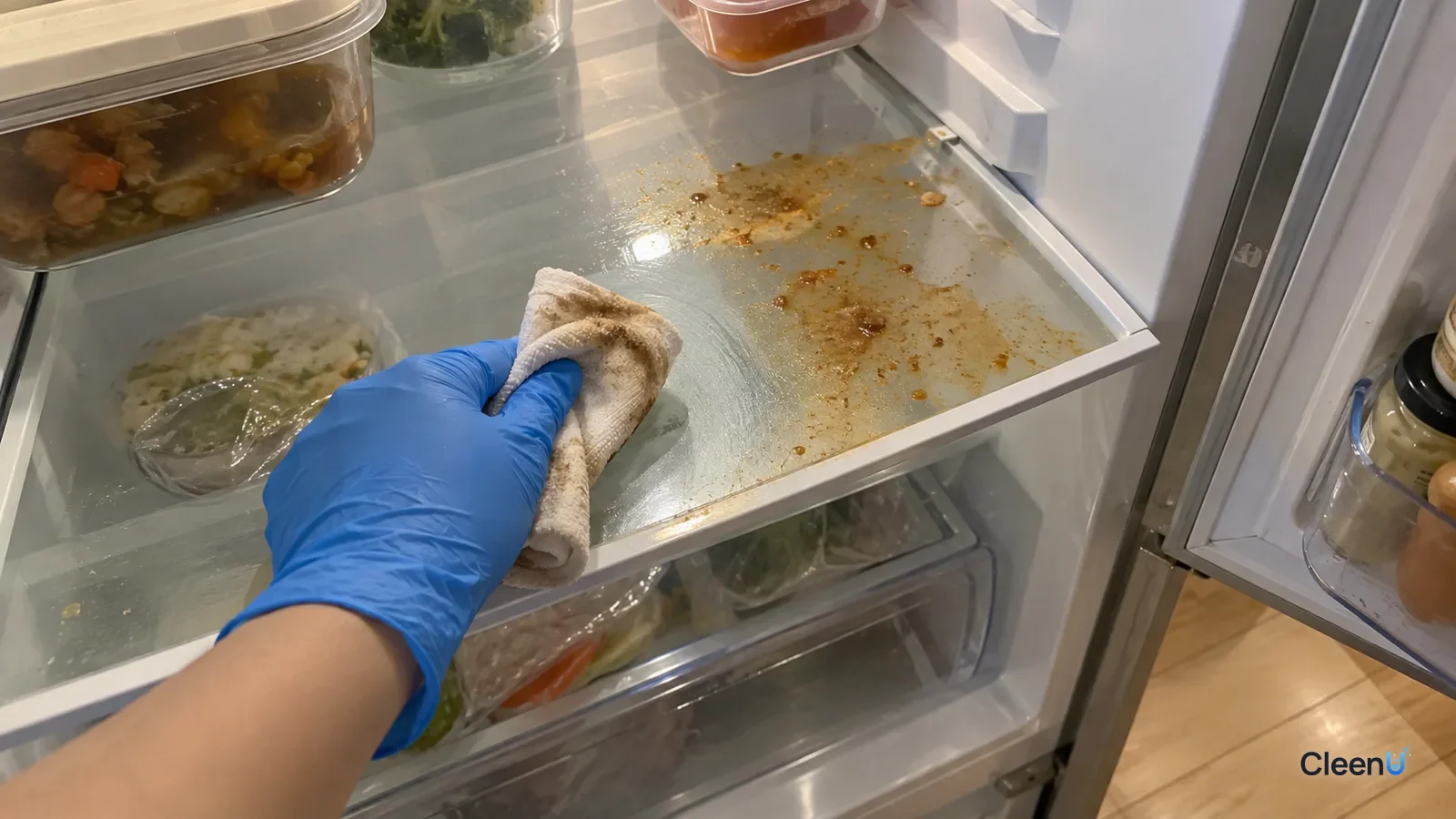
Cold slows microbes down, but it doesn't stop them. The fridge typically runs between 35 and 46°F, and plenty of bacteria and molds still grow slowly at those temperatures; some are even adapted to the cold. Food bits, leaked juices, condensation, and a closed space give them nutrients and moisture. The smell is the odor molecules they release as they break down proteins, fats, and sugars.
What that fridge smell actually is
Different smells usually point to different sources.
Fishy or rotten: usually protein breakdown. When juices from meat, fish, seafood, or eggs leak, bacteria break the proteins into amines and sulfur compounds, like trimethylamine (fishy) and hydrogen sulfide and thiols (rotten egg). These molecules have very low odor thresholds, so a tiny amount is noticeable.
Sour: usually carbohydrate fermentation. Leftovers, fruit, and juice break down into acetic, lactic, and butyric acids.
Musty or earthy: mold. The folds of the door gasket, the bottom of the crisper drawers, and the drain hole stay damp and rarely get cleaned, and growing mold releases volatile compounds with that damp, musty smell.
Odor transfer: strong foods like onions, kimchi, and cheese that aren't sealed release odor molecules that spread through the fridge and get absorbed by fatty or porous foods like butter, cake, and ice.
Five steps to find the source
Find the source of fridge odor in five steps
-
Step 1 Is there any expired, soft, or moldy food, or uncovered leftovers or raw meat and fish?
- Yes
- Remove and toss it, then check the rest for damaged or leaking packaging.
- No
- Go to the next check
-
Step 2 Are there dried spills or sticky residue on the shelves, the bottom of the crisper drawers, or the door bins?
- Yes
- Empty the fridge, take out removable shelves and drawers to wash, and clean the interior walls and fixed parts with a fridge cleaner. Then wipe with plain water and dry.
- No
- Go to the next check
-
Step 3 Is the drain hole at the bottom of the back wall clogged, with water pooling or dark buildup below it?
- Yes
- Clear it gently with a soft drain tool or cotton swab, flush with a little warm water, and make sure water drains. Wipe and dry the area around it.
- No
- Go to the next check
-
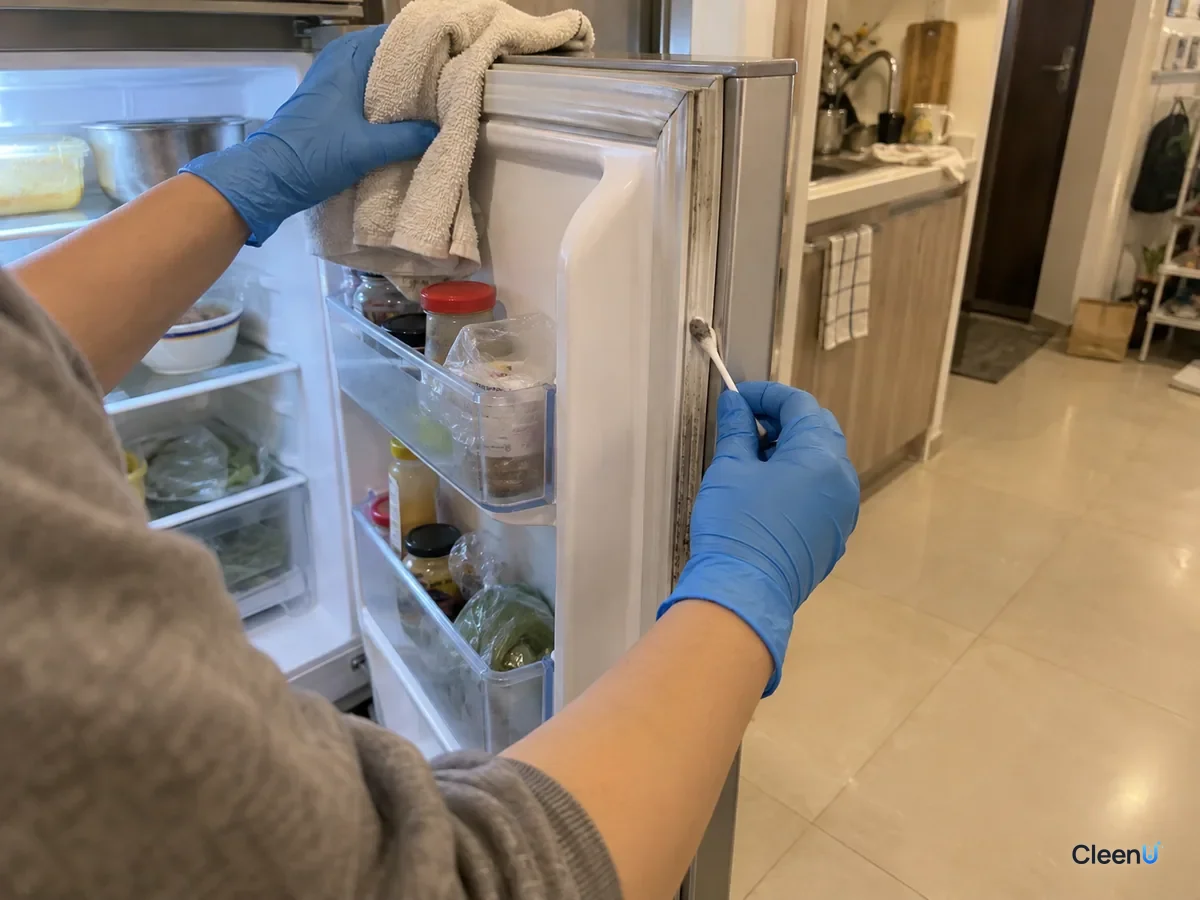
Step 4 Are there black spots, slime, or food bits in the folds of the door gasket?
- Yes
- Wipe along the folds with a soft cloth or cotton swab and fridge cleaner, then wipe with water and dry. Black spots that won't wipe off mean mold has grown into the rubber; consider replacing the gasket.
- No
- Go to the next check
-
Step 5 After cleaning and putting food back, is the smell still strong two or three days later?
- Yes
- The drip pan, evaporator, or air ducts may be the problem. Those need a technician, so contact the manufacturer.
- No
- The odor is gone. Keep it that way with the habits below.
Why an open box of baking soda isn't enough
Charcoal, bamboo charcoal bags, baking soda, and coffee grounds all work by adsorption: they have lots of tiny pores that trap odor molecules from the air. They help with odor already in the air, but they have two limits.
Their capacity is limited. Once the pores are full, they stop working and need replacing.
They only deal with air, not the source. As long as there's dried juice on a shelf or mold in the gasket, new odor keeps coming.
So deodorizers are a follow-up to cleaning, not a substitute for it.
How a fridge cleaner is designed
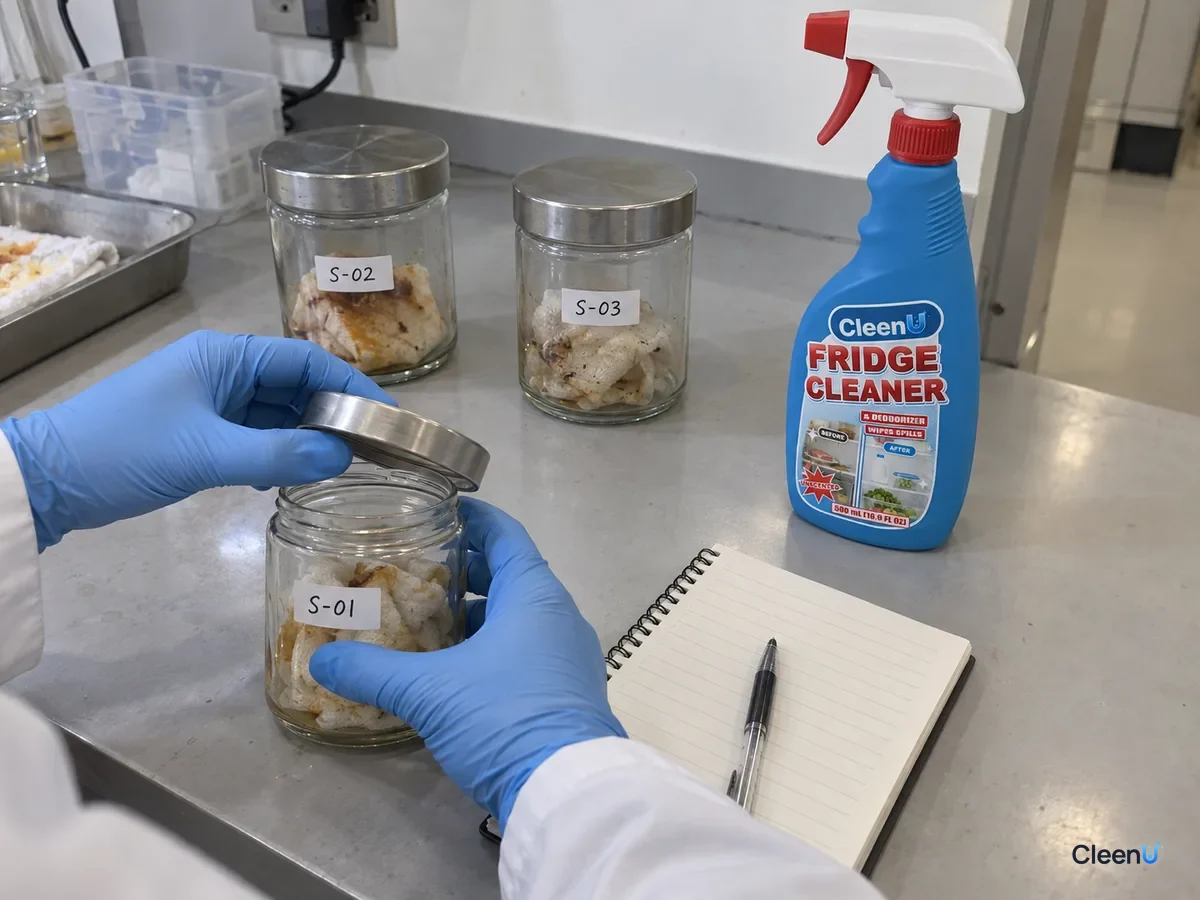
Take CleenU Refrigerator Cleaner & Deodorizer as an example. It's a pH-neutral fridge cleaning and deodorizing spray, pH 7.0 to 8.5 as supplied, made with nonionic surfactants and a cyclodextrin-based odor neutralizer. It's unscented, dye-free, contains no chlorine, and is ready to use.
The nonionic surfactants emulsify and lift food residue, grease, and dried spills from shelves and walls, which removes the source. Cyclodextrin is a ring-shaped molecule with a water-friendly outside and a water-repelling cavity inside. Many odor molecules fit into that cavity and form an inclusion complex, which makes them less volatile, so the smell fades. Unlike adsorbents, it deals with odor left on the surface while you wipe.
Unscented is intentional. A fridge holds food, and fragrance would just transfer to it and make it harder to tell whether the odor is really gone.
Spray the surface, wait about a minute, wipe, then wipe again with a cloth dampened with plain water. It's made for fridge walls, glass shelves, crisper drawers, door gaskets, and freezer walls. Never spray it on food, and keep it away from wiring, the temperature control panel, and air vents. Don't rinse cold glass shelves with hot water; the temperature shock can crack them.
A full fridge clean
Set up a cooler or some ice packs, take the food out, and toss anything expired along the way.
Unplug the fridge or turn it off per the manual. Take out removable shelves, drawers, and door bins and wash them in the sink with warm water and a little mild dish soap, then rinse and dry. Let glass shelves come to room temperature before washing.
Spray the walls, fixed brackets, and inside of the door with fridge cleaner, or spray a cloth, wait about a minute, and wipe. Use a soft brush or cotton swab for corners and gaps.
Clear the drain hole at the back and wipe out the folds of the door gasket.
Go over everything with a wrung-out cloth and plain water, then dry with a towel. Leftover moisture turns into frost and helps mold come back faster.
Put the shelves back, turn the fridge on, and wait until it's cold before loading food.
For the rest of the kitchen, see How to clean a kitchen.
Keeping the fridge fresh
Store leftovers, raw meat and fish, and strong-smelling foods in sealed containers or bags. Keep raw meat on the bottom shelf so juices can't drip onto other food.
Check for expired food weekly, and wipe up spills the same day.
Wipe the shelves and gasket monthly, and do a full clean every three months.
Don't overpack the fridge; cold air needs to circulate. And don't put hot food straight in, which creates a lot of condensation.
Residue hides differently in different parts of the fridge
The materials inside your fridge decide how long an odor can hang on. Glass shelves are dense. Dried spills just sit on top as a thin film, so a minute of contact lets the surfactants wet and loosen the sugar, protein and fat, and one wipe takes it off. Plastic liners and crisper drawers behave differently. Many common plastics have some affinity for fats and fat-soluble odor molecules, so onion and fish smells can work their way into the surface layer. That's why one wipe sometimes still leaves a smell. Wiping twice works better than spraying more: the first pass removes the residue, and on the second you let the cyclodextrin-type ingredients sit on the surface a little longer before wiping clean.
The door gasket is the hardest spot. Its rubber folds collect condensation and food crumbs, stay damp and rarely get wiped. Open the folds one section at a time and run a cotton swab along each one. Switch to a fresh swab when it turns dark, and keep going until new swabs come out almost clean. Then blot the folds dry with a dry cloth. Water left in there becomes the starting point for the next round of odor.
How to tell you're actually done
After cleaning, close the door, turn the power back on and wait two or three hours. When you open it, you should smell little more than cold air, with no fishy or sour notes. Shelves and walls should feel smooth, not tacky or gritty. Open the gasket folds and check for new dark spots or beads of water. Here's a practical test: leave a stick of butter or a cup of ice inside. If it hasn't picked up an off smell after two or three days, the source is gone. If the smell faded right after cleaning but came back a day or two later, you probably missed a spot. Check the drain hole and the bottom of the crisper drawers first.
Choosing and managing a shared fridge in rentals and offices
Shared fridges aren't harder to clean, but nobody knows whose container is whose. Set one cleanout day a week and toss anything expired or unlabeled. For the cleaner, a ready-to-use spray that's fragrance-free, chlorine-free and only needs a damp-cloth wipe afterward keeps things simple. Staff don't have to dilute anything, and the next person's lunch doesn't pick up a perfume smell. Buyers ordering in volume can describe their setting in the inquiry. SDS and other documents are provided per project, and the formal quotation governs.
Stop if you see this
If the fridge is leaking or pooling water underneath, or you smell burning or hot wiring, unplug it and contact the manufacturer. Don't chip ice or poke the drain hole with anything sharp; you can puncture the liner or refrigerant lines. Don't spray cleaner on food, into vents, or onto circuit boards. Don't mix with chlorine products.
Fridge odor: common questions
Do lemon or coffee grounds get rid of fridge smell?
They absorb and mask a little but can't deal with the source. Clean the shelves, drain hole, and gasket first, then use a deodorizer as backup.
How do I clean a moldy fridge gasket?
Wipe along the folds with a soft cloth or cotton swab and fridge cleaner, then wipe with water and dry. If black spots won't come off, mold has grown into the rubber; consider replacing the gasket.
How often should I clean the fridge?
Check for expired food weekly, wipe the shelves and gasket monthly, and do a full clean every three months.
Can I clean the fridge with bleach?
Not as a routine. Chlorine has a harsh smell, residue can transfer to food, and it can damage gaskets and metal parts. Use an unscented fridge cleaner, then wipe with water.
Can I spray fridge cleaner on food?
No. It's for the fridge's interior surfaces only. Wipe with plain water afterward and let surfaces dry before putting food back.
It still smells after cleaning. Is the fridge broken?
First make sure the drain hole is clear and nothing was missed. If the smell persists, it may be coming from the drip pan or air ducts, which need service.
For an unscented, chlorine-free fridge spray that lifts food residue and tackles lingering odor as you wipe, take a look at our Refrigerator Cleaner & Deodorizer.
Fridge odor comes from microbes breaking down food bits and juices: fishy smells usually mean protein, sour smells mean fermenting leftovers or juice, and musty smells usually live in the door gasket and drain hole. Find and remove the source: toss spoiled food, wash shelves and drawers, clear the drain, clean the gasket, wipe with an unscented fridge cleaner, then wipe with plain water and dry. Deodorizers are just backup. Seal food, wipe spills the same day, and clean the shelves and gasket monthly, and the smell won't come back.