
Troubleshooting
Why Stainless Steel Appliances Streak and How to Wipe Them Right
Direct answer
Stainless steel streaks mostly come from cleaner residue and wiping against the grain. Mist a stainless steel cleaner and polish onto a microfiber cloth, wipe with the grain, then buff dry in the same direction. Skip steel wool, abrasive pastes, and bleach.
Check these five things first
- The finish: look closely for fine parallel lines. That's the grain.
- Your wiping pattern: circles, random back-and-forth, or along the grain?
- What you used: dish soap, kitchen degreaser, glass cleaner, or bleach-based cleaner?
- The cloth: lint-free, clean, and never washed with fabric softener?
- The finish type: black stainless and fingerprint-resistant coatings need the manual first.
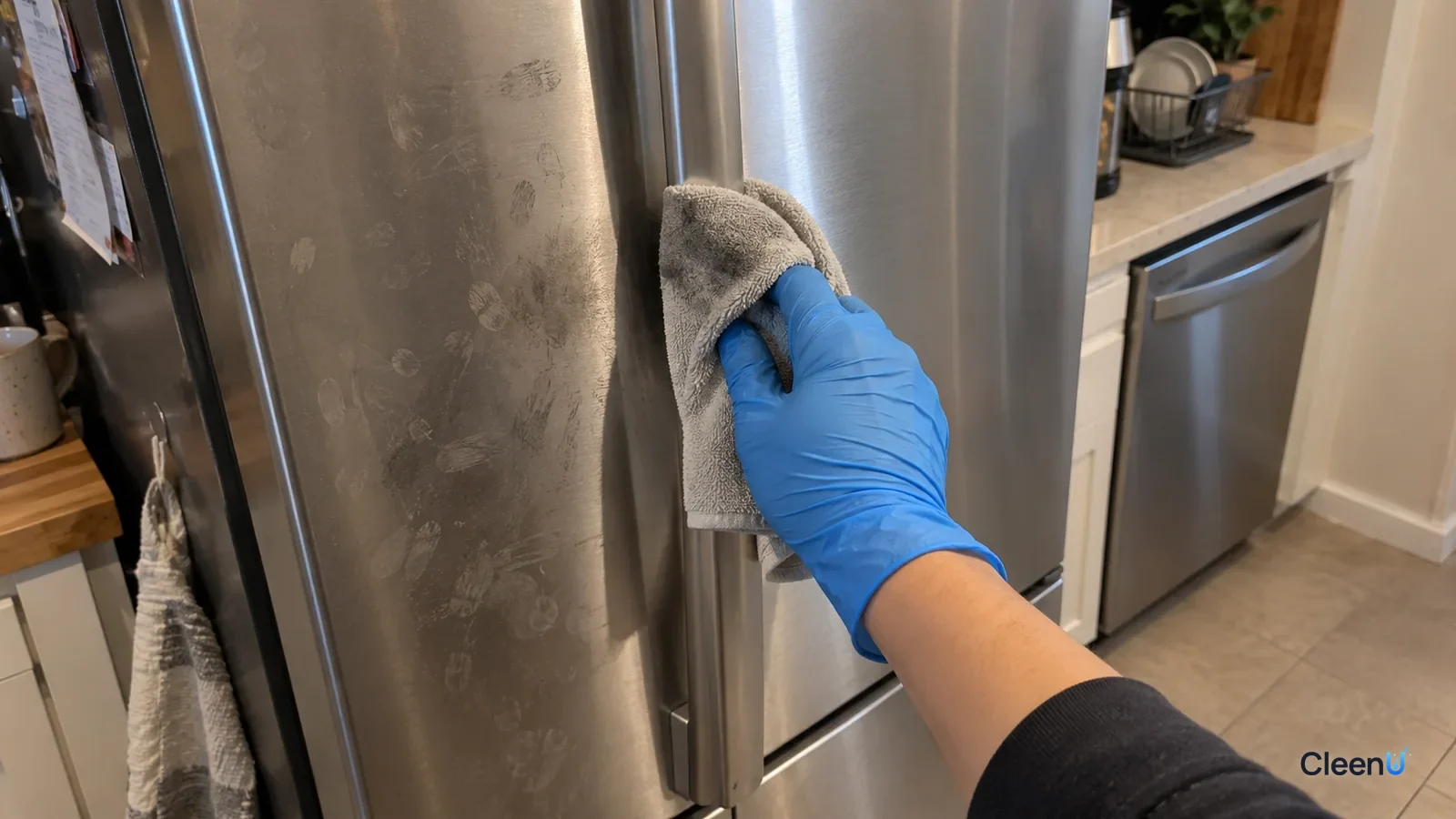
A stainless fridge, dishwasher, oven door, or range hood comes home with an even, satin metal finish. A few weeks later it's covered in fingerprints, grease spots, and water marks. Wipe with a damp cloth and the prints disappear, but now there's a pale haze and crisscross wipe marks. Switch to a kitchen degreaser and the haze gets worse.
Stainless isn't hard to clean. What's hard is cleaning it without streaks, and that comes down to understanding its brushed grain and the invisible film that protects it.
What makes stainless steel different
Most appliance stainless has a brushed finish: the surface is polished into extremely fine parallel lines that give it a soft satin look. Like wood grain, those lines have a direction. Wipe with the grain and the cloth travels along the grooves, lifting dirt out and leaving an even reflection. Wipe against it or in circles and the cloth skips across the grooves, leaving liquid and grime trapped in them, which dries into crosshatched marks.
Stainless resists rust because the chromium in the alloy forms an extremely thin, dense chromium oxide layer in air, called the passive layer. It protects the metal underneath. Water doesn't bother it, but chlorine products, strong acids, and anything that scratches, like steel wool, do. Bleach residue left over time can cause pinpoint rust spots, and iron particles shed by steel wool get embedded and rust, making it look like the stainless itself is rusting.
Why fingerprints show so much
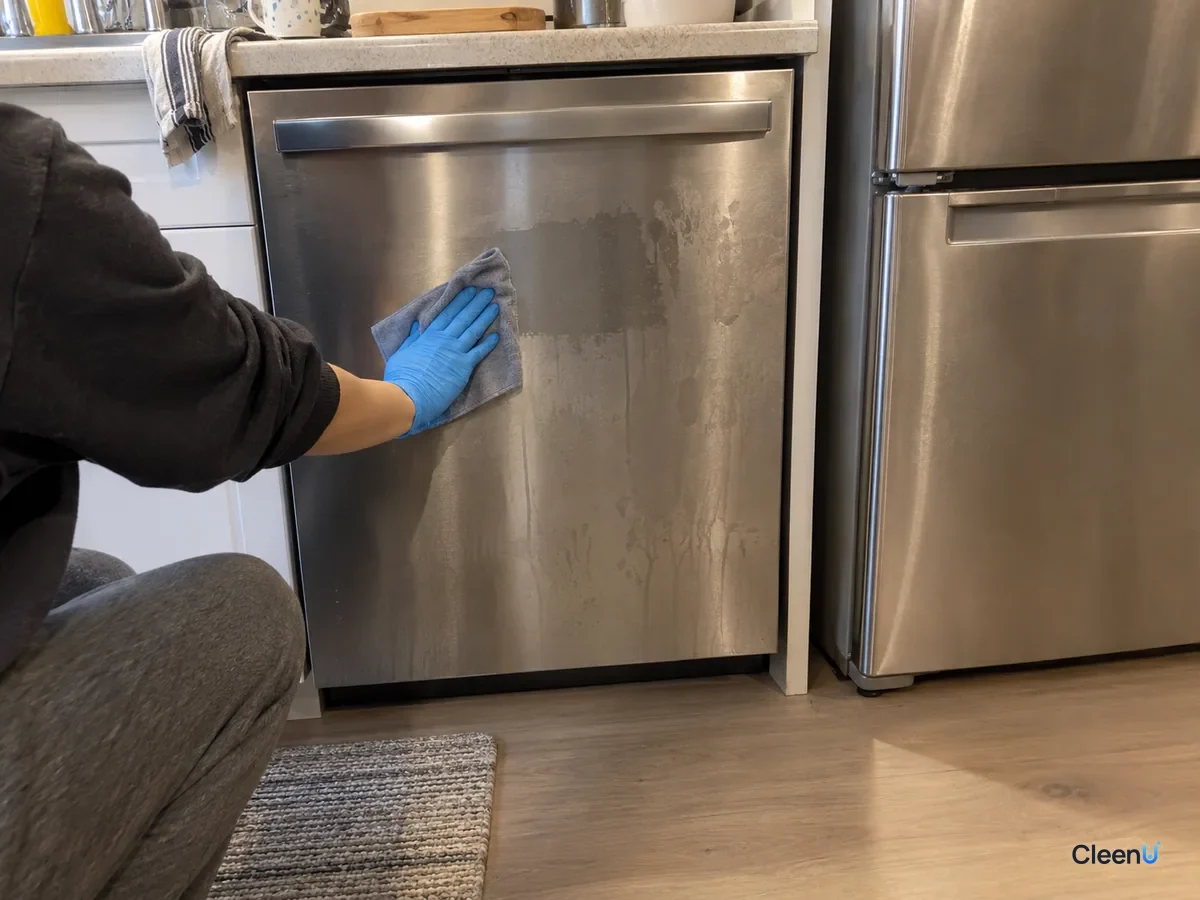
Fingerprints are skin oil and sweat: mostly fatty acids, triglycerides, and wax esters. Stainless has relatively high surface energy, so oil spreads into a thin film easily, and on a satin finish that shows up as darker or shinier patches under the kitchen lights.
A damp cloth doesn't remove oil, because oil and water don't mix. It just smears it out into a haze. Dish soap removes the oil but leaves its own residue if you don't wipe it off, so you get a white film. A kitchen degreaser cuts oil well, but any alkaline residue left behind dries into white, water-spot-like marks on stainless.
What a stainless steel cleaner and polish does differently
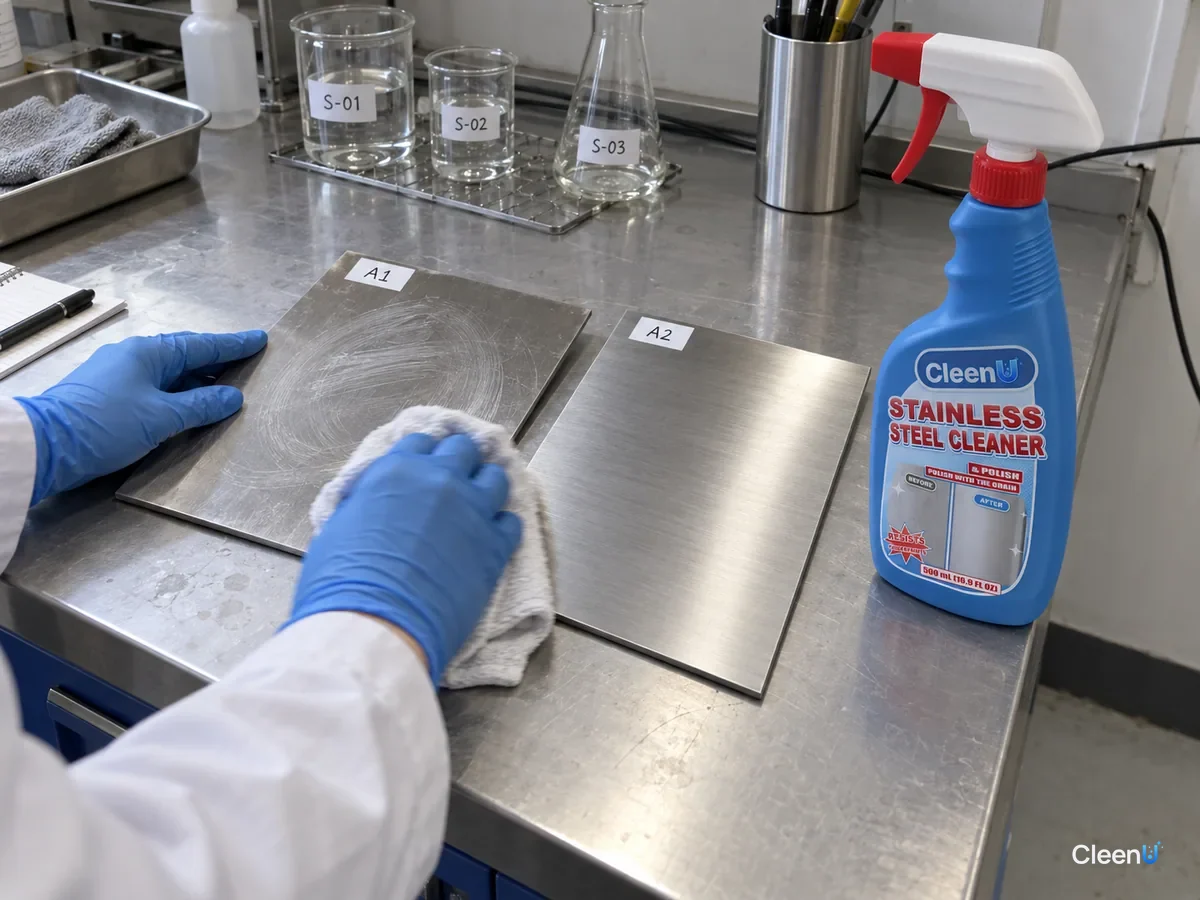
Take CleenU Stainless Steel Cleaner & Polish as an example. It's a two-in-one clean-and-polish spray, pH 7.0 to 8.5 as supplied, made with nonionic surfactants, a small amount of solvent, a chelating agent, and conditioning ingredients, with no chlorine and no abrasive particles. It's ready to use with no dwell time.
The surfactants and solvent dissolve and emulsify fingerprint oil and grease spots. The chelating agent binds calcium and magnesium in water, cutting down on water spots. The conditioning ingredients leave a very thin, even protective film that makes the finish look uniform and glossy and helps new fingerprints wipe off more easily.
That film has to be thin and even to look good. Use too much and skip the buffing, and you get oily-looking patches. So the method is: a little on the cloth, wipe with the grain, buff dry with the grain. It's made for stainless fridges, dishwashers, oven doors, range hoods, sinks, and elevator panels. It isn't for heavy baked-on grease (that's a degreaser's job), black or coated stainless you haven't tested, or long-term care of aluminum and chrome.
Common causes: what you see, fix, prevention
| Cause | What you see | Fix | Prevent it |
|---|---|---|---|
| Wiping against the grain or in circles | Crosshatched marks; shiny patches | Rewipe with the grain, then buff dry the same way | Find the grain first and always follow it |
| Dish soap or degreaser residue | Pale haze; dries like water spots | Wipe twice with a damp cloth along the grain, then use stainless cleaner | Don't use dish soap or degreaser on appliance exteriors |
| Too much polish | Oily patches; feels slick | Buff more with a dry cloth along the grain to remove the excess | Spray the cloth, and only a little |
| Hard-water drips | White droplet marks | Wipe with stainless cleaner along the grain, then buff | Wipe splashes dry promptly |
| Steel wool or bleach | Fine scratches; brown rust specks | Stop using them; gently wipe specks with a stainless product | No steel wool, abrasive paste, or bleach |
| Linty or softener-treated cloth | Streakier with every wipe; fibers left behind | Switch to a clean microfiber cloth that's never seen softener | Keep two dedicated cloths: one damp, one dry |
How to find the grain
Stand close and look across the surface at an angle to the light. You'll see very fine parallel lines; that's the grain. Fridge doors usually run vertically, dishwashers and oven doors often horizontally, but it varies by brand. If you can't tell, wipe a corner a few times each way with a dry cloth. Whichever direction looks more even is the grain.
The right way to wipe stainless
Dust the surface with a dry microfiber cloth first so grit doesn't leave fine scratches.
Mist a little stainless steel cleaner onto a second microfiber cloth until it's just damp. On a big fridge door, work in sections.
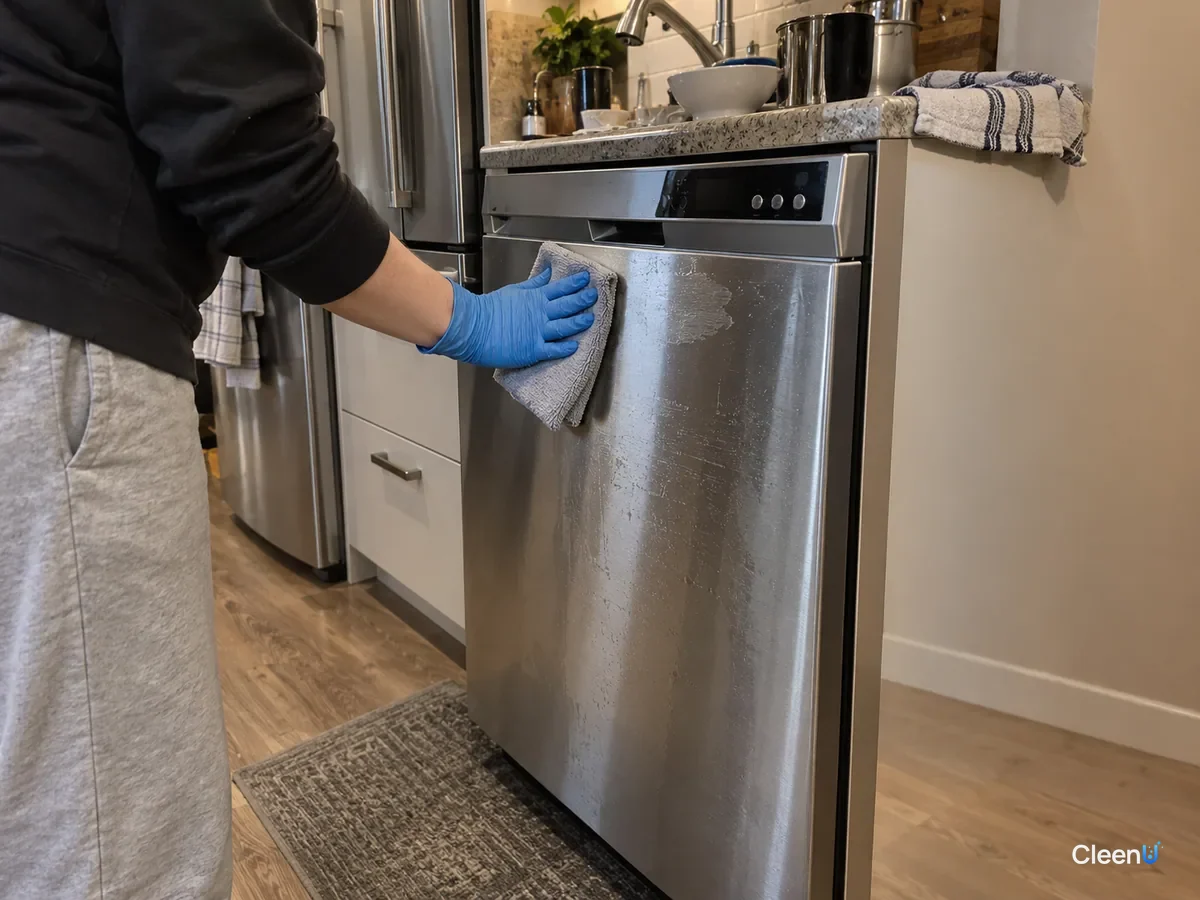
Wipe in long strokes along the grain, top to bottom or side to side. Don't scrub in circles, and don't just spot-clean the fingerprint, or you'll leave a visible patch.
Switch to a dry microfiber cloth and buff in the same direction until there are no damp streaks or shiny patches.
Handles and areas around the controls collect the most prints. A quick dry-cloth wipe along the grain daily and a full clean-and-polish weekly keeps them looking good.
For the rest of the kitchen, see How to clean a kitchen.
Different spots, different approach
On fridge and dishwasher doors, the problem is mostly fingerprints: fresh skin oil in a thin, light film. The surfactant and small amount of solvent in a stainless cleaner and polish emulsify and dissolve it easily. Spray, wipe, buff dry. No dwell time needed.
The range hood and the area above the oven door are a different story. Cooking mist settles layer by layer and gets baked by rising heat until the oil turns tacky and yellow and drags under your fingers. A thin tacky film can come off with two passes of stainless cleaner. A dark, hard buildup you can scrape with a fingernail is beyond what it's made for. Use a kitchen degreaser first, wipe clean with water, then finish with the stainless cleaner and polish along the grain. Do it in the opposite order and the polish layer just lies on top of the grease, and the streaks get worse.
White marks in a stainless sink are usually soap scum: calcium and magnesium from hard water combined with soap from dishwater, leaving a dull, slightly gritty film. The chelating agent in the cleaner ties up those minerals, so light everyday water marks wipe off. A thick, gritty ring of old scale needs an acidic descaling approach instead, followed by a rinse and a dry wipe.
The bottom edge of the dishwasher door and the base of the fridge collect drips of sauce and drinks that carry sugar and protein and dry into shiny hard spots. Hold a damp cloth on them for a few seconds to soften them, then wipe with the grain. That leaves fewer marks than scrubbing hard.
How to know you're done
After buffing, step back and look across the surface toward the light. If the sheen is even and you see no broken bright bands or white haze along the grain, you're finished. A patch that looks darker and feels slick means too much polish; buff it a few more times with a dry cloth along the grain. If fine lines stay put no matter how the light hits them, they're most likely old scratches. No cleaning or polishing will change them, so there's no point in more wiping.
Habits that damage stainless steel
Steel wool, the rough side of a scrub sponge, or abrasive paste: they scratch the grain permanently and can leave iron particles that rust.
Bleach and chlorine disinfectants: residue over time can break down the passive layer and cause pinpoint rust. If you use them, wipe thoroughly with water afterward.
Strong acidic descalers on appliance exteriors: they can dull or darken the finish.
Spraying cleaner heavily onto the appliance: liquid can run into door gaps, buttons, and display edges.
Stop if you see this
For black stainless, fingerprint-resistant coatings, or colored finishes, check the appliance manual and test in a hidden spot first; stop immediately if you see whitening, dulling, or coating coming off. If liquid runs into the control panel or display edge, cut power and dry it. Don't mix with chlorine products. If cleaner gets in your eyes, rinse with water.
Streak-free stainless steel: common questions
Why does my stainless fridge get streakier when I wipe it with a damp cloth?
Water just spreads fingerprint oil into a haze, and wiping against the grain adds crosshatched marks. Use a cleaner that dissolves oil, wipe with the grain, and buff dry.
Which direction should I wipe stainless steel?
Along the grain, the fine parallel lines in the finish. Fridge doors are usually vertical; dishwashers and oven doors are often horizontal. Look at an angle to the light to see it.
Can I clean stainless steel with dish soap?
In a pinch, yes, but wipe twice with a damp cloth along the grain to remove the residue or it'll haze. A stainless cleaner is easier day to day.
Where do the little brown rust spots come from?
Usually iron particles from steel wool, bleach residue, or salt left on the surface. Stop using those and gently wipe the spots with a stainless product.
Can I use the same method on black stainless?
Check the manual and test a corner first. Black stainless usually has a coating that's more sensitive to solvents and friction; wipe gently with a soft cloth.
How often should I polish stainless appliances?
Give high-touch spots a dry-cloth wipe along the grain daily and do a full clean-and-polish once a week.
For a two-in-one spray that lifts fingerprints and grease in one wipe and leaves an even sheen when you buff with the grain, take a look at our Stainless Steel Cleaner & Polish.
Streaky stainless steel usually isn't a dirt problem; it's a technique problem: wiping in circles or against the grain, leaving dish soap or degreaser behind, or using too much polish without buffing. Find the grain, mist a little stainless steel cleaner onto a microfiber cloth, wipe with the grain, and buff dry the same way. Skip steel wool, abrasive paste, and bleach, and test coated finishes first. A daily dry wipe on the handles and a weekly polish is all it takes.