
Q&A
Do Cleaning Products Expire? Shelf Life After Opening and How to Store Them
Direct answer
Yes. Go by the shelf life printed on the bottle, keep the cap tight after opening, and store it out of the sun at room temperature, away from heat and freezing. If it separates, changes color, smells off, clumps, or won't spray, stop using it. Expired products aren't guaranteed to work or stay stable.
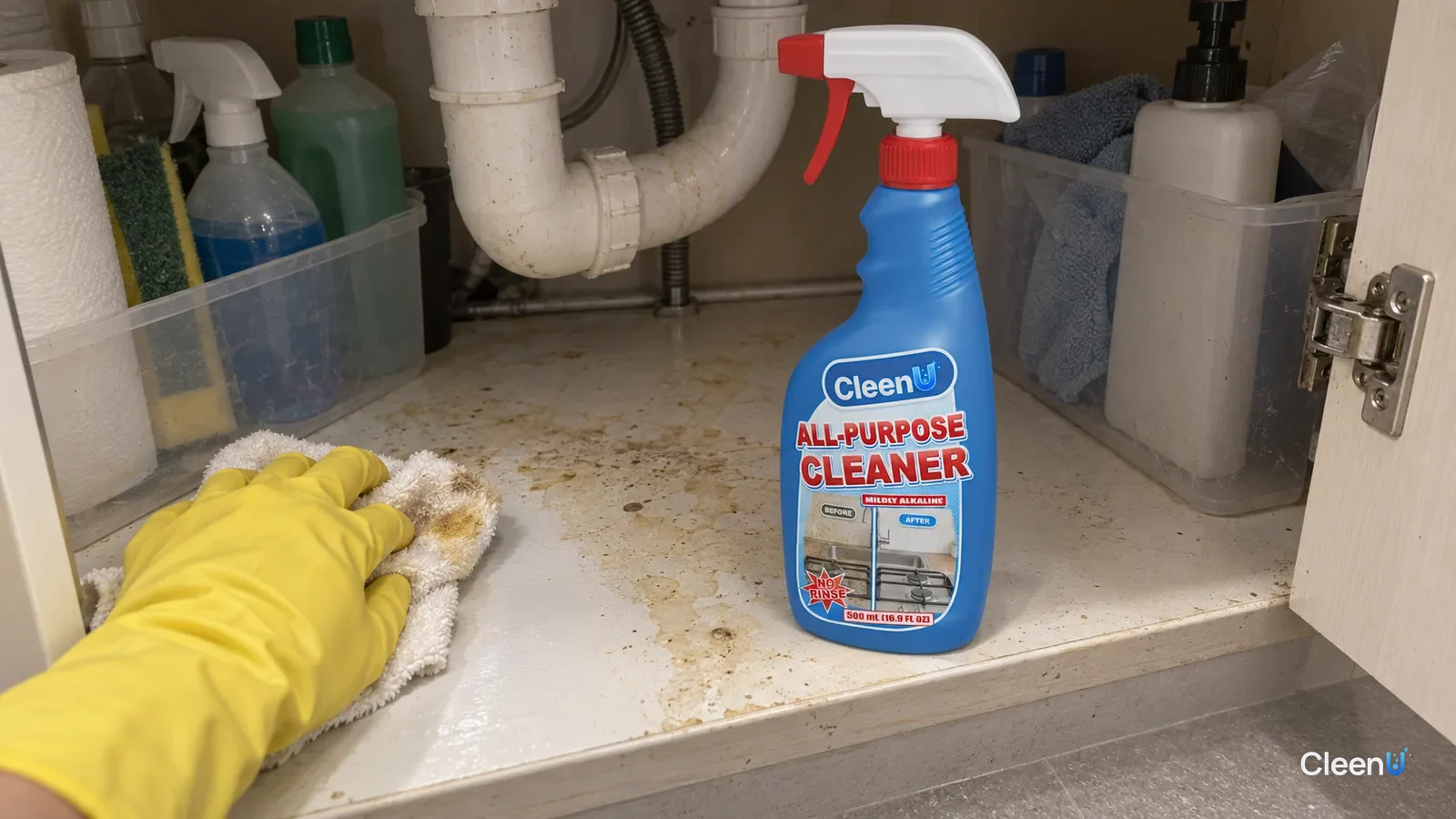
Cleaning product shelf life: the questions people ask most
Do cleaning products really expire?
Yes. A cleaner is a blend of ingredients, and over time it can separate, change color, or thin out or thicken, and active ingredients can break down or evaporate. That's why products carry a shelf life.
What's the shelf life of CleenU cleaners?
24 months unopened, counted from the production date on the bottle, when stored sealed in a cool, dry, ventilated place away from heat, direct sun, and freezing.
How long do they last after opening?
Check the label. CleenU Robot Mop Cleaning Solution lasts about 2 years after opening. For other products, follow each label's guidance; with the cap tight and normal storage, aim to use it up within the shelf life.
Can I still use an expired cleaner?
We don't recommend it. Even if it looks normal, it may not work as well. If it has separated, changed color, or smells off, don't use it, and never put it in appliances, robot mops, or on delicate surfaces.
Where's the best place to store cleaning products?
In a cool, dry, ventilated, dark cabinet, away from the stove, heaters, sunny windows, and anywhere that freezes, and out of reach of kids and pets.
My cleaner froze. Can I still use it?
Let it come back to room temperature on its own, shake it, and check. If it returns to a uniform, normal appearance, it's fine. If it's still separated, cloudy with floating bits, or clumpy, don't use it.
Most of us have a few bottles under the sink of uncertain age: ones that came along in the move, extras from a sale, half-used bottles pushed to the back. Do they expire, and what happens if they do? Here's the longer answer.
Why cleaning products expire
A typical cleaner contains surfactants, builders (alkalis, acids, or chelating agents), solvents, fragrance, color, and water. They stay together because the formula balances ratios, pH, and solubility. Over time, a few things slowly happen.
Physical instability. Some ingredients gradually separate, leaving layers, sediment, or cloudiness. Thickened products can thin out, or thicken and clump. Repeated temperature swings speed this up.
Chemical change. Some ingredients slowly break down or react with others. Oxygen-based ingredients gradually release oxygen and lose strength. Fragrance oxidizes and can turn sharp or sour. Dyes can fade or shift color.
Evaporation. Solvents, fragrance, and water slowly escape through the cap, especially once it's opened or if the cap isn't tight, which changes the concentration.
Microbes. Once a water-based product is opened, every pour or spray can let in microbes from the air. Formulas are designed to control that, but poor storage, frequent opening, or adding water to the bottle makes problems more likely, showing up as odor, sliminess, or floating bits.
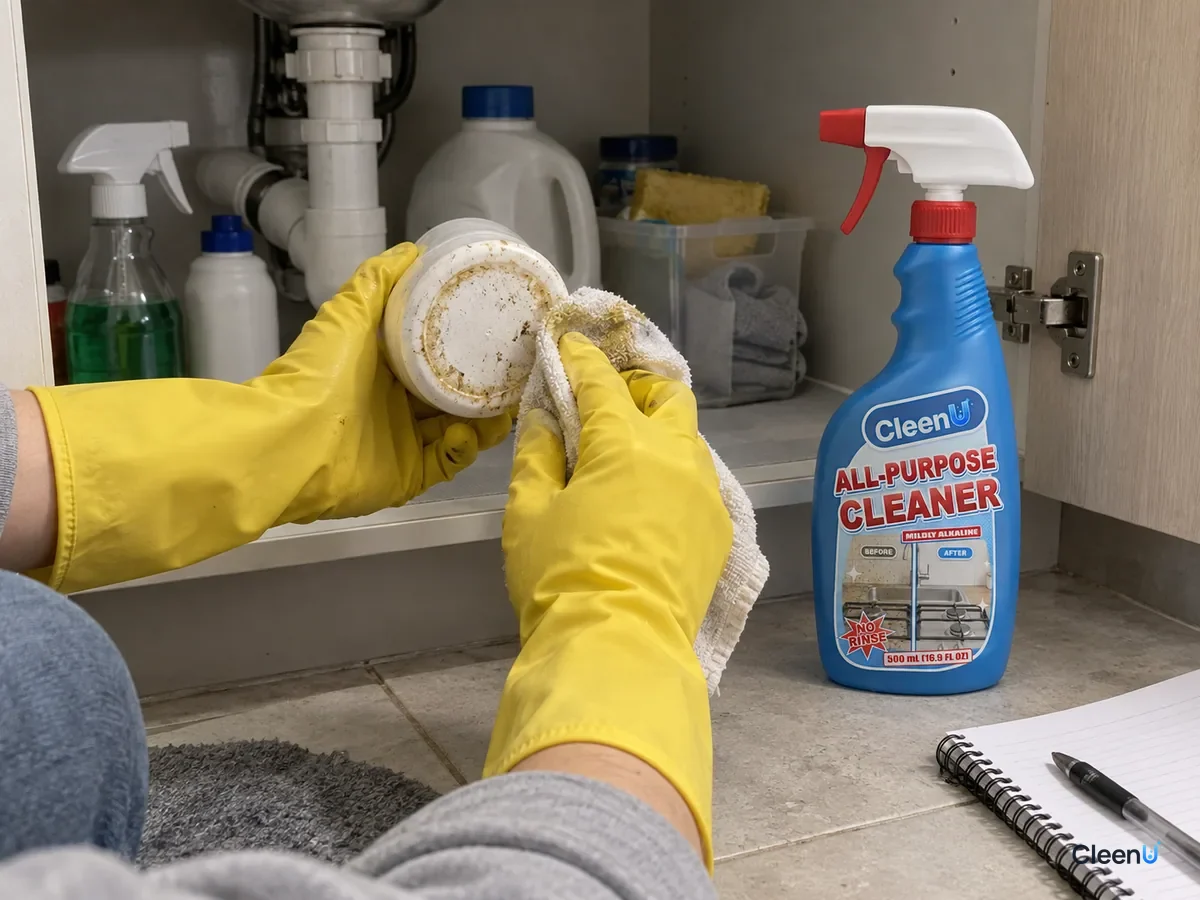
How shelf life is determined
Shelf life isn't a random number. Manufacturers run stability studies: they keep retained samples at room temperature and also run accelerated tests at elevated temperature, cold, and hot-cold cycling, checking appearance, odor, pH, viscosity, and key specs at intervals. That's how the unopened shelf life is set.
CleenU products have a 24-month unopened shelf life, counted from the production date on the bottle, when stored sealed in a cool, dry, ventilated place away from high heat, direct sun, and freezing.
After opening, air gets in, microbes may get in, and evaporation speeds up, so how long it really lasts depends heavily on storage. CleenU Robot Mop Cleaning Solution lasts about 2 years after opening; for other products, follow the label.
How to tell if a cleaner is still good
Expiration date or not, stop using a cleaner if you see any of these.
It's separated or has sediment, and it splits again soon after shaking.
The color has darkened, turned cloudy, or faded noticeably.
The smell has changed: sour, foul, or a fragrance that's turned sharp.
The texture has changed: a thin product has thickened or clumped, or a thick one has gone watery.
The sprayer won't spray, or the spray or foam isn't normal.
The bottle is bulging or misshapen.
If it looks and smells normal but is close to expiring, use it up on less demanding jobs like floors or door handles instead of in robot mops, appliances, or on delicate surfaces.
The risks of using expired cleaner
The most common one is that it just doesn't work as well. Active ingredients break down, cleaning power drops, you end up using more, and you may leave more residue.
Some products shift in pH as they degrade, which can change how they affect surfaces. A gentle product might become harsher, or a surface it used to be safe on might start whitening or dulling.
Products that go into machines need extra care. If a robot mop solution or washing machine cleaner has thickened, clumped, or developed floating bits, it can clog lines or dosing tanks. For robot mop solution specifically, see Robot mop solution changed color or separated: is it still usable? and, for swollen bottles, Cleaning solution bottle bulging?.
How to store cleaning products
Close the cap tight right after use. On trigger sprayers, turn the nozzle to the off position to cut evaporation and keep air out.
Keep it dark and at room temperature. Store it in a cabinet away from sunny windows, the stove, radiators, and the water heater. Heat speeds up breakdown and evaporation, and light changes fragrance and dyes.
Don't let it freeze. In cold climates, don't keep cleaners in an unheated garage or porch. Some products separate after freezing and don't fully recover.
Keep the original container. Never pour cleaner into a drink bottle or an unlabeled bottle. It's a poisoning risk, and you lose the directions and the date.
Store by type. Keep acidic products (descalers, toilet bowl cleaners) away from chlorine products (bleach) so they don't get mixed up or mixed together.
Keep it out of reach of kids and pets, on a high shelf or in a locked cabinet.
Don't add water to the concentrate bottle. Mix only what you need, when you need it, and keep the concentrate as is.
How to avoid a cabinet full of expired bottles
Check what you have before you buy. More isn't better. Most homes really need an all-purpose cleaner, a kitchen degreaser, a bathroom cleaner, and a floor cleaner.
Write the opening date on the label with a marker so you can tell at a glance how long it's been open.
Finish the oldest bottle first, and don't open several of the same type at once.
Take CleenU All-Purpose Cleaner as an example. It's a mildly alkaline all-purpose spray, pH 9.0 to 10.5 as supplied, made with nonionic and anionic surfactants and mild alkaline builders. It's ready to use on sealed hard surfaces like kitchen counters, tables, cabinet doors, and appliance exteriors, so one bottle covers most everyday wiping and you don't need a separate bottle for every spot. It isn't for natural stone such as marble, waxed or unsealed wood, prolonged contact with aluminum, or electronic screens. For what to use where in the kitchen, see How to clean a kitchen.
Different cleaners age in different ways
With acidic descalers and toilet bowl cleaners, the acid itself does the work, and acid doesn't really get used up sitting on a shelf. What usually changes is the fragrance and the thickener. A gel that used to cling to the bowl turns watery and runs straight down. Less contact time means weaker results, even if the acid is still there.
In alkaline degreasers, the alkaline builders are fairly stable, but solvents evaporate a little every time you open the cap. Surfactants can also drop out of solution after repeated hot and cold swings, which shows up as wispy flakes at the bottom or a cloudy spray. Oxygen-based products are different again. Their active ingredient breaks down slowly on its own, faster when it's warm, and you'll notice less bubbling over time. That's the category where the date on the bottle matters most. Enzyme spot cleaners for fabric are sensitive to heat. A bottle left in a hot car or on a sunny balcony can look normal and still have lost much of its punch.
So don't judge by the date alone. Match the check to the product: for a clinging gel, check thickness; for a solvent cleaner, check smell and clarity; for anything that relies on an active ingredient, check whether it still visibly reacts.
Testing a bottle that's close to its date
Try it on a small, out-of-sight spot first. Apply the label amount, wait the label time and wipe clean. Is the soil coming loose as easily as it used to? Is the surface left hazy, tacky or dull? If performance has clearly dropped, or it leaves residue it never used to, stop using it for real cleaning.
Don't try to make up for weaker performance by using more. Overdosing a product that's gone off magnifies both the residue and any effect on the surface. That matters most for anything that goes into the water path of a robot mop or washing machine. Open a new bottle instead.
Managing inventory for retailers and online sellers
Distributors and online sellers aren't managing one bottle; they're managing a lot. Log production dates when stock arrives and ship first in, first out. Keep the warehouse area out of direct sun and away from cold zones in winter, and don't stack shelves against heaters or exterior walls. Reorder based on sales, since smaller, more frequent orders are safer than tying up a big pile of stock. Private-label brands can print the production date and shelf life where shoppers can easily find them, which cuts down on customer questions. Our terms make that easy to plan around: minimum order of 500 bottles, samples in 3–5 days, and bulk production scheduled after packaging and labels are approved, with the formal quotation governing.
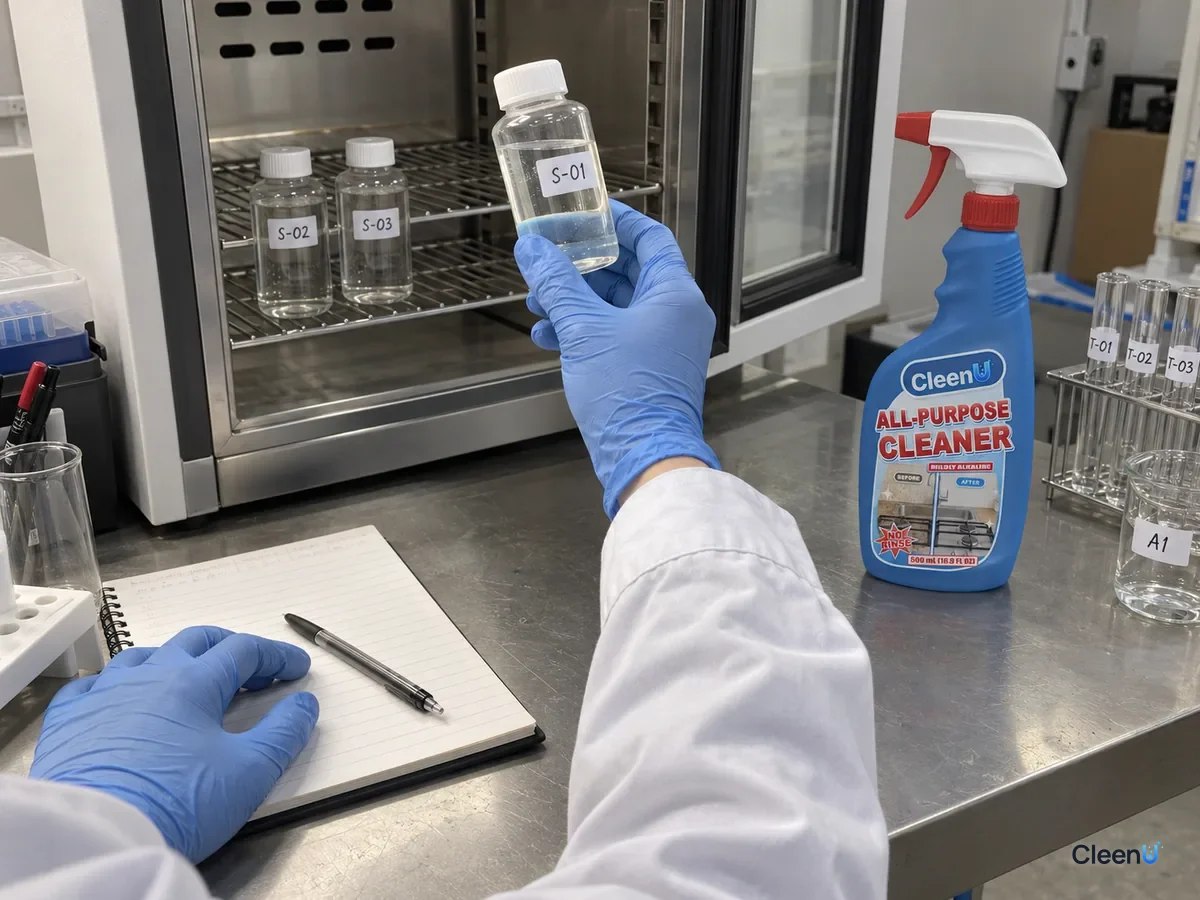
For one everyday spray that handles counters, tables, cabinet doors, and appliance exteriors, with a 24-month unopened shelf life, take a look at our All-Purpose Cleaner.
Cleaning products do expire. Over time they separate, change color and smell, and their active ingredients break down and evaporate. Go by the shelf life on the bottle: CleenU products last 24 months unopened, robot mop solution lasts about 2 years after opening, and other products follow their labels. After opening, keep the cap tight, store it dark, at room temperature, away from heat and freezing, in its original container, with acidic and chlorine products apart. If it separates, discolors, smells off, clumps, or won't spray, stop using it, especially in robot mops and appliances.