
How-to
How to Clean a Stainless Steel Sink: Water Spots and Rust Marks
Direct answer
White spots are usually hard-water scale, and brown specks usually come from iron left by cast iron pans or steel wool. Wash off the grease, wipe with the grain, treat rust specks with a stainless steel cleaner, and dry the sink after use. Don't let bleach sit in a stainless sink.
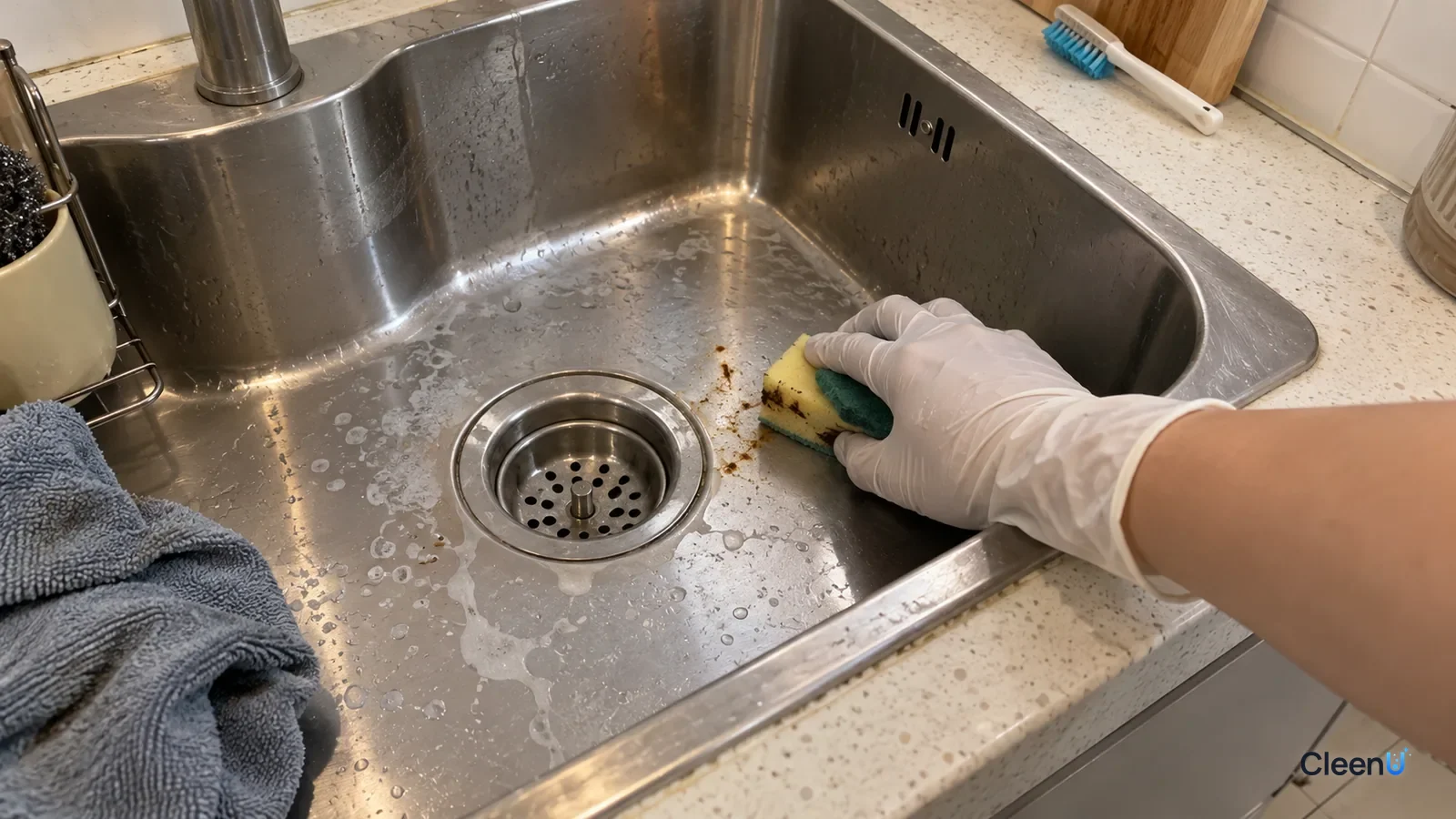
A stainless sink deals with grease, water, food scraps, and all kinds of detergents every day. A few years in, it often looks dull and yellowish, with white water spots, a few brown specks near the drain, and plenty of scratches. People assume the stainless is rusting or ruined, but most of it is buildup on the surface, and the right method brings it back.
What the marks on your sink are
Yellow or dull: usually grease, starch, tea, and coffee layered on and oxidized, mixed with scale into a film.
White spots and rings: calcium carbonate and other minerals left when water evaporates, worse with hard water.
Brown specks: stainless contains chromium, which forms an invisible passive layer that keeps it from rusting. But cast iron pans, steel wool, and tin can lids left in the sink shed tiny iron particles that rust in the damp, so it looks like the stainless is rusting. That's called transferred rust. Separately, bleach left sitting in the sink can break down the passive layer and cause real pitting.
Scratches: from steel wool, rough scrub pads, or hard objects. They can be softened but not removed.
What a stainless steel cleaner and polish does
Take CleenU Stainless Steel Cleaner & Polish as an example. It's a two-in-one clean-and-polish spray, pH 7.0 to 8.5 as supplied, made with nonionic surfactants, a little solvent, a chelating agent, and conditioning ingredients, with no chlorine and no abrasives. It's ready to use with no dwell time; you wipe and buff with the grain. The surfactants and solvent dissolve grease film and fingerprints; the chelating agent binds calcium and magnesium, helping lift light water spots and reducing new ones; the conditioning ingredients leave a thin, even film for a uniform sheen.
It's made for stainless fridges, dishwashers, oven doors, range hoods, sinks, and elevator panels. It isn't for use with steel wool or abrasives or with chlorine bleach, untested black or coated stainless, heavy baked-on grease (use a kitchen degreaser), or long-term care of aluminum and chrome. A thick scale crust needs a separate acidic descaler.
Six steps to clean a stainless steel sink
From degreasing to drying in six steps
Empty the sink and rinse out debris
Take out dishes, cast iron pans, and steel wool, rinse away food scraps, and clean the drain strainer.
Caution:Don't leave cast iron, steel wool, or tin cans sitting in a wet sink; they're the most common source of rust specks.
Wash off grease with dish soap
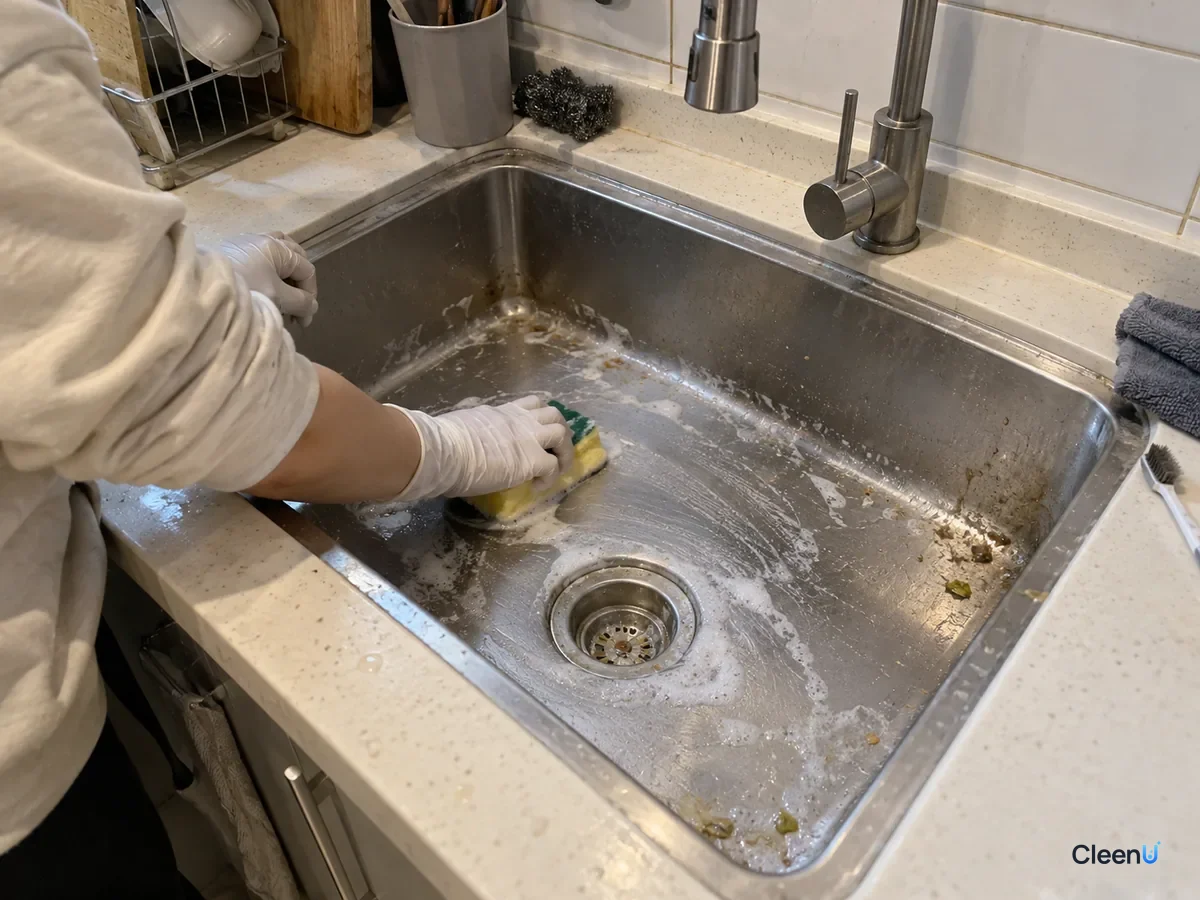
Put a little dish soap on a soft sponge and go over the whole sink along the grain, especially the bottom and corners, then rinse.
Find the grain
Look closely for the fine parallel lines in the finish; that's the grain. Wipe along it from here on, never in circles.
Treat rust specks and water spots
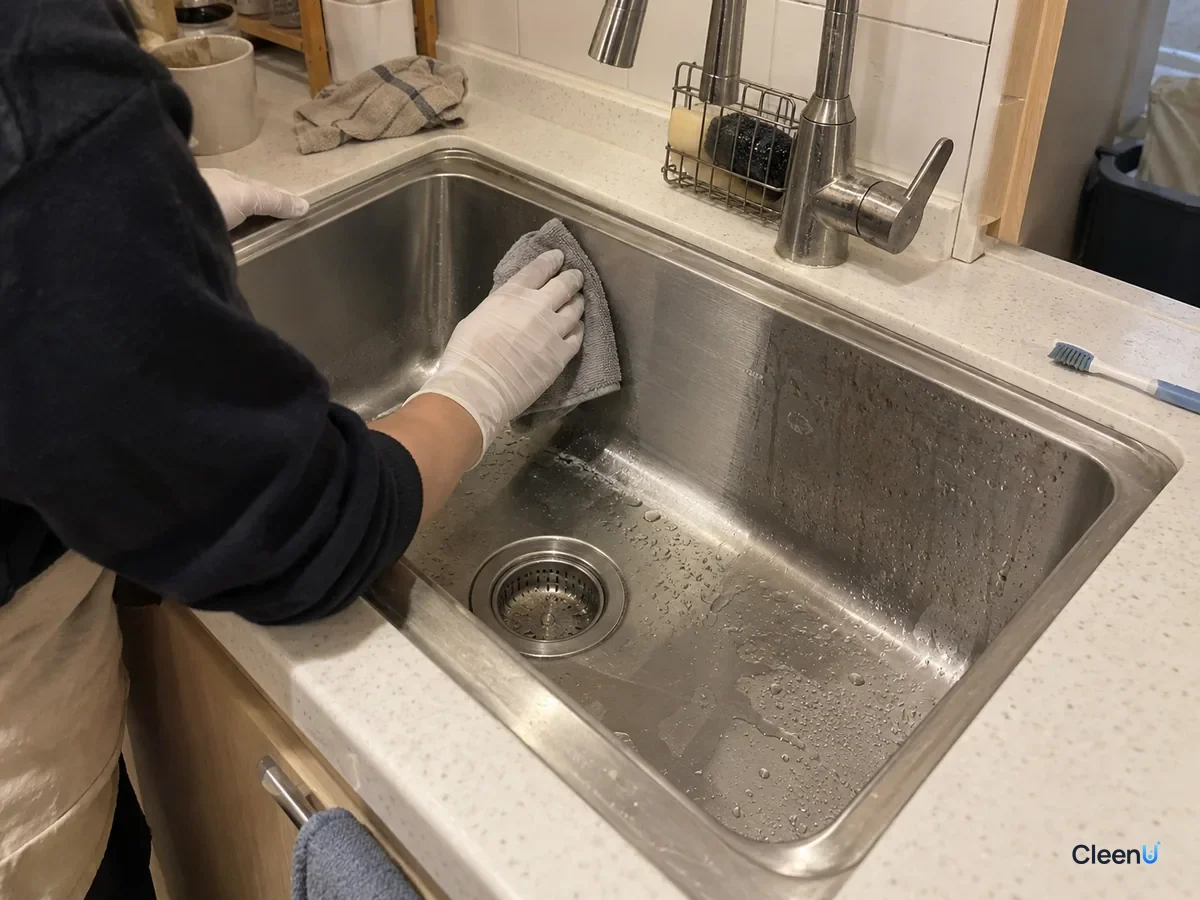
Spray stainless steel cleaner onto a microfiber cloth and rub along the grain over specks and spots. Light transferred rust usually comes off. For stubborn rust or heavy scale, use a dedicated stainless rust remover or descaler per its label.
Caution:Don't scrape rust with steel wool or scouring powder; scratches rust more easily.
Do the corners and drain edge
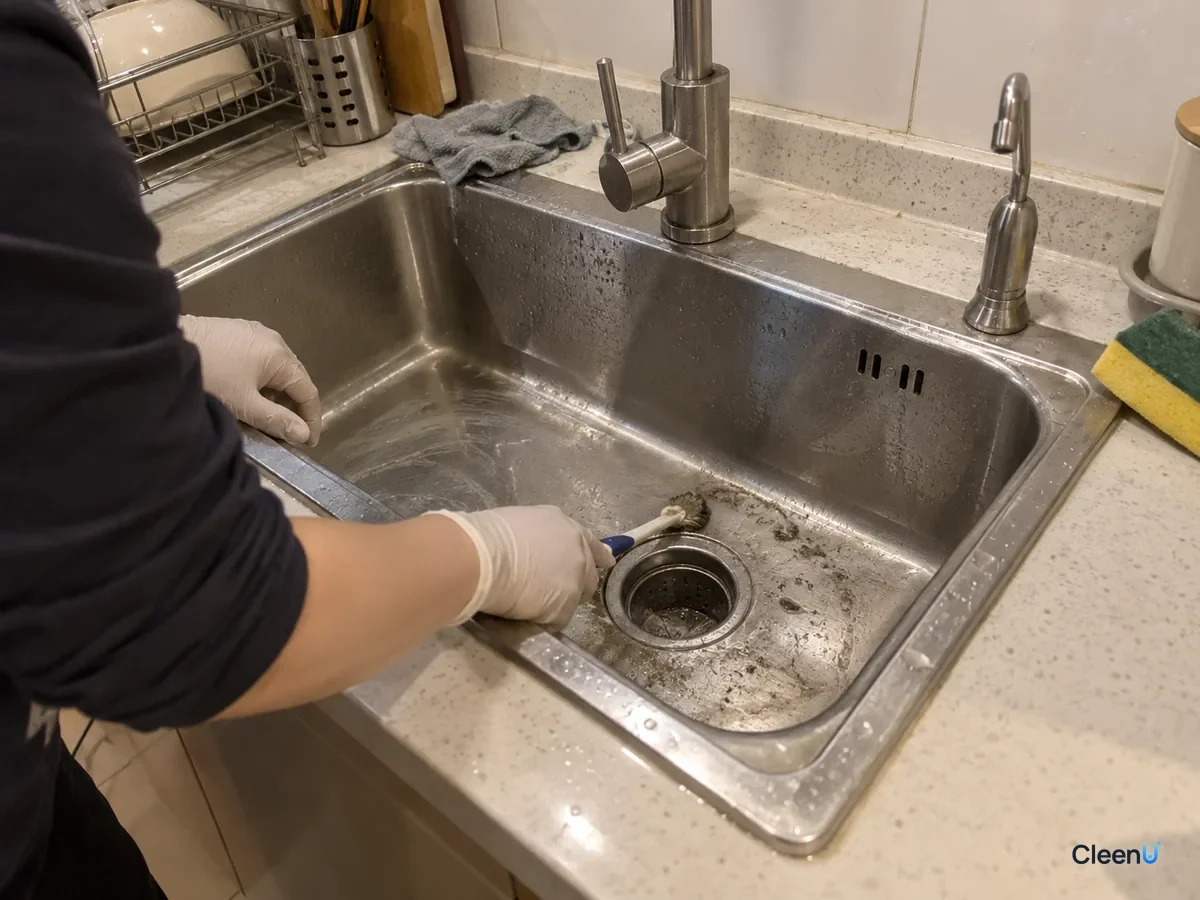
Brush the bottom corners, around the drain, and the seam at the countertop with an old toothbrush and a little cleaner, then wipe with a damp cloth.
Wipe it all down and buff dry
Wipe the whole sink along the grain with a cloth sprayed with cleaner, then buff with a dry cloth in the same direction until there are no water marks. Drying the sink is the single best way to prevent spots and rust.
Surface rust or real corrosion?
Before you go after a rust spot, figure out which kind it is. The fix is completely different.
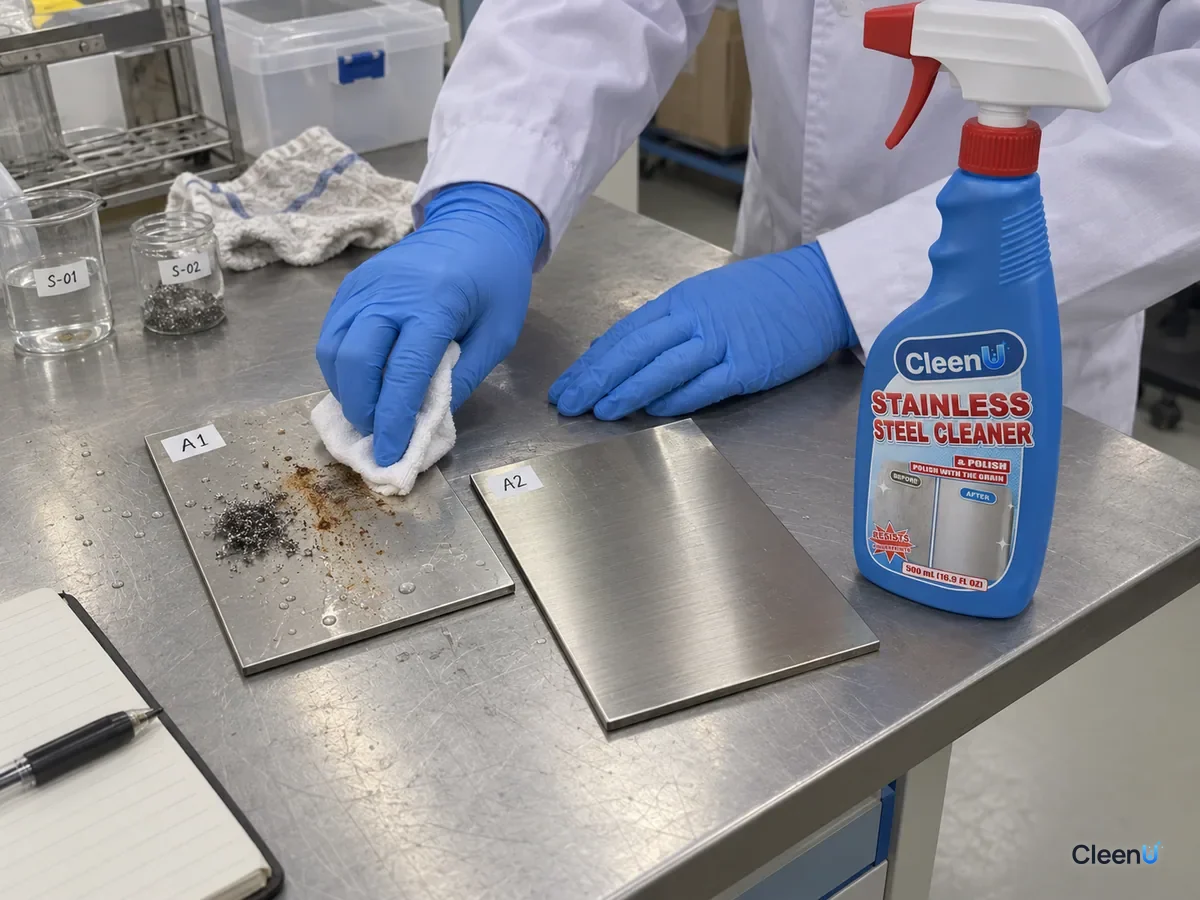
Transferred rust is iron debris rusting on top of the steel. It's orange-brown, often in small clusters or a line where a cast-iron pan or steel wool pad sat, and it feels like it's sitting on the surface when you run a fingernail over it. Spray the cleaner onto a cloth and wipe with the grain a few times. The cloth picks up a light brown tint, and the spot goes back to matching the steel around it.
Pitting is the steel itself corroding after the passive layer has been damaged. It's darker, with a pinpoint dimple in the center. Wiping lightens the color, but the pit stays, and you can feel the tiny dip. It usually shows up on the sink floor or around the drain, wherever bleach solutions tend to sit.
The first kind goes away for good once you wipe it off, keep the sink dry, and stop leaving iron in it. The second kind can be made less visible, but the pit can't be filled in. If you find pitting, the goal shifts from removing it to keeping it from spreading: no more bleach soaks in the sink, and dry it after each use so the passive layer can re-form in dry, oxygen-rich conditions.
Why you degrease first and polish second
A common mistake is spraying polish straight onto a yellowed sink. You end up with bright patches next to dull ones, and more wiping makes it worse. That yellow film is mostly grease and starch. The care ingredients only spread evenly over clean metal. Over an oily film, they mix with the grease and get pushed into uneven streaks.
So wash with dish soap first, rinse, and then use the stainless cleaner for water spots, rust specks, and the final polish. The first step relies on surfactants emulsifying grease. The second relies on chelating agents binding calcium and magnesium and on care ingredients leaving a thin, even film. Each step does its own job, and neither replaces the other.
How to tell you're done, and what too much looks like
Check the sink in side light. The sheen should be even, with no obvious streaks along the grain, and the surface should feel dry and smooth, not tacky. If white water spots remain in places, that's thicker scale. The chelating action handles light water marks, not heavy buildup, so treat those spots separately with a descaler, rinse, dry, and polish again.
Using too much polish makes the steel look greasy and pick up fingerprints, which is the opposite of the shine you're after. A few sprays on the cloth cover a whole sink. Always finish with a dry cloth along the grain to take off the excess.
Why bleach shouldn't sit in a stainless sink
Plenty of people soak dishcloths or cutting boards in bleach right in the sink for hours. Chloride ions from sodium hypochlorite attack the passive layer, and long contact can create tiny pits that look like little rust craters.
When you need bleach, use a separate basin rather than a long soak in the stainless sink, and rinse the sink thoroughly and dry it afterward.
Scratches: what you can and can't do
Fine scratches from steel wool or a gritty pad can't be removed by cleaning, but they can be made less obvious. Always wipe and polish along the grain so light catches the scratches the same way it catches the brushed finish around them. Wiping in circles does the opposite and makes every scratch stand out. Keep scratched areas clean and dry, too. Scratches hold grime and moisture, which is why iron debris tends to rust right inside them.
Day-to-day care
Rinse the sink after each use and wipe it dry. It takes less than a minute and dramatically cuts down on spots and rust.
Wash and dry cast iron right away instead of leaving it in the sink overnight, and don't store steel wool or wire brushes in the sink.
Wipe the sink with stainless steel cleaner along the grain once a week.
In hard-water areas, treat heavy spotting with a descaler once a month, then rinse and dry.
For other stainless appliances, see How to clean a kitchen.
Stop if you see this
For black, colored, or coated sinks, check the manual and test in a hidden spot first; stop if the surface dulls, whitens, or discolors. Don't use steel wool, scouring powder, or long bleach soaks, and don't mix the stainless cleaner with chlorine products. If pitting is deep or the sink is leaking, call a professional.
Stainless steel sink stains: common questions
Why does my stainless steel sink have rust spots?
Usually transferred rust: iron particles from cast iron or steel wool rusting in the damp. Bleach left sitting in the sink can also damage the passive layer.
How do I get rust spots off a stainless sink?
For light specks, rub along the grain with stainless steel cleaner on a cloth. For stubborn ones, use a dedicated stainless rust remover per its label. Don't scrape with steel wool.
How do I get white water spots off my sink?
They're scale. Light spots come off with stainless cleaner along the grain; heavy ones need a descaler, then a rinse and dry.
Can I use steel wool on a stainless sink?
We don't recommend it. It leaves scratches and iron particles; scratches hold grime and the particles rust. Use a soft sponge and microfiber.
Can I soak things in bleach in my stainless sink?
Not for long. Chlorine attacks the passive layer. Use a separate basin, then rinse and dry the sink.
How often should I care for a stainless sink?
Rinse and dry it after each use and wipe it along the grain with stainless cleaner once a week.
For a two-in-one spray that lifts grease film and water marks from a stainless sink with a wipe along the grain and leaves an even sheen, take a look at our Stainless Steel Cleaner & Polish.
A yellowed, spotted stainless sink usually has buildup on the surface: oxidized grease and tea stains, white scale from hard water, and transferred rust from cast iron and steel wool. Wash off grease with dish soap, find the grain, rub water spots and rust specks with stainless steel cleaner on a cloth along the grain, and buff dry. Skip steel wool and scouring powder, don't let bleach sit in the sink, and don't leave iron cookware in it overnight. Rinse and dry after each use and it'll stay bright.