
How-to
How to Clean the Inside of a Refrigerator Step by Step
Direct answer
Unplug the fridge or turn off cooling per the manual, move food into a cooler, wash the shelves and drawers in warm water, and wipe the walls and door gasket with a fridge cleaner. Wipe again with plain water, dry everything, restart, and wait until it's cold to restock. Wipe it monthly and deep clean every three months.
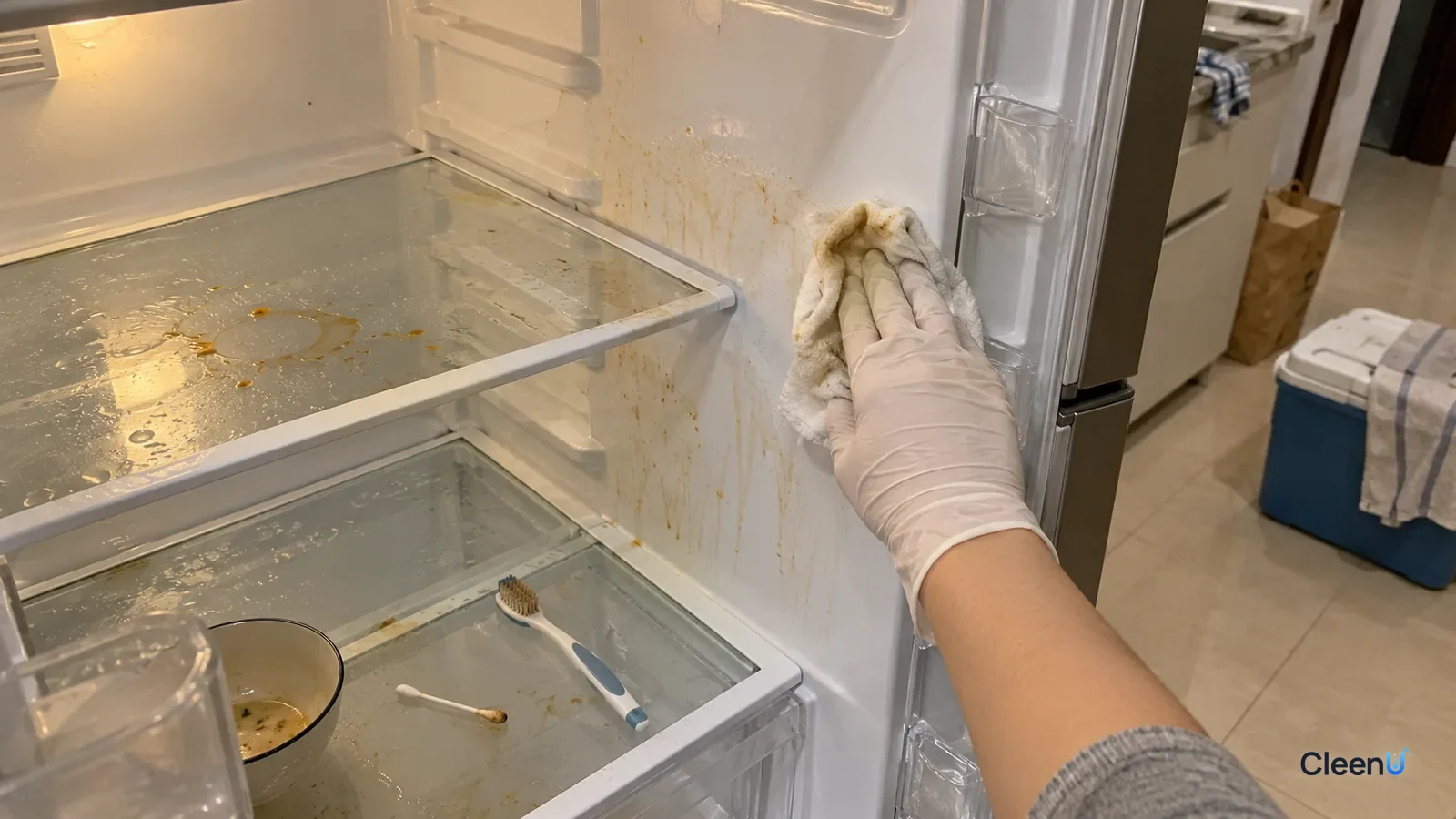
Every day the fridge door opens and closes, and little by little soup, wilted greens, juice, and meat drippings build up: dried rings on the shelves, water and soggy leaves at the bottom of the crisper, black gunk in the folds of the door gasket. Cold slows bacteria down but doesn't stop them, and a dirty fridge is also more likely to share smells between foods.
Here's how to do a full interior clean and how often to do it. If your fridge already smells, find the source first; see the fridge section of How to clean a kitchen.
What's actually dirty in there
Dried soup and juice: sugar, starch, protein, and fat that dry into sticky rings on shelves and feed bacteria and mold.
Water and debris in the crisper: soil and moisture from produce plus rotting leaves, the most common source of smell.
Gunk in the door gasket folds: oil from hands, crumbs, and condensation collect in the folds, turn black, and sometimes grow mold.
The drain hole at the back of the fridge section: frost on the back wall melts and runs into the drain hole. Food bits can clog it, and water pools at the bottom.
How a fridge cleaner differs from regular cleaner
A fridge holds food, so its cleaner needs to lift food residue without leaving a harsh smell, can't carry fragrance onto food, and should wipe off cleanly with water.
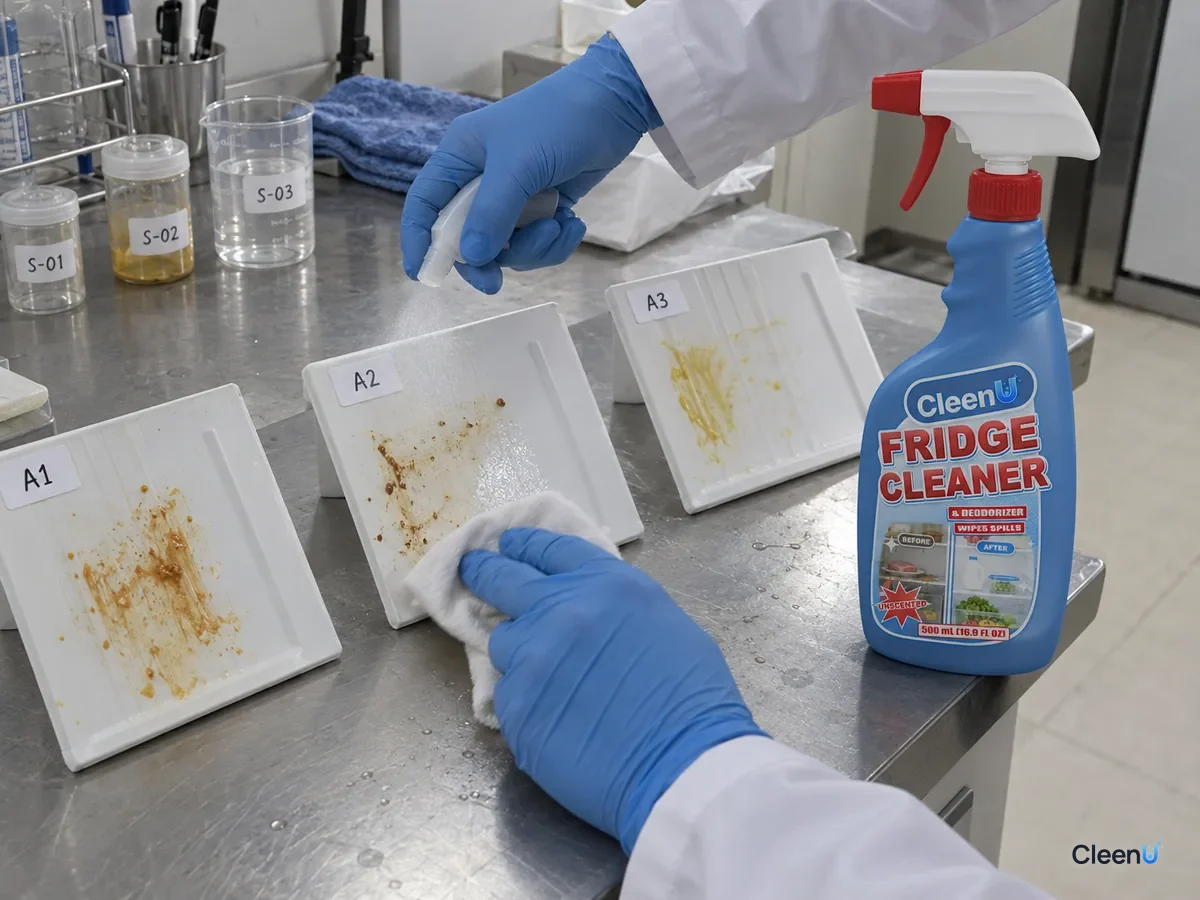
Take CleenU Refrigerator Cleaner & Deodorizer as an example. It's a pH-neutral fridge cleaning and deodorizing spray, pH 7.0 to 8.5 as supplied, made with nonionic surfactants and a cyclodextrin-based odor neutralizer. It's unscented, dye-free, and chlorine-free, and it's ready to use. The surfactants emulsify food residue and grease on shelves and walls. Cyclodextrin is a ring-shaped molecule that traps some odor molecules in its cavity so they don't evaporate as easily, which helps with odors left on surfaces. Unscented and dye-free means the cleaner itself doesn't transfer smells to food. Spray, wait about a minute, wipe, then wipe again with a cloth dampened with plain water.
It's made for fridge walls, glass shelves, crisper drawers, door gaskets, and freezer walls. Never spray it on food, don't rinse cold glass shelves with hot water, keep it away from wiring, temperature controls, and vents, and use a stainless steel product for long-term care of stainless exterior doors.
Seven steps to deep clean the inside of a fridge
A full fridge clean in seven steps
Set up a cooler and toss expired food
Grab a cooler or some ice packs and move the fridge food into it, throwing out anything expired, soft, or moldy as you go. If the freezer is full, clean it in stages so frozen food isn't at room temperature for long.
Unplug or turn off cooling
Unplug it or turn off cooling per the manual. It's safer, and as the interior warms slightly, water won't freeze on contact.
Remove shelves, drawers, and door bins
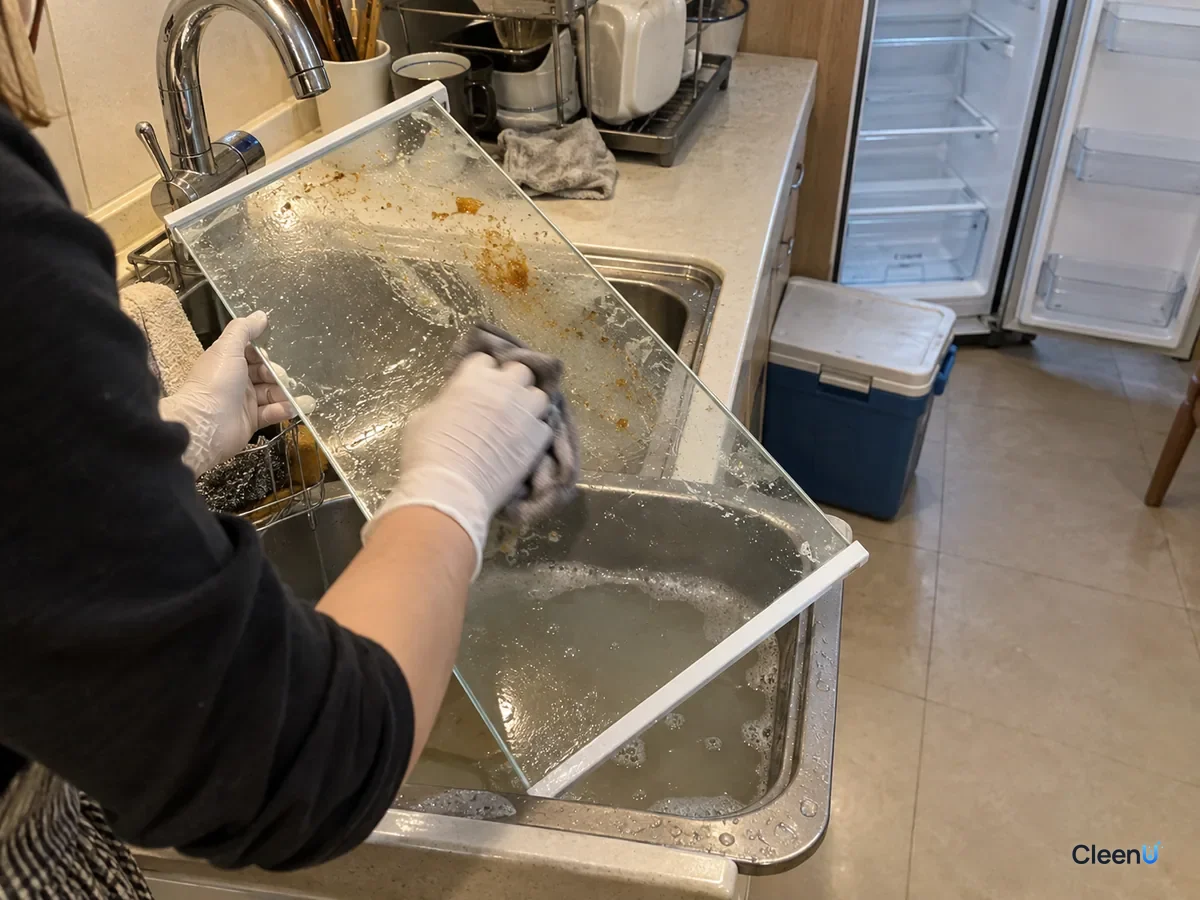
Take out every removable glass shelf, crisper drawer, and door bin. Let glass shelves sit at room temperature for a few minutes, then wash in warm water with a little mild dish soap, rinse, and let them dry.
Caution:Running hot water over cold glass shelves can crack them from the temperature shock.
Wipe the walls
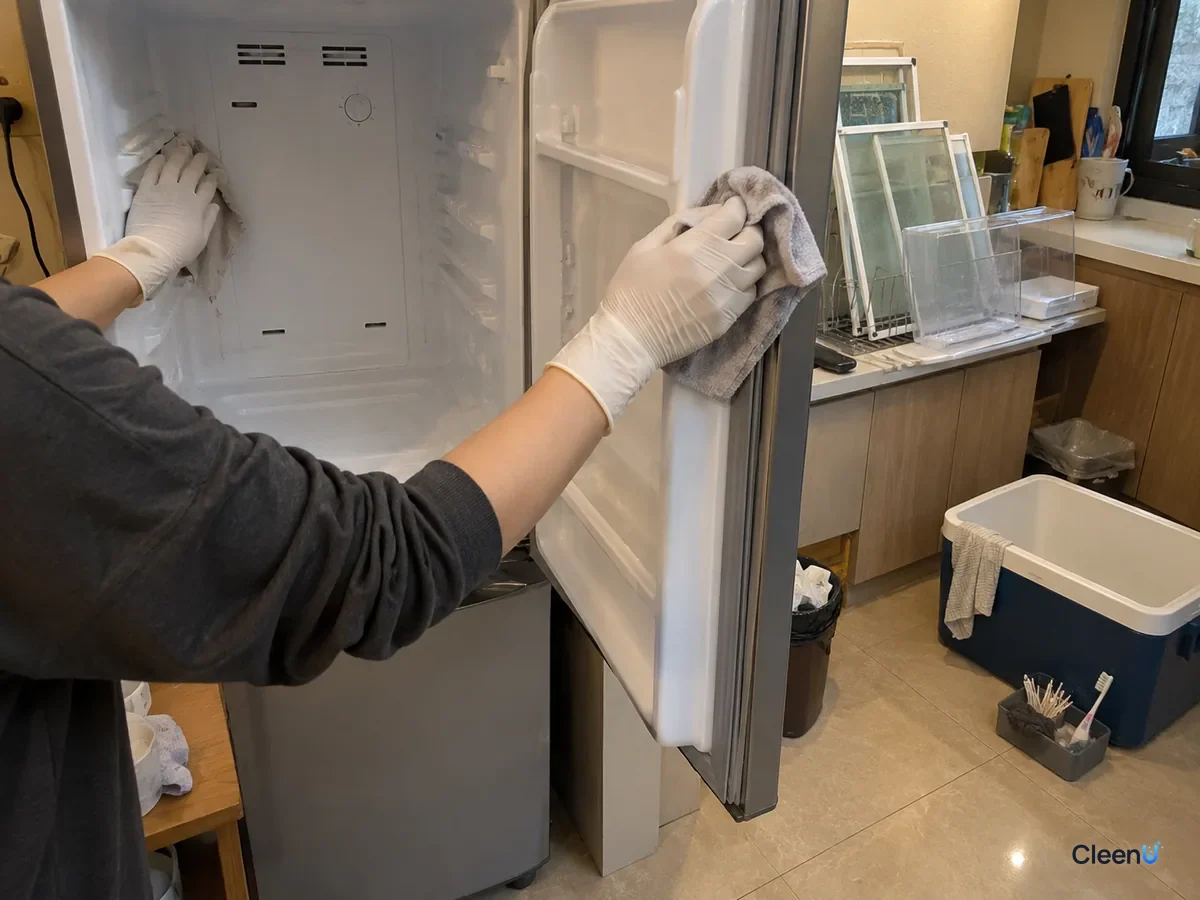
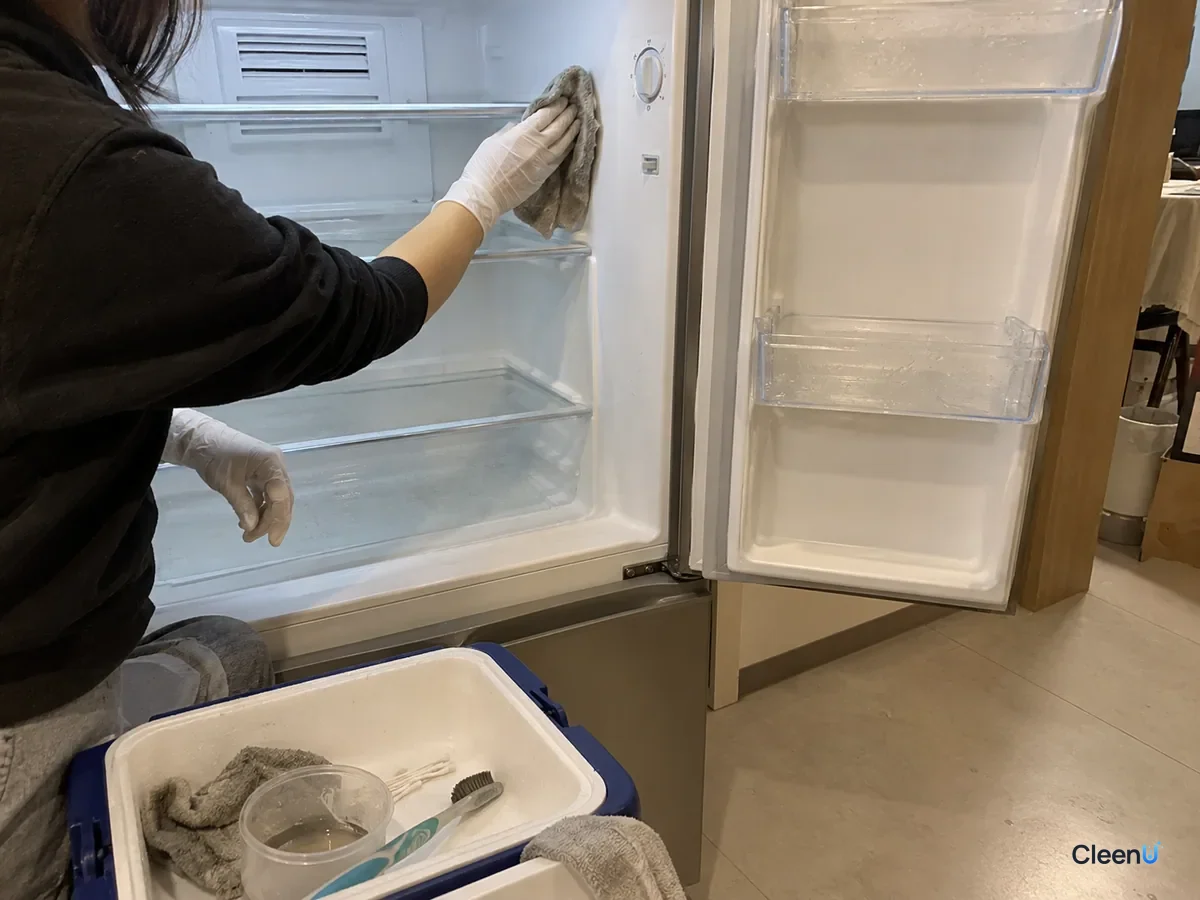
Spray fridge cleaner on the interior walls or a cloth, work top to bottom, let it sit about a minute to soften residue, then wipe it off. Use a soft brush or old toothbrush in corners and crevices.
Clear the drain hole and clean the gasket
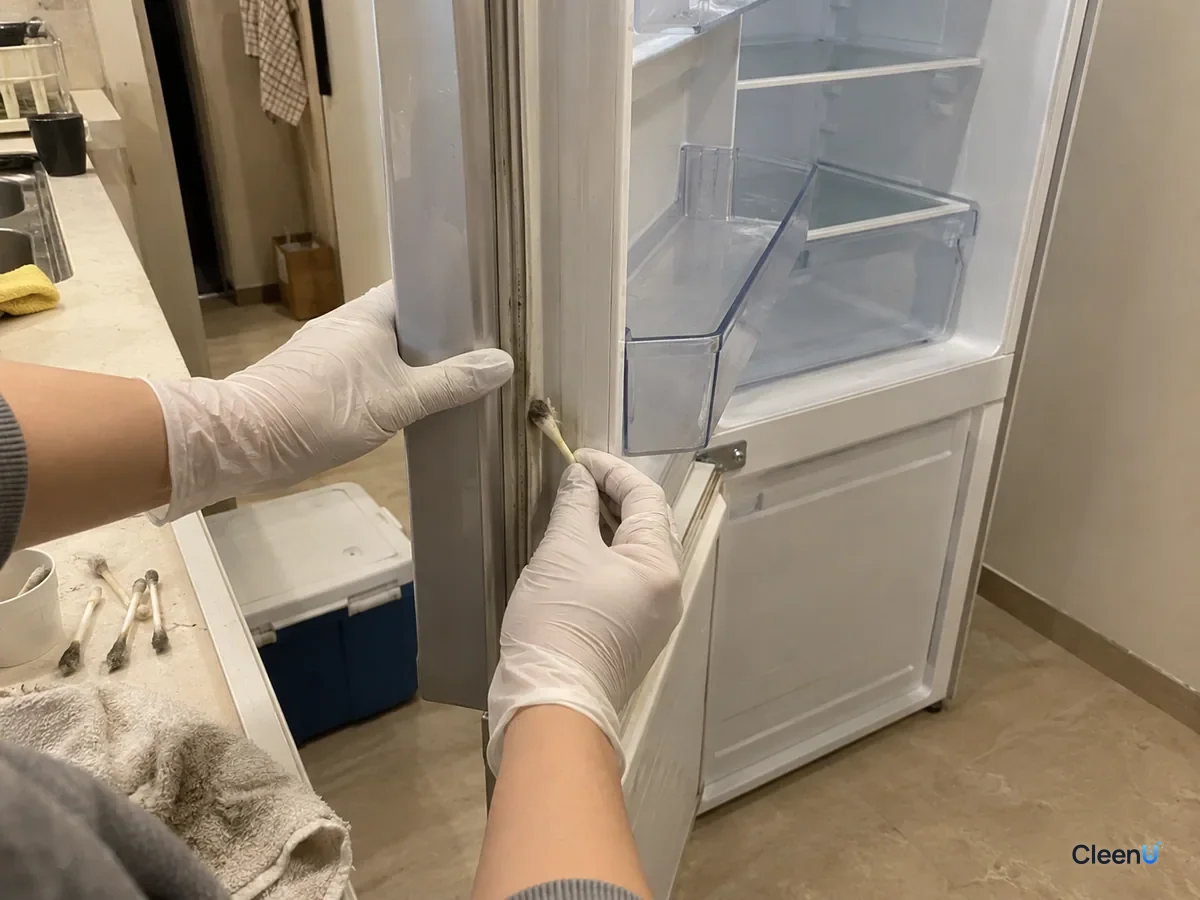
Gently clear the drain hole at the bottom of the back wall with a soft drain tool or cotton swab. Run a cotton swab with a little cleaner along the folds of the door gasket to pull out the grime.
Wipe with plain water and dry
Go over everything with a wrung-out cloth and plain water to remove cleaner residue, then dry the walls, gasket, and shelves with a towel. Leftover water turns to frost and helps mold come back faster.
Reassemble, restart, and restock once cold
Put the dry shelves and drawers back and plug the fridge in. Wait until it's back to temperature (usually an hour or two; check the manual) before restocking by zone.
Different spills, different technique
Dried soup, meat juice, and fruit juice spills are a mix of sugar, starch, protein, and fat that dries into a thin shell. It dries slowly in the cold, but give it time and it hardens and turns tacky, clinging to shelves and walls. A dry cloth just scuffs the top layer. Spray it and let it sit for about a minute. Water redissolves the sugar and starch, the protein takes up water and softens, and the surfactants emulsify the fat, so the whole mark loosens from the surface. Press the cloth onto the spot and pull it in one direction instead of rubbing back and forth, which would just smear the softened residue across the shelf. If one pass doesn't do it, switch to a clean part of the cloth and spray again.
For mud, water, and rotting leaves in the crisper drawer, use paper towels to soak up the liquid and pick out the solids first, then spray and wipe. Spray first and the cleaner mixes with the muddy water, making things murkier the more you wipe.
Black grime in the door gasket folds is partly grease and crumbs, and a cotton swab dipped in cleaner and run along the folds will lift most of it. If the swabs come away clean after a few passes but dark spots remain and look like they've soaked into the rubber, that's likely stain left by mold. Cleaner can remove surface grime, but it can't pull color out of the rubber. Don't scrape at it with anything sharp. A torn gasket leaks cold air. Instead, ask the manufacturer whether the gasket should be replaced.
What fridge interiors don't like
Most fridge liners are plastic, shelves are tempered glass, and door gaskets are soft rubber. Plastic liners scratch easily. Steel wool and scouring powder leave fine scratches that trap grime and odors. Some strong solvents and chlorine products can yellow or embrittle plastic, and their smell can carry over to food. Use soft cloths and soft brushes, pick a neutral, unscented, chlorine-free cleaner, and follow up with a cloth dampened with plain water to take off any residue.
Go easy on the spray. Wet the surface, but don't spray until it drips. The back wall has air vents and a temperature sensor, and liquid running into them can cause problems.
How to tell you're done
Run a finger over the shelves and walls. They shouldn't feel tacky. Look at the glass shelves under the light for rings or wipe marks. Run a dry cotton swab along the gasket folds and see whether it comes out clean. To check for odor, wait until the fridge is back on and cold, keep the door closed for half an hour, then open it and smell. If there's still a clear odor, the source is still in there. Common culprits are debris in the drain hole, juice that thawed and refroze in the freezer, or a food that has gone bad. Find it and deal with it. Also keep in mind that cleaning and deodorizing remove grime and leftover odors. They don't disinfect, so a wiped fridge isn't a sterile one, and keeping raw and cooked foods apart still matters.
How often to clean
Daily: wipe up soup or meat-juice spills the same day; the sooner, the easier.
Weekly: check for expired food and clear water and soggy leaves out of the crisper.
Monthly: wipe the shelves and door gasket with fridge cleaner; no need to unplug or empty everything.
Every three months: do the full clean above.
With a big household, a lot of cooking, or hot weather, clean more often.
Keeping it clean afterward
Store leftovers and raw meat or fish in sealed containers or bags. Keep raw meat on the bottom shelf so drips can't reach other food.
Wipe excess water and soil off produce before it goes in, and line the crisper with a paper towel to absorb moisture, replacing it regularly.
Don't overpack the fridge; cold air needs to circulate. Let hot food cool before refrigerating it.
Stop if you see this
If the fridge is leaking or you smell burning or hot wiring, unplug it and contact the manufacturer. Don't chip ice or poke the drain with anything sharp; you can puncture the liner or refrigerant lines. Never spray cleaner on food, into vents, or onto wiring, and don't mix it with chlorine products. Don't rinse cold glass shelves with hot water.
Cleaning inside the fridge: common questions
How often should I clean my fridge?
Wipe the shelves and gasket monthly and deep clean every three months. Wipe spills the same day and clear out expired food weekly.
Do I have to unplug the fridge to clean it?
For a full clean, unplugging or turning off cooling per the manual is safer. You don't need to for the monthly wipe-down.
Can I rinse fridge shelves with hot water?
Let cold glass shelves warm to room temperature first. Hot water on cold glass can crack it.
What should I clean the inside of a fridge with?
An unscented, chlorine-free fridge cleaner, followed by a plain-water wipe. Skip scented products and bleach.
Why is there water pooling at the bottom of my fridge?
Usually the drain hole on the back wall is clogged. Clear it gently with a soft tool or cotton swab, make sure water drains, then dry the bottom.
How long after cleaning can I put food back?
Once it's back to temperature after restarting, usually an hour or two; check your manual.
For an unscented, chlorine-free fridge spray that lifts food residue, tackles lingering odor, and finishes with a simple water wipe, take a look at our Refrigerator Cleaner & Deodorizer.
A good fridge clean comes down to emptying, washing, wiping, and drying. Move food into a cooler, unplug or turn off cooling, wash shelves and drawers in warm water (let cold glass warm up first), spray the walls with an unscented, chlorine-free fridge cleaner, wait about a minute, and wipe. Clear the drain hole, clean the gasket, wipe everything with plain water, dry it, restart, and restock once it's cold. Wipe spills the same day, clear out expired food weekly, wipe shelves and the gasket monthly, and deep clean every three months.