
How-to
How to Clean a Yellowed Bathtub and Soap Scum Ring
Direct answer
Check what your tub is made of first. Acrylic needs a non-abrasive cleaner and a soft cloth; enameled steel or cast iron with intact glaze can take a mildly acidic foaming cleaner. Spray it on, wait 3 to 5 minutes (10 for heavy soap scum), wipe with a soft sponge, rinse, and dry.
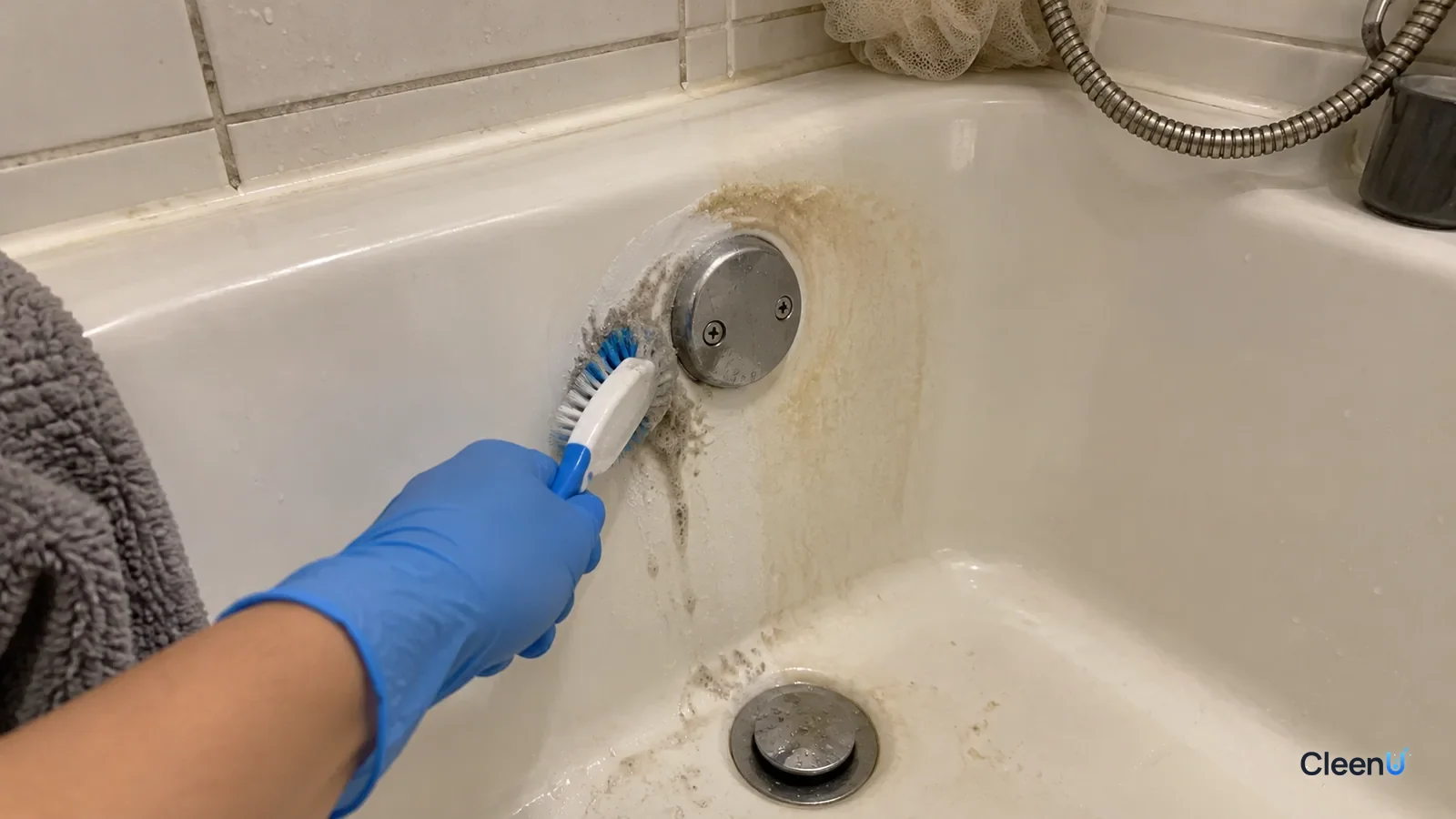
After enough baths, a yellowish ring shows up right where the water line sits. It feels gritty and doesn't rinse off, and the bottom of the tub and the drain area look dingy too. Some people scrub with steel wool or scouring powder and end up with an acrylic tub covered in dull, scratched patches.
Tub grime isn't hard to remove. What's tricky is choosing the right method so you don't damage the surface. Figure out two things first: what the tub is made of, and what the yellow ring actually is.
What a tub ring is
When you bathe, fatty-acid salts in body wash, bar soap, and shampoo combine with calcium and magnesium in the water to form insoluble calcium soap. It mixes with skin oil and dead skin and floats on the surface. As the tub drains, that layer settles on the wall along the water line like a bathtub ring.
As water evaporates, calcium carbonate from the water also settles into the ring, making it harder and grittier. The skin oil oxidizes in air and slowly turns from gray-white to yellow.
So a tub ring is soap scum plus skin oil plus scale. Acid dissolves the calcium in the scum and scale, and surfactants emulsify the oil.
Telling tub materials apart
Acrylic: the most common. It's lightweight, sounds dull when tapped, and the plastic surface feels slightly warm. It's relatively soft, so steel wool, scouring powder, and stiff brushes scratch it, and scratches dull it and trap grime. It also doesn't like strong solvents.
Enameled steel: a steel tub with fused porcelain enamel. It sounds bright and metallic when tapped, and the surface is very hard and smooth.
Cast iron: very heavy, also with an enamel glaze, thick and durable. But if the glaze is chipped and iron shows through, skip acidic products there, or the exposed iron will rust faster.
Cultured or natural stone: stone tubs can't take acidic cleaners. Use a neutral product labeled for stone.
How a foaming tub cleaner works
Take CleenU Foaming Tub & Tile Cleaner as an example. It's a mildly acidic clinging foam, pH 2.5 to 4.0 as supplied, made with organic acids, foaming surfactants, and a foam stabilizer, with no abrasives and no chlorine. It's ready to use.
The organic acids react with the calcium and magnesium in soap scum and scale and dissolve them again. The surfactants emulsify skin oil and the oily part of soap scum. The foam stabilizer keeps the foam clinging to the vertical tub walls instead of sliding to the bottom, so the ring at the water line gets enough contact time. With no abrasives, a soft sponge is all you need, so it won't scratch acrylic. Let the foam sit 3 to 5 minutes, 10 for heavy soap scum.
It's made for acrylic and enameled tubs, shower walls, tile, and glass enclosures. It isn't for natural stone walls or counters, chipped glaze on cast iron tubs, or long contact with coated fixtures, and it must never be used with chlorine bleach.
Six steps to clean a bathtub
From rinse to dry in six steps
Identify the material and rinse
Figure out your tub material using the tips above. Rinse the whole tub with the handheld shower to wash away hair and loose dirt, and clear hair from the drain.
Spot-test acrylic and worn glaze
On acrylic or an older cast iron tub, spray a little on the outside or a hidden corner, let it sit, wipe it off, and check for dulling or color change.
Caution:Don't use acidic products where cast iron glaze is chipped and iron is exposed.
Spray foam, focusing on the water line
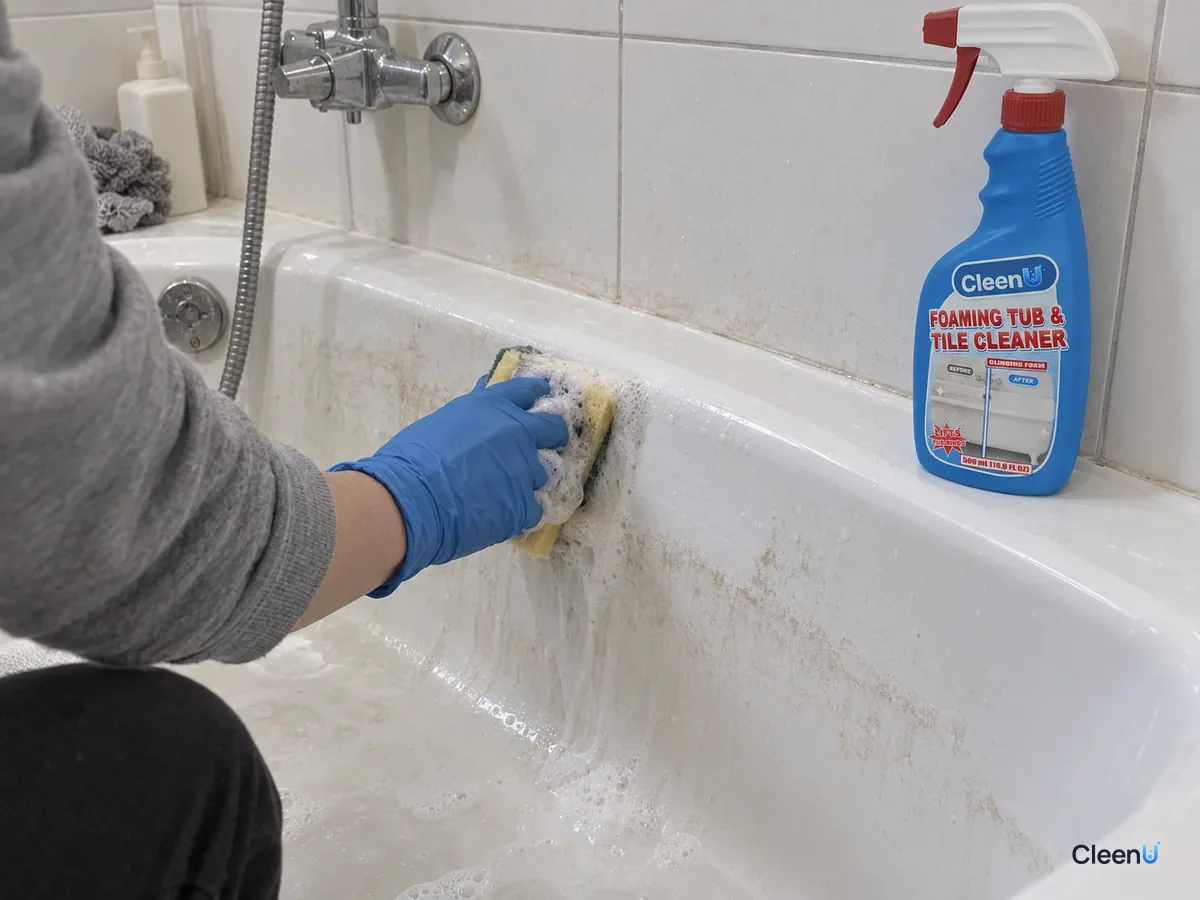
Spray foam evenly on the inside walls, concentrating on the ring at the water line, the bottom, the drain, and around grab bars. You just need it to cling; no need for a thick coat.
Wait 3 to 5 minutes, 10 for heavy scum
Let the foam sit without rinsing. Give a heavy yellow ring up to 10 minutes, and mist a little more if the foam starts to dry.
Wipe with a soft sponge and brush the crevices
Wipe in circles with a soft sponge or microfiber cloth and the softened scum will come off. Use a soft brush on the drain, overflow, and the seam where the tub meets the wall.
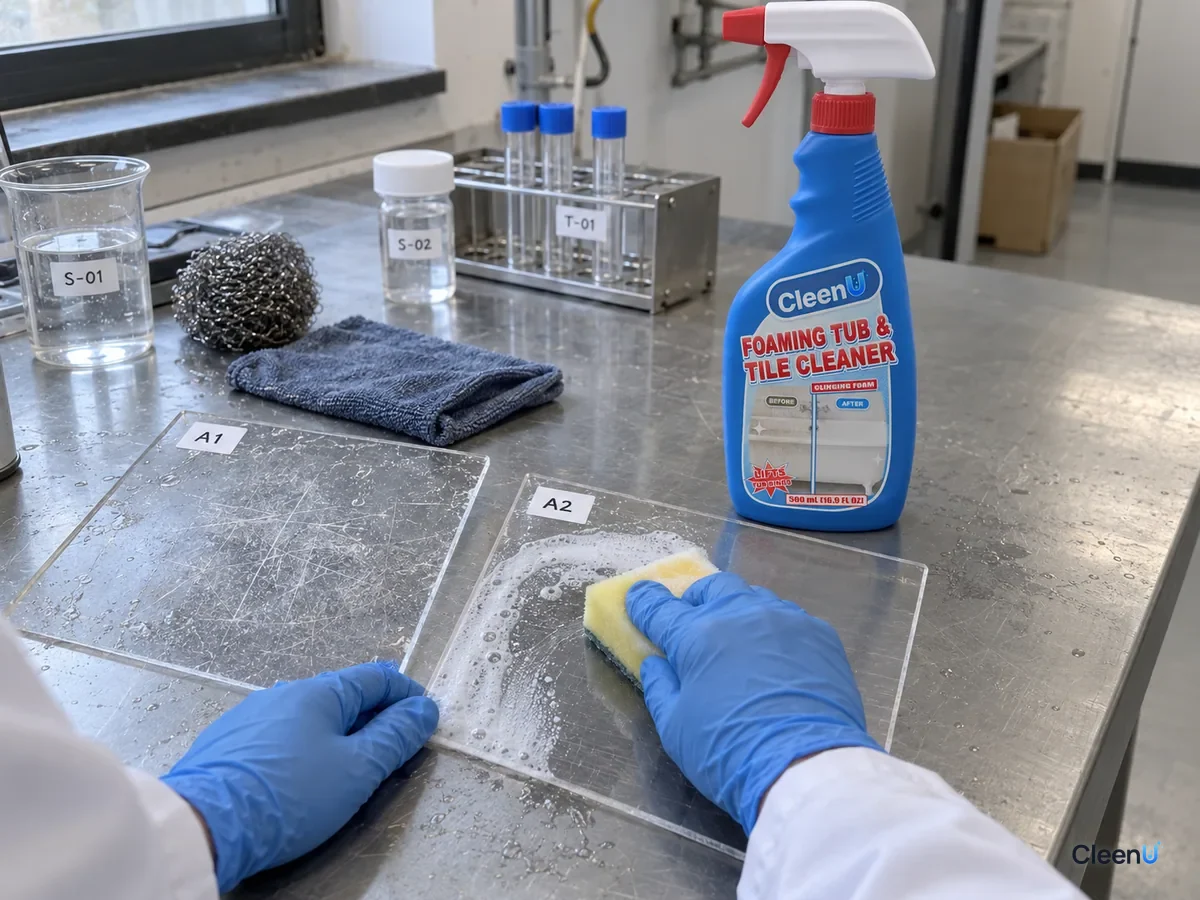
Caution:Never use steel wool, scouring powder, or stiff brushes, especially on acrylic.
Rinse thoroughly and dry
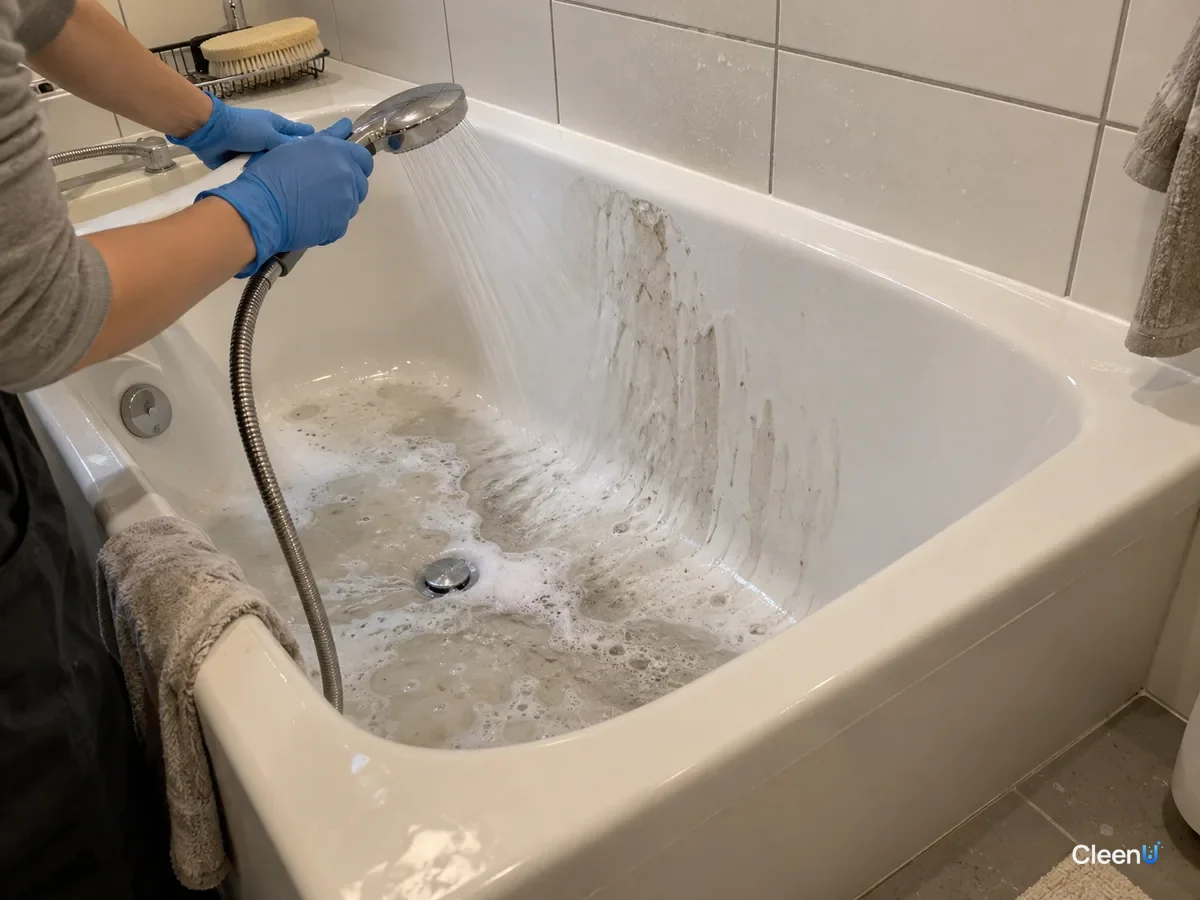
Rinse the tub completely with the handheld shower so no cleaner is left, then dry it with a towel to slow new scale and scum.
How to tell the scum has softened
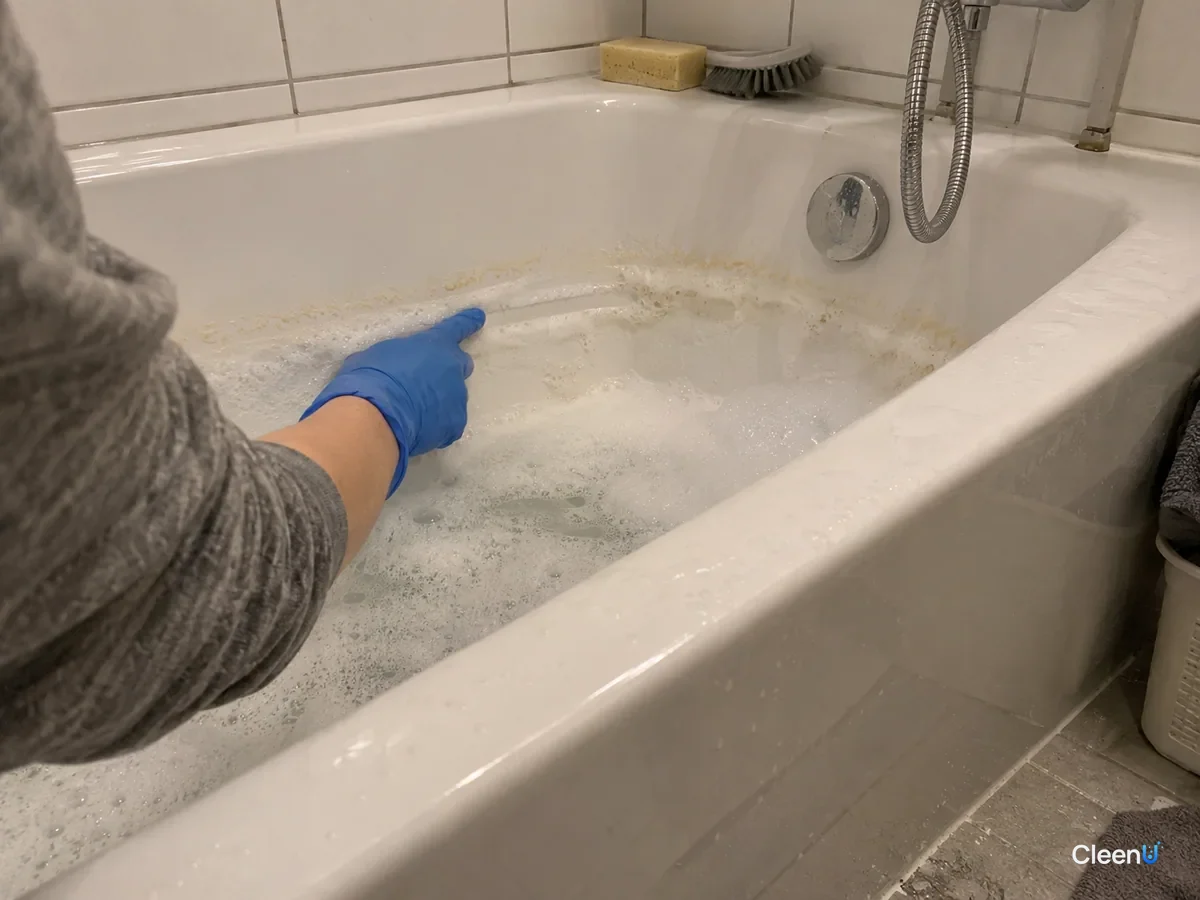
Once the dwell time is up, run a gloved fingertip along the water line. Softened scum goes from gritty and draggy to slick, and a sponge pulls off grayish foam right away. If you still feel a hard edge, or the ring barely changes color after a wipe, the acid hasn't finished dissolving the calcium and magnesium yet. Don't scrub harder. Rinse off the old foam, spray again, and give it another round. Thick rings build up in layers. The first round dissolves the outer layer, and the second reaches the layer bonded to the tub itself.
After rinsing, run a dry hand around the tub wall. If it feels smooth with no rough patches, and water sheets evenly instead of beading up, the scum is gone. If one spot still feels rough, treat just that spot again.
Common mistakes
Spraying a tub that's still hot from a bath. On a warm surface, the water in the foam evaporates fast, so the foam can dry out before the dwell time is up. Without water, the acid and surfactants stop working, and you may end up with a white ring. Let the tub cool, or rinse it with cold water before you spray.
Letting the foam dry on the tub. Longer isn't better. Dried foam isn't doing anything, and it's harder to rinse. If the foam starts thinning out, mist a little more or move on to wiping.
Not rinsing enough. Acidic foam left behind collects on the tub floor and around the drain, where it can touch skin during the next bath and keep metal drain parts sitting in an acidic film. Rinse from the top down, and spend extra time around the drain.
Using it right after another product. If you've just used chlorine bleach, rinse well and air out the room before you use an acidic foam. The two should never meet in the tub.
Adjust for your situation
Hard water: More calcium and magnesium means faster scum buildup and a ring with more scale in it. You may need two rounds of foam with dwell times closer to 10 minutes. Rinsing and drying the tub after every bath makes the biggest difference.
Bath oils, salts, and milk baths: These leave a slicker, yellower ring with more oil in it, so the surfactants' emulsifying action matters more. Switch to a clean face of the sponge often so you aren't just spreading oil around the tub.
Hotel and rental turnovers: Time is tight, so spray the foam first and strip the beds while it sits, then come back to wipe and rinse. That way the dwell time is working for you instead of making you wait.
Is a yellow tub always dirty?
Usually it's soap scum, skin oil, and scale, and the method above removes it. A few situations don't respond as well.
Aged acrylic: after many years of hot water and UV, the acrylic itself can yellow slightly. That's the material, not surface grime, and cleaning won't reverse it.
Grime in scratches: once acrylic has fine scratches, dirt settles into them and the area stays darker after cleaning. A professional refinisher can polish them out.
Rust stains: chipped glaze on cast iron, or iron in the water, leaves orange-yellow rust marks that need a dedicated rust remover and a glaze repair.
To tell soap scum from scale elsewhere in the bathroom, see Soap scum vs. hard water stains. For an overall schedule, see How to clean a bathroom.
Keeping the ring from coming back
Right after you drain the tub, rinse it with the handheld shower, especially the water line, while the scum is still soft.
Dry the tub with a soft towel.
Clean it with foaming tub cleaner once a week instead of waiting for a hard ring to form.
Switching to body washes with less soap base means less calcium soap; in hard-water areas, a water softener helps too.
Stop if you see this
If an acrylic tub turns dull, white, or tacky, rinse it immediately and stop using that product. Don't use acidic products where cast iron glaze is chipped and iron shows. Never mix with chlorine bleach, and keep acidic products off natural stone tubs and counters. If cleaner gets in your eyes, rinse with plenty of water. Tubs are slippery, so take care.
Yellow tubs and soap scum rings: common questions
What is the yellow ring at the water line?
A mix of calcium soap, skin oil, and scale that settles along the water line as the tub drains and yellows as it oxidizes.
Can I scrub an acrylic tub with steel wool?
No. Acrylic is soft and scratches easily, and scratches hold more grime. Use a soft sponge and a non-abrasive cleaner.
How long should tub foam sit?
Usually 3 to 5 minutes, 10 for a heavy ring; follow the label.
Can I use an acidic cleaner on a cast iron tub?
On intact glaze, yes, per the label. Skip spots where the glaze is chipped and iron shows; acid speeds up rust.
Can a yellowed acrylic tub be made white again?
Surface grime comes off. If the acrylic itself has yellowed with age, cleaning won't fix it; a refinisher can advise.
How often should I clean the tub?
Rinse and dry it after every bath and clean it with foaming tub cleaner once a week.
For a mildly acidic foam that clings to tub walls, softens the soap scum ring in a few minutes, and contains no abrasives that scratch acrylic, take a look at our Foaming Tub & Tile Cleaner.
The yellow ring in a tub is calcium soap, skin oil, and scale that settles along the water line and oxidizes. Check the material first: acrylic can't take steel wool or scouring powder, chipped cast iron glaze shouldn't get acid, and stone tubs need a neutral cleaner. For tubs with intact surfaces, spray a mildly acidic foaming cleaner, wait 3 to 5 minutes (10 for heavy scum), wipe with a soft sponge, brush the crevices, rinse, and dry. Yellowing in aged acrylic and grime in scratches are material issues that cleaning can only partly help. Rinse and dry after every bath and clean weekly.