
How-to
How to Clean a Glass Table Without Streaks
Direct answer
Wipe off food bits and sticky spots with a damp cloth first, then spray glass cleaner onto a microfiber cloth to remove fingerprints and grease, and buff dry in one direction. Clean both the top and underside, and wipe away cup rings and drink spills as soon as they happen.
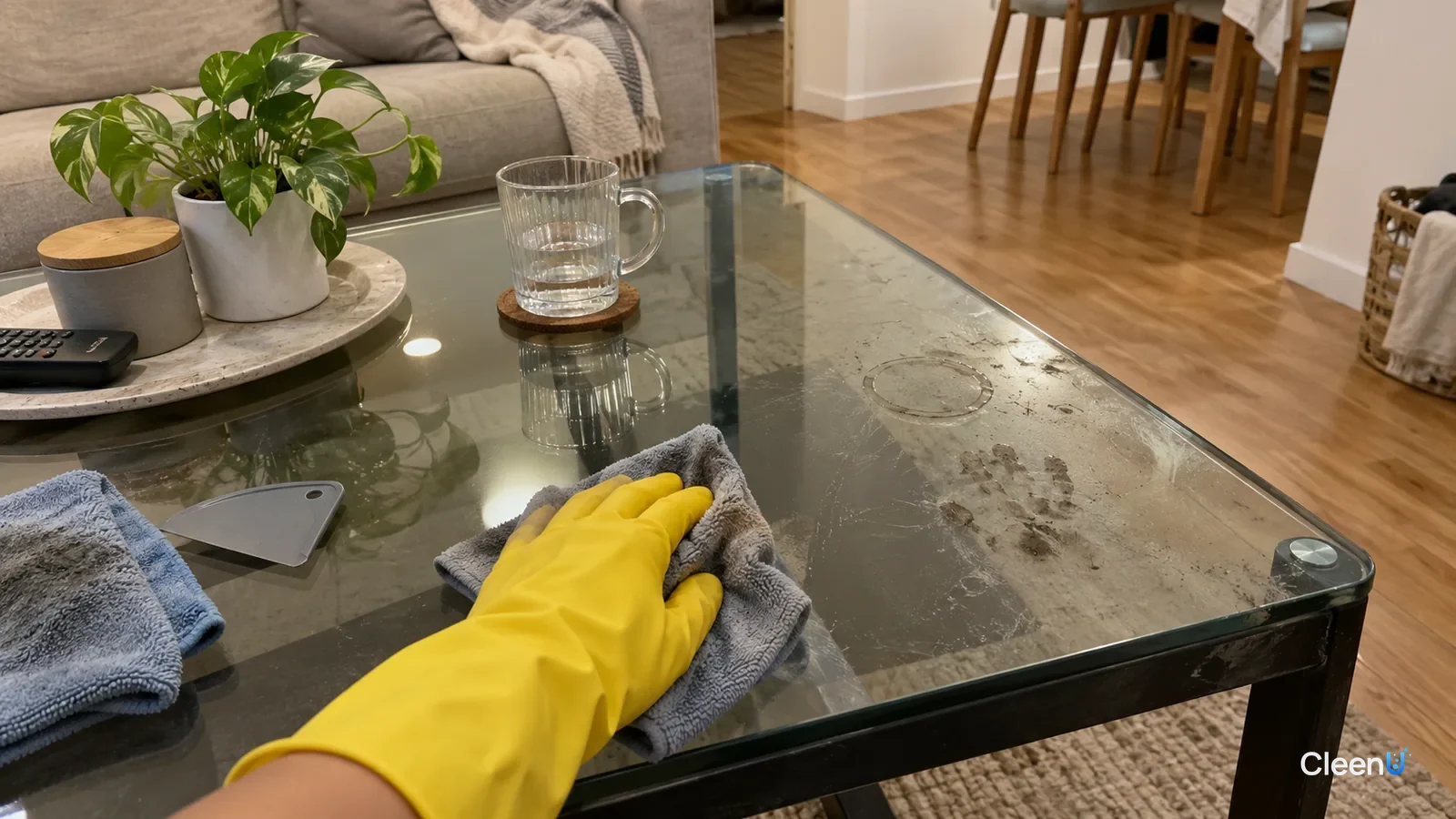
Glass coffee tables and dining tables look great and are easy to wipe, but they show every mark: grease after dinner, rings from water glasses, little handprints everywhere, all lit up by the lamp. You wipe it down and there are still streaks when the light hits it.
When a glass table won't come clean, it's usually not about effort. It's the order you clean in and what you use.
What's on a glass table
Fingerprints and grease: skin oil and food grease spread into a thin film that shows clearly under light.
Food bits and sticky spots: sauce, juice, and sugary drinks dry onto the glass, sometimes hard.
Cup rings: minerals left when water under a glass evaporates, forming white rings.
Dust: mixed with grease, it turns into a dull gray film.
These need different treatment. Food and sugar need water to dissolve, grease needs cleaner, and rings are minerals. If you go straight in with glass cleaner and try to get everything at once, grease, sugar, and dust get smeared together and it just gets streakier.
What glass cleaner does
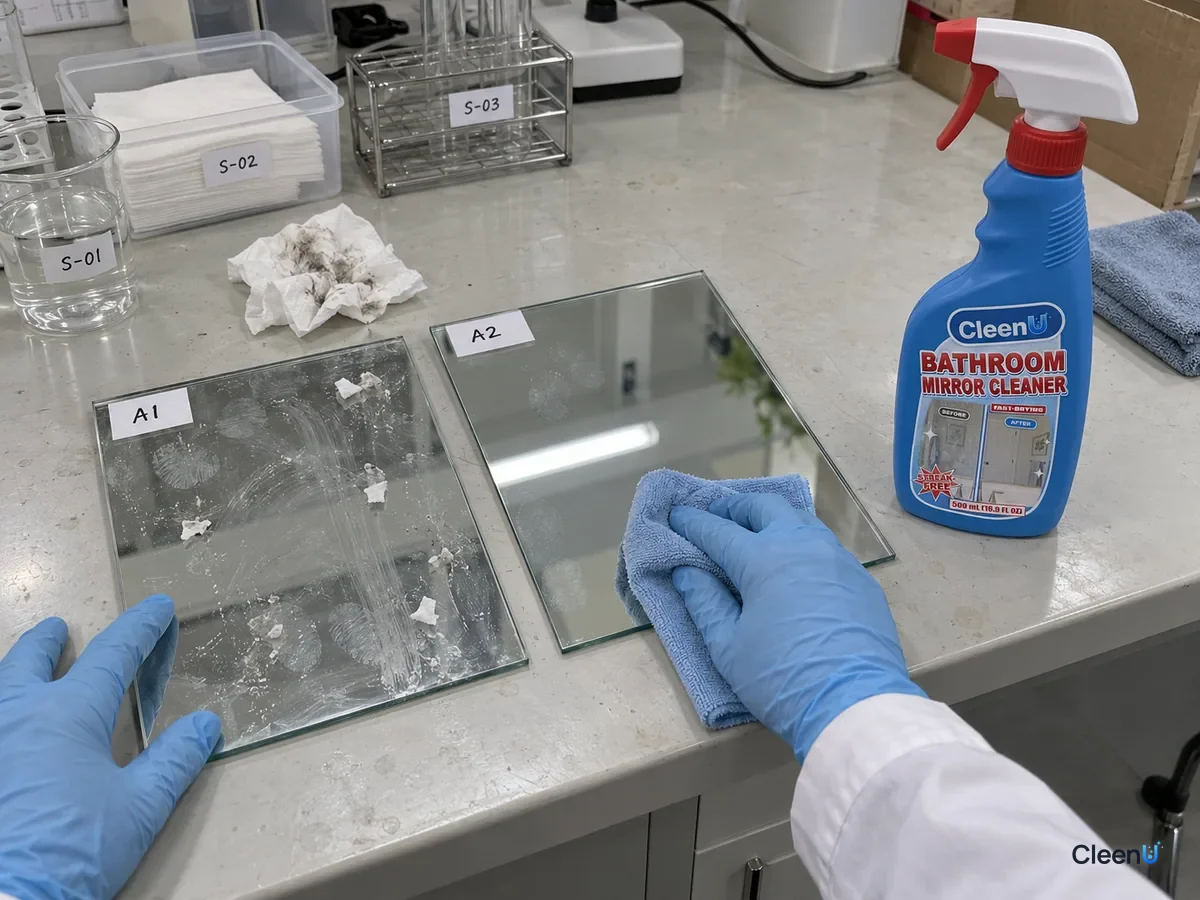
Take CleenU Bathroom Mirror Cleaner as an example. It's a fast-drying mirror and glass spray, pH 6.5 to 8.0 as supplied, made with fast-evaporating alcohols such as isopropyl alcohol and low-residue surfactants, with no ammonia. It's ready to use: spray and wipe, no dwell time. The alcohol dissolves the oily part of fingerprints and grease and evaporates quickly; the low-residue surfactants emulsify grime and leave very little behind. It's designed for bathroom mirrors, glass partitions, and glass shelves and works well on everyday glass like coffee and dining tables. It isn't for mirror edges or backs (avoid pooling), glass with a heavy scale crust, electronic screens, or coated eyeglass lenses.
Six steps to clean a glass table
From crumbs to a streak-free finish in six steps
Clear the table
Take everything off, including placemats, coasters, and decor.
Wipe off food and sticky spots with a damp cloth
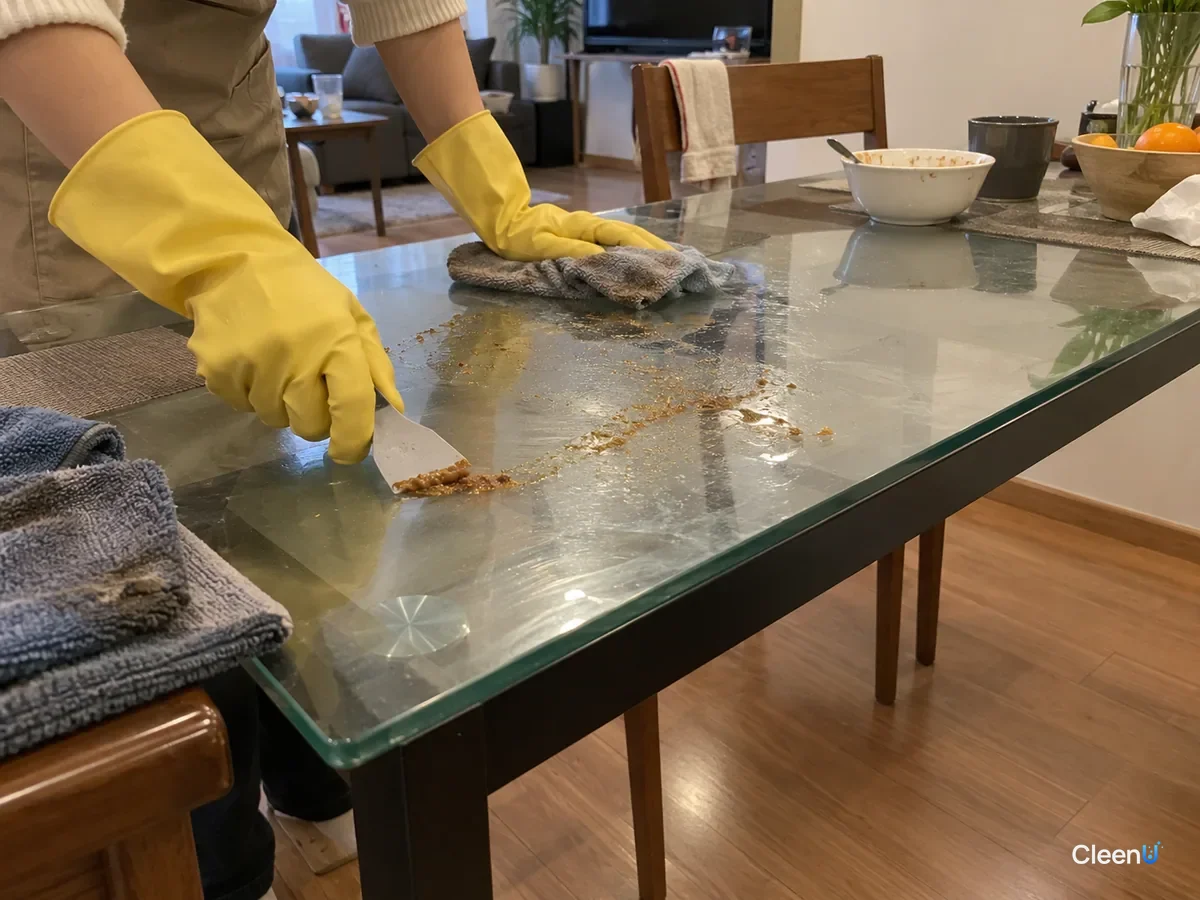
Use a wrung-out damp cloth to remove crumbs, dried sauce, and sugary spills. For hardened spots, lay the damp cloth on them for a minute to soften them, or lift them with a soft plastic scraper held low. Don't scrape with fingernails or steel wool.
Caution:Glass cleaner isn't meant for food chunks. Get them off first or you'll just smear everything.
Spray the cloth and wipe the grease
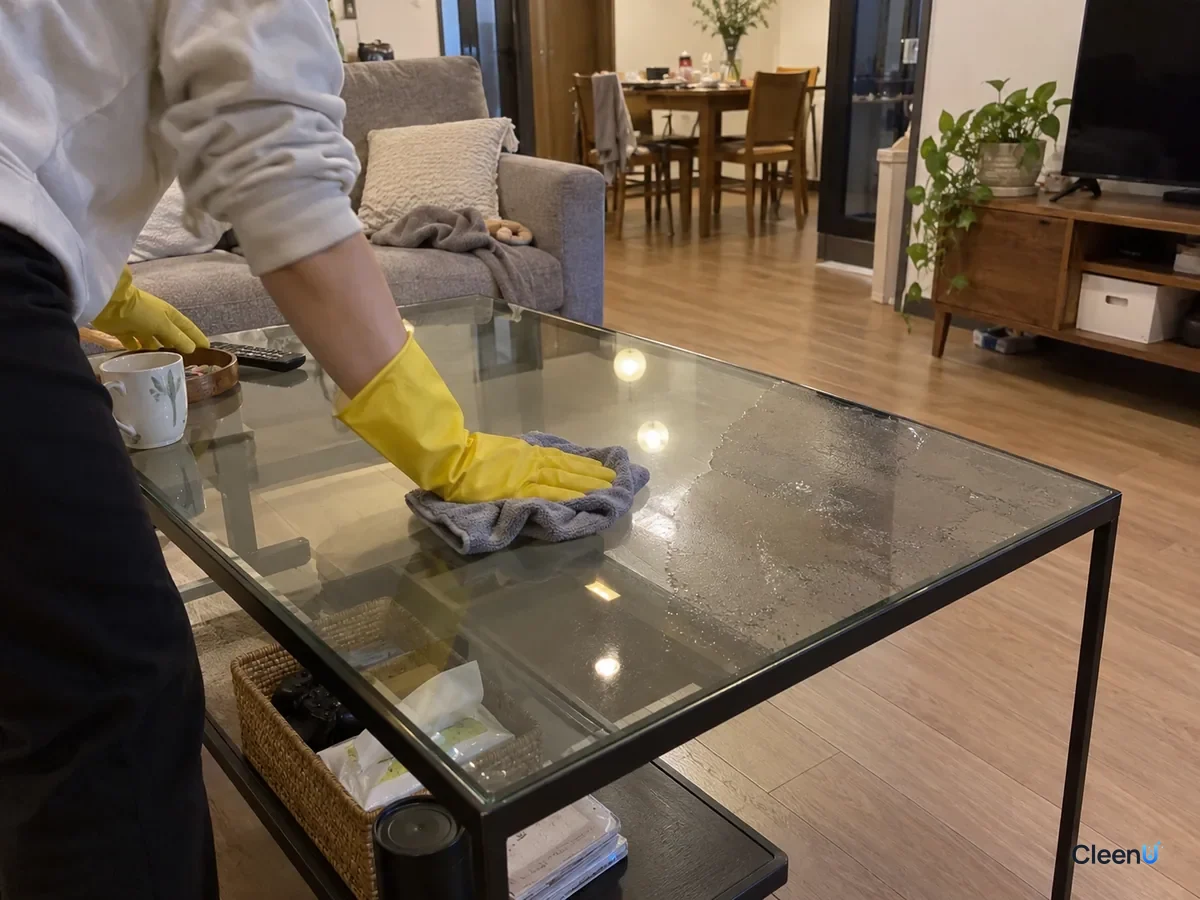
Mist glass cleaner onto a microfiber cloth until it's slightly damp, start at one end, and go over fingerprints and greasy spots a few extra times.
Buff dry in one direction
Right away, take a second, dry microfiber cloth and wipe the whole top in one direction, say left to right, until there are no damp streaks or swirls.
Do the underside and edges
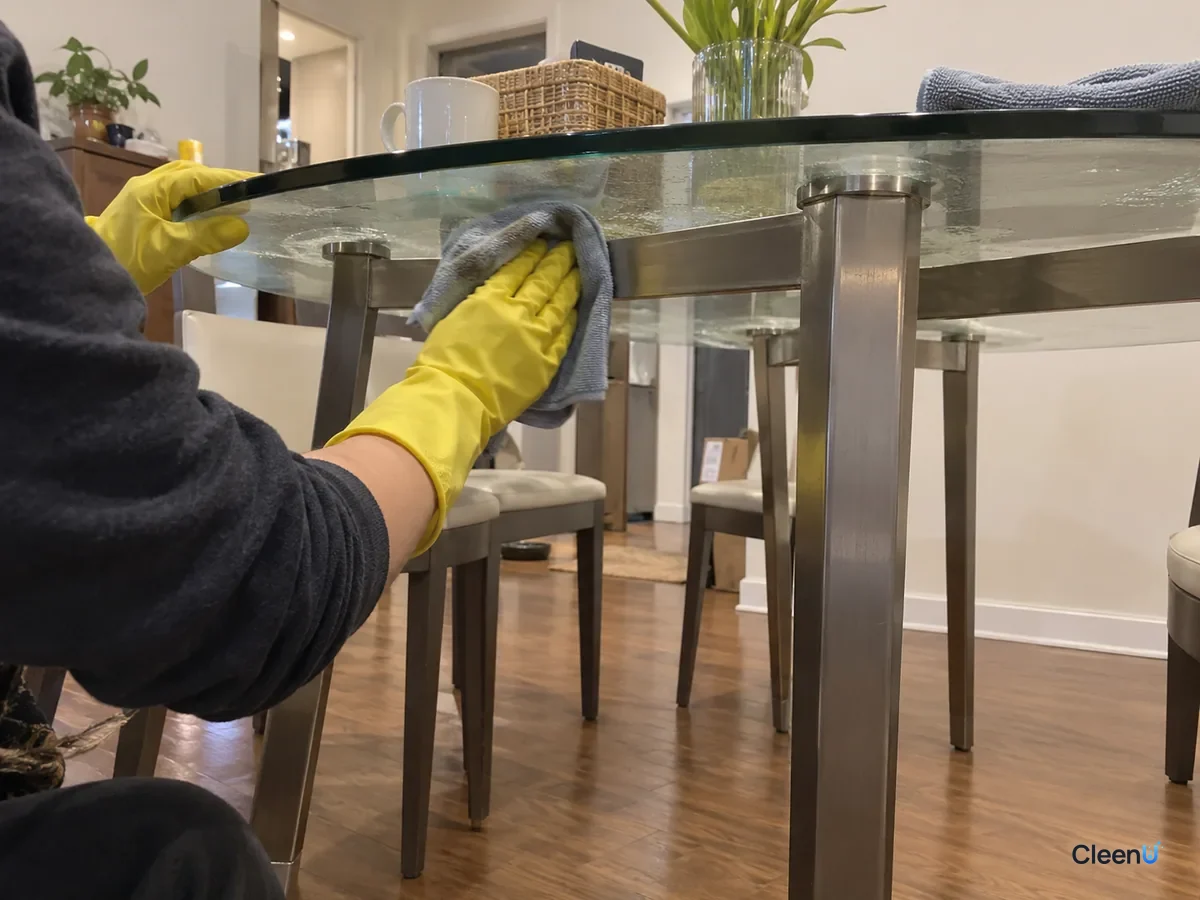
The underside and edges of a glass top collect dust and fingerprints too, and they show from above. Clean them the same way. Clean metal or wood legs separately with something suited to that material.
Check at an angle against the light
Look across the glass toward a lamp or window. Buff any remaining marks with the dry cloth rather than adding more cleaner.
Still streaky? Here's why
A dirty cloth: a rag that's wiped up grease, or one washed with fabric softener, puts oil and softener on the glass. Keep a dedicated microfiber cloth for glass, washed separately without softener.
Too much cleaner: spraying heavily leaves a film when it dries. Spray the cloth so it's just damp.
Skipping the crumb wipe: grease, sugar, and dust get smeared together.
Direct sun or a warm surface: the liquid dries mid-wipe.
Paper towels: they shed lint and leave fibers.
For more on streaky glass, see Why glass streaks after cleaning. For other glass around the house, see How to clean glass without streaks.
Why glass tables show every mark
Glass is smooth and doesn't absorb water or oil. On a wood table, a little grease gets hidden by the grain and the fine texture of the finish. On glass, skin oil and grease spread into an even film that changes how light reflects, so you see a hazy, shiny smudge. Clear glass has another catch: you see dirt on the top and the underside at the same time, so cleaning only the top never looks quite done.
That's why the real trick with glass isn't wiping dirt off. It's not leaving anything behind. The skin oil in a fingerprint has to be dissolved and emulsified by alcohols and surfactants, then picked up by clean fibers. If the cloth already has grease on it, or there's so much liquid that it dries slowly, the loosened oil spreads back over the glass and dries into streaks. A fast-drying formula evaporates before you buff, so very little stays on the glass. That's why you spray, wipe right away, and finish with a dry cloth.
Coffee tables and dining tables get dirty differently
Dining tables collect more grease. Stir-frying and setting down hot dishes sends greasy steam into the air, and it settles slowly on the table. You may not see that film, but you can feel it as a slight drag under your fingers. Add oil from plate bottoms and drips of sauce, and it builds. Wipe up spills with a damp cloth after each meal, and give the whole table a pass with glass cleaner once a week so the film doesn't keep building.
Coffee tables collect fingerprints, cup rings, and dust. Kids' handprints after a snack often carry sugar and crumbs. Hit those with glass cleaner first and you'll smear sticky sugar around, so dissolve it with a damp cloth first. Pet nose prints are a mix of a little saliva and oil that dries into a hazy circle. Wipe them damp first, then follow with cleaner.
Special glass tops
Frosted and textured glass: Oil and dust settle into the texture where a cloth can't reach. Brush lightly along the pattern with a soft brush dipped in a little cleaner, lift the residue with a barely damp cloth, and dry it with a dry one. Don't expect it to look crystal clear, since frosted glass isn't clear to begin with.
Back-painted glass and glass with safety film: The paint or film is on the underside, so clean the top as usual. When you do the underside, keep cleaner from creeping in at the edges between the film and the glass. Test a hidden corner first, and go ahead only if nothing turns cloudy or bubbles.
Tops with metal trim or a wood frame: Spray the cloth, not the table, so liquid doesn't run onto the frame or into the seams. Metal trim can water-spot as it dries, and wood can turn cloudy when it gets wet.
How to tell you're done
Drop to eye level at one edge of the table and look across it toward a lamp or window. You shouldn't see shiny prints, wipe lines, or lint, and a fingertip dragged lightly across the glass should squeak a little. If a large area still looks hazy, you probably used too much cleaner. Buff it again with a clean, dry cloth. If a white ring stays in one spot no matter how much you buff, it's a mineral cup ring and needs separate treatment, below.
Cup rings and stubborn marks
Fresh rings wipe off with a dry cloth. Old white rings are mineral deposits that glass cleaner won't budge much. Wipe them with a cloth dampened with diluted white vinegar, wait a minute or two, wipe again, then follow with a plain-water wipe and a dry buff. Keep vinegar off wood, stone, or metal legs.
For sticker residue, soften it with a little cooking oil or an adhesive remover, scrape it off, then use glass cleaner to remove the oil.
Keeping a glass table clean
Use placemats and coasters at meals and you'll get far less grease and fewer rings.
After eating or drinking, wipe up water and grease spots with a dry cloth right away. It's much easier than once they dry.
Dust with a dry microfiber cloth daily and clean with glass cleaner once a week.
Stop if you see this
If the glass is cracked or chipped, stop using the table and replace the glass to avoid cuts. If tempered glass shows obvious scratches or spreading crack patterns, contact the seller. Don't use steel wool, scouring powder, or a blade held upright, and keep cleaner off wood or leather legs and placemats. Avoid pooling liquid on mirror edges and backs.
Cleaning glass tables: common questions
Why does my glass coffee table streak after I clean it?
Check that the cloth is clean and you didn't use too much cleaner. Buff in one direction with a clean, dry cloth and go over streaky spots again instead of adding more cleaner.
What gets grease off a glass dining table?
Wipe off food with a damp cloth first, then glass cleaner sprayed on a microfiber cloth, then buff dry.
How do I remove white water rings from a glass table?
Fresh ones wipe off with a dry cloth. For old ones, wipe with diluted white vinegar, then a plain-water wipe and a dry buff.
Can I use paper towels on a glass table?
In a pinch, but they shed lint and tend to streak. Use microfiber day to day.
Do I need to clean the underside of a glass table?
Yes. Dust and fingerprints on the underside show right through a clear tempered top.
How often should I clean a glass table?
Wipe up water and grease after use, dust daily, and clean thoroughly with glass cleaner once a week.
For an ammonia-free, fast-drying, low-residue glass cleaner that lifts fingerprints and grease from a glass table when sprayed on a cloth, take a look at our Bathroom Mirror Cleaner.
A streaky glass table is usually about order and supplies. Clear the table, wipe off food and hardened spots with a damp cloth, then spray glass cleaner onto a microfiber cloth for fingerprints and grease, and buff dry in one direction, top, underside, and edges. Use a clean cloth with no softener, a light touch of cleaner, and no direct sun. Placemats, coasters, and a quick wipe after meals keep the glass clear.