
How-to
How to Clean Luxury Vinyl Plank Floors
Direct answer
Vacuum or sweep up grit first, then damp-mop with a neutral resilient-floor cleaner mixed with water and let the floor air-dry. Skip wax, oil soaps, and strong solvents, and don't leave water in the seams, or the floor can turn sticky, hazy, discolored, or start to lift.
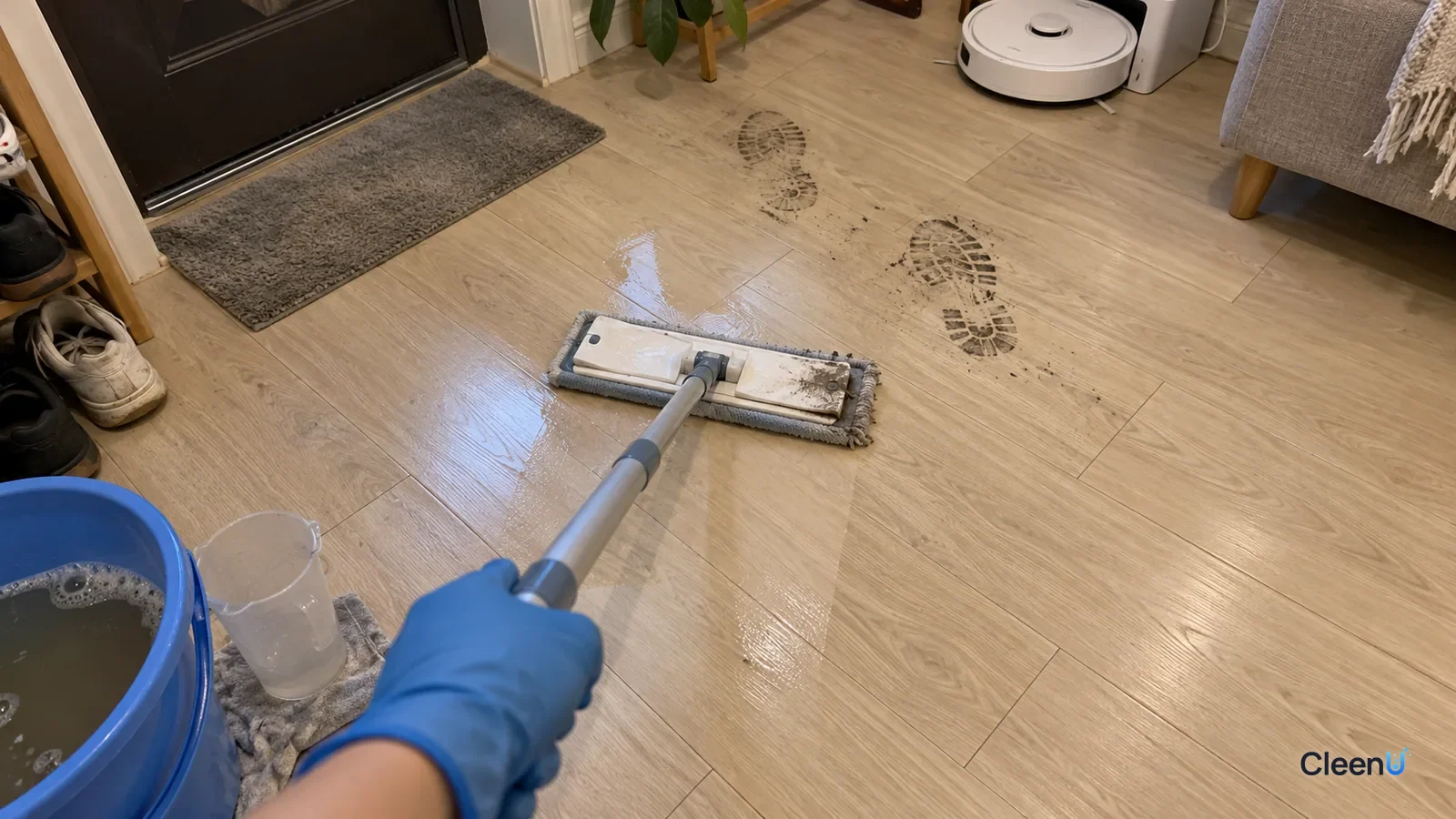
Luxury vinyl plank (LVP), luxury vinyl tile (LVT), and rigid-core SPC flooring are everywhere now: tough, water-resistant, warmer underfoot than tile, and easier on the budget than hardwood. The trouble is that people mop it like tile or polish it like wood. Then the floor gets sticky, goes cloudy, the seams darken, and sometimes the edges curl.
Vinyl plank really is low-maintenance once you know what it doesn't like. Here's how it's built, a step-by-step routine for everyday cleaning, and the habits to avoid.
What vinyl plank is made of
LVP, LVT, and SPC all belong to the "resilient flooring" family. LVP and LVT are layered PVC: a PVC base, a printed design film, and a clear wear layer on top, usually finished with a UV-cured coating that gives stain resistance and sheen. SPC swaps the base for a rigid core of pressed limestone powder and PVC, which makes it stiffer and more stable, and it usually installs as click-lock planks.
What really sets the cleaning rules is the top: the wear layer and UV coating. They don't absorb water and they're dense, so dirt stays on the surface and you never need heavy-duty cleaning. But they're sensitive to a few things.
Strong solvents such as acetone, mineral spirits, and some adhesive removers can swell the PVC surface and leave it tacky and dull.
Oil soaps, waxes, and "shine" products form a film on that dense surface. It looks glossy at first, then a few coats later it attracts dust, feels sticky, and goes cloudy.
Strong alkaline or acidic cleaners used routinely can age the coating and leave it hazy.
Standing water won't ruin the PVC itself, but it can seep through click-lock seams, darkening the edges, causing them to lift, or creating musty smells under rugs.
So the rule for vinyl plank is simple: neutral, a little, damp not wet, no film.
Why vinyl floors get sticky
Stickiness is the top complaint with vinyl plank, and it almost always comes down to residue.
Too much cleaner. More doesn't mean cleaner. The extra surfactant isn't picked up by the mop, dries on the floor into an invisible film, feels tacky underfoot, and grabs fresh dust, so the floor gets dirtier every time you mop.
Dish soap or "clean and shine" products. Dish soap is foamy and high in solids, so without a rinse it nearly always leaves residue. Waxes and polymers in shine products build up layer by layer on vinyl.
A dirty mop. Mopping with a dirty pad or dirty water just spreads oil and dust evenly across the floor.
The fix is straightforward: a low-foam, low-residue neutral cleaner, measured dilution, a clean pad wrung out until just damp, and fresh water when it gets gray. If the floor is already sticky, mop it twice with plain water to lift the residue, then go back to the normal dose.
How a resilient-floor cleaner is designed
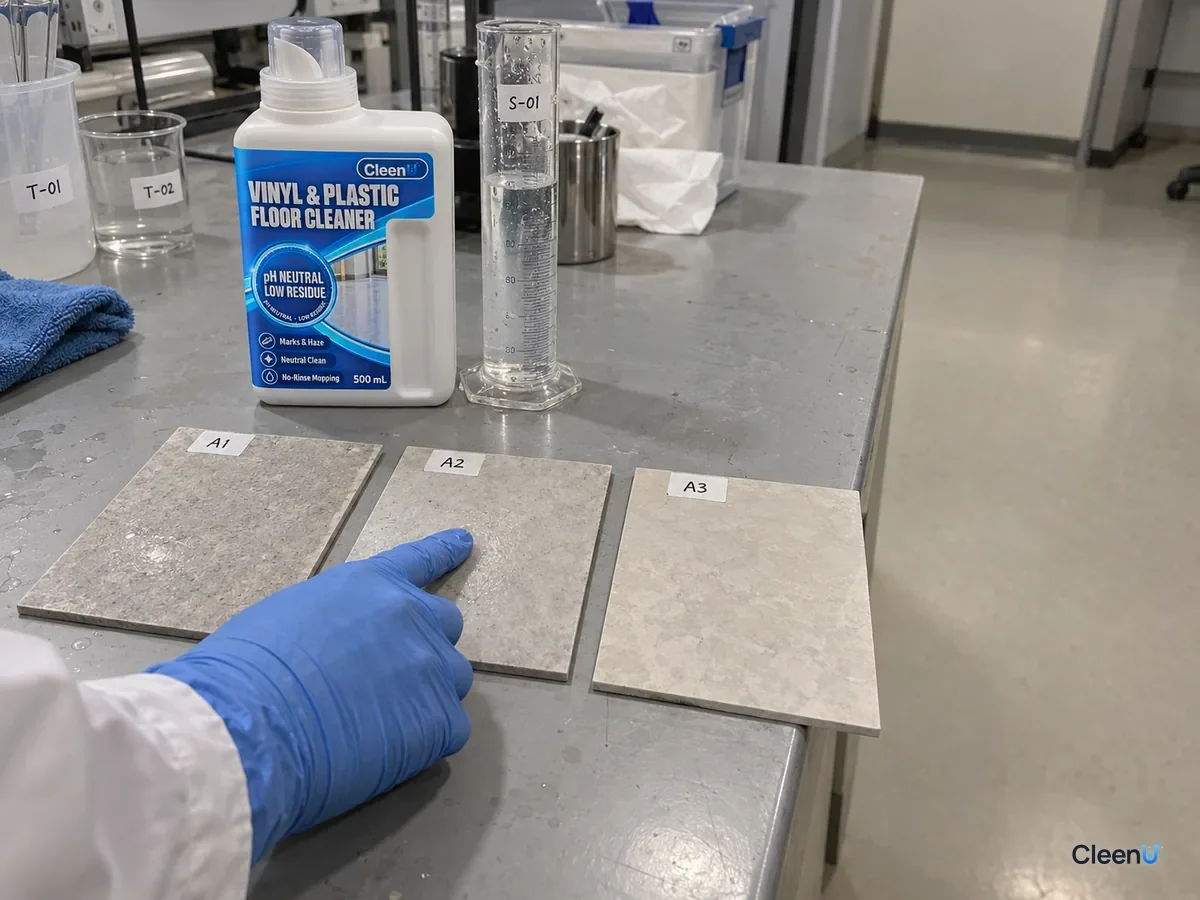
Take CleenU Vinyl & Plastic Floor Cleaner as an example. It's a neutral resilient-floor cleaner, pH 7.0 to 9.0 as a concentrate, made with low-foam nonionic surfactants and a chelating agent, with no solvents and no chlorine, and it's diluted 1:20 with water.
The nonionic surfactants emulsify the oily grime and skin oil tracked in on shoes, and the low-foam design means you don't need a rinse to avoid foam marks. The chelating agent binds calcium and magnesium in tap water, which cuts down the white water spots hard water leaves as it dries. That makes a visible difference in hard-water areas. Leaving out solvents is deliberate, because PVC and UV coatings don't tolerate them well.
It's made for everyday mopping of sheet vinyl, PVC flooring, LVT, SPC, and rubber mats. It isn't for wood floors or carpet, and it shouldn't be paired with a rough scrub pad.
Five steps for everyday vinyl plank cleaning
Your everyday mopping routine
Vacuum or sweep up grit first
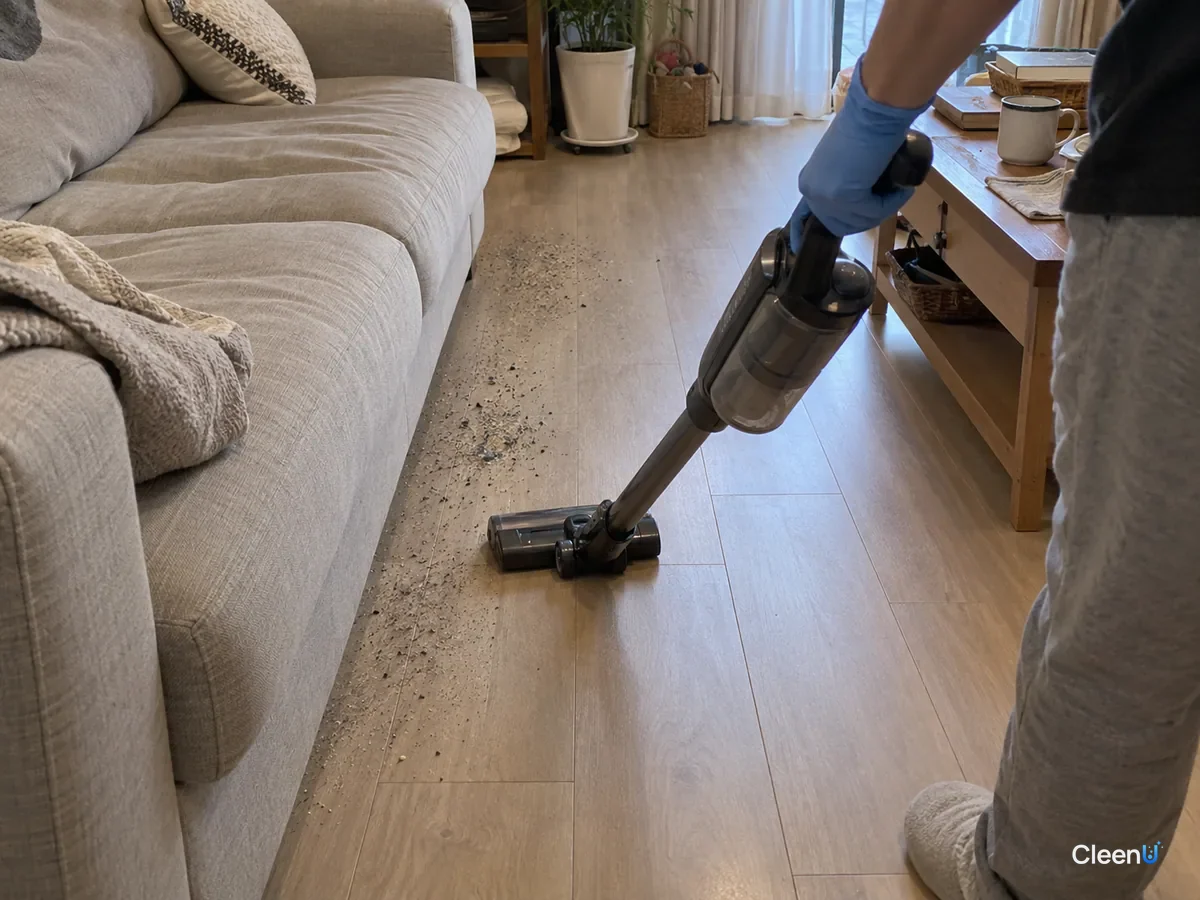
Grit is vinyl's number-one enemy. Dragged under a mop or a shoe, it sands fine scratches into the wear layer, and the floor slowly loses its sheen. Vacuum on the hard-floor setting or sweep with a soft broom before you mop.
Caution:If your vacuum has a stiff beater bar, switch to hard-floor mode or a soft brush head.
Measure your cleaner
Use a measuring cup and mix at 1:20, about 6 ounces of concentrate per gallon of water. Don't eyeball it; extra cleaner leaves a sticky film. Use room-temperature or warm water, not boiling.
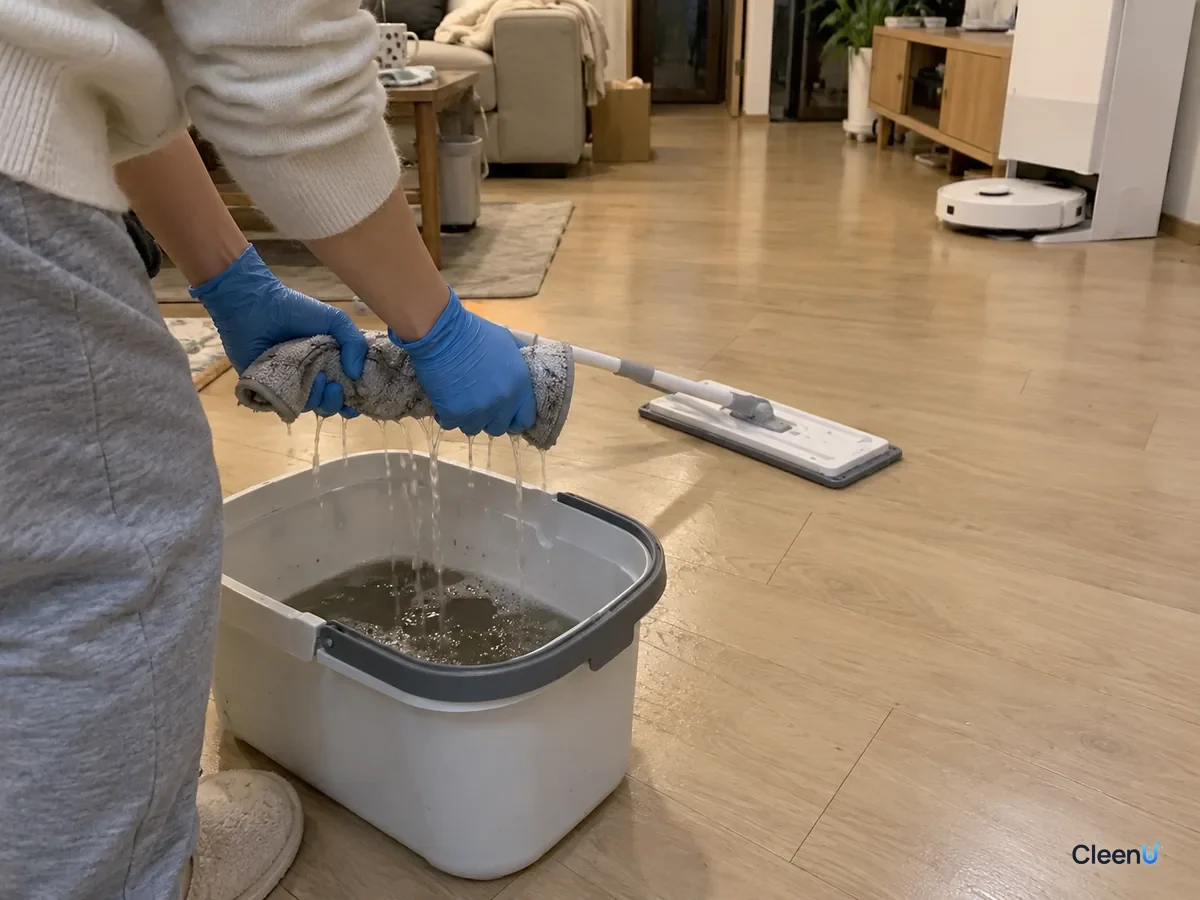
Wring the pad until it's just damp
A flat mop with a microfiber pad works best. Wet the pad, then wring it until it doesn't drip and feels barely damp. Mop along the length of the planks. The goal is to wipe and lift, not soak the floor.
Caution:Don't let water sit in the seams, and don't hold a steam mop over the joints.
Spot-treat problem areas
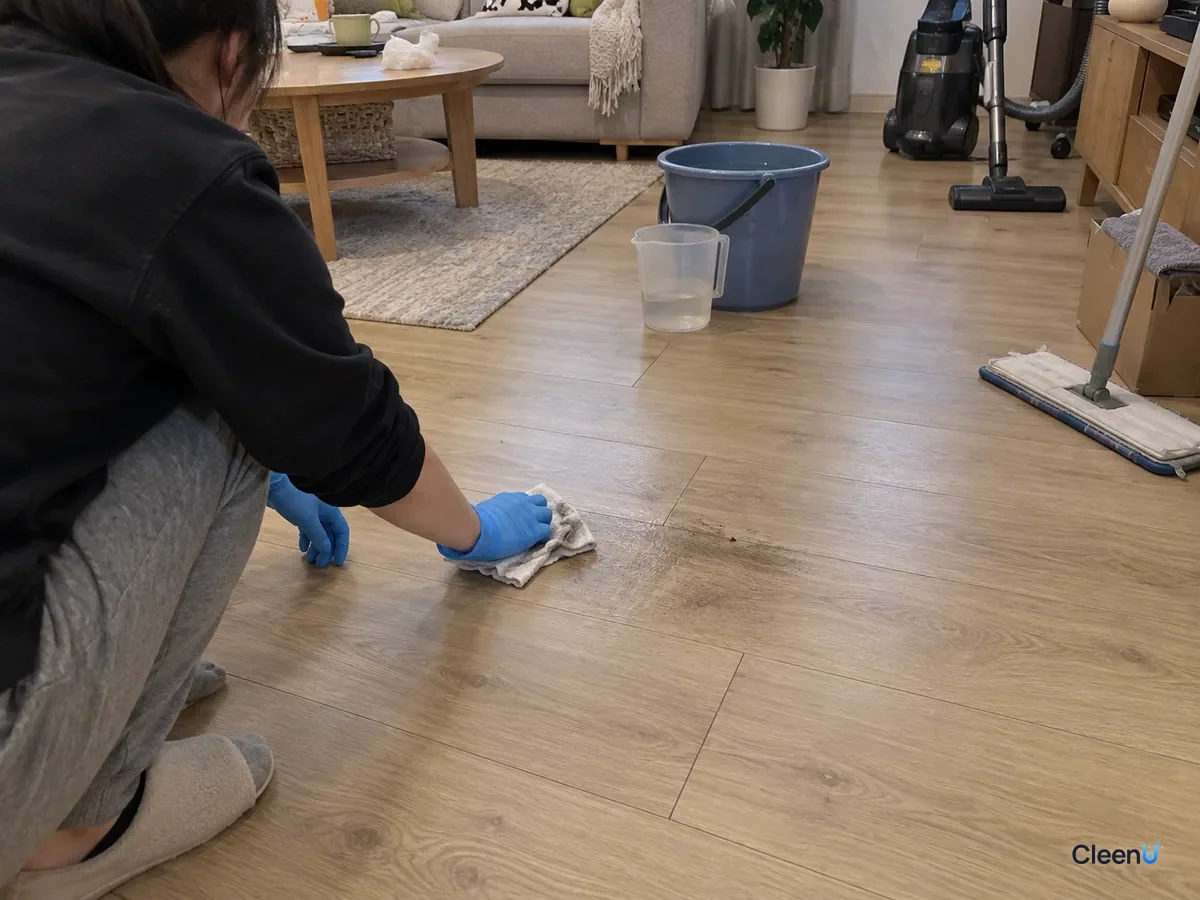
For greasy footprints at the kitchen door or shoe scuffs in the entry, spray diluted cleaner on a cloth and wipe, or work the mop over the spot a few more times. For lipstick, marker, or adhesive, don't reach for solvents. Rub with diluted cleaner and a soft cloth, and stop if it won't budge.
Let it air-dry and change dirty water
No rinse needed. Open a window and let the floor dry, usually in a few minutes. If the bucket water turns gray halfway through, swap it for fresh so you're not spreading dirty water back on the floor. Wash and dry the pad afterward.
Different kinds of dirt, different priorities
Gray shoe prints at the entry are mostly fine grit and road dust held together by a little oil from shoe soles, pressed into the wear layer. The problem is the grit. Wipe it with a wet mop first and you drag those particles across the surface, so always vacuum, then mop. Once the grit is gone, the cleaner emulsifies the bit of oil that was gluing it down, and whatever is left lifts into the microfiber.
Greasy footprints by the kitchen are different. Cooking spatter gets tracked around by slippers into a dull film that feels slightly draggy underfoot. Here the cleaner's job is wetting and emulsifying: letting water get under the oil and break it into droplets the pad can hold. If one pass doesn't do it, don't make the solution stronger. Spray the diluted mix on a cloth, let it sit on the spot for 10 or 15 seconds, wipe, and switch to a clean side of the pad often.
Black scuffs from sneakers are rubber transferred from the sole. Wipe in one direction with a soft cloth and diluted cleaner and they usually fade. If they won't move, don't reach for a solvent; it can soften the vinyl surface just as easily.
A floor that looks dull all over usually isn't extra dirty. It's old residue layered over fine scratches. Wipe a small patch with plain water and let it dry. If that patch looks brighter than the area next to it, it's residue film; go over the floor twice with plain water. If nothing changes, the wear layer has fine scratches, and no cleaner will fix that.
Habits that damage vinyl plank
Wax, polish, or oil soaps. Vinyl plank doesn't need wax. Wax goes sticky and cloudy and is a pain to strip later.
Strong solvents and adhesive removers. Acetone, lacquer thinner, and mineral spirits can swell and dull the surface. Use them only in small spots and only if the flooring maker allows it.
Rough scrub pads, steel wool, and stiff brushes. They scratch the wear layer, and scratches trap dirt.
Sloshing water or leaving puddles. Water can seep through click-lock seams and cause darkened or lifting edges.
Rubber-backed rugs left in place for months. Some rubber compounds can react with vinyl and leave yellow stains. Choose rugs labeled safe for vinyl floors.
Routine use of strong acidic or alkaline cleaners. An occasional spot treatment is fine; everyday mopping should be neutral.
How often to clean
Daily or every other day: sweep or vacuum. Do the entryway daily if a lot of grit comes in.
Weekly: mop the whole floor once or twice with diluted cleaner. With pets, kids, or shoes worn indoors, go to two or three times a week.
Monthly: check seams and high-traffic spots like the entry and kitchen for dark buildup or edges starting to lift. If any area feels sticky, mop it twice with plain water.
To see how vinyl compares with tile and hardwood, check How to clean every type of floor.
Stop if you see this
If planks are lifting, seams are separating, or the floor sounds hollow underfoot, stop wet mopping and check for water getting underneath. If the floor turns cloudy, dull, or discolored, stop using the current product and wipe with plain water to see if it improves. If the cleaner irritates your skin, rinse right away. If the floor is still under warranty, follow the manufacturer's care instructions first.
Vinyl plank cleaning: common questions
Can I use a robot mop or wet-dry vacuum on SPC or LVP?
Yes. Use a low-to-medium water setting with a low-foam cleaner made for the machine, avoid puddles at the seams, and follow both the machine's and the flooring maker's instructions.
Can I use a steam mop on vinyl plank?
Not regularly. Prolonged high heat can warp the locking joints and coating, and steam can push moisture into the seams. Follow the flooring maker's guidance.
My LVP floor feels sticky. What should I do?
Mop twice with plain water to lift the residue, then switch to a low-foam neutral cleaner at 1:20 with a barely damp pad. Stop using dish soap and anything with wax.
Does vinyl plank need waxing?
No. It has a wear layer and coating already. Wax just makes it sticky, cloudy, and dusty.
Can I mop vinyl plank with bleach or vinegar?
Not as a routine. Chlorine bleach is harsh and can age the coating; vinegar can leave the floor feeling dull over time. Use a neutral cleaner day to day.
How do I clean dark seams?
Brush the seams gently with a soft brush dipped in diluted cleaner, then wipe with a wrung-out cloth. If they keep darkening, you're using too much water; wring the pad drier.
For a solvent-free, low-foam, no-rinse cleaner you dilute 1:20 for everyday mopping of LVP, LVT, SPC, and sheet vinyl, take a look at our Vinyl & Plastic Floor Cleaner.
Vinyl plank has a wear layer and UV coating on top, so dirt stays on the surface. Everyday cleaning doesn't need muscle; it needs no film and no standing water. Vacuum up grit, then damp-mop with a neutral, low-foam resilient-floor cleaner at the right dilution, and let it air-dry. Skip wax, oil soaps, strong solvents, rough pads, and puddles. If the floor feels sticky, it's residue: mop twice with plain water, then go back to the correct dose.