
Comparison
Screen Cleaner Spray vs Foam: Which Leaves Fewer Streaks?
Direct answer
Foam stays put and is less likely to seep into gaps, which suits phones, tablets, and upright devices. Spray spreads easily and dries fast, which suits TVs and monitors. Apply either to a cloth first. Whether you get streaks depends on the amount, the formula's residue, and the cloth, not on spray versus foam.
How to choose
-
You mostly clean TVs and computer monitors
Choose A spray, applied to a cloth
It covers fast and dries fast, and on a cloth it won't run into the bezel.
-
You mostly clean phones and tablets, or upright devices with lots of button gaps
Choose A foam, or a spray misted lightly onto a cloth
Foam is foolproof about drips; one spray on a cloth is just as controllable.
-
You have lots of screens and want one bottle
Choose A low-residue, ammonia- and alcohol-free spray, always used on a cloth
It handles big and small screens; the key is the amount and the cloth.
-
You keep getting streaks
Choose A clean microfiber cloth and less product before switching cleaners
Most streaks come from the amount and the cloth, not the format.
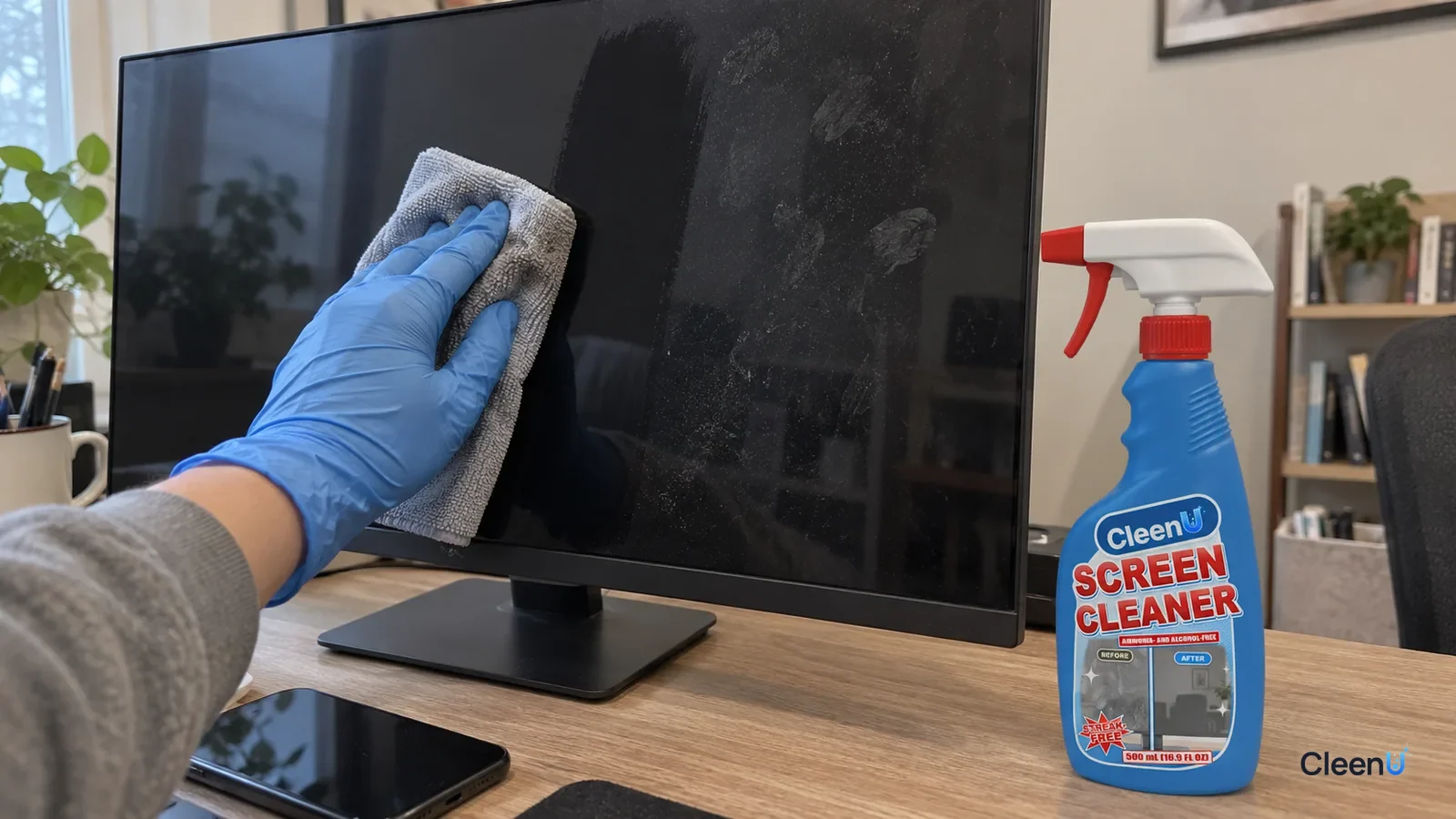
Screen cleaners come in two forms: a fine mist, or a puff of white foam. Each side makes its pitch. Sprays promise fast drying with no streaks; foams promise no drips and more safety. Here's how they actually differ, how to use them, and which devices each suits.
How sprays and foams differ
Both are mostly water with a little cleaning agent, usually mild surfactants, sometimes with alcohol to speed drying. The difference is how they come out.
A spray breaks the liquid into fine droplets through the nozzle. On a cloth or screen, it's a layer of liquid that spreads easily, flows easily, and evaporates fast.
A foam adds foaming ingredients and uses a special foaming pump or aerosol to mix liquid and air into dense foam. Foam is mostly air, with the liquid held in the bubble walls, so it doesn't run. When you wipe, the bubbles collapse and release the liquid.
So foam's big advantage is that it stays put. Spray's is that it spreads and dries quickly.
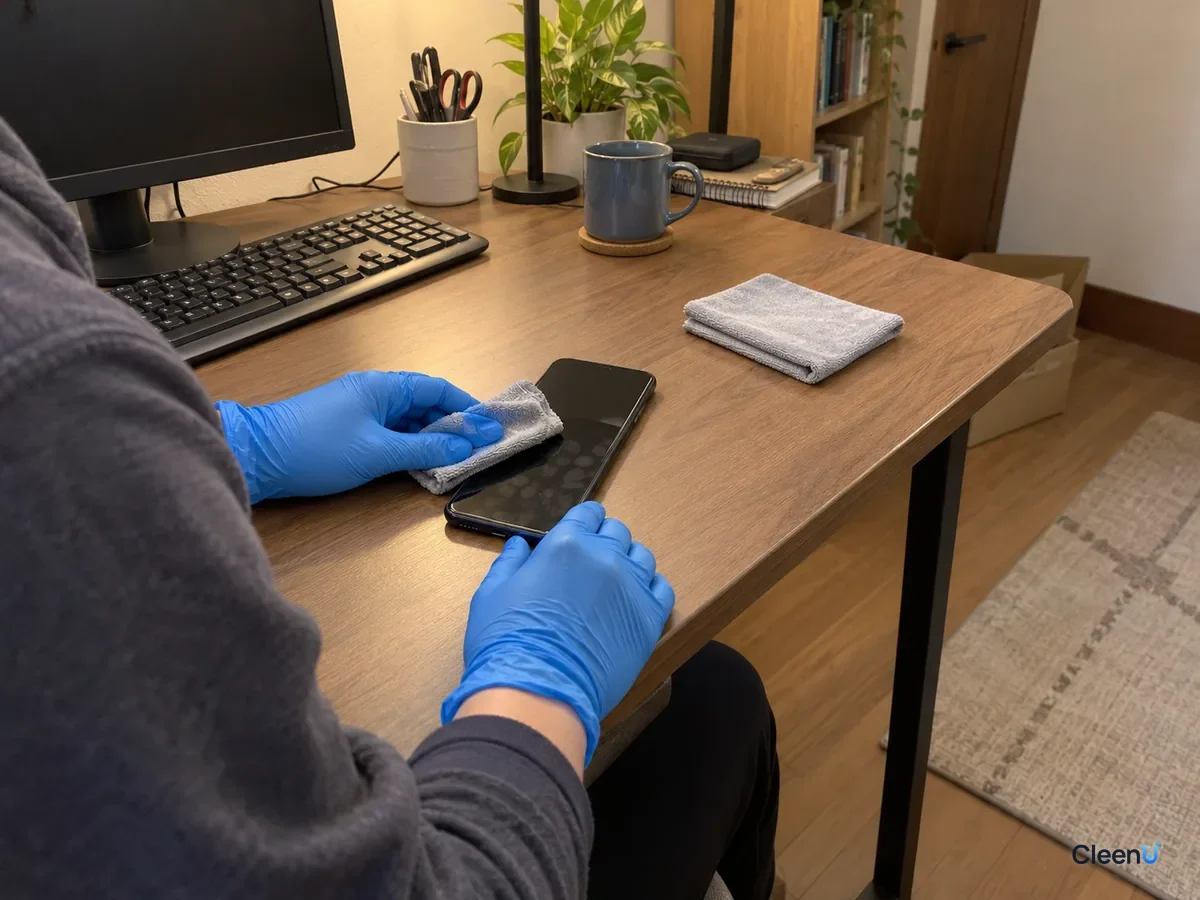
Which one leaves fewer streaks?
Streaks come from non-volatile ingredients left on the screen, or a cloth smearing dirt around. Specifically:
Amount. The more liquid, the more the cloth can't absorb, and the more is left after drying. It's easy to overdo a spray. Foam looks voluminous but holds less liquid; still, smear a whole dollop on the screen and you leave more surfactant than a light spray would.
Formula. Foams need foaming agents to hold their shape, and those also have to be wiped away. A well-designed foam leaves very little; a poor one leaves a film. A spray with a good balance of surfactant and alcohol can also be very low-residue.
The cloth. A dirty cloth, one washed with fabric softener, or paper towels will streak with either.
So neither one always wins. Used correctly with a good formula, both leave about the same; used wrong, both streak.
Side by side
Screen cleaner spray vs foam
| Factor | Spray | Foam |
|---|---|---|
| Flow | Spreads easily, also runs easily | Barely runs or drips |
| Risk of seeping into gaps | Higher if sprayed directly on the screen | Lower |
| Covering large screens | Fast; good for TVs and monitors | Slower; needs reapplying |
| Drying speed | Fast | A little slower; bubbles must be wiped down |
| Controlling the amount | One or two sprays on a cloth | A small dab; don't smear a big dollop |
| Best for | TVs, monitors, laptop screens | Phones, tablets, upright devices, devices with button gaps |
| Streaking | Mostly about amount and cloth | Mostly about amount, foaming-agent residue, and cloth |
Either way, the cloth goes first
Whether you use spray or foam, apply it to a microfiber cloth first, then wipe the screen.
Spray: one or two sprays on a corner of the cloth so it's slightly damp, wipe the screen gently in one direction, and finish with a dry cloth.
Foam: put a small dab on the cloth and work it in, then wipe the screen. Don't plop the whole dollop on the screen; you'll use too much and leave more behind.
With both, turn the device off, let the screen cool, and don't press hard.
Our screen cleaner is a spray
Take CleenU Screen Cleaner as an example. It's a neutral, ammonia-free, alcohol-free screen spray, pH 6.5 to 7.5 as supplied, made with mild nonionic surfactants and low-residue ingredients, with no ammonia, ethanol, or abrasives. You spray it onto a cloth, there's no dwell time, and it dries within seconds of wiping.
We chose a spray because it covers large screens quickly and dries fast, and used on a cloth, liquid never touches the screen edges, which removes spray's main downside. The low-residue ingredients limit what's left on the screen after drying, so there are fewer streaks. It's made for TVs, monitors, laptops, tablets, and phones. It isn't for spraying directly on screens, for screens that are on or hot, or for use with paper towels or rough cloths.
If you mostly clean a phone and worry about controlling a spray, one spray on the cloth is plenty and works about the same as foam.
Still getting streaks? Check these first
Is the cloth clean, and has it ever been washed with fabric softener? Keep one damp cloth and one dry one.
Are you using too much? One or two sprays, or a small dab of foam, is enough.
Is the screen on or warm? Turn it off and let it cool first.
Are you scrubbing in circles? Wipe gently in one direction.
For streaks and rainbow smears, see How to clean a TV screen. For other screens, see How to clean screens safely.
Different screens, different soil, different strengths
Before you pick spray or foam, look at what you're actually cleaning. Each device collects different soil, it sticks in different ways, and that changes what you need from the cleaner.
Phones mostly carry skin oil from faces and fingers, plus foundation and sunscreen. Skin oil doesn't dissolve in water, and sunscreen adds film formers and fine powders that leave a white, draggy layer. Most phone screens have an oleophobic coating that keeps fingerprints from sticking, but it doesn't hold up well to alcohol and friction and wears thinner over time.
Tablets, especially the ones kids use, add juice and snack residue to the fingerprints. Dried sugar is sticky and has to be rewetted and dissolved before a cloth can take it away.
TVs and monitors mostly collect dust held by static, with fingerprints along the edges and lower half and the occasional drink splash.
Car displays and touchscreen kiosks are mounted upright next to vents, buttons, and bezel gaps. They get lots of fingerprints and dust, and any liquid that runs heads straight for those gaps.
The cleaning work is the same in every case. Surfactant wets oily soil, loosens its grip on the screen, and emulsifies it into tiny droplets. Water dissolves sugar and salt. Microfiber pulls the loosened soil in between its fibers. The difference between spray and foam isn't whether they clean. It's how the liquid gets to the soil, how long it stays there, and whether it ends up somewhere it shouldn't.
Why foam stays put, and why it can leave a bit more behind
Foam is air held in tiny bubbles, with the liquid spread through the thin films between them. Surfactant molecules line up at the air-liquid boundary and keep those films from popping right away. Foam clings to a vertical screen because the liquid is divided among countless films, each one too light to overcome surface tension and run downhill.
That advantage comes with a trade-off. A stable foam usually needs a fair amount of foaming agent. When the bubbles collapse, that agent stays on the screen along with the cleaning ingredients, and the cloth has to pick all of it up. Smear a whole dollop directly on the screen and the collapsed foam releases more liquid than you'd expect, plus the foaming agent, which is how a film gets left behind. So go easy with foam: a small dab on the cloth, worked in, then wipe.
Spray puts out fine droplets that spread thin, so it's easy to keep the amount of liquid per square inch very low. Paired with a low-residue formula, it evaporates and leaves almost nothing. The risk with spray is flow. Mist the screen directly and the droplets merge, run down, and get pulled into the bezel gap. Spray the cloth instead and that risk mostly goes away.
A simple side-by-side test at home
If you have both, here's a quick way to see which suits your screen. Pick a monitor or TV that's off and cool, dust it with a dry cloth, and press a few fingerprints on the left and right halves. Take two equally clean microfiber cloths. Mist one with a spray or two and work a small dab of foam into the other. Wipe the left side with one and the right side with the other, using the same direction and the same number of passes. Then buff both halves with the same dry cloth.
Turn off the lights and sweep a phone flashlight across the screen at a low angle. Look for leftover fingerprint outlines, haze, streaks, or rainbow sheen on each side. This only tells you what works best with your screen, your cloth, and your technique; it doesn't capture everything about either product. Still, it's closer to your day-to-day reality than any marketing claim. If both sides streak, the problem is usually the cloth or the amount, so fix those and test again.
When the situation changes, so does the pick
Phones and tablets with oleophobic coatings: either format works. What matters is no alcohol, which speeds up wear on that coating and makes fingerprints stick more.
Matte anti-glare monitors: the fine texture traps fingerprint oil. These screens don't like much liquid, and hard rubbing can leave shiny patches. A spray or two on the cloth and a light wipe is enough. If you use foam, work it well into the cloth first.
Car displays and upright touchscreens: with vents and gaps right there, foam's no-drip advantage counts the most.
TVs and large monitors: foam has to be reapplied over and over on a big panel, while spray on the cloth covers more ground. Work in sections and buff dry for a clean finish.
What brands should weigh when picking a format
For brands and retailers developing a screen cleaner, format also shapes packaging and where the product sells. Trigger sprays and pump foamers are both standard; foam needs a dedicated foaming head and a formula matched to it. Aerosol foam feels nice to use, but it usually faces more shipping and e-commerce requirements, so confirm the rules for each target market. Larger spray refills fit offices and homes with big screens; smaller foam formats fit cars and on-the-go use.
CleenU's screen cleaner is a spray, and we also make a screen cleaning foam for large, upright, and in-car displays. Both are pH-neutral and free of ammonia and alcohol. For private-label projects, format and size can follow your channel. MOQ starts at 500 bottles, samples take 3–5 days, and production is scheduled after packaging and labels are approved, subject to a formal quote.
Which should you choose?
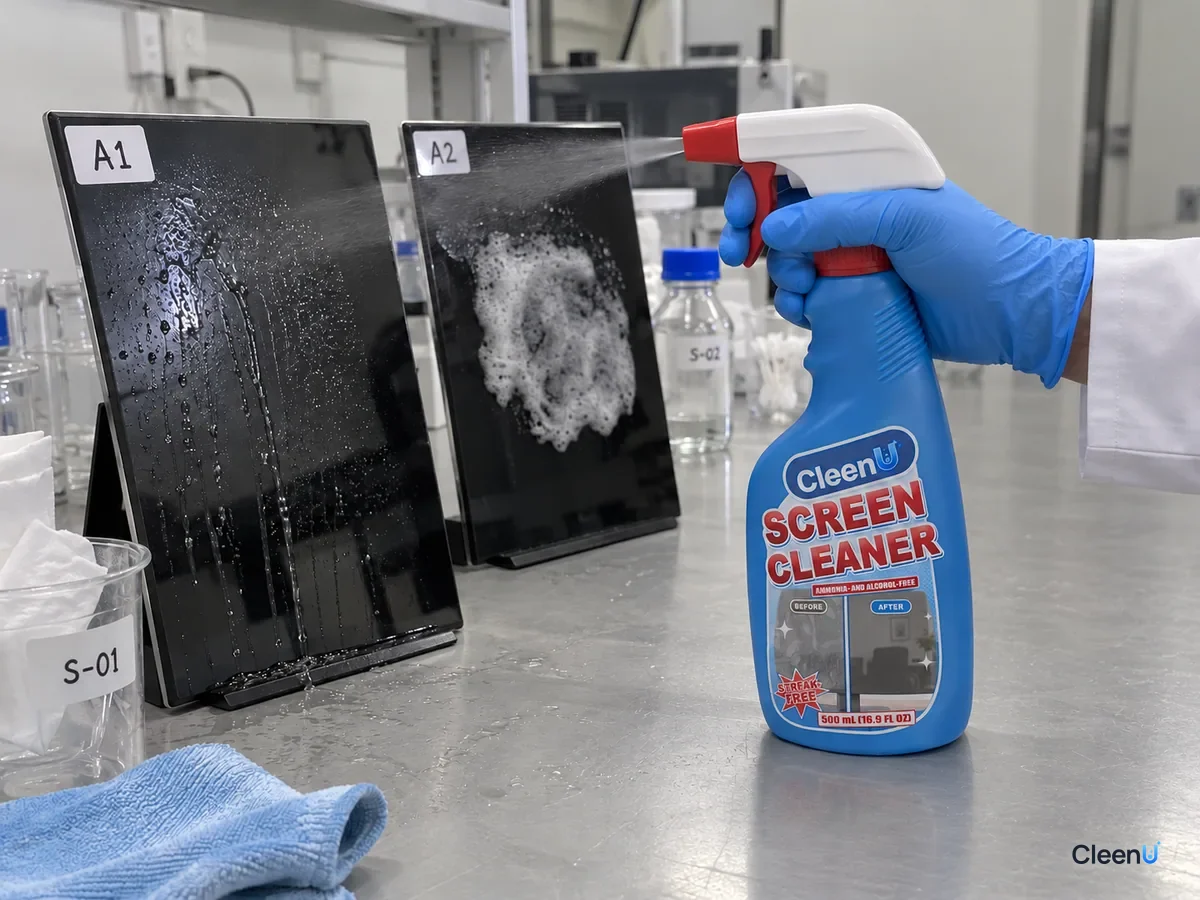
The real difference between screen cleaner spray and foam is form. Foam doesn't run, which suits phones, tablets, and upright devices. Spray spreads and dries fast, which suits TVs and monitors. Which leaves fewer streaks depends on the amount, the formula's residue, and the cloth, not on spray versus foam. The method is the same either way: power off and let it cool, apply to the cloth first, use one or two sprays or a small dab, wipe gently in one direction, and buff dry. With a low-residue, ammonia- and alcohol-free formula and a clean microfiber cloth, either one cleans without streaks.