
Q&A
Can You Use Screen Cleaner on Eyeglasses?
Direct answer
Most neutral screen cleaners with no ammonia or alcohol are fine on standard lenses. For lenses with specialty coatings like blue-light, anti-fog, or photochromic, follow your optician's advice. Rinse dust off first, then wipe gently with a clean microfiber cloth, never a tissue or your shirt.
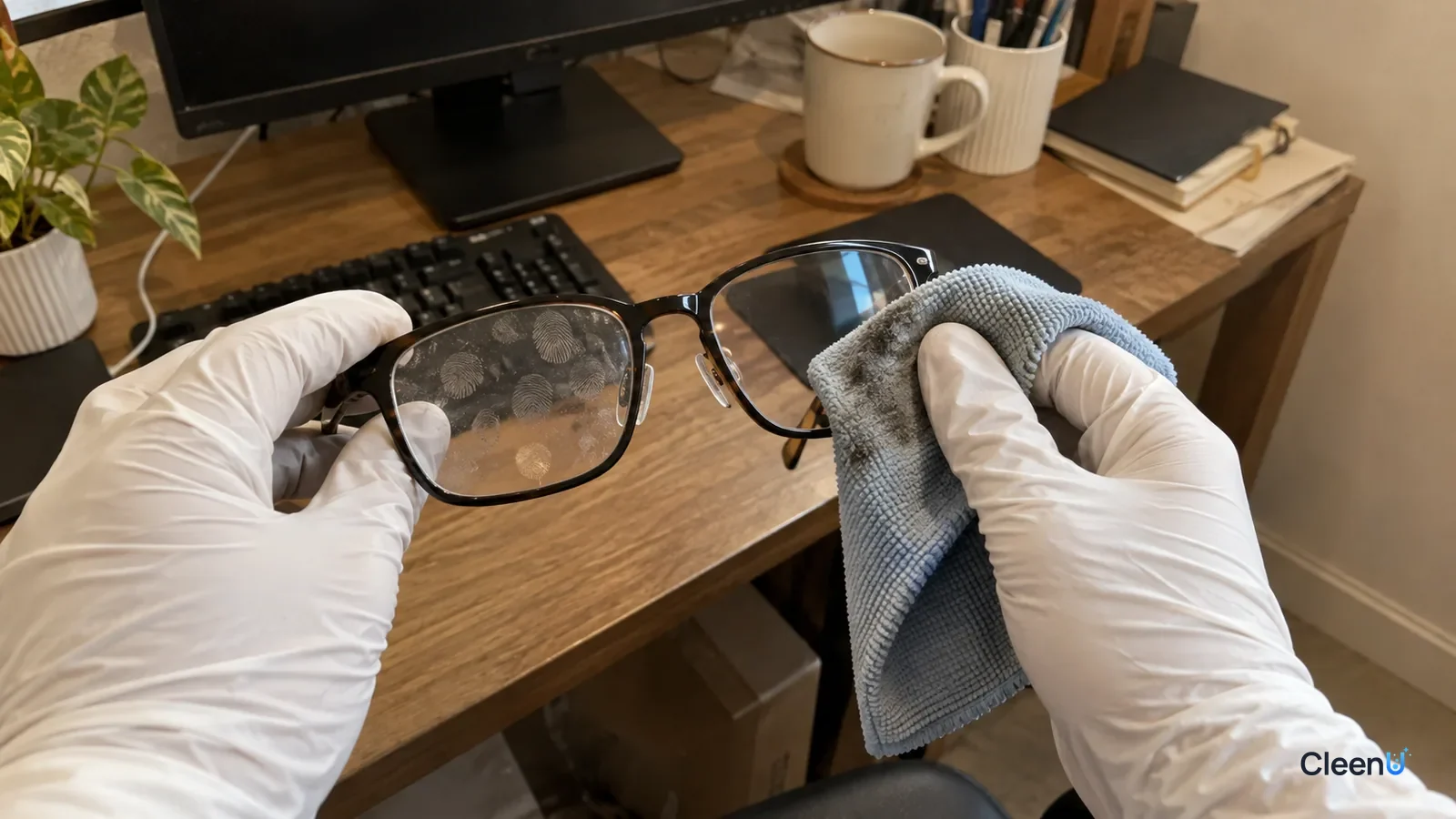
Screen cleaner and eyeglasses: the questions people ask most
Can I use screen cleaner on my glasses?
A neutral, ammonia- and alcohol-free screen cleaner is generally fine on standard plastic and glass lenses. Check with your optician for specialty coatings.
Can I clean glasses with rubbing alcohol?
Not regularly. High-strength alcohol can age some lens coatings and cause fine crazing. Your optician's lens cleaner or a mild neutral cleaner is safer.
Why rinse glasses before wiping?
Dust on lenses can include fine grit, and dry-wiping drags it across the lens and leaves fine scratches. Rinse it off first, then wipe.
Can I wipe my glasses with a tissue or my shirt?
We don't recommend it. Tissues are coarse and shed lint, and clothing carries dust and laundry residue, both of which cause scratches and smears.
Can I use an eyeglass cloth on my phone screen?
Yes. Most eyeglass cloths are microfiber and work fine on screens if they're clean.
Why are my lenses still smeary after cleaning?
Usually a dirty cloth, too much liquid, or a worn coating. Use a clean cloth and less liquid; if the coating is worn, cleaning can't fix it.
Phone screens and eyeglass lenses look like the same thing, a clear surface, and they get the same grime: fingerprints, skin oil, and dust. If you've got screen cleaner handy, it's tempting to use it on your glasses. Whether that's okay depends on two things: what's in the cleaner and what's on the lenses.
What's on an eyeglass lens
Most lenses today are plastic, with some glass. Either way, they usually have several coatings on top.
Scratch-resistant coating: makes the surface tougher. Nearly all plastic lenses have one.
Anti-reflective coating: cuts glare so lenses look clearer. Multilayer AR coatings are sensitive to chemicals and heat.
Water- and oil-repellent coating: helps water and oil bead off, making lenses easier to clean.
Functional coatings: blue-light filtering, anti-fog, photochromic, polarized, and others, each made differently.
These coatings are very thin. High-strength alcohol, ammonia-based glass cleaners, strong solvents, and hot water can age them and cause fine crazing or peeling patches that look like permanent smears. Once a coating is damaged, the only fix is new lenses.
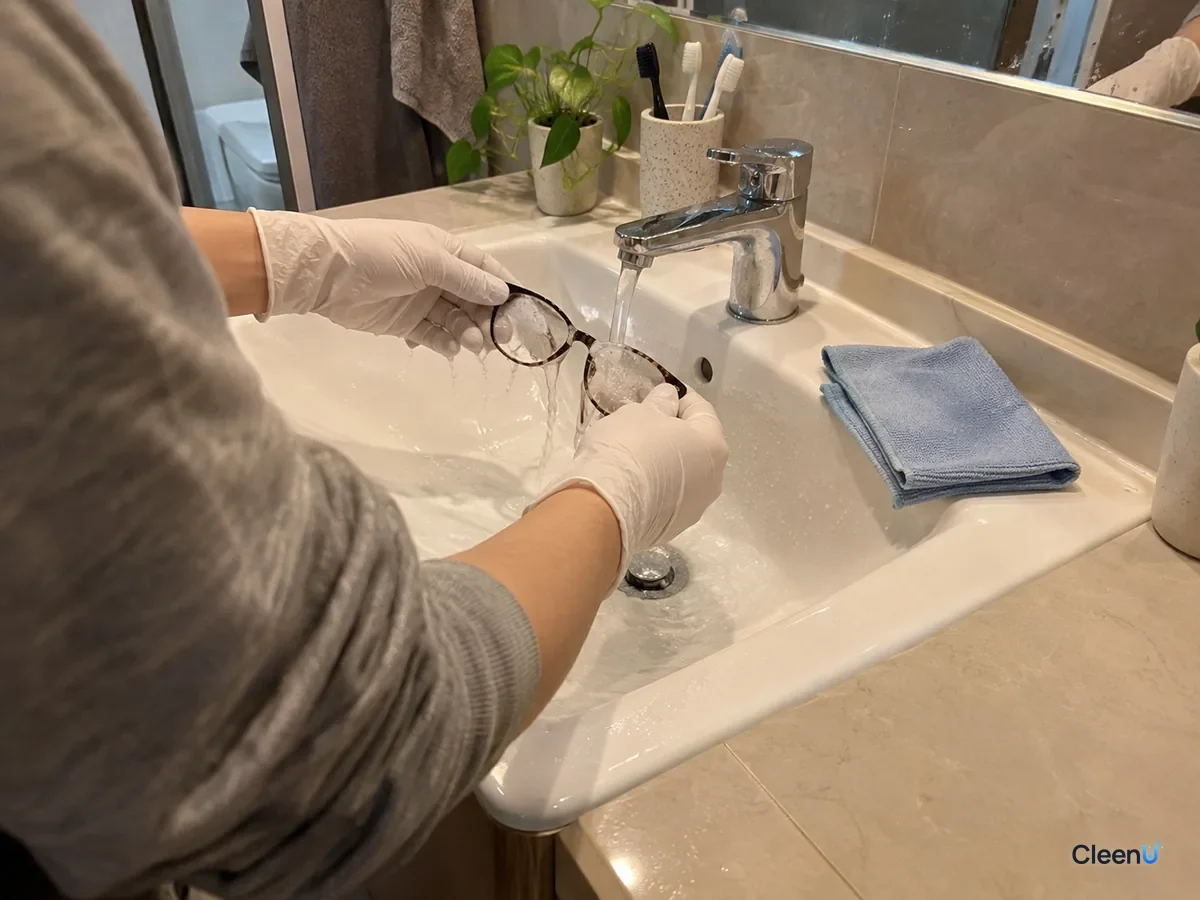
Which screen cleaners are okay
Screen coatings (anti-reflective, oleophobic) and lens coatings have a lot in common in what they can't handle: ammonia, high-strength alcohol, and abrasives. So a neutral, ammonia- and alcohol-free cleaner designed for screens is generally fine for standard lenses too.
Take CleenU Screen Cleaner as an example. It's a neutral, ammonia-free, alcohol-free screen spray, pH 6.5 to 7.5 as supplied, made with mild nonionic surfactants and low-residue ingredients, with no ammonia, ethanol, or abrasives. The surfactants emulsify skin oil and fingerprints, the low-residue ingredients help it dry without smears, and neutral pH with no ammonia or alcohol is gentle on coatings. It's designed for TVs, monitors, laptops, tablets, and phones; on glasses, standard plastic and glass lenses can be cleaned the same way, and for specialty coatings, check with your optician first.
Note that some products sold as screen or glass cleaners do contain alcohol or ammonia. Those aren't a good idea for glasses, or for screens. Check the ingredients before you use one.
The right way to clean glasses
Wash your hands first so you don't put more oil and dust on the lenses.
Rinse the lenses under lukewarm water to wash away dust and grit. Avoid hot water, which can damage coatings.
Mist a little cleaner onto the lenses or onto a microfiber cloth and gently rub both sides of each lens with your fingertips, along with the frame, nose pads, and where the arms meet the lenses.
If you sprayed the lenses directly, rinse again and shake off excess water.
Blot and wipe dry gently with a clean microfiber cloth, without scrubbing back and forth.
Hold them up to the light and lightly buff any spots that remain with the dry cloth.
Why tissues and shirts scratch glasses
Tissues are made of wood pulp, which is coarse and stiff and sheds lint. Shirts and towels carry dust plus detergent and softener residue. If the dust on your lenses includes fine grit, dry-wiping with these drags it across the lens and leaves fine scratches that gradually make lenses look hazy.
Microfiber's ultrafine fibers don't shed and trap oil and dust instead of pushing them around. Keep the cloth clean, though: once it's full of oil, hand-wash it with a mild detergent, rinse well, and air-dry, with no fabric softener. For more on cloths for screens and lenses, see How to clean screens safely.
What's actually on your lenses
Glasses sit inches from your face, so they pick up a wider mix of grime than a screen does.
Skin oil and sweat: Oil from your forehead and the bridge of your nose transfers to the inside of the lenses through the frame and your lashes, and sweat dries into tiny salt crystals. Skin oil won't rinse off with plain water. Surfactants are needed to wet the oil film and break it into tiny droplets that rinse away or soak into the cloth. The salt dissolves in water, so a quick rinse takes care of it.
Makeup and sunscreen: Foundation and sunscreen often contain mineral powders and silicones, and mascara leaves little dark dots on the inside of the lens. The powders are particles, so dry-wiping them is a bit like rubbing the lens with fine sand. The silicones spread into a slick film that's hard to wipe clean. Always rinse first, then work the cleaner in with a little more rubbing, and repeat if needed. Don't press harder.
Kitchen grease: If you cook a lot, the outside of your lenses can build up a yellowish, tacky film of grease. It's tougher to emulsify than fingerprints. Mist on the cleaner, give it a few seconds, rub a bit longer with your fingertips, then rinse.
Mask fog and dried raindrops: Water vapor condenses on the lens and then evaporates, leaving small dots of minerals and airborne dust behind. Rinse with plain water and blot dry with a clean cloth.
Don't forget the nose pads and frame
A lot of lens smudging actually creeps back from the nose pads and the edges of the frame. Oil, sweat, and dead skin collect in the gap between the pads and the lens rims. Clean the lenses, put the glasses on, push them up once, and that oil migrates right back to the edge of the lens. When you clean, rub a little cleaner over the nose pads and the inside of the frame with your fingertip, brush the seams gently with a soft toothbrush, and rinse everything together. If the metal pad arms show green or dark corrosion, that's the metal reacting with sweat over time. Cleaner can't fix it, but an optician can replace the nose pads.
How to read the result, and when to stop
After drying, hold the glasses up to a lamp or a window and tilt them slowly. A clean lens looks crisp, and its reflection stays an even color as you turn it. If you still see a smudge, blot it lightly with a clean, dry cloth. If the smudge fades or moves, it's leftover oil or water, and one more light wipe will clear it.
If the mark stays put no matter what you do, and on a close look it's a fine web of lines or a small patch that looks whiter or duller than the rest, the coating has most likely crazed or started to flake. It isn't dirt. Don't reach for a stronger cleaner or press harder. Cleaning can't repair a coating and will only spread the damage. Take the glasses to your optician.
Everyday habits that wear lenses out
Breathing on the lenses and wiping with your shirt. Breath carries a little moisture, not enough to cut oil, and the dust on your shirt scuffs the coating.
Using alcohol wipes. They're handy, but used day after day they can age coatings faster.
Leaving glasses in a hot car or a sunny windowsill. Heat makes the coating and the lens expand at different rates, and over time that leads to fine cracks.
Setting glasses lens-down on a table. Dust and grit on the table rub straight into the lenses. Put them in their case, or set them down with the lenses facing up.
When to ask your optician first
Your lenses have specialty coatings like anti-fog, blue-light filtering, photochromic, or polarized.
Your lenses already show fine cracks, hazy patches, or peeling coating.
They're high-prescription or expensive lenses and you're not sure what's safe.
Opticians usually provide a matching lens cleaner and cloth, and many offer ultrasonic cleaning and a check-up.
One bottle for the desk: screens and glasses together
If you wear glasses and spend the day in front of a monitor, it's convenient to keep one neutral, ammonia- and alcohol-free spray and two microfiber cloths at your desk: one for the screen, one for your lenses. Keep them separate. A screen cloth picks up dust and skin oil from the keyboard area, and you don't want that grit on your lenses. Wash both cloths every week or two in mild detergent with no fabric softener, since softener leaves a film that shows up as smears on glass and coatings alike.
How often you clean should follow how you live. If you cook a lot, sweat at the gym, or wear makeup and sunscreen every day, a rinse-and-clean every day or two keeps film from building up. For desk workers who mostly touch their glasses to push them up, a quick clean every few days plus a dry blot as needed is usually enough.
Can lens cleaner go on screens?
Most optician lens cleaners are mild, neutral formulas, so using them occasionally on a phone or tablet is usually fine. Some contain alcohol, though, so check the label before using one on a screen. For more on screens, see How to clean a TV screen.
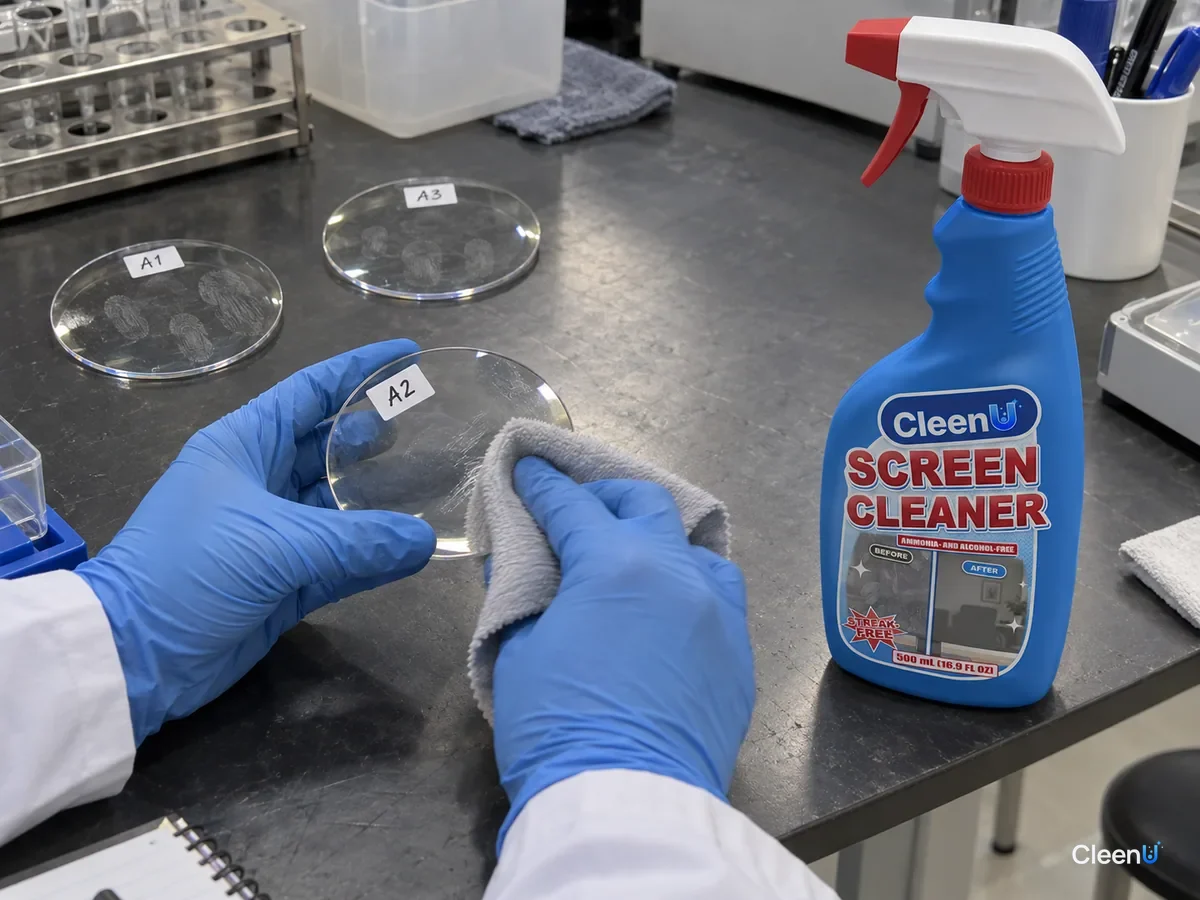
For a neutral cleaning spray with no ammonia or alcohol that's made for screens and also suits standard eyeglass lenses, take a look at our Screen Cleaner.
Whether screen cleaner is safe for glasses depends on the cleaner's ingredients and the lens coatings. A neutral, ammonia- and alcohol-free screen cleaner is generally fine for standard plastic and glass lenses: wash your hands, rinse off dust, mist a little on the lens or a microfiber cloth, rub gently, rinse, and blot dry with a clean cloth. Skip alcohol, ammonia, hot water, tissues, and your shirt. For lenses with anti-fog, blue-light, photochromic, or other specialty coatings, follow your optician's advice, because damaged coatings can't be repaired by cleaning.