Formula Tuning
Tune solvent strength and acidity for fresh glue, old glue, and cement haze

The right adhesive remover depends on how fresh and hard the residue is. Pressure-sensitive glue left by labels, price tags, and stickers is still soft, and a solvent spray swells it enough to wipe off in 1–3 minutes. Tape marks, double-sided tape, and protective-film residue that have oxidized and hardened over years need a stronger solvent, a 5–10 minute soak, and a plastic scraper. The gray haze and grout residue on tile after a renovation isn't glue at all: it's alkaline cement, and it needs an acidic post-construction cleaner. CleenU matches three ready-to-use products to the residue and makes private-label and OEM/ODM adhesive removers and renovation cleaners for brands, distributors, and online sellers.
Tune solvent strength and acidity for fresh glue, old glue, and cement haze
Samples are usually ready in 3–5 days
Spray bottles, scraper kits, size, and label language
Private-label adhesive removers and renovation cleaners from 500 bottles
For fresh label glue on glass, ceramic, metal, and hard plastic, spray a solvent adhesive remover, wait 1–3 minutes until the glue softens, wipe it off, and finish with a damp cloth. For years-old, hardened tape marks, double-sided tape, floor decals, and protective-film residue, soak with a heavy-duty adhesive residue remover for 5–10 minutes, push it off with a plastic scraper, and finish with a damp cloth. For cement haze and grout residue on new tile and acid-resistant stone, wet the grout lines first, apply an acidic cement residue remover straight or diluted 1:3, wait 3–5 minutes, scrub, and rinse with plenty of water. Keep solvents off acrylic, painted walls, and car paint, and never use the acidic cleaner on marble or other calcium-based stone.
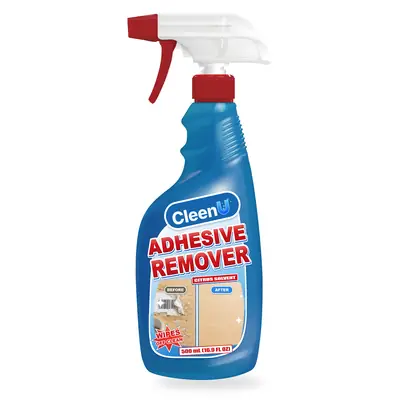
Glue left on glass jars, ceramic, and hard plastic: spray the Adhesive Remover, wait 1–3 minutes, and wipe it off.
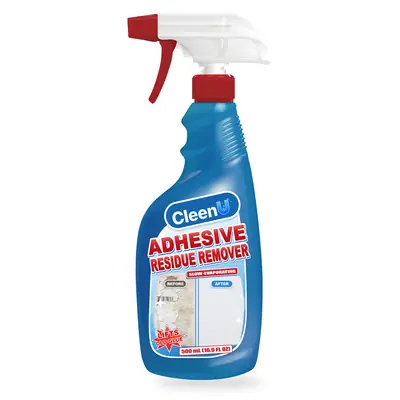
Years-old tape marks and double-sided tape on windows, tile, and metal: soak with the Adhesive Residue Remover for 5–10 minutes and scrape with plastic.
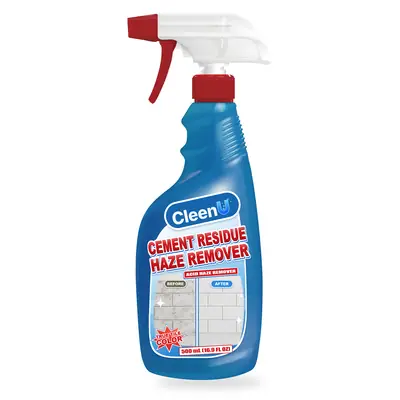
Cement haze and grout residue after renovation: wet the tile, scrub with the Cement Residue Haze Remover, and rinse thoroughly.
Residue from protective film on appliances and furniture: spot-test the Adhesive Remover in a hidden area before treating.
Spot-test natural stone, coated, and wood surfaces in a hidden area first.
Tell us what you are cleaning, the surface, and how you clean it, and we will point you to the right product or formula.
Get Product AdviceWe tune solvent strength, acidity, and working time separately for fresh glue, old glue, and cement haze.
Free samples are usually ready in 3–5 days, then tuned for softening speed, residue, and odor based on your tests.
Spray pack sizes, plastic scraper kits, warning statements, label language, and post-construction bundles.
Each formula keeps batch retention samples and a COA, so color, scent, and feel stay consistent on reorders.
Three common kinds of residue, compared by product, pH, foam, and method. Fresh and aged glue both come off by solvent swelling, differing in strength and soak time; cement haze isn't glue and needs an acid to dissolve it. Pick wrong and it either won't come off or the surface gets damaged.
| Cleaning Job | Where | Strength | Foam | Method |
|---|---|---|---|---|
| Fresh Label Glue | Glass, ceramic, metal, and hard plastic | Neutral solvent-based, pH 6.5–8.0 | None | Wait 1–3 minutes, then wipe off |
| Aged Adhesive | Glass, tile, metal, and hard plastic | Neutral heavy-duty solvent, pH 6.5–8.0 | None | Soak 5–10 minutes, then scrape with plastic |
| Cement Haze | Tile, rustic tile, and acid-resistant stone | Acidic, pH 1.0–2.5 | Low | Wet first, wait 3–5 minutes, scrub, and rinse |
Tell fresh glue, old glue, and cement haze apart before you pick a product.
Spot-test solvents on acrylic and paint, and keep acid away from calcium-based stone and metal.
Let it soften for the stated time, then remove with a cloth or plastic scraper, never steel wool or blades.
Wipe with a damp cloth or rinse, and check for any tackiness or haze left behind.
Common questions about how to use it, which surfaces are safe, and private-label orders.
Spray the adhesive remover on the residue, wait 1–3 minutes until the glue swells and softens, wipe it off with a cloth, and finish with a damp cloth. It works on glass, ceramic, metal, and hard plastic; spot-test acrylic and painted surfaces first.
Soak years-old, hardened double-sided tape and tape marks with the adhesive residue remover for 5–10 minutes, push the softened glue off with a plastic scraper, and finish with a damp cloth; repeat once for thick residue. Keep it off latex paint, car paint, and acrylic.
Wet the grout lines with water, then spray the cement residue haze remover straight or diluted 1:3 on the haze, wait 3–5 minutes, scrub, and rinse with plenty of water. Wear acid-resistant gloves and goggles, and never let it touch marble, other calcium-based stone, or metal fixtures.
Solvent removers aren't recommended on latex-painted walls, since they can cloud or lift the paint. On tiled walls, the adhesive remover or residue remover works.
Appliance shells are usually painted or plastic, so spot-test the adhesive remover in a hidden area first to make sure it doesn't cloud, then treat the residue. Don't scrape with a blade, which scratches the surface.
No. Use one product at a time, and never mix the acidic post-construction cleaner with chlorine products.
Settle four things: label glue, aged residue, or post-construction cleaning; home retail or cleaning-crew channels; packaging and whether to include a plastic scraper; and your target market's labeling and warning requirements. Then we'll arrange free samples, usually ready in 3–5 days.
We provide SDS/MSDS, TDS, and batch COA, and prepare warning statements and label copy for your target market. These documents aren't posted for download; we send them on request after you inquire.
Standard projects start at 500 bottles. Free samples are usually ready in 3–5 days, and production is scheduled after packaging and labels are approved.
Adhesive and renovation residue comes down to knowing what you're dealing with: a solvent adhesive remover sprayed and wiped for fresh label glue, a heavy-duty remover soaked and scraped for old, hardened adhesive, and an acidic post-construction cleaner scrubbed and rinsed for cement haze on new tile. Keep solvents off acrylic, latex paint, and car paint, and acid off calcium-based stone and metal. If you're launching your own adhesive remover or renovation cleaner, CleenU can start from these three formulas, with free samples first and a 500-bottle MOQ.
Tell us your target market, channels, and packaging ideas. Free samples are usually ready in 3–5 days.