Formula Tuning
Formula direction and use method tuned for scale, tea stains and nonstick pots

Kettles, cups and rice cookers all look dirty, but the soils are not the same. The white layer on a kettle floor is calcium and magnesium scale from tap water, and an acid dissolves it. The brown film in cups is tea polyphenol and coffee pigment, which an oxygen-based soak in hot water fades. Starch film and scorch in a nonstick rice cooker pot call for a mild cleaner and a soft sponge, never steel wool. CleenU matches four kitchenware cleaners to these soils and builds private-label OEM/ODM projects for kitchenware, tea and home cleaning brands and ecommerce sellers.
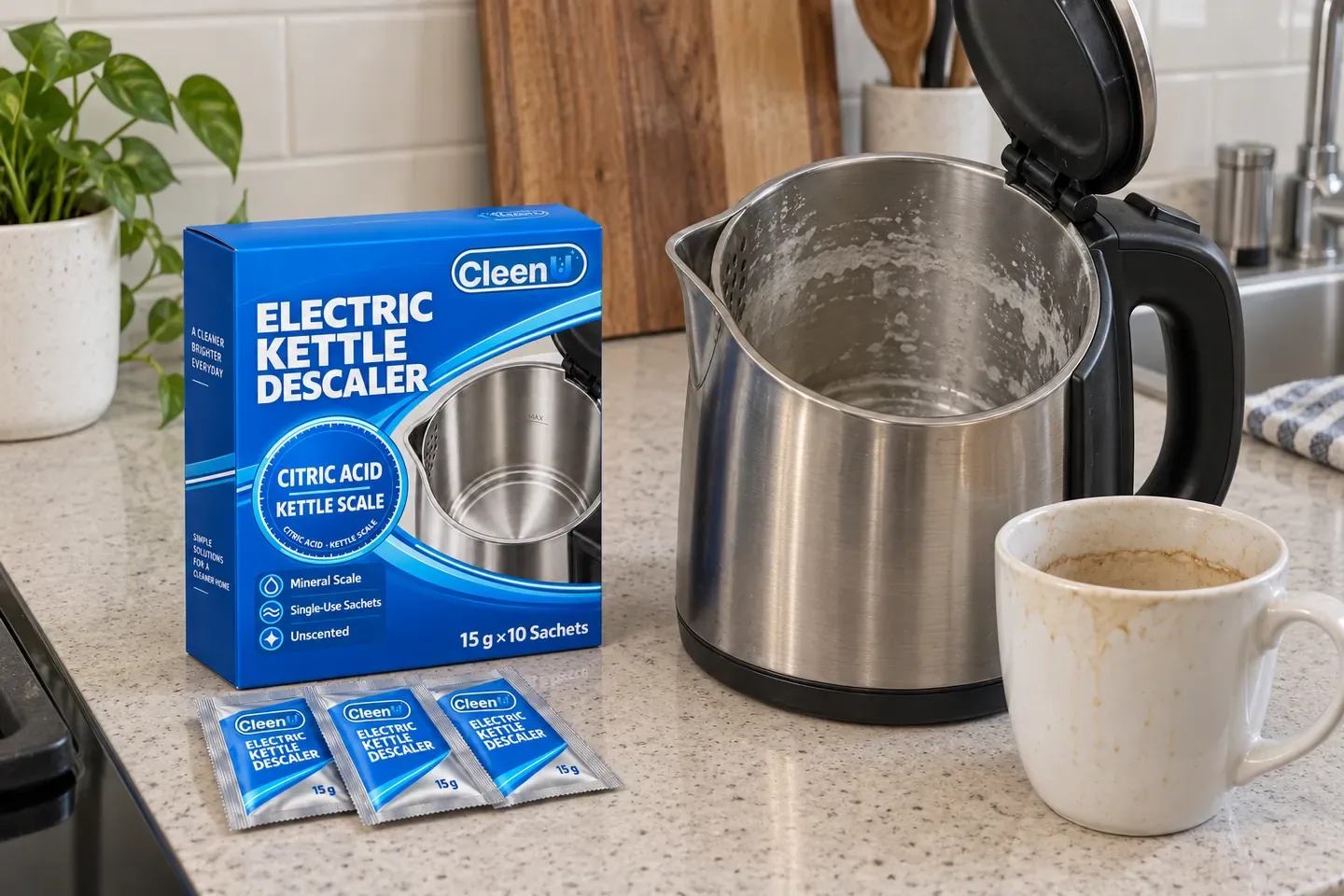
Formula direction and use method tuned for scale, tea stains and nonstick pots
Samples are usually ready in 3–5 days
Single-use packets, tub powder, tablets and spray bottles, with bundles available
Private-label OEM/ODM for kitchenware cleaners
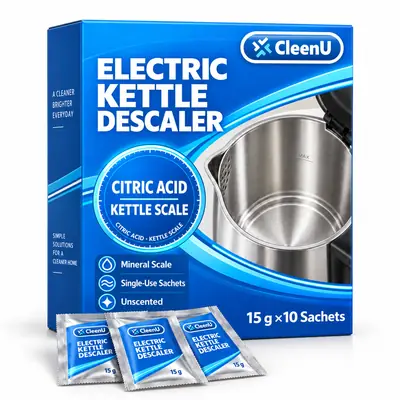
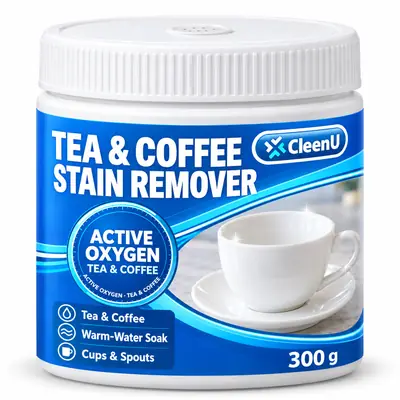
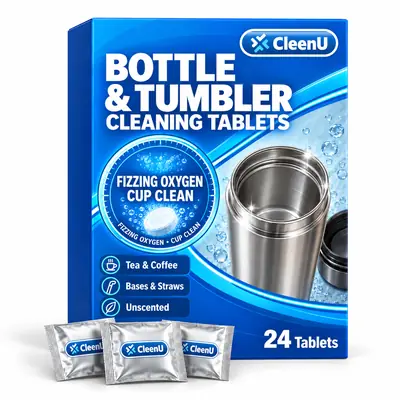
For white scale in electric kettles and tea makers, use the citric acid electric kettle descaler: fill the kettle to the max line, add one 15 g packet, boil, let it sit 15–20 minutes, pour out, rinse 2–3 times, then boil and discard a kettle of clean water. For tea and coffee stains in cups, dissolve one scoop (about 10 g) of the tea and coffee stain remover per 17 oz of water at 140°F or hotter, soak 15–30 minutes, brush lightly and rinse. For tumblers and straw cups, fill with warm water, drop in one tablet, submerge the lid and straw for 15–30 minutes without sealing the lid. For a nonstick rice cooker pot, soak in warm water for 10 minutes, spray, and scrub with a soft sponge. Skip aluminum, unglazed clay teapots and painted or gilded ware, never mix with chlorine products, and follow the appliance manual.
White scale on the floor and heating plate: add one packet, fill, boil, let it sit, pour out and rinse, then boil and discard clean water.
Tea and coffee stains in ceramic and glass cups, teapots, strainers and carafes: dissolve the powder in hot water, soak, then brush lightly and rinse.
Tea film, milk residue, odor and slime in the base, lid and straw: soak with a tablet in warm water, lid not sealed.
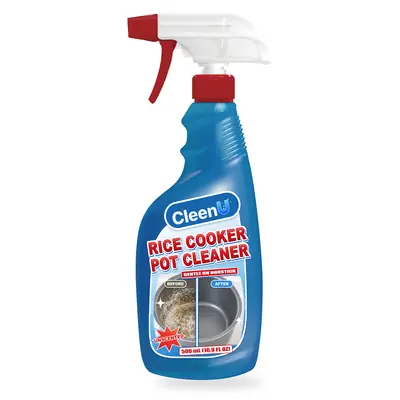
Rice film, scorch and odor on nonstick pots, lids, vents and gaskets: warm soak, spray and wipe with a soft sponge.
Spot-test natural stone, coated, and wood surfaces in a hidden area first.
Tell us what you are cleaning, the surface, and how you clean it, and we will point you to the right product or formula.
Get Product AdviceAcidity, format and use method tuned separately for scale, tea stains and nonstick pots.
Free samples ready in 3–5 days, adjusted from real feedback on your ware for fading speed, rinse residue and scent.
Single-use packets, tub powder, tablet boxes, spray bottles and ecommerce bundles, with label design and language.
Each formula keeps batch retention samples and a COA, so color, scent, and feel stay consistent on reorders.
Four common kitchenware jobs, compared by product, pH, format and method. Kettle scale takes citric acid descaling; tea and coffee stains take a sodium percarbonate hot-water soak; tumblers and straws take an effervescent tablet soak; a nonstick rice cooker pot takes a mild spray and a soft sponge. The causes and materials differ, so one product should not cover every item.
| Cleaning Job | Where | Strength | Foam | Method |
|---|---|---|---|---|
| Kettle Descaling | White scale on the floor of kettles, tea makers and egg cookers | Acidic, pH 2.0–3.0 | Single-use powder | One packet, boil, sit 15–20 minutes, rinse 2–3 times |
| Tea & Coffee Stains | Ceramic and glass cups, teapots and carafes | Alkaline, pH 10.0–11.0 at 1% | Low-foam powder | One scoop per 17 oz of hot water, soak 15–30 minutes |
| Tumbler Tablets | Tumblers, bottles, kids' cups and straws | Mildly alkaline, pH 9.5–10.5 at 1% | Low-foam tablet | Fill with warm water, one tablet, soak lid and straw 15–30 minutes |
| Pot Cleaning | Nonstick rice cooker and pressure cooker pots and gaskets | Near-neutral, pH 6.5–8.0 | Ready-to-use spray | Warm soak 10 minutes, spray and scrub with a soft sponge |
Rule out aluminum, clay interiors and painted or gilded ware, and read the appliance manual.
Handle scale, tea stains, tumbler odor and pot residue with their own product, and never mix them.
Use the stated amount, water temperature and time for soaking or boiling, and do not extend beyond the directions.
Rinse with clean water before using the ware again; boil and discard a kettle of clean water after descaling.
Common questions about how to use it, which surfaces are safe, and private-label orders.
It depends on your water and how often you boil. Descale when white flakes or a thicker scale layer appear on the floor and heating plate, and more often in hard-water areas. Follow the appliance manual, rinse 2–3 times afterward and boil and discard a kettle of clean water.
For stainless tumblers, use the bottle and tumbler cleaning tablets: fill with warm water, add one tablet, submerge the lid and straw for 15–30 minutes without sealing the lid, then rinse well. Ceramic and glass mugs with heavy tea film can use the tea and coffee stain remover in hot water.
Soak the inner pot in warm water for 10 minutes, spray the rice cooker pot cleaner, scrub with a soft sponge, then rinse and dry. Remove the inner lid and gasket, spray-wash and dry them before refitting. Never use steel wool or scouring paste on nonstick.
No. The kettle descaler, tea and coffee stain remover and tumbler tablets are not for aluminum. Check the material first and follow the manufacturer's care instructions for aluminum ware.
No. The tea and coffee stain remover is not for the inside of unglazed clay teapots or hand-painted and gilded china, and the tablets are not for painted or gold-trimmed cups. Use the care method that suits that ware.
No. The tea and coffee stain remover and the tablets must not be mixed with chlorine products, and each product is used on its own. Rinse thoroughly with clean water after every cleaning.
Decide four things: whether you want descaling, tea stain, tumbler or rice cooker pot cleaning, or a bundle; the format (single-use packets, tub powder, tablets or spray bottles); size and packaging; and target market and label language. Then we arrange free samples, usually ready in 3–5 days.
We can provide SDS/MSDS, TDS and batch COA, and prepare bilingual label information for your target market. These documents are not public downloads and are sent on request after your inquiry.
Spray-bottle projects start at 500 bottles as standard; single-use packets, tub powder and tablets are set by spec and packaging format. Free samples are usually ready in 3–5 days, spray bottles are scheduled after packaging and labels are approved, and other formats are scheduled once spec, packaging and labels are approved.
Cleaning kitchenware comes down to matching the product to the soil: citric acid for kettle scale, a sodium percarbonate hot-water soak for tea and coffee stains, effervescent tablets for tumblers and straws, and a mild spray with a soft sponge for nonstick rice cooker pots. Skip aluminum, clay and painted or gilded ware, never mix with chlorine products, and rinse well afterward. Kitchenware, teaware and home cleaning brands that want their own range can start from these four products with free samples, then confirm format, size and labels.
Tell us your target ware, format and market, and CleenU prepares free samples in 3–5 days.