
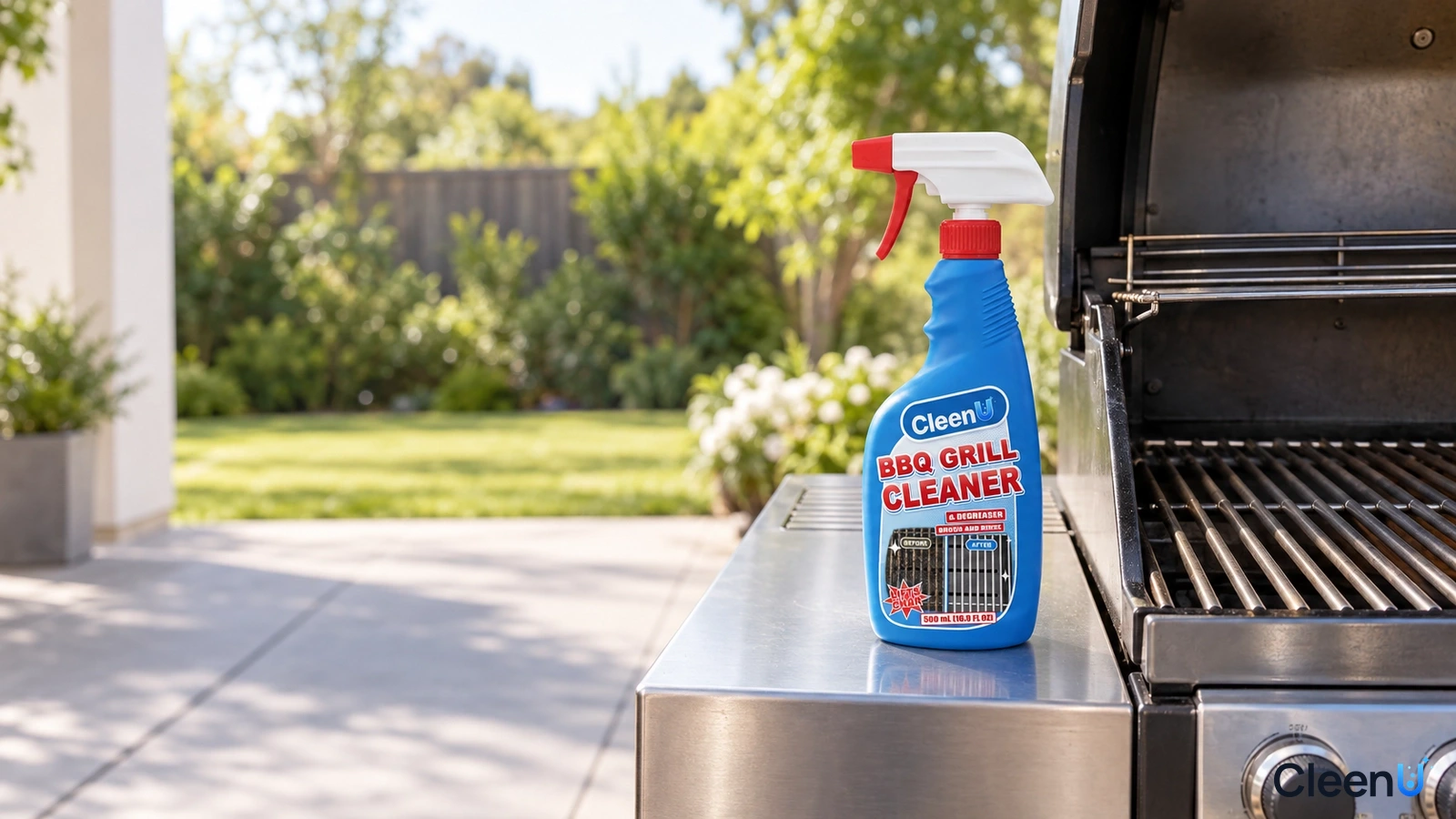
Product and application illustrations. Follow the product label and written use guidance.
CleenU product solution
BBQ Grill Cleaner & Degreaser
Softens baked-on grease · Brush and rinse · Private label
Black, baked-on grease on the grates that dish soap won’t touch? Once the grill is cold, spray and wait 3–5 minutes (10 for heavy carbon) until it softens and changes color, then brush along the bars down to bare metal. Private label from 500 bottles.
- The black, glossy crust on your grates stopped being ordinary grease a long time ago. At grilling temperatures, dripping fat oxidizes and polymerizes into a hard, varnish-like layer, with charred marinade sugars and meat juices baked into it. Dish soap lifts the surface oil but barely touches that layer. This degreaser works down through the cracks, softens the crust, and emulsifies the fat. Give it a few minutes, then brush along the bars and the char comes off in flakes instead of fighting you on every pass.
- Grates touch food, so finish them with a thorough clean-water rinse on both sides and between the bars, then dry them. Run a hand over the rinsed grate: if it still feels slick, cleaner or emulsified grease is left behind, so rinse again. For the lid, hood, and side shelves, spray onto a cloth instead of soaking the panel. You lift greasy handprints and splatter in one pass and keep cleaner out of the igniter and gas fittings.
- MOQ
- 500 bottles
- Free samples
- 3–5 days
- Bulk lead time
- Scheduled with the order

Product value
What does BBQ Grill Cleaner & Degreaser clean?
BBQ Grill Cleaner & Degreaser removes blackened, baked-on grease and char from grill grates and cleans grease and smoke film off lids, hoods, and side shelves.
View product detailsProduct summary
- Product type
- Liquid degreaser spray
- Intended use
- Baked-on grease and char on grates; grease and smoke film on lids, hoods, and side shelves
- Formula
- Alkaline degreasing system (pH 10.5–12.0 at 25°C) with surfactants: the surfactants wet and penetrate, the alkaline builders saponify and soften hardened grease and emulsify it, and a brush-and-rinse finish carries it away. Ready to use, no dilution.
- For
- BBQ and outdoor brands, cleaning product brands, hardware and home retail chains, distributors, and wholesalers, ecommerce sellers
Before & after
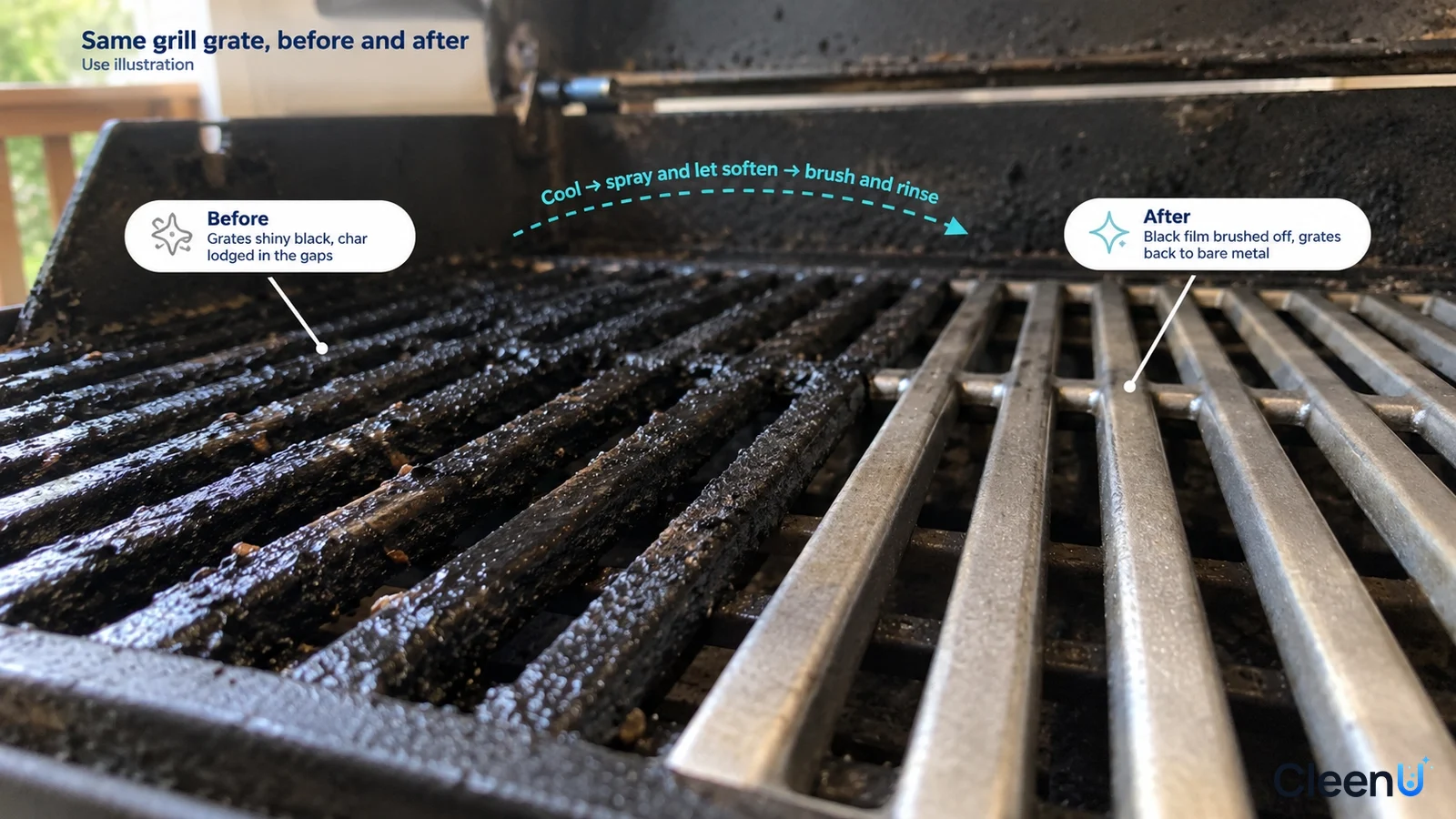
Before and after (use illustration)
Before: the bars are coated in a glossy black layer of polymerized grease, with char packed into the gaps and crossings, and they feel tacky. After: once sprayed, left to soften, scrubbed, and rinsed, the black film brushes away, the bars show bare metal, and the surface no longer feels sticky. Years of heavy buildup usually take two or three rounds.
- Before: a shiny black grease film on the bars, char packed in the joints
- After: brushed through to bare metal
- Rinsed and dried, no black smoke next cook
How it works
How Baked-On Grease Comes Off
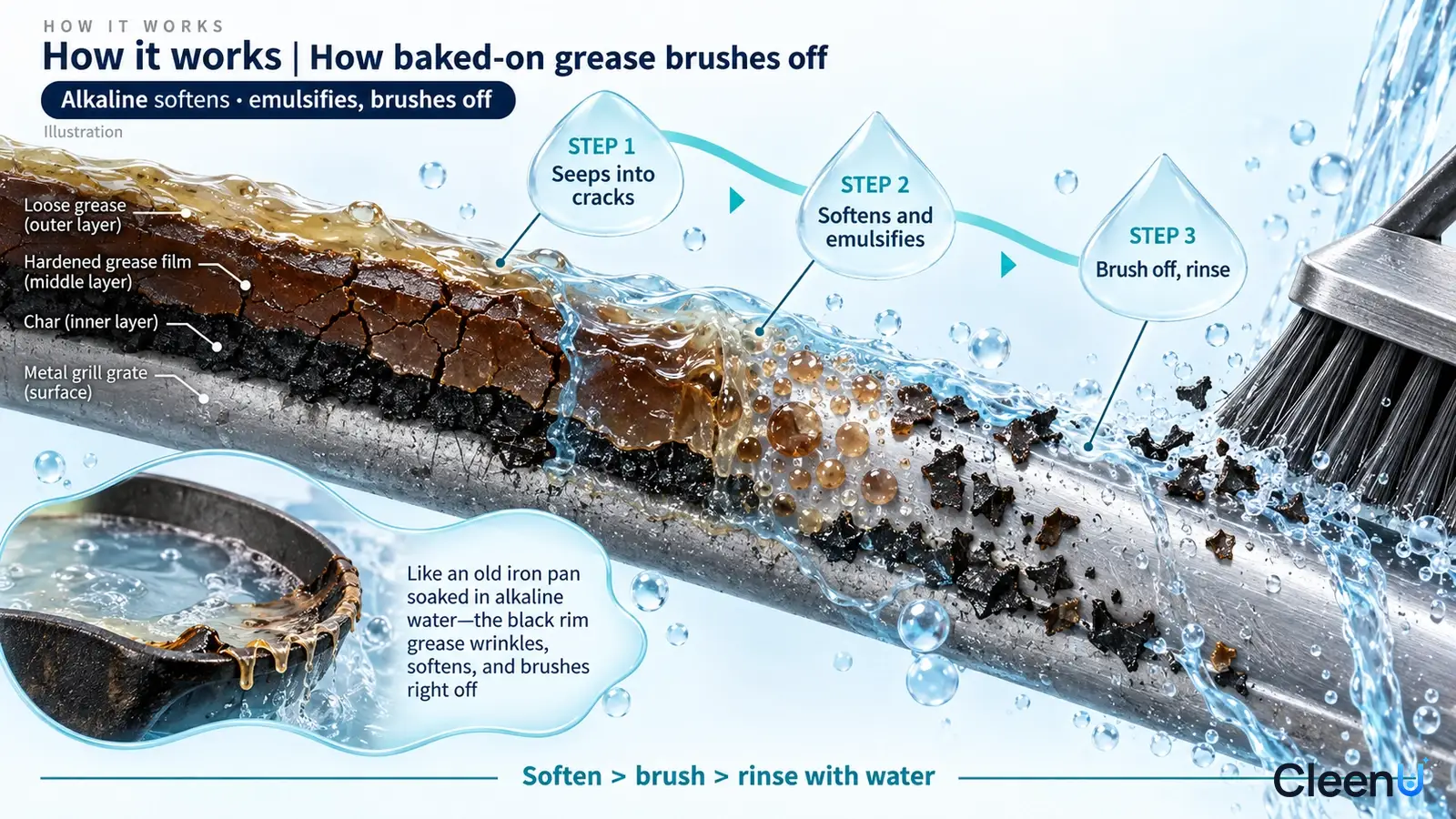
Grate buildup comes in three layers: loose surface oil on top, a heat-hardened film of polymerized fat in the middle, and carbonized residue bonded to the metal. Surfactants spread the cleaner and carry it into tiny cracks in the film. The alkaline builders saponify the fatty esters in the hardened layer, turning it into water-soluble soap, while the remaining oil is emulsified into fine droplets that water can carry away. Once the middle layer lets go, the char underneath loses its glue and flakes off under the brush. A clean-water rinse removes the emulsified grease and cleaner so nothing slick stays behind.
- Penetrate
- Soften
- Emulsify
- Brush off
- Rinse
Usage guidance
Use guidance
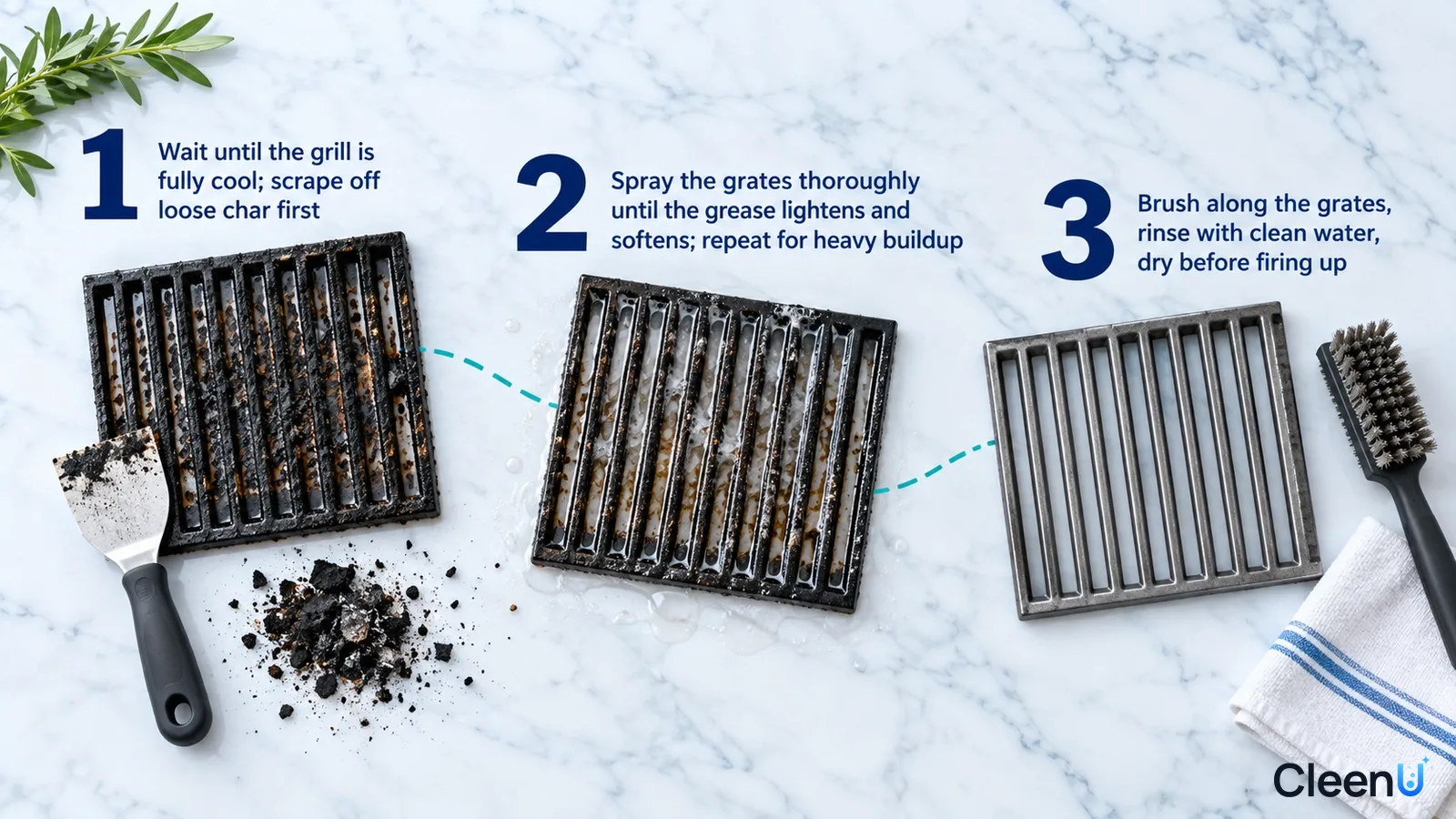
- Let the grill cool fully. Scrape off loose char and ash with a scraper or grill brush so the cleaner reaches the grease layer.
- Spray the buildup until the bars are covered and let it sit 3–5 minutes, up to 10 minutes on heavy carbon, until the grease lightens in color and gives when you touch it. For lids and exteriors, spray onto a cloth and wipe.
- Scrub along the bars with a grill brush or scouring pad; repeat spray, wait, and scrub on heavy buildup. Rinse grates front and back with clean water, dry them, then cook.
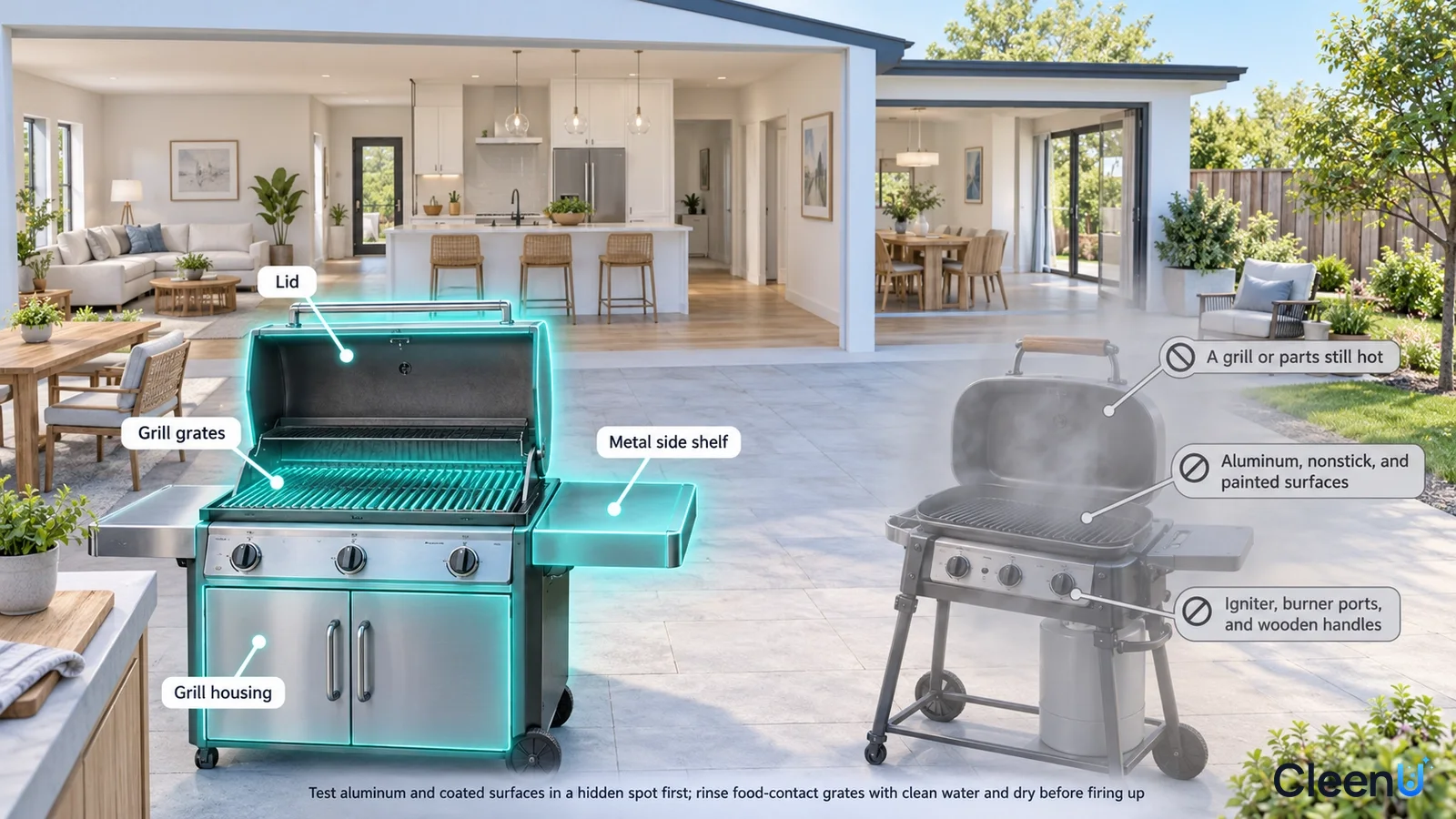
Before you use it
Important notes
- Not for: Hot grills or parts
- Not for: Aluminum, cast-aluminum lids, nonstick coatings, and painted finishes that haven't been spot-tested
- Not for: Igniters, gas burners, and electrical parts
- Not for: Wooden handles and wood side shelves
- Test first for special materials, special equipment, or sensitive scenarios.
Product comparison
How to choose a BBQ Grill Cleaner & Degreaser
Fresh drips and surface oil come off with hot water and dish soap. For black, hardened grease you can't scratch off with a fingernail, use a grill degreaser. Both handle greasy handprints on the lid, but the degreaser does it faster. For baked-on grease inside an oven, see the oven cleaner.
View product comparison
| Decision point | BBQ Grill Cleaner & Degreaser | Dish soap |
|---|---|---|
| Target soil | Heat-polymerized grease and char on grates | Surface oil and fresh drips |
| Dwell time | Yes, let the crust soften before scrubbing | No, wash and rinse as you go |
| Finish | Scrub, rinse with clean water, dry | Rinse with water |
| Best for | Frequent grillers with visible buildup | People who wash grates right after every cook |
Where BBQ Grill Cleaner & Degreaser stands out
Season-Old Grease, Softened Before You Scrub
The black, glossy crust on your grates stopped being ordinary grease a long time ago. At grilling temperatures, dripping fat oxidizes and polymerizes into a hard, varnish-like layer, with charred marinade sugars and meat juices baked into it. Dish soap lifts the surface oil but barely touches that layer. This degreaser works down through the cracks, softens the crust, and emulsifies the fat. Give it a few minutes, then brush along the bars and the char comes off in flakes instead of fighting you on every pass.
Grates and Grill Body, Each Cleaned the Right Way
Grates touch food, so finish them with a thorough clean-water rinse on both sides and between the bars, then dry them. Run a hand over the rinsed grate: if it still feels slick, cleaner or emulsified grease is left behind, so rinse again. For the lid, hood, and side shelves, spray onto a cloth instead of soaking the panel. You lift greasy handprints and splatter in one pass and keep cleaner out of the igniter and gas fittings.
Who it's for, where it's used, and when not to use it
For
End-use scenarios
When not to use it
Product Specifications and Custom Options
Key product details and custom options for your project.
Product specifications
Product type, cleaning scope, and format.
| Product type | Liquid degreaser spray |
| Surfaces | Grill grates, grill lids, hoods, exteriors, and side shelves |
| Use scenarios | After a weekend cookout; Before storing for the season; Camping and portable grills |
| Target soils | Baked-on grease and char on grates; grease and smoke film on lids, hoods, and side shelves |
| Directions | Ready to use; 3–5 min dwell, up to 10 min on heavy carbon |
| Not for | Hot grills or parts; Aluminum, cast-aluminum lids, nonstick coatings, and painted finishes that haven't been spot-tested; Igniters, gas burners, and electrical parts; Wooden handles and wood side shelves |
| Size and packaging | 500 mL trigger spray bottle |
| pH | pH 10.5–12.0 at 25°C |
| Scent | Unscented |
| Shelf life and storage | 24 months unopened; keep tightly closed in a cool, dry, well-ventilated place. Protect from heat, direct sunlight, and freezing |
B2B custom options
Private label, packaging, MOQ, samples, and delivery.
| OEM/ODM and private label | From product direction and sample review to packaging, production, and delivery for your BBQ Grill Cleaner & Degreaser project. |
| Packaging and labels | Mist trigger / foam trigger, fill size, labels, and retail sets can be customized |
| Case pack | 12 × 500 mL per case |
| MOQ | 500 bottles |
| Sample time | Free sample: 3–5 days |
| Bulk lead time | Scheduled with the order after packaging and label approval |
| Documents | SDS/MSDS, TDS, and batch COA provided per project on inquiry |
OEM/ODM project process
Move from product direction and sample review to packaging, production, and delivery for BBQ Grill Cleaner & Degreaser.
Define the main job
Decide whether the product leads on grate buildup or also covers everyday wiping of the grill body. The two call for different degreasing strength and trigger types.
Free sample
A free sample is usually ready in 3–5 days for project review.
Packaging and labels
Choose spray or foam trigger, size, label language, the warnings your market requires, and the rinse-before-cooking instruction for food-contact parts.
Bulk delivery
Standard MOQ is 500 bottles; bulk orders are scheduled after packaging and labels are approved. Start early for pre-season orders.
Why choose CleenU for BBQ Grill Cleaner & Degreaser?
From product positioning and samples to packaging and repeat supply, CleenU supports OEM/ODM projects built around BBQ Grill Cleaner & Degreaser.
Formula direction set by real grate buildup
Degreasing power, penetration speed, and gentleness on aluminum and paint trade off against each other. We start from your target grate materials and user habits.
Spray or foam, matched to the surface
A foam trigger clings to lids and vertical panels without running; a mist trigger covers grate bars more evenly. We supply both, or one formula in two versions.
Sample reviews with clear criteria
Review samples against your grates and real buildup: softening speed, scrub passes, and residue feel after rinsing.
Scent that suits grilling
Most grillers prefer unscented so no fragrance carries onto food; a light-scent version can be discussed.
Labels and documents
We supply bilingual labels, SDS/MSDS, TDS, and batch COAs, with rinse instructions for food-contact parts on the label, and can arrange third-party testing for your market.
Supply planned around grilling season
Grill-care sales peak in spring and summer. Start samples, packaging, and orders early to leave room for production and freight.
Packaging and labeling options
Plan packaging format, label language, and shelf presentation around BBQ Grill Cleaner & Degreaser and your target channel.
Show packaging and label options
Packaging options
Core size: 500 mL trigger spray bottle. Also available: 1 L household refill, channel case packs, and ecommerce bundles with a grill brush. Mist trigger or foam trigger options, with labels and cartons made to your brand.
Supporting Documents and Materials
Purchasers usually confirm whether the materials are complete before formal cooperation. Preparing documents in advance helps with quoting, sampling, and channel review.
Show available documents
Project documents
When you inquire, we provide SDS/MSDS, a TDS, batch COAs, label directions, and packaging files for your project.
Related products, solutions, and articles
Explore related cleaning products, application guidance, and OEM/ODM resources for BBQ Grill Cleaner & Degreaser.
Frequently asked questions (FAQ)
Find practical answers about BBQ Grill Cleaner & Degreaser, private label, samples, MOQ, documents, and delivery.
How to use
Why won't dish soap get the black gunk off my grill grates?
Because it isn't ordinary grease anymore. At grilling temperatures, fat oxidizes and polymerizes into a hard, varnish-like film mixed with charred sugars and proteins. Dish soap emulsifies surface oil but does little against that film. A degreaser has to soak in and soften it first, then a brush takes it off.
How long should it sit before I scrub?
Give it 3–5 minutes, up to 10 on heavy carbon, until the grease lightens and gives way under the brush. Scrub right away and the cleaner hasn't soaked in, so you only take off the top layer and work harder for it. For heavy buildup, repeat spray, wait, and scrub.
Can I cook on the grates right after cleaning them?
Yes, once you've rinsed both sides and between the bars with clean water and dried them. Feel the rinsed grate: if it's slick, there's residue left, so rinse again. Then preheat as usual before adding food.
What's the best way to clean the inside of a grill?
Remove the grates and grease tray and clean them separately. Spray the grease on the firebox walls, wait a few minutes, then scrub and wipe it off. Keep spray off igniters, gas nozzles, and electrical parts (cover them with foil or a bag), and test the inside of a cast-aluminum lid on a small area first. Let it air out, then run the grill empty for a few minutes before cooking.
Surfaces and common questions
Can I use it on cast iron grates?
Yes, but a degreaser strips the seasoning along with the grease. After rinsing and drying, wipe on a thin coat of cooking oil while the grate is warm and heat it for a few minutes to re-season and prevent rust. On porcelain-coated cast iron, skip steel wool so you don't chip the enamel.
Is it OK on aluminum parts or a painted lid?
Spot-test first. This is an alkaline degreaser (pH 10.5–12.0), and aluminum can dull or darken under alkaline cleaners; painted finishes can react too. On stainless or painted exteriors, spray onto a cloth, wipe, then follow with a damp cloth so the cleaner doesn't sit on the surface.
Can I spray it on a hot grill?
No. Heat flashes the cleaner off, causes spatter, can leave burnt marks on the metal, and cuts cleaning performance. Wait until the grill has fully cooled.
It’s still black after one round. Is it not working?
It is—years of carbon build up in layers, and one round softens only the top. Brush off what’s loose, spray again, and wait; two or three rounds usually get you to bare metal.
Can I use it on a stainless lid and body?
Yes. Spray a cloth rather than the panel, wipe with the grain, then go over it with a damp cloth and dry it to avoid water spots and streaks.
How often should I deep-clean the grates?
Every 3–5 cooks for home grills, before grease fully carbonizes. Brushing off debris while the grill is still warm after each cook cuts buildup a lot.
Can I use it on cast-iron gas stove grates?
Yes. Once the grates are fully cool, take them off, coat them, wait 3–5 minutes (10 for heavy carbon), scrub with a stiff brush, rinse, and dry; rub a thin coat of oil on cast iron afterward to prevent rust. Don't spray aluminum burner caps, gas nozzles, or igniters.
What do I do about rusty grill grates?
A degreaser removes grease, not rust. Clean off the grease first, then scrub loose rust away with a wire brush; dry cast-iron grates fully and season them with cooking oil and heat. Grates rusted through or flaking apart should be replaced.
Buying and private label
What should we decide first for a private-label grill cleaner?
Three things: whether it leads on grate buildup or everyday grill-body cleaning, spray or foam trigger, and the target market. Those set the degreasing strength, packaging, and label content. Decide them before sampling and you'll cut several revision rounds.
What are the sample, MOQ, and lead-time terms?
Free samples are usually ready in 3–5 days. Standard MOQ is 500 bottles, and bulk orders are scheduled after packaging and labels are approved.
What can be customized?
All of it: degreasing strength, scent, fill size (500 mL spray, 1 L refill, and more), mist or foam trigger, label design and language, and ecommerce bundles with a grill brush.
Can we test samples first?
Yes, we ship samples first. Test on the grate materials your customers actually use, with real buildup, and record softening time, scrub passes, and how the grate feels after rinsing. That tells you more than a before-and-after photo.
Which documents can you provide?
We provide SDS/MSDS, a TDS, and batch COAs, plus bilingual label content for your target market. They aren’t posted publicly; we send them per project on inquiry.
How is private-label pricing quoted?
Pricing is tiered by packaging, trigger or cap, label, and order quantity, starting at the 500-bottle MOQ. Send your target quantity, fill size, and packaging needs, and we’ll quote unit prices by volume tier with sample and lead-time details.
Launching your own grill cleaner?
Send us your market, the main job (grate buildup or everyday grill-body cleaning), packaging format, and estimated volume. We'll work through formula direction, trigger, and label with you.