
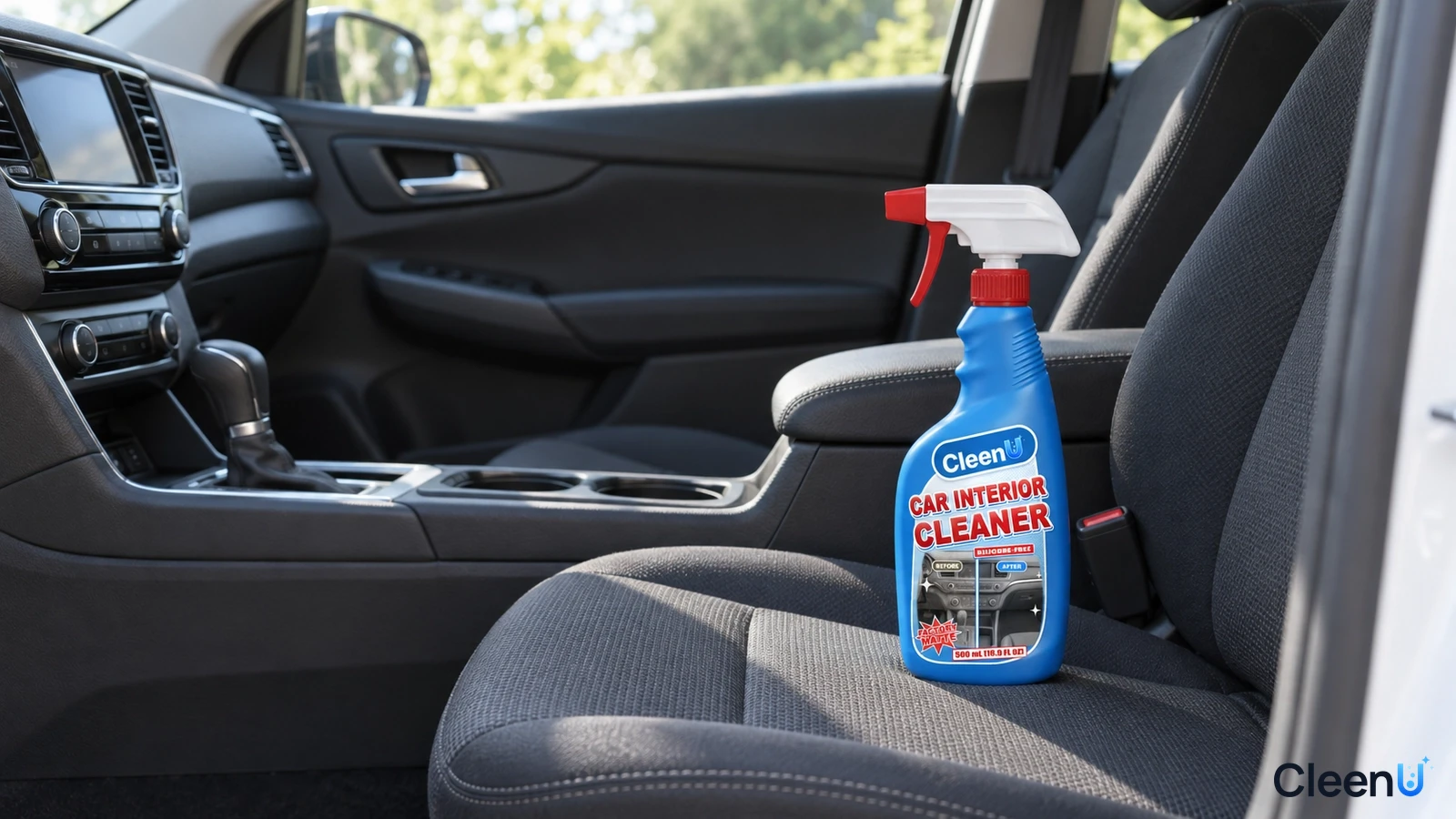
Product and application illustrations. Follow the product label and written use guidance.
CleenU product solution
Car Interior Cleaner
Silicone-free · Factory matte · Private label
Clears sun-lit dust haze on the dash, shiny handprints on door handles, and dried drink spills in cupholders, leaving a factory matte finish with no greasy shine or glare. Mildly alkaline and silicone-free; private label from 500 bottles.
- Interior plastic is mostly matte and textured, and the spots you touch most—door handles, around the steering column, the passenger-side dash—slowly go shiny. That isn’t newness; it’s skin oil and hand cream filling the grain. Vent dust sticks to the oil and the dash turns hazy grey in the sun. This mildly alkaline cleaner breaks up the oil and lifts dust out of the grain, taking the trim back to factory matte.
- Many interior products add silicone for shine, so the dash mirrors in the windshield while you drive and turns tacky enough to pull in more dust. This one cleans without dressing and dries to a clean, dry feel. Around screens, buttons, and vents, spray the cloth rather than the trim so liquid stays out of the electronics.
- MOQ
- 500 bottles
- Free samples
- 3–5 days
- Bulk lead time
- Scheduled with the order

Product value
What does a car interior cleaner clean?
A car interior cleaner removes dust haze, shiny handprints, skin oil, and dried drink spills from dashboards, door panels, center consoles, cupholders, and plastic or faux-leather trim, leaving a factory matte finish with no gloss film.
View product detailsProduct summary
- Product type
- Mildly alkaline car interior cleaning spray
- Intended use
- Dust film, handprints, skin oil, and drink spills on dashboards, door panels, consoles, and plastic trim
- Formula
- Gentle nonionic surfactants with mild alkaline builders, no silicone or solvent gloss agents; pH 8.0–9.5; ready to use.
- For
- Car-care and detailing brands, auto-parts retail and ecommerce, car wash and detailing shop buyers, rideshare and fleet operators

Before & after
Before and after (use illustration)
Before: in low sun the dash wears a grey haze, handprints on the passenger side shine in patches, and the dash reflects in the windshield. After: sprayed, wiped with the grain, and dried with a clean cloth, the haze and shine are gone, the grain is crisp, the color is back to a deep factory matte, and the reflection is noticeably weaker.
- Before: hazy grey in the sun, handprints shining in patches
- After: crisp grain and one even matte finish
- The dash reflection in the windshield is noticeably weaker

How it works
How Trim Goes Back to Matte
Matte plastic is covered in fine peaks and valleys that scatter light, which is why it doesn’t shine. Skin oil and hand cream fill that texture until the surface acts like a mirror, and dust from the vents sticks to the oil, so the dash looks hazy grey in the sun. The cleaner wets the texture down to the valleys, its mild alkalinity breaks the oil into tiny droplets, and the dust lets go and stays suspended. Microfiber soaks it all up, the texture is exposed again, light scatters, and the finish is matte. With no silicone, no new reflective film goes back on.
- Wet the texture down to the valleys
- Break skin oil into tiny droplets
- Loosen and suspend dust
- Microfiber lifts it; texture returns
Usage guidance
Use guidance
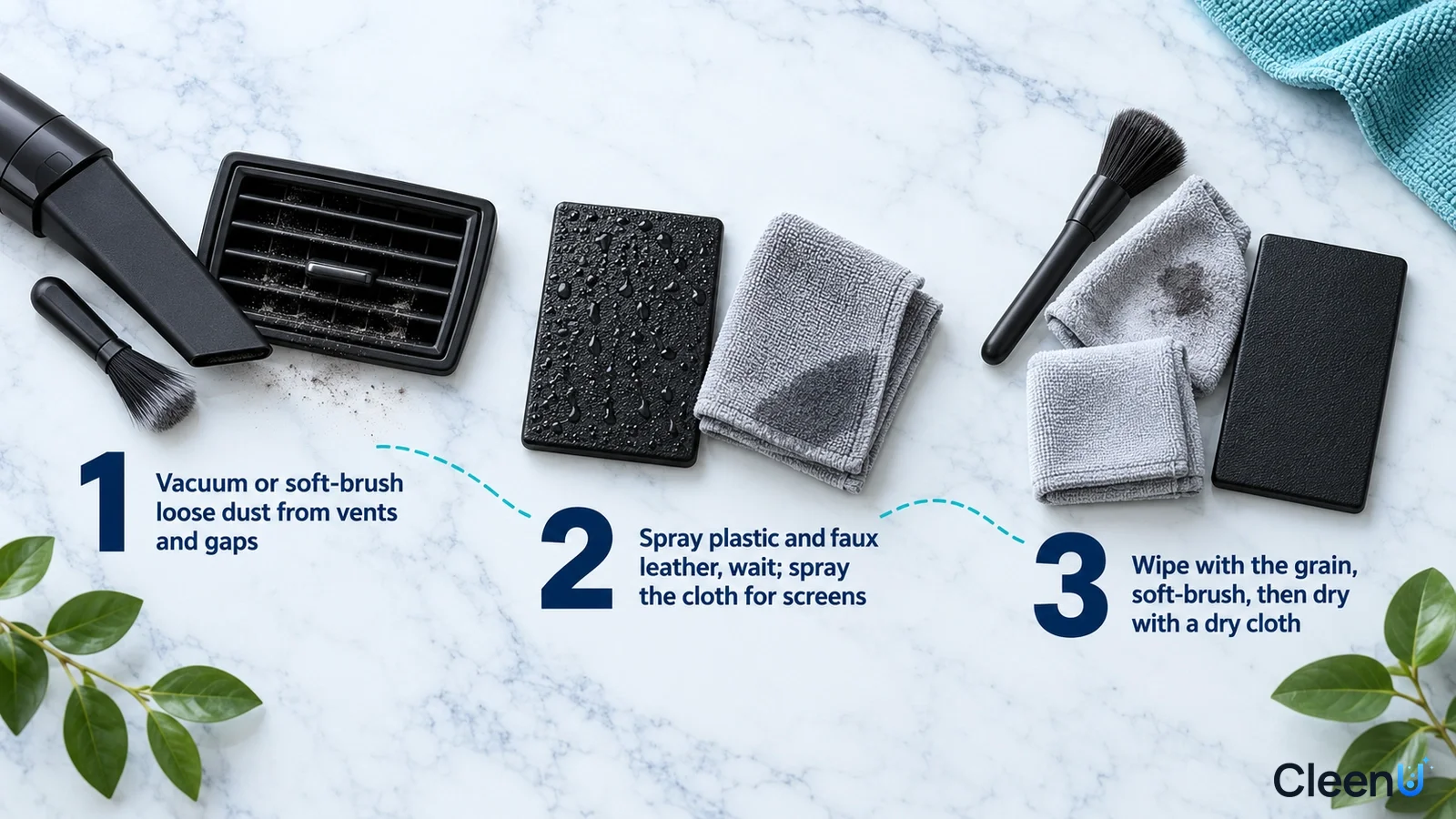
- Vacuum or brush loose dust out of vents and seams first so wet wiping doesn’t smear it into streaks.
- Spray plastic and faux-leather trim and let it sit about 30 seconds to soften skin oil; around screens, buttons, and vents, spray a microfiber cloth instead.
- Wipe with the grain using microfiber, run a soft brush through deep texture, then finish with a dry cloth.

Before you use it
Important notes
- Not for: Touchscreens, displays, and buttons—spray the cloth, not the screen
- Not for: Genuine leather seats and steering wheels (use a leather cleaner)
- Not for: Alcantara and suede before a hidden-spot test
- Not for: Sun-hot trim (let the cabin cool first)
- Test first for special materials, special equipment, or sensitive scenarios.
Product comparison
How to choose a Car Interior Cleaner
For dust haze and handprints on hard plastic and faux-leather trim—dash, doors, console—use the Car Interior Cleaner. Fabric seats and mats: Carpet & Upholstery Cleaner. Genuine leather seats and wheels: Leather Upholstery Cleaner & Conditioner.
View product comparison
| Decision point | Car Interior Cleaner | Silicone interior dressing |
|---|---|---|
| Job | Cleans off oil and dust film | Coats trim in a gloss film |
| Finish | Factory matte | Glossy, wet look |
| Windshield glare | Noticeably reduced | Brighter, more glare |
| Dust pickup | Dry, low dust pickup | Tacky, attracts dust |
Where Car Interior Cleaner stands out
Shiny Trim Isn’t Clean Trim: It’s Oil
Interior plastic is mostly matte and textured, and the spots you touch most—door handles, around the steering column, the passenger-side dash—slowly go shiny. That isn’t newness; it’s skin oil and hand cream filling the grain. Vent dust sticks to the oil and the dash turns hazy grey in the sun. This mildly alkaline cleaner breaks up the oil and lifts dust out of the grain, taking the trim back to factory matte.
Silicone-Free: No Glare, No Dust Magnet
Many interior products add silicone for shine, so the dash mirrors in the windshield while you drive and turns tacky enough to pull in more dust. This one cleans without dressing and dries to a clean, dry feel. Around screens, buttons, and vents, spray the cloth rather than the trim so liquid stays out of the electronics.
Who it's for, where it's used, and when not to use it
For
End-use scenarios
When not to use it
Product Specifications and Custom Options
Key product details and custom options for your project.
Product specifications
Product type, cleaning scope, and format.
| Product type | Mildly alkaline car interior cleaning spray |
| Surfaces | Car dashboards, door panels, center consoles, and plastic and faux-leather trim |
| Use scenarios | Commuter car upkeep; Rideshare and taxis; Used-car prep and detailing |
| Target soils | Dust film, handprints, skin oil, and drink spills on dashboards, door panels, consoles, and plastic trim |
| Directions | Ready to use, no dilution; about 30 s dwell, then wipe; apply by cloth near electronics; finish with a dry cloth |
| Not for | Don’t spray screens or buttons directly; genuine leather seats and wheels (use a leather cleaner); spot-test Alcantara and suede; let sun-hot trim cool first |
| Size and packaging | 500 mL trigger spray bottle |
| pH | pH 8.0–9.5 at 25°C |
| Scent | Fresh ocean scent |
| Shelf life and storage | 24 months unopened; keep tightly closed in a cool, dry, well-ventilated place. Protect from heat, direct sunlight, and freezing |
B2B custom options
Private label, packaging, MOQ, samples, and delivery.
| OEM/ODM and private label | From product direction and sample review to packaging, production, and delivery for your Car Interior Cleaner project. |
| Packaging and labels | Mist trigger / foam trigger, fill size, labels, and retail sets can be customized |
| Case pack | 12 × 500 mL per case |
| MOQ | 500 bottles |
| Sample time | Free sample: 3–5 days |
| Bulk lead time | Scheduled with the order after packaging and label approval |
| Documents | SDS/MSDS, TDS, and batch COA provided per project on inquiry |
OEM/ODM project process
Move from product direction and sample review to packaging, production, and delivery for Car Interior Cleaner.
Define channel and function
Decide retail or professional detailing, and whether it is cleaning-only or clean-plus-protect.
Free sample
A free sample is usually ready in 3–5 days for project review.
Packaging and labels
Set fill size, trigger type, label language, the warnings your market requires, and a spray-on-cloth-near-electronics, do-not-spray-screens note.
Bulk delivery
Standard MOQ is 500 bottles; bulk orders are scheduled after packaging and labels are approved.
Why choose CleenU for Car Interior Cleaner?
From product positioning and samples to packaging and repeat supply, CleenU supports OEM/ODM projects built around Car Interior Cleaner.
Cleaning power balanced with matte finish
Interior cleaners must remove oil without leaving a gloss film. We tune surfactants and builders to the trim materials and feel you want.
Mist or foam
Fine mist suits large plastic areas; foam clings to door panels without running, popular at retail.
Sample reviews with clear criteria
Review samples on your automotive interior plastic panels with oil and dust film against clear points: dust and handprint removal, matte level after wiping, and effect on plastics and faux leather.
Scent drives repurchase
Ocean fresh, new-car, woody, and unscented are the core interior scents; we can build a range.
Labels and documents
We supply bilingual labels, SDS/MSDS, TDS, and batch COAs, with a spray-on-cloth-near-electronics, do-not-spray-screens note on the label, and can arrange third-party testing for your market.
Consistent supply and reorders
Each batch is retained and ships with a COA, so reorders match in color, scent, and feel.
Packaging and labeling options
Plan packaging format, label language, and shelf presentation around Car Interior Cleaner and your target channel.
Show packaging and label options
Packaging options
Core size: 500 mL trigger spray bottle. Also available: 1 L household refill, channel case packs, and ecommerce bundles with microfiber cloths and a detail brush. Mist trigger or foam trigger options, with labels and cartons made to your brand.
Supporting Documents and Materials
Purchasers usually confirm whether the materials are complete before formal cooperation. Preparing documents in advance helps with quoting, sampling, and channel review.
Show available documents
Project documents
When you inquire, we provide SDS/MSDS, a TDS, batch COAs, label directions, and packaging files for your project.
Related products, solutions, and articles
Explore related cleaning products, application guidance, and OEM/ODM resources for Car Interior Cleaner.
Frequently asked questions (FAQ)
Find practical answers about Car Interior Cleaner, private label, samples, MOQ, documents, and delivery.
How to use
Why does my dashboard look hazy in the sun?
It’s dust stuck to a film of skin oil. Oil from hands and dust from the vents build up on the dash, and low sunlight shows it as a grey haze. Break up the oil with an interior cleaner and the dust wipes away with it; a dry duster leaves the oil behind, so the haze comes right back.
Can I spray the center screen?
No. Spray a microfiber cloth and wipe gently so no liquid gets into gaps. For screens with an anti-fingerprint coating, use a dedicated screen cleaner.
Will it leave the dash shiny?
No. It’s silicone-free and cleans without dressing, so it dries to the factory matte finish. If a spot still shines, there’s skin oil left there—wipe it again with a clean side of the cloth.
What should I watch for when using it inside a small, closed car?
Ventilate and use it lightly. It's a mildly alkaline formula with gentle surfactants and no silicone or solvent shine agents. Open the doors or windows while you clean, spray the cloth rather than screens, buttons, and vents, buff dry so no wet residue is left, let sun-baked trim cool first, and don't leave the bottle baking in the car; store it out of reach of children.
How do I use car interior cleaner?
Use it straight from the bottle, no mixing. Spray hard plastic and faux-leather trim, give it a moment to loosen the grime, then wipe. Around screens, buttons, and vents, spray the cloth instead. Finish with a dry microfiber so no wet residue is left, and let sun-baked trim cool first.
Surfaces and common questions
Can I use it on leather seats?
Not as a regular leather cleaner. Genuine leather needs a slightly acidic leather cleaner and conditioner to avoid drying and cracking. Faux-leather seats and door panels are fine.
How do I handle dried drink spills in cupholders?
Spray again and give it extra time. Dried sugar softens once it’s wet again; then scrub the bottom and corners with a soft brush, wipe with microfiber, and dry. Pull out removable cupholder liners and clean them separately for a better result.
Will it fix odors in the car?
It removes the oil and spill residue on trim that can cause odor and leaves a light ocean scent. Deep smoke or pet odors also need a new cabin filter and a dedicated odor eliminator.
Will it leave white marks on dashboard plastic?
Not when you wipe it off and dry the surface as directed; it’s made for everyday use on common plastic and faux-leather trim. White marks usually come from residue drying on hot trim, so let the cabin cool, always finish with a dry cloth, and spot-test any trim you’re unsure about.
How often should I clean my car interior?
For a personal car, wipe the dash, door handles, and console every 2–4 weeks. Rideshare and taxi vehicles should get handles, console, and cupholders wiped daily or every shift, before skin oil builds up.
Does a new car need interior cleaner?
Yes, once. New trim often carries shipping dust and production residue, so wipe the interior down after delivery and dry it with a clean cloth; after that, clean high-touch areas on your normal schedule.
How is it different from an all-purpose foam cleaner?
This cleaner is made for hard plastic and faux-leather trim on the dash, doors, and console: it wipes off and dries fast, removing skin oil without leaving a gloss film. All-purpose foams cover more materials but leave more foam to wipe away. For fabric seats and floor mats, use a carpet and upholstery cleaner.
What's the best way to clean the inside of car windows?
Use an ammonia-free glass cleaner with two microfiber cloths: one damp to wipe, one dry to buff. Wipe side to side, then top to bottom, so missed spots show. An interior cleaner is made for dash plastics, door panels, and faux leather, not glass, and can streak on windows.
Are disinfecting wipes OK for a car interior?
Fine now and then on door handles and the steering wheel, but not for routine interior cleaning. Wipes with alcohol or disinfectants can dry out and whiten dashboard plastic, stiffen leather, and damage screen coatings with regular use. Use an interior cleaner for routine cleaning and a screen cleaner for displays.
Buying and private label
What should we decide first for a private-label car interior cleaner?
Three things: retail car owners or professional detailers, a clean-only or clean-plus-protect version, and ocean fresh, new-car, or unscented. Car-care channels care a lot about scent and packaging feel.
What are the sample, MOQ, and lead-time terms?
Free samples are usually ready in 3–5 days, and we recommend testing first: on oily, dusty interior trim under low-angle light, check how much haze and handprint comes off, whether the matte finish is even, and whether plastics or faux leather whiten. Standard MOQ is 500 bottles, and bulk orders are scheduled after packaging and labels are approved. SDS/MSDS, a TDS, batch COAs, and bilingual label content are sent per project on inquiry.
What can be customized?
All of it: formula direction, scent, fill size (500 mL spray, 1 L refill, and more), mist or foam trigger, label design and language, and ecommerce bundles with microfiber cloths and a detail brush.
How is private-label pricing quoted?
Pricing is tiered by bottle, trigger, label, and order quantity, starting at the 500-bottle MOQ. Send your target quantity, fill size, and packaging needs, and we’ll quote unit prices by volume tier along with sample and lead-time details.
Launching your own Car Interior Cleaner?
Send your market, retail or pro line, scent range, and estimated volume. We’ll work through formula, scent, and packaging with you, with free samples in 3–5 days.